
By Michael Nielsen, Editor & Publisher | 15+ Years in Diesel Repair
Last Updated: January 2026
📖 Estimated reading time: 22 minutes
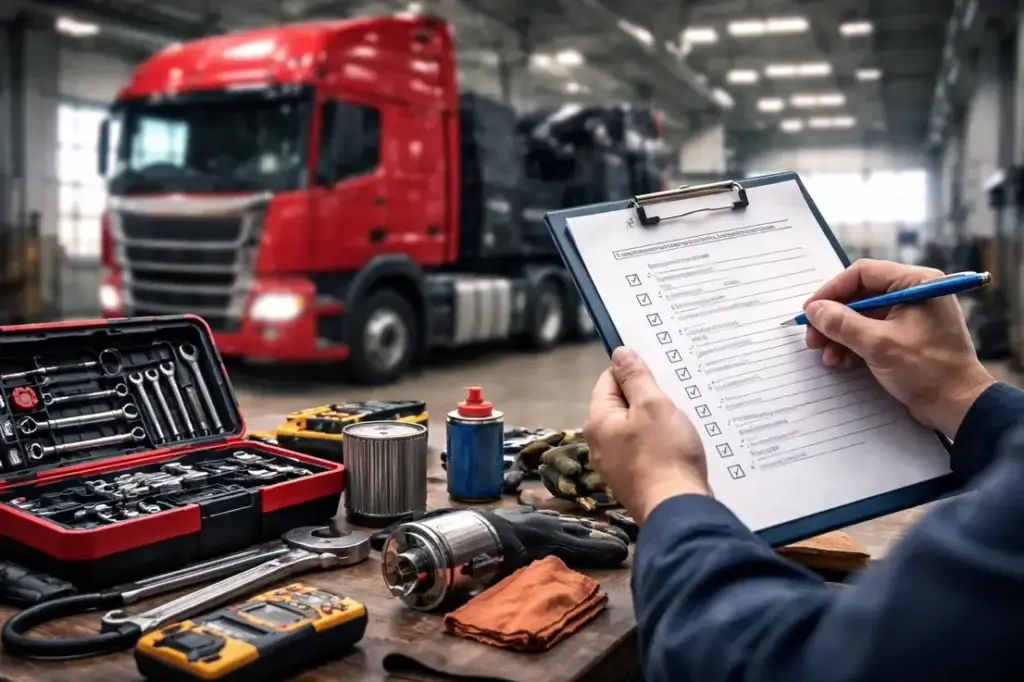
A mobile service truck transforms how diesel technicians deliver repairs—bringing a complete workshop directly to stranded equipment instead of waiting for expensive tows. Implementing an effective Mobile Service Truck Setup is crucial for maximizing efficiency in the field. For entrepreneurs entering the heavy-duty repair industry, this approach eliminates the overhead of a brick-and-mortar shop while meeting the urgent needs of fleet managers who lose hundreds of dollars for every hour a truck sits idle.
The business case is compelling. According to Element Fleet Management research, vehicle downtime costs fleets an average of $448 to $760 per day per truck—not counting towing expenses that can exceed $3,000 for heavy equipment. When a properly equipped mobile technician arrives within hours rather than days, the value proposition sells itself.
Building a profitable mobile repair operation requires more than bolting tools to a truck bed. Every equipment choice affects your ability to complete jobs efficiently and safely. This guide covers the essential decisions—from selecting the right chassis and service body to outfitting power systems, welding equipment, diagnostic tools, and storage solutions that keep you productive across hundreds of job sites each year.
Key Takeaways
- Lower startup costs: Mobile operations typically require 50-70% less capital than traditional shops by eliminating lease payments and large equipment investments
- Significant client value: Fleet downtime costs $448-$760 daily per vehicle, making on-site repairs highly attractive to fleet managers
- Strong market growth: Employment of heavy vehicle and mobile equipment technicians is projected to grow 6% through 2034, with approximately 21,700 annual job openings
- Equipment integration matters: Proper welder/generator, compressor, and diagnostic tool selection determines repair capability and efficiency
- Organization drives profitability: Strategic tool placement and storage systems directly impact time-on-job and customer satisfaction
Understanding the Mobile Service Truck Business Model
Starting a mobile repair business requires understanding both the market opportunity and operational requirements. The mobile equipment service sector is experiencing steady growth, with the Bureau of Labor Statistics projecting 6% employment growth from 2024 to 2034—faster than the average for all occupations. This expansion reflects rising demand for on-site repair capabilities across construction, agriculture, and transportation industries.
The financial advantages over traditional shops are substantial. Mobile operations eliminate several major expense categories that burden fixed-location businesses: no building lease or mortgage payments, lower utility and maintenance costs, reduced initial equipment investment, and flexible operating hours that adapt to customer needs rather than fixed shop schedules.
Market Demand for On-Site Heavy-Duty Repair
Construction companies, agricultural operations, and transportation businesses frequently operate in remote locations where traditional repair shops are scarce or impractical to reach. These businesses need immediate service to minimize downtime and maintain productivity. A single day of lost operation can cost thousands in missed revenue, contract penalties, and cascading schedule disruptions.
Evaluating your target market involves checking the density of existing repair services and identifying underserved areas. Small towns and rural communities outside major cities frequently lack adequate heavy equipment repair facilities, creating opportunities for mobile service providers. Equipment dealerships and fleet operations also contract mobile technicians for overflow work during peak seasons.
$448–$760
Average daily cost of truck downtime per vehicle, according to Element Fleet Management research
Value Proposition for Fleet Managers
Fleet managers at companies like Schneider National and J.B. Hunt understand the pain of equipment breakdowns intimately. Mobile services provide immediate value by eliminating towing costs, reducing downtime duration, and keeping vehicles operational during critical delivery periods. For a 1,000-unit fleet, even modest improvements in uptime translate to hundreds of thousands in annual savings.
Owner-operators appreciate the convenience of repairs that eliminate transportation logistics and minimize time away from revenue-generating work. Rather than deadheading to a shop, waiting for diagnosis, and potentially staying overnight, they can receive service at truck stops, rest areas, or customer locations during mandatory rest periods.
Selecting the Right Base Vehicle
Choosing the proper foundation determines your operational efficiency and profitability for years. The base vehicle must balance power, reliability, payload capacity, and serviceability while meeting the specific demands of field repairs. This decision affects everything from fuel costs and insurance rates to the types of jobs you can accept.
Comparing Chassis Options
The decision between 3/4-ton and 1-ton trucks impacts your operational capacity significantly. A 3/4-ton truck like the Ram 2500 provides adequate capacity for lighter setups, typically handling 3,000-4,000 pounds of payload. One-ton models such as the Ford F-350 or GMC Sierra 3500 deliver superior performance, accommodating 4,000-7,000 pounds depending on configuration.
For comprehensive mobile service operations, medium-duty chassis like the Ford F-550 or Ram 5500 provide the payload capacity needed for crane installations, larger air compressor systems, and extensive parts inventory. These platforms accept larger service bodies and offer commercial-grade drivetrain components designed for continuous heavy use.
Service Body vs. Flatbed Configurations
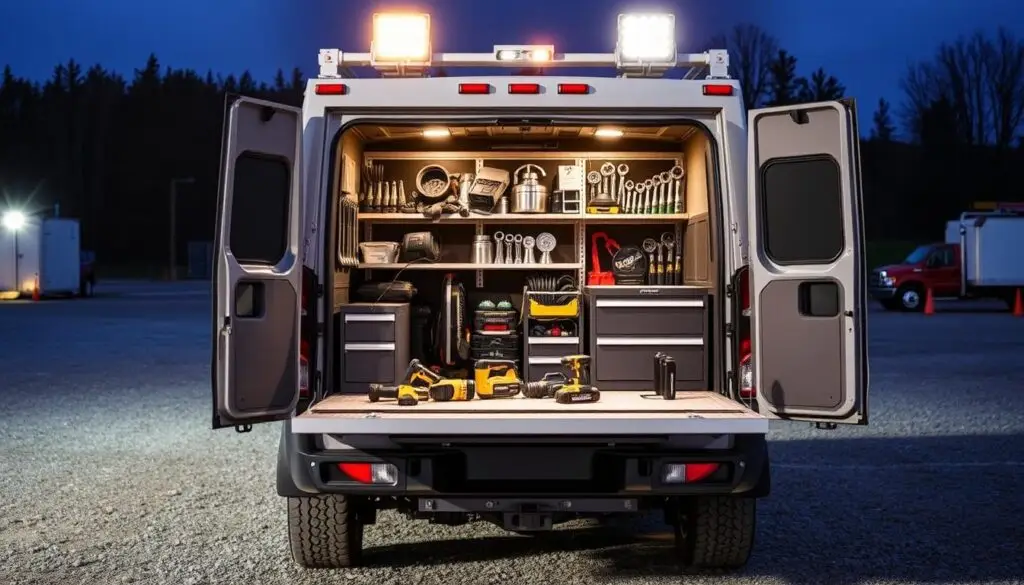
Service body trucks feature integrated compartments and toolboxes that protect equipment from weather and theft. Manufacturers like Knapheide and Reading Truck offer bodies with customizable storage layouts designed specifically for mobile repair operations. These enclosed compartments keep tools organized and accessible while providing security during overnight parking.
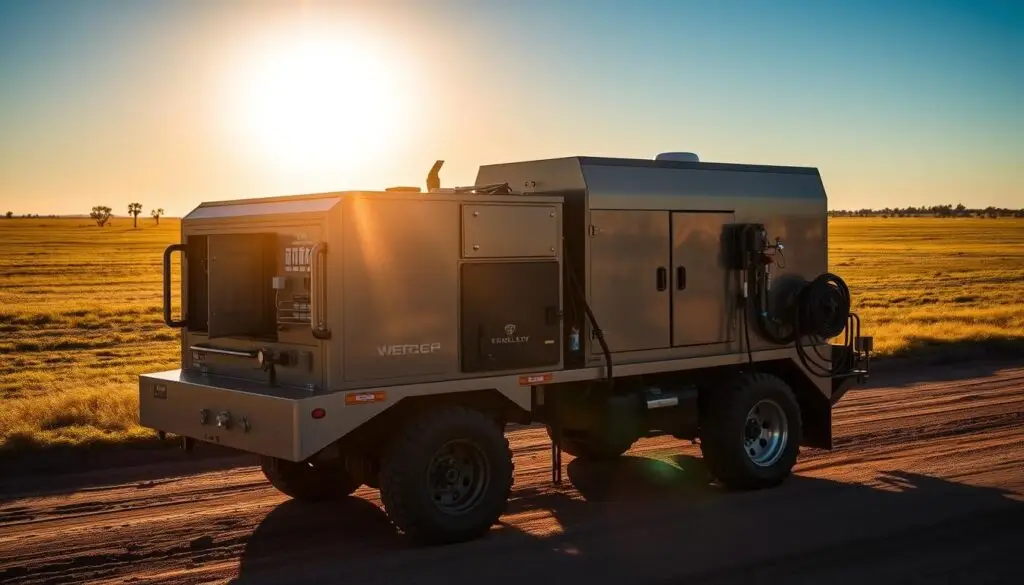
Flatbed configurations offer flexibility for mounting large equipment like welder/generators, rotary screw compressors, and custom tank racks directly to the deck. Many operators prefer flatbeds for crane installations since the open deck simplifies mounting and provides better weight distribution. The trade-off is reduced weather protection and security for smaller tools and parts.
| Configuration | Storage Capacity | Equipment Access | Weather Protection | Best For |
|---|---|---|---|---|
| Service Body | 40-60 cubic feet | Side compartments | Excellent | General repair, PM service |
| Flatbed | 80-120 cubic feet | Open deck | Requires covers/boxes | Heavy welding, crane work |
| Combo (Flatbed + Boxes) | 60-80 cubic feet | Mixed access | Good | Versatile operations |
Payload and Weight Considerations
A complete mobile service truck setup typically carries 2,500-4,000 pounds of equipment before adding parts inventory. Essential items include a welder/generator combo (400-600 pounds), air compressor system (300-500 pounds), welding gas cylinders (250-400 pounds), hand tools and consumables (500-800 pounds), and a telescopic crane if equipped (800-1,200 pounds). Always calculate your anticipated payload against the vehicle’s Gross Vehicle Weight Rating (GVWR) to ensure legal compliance and safe operation.
2WD vs. 4WD for Field Access
Four-wheel drive capability proves essential for reaching equipment at construction sites, farms, and remote locations where breakdowns frequently occur. While 2WD trucks cost less upfront and deliver better fuel economy on highways, 4WD systems provide critical traction in mud, snow, and unpaved terrain. For most mobile service operations, the additional investment in 4WD pays dividends through expanded service capability and fewer declined calls due to access limitations.
Essential Welding Equipment Integration
Welding capability defines what repairs your mobile operation can handle. The right equipment transforms your truck into a complete fabrication shop capable of addressing structural repairs, custom modifications, and emergency fixes that keep customers moving. Equipment selection directly impacts your service menu and competitive positioning.
Welder/Generator Combo Units
Welder/generator combination units serve as the backbone of mobile repair operations. These dual-purpose machines eliminate the need for separate welding and power generation equipment while providing electricity for tools, lights, and diagnostic equipment. Leading manufacturers like Lincoln Electric and Miller offer models designed specifically for truck mounting and field service demands.
The Miller Bobcat 265 delivers 265 amps with 11,000 watts of auxiliary power, making it suitable for heavy structural work and simultaneous power tool operation. For operations focused on lighter repairs and maintenance, the Miller Bobcat 230 offers a more compact package at just 385 pounds while still providing 230 amps and 11,000 watts of generator capacity.
Fuel type selection affects both operating costs and cold-weather performance. Diesel units offer better fuel economy and longer engine life, making them ideal for daily use. Gas-powered models cost less upfront and start more reliably in freezing temperatures. Consider your regional fuel availability and typical operating conditions when making this decision.
Welding Process Requirements
Different welding processes serve specific repair scenarios you’ll encounter in field service:
- Stick welding (SMAW): Essential for outdoor repairs in wind, dirt, and moisture—handles rusty or painted steel without extensive preparation
- MIG welding (GMAW): Ideal for cleaner structural work where speed and appearance matter, though requires shielding gas that complicates outdoor use
- TIG welding (GTAW): Required for precision work on aluminum, stainless steel, and thin materials—increasingly important for modern equipment repairs
- Flux-cored (FCAW): Combines MIG speed with stick welding’s outdoor tolerance, excellent for heavy fabrication
Long welding leads and properly gauged cables provide the flexibility needed to reach difficult positions on large equipment. Most experienced technicians recommend at least 50-foot leads as standard, with 75-100 foot sets available for extreme situations.
Cutting and Heating Equipment
Torch setups remain crucial for versatile field repairs beyond welding. An oxy-acetylene kit handles cutting, heating, and brazing tasks that welders cannot address. Propane torches excel at heavy heating applications like freeing seized fasteners and thawing frozen components during winter months. Plasma cutters provide precision cutting capability for steel up to 1/2-inch thickness with cleaner edges than oxy-fuel cutting.
| Equipment Type | Primary Use | Typical Weight | Power Requirements |
|---|---|---|---|
| Oxy-Acetylene Kit | Cutting, heating, brazing | 250-400 lbs (with tanks) | None |
| Propane Torch | Heavy heating, thawing | 40-80 lbs | None |
| Plasma Cutter | Precision cutting | 50-100 lbs | 240V or generator |
Power Generation and Electrical Systems
Reliable power generation forms the backbone of any successful mobile operation. When working miles from the nearest outlet, your ability to run welders, grinders, diagnostic equipment, and power tools depends entirely on onboard systems. Modern service trucks require multiple power sources to handle diverse electrical demands during complex repairs.
Primary Power Systems
Your welder/generator combo serves as the primary workhorse, but understanding its limitations prevents frustrating surprises. A 200-amp welder drawing full power leaves limited generator capacity for other tools. Plan your workflow to avoid simultaneous heavy draws, or spec a larger unit that provides headroom for running grinders, lights, and chargers while welding.
Auxiliary Power and Inverters
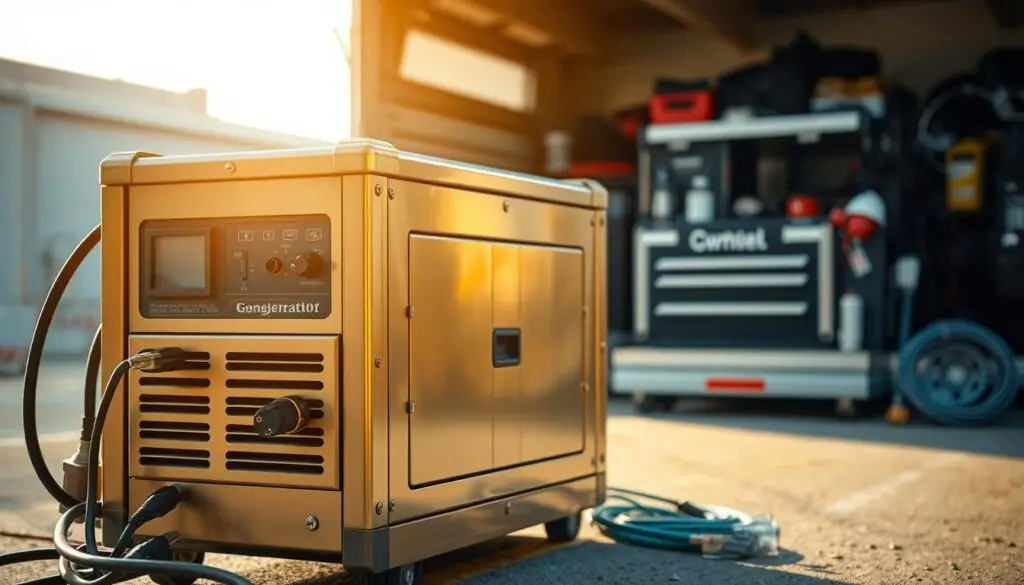
A secondary generator provides essential backup capability. Units ranging from 3,000 to 7,000 watts power lights, plasma cutters, and angle grinders without taxing your main welder/generator. This redundancy keeps you productive when primary systems need maintenance or when multiple high-draw tools require simultaneous operation.
Deep-cycle battery banks paired with pure sine wave inverters create a silent power source for sensitive electronics and low-draw tools. This setup powers diagnostic computers, battery chargers, and LED work lights without running any engines—valuable during noise-sensitive situations or when fuel conservation matters. Modified sine wave inverters work for basic power tools, but sensitive diagnostic equipment demands pure sine wave output to prevent data errors and equipment damage.
Heavy-Duty Diagnostic Equipment
Modern commercial vehicles contain dozens of electronic control modules communicating across multiple networks. Without proper diagnostic capability, you’re limited to mechanical repairs while electronic issues—often the root cause—remain undiagnosed. Investing in professional diagnostic tools separates profitable mobile operations from those constantly referring work to dealerships.
All-Makes Diagnostic Software
Professional mobile diesel repair requires comprehensive diagnostic coverage across all major OEMs. Noregon JPRO has become the industry standard, covering all makes and models of Class 3-8 commercial trucks plus popular off-highway equipment. The software provides fault code reading, guided troubleshooting with wiring diagrams, and bi-directional controls for tasks like DPF regenerations and cylinder cutout tests.
A complete diagnostic setup includes a rugged laptop (Panasonic Toughbook remains the industry choice), diagnostic adapter kit with cables for 9-pin, 6-pin, and OBD-II connections, and current software subscriptions. Budget $5,000-$15,000 for professional-grade diagnostic capability, with annual subscription renewals of $1,500-$3,000 to maintain current coverage and features.
Essential Diagnostic Tools
- All-makes scan tool: JPRO, Jaltest, or equivalent with current subscription
- Digital multimeter: True RMS with min/max recording (Fluke 87V or similar)
- Pyrometer: Non-contact IR plus probe type for exhaust diagnostics
- Battery/charging system tester: Conductance-based for accurate assessment
- Pressure gauges: Fuel, oil, boost, and air system testing capability
Handheld Testing Equipment
Beyond software diagnostics, essential handheld tools include a quality digital multimeter with true RMS capability, pyrometer for exhaust temperature readings during emissions troubleshooting, and battery/charging system testers. Pressure testing equipment for fuel systems, cooling systems, and air systems rounds out the diagnostic toolkit needed for comprehensive field diagnosis.
Air Compressor Systems
A properly configured air system powers essential tools like impact wrenches, air ratchets, and cleaning equipment that technicians rely on daily. Selecting the right compressor ensures your pneumatic tools operate at peak performance during critical repair situations.
Sizing Your Compressor
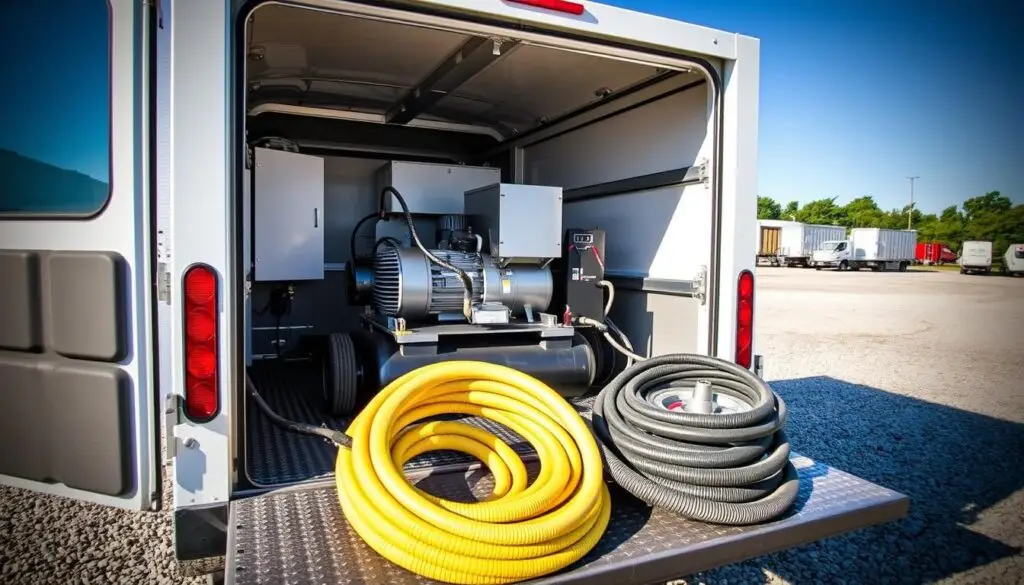
Most heavy-duty applications demand compressors producing 90-175 PSI with CFM ratings between 15-30. Gas-powered units typically outperform electric models for field applications due to their independence from external power sources. Rotary screw compressors provide superior duty cycles compared to reciprocating models—critical when running impact wrenches continuously during brake jobs or wheel-off services.
Tank Capacity and Mounting
Tank size directly impacts your ability to maintain consistent pressure during extended tool use. A 30-gallon tank suits light-duty work and tire inflation, while 60-gallon tanks better support continuous heavy-duty operations like sustained impact wrench use or sandblasting. Many operators choose truck-mounted systems with quick-disconnect fittings for occasional portable use when job sites demand versatility.
| Tank Size | Best Application | Continuous Run Time | Recovery Time |
|---|---|---|---|
| 30 Gallon | Light repairs, tire inflation | 3-5 minutes | 2-3 minutes |
| 60 Gallon | Impact wrenches, grinding | 8-12 minutes | 4-5 minutes |
| 80+ Gallon | Multiple tool operation | 15-20 minutes | 6-8 minutes |
The HDJ Perspective
The mobile service truck market has matured significantly over the past decade. What once required extensive custom fabrication now benefits from purpose-built solutions from manufacturers who understand field service demands. The most successful operators we’ve observed treat their trucks as profit centers rather than expenses—investing in quality equipment that enables faster repairs and expanded service capabilities. The initial investment in professional-grade diagnostics, adequate power generation, and proper organization pays dividends through higher first-time fix rates and the ability to command premium pricing for genuine emergency response capability.
Storage Solutions and Tool Organization
A well-organized workspace directly impacts productivity and professionalism. Every minute spent searching for tools is time lost on the job site and money left on the table. Smart storage transforms your truck from cluttered chaos into an efficient workspace that impresses clients and speeds up repairs.
Drawer and Shelving Systems
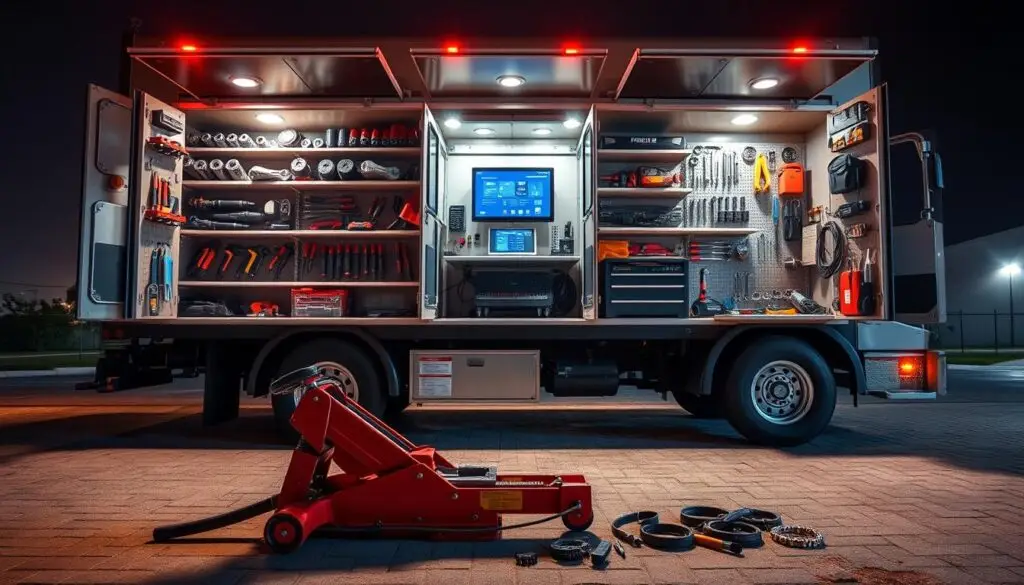
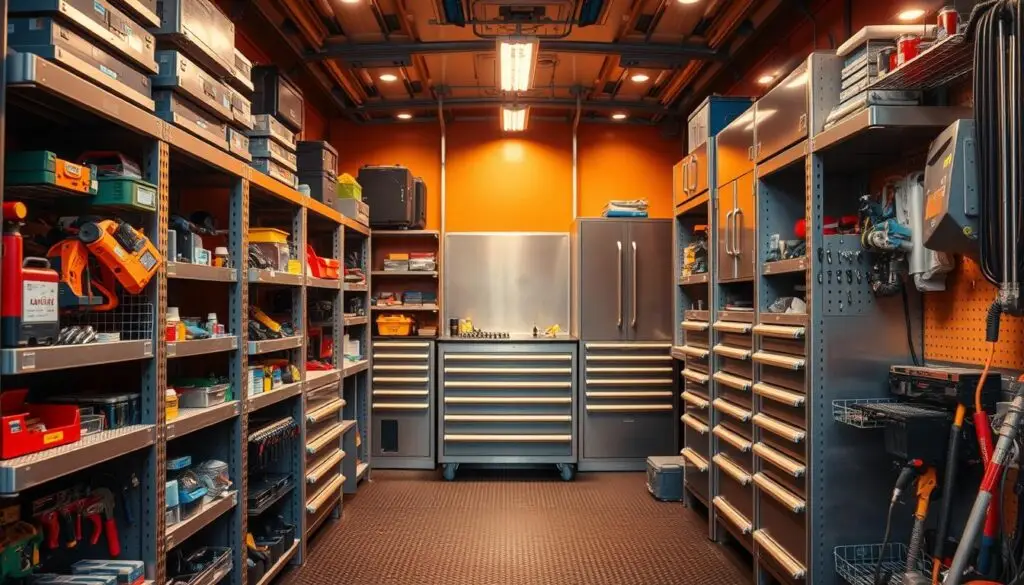
Professional organization systems from manufacturers like Weather Guard maximize every square inch of available space. Heavy-duty sliding drawers support up to 250-600 pounds each with ball-bearing slides ensuring smooth operation even when fully loaded. Adjustable shelving adapts to changing equipment needs, while powder-coated steel construction resists rust and handles the weight of hydraulic jacks and diagnostic tools.
Foam cutouts in drawers cradle sockets, wrenches, and precision instruments, preventing damage during transport while making missing tools immediately obvious. This level of organization might seem excessive until you’ve spent twenty minutes searching for a specific socket at a roadside breakdown with traffic rushing past.
Weatherproof Compartments
Quality compartments protect valuable tools from rain, dust, and road salt. Knapheide aluminum service bodies feature military-grade construction with 6061-T6 aluminum and include 10-year warranties against structural failure. Steel bodies from Reading and others utilize galvannealed steel with E-coat primer for exceptional corrosion resistance in harsh environments.
Stainless steel T-handle latches provide secure closure without freezing in winter weather. Electronic lock systems like Weather Guard’s 1Key allow fleet managers to control access across multiple vehicles with programmable codes—valuable for operations with multiple technicians sharing equipment.
Organizing for Efficiency
Strategic tool placement speeds up workflow dramatically. Position frequently used tools within arm’s reach of your primary work position. Magnetic strips hold wrenches at eye level. Spring-loaded clips secure hammers and pry bars. Cable reels on swivel brackets prevent tangled welding leads and air hoses. Label each storage location clearly to maintain organization during busy workdays and make it easy for helpers to return tools properly.
Free Professional Fleet Tools
Cost calculators, fault code lookup, maintenance planners, and more—built for owner-operators, fleet managers, and diesel techs. No signup required.
Safety Equipment and Compliance
Operating a mobile service truck requires strict attention to safety protocols and regulatory requirements. Proper safety equipment protects both technicians and customers while ensuring your operation stays within legal boundaries. Meeting compliance standards prevents costly fines and creates a professional work environment that inspires client confidence.
⚠️ Safety Warning
Welding gas cylinders present serious hazards if improperly stored or transported. Always secure oxygen and acetylene tanks in separate compartments with proper chain restraints. Never transport cylinders with regulators attached, and ensure adequate ventilation in storage areas.
Fire Prevention Requirements
Every mobile service truck needs comprehensive fire protection. Install at least two ABC-rated fire extinguishers in easily accessible locations—one near the cab and one near the work area. Mount a fire blanket near welding equipment for smothering metal fires. Keep a sand bucket available for emergency use. Spark arrestors on generator and compressor exhausts prevent accidental ignition of flammable materials during operation.
Personal Protective Equipment
Dedicated PPE storage keeps safety gear organized and protected from weather damage. OSHA regulations require proper protective equipment for welding operations, including appropriate eye protection, fire-resistant clothing, and respiratory equipment when necessary. Maintain the following items in ready condition:
- Auto-darkening welding helmets with appropriate shade ratings
- Leather welding gloves and protective jackets
- Steel-toed boots rated for impact and compression
- Safety glasses and hearing protection for grinding operations
- Full-face respirators for extended welding in enclosed spaces
- High-visibility vests for roadside operations
DOT Hazmat Compliance
Federal regulations require specific measures for transporting welding gases. According to FMCSA hazardous materials requirements, operators must secure oxygen and acetylene tanks in separate compartments with proper chain restraints, display required hazmat placards when thresholds are exceeded, and keep Material Safety Data Sheets readily available in the cab. Maintain current emergency contact information visible to first responders.
Lighting and Communication Systems
Proper illumination and reliable communication enable technicians to work safely in any environment while staying connected with dispatch and customers. Strategic placement of lighting equipment and selection of robust communication tools can transform a basic service vehicle into a professional mobile workshop.
LED technology has revolutionized work truck lighting by delivering intense brightness with minimal power consumption. Roof-mounted light bars illuminate entire work areas for nighttime roadside repairs. Bed-mounted spotlights focus on specific repair zones. Cabinet interior strip lights activate when doors open, eliminating fumbling in dark compartments. Magnetic portable lights stick to equipment surfaces for hands-free operation during detailed work.
Emergency strobe lights serve dual purposes: alerting passing traffic during roadside repairs and helping first responders locate disabled vehicles quickly. Amber warning lights meet DOT regulations for service vehicles while red and white combinations provide maximum visibility. Programmable controllers allow operators to customize flash patterns based on location and traffic conditions.
Two-way radios remain essential despite smartphone prevalence. Digital models from Motorola and Kenwood provide reliable coverage in remote areas where cellular signals fail. Hands-free headsets let technicians communicate while working under vehicles or inside engine compartments. Mobile hotspots transform service trucks into rolling offices, supporting tablets, diagnostic computers, and smartphones for real-time parts ordering and invoice processing.
Frequently Asked Questions
What are the startup costs for a mobile service truck compared to a traditional shop?
Mobile service trucks typically cost 50-70% less to launch than brick-and-mortar facilities by eliminating building leases, extensive utility costs, and large stationary equipment investments. A fully equipped mobile setup ranges from $50,000-$150,000 depending on chassis selection and equipment specifications, compared to $200,000-$500,000+ for a traditional shop facility. The lower overhead translates directly to competitive pricing flexibility and faster break-even timelines—most mobile operations reach profitability within 12-18 months versus 3-5 years for fixed locations.
Which truck models work best for heavy-duty mobile repair services?
The Ford F-350/F-550 and Ram 3500/5500 chassis cabs dominate the mobile service market due to their payload capacity, drivetrain durability, and extensive aftermarket support. One-ton trucks handle 4,000-7,000 pounds of equipment payload, while medium-duty chassis accommodate crane installations, larger service bodies, and expanded parts inventory. Service body options from Knapheide and Reading offer integrated storage specifically designed for mobile repair operations, with aluminum and steel construction options to match durability requirements and budget constraints.
What size welder/generator combo is needed for field service operations?
Most heavy-duty field repairs require 200-300 amp welding output with 10,000+ watts of auxiliary generator power. The Miller Bobcat 265 delivers 265 amps with 11,000 watts in approximately 500 pounds, suitable for structural repairs and simultaneous power tool operation. The Bobcat 230 offers a lighter 385-pound option while maintaining 230 amps and 11,000 watts for operations focused on lighter welding and maintenance tasks. Diesel-powered units provide better fuel economy for daily use, while gas models offer easier cold-weather starting and lower purchase prices.
What diagnostic equipment do mobile diesel technicians need?
Professional mobile diesel repair requires all-makes diagnostic software like Noregon JPRO or Jaltest providing coverage across all major commercial vehicle OEMs. A complete setup includes a rugged laptop (Panasonic Toughbook preferred), adapter kit with 9-pin, 6-pin, and OBD-II cables, and current software subscriptions. Essential handheld tools include a quality true-RMS digital multimeter, pyrometer for exhaust temperature diagnostics, and battery conductance tester. Budget $5,000-$15,000 for professional diagnostic capability including hardware and first-year subscriptions.
How much air compressor capacity is required for mobile operations?
Gas-powered compressors producing 90-175 PSI with 15-30 CFM handle most heavy-duty applications. A 30-gallon tank suits light-duty work including tire inflation and intermittent tool use, while 60-gallon tanks support continuous impact wrench operation during brake jobs and wheel-off services. Rotary screw compressors provide superior duty cycles compared to reciprocating models—worth the additional investment for operations performing sustained pneumatic tool work. Truck-mounted systems with quick-disconnect fittings offer the best combination of capacity and occasional portable use.
What safety equipment is mandatory for mobile service trucks?
DOT compliance requires proper hazmat placards for welding gas quantities exceeding threshold limits, secured cylinder storage with chain restraints in separate compartments for oxygen and fuel gases, and Material Safety Data Sheets maintained in the cab. Essential safety equipment includes minimum two ABC-rated fire extinguishers, auto-darkening welding helmets, fire-resistant leather gloves and jackets, steel-toed boots, safety glasses, hearing protection, and a comprehensive first aid kit configured for mechanical workplace injuries including burns, cuts, and eye contamination.
Building Your Mobile Service Business for Success
Creating an effective mobile service truck setup requires balancing equipment capability with practical constraints of weight, space, and budget. The most successful operators start with core capabilities—reliable transportation, essential welding equipment, adequate power generation, and professional diagnostic tools—then expand as their customer base and revenue justify additional investment.
The mobile repair model offers genuine advantages for entrepreneurs entering the heavy-duty service industry. Lower overhead costs create pricing flexibility that attracts customers while maintaining healthy margins. The ability to respond quickly to emergency calls builds relationships that generate repeat business and referrals. With approximately 21,700 annual job openings projected for heavy vehicle and mobile equipment technicians through 2034, the industry offers strong prospects for those willing to invest in proper equipment and professional service delivery.
Your truck setup will evolve over time. Track which tools you reach for most frequently and which sit unused. Note the repairs you have to decline due to equipment limitations. Let real-world experience guide your upgrade decisions rather than buying everything at once. A properly equipped mobile service truck, combined with technical competence and reliable customer service, creates a foundation for building a sustainable business serving the heavy-duty industry.
Share This Guide
Know someone building a mobile service operation? Share this comprehensive guide to help them make informed equipment decisions.