
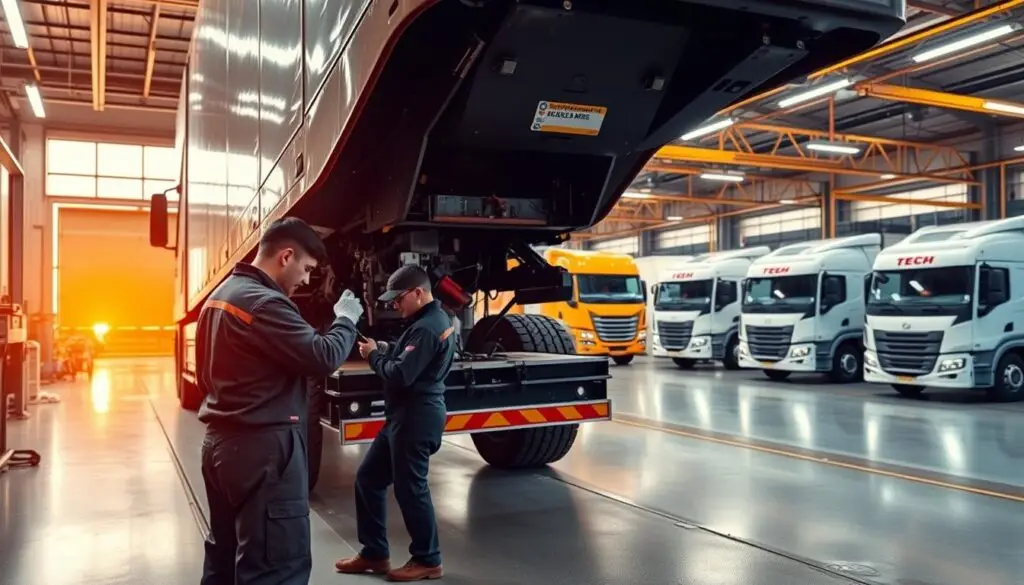
Fleet managers face a critical choice when building their fleet maintenance staffing strategy. The decision between using external service providers or developing internal maintenance teams affects every aspect of operations. This choice influences budget allocation, vehicle availability, and long-term fleet performance.
Understanding the differences between mobile vs in-house mechanics requires examining multiple factors. Each staffing approach delivers distinct advantages depending on your operational requirements. The right solution varies based on fleet size, service complexity, and strategic objectives.
This comprehensive analysis examines both models from financial, operational, and strategic perspectives. Fleet managers will discover how each approach functions in real-world conditions. The comparison provides data-driven insights to help you choose the optimal maintenance strategy for your specific circumstances rather than relying on outdated industry assumptions.
Last Updated: November 2025
Key Takeaways
- Strategic Impact: The choice between external and in-house maintenance teams represents one of the most significant operational decisions affecting fleet performance and costs.
- Model Alignment: Each staffing model delivers unique advantages that align differently with fleet size, service complexity, and budget constraints.
- Total Cost Analysis: Understanding the complete cost structure beyond hourly rates is essential for accurate comparison between both approaches.
- Uptime Considerations: Vehicle availability and service response capabilities vary substantially between different maintenance staffing models.
- Strategic Planning: Long-term goals should drive your staffing decision rather than short-term cost considerations alone.
Understanding Your Fleet Maintenance Staffing Options
The landscape of fleet maintenance staffing has transformed dramatically over the past decade. Fleet managers now navigate a complex decision-making environment where traditional approaches no longer deliver optimal results. Understanding the available mechanic staffing models requires examining how maintenance delivery has evolved and what factors drive successful implementation.

The Evolution of Fleet Maintenance Models
Fleet maintenance historically followed a simple formula: hire one technician for every set number of vehicles. This outdated approach ignored critical variables like vehicle diversity, utilization patterns, and maintenance complexity. Many organizations found themselves chronically understaffed during peak seasons or inefficiently overstaffed during slow periods.
Modern fleet management introduced Asset Equivalent Units (AEUs), which assign specific labor values to each vehicle class based on actual maintenance requirements. This data-driven method accounts for the reality that a heavy-duty excavator demands far more maintenance hours than a light pickup truck. According to Bureau of Labor Statistics fleet management data, AEU-based planning proves significantly more reliable than traditional asset-to-tech ratios.
The emergence of mobile diesel mechanic services created viable alternatives to traditional shop-based operations. Technological advances, improved service networks, and changing economic realities enabled on-site maintenance delivery at competitive costs.
Key Factors Influencing Staffing Decisions
Successful fleet maintenance strategy depends on analyzing multiple interconnected variables. Fleet managers must evaluate their specific operational context rather than applying universal formulas. The following factors fundamentally shape staffing decisions:
| Critical Factor | Impact on Staffing | Primary Consideration |
|---|---|---|
| Fleet Size and Composition | Determines baseline staffing needs and specialization requirements | Vehicle diversity and complexity levels |
| Budget Availability | Constrains staffing model options and service levels | Total cost of ownership vs. operational flexibility |
| Operational Tempo | Influences scheduling demands and emergency response needs | Utilization patterns and seasonal fluctuations |
| Geographic Distribution | Affects service delivery logistics and response times | Multi-location coordination and travel requirements |
These factors interact in complex ways. A geographically dispersed fleet may benefit more from mobile services, while high-volume operations with concentrated assets might justify in-house facilities. No single approach works for every organization, making careful analysis essential for optimal staffing decisions.
Mobile Diesel Mechanic Services Explained
Fleet operators today have access to fully-equipped mobile diesel mechanics who deliver professional repair services directly at the vehicle’s location. This service delivery model eliminates the traditional need to transport disabled equipment to fixed repair shops. Understanding how these services operate helps businesses determine whether this approach aligns with their fleet maintenance requirements.
On-Site Service Delivery Model
The on-site diesel repair model brings the workshop directly to your vehicles rather than requiring costly towing or extended downtime. Mobile diesel mechanic services operate from specialized trucks equipped with diagnostic computers, air compressors, generators, and comprehensive tool inventories.
These mobile units arrive at your job site, depot, or roadside location ready to perform immediate assessments and repairs. The technician conducts diagnostics on location and completes serviceable repairs without moving the vehicle. This approach significantly reduces the logistical complications associated with traditional shop-based maintenance.

Service Capabilities and Limitations
Mobile diesel mechanics excel at preventive maintenance tasks, fluid services, brake repairs, electrical diagnostics, and component replacements that don’t require heavy equipment. The mobile mechanic benefits become apparent when addressing roadside breakdowns or performing scheduled maintenance at operational sites.
However, certain repairs exceed mobile service capabilities. Major engine overhauls, transmission rebuilds, frame straightening, and tasks requiring vehicle lifts cannot typically be performed on-site. Understanding these boundaries helps set realistic expectations for what mobile services can accomplish.
| Mobile Service Capabilities | Typical Limitations | Recommended Solution |
|---|---|---|
| Oil changes and fluid services | Complete engine rebuilds | Mobile for routine, shop for major work |
| Brake system repairs | Transmission overhauls | Mobile diagnostics, shop for rebuild |
| Electrical diagnostics | Frame and structural repairs | Shop-based heavy equipment required |
| Component replacements | Tasks requiring vehicle lifts | Facility with proper lifting capacity |
Service Agreements and Coverage
A mobile diesel mechanic typically offers flexible contracting arrangements tailored to different operational needs. Pay-per-service models work well for smaller fleets with occasional maintenance requirements. These agreements charge for labor hours and parts without ongoing commitments.
Larger operations often benefit from monthly retainer agreements that guarantee priority response times and predetermined service levels. These contracts may include scheduled preventive maintenance visits, emergency breakdown coverage, and multi-location service territories. Coverage options extend to after-hours emergency response, specialized services for particular equipment types, and dedicated technician assignments for consistent service quality.
In-House Diesel Mechanic Teams Explained
Establishing shop-based maintenance operations provides fleet managers with direct control over service quality and scheduling priorities. An in-house mechanic team delivers dedicated attention exclusively to your organization’s vehicles. This model requires significant commitment to staffing, infrastructure, and ongoing operational expenses.
The investment extends far beyond simply hiring technicians. You must create a complete maintenance ecosystem that supports daily operations and long-term fleet reliability.
Traditional Shop-Based Operations
In-house facilities give you complete autonomy over maintenance decisions and timing. Your technicians work solely on your equipment, eliminating external scheduling conflicts.
This dedicated approach allows you to prioritize critical vehicles during peak seasons. You can also customize maintenance protocols to match your specific operational requirements. Quality standards remain consistent because the same team handles all repairs and preventive services.
Shop-based operations build institutional knowledge about your fleet. Technicians become familiar with individual vehicle histories and recurring issues.
Team Structure and Staffing Requirements
Building an effective in-house mechanic team requires careful attention to skill diversity and hierarchy. Most successful operations include multiple experience levels:
- Master technicians handle complex diagnostics, engine overhauls, and transmission repairs
- Journey-level technicians perform routine maintenance, brake work, and standard repairs
- Apprentice or entry-level technicians assist senior staff while developing their skills
- Shop foreman or maintenance supervisor coordinates workflow and manages quality control
Fleet technician hiring decisions depend heavily on your fleet size. Small operations with 10-20 vehicles might function with a single qualified technician. Larger fleets with 100+ vehicles typically require specialized teams across different vehicle types.
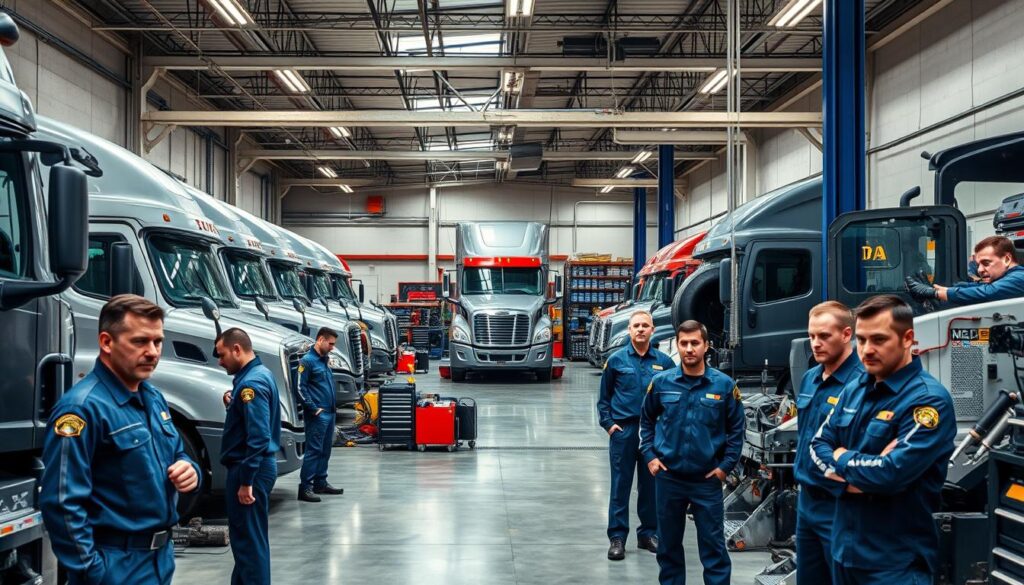
A critical benchmark often overlooked: each full-time technician delivers approximately 1,400 to 1,600 billable hours annually. This accounts for the 2,080 total work hours minus holidays, paid time off, training sessions, and indirect activities like shop cleanup and administrative meetings. This productivity metric proves essential for right-sizing your team.
Facility and Infrastructure Needs
In-house shop costs encompass substantial upfront and ongoing investments. Your facility must provide adequate space and systems to support comprehensive maintenance operations:
- Service bays with vehicle lifts or inspection pits for heavy equipment access
- Parts storage systems with inventory management software
- Specialized diagnostic equipment and manufacturer-specific tools
- Air compressor systems and pneumatic tool infrastructure
- Waste oil, coolant, and fluid disposal systems meeting EPA environmental regulations
- Office space for administrative functions and record keeping
- Safety equipment and compliance with OSHA workplace standards
Beyond physical infrastructure, you need ongoing subscriptions for diagnostic software and technical information databases. Training programs keep technicians current with evolving diesel technology. These recurring expenses add considerably to total operational costs but remain essential for maintaining service quality and efficiency.
Comprehensive Cost Analysis and Budget Considerations
Every fleet manager faces the critical challenge of balancing maintenance quality with budget constraints. The financial decision between mobile diesel mechanics and in-house teams requires examining multiple cost layers that extend far beyond simple hourly comparisons. Understanding these expense categories helps you build an accurate fleet maintenance budget that aligns with your operational needs.
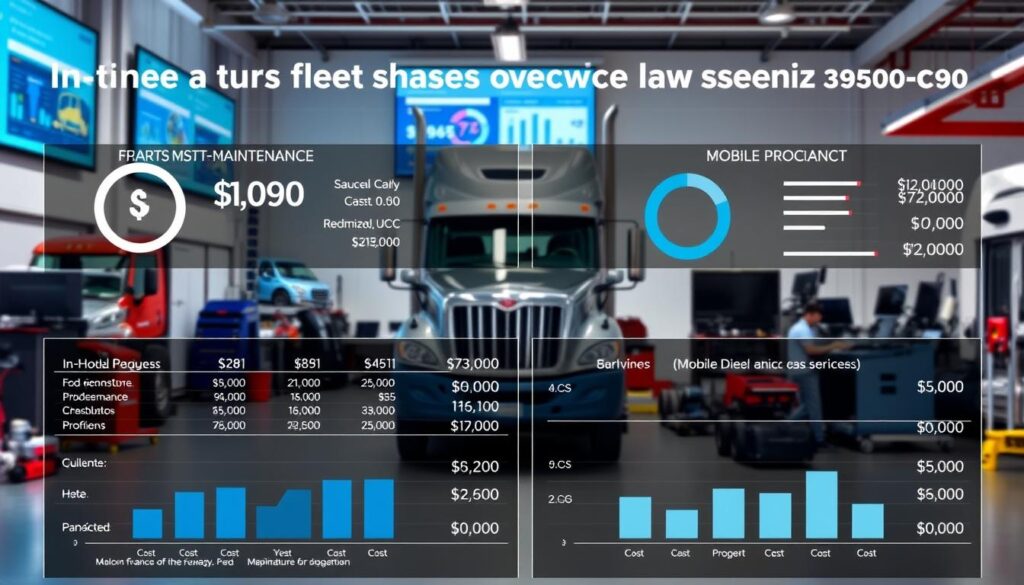
Mobile Diesel Mechanic Pricing Structure
Mobile mechanic services typically follow three distinct pricing approaches, each offering different advantages for fleet operations. The model you select significantly impacts your annual maintenance expenditures and budget predictability.
Per-Service and Hourly Rates
Per-service pricing provides fixed costs for specific maintenance tasks like oil changes, brake inspections, or filter replacements. This approach delivers excellent budget predictability for routine maintenance. Hourly mechanic labor rates for mobile diesel mechanic services generally range from $85 to $150 per hour depending on your geographic location and service urgency.
Emergency after-hours service commands premium rates, often 1.5 to 2 times standard pricing. Scheduled preventive maintenance typically receives the most competitive hourly rates. According to the Bureau of Labor Statistics, the median annual salary for automotive service technicians was $49,670 in May 2024, which translates to $23.88 per hour in base compensation.
Contract and Retainer Options
Contract arrangements offer the greatest cost stability for fleet maintenance budgets. Monthly retainer agreements provide predetermined service levels with priority response guarantees. These contracts typically include discounted rates compared to on-demand service calls and eliminate invoice surprises.
Most mobile diesel mechanic providers structure retainers based on fleet size and anticipated service frequency. This model works exceptionally well for medium-sized fleets requiring consistent maintenance attention without full-time staff investment.
In-House Team Total Cost of Ownership
Building an internal diesel mechanic services team involves substantially more financial commitment than base salary figures suggest. The true total cost of ownership includes multiple expense categories that many fleet managers initially underestimate.
Salaries, Benefits, and Payroll Taxes
Base technician salaries represent only the starting point for in-house staffing costs. Competitive compensation packages must account for local market conditions and technician experience levels. Benefits packages typically add 30-40% to base compensation, including health insurance, retirement contributions, and paid time off.
Payroll taxes further increase labor costs through FICA contributions, federal and state unemployment insurance, and workers’ compensation premiums. These mandatory expenses can add another 10-15% beyond gross wages, bringing total labor costs significantly higher than advertised mechanic labor rates.
Facility Overhead and Equipment Investment
In-house operations demand substantial infrastructure investment that mobile mechanic cost structures eliminate. Facility expenses include rent or mortgage payments, utilities, property insurance, and ongoing maintenance. A properly equipped diesel service bay requires $50,000 to $150,000 in initial equipment investment for lifts, diagnostic tools, and specialty equipment.
The hidden costs of facility maintenance, equipment calibration, and tool replacement can consume 15-20% of your annual maintenance budget if not carefully managed.
Equipment depreciation and replacement cycles create ongoing capital requirements. Diagnostic technology advances rapidly, requiring periodic upgrades to service modern diesel engines effectively.
Training and Certification Expenses
Maintaining technician competency requires continuous investment in education and certification. ASE certifications, manufacturer-specific training programs, and safety compliance courses generate recurring expenses. Annual training budgets of $2,000 to $5,000 per technician ensure your team maintains current knowledge of evolving diesel technology.
Break-Even Analysis by Fleet Size
The financial tipping point between mobile and in-house diesel mechanic services varies based on fleet composition and maintenance intensity. Simple vehicle counts provide incomplete analysis without considering asset complexity.
| Fleet Size Category | Typical Break-Even Point | Cost-Effective Model | Key Considerations |
|---|---|---|---|
| Small Fleets (1-15 vehicles) | Rarely cost-effective | Mobile services | Lower volume cannot justify fixed overhead costs |
| Medium Fleets (16-30 vehicles) | Depends on asset type | Hybrid or mobile | Asset complexity determines maintenance labor hours |
| Large Fleets (31-50 vehicles) | Often favorable | In-house primary | Economies of scale begin offsetting fixed costs |
| Enterprise Fleets (50+ vehicles) | Strongly favorable | In-house with mobile support | Volume justifies specialized facilities and staff |
The Asset Equivalent Units concept provides more accurate break-even calculations than simple vehicle counts. Five heavy-duty construction vehicles require substantially more maintenance labor than twenty light-duty pickup trucks. This methodology weighs each asset by its maintenance intensity, creating realistic workload projections for your fleet maintenance budget planning.
Flexibility, Scalability, and Operational Efficiency
Operational efficiency in fleet maintenance depends heavily on how well your staffing model handles demand fluctuations and geographic challenges. The capacity to adjust resources, respond to changing workloads, and maintain consistent service across locations determines long-term maintenance success. Both mobile and in-house approaches offer distinct advantages in flexibility and scalability that align with different operational requirements.
Scheduling and Availability Comparison
Mobile diesel mechanic services deliver exceptional scheduling flexibility for fleet maintenance efficiency. Fleet managers can request service precisely when needed without maintaining continuous staffing during slower periods. This approach provides access to extended hours, including evenings and weekends, without incurring overtime costs for permanent employees.
However, availability depends on service provider capacity and may face limitations during peak demand periods. In-house teams provide guaranteed availability and immediate response since technicians remain on-site throughout business hours. The trade-off involves continuous staffing costs regardless of actual workload variations.
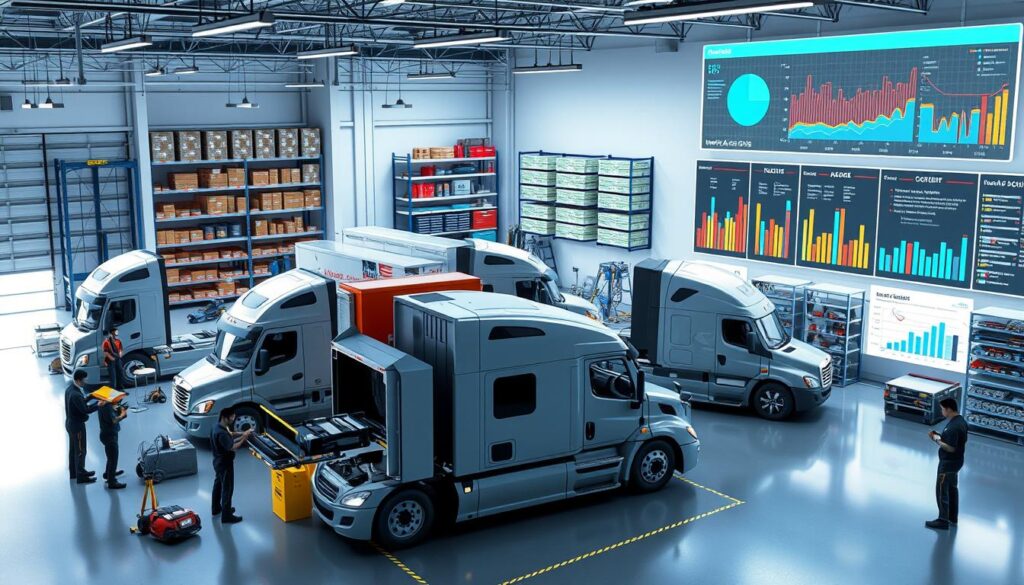
Scaling Up and Down with Demand
Scalability represents a significant differentiator between staffing models. Mobile services scale effortlessly with fleet growth or contraction without hiring, training, or termination costs. You simply adjust service agreements to match current fleet size and maintenance requirements.
In-house operations require lengthy hiring processes and substantial onboarding investment to expand capacity. Reducing team size during downturns presents additional challenges including severance costs and potential loss of experienced personnel. This inflexibility can significantly impact technician productivity metrics and overall cost management.
Geographic Coverage and Multi-Location Support
Geographic coverage strongly favors mobile services for multi-location fleets. Providers typically service wide territories without requiring facility investment at each location. This eliminates the capital expenditure and ongoing operational costs associated with maintaining multiple shop facilities.
In-house operations face significant challenges supporting geographically dispersed assets. Each location requires dedicated staff, equipment, and infrastructure, multiplying fixed costs substantially. Preventive maintenance scheduling becomes more complex when coordinating across multiple facilities with varying capacity levels.
Handling Workload Fluctuations
Workload management separates adaptable operations from those struggling with fixed capacity constraints. Seasonal variations, unexpected surge periods, and specialized repair needs particularly challenge in-house operations. Mobile services provide valuable surge capacity without permanent staffing increases during these demanding periods.
Fleet managers can increase technician productivity for in-house teams through several proven methods. Preloading parts in each bay before work starts eliminates waiting time. Adding tablets or terminals at every workstation reduces administrative walking time and improves data accuracy.
Streamlining inventory with point-of-use storage and tracking minimizes parts retrieval delays. Tracking indirect labor—including cleaning, parts runs, and administrative tasks—identifies hidden time losses that reduce billable hours. Well-trained technicians demonstrate faster work completion, greater accuracy, and fewer costly errors.
Training investment on fleet management information systems, diagnostic tools, and optimized workflows can produce double-digit efficiency gains over time. This systematic approach to preventive maintenance scheduling and resource allocation maximizes the return on in-house staffing investments.
Stay Ahead of Industry Trends
Get expert insights, equipment reviews, and operational strategies delivered weekly.
Equipment, Tools, and Technology Capabilities
Equipment capabilities and technological infrastructure create fundamental differences between mobile and in-house diesel repair services. The tools and systems available to your mechanics directly influence repair quality, diagnostic accuracy, and how quickly vehicles return to revenue-generating service. Understanding these operational distinctions helps fleet managers align their maintenance approach with actual service delivery capabilities.
Portable Service Tools and Mobile Equipment
Mobile diesel mechanics arrive with fully-equipped service vehicles designed for versatility. These trucks carry comprehensive tool sets covering common repairs, portable diagnostic scanners with OEM software subscriptions, and compact air compressors with onboard power generation. The investment in mobile equipment rests with the service provider, eliminating capital expenditure for fleet operators.
Mobile providers maintain strategic parts inventory for frequent failure points and bring specialized equipment like portable welders or hydraulic tools. However, they lack access to heavy machinery including multi-ton lifts, engine hoists, transmission jacks, and frame straightening equipment available in fixed facilities.
Fixed Shop Infrastructure and Specialized Machinery
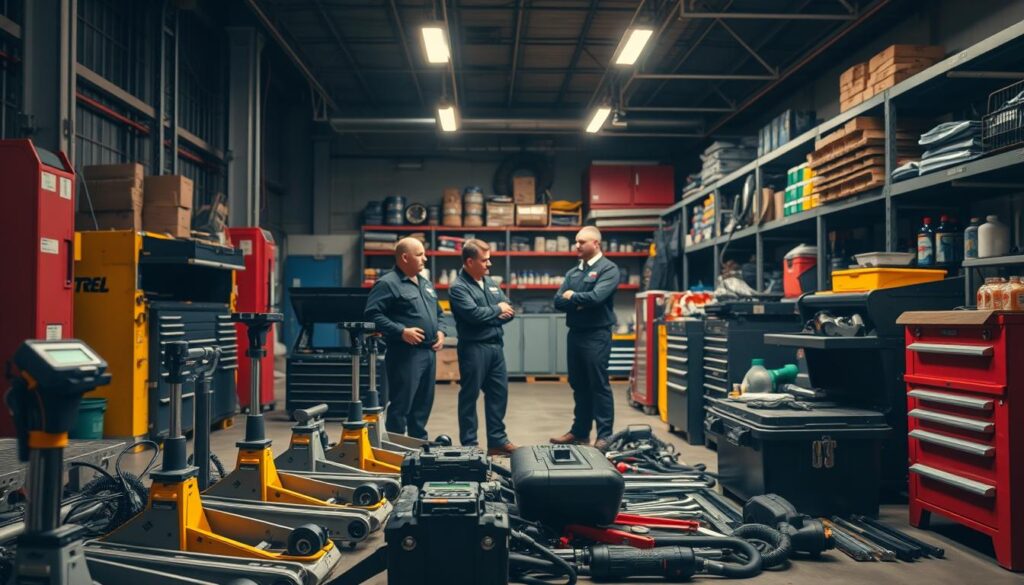
In-house operations provide comprehensive repair capabilities through permanent infrastructure. Dedicated facilities feature multiple vehicle bays with heavy-duty lifts or pits, overhead crane systems for engine removal, and climate-controlled work environments that improve technician productivity year-round.
The fixed shop advantage includes specialized equipment justified by repetitive use across your fleet. This encompasses alignment machines, brake lathes, parts washing stations, fluid exchange systems, and welding fabrication equipment that mobile providers cannot practically transport.
Diagnostic Systems and Maintenance Software
Modern diesel vehicles require sophisticated diagnostic technology regardless of staffing model. Both approaches need current scan tools, proprietary OEM software, and technical information systems to accurately diagnose electronic control systems.
Fleet Maintenance Management Software has transformed how we optimize technician assignments and justify staffing investments to leadership with concrete performance data.
Fleet Maintenance Management Software delivers critical capabilities for data-driven decisions. The system tracks actual labor hours per asset, classifies vehicles using AEU methodology, and flags workflow inefficiencies. This technology identifies opportunities to reassign technicians, supports staffing requests with performance metrics, and becomes particularly valuable for optimizing in-house operations.
When bay space limits throughput, managers can implement second shifts to share facilities, establish temporary outdoor bays for specific repairs, or redesign workflows to reduce time per job. These fleet maintenance strategy adjustments often emerge from FMMS analysis rather than intuition.
Parts Procurement and Inventory Management
Parts availability creates another operational distinction between models. In-house shops maintain extensive inventories that minimize downtime but require capital investment, warehouse space, and inventory management systems. This approach works well for standardized fleets with predictable parts consumption.
Mobile services carry limited inventory supplemented by established parts procurement networks. While this approach may introduce modest delays for specialized components, it eliminates inventory carrying costs entirely. Fleet service contracts typically specify parts sourcing responsibilities and associated timelines to set clear expectations.
Expertise, Certifications, and Specialized Skills
Skilled technicians separate exceptional fleet maintenance operations from mediocre ones across both mobile and in-house models. The expertise level of your maintenance team directly impacts repair quality, efficiency, and long-term fleet reliability. Understanding how diesel technician qualifications differ between mechanic staffing models helps you make informed decisions about building or outsourcing your maintenance capabilities.
Field-Proven Mobile Technician Credentials
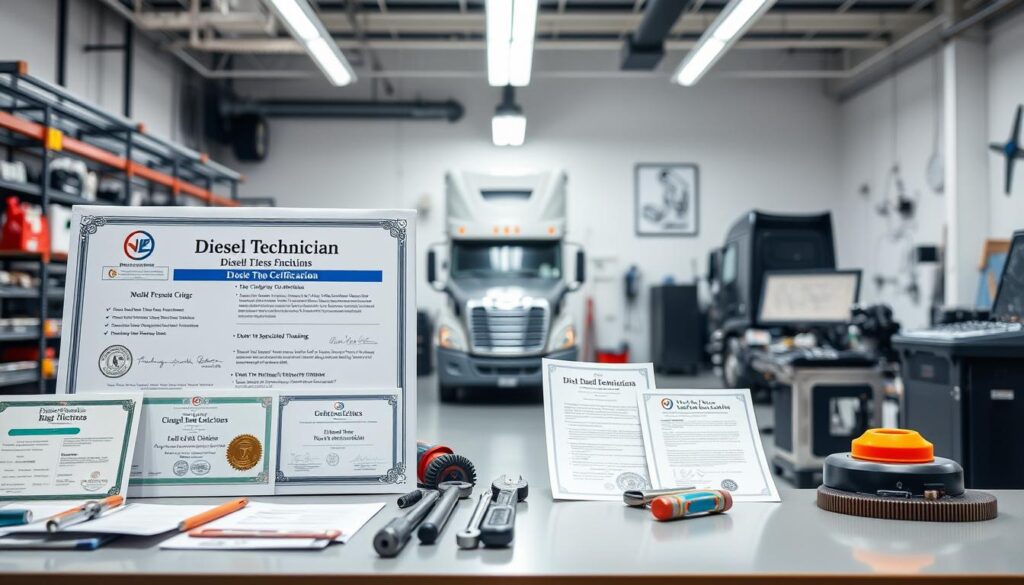
Mobile diesel mechanics typically bring extensive field experience across diverse vehicle types and operating conditions. These professionals must hold relevant ASE certifications in diesel engine repair, electrical systems, and hydraulics. Most reputable mobile service providers require manufacturer-specific training certifications for major truck brands.
The mobile environment demands exceptional problem-solving abilities since technicians work without immediate access to shop resources or colleague consultation. They must diagnose complex issues using portable diagnostic equipment in challenging field conditions. However, fleet managers face limited control over individual technician qualifications when using mobile services, and skill levels may vary across different service calls.
Structured Internal Development Opportunities
In-house operations provide direct control over expertise development through customized training pathways. Organizations can send technicians to manufacturer schools, create mentorship programs pairing experienced mechanics with apprentices, and build institutional knowledge about fleet-specific challenges. This approach addresses fleet technician hiring as a long-term investment rather than a transactional service purchase.
Well-trained techs are faster, more accurate, and less likely to make costly errors, with training on fleet management systems leading to double-digit efficiency gains.
Compensation structures significantly influence expertise development. Flat-rate pay highly motivates experienced, efficient employees and simplifies income estimation, but challenges entry-level technicians still building speed and skills. Hourly pay offers consistency and supports methodical, quality-focused approaches without penalizing thorough diagnostic work.
Progressive shops combine hourly base pay with performance incentives, balancing financial stability with productivity motivation. This hybrid approach facilitates mentoring activities and encourages knowledge transfer between senior and junior team members.
| Qualification Factor | Mobile Services | In-House Teams |
|---|---|---|
| Certification Control | Provider-managed standards | Direct oversight and requirements |
| Training Customization | Broad manufacturer coverage | Fleet-specific specialization |
| Experience Development | Diverse vehicle exposure | Deep platform expertise |
| Knowledge Retention | Service provider holds knowledge | Institutional memory building |
Manufacturer Technical Knowledge Access
Access to manufacturer-specific expertise increasingly matters as vehicles incorporate complex electronics, emissions systems, and proprietary technologies. Mobile services maintain broad manufacturer coverage through diverse technician specialization and established OEM relationships. They invest substantially in ongoing certification programs recognizing that technician quality directly impacts customer retention.
In-house operations develop deep expertise in specific vehicle platforms comprising their fleet but may struggle with unusual or newly acquired vehicle types. The mechanic staffing models you choose should align with your fleet composition—homogeneous fleets benefit from specialized in-house knowledge, while mixed fleets may require the broader expertise mobile services provide.
Response Time, Downtime, and Fleet Availability
The speed at which your maintenance team responds to breakdowns directly impacts your bottom line. Every hour a vehicle sits idle translates to lost revenue, missed deliveries, and potentially damaged customer relationships. Understanding how different staffing models handle emergencies and scheduled maintenance determines which approach keeps your fleet running most efficiently.
Both mobile and in-house operations offer distinct advantages for on-site diesel repair and emergency response. The right choice depends on where your vehicles typically break down and how quickly you need them back in service.
Emergency Repair Response Capabilities
A mobile diesel mechanic service excels at reaching disabled vehicles quickly without towing requirements. These technicians are already mobile and can respond to roadside breakdowns in real-time. Premium service agreements often guarantee response within 2-4 hours, though actual arrival times depend on technician proximity and current workload.
Response speed becomes critical during peak operational periods. However, availability may decline during high-demand seasons or in remote locations where fewer service providers operate.
In-house teams provide immediate response for vehicles at your facility but require towing services for field breakdowns. The key advantage is guaranteed availability without dependence on external scheduling. Your mechanics are always on-site during business hours, eliminating wait times for service providers.
Preventive Maintenance Scheduling Efficiency
Mobile diesel mechanic services offer flexible scheduling that occurs at your location during off-hours. Vehicles remain at operational sites rather than being repositioned to maintenance facilities. This approach works particularly well for geographically dispersed fleets where bringing vehicles to a central shop creates logistical challenges.
In-house operations require vehicles to come to your facility, which provides greater scheduling control and predictability. You can coordinate multiple services simultaneously and adjust schedules based on operational demands. The tradeoff is the time and cost associated with vehicle repositioning.
Minimizing Vehicle Downtime and Lost Revenue
Fleet downtime reduction strategies differ significantly between models. Mobile services minimize downtime when repairs can be completed on-site without specialized shop equipment. They eliminate towing time and enable preventive maintenance without vehicle repositioning.
In-house operations reduce downtime through comprehensive parts inventory that enables immediate repairs. Multiple service bays allow parallel servicing of several vehicles simultaneously. Your team’s institutional knowledge of fleet-specific issues accelerates diagnosis and repair completion.
The most effective approach for fleet downtime reduction depends on your operational patterns. Consider where breakdowns typically occur, what types of repairs are most common, and whether your vehicles operate from centralized locations or across wide geographic areas.
| Response Factor | Mobile Services | In-House Teams | Critical Advantage |
|---|---|---|---|
| Emergency Response Time | 2-4 hours typical for roadside breakdowns | Immediate at facility; requires towing for field | Mobile wins for remote locations |
| Preventive Maintenance Flexibility | Performed at customer location, off-hours available | Requires vehicle transport to shop | Mobile eliminates repositioning time |
| Downtime Duration | Lower for simple on-site repairs | Lower for complex repairs needing shop equipment | Depends on repair complexity |
| Parts Availability Impact | Limited mobile inventory may cause delays | Comprehensive stock enables immediate repairs | In-house reduces parts-related delays |
Industry-Specific Applications and Best Fit Scenarios
Understanding which fleet maintenance staffing model fits your industry can transform maintenance operations from cost center to competitive advantage. Each sector faces unique operational challenges that influence whether mobile diesel mechanic services or in-house teams deliver better results.
Asset Equivalent Units (AEUs) help managers forecast staffing needs accurately across diverse vehicle types. This measurement system assigns values based on annual maintenance hours required:
- Sedan = 1 AEU (approximately 8 hours annually)
- Pickup Truck = 1.3 AEUs
- Fire Apparatus = 5–8 AEUs
This standardized approach enables precise resource planning regardless of fleet composition.
Heavy Construction Equipment and Job Site Operations
Construction operations benefit significantly from mobile diesel mechanic services due to equipment dispersion across multiple sites. Transporting bulldozers, excavators, and cranes to central shops proves impractical and costly.
On-site repairs minimize productivity losses and address breakdowns where they occur. Mobile mechanics respond directly to job sites, keeping project schedules on track.
However, major overhauls still require shop facilities. Hybrid approaches often deliver optimal results for construction fleets, combining mobile response with shop-based rebuilds.
Transportation and Logistics Carriers
Large carriers with terminal facilities typically justify in-house operations. Concentrated fleets returning to fixed locations enable comprehensive preventive maintenance programs and 24/7 coverage.
Smaller carriers without dedicated terminals find mobile mechanic benefits more compelling. They access professional maintenance without facility investment, reducing overhead while maintaining service quality.
Regional haulers often blend both approaches based on geographic distribution and fleet size.
Agricultural Equipment and Seasonal Operations
Farming operations face intense seasonal demands during planting and harvest periods. Equipment breakdowns during critical windows threaten crop timing and profitability.
Mobile diesel mechanic services provide perfect scalability for agricultural fleets. Surge capacity appears exactly when needed without year-round staffing costs.
Extended off-seasons reduce maintenance requirements, making mobile services economically superior to maintaining full-time staff.
Government and Emergency Service Fleets
Municipal operations typically favor in-house teams due to budget predictability requirements and public accountability standards. Diverse vehicle types—from sedans to fire apparatus requiring 5-8 times more maintenance labor—demand comprehensive expertise.
Specialized equipment knowledge and direct employee oversight strengthen this preference. However, municipalities increasingly use mobile services for overflow capacity and specialized repairs beyond in-house capabilities.
Small Business and Growing Operations
Startup fleets almost universally benefit from outsourced maintenance. Minimal vehicle counts cannot justify substantial fixed costs of facilities, equipment, and full-time technician employment.
Mobile services deliver professional maintenance with predictable costs and scalable capacity. This approach defers major infrastructure investment until fleet size genuinely justifies it, preserving capital for core business growth.
Hybrid Staffing Models and Strategic Approaches
The debate between mobile and in-house mechanics often misses a crucial third option—combining both approaches strategically. Most fleet operations achieve better results by blending mechanic staffing models rather than committing exclusively to one approach. This hybrid strategy capitalizes on the strengths of each model while minimizing their respective limitations.
Blending Mobile and In-House Capabilities
A balanced fleet maintenance strategy employs in-house technicians for routine tasks while leveraging mobile services for specialized needs. Your internal team handles preventive maintenance, oil changes, and common repairs that occur frequently. Mobile mechanics step in for manufacturer-specific diagnostics, transmission rebuilds, or body work requiring specialized equipment.
This combination optimizes labor costs through right-typing—matching technician skill levels to task complexity. You don’t need ASE-certified master mechanics performing routine oil changes when entry-level PM technicians can handle these tasks efficiently.
Making Smart Outsourcing Decisions
Certain repairs belong in-house while others should be outsourced to mobile providers. Keep frequent tasks requiring common tools and established institutional knowledge within your shop. These are the bread-and-butter repairs your team knows inside and out.
Outsource specialized repairs, infrequent tasks needing expensive equipment, warranty work, and service calls for geographically isolated vehicles. Mobile services excel when you need expertise or equipment that doesn’t justify permanent investment. This decision framework prevents costly mistakes in resource allocation.
Implementing Transition Plans Effectively
Moving between mechanic staffing models requires careful phasing. Start with one technician and basic equipment while maintaining mobile service relationships for coverage gaps. Gradually expand your in-house capabilities as fleet growth justifies additional investment.
Organizations downsizing in-house operations should identify core capabilities worth retaining before releasing staff. Establish reliable mobile service relationships before cutting internal resources, not after. Document fleet-specific issues to ensure knowledge transfers smoothly to your service providers.
Developing Strategic Service Partnerships
Transform mobile providers from transactional vendors into strategic partners. Negotiate comprehensive fleet service contracts that establish clear performance expectations and service level agreements. Share information about your fleet’s unique challenges and maintenance history.
The most successful operations treat mobile providers as extensions of their maintenance team. Regular communication, performance feedback, and collaborative problem-solving create relationships that deliver superior results. These partnerships provide flexibility that rigid fleet service contracts cannot match.
Right-sizing focuses on fleet count, while right-typing ensures you’re using the right assets for the job and the right people for the work.
Sophisticated fleet managers recognize that optimal maintenance doesn’t come from choosing between mobile and in-house options. It comes from strategically combining both approaches to match your specific operational requirements and financial constraints.
Share Your Expertise
Join Heavy Duty Journal as a guest author and reach thousands of industry decision-makers.
Decision Framework for Choosing Your Staffing Model
Smart fleet managers use a methodical evaluation process to determine which maintenance staffing model best serves their organization. The right fleet maintenance staffing decision emerges from systematically assessing four critical dimensions. Each factor builds upon comprehensive data analysis rather than assumptions or industry generalizations.
This framework transforms the mobile vs in-house mechanics question from a subjective preference into an objective business decision. Apply these evaluation criteria to your specific situation for clarity.
Fleet Size and Composition Assessment
Begin your analysis by calculating Asset Equivalent Units (AEUs) for your entire fleet. This methodology assigns a labor value to each vehicle class based on actual maintenance requirements.
A fire truck demands 5-8 times more maintenance than a standard sedan. AEUs capture this reality while simplistic vehicle counts do not.
Multiply your AEUs by the number of assets in each class to determine total labor demand. Compare this figure against available work hours from technicians after factoring in PTO, training, and indirect labor. This calculation reveals whether your fleet maintenance staffing needs align with mobile service capacity or require dedicated in-house resources.
Budget Constraints and Financial Planning
Calculate the complete total cost of ownership for in-house operations before making comparisons. Include salaries, benefits, facility costs, equipment, parts inventory, and all indirect expenses.
The biggest mistake in fleet maintenance budget planning is failing to track indirect labor. Administrative tasks, training, meetings, and downtime consume 20-30% of technician hours.
Obtain detailed pricing from mobile service providers including contract terms and service level guarantees. Project both options across multiple years accounting for inflation and fleet changes. Identify the break-even point where economics favor one model over another based on your fleet maintenance budget constraints.
Operational Requirements and Service Level Expectations
Define your functional needs with precision. What response times do emergency breakdowns require? Which preventive maintenance intervals must you maintain?
Geographic service areas significantly impact the mobile vs in-house mechanics decision. Multi-location operations may benefit from mobile services while concentrated fleets favor in-house shops.
Determine acceptable downtime tolerances and catalog specialized repair capabilities your fleet requires. These operational parameters eliminate unsuitable options quickly.
Long-Term Growth and Strategic Goals
Project fleet size changes over the next 3-5 years to ensure your fleet maintenance staffing model scales appropriately. A rapidly growing fleet may justify in-house investment while static or declining fleets favor flexible mobile arrangements.
Consider facility expansion plans, workforce development objectives, and organizational risk tolerance. Align your maintenance strategy with broader business goals regarding outsourcing versus internal capability development.
The most successful fleet operations integrate staffing decisions with strategic planning rather than treating them as isolated tactical choices.
Making the Right Choice for Your Fleet
Choosing between a mobile diesel mechanic and in-house staffing isn’t about finding the perfect answer. It’s about identifying the right fit for your specific operational needs and financial situation.
Your fleet maintenance strategy should reflect your actual circumstances, not industry assumptions. The decision requires honest assessment of your fleet size, budget constraints, geographic spread, and service requirements. Small fleets often benefit from mobile diesel mechanic services that eliminate fixed overhead costs. Larger operations might justify in-house teams with dedicated facilities.
Hybrid approaches frequently deliver the best results. Combining internal capabilities for routine maintenance with external diesel mechanic services for specialized repairs provides flexibility without excessive costs. This balanced model adapts as your fleet grows and operational demands shift.
Start with systematic evaluation of your current situation. Calculate total ownership costs accurately. Assess workload patterns realistically. Consider your growth trajectory carefully. The staffing model that works today might need adjustment next year.
Your fleet maintenance strategy shouldn’t be static. Regular performance reviews against operational and financial benchmarks ensure your chosen approach continues delivering value. Make decisions based on data, remain flexible in implementation, and adjust as circumstances evolve.
Frequently Asked Questions
What is the main difference between mobile diesel mechanics and in-house technicians?
Mobile mechanics bring services to your vehicle location using equipped trucks, while in-house teams work from fixed facilities. Mobile excels at preventive maintenance and field repairs; in-house handles major overhauls and complex work requiring lifts and specialized equipment. The choice balances flexibility and lower fixed costs versus complete control and dedicated capacity.
At what fleet size does an in-house mechanic become more cost-effective than mobile services?
Break-even typically occurs around 25-30 vehicles, but vehicle complexity matters more than count. Use Asset Equivalent Units—fire trucks need 5-8 times more maintenance than sedans. When total AEUs justify 1,400-1,600 annual billable hours (one technician’s capacity), in-house becomes viable if you have or can justify facility infrastructure.
What are the total costs of employing an in-house diesel mechanic beyond salary?
Beyond the $49,670 median salary, add benefits (30-40%), payroll taxes (10-15%), facility costs, equipment investment ($50,000-150,000 initial), and training ($2,000-5,000 annually). A $50,000 salary technician typically costs $70,000-85,000 total before facility and equipment expenses. Many managers underestimate by focusing only on wages.
Can mobile diesel mechanics handle emergency breakdowns and provide rapid response?
Yes, mobile mechanics often respond faster to roadside breakdowns since they’re already mobile—no towing required. Premium contracts typically guarantee 2-4 hour emergency response. However, availability depends on technician proximity and workload. Response may extend during peak periods or in remote locations. On-site repairs work best; complex jobs still need shop facilities.
What maintenance tasks can mobile mechanics NOT perform that require a shop?
Mobile services cannot handle major engine overhauls, transmission rebuilds, frame repairs, extended undercarriage work, wheel alignment, or tasks requiring vehicle lifts, overhead cranes, or climate-controlled environments. They also struggle with repairs needing extensive parts inventory. Understanding these limits prevents unrealistic expectations—frequent heavy repairs require shop access.
How do I calculate how many in-house technicians my fleet actually needs?
Use Asset Equivalent Units, not vehicle counts. Assign AEU values by complexity (sedans=1.0, heavy trucks=2.5-3.5, fire apparatus=5.0-8.0), multiply by vehicle counts for total demand, then divide by 1,400-1,600 productive hours per technician annually. Adjust for tempo, vehicle age, and whether you’ll outsource specialized work. Fleet software validates calculations with actual data.
What are the advantages of mobile diesel mechanics for multi-location fleets?
Mobile services eliminate facility investment at each location while providing wide territory coverage. Mechanics travel to wherever vehicles operate, minimizing downtime from vehicle transport and reducing coordination complexity. However, confirm provider coverage area and response times for your specific locations—quality varies between urban centers and remote areas.
Should construction companies use mobile mechanics or in-house technicians?
Construction operations typically benefit from mobile services due to equipment dispersion across job sites, impracticality of transporting heavy equipment, and high downtime costs. Mobile minimizes productivity loss and enables point-of-breakdown repairs. However, major overhauls need shop facilities. Optimal approach: hybrid model combining mobile field service with shop partnerships for major work.
How do mobile mechanic pricing models work, and what should I expect to pay?
Three models exist: per-service pricing for routine tasks with fixed costs, hourly rates ($85-150+ based on urgency and location), and retainer agreements providing predetermined monthly costs with priority response. Retainers suit consistent maintenance needs. Compare against comprehensive in-house costs including salary, benefits, taxes, facility, equipment, and training—not just wages.
What certifications and qualifications should I look for in mobile diesel mechanics?
Require ASE certifications (especially T-series for medium/heavy trucks), manufacturer-specific training for your fleet brands, and proven field experience. Mobile mechanics need exceptional problem-solving since they lack shop resources. Verify provider invests in ongoing training, maintains current diagnostic software for multiple manufacturers, and employs experienced technicians. Request references and ask about first-time fix rates.
Can I combine mobile services with in-house mechanics in a hybrid approach?
Absolutely—hybrids often deliver optimal results. Use in-house for routine maintenance, common repairs, and fleet-specific issues requiring institutional knowledge. Contract mobile for specialized diagnostics, manufacturer-specific work, surge capacity, or after-hours emergencies. Systematically analyze which tasks to handle internally versus outsource based on frequency, expertise needs, and cost-effectiveness.
How quickly can mobile diesel mechanics respond to emergency breakdowns?
Premium contracts guarantee 2-4 hour emergency response during business hours; some offer 24/7 coverage. Standard agreements may provide same-day or next-day response. Speed depends on technician proximity—larger networks respond faster. High-demand periods extend response times. Urban areas receive faster service than remote locations. Request written commitments and inquire about coverage for your specific area.
What facility requirements do I need for an in-house maintenance operation?
Essential requirements: bay space with lifts or pits (12-14 foot ceilings), proper ventilation and HVAC, parts storage and inventory systems, diagnostic equipment, air compressors, waste disposal meeting EPA regulations, office space, adequate lighting (100 foot-candles), and OSHA compliance. Beyond physical space, need tool inventory, diagnostic software subscriptions, technical manuals, training programs, and safety equipment.
How does fleet management software help with staffing decisions?
Software tracks actual labor hours per asset, enables AEU classification, identifies workflow inefficiencies, monitors technician productivity, and reveals total cost per vehicle. It transforms staffing from guesswork into data-driven analysis based on your fleet’s actual maintenance patterns. Software justifies staffing requests with concrete metrics and enables accurate mobile service versus in-house cost comparisons.
What’s the best staffing model for a small fleet of fewer than 20 vehicles?
Small fleets under 20 vehicles almost universally benefit from mobile services. Minimal counts cannot justify fixed costs of facilities, equipment, and full-time employment. A single in-house technician costs $70,000-85,000 total while that budget typically covers comprehensive mobile service for 15-20 standard vehicles. Mobile provides professional maintenance, predictable costs, and scalable capacity without major infrastructure investment.
How do I handle seasonal fluctuations in maintenance needs?
Mobile services provide perfect scalability—agricultural fleets access surge capacity during planting/harvest without year-round costs. Construction companies handle weather-driven patterns similarly. For operations needing some in-house capability, use hybrid approaches: maintain minimal core staff for baseline needs while mobile provides surge capacity. Alternatively, consider seasonal technician positions or overtime protocols during peaks.
What diagnostic technology and equipment do mobile mechanics have access to?
Quality providers carry OEM diagnostic software and scan tools for multiple manufacturers, laptop computers with technical information systems, digital multimeters, compression testers, portable oscilloscopes, and manufacturer-specific connectors. However, portability limits large equipment—no dynamometers, emissions analyzers, or stationary diagnostic equipment. Ask providers about capabilities for your specific vehicle makes and software currency.
How do warranty considerations affect the mobile versus in-house decision?
Vehicles under warranty often require authorized dealer service, limiting both options unless you achieve manufacturer certification (feasible only for larger fleets). Mobile providers may offer certifications for warranty-compliant service. In-house certification requires meeting stringent facility, equipment, and training standards. Many find contracting warranty work to dealers while handling post-warranty maintenance in-house or through mobile services most cost-effective.
What are Asset Equivalent Units and why do they matter for staffing decisions?
AEU prevents using simplistic vehicle-to-technician ratios that ignore complexity. System assigns factors relative to baseline (cars=1.0, light trucks=1.5-2.0, heavy trucks=2.5-3.5, fire apparatus=5.0-8.0) based on maintenance labor intensity. Five fire trucks need vastly more maintenance than twenty sedans. Calculate total demand by multiplying counts by AEU factors, divide by 1,400-1,600 productive hours annually for accurate staffing.
How do mobile services handle parts procurement and inventory?
Mobile mechanics carry limited strategic inventory—common filters, belts, fluids, brake components—handling routine maintenance without delays. For non-carried parts, providers maintain supplier relationships enabling same-day or next-day procurement for standard components. This eliminates capital investment and storage requirements but may introduce modest delays versus in-house comprehensive stock. Clarify procurement arrangements when evaluating providers, especially for older or specialized equipment.
What training and development opportunities exist for in-house technicians?
In-house provides direct control through manufacturer training schools, ASE certification programs, mentorship pairing experienced with apprentice mechanics, advanced diagnostic training, and fleet-specific institutional knowledge building. Training investment delivers faster repairs, fewer comebacks, improved fix rates, and enhanced internal capability. However, training represents significant cost—course fees, travel, and lost productive time. Calculate as total ownership cost.
How can I transition from all mobile services to a hybrid or in-house model?
Start with one technician and basic equipment while maintaining mobile relationships for gaps. Begin with high-frequency tasks (oil changes, brake service) generating immediate ROI without extensive equipment. Gradually expand as growth justifies. Hire technicians with broad experience, invest early in quality diagnostic equipment, establish parts suppliers, and implement management software from day one. Maintain mobile relationships as backup during transition.
What service level agreements should I negotiate with mobile diesel mechanics?
Negotiate specific response time commitments (emergency: 2-4 hours, scheduled: specified windows), define coverage hours with rate structures, specify service territory boundaries, include first-time fix expectations and comeback policies, address parts procurement responsibilities, establish communication protocols, include performance metrics and reporting, negotiate pricing structures, and include periodic review provisions. Comprehensive SLAs transform vendors into strategic partners.
How does vehicle age and condition affect the mobile versus in-house decision?
Newer warranty vehicles often require dealer service, favoring mobile arrangements with certified providers. Modern vehicles benefit from providers maintaining current software across manufacturers. Older high-mileage fleets may justify in-house since frequency generates productive volume and institutional knowledge delivers efficiency gains. Mixed-age fleets benefit from hybrids. Consider vehicle trajectory—fleets approaching replacement may not justify infrastructure investment.
What performance metrics should I track to evaluate my maintenance staffing model?
Track vehicle uptime percentage, mean time between failures (MTBF), maintenance cost per mile or operating hour, first-time fix rate, emergency versus scheduled maintenance ratio, parts inventory turnover (in-house), labor hours per AEU, response times, scheduled maintenance compliance, and invoice accuracy (mobile services). Fleet software captures these systematically, enabling trend analysis and informed decisions rather than reactive firefighting.
Share This With Your Heavy-Duty Network
Help fleet managers and diesel technicians discover valuable insights by sharing this article.


