
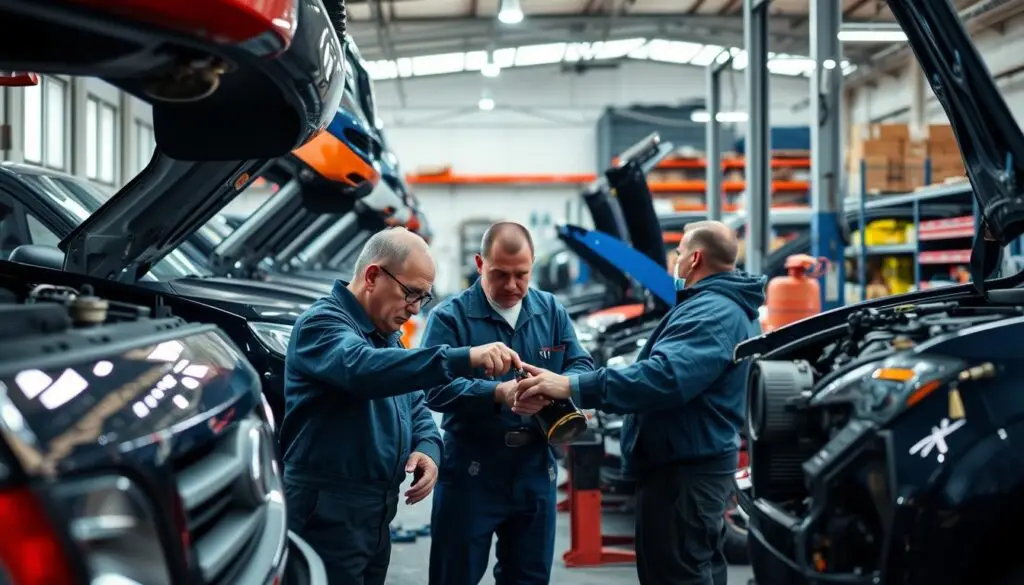
Fleet maintenance succession planning has become a critical priority as the American automotive service industry faces an unprecedented workforce crisis. Within the next 15 years, 40 to 50 percent of experienced technicians will retire, taking decades of institutional knowledge with them. Organizations across the country are watching their most skilled workers approach the end of their careers without clear plans for transferring their expertise.
The numbers paint a stark picture. Research shows that 33 percent of business owners intend to exit within the next decade, yet only 10 percent have formal transition strategies in place. Meanwhile, the Bureau of Labor Statistics reports technician supply growing at 2.6 percent annually while demand increases by just 0.7 percent. This creates a unique challenge: finding quality candidates, not just filling positions.
The cost of inaction is staggering. Organizations without succession planning protocols can lose three times an employee’s salary in turnover expenses. Municipal operations and corporate departments have learned this lesson the hard way. Effective fleet workforce planning protects technical expertise, vendor relationships, and parts knowledge that cannot be easily replaced. For departments handling complex vehicle systems, fleet management continuity represents a strategic imperative, not an optional initiative.
Last Updated: November 2025
Key Takeaways
- Demographic Crisis: Nearly half of all automotive technicians will retire within 15 years, creating an urgent knowledge transfer crisis in fleet maintenance operations.
- Planning Gap: Only 10 percent of organizations have formal succession strategies despite one-third of owners planning to exit, leaving operations vulnerable to service disruptions.
- Financial Impact: Replacing experienced workers without proper planning costs three times their annual salary when accounting for recruiting, training, and productivity losses.
- Knowledge Loss: Institutional expertise including vendor relationships, parts sourcing strategies, and technical troubleshooting cannot be quickly rebuilt after retirements.
- Immediate Action Required: Fleet managers must begin succession planning 2-5 years before anticipated retirements to ensure adequate knowledge transfer timelines.
The Critical Need for Succession Planning in Fleet Maintenance Operations
A perfect storm is forming in fleet maintenance operations as retirement-eligible technicians hold the keys to decades of irreplaceable knowledge. Organizations across the country are discovering that their most experienced maintenance professionals will exit the workforce within the next five years. This demographic reality demands immediate action to preserve operational capabilities and maintain service standards.
The consequences of inaction extend far beyond simple staffing challenges. When master technicians retire without transferring their expertise, organizations lose the competitive advantages built over decades. Fleet maintenance departments must treat succession planning as a strategic imperative, not an administrative task to address when convenient.
The Demographic Reality Facing Maintenance Departments
The average age of fleet technicians falls predominantly in the 40-49 age range, with many approaching retirement eligibility. This concentration of experienced workers in their peak career years creates a compressed timeline for knowledge transfer. Industry demographics reveal a troubling gap between senior technicians and entry-level workers.
Transit agencies report that 40 percent of their mechanics are eligible to retire within five years, creating immediate succession pressure. The aging workforce in the fleet industry faces a situation where decades of hands-on experience will disappear faster than training programs can replace it. Private fleet operations encounter similar challenges across all sectors.
Industry surveys reveal that over 40 percent of businesses struggle to fill vacancies in maintenance positions. The fleet technician shortage stems from multiple factors: fewer young workers entering skilled trades, increased competition from other industries, and the specialized knowledge required for modern vehicle systems. According to the Bureau of Labor Statistics, automotive service technicians face evolving workforce challenges as technology complexity increases.

Fleet maintenance departments face compressed timelines as experienced technicians approach retirement eligibility.
Leadership recognition of the problem exists, yet many organizations lack structured responses. The gap between awareness and action widens as retirement dates approach.
Quantifying the Financial Impact of Knowledge Loss
The cost of losing institutional knowledge capabilities extends well beyond recruitment expenses. Research shows turnover costs equal three times an employee’s annual salary when accounting for recruiting, hiring, training, and productivity losses. For a master technician earning $65,000 annually, the true replacement cost approaches $195,000.
Institutional knowledge in fleet contexts encompasses understanding of specific vehicle histories that prevent repeated diagnostic errors. Master technicians know which trucks have recurring issues, which parts suppliers provide reliable components, and which troubleshooting shortcuts save hours of labor. They maintain vendor relationships that secure priority service and favorable pricing.
“When experienced technicians leave without knowledge transfer, organizations essentially delete their operational memory.”
Parts sourcing strategies developed over decades disappear overnight when key personnel retire. New technicians lack the informal networks that keep operations running smoothly during parts shortages or emergency repairs. These invisible competencies don’t appear in job descriptions, yet they determine operational efficiency.
Direct Consequences for Operations and Service Delivery
Loss of expert technicians leads to measurable declines in service quality and vehicle uptime. Diagnostic times increase when inexperienced staff lack pattern recognition developed through years of troubleshooting. Simple repairs that veterans complete in 30 minutes may require two hours for newer technicians.
Comeback rates rise significantly when institutional knowledge retention systems fail. Vehicles return to the shop with the same problems because less experienced technicians miss root causes. This cycle reduces fleet availability while increasing maintenance costs through duplicated labor and unnecessary parts replacement.
Organizations experience higher outsourcing costs when internal expertise diminishes. Repairs that veterans handled in-house must be sent to dealerships or specialty shops at premium rates. Fleet availability drops, impacting organizational mission delivery whether that involves package delivery, emergency response, or public transportation.
Municipalities have documented service degradation following master technician retirements without succession plans. One transit agency saw average vehicle downtime increase by 23 percent in the year following three senior mechanic retirements. Another municipal fleet reported diagnostic accuracy declining from 94 percent to 78 percent after losing two master technicians within six months.
The ripple effects extend to customer satisfaction and operational costs. Reduced vehicle availability forces route cancellations, delivery delays, and emergency vehicle shortages. These service failures damage organizational reputation while fleet technician shortage problems prevent quick recovery through external hiring.
Assessing Your Current Fleet Maintenance Team Structure
A comprehensive fleet maintenance team assessment reveals vulnerabilities that could disrupt operations if key personnel depart unexpectedly. This systematic evaluation process identifies where your organization faces the greatest risk and which positions require immediate succession planning attention. Without this foundational analysis, fleet managers operate blindly, unaware of the dependencies that threaten operational continuity.
The assessment begins with honest conversations and data collection across your entire maintenance workforce. This process examines not only who fills each position today but also what unique capabilities, relationships, and institutional knowledge each person possesses. The goal is creating a complete picture of organizational strengths and weaknesses before departures create emergency situations.

Systematic workforce assessment identifies critical skill gaps and succession planning priorities.
Identifying Critical Roles and Skill Gaps
Every fleet maintenance operation contains positions that disproportionately impact service delivery and operational success. These critical roles often remain invisible during normal operations but become glaringly apparent when vacated. The identification process requires looking beyond job titles to understand actual responsibilities and dependencies.
Organizations utilize talent assessment tools to evaluate employee performance and potential systematically. This framework helps fleet operations identify star performers who consistently exceed expectations and act at capability levels above their current position. These individuals demonstrate situational leadership and possess widespread influence beyond their immediate role.
Technician skill gaps emerge when comparing required competencies against available capabilities within your team. This analysis often reveals dangerous concentration risks where only one or two employees possess specific technical knowledge. Addressing these gaps becomes paramount before those individuals retire or seek opportunities elsewhere.
Master Technicians and Specialized Expertise
Master technicians represent your department’s deepest technical resources. These individuals possess specialized expertise that cannot be easily replaced through external hiring or quick training programs. Their knowledge often spans decades of hands-on experience with specific vehicle platforms or systems.
Specialized expertise areas requiring particular attention include:
- Heavy-duty diesel diagnostics and electronic engine control systems
- CNG and alternative fuel systems installation and maintenance
- Advanced electrical troubleshooting for modern vehicle networks
- Transmission rebuilding and driveline component repair
- Manufacturer-specific expertise for proprietary systems and software
Document how many employees currently possess each critical skill. When only one technician understands a particular system, your organization operates with zero redundancy. This concentration risk demands immediate succession planning action before that individual’s departure creates operational paralysis.
Supervisory and Management Positions
Leadership roles within fleet maintenance departments require both technical competency and management capabilities. Shop foremen must understand repair procedures while coordinating workflow and personnel scheduling. Fleet managers balance technical oversight with budget management and strategic planning responsibilities.
Maintenance directors operate at the intersection of operations, finance, and organizational strategy. These positions require years of development and cannot be filled successfully through external recruitment alone. The technical credibility necessary to lead experienced maintenance technicians comes only from demonstrated hands-on expertise.
“Palm Beach County’s approach demonstrated proactive assessment: the departing director announced his exit five years in advance, allowing the county to create an assistant director position and conduct a nationwide search three years before his departure.”
This extended timeline enabled comprehensive knowledge transfer and relationship building. The successor gained credibility with the team and established vendor relationships before assuming full responsibility. Such foresight prevents the chaos that typically follows sudden leadership departures.
Evaluating Retirement Timelines and Risk Exposure
Retirement planning conversations provide essential data for prioritizing succession planning efforts. These confidential discussions reveal when departures will occur and allow organizations to prepare appropriately. Without this information, fleet managers cannot allocate training resources effectively or establish realistic development timelines.
Calculate risk scores by combining role criticality with departure probability. A master technician with unique diesel expertise planning to retire within two years presents extreme risk. A junior technician with general skills considering retirement in seven years represents minimal concern. This mathematical approach creates objective prioritization for succession planning investments.
Risk matrices visualize organizational vulnerability across your entire workforce. These tools display which positions face imminent departure risk and which skills will disappear when specific individuals leave. The visual representation helps leadership teams understand the urgency of succession planning initiatives and allocate appropriate resources.
| Risk Level | Role Criticality | Retirement Timeline | Required Action |
|---|---|---|---|
| Critical | Master technician with unique expertise | 0-2 years | Immediate mentorship assignment and cross-training |
| High | Shop foreman or specialized tech | 2-4 years | Structured development program and shadowing |
| Moderate | Experienced technician | 4-6 years | Knowledge documentation and skill sharing |
| Low | Entry to mid-level position | 6+ years | Standard training and development pathways |
Mapping Technical Competencies and Certifications
Creating comprehensive skills inventories documents the technical competencies distributed across your workforce. This mapping process catalogs ASE certifications, manufacturer training credentials, specialized tool proficiencies, and equipment-specific knowledge. The resulting database provides visibility into competency distribution and highlights concentration risks.
Technical competencies extend beyond formal certifications to include practical capabilities developed through experience. One technician might excel at diagnosing intermittent electrical problems while another demonstrates exceptional welding and fabrication skills. Documenting these informal specializations proves as important as tracking official credentials.
Certification mapping reveals gaps in your team’s qualifications relative to the equipment you maintain. When your fleet includes twenty natural gas vehicles but only one technician holds alternative fuel certification, you face obvious vulnerability. This analysis guides training investments and certification priorities for developing staff members.
The competency mapping exercise also uncovers hidden expertise that may not appear in job descriptions or official records. Long-tenured employees often possess undocumented knowledge about facility systems, vendor relationships, and historical maintenance issues that prove invaluable during troubleshooting. Capturing this institutional knowledge becomes essential before retirement eliminates these resources permanently.
Stay Ahead of Industry Trends
Get expert insights, equipment reviews, and operational strategies delivered weekly to your inbox.
Building a Comprehensive Fleet Maintenance Succession Planning Strategy
Building an effective succession planning strategy begins with establishing clear organizational commitments. Fleet maintenance departments cannot treat succession planning as an occasional HR initiative or annual checkbox exercise. Instead, successful programs require systematic frameworks that integrate workforce development into daily operations.
A comprehensive approach addresses three fundamental components. First, it establishes measurable objectives that define what success looks like for your organization. Second, it aligns talent development with broader fleet operations planning to ensure resources and support. Third, it creates accountability structures that make succession planning a management responsibility rather than an administrative task.
These elements work together to transform theoretical succession plans into practical programs that protect your fleet maintenance operations from knowledge loss and service disruptions.
Setting Clear Objectives and Timeline Milestones
Effective succession planning requires specific, measurable objectives that guide program development. Generic goals like “improve workforce readiness” lack the clarity needed to drive action and allocate resources appropriately.
Your succession planning strategy should include concrete objectives such as:
- Identify and develop successors for all supervisory positions within 18 months
- Establish formal knowledge transfer protocols for all master technicians within two years
- Provide critical development experiences to high-potential employees quarterly
- Implement career development programs that reduce external recruiting costs by 30 percent
- Build talent assessment programs for better staffing decisions across all maintenance shifts
- Develop internal candidates for 75 percent of leadership openings within three years
Timeline milestones must reflect the reality of technical skill development in fleet maintenance environments. Unlike office roles where employees can develop competencies relatively quickly, journey-level technicians typically require 2-5 years of focused development. Management-ready candidates need even longer horizons to gain the breadth of experience necessary for leadership roles.
Your succession plan implementation timeline should account for certification requirements, hands-on experience thresholds, and the gradual complexity progression inherent to fleet maintenance work. Rushing these timelines compromises quality and creates successors who lack the depth needed for independent decision-making.

Structured succession frameworks establish clear milestones for knowledge transfer and capability development.
Aligning Succession Plans with Fleet Operations Goals
Succession planning cannot exist in isolation from broader organizational objectives. Fleet managers must demonstrate how workforce development directly supports measurable fleet operations planning targets.
Connect your succession initiatives to specific operational metrics. If your fleet has a 95 percent vehicle availability target, explain how developing backup expertise for specialized repair capabilities protects that metric during unexpected departures. If cost per mile reduction is a strategic priority, quantify how internal candidate development reduces expensive external recruiting and onboarding costs.
This alignment serves two critical purposes. First, it ensures your succession planning strategy receives appropriate resource allocation during budget discussions. Executives approve investments that clearly support strategic objectives rather than standalone HR programs.
Second, alignment creates operational urgency around talent development. When maintenance supervisors understand that succession planning directly impacts their service quality standards and uptime performance, it becomes a priority rather than an administrative burden they defer to year-end.
Document these connections explicitly in your succession planning documentation. Create a simple matrix showing how each succession objective supports specific fleet operations planning goals, making the business case transparent to all stakeholders.
Establishing Accountability and Ownership
The most common failure point in succession plan implementation occurs when responsibility remains unclear. Organizations that treat succession planning as exclusively an HR function rarely achieve sustained results.
Effective programs establish clear ownership at the operational level. Fleet managers and maintenance supervisors must function as primary owners of succession planning within their departments. This positioning transforms succession from a theoretical exercise into a practical management responsibility with direct performance implications.
“McDonald’s former CEO created a culture of accountability by requiring every manager to name two potential successors, embedding succession planning into management responsibilities rather than treating it as an HR afterthought.”
This accountability mechanism drove consistent action across the organization. Managers could not delegate or postpone succession planning because it became a standard component of their role expectations and performance evaluations.
Defining Roles for Management and HR
Clear role definition prevents the organizational confusion that undermines succession initiatives. Fleet managers and supervisors should own these specific responsibilities:
- Identifying high-potential technicians within their teams based on performance data and demonstrated capabilities
- Creating individual development plans that outline skill gaps and training pathways
- Facilitating mentorship relationships between senior technicians and successors
- Monitoring progress against development milestones and adjusting plans as needed
- Making final decisions about readiness for promotion or expanded responsibilities
HR departments provide essential support infrastructure rather than program ownership. Their responsibilities include developing standardized assessment tools, maintaining succession planning templates, tracking compliance with organizational policies, coordinating training resources, and facilitating cross-departmental talent discussions.
This division clarifies that fleet operations planning expertise must drive succession decisions while HR ensures consistency and provides administrative support systems.
Creating Cross-Functional Planning Teams
Comprehensive succession plan implementation requires coordination across multiple organizational functions. Establishing formal cross-functional planning teams ensures succession initiatives receive the broad support necessary for success.
These working groups should include representatives from fleet management, human resources, finance, and operations leadership. Each function brings critical perspectives that strengthen succession planning outcomes.
Fleet management contributes technical expertise about role requirements and skill development pathways. HR provides talent management frameworks and regulatory compliance guidance. Finance ensures budget allocation aligns with succession timelines and training investments. Operations leadership connects succession initiatives to broader organizational strategies and resource priorities.
Schedule quarterly meetings for these cross-functional teams to review succession progress, address resource constraints, and adjust plans based on changing organizational needs. This regular cadence maintains momentum and prevents succession planning from becoming dormant between annual review cycles.
Knowledge Capture and Transfer Methods
Fleet maintenance departments face a critical challenge: extracting decades of expertise from veteran technicians before they leave. The knowledge residing in experienced minds represents years of troubleshooting, specialized repairs, and problem-solving that cannot be easily replaced. Effective knowledge transfer programs provide the systematic framework needed to preserve this institutional knowledge and pass it along to the next generation.
Organizations that implement structured approaches to knowledge capture create sustainable succession planning outcomes. These methods transform individual expertise into organizational assets that remain accessible regardless of workforce changes.
Documenting Technical Procedures and Troubleshooting Guides
Written documentation forms the foundation of knowledge preservation in fleet maintenance operations. Technical documentation should capture not just the steps of a procedure, but the reasoning behind technical decisions. This approach helps developing technicians understand the “why” behind each action, building genuine competency rather than rote memorization.
Priority should focus on low-frequency, high-complexity repairs where knowledge concentrates in one or two individuals. These specialized procedures pose the greatest risk when experienced technicians retire. Standard operating procedures should include diagnostic sequences, parts specifications, tool requirements, and safety considerations.
Effective documentation includes troubleshooting decision trees that guide technicians through diagnostic processes. These guides should capture the subtle indicators experienced technicians recognize—unusual sounds, specific symptoms, or failure patterns that point to underlying causes.

Structured mentorship programs transfer critical technical knowledge from experienced technicians to developing talent.
Implementing Mentorship and Shadowing Programs
Structured mentorship creates direct knowledge transfer pathways between generations of technicians. Transit agencies have demonstrated the effectiveness of formal programs, with some achieving turnover rates of only 2-3 percent annually through comprehensive apprenticeship initiatives. These mentor programs require careful planning and sustained commitment.
Successful programs combine classroom instruction with hands-on experience. One proven model includes extensive classroom hours plus on-the-job training, with apprentices completing mandatory training modules taught by in-house instructor teams.
“Organizations that treat knowledge transfer as a strategic priority rather than an informal process see measurably better succession outcomes and reduced skills gaps.”
Pairing Senior Technicians with Emerging Talent
Selecting the right mentor-mentee combinations requires assessing both technical expertise and teaching aptitude. Not every master technician possesses the patience or communication skills needed for effective mentoring. Organizations should evaluate teaching ability alongside technical knowledge when identifying potential mentors.
Compensation considerations matter when asking senior technicians to take on mentoring responsibilities. Additional pay, recognition programs, or reduced direct workload can acknowledge the extra effort required to train others effectively. Some organizations use service employees as feeder programs to mechanic staff, creating clear advancement pathways.
Palm Beach County’s succession approach exemplified effective pairing when the successor worked under the departing director for 1.5 years. This extended timeline allowed comprehensive knowledge transfer, including management of a remote shop to learn daily operations from work order creation to parts procurement.
Structured Knowledge Transfer Schedules
Formal schedules prevent knowledge transfer from becoming an afterthought in busy maintenance operations. These timelines should outline specific competencies to be transferred, assessment milestones, and target completion dates. Rotation schedules expose developing technicians to various specializations, building versatility across the department.
For technicians approaching retirement, knowledge transfer schedules should begin 18-24 months before departure. This timeline provides sufficient opportunity to cover specialized knowledge without rushing critical information. Regular milestone assessments verify that mentees are genuinely acquiring and retaining transferred knowledge.
Documentation of completed transfer activities creates accountability and ensures nothing falls through the cracks. Checklists tracking specific skills, procedures, and competencies transferred provide clear visibility into program progress.
Creating Video Documentation of Specialized Repairs
Visual documentation captures technical nuances that written procedures cannot adequately convey. Smartphone technology and affordable video equipment enable fleet departments to record complex procedures, preserving hand positioning, tool techniques, and sequential steps. These resources create powerful learning tools for visual learners and reference materials for infrequent repairs.
Video documentation proves particularly valuable for specialized equipment repairs or diagnostic procedures requiring specific observation techniques. Senior technicians can narrate their thought process while performing repairs, capturing the decision-making logic that guides expert troubleshooting.
Organizations should establish simple recording protocols that don’t disrupt workflow. Short, focused videos covering specific procedures or common problems provide more practical value than lengthy, comprehensive recordings that technicians are unlikely to watch in their entirety.
Building a Centralized Knowledge Repository
All captured knowledge requires organized storage and easy accessibility to deliver ongoing value. A centralized repository ensures information remains available even after the expert who created it has departed. Fleet management systems, shared drives, or specialized knowledge management platforms can serve this function when properly organized.
Effective repositories include robust search functionality, clear categorization by vehicle type or system, and version control to maintain current information. Access permissions should balance security needs with ensuring technicians can readily find needed information during repairs.
Regular maintenance of the knowledge repository prevents it from becoming outdated or cluttered. Assigning ownership for content updates and periodic review ensures technical documentation remains accurate and relevant as equipment and procedures evolve.
Developing Technical Training Programs for Future Leaders
Investment in fleet technician training creates the foundation for sustainable maintenance operations and organizational continuity. As veteran technicians approach retirement, structured training programs ensure that knowledge transfers systematically to the next generation of maintenance professionals. These programs must address both current operational needs and emerging technological demands that define modern fleet maintenance.
Effective training initiatives extend beyond simple skill transfer. They build technical depth, operational versatility, and leadership capacity within maintenance teams. Organizations that implement comprehensive development programs position themselves to maintain service quality despite workforce transitions and technological advancement.
The complexity of fleet assets requires deliberate capability building. Training programs must balance immediate productivity requirements with long-term workforce development objectives. This strategic approach transforms entry-level technicians into master mechanics capable of managing diverse vehicle systems and leading maintenance operations.
Cross-Training Initiatives Across Vehicle Types
Succession planning demands that technicians develop capabilities beyond their specialized comfort zones. Cross-training fleet staff creates versatility that proves essential when senior personnel depart or when operational demands shift unexpectedly. Light-duty vehicle specialists benefit from exposure to heavy equipment maintenance, while diesel technicians gain valuable perspective through alternative fuel system training.
Structured rotation programs systematically expose maintenance personnel to diverse fleet assets. These initiatives build comprehensive understanding that positions technicians for supervisory roles requiring fleet-wide knowledge. A mechanic who understands only one vehicle segment lacks the perspective needed to manage entire maintenance operations effectively.
Implementation requires careful scheduling to balance immediate repair demands against long-term capability development. Rotation assignments should include specific learning objectives, mentorship from specialists in each vehicle category, and documentation of competencies achieved. Organizations typically structure these programs in quarterly rotations that provide meaningful exposure without disrupting workflow continuity.
Cross-training also reduces operational vulnerability. When maintenance departments depend on single-point expertise for critical vehicle systems, absences or departures create immediate capability gaps. Distributed knowledge across multiple technicians ensures operational resilience and provides career development opportunities that improve retention.

Comprehensive certification programs establish clear advancement pathways for developing technicians.
Certification and Continuing Education Pathways
Formal credentials provide objective measures of technical competency while creating clear advancement pathways. Investment in certification programs demonstrates organizational commitment to professional development and establishes performance standards that guide individual career progression. These structured programs ensure that skill development aligns with industry standards and operational requirements.
Transit agencies and fleet operations increasingly implement comprehensive training frameworks. Many organizations require mechanics to complete multiple modules for master mechanic certification, with in-house instructor teams delivering mandatory training. These programs combine theoretical knowledge with practical application, ensuring technicians develop both understanding and capability.
Compensation strategies should reinforce certification achievement. Successful programs provide one-time bonuses for course completion, typically structured with claw-back clauses that protect training investments. Salary increases tied to certification passage create ongoing financial incentives that reward professional development. This approach ensures that organizational training investments yield long-term capability benefits.
ASE Certifications and Manufacturer Training
The Automotive Service Excellence certification system provides industry-recognized credentials across multiple specialties. ASE certification programs offer pathways from entry-level competency through master technician status, covering areas including brakes, electrical systems, engine performance, and diesel engines. Organizations should integrate these certifications into career progression frameworks that define advancement requirements.
Fleet technician training programs benefit from establishing clear certification expectations for each position level. Entry technicians might target two ASE certifications, journey-level mechanics four to six certifications, and lead technicians or supervisors master certification status. This structure creates transparent advancement criteria while building organizational capability systematically.
Manufacturer training from original equipment manufacturers complements ASE credentials. Ford, Freightliner, Cummins, and other OEMs offer specialized training on proprietary systems and diagnostic procedures. These programs provide access to manufacturer-specific technical information unavailable through general certifications. Individual development plans should incorporate both ASE credentials and relevant manufacturer training based on fleet composition.
Education reimbursement programs remove financial barriers to certification pursuit. Organizations that fund testing fees, study materials, and preparation courses see higher participation rates and faster skill development. These investments typically generate positive returns through improved diagnostic accuracy, reduced repair times, and decreased comebacks requiring rework.
Advanced Diagnostic and Electrical Systems
Vehicle technology complexity continues advancing, requiring ongoing education to maintain diagnostic capability. Modern fleet assets integrate sophisticated electronic control systems, network communications, and computer-managed components. Fleet technician training must address these emerging technologies to ensure maintenance departments remain capable of servicing current and future vehicle platforms.
Hybrid and electric propulsion systems demand specialized knowledge that differs fundamentally from traditional mechanical repairs. Technicians require training in high-voltage safety procedures, battery management systems, and electric drive diagnostics. Organizations transitioning to alternative fuel vehicles must invest proactively in these competencies before asset deployment.
Telematics systems and advanced driver assistance systems represent additional training requirements. These technologies generate diagnostic data that technicians must interpret accurately and require calibration procedures following repairs. Network diagnostics training enables technicians to troubleshoot communication failures between vehicle control modules, a growing source of diagnostic complexity.
| Training Category | Competency Level | Typical Duration | Certification Outcome |
|---|---|---|---|
| Basic Electrical Systems | Entry Technician | 40-60 hours | ASE A6 Electrical/Electronic |
| Advanced Diagnostics | Journey Technician | 80-120 hours | ASE L1 Advanced Engine Performance |
| Hybrid/Electric Propulsion | Specialist Certification | 60-80 hours | Manufacturer-Specific Credential |
| Network Diagnostics | Senior Technician | 40-60 hours | OEM Network Certification |
Hands-On Diagnostic and Repair Skill Development
Technical competency requires practical application beyond classroom instruction. Knowledge gained through coursework must translate into diagnostic confidence and repair capability through structured on-the-job training. Hands-on skill development bridges the gap between theoretical understanding and operational proficiency.
Diagnostic challenges provide controlled learning opportunities where technicians troubleshoot complex failures under mentor supervision. These exercises build problem-solving methodology and diagnostic logic while allowing mistakes in low-stakes environments. Senior technicians should create progressively difficult scenarios that require systematic testing and critical thinking.
Supervised complex repairs accelerate capability development for procedures technicians have not performed independently. A master mechanic guiding a journey-level technician through transmission overhaul or engine replacement provides real-time coaching while ensuring quality outcomes. This approach builds confidence and competency simultaneously.
Progressive responsibility assignment recognizes growing capability through increasingly independent work authorization. Technicians advance from assisted repairs to supervised independence to full authorization based on demonstrated proficiency. Clear competency checkpoints define these transitions, providing objective criteria for responsibility expansion.
Documentation of hands-on training creates accountability and tracks development progression. Training logs should record specific procedures performed, supervision level required, and competency assessment outcomes. This documentation supports succession planning by identifying readiness for increased responsibility and revealing areas requiring additional development focus.
Cultivating Leadership Skills in Technical Staff
Cultivating leadership capabilities in technical staff represents one of the most critical yet underinvested aspects of fleet succession planning. Many organizations make the costly mistake of promoting their most skilled technician to supervisor based solely on technical prowess. This approach frequently fails because leadership roles demand entirely different competencies than performing maintenance tasks.
The transition from hands-on technician to fleet leader requires deliberate development of management abilities, financial acumen, and interpersonal skills. Without proper preparation, even the most talented mechanics struggle when faced with budget decisions, performance evaluations, and conflict resolution. Successful fleet leadership development programs address this gap by systematically building these capabilities before promotion rather than expecting new supervisors to learn through trial and error.

Leadership development programs prepare technical staff for supervisory responsibilities beyond mechanical expertise.
Recognizing Tomorrow’s Fleet Leaders Today
Identifying high-potential maintenance technicians requires looking beyond technical excellence to recognize leadership qualities that predict management success. The best candidates typically demonstrate natural mentoring behavior, regularly helping newer team members solve problems. They approach challenges with systematic thinking rather than just following procedures.
Strong communication skills separate potential leaders from purely technical specialists. These individuals explain complex repairs clearly to colleagues and customers alike. They show consistent reliability, taking initiative on difficult projects without constant supervision. The respect they command among peers often becomes evident in informal settings. Other technicians seek their advice and follow their example naturally.
Progressive fleet organizations use structured assessment tools like the 9-Box talent matrix to evaluate both current performance and future potential. This framework helps managers conduct fair, consistent evaluations across the entire maintenance team. The system plots employees on two dimensions: performance results and leadership potential.
Transit agencies have developed particularly effective approaches through structured apprenticeship programs. These programs identify high-performers early in their careers and create multiple development pathways. Interestingly, some programs even find productive roles for apprentices who don’t complete full mechanic training, placing them in support positions that match their capabilities.
Key characteristics to assess when identifying supervisory training candidates include:
- Problem-solving approach: Looks for root causes rather than quick fixes
- Teaching ability: Explains concepts clearly and patiently to others
- Initiative: Identifies and addresses issues proactively
- Emotional intelligence: Reads situations and responds appropriately
- Accountability: Owns mistakes and learns from them
Building Management Competencies Through Structured Programs
Developing technical staff for leadership roles requires comprehensive fleet manager training that addresses the full spectrum of supervisory responsibilities. Organizations like NAFA Fleet Management Association provide valuable resources through professional development programs. These courses help technicians and current supervisors prepare systematically for expanded leadership roles.
Career progression from technician to assistant director illustrates the importance of developing both technical and business competencies. Successful leadership requires more than mechanical expertise.
“Training your replacement is your legacy. Actively prepare team members for director roles even if their advancement occurs elsewhere.”
— Harold Siguenza, Assistant Director of Public Works
Advanced education combined with budget office experience provides fluency in financial justification that proves critical for fleet leadership success. Spending time building trust and understanding organizational culture before implementing major changes enables lasting improvements that might have failed with rushed implementation.
Conflict Resolution and Performance Management
The interpersonal dimension of supervision often presents the steepest learning curve for newly promoted technicians. Managing former peers creates particularly challenging dynamics that require preparation and support. Effective programs teach specific skills for conducting difficult conversations professionally and constructively.
Performance management training must address how to document issues properly, provide corrective feedback that motivates improvement, and make tough decisions when performance doesn’t improve. Conflict resolution skills enable supervisors to mediate disputes between team members while maintaining workplace harmony. These capabilities don’t develop naturally for most technical staff.
Maintaining team morale during budget constraints, equipment failures, or organizational changes requires emotional intelligence and communication finesse. Training programs should include role-playing exercises that simulate real supervisory challenges. This practice builds confidence before supervisors face actual high-stakes situations with their teams.
Budget and Resource Allocation Skills
Financial literacy stands as a critical success factor for fleet leadership that technical training rarely addresses. Understanding budget development processes, cost-benefit analysis, and financial justification enables fleet managers to advocate effectively for necessary resources. Without these skills, even excellent technical leaders struggle to secure funding for essential equipment and staff.
Budget office experience exemplifies how financial competency empowers fleet leaders. The ability to speak the language of finance directors and elected officials makes managers far more effective at obtaining approvals for fleet investments. This capability transforms good ideas into funded reality.
Development approaches should expose technical staff to budget processes through progressive assignments. Start with analyzing department spending patterns, then progress to developing budget requests for specific projects. Eventually, involve high-potential technicians in annual budget planning meetings to observe how financial decisions get made at organizational levels.
| Financial Skill | Development Activity | Business Impact |
|---|---|---|
| Budget Planning | Shadow finance staff during budget cycle | Understand organizational priorities and constraints |
| Cost-Benefit Analysis | Calculate total cost of ownership for equipment | Make data-driven purchasing recommendations |
| Financial Reporting | Prepare monthly variance reports | Communicate spending trends to stakeholders |
| Procurement Processes | Participate in vendor evaluations | Navigate organizational buying procedures efficiently |
Communication and Team Leadership Development
Leadership effectiveness ultimately depends on communication abilities that technical training rarely emphasizes. Fleet supervisors must present complex information to non-technical audiences including city managers, elected officials, and department heads. They need to write clear reports and recommendations that busy executives can quickly understand and act upon.
Conducting productive meetings requires facilitation skills distinct from technical knowledge. Motivating diverse teams with varying experience levels, personalities, and work styles demands interpersonal sophistication. These communication competencies determine whether supervisors can translate their technical vision into organizational reality.
Specific development activities build these capabilities systematically. Toastmasters participation provides low-stakes practice for public speaking and presentation skills. Leadership courses through professional associations offer frameworks for understanding team dynamics and motivation theories.
Progressive responsibility assignments give emerging leaders practical experience before formal promotion. Assign high-potential technicians to lead small projects, present at team meetings, or represent the department at cross-functional committees. Each experience builds confidence and reveals areas needing additional development.
Writing skills improve through regular practice with meaningful stakes. Have candidates draft procedure documentation, prepare equipment justification memos, or compose performance feedback. Provide constructive editing that improves their ability to communicate clearly in writing.
The investment in developing these softer skills pays substantial dividends when technical staff move into formal leadership roles. They arrive prepared to handle the full scope of supervisory responsibilities rather than learning painfully through mistakes that affect team performance and morale.
Share Your Expertise
Join Heavy Duty Journal as a guest author and reach thousands of industry decision-makers with your succession planning insights.
Leveraging Technology to Support Succession Planning
The integration of technology into succession planning efforts creates measurable advantages for fleet maintenance operations. Digital tools provide fleet managers with powerful capabilities to track workforce development, assess technical competencies, and make informed decisions about talent advancement. These systems transform succession planning from a manual, paper-based process into a data-driven strategic function.
Organizations that embrace technological solutions gain visibility into their workforce capabilities that was previously impossible to achieve. Despite lacking a mechanical background, successful fleet managers have entered the field by learning fleet maintenance management software that provided comprehensive operational visibility.

Modern fleet management systems centralize workforce capability tracking and succession planning data.
Centralized Workforce Capability Management
Modern fleet management software functions as a centralized database for tracking every aspect of technician development and qualification. These skills tracking systems maintain detailed records of individual certifications, completed training courses, specialized competencies, and performance history. Fleet managers can instantly access comprehensive profiles showing each technician’s current capabilities and development progress.
The software enables systematic identification of organizational skill gaps by comparing current workforce capabilities against operational requirements. Managers generate reports showing which critical competencies exist within the department, how many technicians possess specific certifications, and where vulnerabilities threaten operations. This data-driven approach eliminates guesswork from succession planning decisions.
Certification management represents another crucial function of these platforms. The systems automatically track expiration dates for licenses, ASE certifications, manufacturer training credentials, and safety qualifications. Automated alerts notify managers and technicians when renewals approach, preventing compliance lapses that could disqualify individuals from critical repair work.
Transparency benefits both management and technicians when fleet management software clearly documents advancement requirements. Technicians access their own profiles to review completed training, identify remaining requirements for promotion, and understand their position within succession planning initiatives. This visibility motivates skill development and reduces uncertainty about career progression pathways.
Data-Driven Talent Evaluation
Digital work order systems generate objective performance metrics that inform succession planning decisions with unprecedented precision. Every repair transaction creates data points revealing technician productivity, diagnostic accuracy, repair quality, and customer satisfaction. This information transforms talent assessment from subjective opinion into measurable fact.
Key performance indicators derived from work order analysis include completion rates against scheduled time, average repair duration compared to flat rate standards, comeback percentages indicating rework requirements, and first-time fix rates demonstrating diagnostic capability. Fleet managers track these metrics longitudinally to identify consistent high performers worthy of development investment versus technicians requiring performance improvement plans.
The objectivity of data-driven assessment removes bias from succession planning decisions. Promotion recommendations supported by concrete performance metrics withstand scrutiny and provide defensible rationale for development resource allocation. Organizations establish credibility with their workforce when advancement decisions reflect measurable achievement rather than perceived favoritism.
Comparative analysis across the technician workforce reveals performance distributions that inform talent management strategies. Managers identify top performers in the 90th percentile who represent ideal succession candidates, solid contributors performing at expected levels, and struggling technicians in the bottom quartile requiring intervention. This segmentation enables targeted development approaches for different performance groups.
Scalable Training Delivery Solutions
E-learning platforms and learning management systems enable consistent training delivery across geographically dispersed fleet operations. Organizations with multiple facilities face challenges providing uniform instruction when relying exclusively on classroom-based training. Digital training platforms solve this problem by delivering standardized content accessible from any location.
Options range from subscription-based services offering comprehensive automotive training libraries to custom learning management systems delivering organization-specific procedures and policies. Major providers include platforms specializing in technical automotive content, manufacturer training portals, and enterprise learning systems. Fleet departments select solutions matching their budget, technical sophistication, and training requirements.
Hybrid training models combine online theoretical instruction with hands-on practical application to maximize efficiency. Technicians complete knowledge acquisition modules at their own pace through self-directed learning, then demonstrate skill application under supervisor observation. This approach reduces time experienced technicians spend away from productive work while ensuring competency verification occurs through practical assessment.
| Platform Type | Primary Advantages | Best Fit Scenario |
|---|---|---|
| Subscription-Based Training | Extensive content library, immediate availability | Organizations needing comprehensive technical training without development resources |
| Custom Learning Management | Organization-specific content, complete curriculum control | Large fleets with unique procedures requiring customized programs |
| Manufacturer Training Portals | Equipment-specific content, certification pathways | Fleets maintaining specific vehicle brands with manufacturer requirements |
| Hybrid Internal/External Model | Balances cost with content breadth | Mid-sized operations seeking cost-effective comprehensive training |
Analytics capabilities within learning platforms provide valuable succession planning insights by tracking completion rates, assessment scores, time invested in skill development, and learning path progress. Managers identify highly motivated technicians demonstrating initiative through voluntary training completion, signaling readiness for increased responsibility. These engagement metrics complement performance data from work order systems to create comprehensive talent profiles.
Mobile accessibility extends training opportunities beyond formal work hours and designated training spaces. Technicians access learning content during downtime between service calls, during breaks, or outside working hours. This flexibility accelerates skill development by enabling learning to occur whenever technicians have available time rather than competing with scheduled repair work.
Implementing and Monitoring Your Succession Plan
Effective succession plan rollout requires methodical implementation phases that build momentum through demonstrated results. Fleet maintenance departments often fail when attempting organization-wide changes simultaneously. A strategic approach starts small, proves value, then expands systematically across the operation.
The transition from planning to execution demands clear accountability structures and measurable outcomes. Fleet managers must establish monitoring systems that track progress while remaining flexible enough to adjust course when challenges emerge.
Phased Rollout and Pilot Programs
Beginning with pilot programs focused on highest-risk positions delivers early wins that build organizational support. Identify one critical role where retirement looms within 18-24 months and concentrate initial succession efforts there. This focused approach allows your team to refine processes before expanding scope.
Palm Beach County demonstrated this methodology effectively by creating an assistant director position three years before the fleet director’s planned retirement. The county invested 1.5 years in direct mentorship and knowledge transfer. This timeline provided sufficient overlap for the successor to absorb institutional knowledge while gradually assuming responsibilities.
Your phased implementation timeline should include specific milestones:
- Months 1-3: Launch pilot program for one critical position with clear success criteria
- Months 4-6: Evaluate pilot results and document lessons learned
- Months 7-9: Expand to two additional high-risk positions incorporating improvements
- Months 10-12: Roll out framework across all key technical positions
Address resistance proactively through transparent communication. Senior technicians may interpret succession planning as pressure to retire. Junior staff might doubt genuine advancement opportunities exist. Hold individual conversations explaining that succession planning protects both organizational stability and employee career growth.
Key Performance Indicators for Succession Success
Establishing concrete fleet performance metrics enables fleet managers to demonstrate program effectiveness and justify continued investment. Without measurement systems, succession planning remains an abstract initiative rather than a business imperative.
Organizations should monitor whether succession plans exist for all key positions, how quickly critical roles are filled, and whether new employees perform effectively in advanced positions. These indicators provide objective evidence of whether your succession strategy delivers intended results.
Technician Retention and Promotion Rates
Workforce stability serves as a primary indicator of succession planning effectiveness. Calculate your voluntary turnover rate using this formula: (Number of voluntary departures ÷ Average number of employees) × 100. Transit agencies with structured apprenticeship programs achieve 2-3 percent annual turnover rates compared to industry averages of 15-20 percent.
Track internal promotion percentages by dividing filled positions from internal candidates by total filled positions. A healthy succession program should fill 60-70 percent of supervisory and lead technician roles through internal promotion. Lower percentages suggest inadequate development pipelines or insufficient career pathway communication.
Monitor time-to-fill metrics for critical positions. When key roles open, how many days elapse before a qualified candidate assumes responsibilities? Strong succession planning reduces this timeframe from 90-120 days to 30-45 days by maintaining ready talent pools.
Employee engagement scores from workforce surveys reveal whether staff perceive genuine advancement opportunities. Include questions specifically addressing career development satisfaction and confidence in leadership’s commitment to internal promotion.
Knowledge Transfer Completion Metrics
Measuring whether institutional knowledge successfully transfers before retirements represents the core succession planning objective. Establish knowledge transfer metrics that track documentation completion, mentorship program participation, and verified competency achievement.
| Transfer Component | Measurement Method | Target Completion |
|---|---|---|
| Technical procedure documentation | Percentage of critical processes documented with guides | 90% before retirement |
| Mentorship session completion | Scheduled shadowing hours completed vs. planned hours | 85% attendance rate |
| Competency verification assessments | Successors passing hands-on skill evaluations | 100% pass after training |
| Video documentation library | Specialized repair procedures captured on video | 100% of rare procedures |
Link employee learning plans directly to knowledge, skills, and abilities required for current and future roles. This alignment ensures training investments support both immediate operational needs and long-term succession objectives.
Discuss with senior employees how they can systematically pass on corporate knowledge through structured mentorship rather than informal hallway conversations. These metrics provide accountability for both mentors and successors.
Regular Review and Plan Adjustments
Succession planning requires ongoing management rather than one-time creation. Fleet operations evolve continuously through technology changes, fleet composition shifts, and organizational restructuring. Your succession strategy must adapt accordingly.
Implement quarterly reviews examining progress against established milestones. These reviews should assess whether knowledge transfer activities remain on schedule, identify emerging obstacles requiring intervention, and celebrate achieved successes that maintain momentum.
Conduct annual comprehensive reassessments of retirement timelines and organizational changes. Senior technicians may delay or accelerate retirement plans based on personal circumstances. New vehicle technologies might create unexpected skill gap urgencies.
Regular talent review and calibration processes ensure succession plans remain current and aligned with organizational needs. Gather your leadership team quarterly to evaluate high-potential employees’ development progress and adjust individual development plans based on performance trends.
Document lessons learned throughout implementation. Which knowledge transfer methods proved most effective? Where did resistance emerge and how was it resolved? These insights improve successive phases of your rollout and benefit other departments developing similar programs.
Communicating the Plan to Stakeholders
Transparent communication ensures all parties understand succession planning initiatives, their specific roles, and expected outcomes. Different stakeholder groups require tailored messaging addressing their unique concerns and interests.
For technicians, provide clarity on career pathways and advancement criteria. Publish clear competency requirements for each progressive role from entry-level technician through master technician and supervisor positions. Explain exactly what training, certifications, and demonstrated skills lead to promotion consideration.
Senior staff must understand their mentorship expectations as critical contributors to succession success. Formalize these responsibilities in performance evaluations and compensate appropriately for time invested in knowledge transfer activities. Recognize that asking busy technicians to mentor without acknowledging this workload creates resentment.
Organizational leadership requires regular updates demonstrating return on investment through improved retention rates, reduced time-to-fill metrics, and maintained service quality during transitions. Present succession planning as risk mitigation that protects operational continuity and budget stability.
External stakeholders such as unions may have contractual interests in promotion processes. Engage union representatives early in succession planning development to address seniority provisions, posting requirements, and evaluation criteria. Collaborative approaches prevent grievances that derail implementation.
Schedule town hall meetings where employees can ask questions about succession planning initiatives. Address concerns directly rather than allowing rumors to fill information gaps. Transparency builds trust that leadership genuinely invests in employee development rather than simply managing upcoming departures.
Conclusion
The philosophy that “training your replacement is your legacy” captures the essence of effective fleet succession planning. Developing team members for advancement creates lasting impact that extends throughout the industry.
The numbers tell a stark story. With 40-50 percent of technicians approaching retirement within 15 years and only 10 percent of organizations maintaining formal succession plans, the window for action is closing. Fleet managers must advocate for resources now.
The costs of inaction far exceed investment in fleet workforce development. Turnover expenses equal three times annual salary. Lost institutional knowledge cannot be recovered. Service quality declines. Vehicle availability suffers.
Maintenance department continuity requires immediate action. Start simple: identify your potential successor, document one critical procedure, or join professional associations like American Trucking Associations or NTEA for succession planning resources.
Palm Beach County’s five-year succession timeline ensured seamless leadership transition. Transit agencies achieved 2-3 percent turnover rates through structured apprenticeship programs. These results are replicable.
Fleet professionals already possess the problem-solving capabilities, resource management skills, and leadership experience needed for succession planning success. Apply these competencies to workforce development with the same rigor you bring to vehicle maintenance.
Your most important contribution isn’t keeping vehicles running today. It’s ensuring qualified professionals can maintain operations tomorrow. Begin building that legacy now.
Share This With Your Heavy-Duty Network
Help fleet managers and diesel technicians discover valuable succession planning insights by sharing this article with your professional network.
Frequently Asked Questions
Why is succession planning particularly critical for fleet maintenance departments?
Fleet maintenance departments face unique challenges that make succession planning exceptionally critical. The aging workforce issue is more pronounced in skilled trades, with 40-50 percent of experienced technicians approaching retirement within 15 years. Institutional knowledge in fleet maintenance is highly specialized and irreplaceable—understanding specific vehicle histories, vendor relationships, parts sourcing strategies, and troubleshooting shortcuts developed over decades cannot be learned through formal education alone. The cost of losing a master technician without a succession plan equals approximately three times their annual salary when accounting for recruiting, hiring, training, and productivity losses.
How far in advance should fleet maintenance departments begin succession planning for critical positions?
Effective succession planning typically requires 2-5 year timelines for developing journey-level technicians and even longer horizons for cultivating management-ready candidates. Palm Beach County’s approach provides an excellent model: they created an assistant director position three years before the planned retirement, allowing comprehensive knowledge transfer and leadership development. For master technicians with specialized expertise in areas like heavy-duty diesel diagnostics or transmission rebuilding, organizations should begin succession planning at least 3-5 years before anticipated retirement. The complexity of fleet operations makes shorter timelines inadequate for ensuring seamless transitions.
What are the most common mistakes fleet managers make when developing succession plans?
The most frequent succession planning failures include treating it as a one-time HR initiative rather than an ongoing operational priority, waiting until retirements are imminent rather than planning years in advance, promoting the best technician to supervisor without providing leadership training, failing to document institutional knowledge before experts retire, focusing exclusively on technical skills while neglecting management competencies like budget management and conflict resolution, and attempting organization-wide implementation simultaneously rather than starting with pilot programs. Organizations with only informal, undocumented plans also frequently fail when key personnel unexpectedly depart.
What specific institutional knowledge should be prioritized for capture in fleet maintenance operations?
Priority knowledge capture areas include specific vehicle history and quirks, vendor relationships and parts sourcing strategies, troubleshooting shortcuts and diagnostic sequences developed through experience, low-frequency high-complexity repair procedures, equipment-specific knowledge for specialized tools, manufacturer-specific expertise for fleet-dominant vehicle brands, regulatory compliance procedures and documentation requirements, and emergency response protocols. Documentation should capture not just the “what” but the “why” behind technical decisions, providing context that enables developing technicians to understand the reasoning behind established practices.
How can smaller fleet operations with limited resources implement effective succession planning?
Smaller fleets can implement scaled succession approaches that deliver significant value without extensive resources. Priority strategies include focusing initially on the single highest-risk position, leveraging free or low-cost resources from industry associations that provide succession planning templates, implementing simple documentation practices using smartphones to record complex repairs, establishing informal mentorship pairings rather than elaborate programs, utilizing affordable online training platforms, partnering with local technical colleges to access training resources, and taking incremental steps like documenting one critical procedure monthly or scheduling one shadowing session weekly. Even modest succession planning efforts significantly reduce risk compared to having no plan.
What key performance indicators should fleet managers track to measure succession planning effectiveness?
Comprehensive succession planning measurement requires multiple KPIs across different dimensions. Workforce stability metrics include voluntary turnover rates (transit agencies with structured programs achieve 2-3 percent compared to industry averages of 15-20 percent), internal promotion percentages, time-to-fill for critical positions, and retention rates for employees who complete training programs. Knowledge transfer metrics track documentation completion percentages, mentorship program participation rates, and competency assessment pass rates. Development program metrics measure ASE certification achievement rates, training hours completed per technician, and progression through defined career pathways. Operational impact metrics connect succession planning to business outcomes through measurements like average repair times, diagnostic accuracy rates, and fleet availability statistics.


