Diesel engine fault codes serve as your diagnostic roadmap when troubleshooting modern heavy-duty vehicles. These standardized error messages—generated by the Engine Control Unit—pinpoint specific component failures and operational problems across fuel systems, emissions controls, sensors, and mechanical assemblies. Understanding how to interpret Diagnostic Trouble Codes (DTCs) separates efficient fleet operations from costly downtime and guesswork repairs.
Modern diesel engines like the Detroit Diesel DD15 Gen 5 use sophisticated monitoring systems that track hundreds of parameters simultaneously. When sensor readings fall outside programmed thresholds, the ECU stores a fault code using either the OBD-II format (light and medium-duty trucks) or the J1939 protocol with SPN/FMI codes (heavy-duty vehicles over 26,001 pounds). Each code combination identifies both the suspect component and the specific failure mode.
Critical codes demand immediate action—low oil pressure (SPN 100 FMI 1) requires shutdown within seconds to prevent bearing damage. High coolant temperature (SPN 110 FMI 0) signals imminent head gasket failure. Fuel rail pressure codes (P0087/P0088) affect power delivery and combustion efficiency. Aftertreatment faults involving DEF quality (SPN 3364 FMI 2) trigger derate conditions that limit vehicle performance progressively.
Last Updated: November 2025
Key Takeaways
- Two diagnostic standards: OBD-II serves vehicles 6,000-26,000 lbs with alphanumeric codes, while J1939 protocol uses SPN/FMI format for heavy-duty equipment over 26,001 lbs
- Critical vs routine codes: Oil pressure, coolant temperature, and brake system faults require immediate shutdown, while sensor drift and service reminders can wait for scheduled maintenance
- Aftertreatment complexity: DEF quality sensors, NOx monitors, and SCR system diagnostics account for the majority of modern fault codes in emissions-compliant diesels
- Real-time monitoring advantage: Telematics platforms reduce downtime by 25-30% through instant fault notifications and predictive maintenance patterns
Modern diagnostic scan tools translate complex SPN/FMI codes into actionable repair guidance for fleet technicians.
Understanding Diesel Engine Diagnostic Systems
Diesel engine diagnostic systems operate as continuous monitoring networks that evaluate performance parameters thousands of times per second. Engine Control Units receive input from sensors measuring everything from fuel pressure to exhaust gas composition. When any reading exceeds programmed tolerances, the ECU generates a specific fault code and stores it in non-volatile memory.
The sophistication of these systems has evolved dramatically since the 1990s. Early diagnostic protocols provided limited information—a check engine light indicated problems somewhere in the powertrain. Modern systems identify the exact sensor circuit, specify whether voltage is high or low, and often predict which component will fail next based on degradation patterns.
What Are Diagnostic Trouble Codes
Diagnostic Trouble Codes function as standardized error messages that translate sensor data into technician-readable formats. Each code follows a specific structure that identifies the system affected, the component involved, and the type of failure detected. This standardization allows technicians to diagnose problems across different manufacturers using common diagnostic tools and reference materials.
The ECU assigns codes based on predetermined fault conditions programmed by engine manufacturers. A single problematic sensor can generate multiple codes as the ECU detects cascading effects throughout connected systems. Understanding this relationship helps technicians identify root causes rather than chasing secondary symptoms.
OBD-II vs J1939 Protocol Standards
Vehicle weight determines which diagnostic protocol applies to your fleet. The Environmental Protection Agency mandated OBD-II systems for all light-duty vehicles sold in the United States after January 1, 1996. This standard focuses primarily on emissions-related components and uses five-character alphanumeric codes.
OBD-II codes start with a letter indicating the system category: P for powertrain, B for body, C for chassis, and U for network communication. The following four digits specify the exact fault condition. This format works well for pickup trucks and delivery vans but lacks the detail required for complex heavy-duty applications.
The Society of Automotive Engineers developed the J1939 protocol specifically for commercial vehicles exceeding 26,001 pounds GVWR. This standard uses a two-part code structure: Suspect Parameter Number (SPN) identifies the component, while Failure Mode Identifier (FMI) describes the failure type. A technician reading SPN 157 FMI 16 immediately knows the fuel rail pressure sensor detected low pressure conditions.
| Standard | Vehicle Weight | Code Format | Primary Application |
|---|---|---|---|
| OBD-II | 6,000-26,000 lbs | P/B/C/U + 4 digits | Medium-duty trucks, vans |
| J1939 | Over 26,001 lbs | SPN + FMI | Class 7-8 trucks, equipment |
How ECUs Monitor and Store Fault Codes
Engine Control Units function as the central intelligence hub for modern diesel engines. These computers process inputs from dozens of sensors monitoring temperature, pressure, flow rates, and electrical signals. The ECU compares each reading against acceptable ranges stored in its programming. Deviations trigger specific response protocols based on severity and safety implications.
The monitoring process operates continuously during engine operation. Sensor inputs typically refresh every 10 to 100 milliseconds depending on the parameter’s importance. Critical systems like oil pressure receive constant attention, while less urgent parameters like ambient air temperature update less frequently to conserve processing power.
When a sensor reading crosses a threshold, the ECU doesn’t immediately store a fault code. Most systems require the condition to persist for a specific duration or occur repeatedly within a defined timeframe. This filtering prevents false codes from momentary glitches or electrical noise. Once the fault meets validation criteria, the ECU records the code along with freeze-frame data capturing operating conditions at the moment of failure.
SPN and FMI Code Structure Explained
The Suspect Parameter Number identifies which component or system has detected an abnormal condition. These numbers range from three to five digits, with each assigned to a specific sensor, actuator, or subsystem. SPN 110 always refers to coolant temperature, while SPN 3364 indicates DEF quality sensors. This consistency across manufacturers simplifies diagnosis for technicians working on mixed fleets.
Failure Mode Identifiers describe the specific nature of the problem detected by that component. The SAE J1939 standard defines 31 possible FMI values, though most technicians regularly encounter fewer than 15. Common FMI codes include 0 (data valid but above normal range), 1 (data valid but below normal range), 3 (voltage above normal), 4 (voltage below normal), and 18 (data valid but below normal—moderate severity).
Combining SPN and FMI creates precise diagnostic information. SPN 100 FMI 1 specifically indicates engine oil pressure below acceptable limits, while SPN 100 FMI 4 points to a wiring problem with the oil pressure sensor itself showing voltage below normal range. This specificity eliminates guesswork and directs technicians toward the correct repair procedure.
Critical Oil Pressure Fault Codes
Oil pressure faults represent the most time-sensitive diagnostic codes in diesel engine troubleshooting. Adequate lubrication prevents metal-to-metal contact between crankshaft journals, connecting rod bearings, camshaft lobes, and piston rings. When pressure drops below minimum thresholds, bearing surfaces begin to score within seconds. Continued operation without proper oil pressure can destroy an engine in under five minutes of running time.
Modern engines typically maintain 10-15 PSI at idle and 40-70 PSI at highway speeds, depending on engine design and oil viscosity. The ECU continuously monitors these values and compares them against programmed minimums that vary with engine speed and temperature. Pressure readings below these thresholds trigger immediate fault codes and warning systems.
SPN 100 FMI 1: Low Engine Oil Pressure
This code indicates actual oil pressure has dropped below safe operating limits. The pressure sensor is functioning correctly and sending valid data—the problem lies with insufficient pressure delivery to critical engine components. Common causes include worn oil pumps that can no longer generate adequate flow, oil leaks reducing system volume, or severely worn bearings that increase clearances and allow pressure to bleed off.
Technicians responding to this code should immediately shut down the engine to prevent catastrophic damage. Initial diagnosis involves checking oil level on the dipstick and inspecting for external leaks around the oil pan, filter housing, and cooler lines. If oil level is adequate and no leaks are visible, the problem likely involves internal wear requiring engine disassembly.
Systematic diagnosis of oil pressure faults prevents unnecessary part replacement and identifies root causes quickly.
SPN 100 FMI 3: Oil Pressure Sensor Circuit High
High voltage readings from the oil pressure sensor circuit indicate an electrical problem rather than actual pressure issues. The sensor may have become disconnected, or the signal wire has developed an open circuit condition. Unlike FMI 1, this code suggests the engine itself may be functioning normally—the ECU simply cannot verify pressure due to signal loss.
Diagnosis begins with visual inspection of the sensor connector and wiring harness. Look for damaged insulation, corrosion on pins, or loose connections that could interrupt signal transmission. Use a multimeter to verify reference voltage at the sensor connector before replacing components. Many apparent sensor failures result from simple wiring problems that cost significantly less to repair.
SPN 100 FMI 4: Oil Pressure Sensor Circuit Low
Low voltage conditions typically result from a short circuit to ground somewhere in the sensor wiring. The signal wire may have rubbed through its insulation and contacted the engine block or frame, creating a direct path to ground that pulls voltage down. This code can also indicate a failed sensor with internal short circuits.
Testing requires isolating the sensor from the harness and checking for continuity between the signal wire and ground. If continuity exists with the sensor disconnected, the wiring harness needs repair or replacement. No continuity suggests the sensor itself has failed internally and requires replacement.
| Code | Voltage Reading | Primary Cause | Action Required |
|---|---|---|---|
| FMI 1 | Valid signal | Low actual pressure | Immediate shutdown |
| FMI 3 | Above 4.5V | Open circuit | Check wiring/connections |
| FMI 4 | Below 0.5V | Short to ground | Isolate sensor, test harness |
Fuel System and Rail Pressure Diagnostics
Fuel system fault codes account for approximately 30% of all diagnostic trouble codes in modern diesel engines equipped with common rail injection systems. These high-pressure systems operate at 23,000 to 36,000 PSI, requiring precise control to maintain optimal combustion. When pressure deviates from target values, engine performance degrades immediately through symptoms including rough idle, reduced power output, increased exhaust smoke, and elevated fuel consumption.
Common rail systems use electronically controlled injectors that open and close multiple times per combustion cycle. This multi-pulse injection strategy reduces noise, lowers emissions, and improves fuel economy compared to older mechanical injection systems. However, the complexity introduces additional failure points that generate specific diagnostic codes.
Fuel rail pressure monitoring prevents injector damage and maintains optimal combustion efficiency across all operating conditions.
P0087: Fuel Rail Pressure Too Low
This code appears when actual rail pressure falls below the ECU’s target value during operation. The high-pressure fuel pump cannot generate sufficient pressure to meet injection demands. Contributing factors include worn pump components that reduce volumetric efficiency, restricted fuel filters limiting flow to the pump inlet, contaminated fuel damaging precision components, or pressure regulator valves stuck open that bleed off pressure.
Diagnosis starts with monitoring actual versus desired rail pressure using a diagnostic scan tool during engine operation. Significant pressure deficits under load conditions point toward pump wear or supply restrictions. Check fuel filter condition and replacement intervals first—this simple maintenance item resolves many low-pressure complaints. If filters are clean, pressure testing of the supply and return lines identifies restrictions or leaks affecting system performance.
P0088: Fuel Rail Pressure Too High
Excessive fuel rail pressure indicates the pressure regulator cannot adequately relieve pressure or the ECU has lost control of the system. This condition risks damaging injectors, fuel lines, and seals throughout the high-pressure circuit. Common causes include pressure regulator valves stuck closed, contaminated fuel affecting regulator operation, blocked return lines preventing pressure relief, or ECU software glitches sending incorrect control signals.
Testing involves commanding specific pressure values through the diagnostic tool while monitoring actual pressure response. Sluggish or erratic pressure changes indicate mechanical problems with the regulator valve. Check return line flow by disconnecting the line at the tank and verifying adequate fuel return during operation.
SPN 157 FMI 16 and FMI 18: Rail Pressure Control Faults
These codes specifically identify pressure control system failures in J1939 protocol vehicles. FMI 16 signals that rail pressure has fallen below minimum acceptable levels, similar to P0087 but with additional severity classification. FMI 18 indicates moderately low pressure that may not yet require immediate shutdown but demands prompt attention to prevent progression.
The distinction between these codes helps fleet managers prioritize repairs. FMI 16 typically requires roadside service or towing to prevent engine damage, while FMI 18 may allow the vehicle to return to the shop under reduced power operation. Always consult manufacturer guidelines for specific derate schedules associated with each code.
| Fault Code | Description | Common Causes |
|---|---|---|
| P0087 | Rail pressure too low | Worn pump, clogged filter, regulator failure |
| P0088 | Rail pressure too high | Stuck regulator, blocked return line |
| SPN 164 FMI 3 | Pressure sensor circuit high | Open circuit, damaged wiring |
| SPN 164 FMI 4 | Pressure sensor circuit low | Short to ground, sensor failure |
Temperature Monitoring and Thermal Management Codes
Temperature-related fault codes protect engines from thermal damage that costs fleets thousands per incident. Modern diesel engines operate within narrow temperature windows—too cold affects combustion efficiency and increases emissions, while excessive heat damages gaskets, warps cylinder heads, and breaks down lubricants. The ECU monitors multiple temperature points throughout the engine to maintain optimal operating conditions.
Coolant, oil, charge air, and exhaust gas temperatures all receive continuous monitoring. Each system has specific thresholds that trigger warnings at different severity levels. Understanding these codes helps technicians prevent expensive failures through proactive maintenance and quick response to developing problems.
SPN 110 FMI 0: Coolant Temperature High
High coolant temperature represents one of the most serious fault conditions in diesel engine operation. When coolant exceeds approximately 230-250°F depending on engine design, head gasket failure becomes imminent. Continued operation risks cracking cylinder heads, warping deck surfaces, and damaging pistons through extreme thermal stress.
This code requires immediate engine shutdown and diagnosis before restarting. Common causes include coolant leaks reducing system capacity, failed water pumps that cannot circulate coolant adequately, restricted radiator cores blocking heat transfer, stuck closed thermostats preventing flow, or malfunctioning cooling fans that don’t activate when needed. Proper cooling system maintenance prevents most overheating incidents through regular inspections and fluid testing.
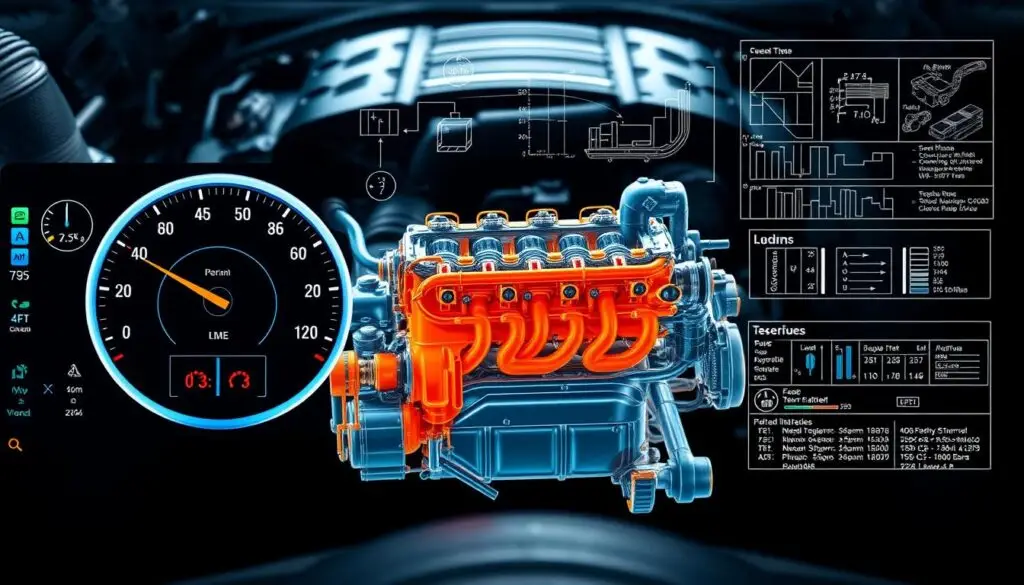
Multi-point temperature monitoring provides early warning of cooling system problems before catastrophic failure occurs.
SPN 110 FMI 3 and FMI 18: Coolant Sensor Circuit Faults
FMI 3 indicates voltage readings above normal range, typically from an open circuit or disconnected sensor. The ECU receives no valid temperature data and may default to a safe mode that limits engine power. FMI 18 appears when the thermostat remains stuck open, preventing the engine from reaching normal operating temperature. This condition increases fuel consumption, elevates emissions, and accelerates engine wear from incomplete combustion.
SPN 175 FMI 0: Oil Temperature Excessive
Oil temperature faults warn of lubrication system problems before bearing damage occurs. When oil temperature exceeds 260-280°F, viscosity drops significantly and the oil cannot maintain adequate film strength between moving parts. This code often accompanies coolant temperature issues since the two systems interact through the oil cooler. Independent oil overheating suggests restricted oil coolers, excessive bearing clearances generating friction heat, or failed oil cooler bypass valves.
SPN 1636 FMI 0: Charge Air Cooler Efficiency Low
Charge air cooler performance directly affects power output and exhaust temperatures. This code triggers when the intercooler cannot reduce intake air temperature to acceptable levels after turbocharger compression. Hot intake air reduces air density, limiting oxygen available for combustion. The result is power loss, increased fuel consumption, and elevated exhaust gas temperatures that stress aftertreatment components.
Causes include external contamination blocking airflow through the cooler core, internal oil contamination from turbocharger seal failures, fin damage from road debris impacts, or boost air leaks that bypass the cooler entirely. Pressure testing the charge air system identifies leaks, while temperature measurements before and after the cooler quantify efficiency loss.
Stay Ahead of Industry Trends
Get expert insights, equipment reviews, and operational strategies delivered to your inbox weekly.
Subscribe to Our NewsletterAftertreatment and DEF System Fault Codes
Aftertreatment system diagnostics have become increasingly complex as emission regulations tighten across North America. Diesel Exhaust Fluid quality, Selective Catalytic Reduction efficiency, and Diesel Particulate Filter regeneration all generate specific fault codes when performance degrades. These systems represent the most common source of diagnostic trouble codes in trucks manufactured after 2010, accounting for nearly 40% of all fault codes recorded in fleet management systems.
Understanding DEF-related codes prevents the progressive power derates that can leave trucks stranded with minimal horsepower. The emission control system provides escalating warnings before implementing severe operating restrictions, giving drivers and maintenance teams time to address problems before they become critical.
DEF system monitoring prevents derate conditions through early detection of fluid quality and level problems.
SPN 1761 FMI 18: DEF Tank Empty
This fault code appears when the DEF tank level sensor detects no usable fluid remaining. Modern trucks typically provide a series of escalating warnings starting at 10% tank capacity. Initial warnings appear as dashboard messages with no performance impact. At 5% capacity or approximately 50 miles of range, the system enters first-level derate, reducing engine power by 25%.
When the tank reaches empty, vehicles experience severe derate conditions limiting speed to 5 MPH after restart. The only resolution involves refilling the DEF tank with quality fluid that meets ISO 22241 specifications and API certification requirements. Attempting to bypass or disable these warnings violates federal regulations and can result in significant fines.
SPN 3031 FMI 3: DEF Tank Temperature Sensor Failed
Temperature monitoring protects DEF from freezing in cold climates and degradation in hot conditions. This code indicates the sensor circuit has failed with voltage readings above acceptable limits. The ECU cannot verify whether DEF is frozen or overheated without valid temperature data. Most systems include heating elements that activate when temperature drops below 15°F, preventing crystallization that blocks supply lines and injector nozzles.
SPN 3363 FMI 0: DEF Tank Temperature Excessive
Diesel Exhaust Fluid begins to degrade when exposed to temperatures above 140°F for extended periods. High temperatures break down the urea molecules, reducing the fluid’s effectiveness in the SCR catalyst. This code triggers when tank temperature exceeds safe storage limits, typically from inadequate tank insulation, exposure to direct sunlight during parking, or exhaust system heat transfer.
Long-term exposure to high temperatures produces ammonia gas that escapes through tank venting, further reducing fluid concentration below the required 32.5% urea content. Fleet managers should implement parking strategies that provide shade during hot weather and verify tank insulation meets manufacturer specifications.
SPN 3364 FMI 2: DEF Quality Below Specification
Quality sensor codes represent the most frustrating aftertreatment faults for fleet technicians. The sensor measures fluid concentration, detecting contamination or dilution that affects SCR performance. Common causes include water intrusion reducing urea concentration, petroleum product contamination from using contaminated fill equipment, chemical degradation from age or improper storage, or using non-certified DEF brands that don’t meet specifications.
The only reliable fix involves draining the DEF tank completely, flushing supply lines, and refilling with fresh certified fluid. Quality issues cannot be corrected by topping off with good fluid—the entire system requires purging to restore proper operation. Always purchase DEF from suppliers displaying API certification marks to avoid quality problems.
Turbocharger and Boost Control Diagnostics
Turbocharger fault codes directly impact power delivery and fuel efficiency in modern diesel engines. These forced induction systems compress intake air to increase oxygen density, allowing more fuel burn per combustion cycle. When boost pressure falls below target levels, engines lose 20-30% of rated power output while consuming excess fuel attempting to maintain performance.
Modern variable geometry turbochargers add complexity compared to fixed-vane designs. Electronic actuators control vane position throughout the engine’s operating range, optimizing boost pressure for different speed and load conditions. This sophistication introduces additional failure modes that generate specific diagnostic codes.
Real-time boost pressure monitoring identifies turbocharger performance degradation before complete failure occurs.
P0299: Turbocharger Underboost
This universal code indicates actual boost pressure falls significantly below the ECU’s target value. The turbocharger cannot generate adequate pressure to meet engine demands under load. Contributing factors include damaged turbine wheels from foreign object ingestion, worn journal bearings that allow excessive shaft play, restricted intake systems reducing airflow to the compressor, exhaust leaks before the turbine reducing drive energy, or failed wastegate actuators stuck open that bypass exhaust flow.
Diagnosis requires comparing actual boost readings against manufacturer specifications using a scan tool while operating the engine under load. Boost pressure should reach target values within 2-3 seconds of acceleration. Sluggish response or low peak pressure indicates turbocharger problems. Physical inspection includes checking for shaft play, examining the compressor and turbine wheels for damage, and verifying actuator movement through full range.
SPN 103 FMI 0 and FMI 1: Turbocharger Speed Faults
These codes specifically monitor turbocharger shaft speed rather than boost pressure output. FMI 0 appears when turbo speed drops below acceptable levels during low-speed engine operation, while FMI 1 indicates insufficient speed at higher engine RPM ranges. The distinction helps technicians determine whether problems occur across the entire operating range or only under specific conditions.
Turbocharger speed faults often precede complete failure by days or weeks. The speed sensor detects shaft RPM variations that indicate developing problems with bearing support, wheel imbalance from blade damage, or insufficient lubrication causing friction. Addressing these codes promptly prevents catastrophic turbo failures that shower metal debris throughout the intake system.
SPN 103 FMI 2: Implausible Turbocharger Speed Signal
Erratic or implausible speed readings suggest sensor or wiring problems rather than mechanical turbocharger faults. The speed sensor may have become contaminated with oil or carbon deposits, blocking magnetic field detection. Damaged sensor wiring creates intermittent signals that the ECU flags as implausible because they don’t match expected patterns based on other engine parameters.
Testing involves cleaning the sensor, inspecting wiring for damage, and verifying proper air gap between the sensor and target wheel. Many apparent turbocharger failures result from simple sensor problems that cost far less to repair than turbo replacement.
NOx Sensor and Emission Monitoring Codes
Nitrogen oxide sensors serve as the feedback mechanism for Selective Catalytic Reduction systems. These sophisticated sensors measure NOx concentration in the exhaust stream both before and after the SCR catalyst. The ECU uses this data to calculate catalyst efficiency and adjust DEF dosing rates to meet emission targets. When NOx sensors fail or drift from calibration, the system cannot properly control emissions, triggering fault codes and potential derate conditions.
NOx sensor problems account for a significant portion of aftertreatment-related downtime in modern diesel fleets. These sensors operate in harsh conditions—extreme temperatures, corrosive exhaust gases, and vibration—that gradually degrade performance over time. Understanding common failure modes helps technicians diagnose problems quickly and implement effective repairs.
Dual NOx sensors provide continuous feedback for SCR system efficiency and emission compliance monitoring.
SPN 3216 FMI 14: SCR Inlet NOx Sensor Closed Loop Control
This code appears when the inlet NOx sensor cannot maintain accurate closed-loop control of the SCR dosing system. The sensor has drifted from its original calibration, providing readings that don’t accurately reflect actual NOx concentrations. This calibration drift prevents the ECU from precisely controlling DEF injection, potentially allowing emissions to exceed legal limits even though the SCR catalyst functions properly.
Related codes include FMI 16 for high drift conditions exceeding acceptable tolerances and FMI 20/21 for oxygen pump capacity problems within the sensor’s internal measurement system. These faults typically require sensor replacement—recalibration procedures rarely restore accuracy to sensors experiencing significant drift.
SPN 3226 FMI 13: SCR Outlet NOx Sensor Communication Lost
Communication faults indicate the outlet NOx sensor has stopped transmitting data over the CAN network. The sensor may have lost power, experienced a wiring harness failure, or suffered internal electronic failures. Without outlet sensor feedback, the ECU cannot calculate SCR efficiency or verify that emissions meet regulatory standards.
Diagnosis starts with verifying sensor power supply and ground circuits using a multimeter. Check for battery voltage at the sensor connector with the key on. Inspect wiring harnesses for damage, especially near hot exhaust components where insulation commonly fails. The FMI 10 variant indicates intermittent communication problems that suggest loose connections rather than complete sensor failure.
SPN 3056 FMI 2: NOx Sensor Performance Degraded
This general NOx sensor error requires deeper investigation to identify the specific problem. Contaminated sensors from poor-quality DEF represent the most common cause—impurities in the fluid create deposits on the sensor element that interfere with measurement accuracy. Exhaust leaks upstream of the sensor introduce ambient air that skews readings, while electrical interference from damaged shielding affects signal quality.
Many NOx sensor faults respond to cleaning procedures using approved sensor cleaning solutions. Sensors showing performance degradation but still communicating on the network often recover full function after proper cleaning. Regular sensor maintenance every 100,000-150,000 miles prevents most premature failures and extends sensor service life. Understanding EPA diesel emission standards helps fleet managers maintain compliance while optimizing maintenance schedules.
EGR System Fault Codes
Exhaust Gas Recirculation systems reduce nitrogen oxide formation by lowering combustion temperatures through the introduction of inert exhaust gas into the intake air stream. The EGR valve controls recirculation rates based on engine operating conditions. When this system develops faults, NOx emissions increase while engine performance often degrades through reduced air quality entering the cylinders.
Carbon buildup represents the primary enemy of EGR system reliability. Exhaust gases contain particulate matter that gradually accumulates on valve surfaces, actuator mechanisms, and cooler passages. This contamination restricts flow, prevents proper valve operation, and generates specific fault codes that technicians must understand for effective diagnosis.
SPN 2659 FMI 0: EGR Flow Rate Excessive
High flow rate faults indicate the EGR valve allows more exhaust gas recirculation than the ECU commanded. A valve stuck partially or fully open creates this condition, introducing too much inert gas into the combustion process. Symptoms include rough idle, excessive exhaust smoke, elevated fuel consumption, and reduced power output as oxygen content drops below optimal levels.
Carbon deposits frequently prevent EGR valves from closing completely. The deposits wedge between the valve and seat, creating a permanent gap that allows uncontrolled flow. Physical inspection requires removing the valve assembly and examining sealing surfaces for buildup. Cleaning procedures using specialized solvents often restore proper operation without requiring valve replacement.
SPN 2791 FMI 11: EGR Actuator General Fault
This code represents multiple potential problems affecting the EGR valve actuator assembly. Damaged wiring harnesses create intermittent operation, faulty position sensors prevent the ECU from verifying valve movement, internal motor wear causes sluggish response, or communication errors disrupt command signals between control modules. The non-specific nature of FMI 11 requires systematic testing to isolate the actual failure mode.
Actuator diagnostics begin with commanded position testing using a scan tool. Command the valve to various positions while monitoring actual position feedback. Discrepancies between commanded and actual position indicate mechanical binding or position sensor problems. Verify actuator power supply and ground circuits, then test motor operation by applying direct voltage to confirm the motor functions properly when bypassing the ECU.
SPN 2791 FMI 12: EGR Actuator Frozen or Binding
A completely frozen actuator results from severe carbon buildup or mechanical seizure within the valve assembly. This condition prevents any valve movement, forcing the system into whatever position existed when seizure occurred. If stuck closed, the EGR system provides no emission control functionality. Stuck open creates constant recirculation that severely impacts engine performance and drivability.
Resolution requires removing the EGR valve assembly for inspection and cleaning. Carbon deposits require mechanical removal using wire brushes and chemical cleaners approved for aluminum components. Inspect actuator gears and linkages for damage that could prevent smooth operation. Replace the valve assembly if cleaning doesn’t restore proper function. Implement preventive maintenance schedules including EGR system cleaning every 100,000 miles to prevent future seizure incidents.
Electrical System and Battery Voltage Diagnostics
Electrical system faults create cascading problems throughout modern diesel engines. Every sensor, control module, and actuator requires stable voltage and clean power to function correctly. When battery voltage drops too low or rises too high, electronic systems generate fault codes, enter protective modes, and may refuse to operate entirely. Understanding voltage-related codes prevents misdiagnosis of components that appear faulty but actually suffer from inadequate power supply.
The charging system maintains battery voltage between 13.5-14.5 volts during normal operation. Deviations outside this range indicate alternator problems, battery failures, or wiring issues affecting power distribution. The ECU continuously monitors system voltage and records specific codes when problems occur.
SPN 168 FMI 0 and FMI 1: Battery Voltage Out of Range
FMI 0 warns of excessive battery voltage that can damage sensitive electronic components. Modern control modules contain voltage regulators designed for 14.5-volt maximum input. Higher voltages stress these regulators and can cause permanent damage to processors and memory circuits. This condition typically results from failed voltage regulators in the alternator that allow uncontrolled charging output.
FMI 1 indicates battery voltage has dropped below the minimum threshold required for reliable system operation, typically below 11 volts. Low voltage prevents control modules from functioning properly, causes erratic sensor readings, and may prevent engine starting. Common causes include discharged batteries, failing alternators that cannot maintain charge, or excessive parasitic drains depleting the battery when the vehicle sits idle.
SPN 168 FMI 18: Low Battery Voltage Warning
This variant provides an early warning before voltage drops to critical levels triggering FMI 1. The system detects voltage trending downward, alerting operators to potential charging system problems before complete failure occurs. Responding to this warning prevents roadside breakdowns and allows scheduled repair rather than emergency service.
P0622 and P0623: Generator Control Circuit Faults
These OBD-II codes identify specific problems with alternator control circuits. P0622 indicates the generator field control circuit has malfunctioned, preventing the ECU from regulating charging output. P0623 reveals problems with the generator exciter circuit that provides initial magnetic field to begin the charging process. Both codes typically require alternator replacement or repair, though wiring problems occasionally create similar symptoms.
P0642 and P0643: Sensor Reference Voltage Faults
These codes signal problems with the 5-volt reference circuits that power multiple sensors throughout the engine. The ECU provides regulated 5-volt supplies to pressure sensors, position sensors, and temperature sensors. When this reference voltage falls outside acceptable limits, every sensor connected to that circuit generates fault codes simultaneously. Technicians seeing multiple sensor codes should always check reference voltage circuits first before replacing individual sensors.
CAN Network Communication Fault Codes
Controller Area Network communication enables multiple electronic control modules to share information across the vehicle. The engine control module, transmission controller, aftertreatment module, instrument cluster, and dozens of other computers exchange data continuously during operation. When communication links fail, systems lose the data they need to function properly, generating specific fault codes that identify which module has gone offline.
Communication problems stem from wiring damage, corroded connectors, failed control modules, or electrical interference affecting data transmission. The J1939 protocol includes diagnostic features that detect missing messages and identify which module stopped communicating, simplifying troubleshooting compared to older communication systems.
SPN 1231 FMI 9: Aftertreatment Control Module Not Responding
This code appears when the Aftertreatment Control Module stops sending expected messages over the CAN network. The engine ECU receives no updates about DPF regeneration status, DEF dosing rates, or catalyst temperatures. Without this information, the engine may enter derate mode to protect emission system components from potential damage caused by operating without proper monitoring.
Diagnosis begins with verifying the ACM has power and ground connections. Check for battery voltage at the module connector with the key on. Inspect the CAN bus wiring between the ACM and engine ECU, paying particular attention to connector pins for corrosion or damage. The ACM location near hot exhaust components makes wiring vulnerable to heat damage over time.
SPN 1669 FMI 9: Aftertreatment CAN Signal Missing
This fault indicates complete loss of communication from the aftertreatment module. Unlike SPN 1231 which detects specific message failures, this code signals the module has completely dropped off the network. The most common causes include power supply failures to the module, damaged CAN bus wiring creating open circuits, or internal module failures requiring replacement.
CAN bus diagnostics require specialized tools that monitor network traffic and identify communication errors. Testing involves checking for proper termination resistance on the network—typically 60 ohms between CAN High and CAN Low wires with all modules connected. Incorrect termination prevents reliable communication and generates intermittent faults that can be difficult to isolate without proper equipment.
SPN 2000 FMI 9: Common Powertrain Controller Communication Lost
Loss of communication with the CPC represents a critical system fault that prevents normal vehicle operation. The Common Powertrain Controller manages essential engine functions including fuel delivery, ignition timing, and emission control. Without CPC communication, other modules cannot receive the data they need to perform their functions.
This fault often results from connector problems rather than module failure. Inspect the CPC connector for bent pins, corrosion, or loose terminals that prevent reliable connections. Check the J1939 data link connections at both ends of the communication circuit. Vibration can work connectors loose over time, creating intermittent communication failures that appear as random faults.
Share Your Expertise
Join Heavy Duty Journal as a guest author and reach thousands of industry decision-makers.
Become a Guest AuthorBest Practices for Fleet Fault Code Management
Effective fault code management separates high-performing fleets from operations plagued by unexpected breakdowns and excessive repair costs. Modern fleet management requires systematic approaches that combine technology, training, and disciplined processes. The most successful operations treat fault codes as early warning systems rather than simply reacting to problems after they occur.
Data-driven decision making transforms raw diagnostic information into actionable intelligence. Fleet managers who implement comprehensive fault code tracking systems reduce maintenance costs by 15-25% while improving vehicle availability. These improvements come from catching problems early, prioritizing repairs effectively, and identifying patterns that predict future failures.
Real-Time Monitoring Implementation
Telematics platforms like Samsara, Geotab, and Trimble provide instant fault code notifications directly to maintenance managers’ smartphones and computers. These systems capture codes immediately when they occur, linking each fault to specific vehicles, drivers, locations, and operating conditions. Real-time visibility enables quick decisions about whether vehicles should continue operating or return for service.
Modern telematics platforms automatically translate complex SPN/FMI codes into plain language descriptions that operations teams can understand without technical training. Instead of seeing “SPN 100 FMI 1,” the system displays “Engine Oil Pressure – Critically Low – Immediate Shutdown Required.” This clarity enables faster response and better communication between drivers and maintenance teams.
Integration with maintenance management systems converts fault codes directly into work orders with appropriate priority levels and estimated repair times. This automation eliminates manual data entry and ensures no codes get overlooked or forgotten. The work order includes all relevant information technicians need to diagnose and repair the problem efficiently.
Critical vs Non-Critical Code Prioritization
Smart prioritization prevents unnecessary downtime while ensuring critical safety systems receive immediate attention. Implement a three-tier classification system that assigns red, yellow, or green status to every fault code based on safety implications and potential damage risk.
Red codes demand immediate vehicle shutdown and repair. These include engine oil pressure faults, critical coolant temperature warnings, brake system malfunctions, and any code indicating immediate risk of catastrophic failure. Vehicles showing red codes should not operate until repairs are completed and verified.
Yellow codes require prompt attention but allow continued operation until the next scheduled maintenance window. Examples include minor sensor drift, DEF quality warnings with adequate remaining range, EGR flow rate deviations, and charging system inefficiencies. Schedule repairs within 48-72 hours to prevent progression to critical status.
Green codes represent maintenance reminders, minor informational alerts, and non-critical system messages that can wait for regularly scheduled service intervals. These include service interval notifications, minor communication glitches that self-correct, and advisory messages about optimal operating conditions.
| Priority | Example Faults | Required Response |
|---|---|---|
| Red – Critical | Oil pressure low, coolant temp high, brake failure | Immediate shutdown and repair |
| Yellow – Urgent | DEF quality low, sensor drift, EGR flow issues | Repair within 48-72 hours |
| Green – Routine | Service reminders, minor warnings, advisory messages | Address at next scheduled service |
Predictive Maintenance Through Trend Analysis
Historical fault code data reveals patterns that predict component failures before they occur. Analyze 3-6 months of fault code history to identify which codes appear most frequently, which vehicles generate more faults than others, and which operating conditions correlate with increased fault rates. This analysis guides preventive maintenance schedules and helps justify equipment replacement decisions.
Track fault code frequency by vehicle make, model, and engine family. Certain engine platforms exhibit characteristic failure modes that appear predictably at specific mileage intervals. Knowing these patterns allows proactive component replacement before failures occur in service.
Monitor intermittent codes that appear and disappear. Codes that self-clear often indicate developing problems that haven’t progressed to the point of persistent faults. Three or more occurrences of the same intermittent code within a month suggests the component or system requires inspection even though the problem hasn’t become permanent yet.
Documentation and Knowledge Management
Comprehensive documentation transforms institutional knowledge into permanent records that improve over time. Record every fault code occurrence along with the diagnostic steps taken, root cause identified, repairs performed, parts replaced, and verification of repair effectiveness. This database becomes increasingly valuable as patterns emerge from thousands of repair records. Following TMC recommended practices for documentation standardization ensures consistency across maintenance operations.
Standardize documentation formats to ensure consistency across multiple technicians and locations. Include freeze-frame data captured when faults occurred—engine speed, load, temperature, and other parameters at the moment the ECU recorded the code. This contextual information often reveals important clues about why faults occurred and how to prevent recurrence.
Train drivers to report warning lights and unusual vehicle behavior immediately rather than ignoring problems. Many catastrophic failures start with minor warnings that drivers dismiss or forget to mention. Clear communication protocols ensure maintenance teams receive timely information about developing problems before they escalate.
Conclusion
Mastering diesel engine fault codes requires understanding both the diagnostic systems that generate these codes and the mechanical systems they monitor. The 15 critical fault code categories covered here—from oil pressure and fuel system diagnostics to aftertreatment sensors and electrical network faults—represent the core knowledge base every fleet technician needs for effective troubleshooting.
Success in fault code management comes from systematic approaches that combine real-time monitoring, intelligent prioritization, and predictive maintenance strategies. Fleets that implement comprehensive telematics platforms reduce diagnostic time by 40-50% through instant fault notifications and automated work order generation. This efficiency translates directly into reduced downtime and lower operating costs across the entire fleet.
The difference between OBD-II and J1939 diagnostic standards matters in daily operations. Understanding SPN/FMI code structure enables quick interpretation without constant reference to code manuals. Knowing which codes demand immediate shutdown versus those allowing continued operation prevents both unnecessary downtime and catastrophic failures from ignored warnings.
Regular training keeps technicians current with evolving diagnostic technologies and emerging fault patterns. Engine manufacturers continuously update ECU software, adding new fault codes and refining diagnostic algorithms. Stay connected with manufacturer technical service bulletins and industry forums where technicians share solutions to common problems. The SAE J1939 standard continues to evolve with enhanced diagnostic capabilities in newer protocol revisions. The most effective maintenance operations treat fault code management as an ongoing improvement process rather than a static set of procedures.
Share This Article
Share this post with your network and help other industry professionals stay informed.