By Michael Nielsen, Editor & Publisher | 15+ Years in Diesel Repair
Last Updated: January 2026
📖 Estimated reading time: 22 minutes
Autonomous trucking has moved from experimental pilot programs to scaled commercial operations, fundamentally changing how fleet managers approach long-haul freight. In 2026, Level 4 autonomous systems now handle thousands of miles daily on designated corridors, delivering measurable improvements in safety, fuel efficiency, and asset utilization. For fleet operators evaluating this technology, understanding the operational realities—not just the marketing promises—determines whether autonomous integration makes financial sense for their specific routes and freight profiles.
The technology addresses several converging pressures facing the trucking industry. Labor represents 35-40% of operating costs for long-haul operations, and qualified drivers remain difficult to recruit and retain. Autonomous systems don’t eliminate the need for human oversight, but they fundamentally change the economics by enabling continuous operation and reducing per-mile labor costs on suitable routes. Carriers implementing phased adoption strategies report 25-35% utilization improvements and payback periods of 3-5 years on high-volume corridors.
This guide examines what autonomous trucking means for fleet operations in practical terms: the technology stack enabling these systems, regulatory requirements governing deployment, total cost of ownership calculations, safety performance data from commercial operations, and workforce implications for existing drivers and technicians.
Key Takeaways
- Operational Economics: Autonomous systems reduce freight costs by 25-30% through optimized fuel efficiency, reduced labor expenses, and increased asset utilization from continuous operation
- Safety Performance: Commercial deployments show 15-25% lower collision rates per million miles, with advanced sensor arrays providing 360-degree awareness and faster hazard response than human drivers
- Regulatory Framework: FMCSA guidelines permit Level 4 autonomous operations on designated corridors with mandatory remote monitoring, though state regulations vary significantly
- Investment Timeline: Autonomous technology adds $150,000-$250,000 to base truck costs, with fleet operators reporting 3-5 year payback on routes exceeding 100,000 annual miles
- Workforce Evolution: Driver roles transition to remote fleet monitoring and edge-case intervention, requiring new technical skills while maintaining institutional knowledge of freight operations
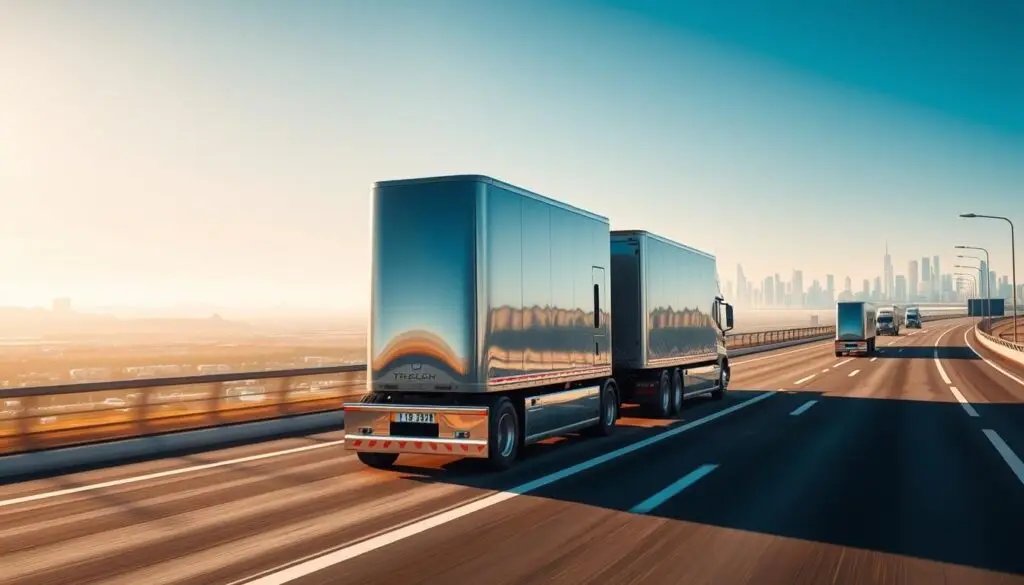
Modern autonomous trucks integrate LiDAR, radar, and camera systems to navigate complex highway environments safely
Understanding Autonomous Trucking Technology
Autonomous trucking operates on a foundation of sensor fusion, artificial intelligence, and vehicle-to-everything (V2X) communication that enables trucks to navigate without continuous human intervention. The Society of Automotive Engineers J3016 standard defines six levels of driving automation, from Level 0 (no automation) to Level 5 (full automation). Most commercial deployments in 2026 operate at Level 4, meaning the vehicle handles all driving tasks within specific operational design domains—typically highway routes between distribution centers.
These systems combine multiple sensor types to create a comprehensive view of the surrounding environment. Forward-facing radar detects objects up to 250 meters ahead, while short-range radar monitors blind spots and adjacent lanes. LiDAR systems generate precise 3D maps of the road environment, identifying lane markings, barriers, and obstacles with centimeter-level accuracy. High-resolution cameras provide visual context for traffic signals, road signs, and unexpected hazards.
The AI processing stack interprets this sensor data in real-time, making thousands of micro-decisions per second. Machine learning algorithms trained on millions of miles of driving data predict the behavior of surrounding vehicles, anticipate traffic pattern changes, and select optimal paths through complex scenarios. When the system encounters situations outside its operational parameters—construction zones, severe weather, or unusual obstacles—it alerts remote operators who can assume control or provide guidance.
SAE Autonomy Levels and Commercial Applications
The freight industry has moved methodically through the SAE autonomy levels. Level 2 systems featuring adaptive cruise control and lane-keeping assistance gained widespread adoption between 2020-2023 as fleets familiarized drivers with partial automation. These systems reduced driver fatigue on long hauls while collecting valuable data on real-world driving conditions that informed subsequent development.
Level 3 conditional automation emerged in limited deployments around 2024, allowing hands-off operation on highways under favorable conditions with drivers ready to intervene. This transitional phase proved crucial for regulatory acceptance and public confidence building. By 2026, Level 4 systems handle complete trips on approved routes without human drivers in the cab, though remote monitoring remains standard practice across all commercial deployments.
| SAE Level | Description | Commercial Status 2026 |
|---|---|---|
| Level 2 | Partial automation with driver supervision | Widespread adoption across fleets |
| Level 3 | Conditional automation requiring driver readiness | Transitioning to Level 4 on major routes |
| Level 4 | High automation within defined operational domains | Active deployment on approved corridors |
| Level 5 | Full automation in any environment | Research and development phase |
Core Technology Components
Redundancy defines modern autonomous truck architecture. Critical systems operate in duplicate or triplicate to ensure fail-safe operation. Dual computing platforms process sensor data independently, comparing results to detect anomalies. Multiple power supplies maintain operation if one source fails. Brake systems feature independent hydraulic circuits with electronic backups capable of bringing the vehicle to a controlled stop even with primary system failure.
V2X communication represents a crucial advancement beyond individual vehicle sensors. Trucks exchange real-time data with infrastructure, other vehicles, and cloud-based traffic management systems. This connected approach extends situational awareness beyond sensor range, providing advance warning of accidents, traffic congestion, or hazardous conditions miles ahead. Integration with fleet telematics systems enables centralized monitoring and coordination across entire autonomous fleets.
Cybersecurity protections match the sophistication of the autonomous systems themselves. Multi-layered encryption secures vehicle-to-cloud communications, while intrusion detection systems monitor for unauthorized access attempts. Over-the-air software updates deploy security patches without requiring physical service visits, maintaining protection against evolving threats while enabling continuous system improvements.
Regulatory Framework for Autonomous Freight
Federal and state regulations form the legal framework enabling autonomous trucking operations. The Federal Motor Carrier Safety Administration has developed guidelines for ADS-equipped commercial motor vehicles, addressing how existing safety regulations apply when automated systems perform driving tasks traditionally assigned to human operators. These guidelines require comprehensive testing and performance validation before commercial deployment while establishing notification procedures for carriers operating Level 4 or Level 5 systems.
The regulatory landscape continues evolving as technology matures. FMCSA’s rulemaking process has solicited extensive industry input on questions including inspection protocols for driverless vehicles, remote operator training requirements, and data recording standards for accident investigation. The agency’s TechCelerate Now program accelerates adoption of advanced driver assistance systems by partnering with industry stakeholders including the American Trucking Associations’ Technology & Maintenance Council and the American Transportation Research Institute.
State-level regulations add complexity for interstate carriers. Some states have enacted permissive frameworks aligned with federal guidelines, while others maintain more restrictive approaches requiring additional permits or limiting operational hours. Texas, Arizona, and Nevada emerged as early leaders in autonomous vehicle testing and deployment, creating regulatory sandboxes that attracted technology developers and generated crucial safety data. Carriers operating across state lines must navigate this patchwork, often restricting autonomous operations to states with compatible regulatory frameworks.
Liability and Insurance Considerations
Insurance frameworks have evolved to address the unique risk profile of autonomous trucks. Traditional commercial vehicle policies assigned liability primarily to drivers and fleet operators. Autonomous systems introduce questions about manufacturer responsibility, software liability, and the role of remote monitors in accident causation that existing policy structures weren’t designed to address.
Major insurers now offer specialized autonomous vehicle policies accounting for these factors. Premiums reflect the improved safety statistics demonstrated by autonomous systems—some carriers report 20-30% lower rates compared to conventional operations—while including coverage for technology failures and cyber incidents. Policies typically require detailed data logging that provides clear records of system status and decision-making in the event of an incident, enabling more precise fault determination than traditional accident reconstruction.
Product liability questions continue evolving through case law and legislative action. When an autonomous system causes an accident, determining fault requires examining sensor data, software logic, maintenance records, and the actions of any human oversight. The industry trend favors clear liability assignment through contractual agreements between technology providers, fleet operators, and their insurers, reducing uncertainty that might otherwise slow adoption.

Remote operations centers enable human oversight of autonomous truck fleets across multiple routes simultaneously
Economic Analysis for Fleet Operators
The driver recruitment and retention challenge remains the most compelling economic argument for autonomous trucking. The American Trucking Associations reports ongoing workforce challenges in recruiting qualified drivers, with demographic trends suggesting continued pressure as experienced drivers retire faster than new entrants join the profession. Autonomous systems offer a path to maintain freight capacity without depending entirely on constrained labor supply.
Labor represents approximately 35-40% of total operating costs for long-haul trucking operations. Autonomous systems eliminate or significantly reduce this expense on routes where Level 4 operation is feasible. A typical long-haul truck might cover 110,000-120,000 miles annually with a human driver limited by hours-of-service regulations. An autonomous truck operating continuously except for fueling and maintenance can exceed 200,000 miles per year, dramatically improving asset utilization and spreading fixed costs across more revenue miles.
Fuel efficiency gains add another layer of economic benefit. AI-powered systems optimize acceleration, braking, and cruising speeds to minimize fuel consumption in ways human drivers rarely achieve consistently. They maintain ideal following distances, anticipate traffic flow changes, and select routes balancing distance with real-time traffic conditions. Fleet operators report fuel savings of 8-12% from partial autonomy systems, with expectations of 15-20% improvements as Level 4 systems mature and algorithms incorporate more operational data.
35% Utilization Increase
Reported by carriers deploying Level 4 autonomous trucks on dedicated corridors, enabling continuous operation except for fueling and mandatory inspection stops
Total Cost of Ownership Analysis
Initial autonomous system costs remain substantial, typically adding $150,000-$250,000 to the base truck price depending on sensor suite sophistication and redundancy levels. However, operational savings justify these premiums for high-utilization applications. Fleet operators calculate payback periods of 3-5 years on vehicles covering 100,000+ annual miles, with returns accelerating as labor costs continue rising and technology costs decline with scale.
Maintenance costs follow different patterns compared to conventional trucks. Autonomous systems require specialized technician training and diagnostic equipment, increasing service complexity and potentially limiting where vehicles can be serviced. However, predictive maintenance capabilities reduce catastrophic failures and unplanned downtime. Sensor calibration and software updates become regular service items, but major component failures decrease as AI systems detect wear patterns early and schedule proactive replacements before roadside breakdowns occur.
| Cost Category | Conventional Truck | Autonomous Truck | Net Impact |
|---|---|---|---|
| Initial Purchase | $150,000-$180,000 | $300,000-$430,000 | +$150,000-$250,000 |
| Annual Labor (per truck) | $50,000-$65,000 | $8,000-$12,000 (monitoring) | -$38,000-$57,000 |
| Fuel (annual) | $35,000-$45,000 | $28,000-$38,000 | -$7,000-$7,000 |
| Insurance (annual) | $12,000-$18,000 | $9,000-$14,000 | -$3,000-$4,000 |
Safety Performance and Risk Assessment
Safety data from autonomous trucking deployments shows measurable improvements over human-driven vehicles in specific metrics. Advanced sensor arrays provide 360-degree awareness without blind spots, fatigue, or distraction. Reaction times measured in milliseconds enable faster responses to sudden hazards than human perception and motor response allows. Collision avoidance systems detect potential accidents and begin evasive maneuvers significantly faster than typical human response times.
However, autonomous systems face challenges that human drivers handle intuitively. Unusual scenarios—construction zone layouts, hand signals from workers, or vehicles behaving unpredictably—can confuse AI decision-making logic. Edge cases remain the primary safety concern: situations occurring too infrequently for comprehensive training data but requiring appropriate responses. This reality explains why remote monitoring persists even for Level 4 systems, providing human judgment when algorithms encounter uncertainty.
Accident rates per million miles offer the clearest safety comparison. Early data from commercial autonomous operations suggests collision rates 15-25% lower than conventional trucking, with most incidents occurring at low speeds during transitions between autonomous and manual operation. As systems mature and operational procedures improve, these statistics continue trending favorably, though the relatively small sample size compared to total trucking miles means conclusions remain preliminary.
Weather and Environmental Limitations
Sensor performance degrades under adverse weather conditions, representing a key operational constraint fleet managers must account for in deployment planning. Heavy rain reduces LiDAR effectiveness, while snow and fog impair camera systems. Regulatory frameworks and fleet operating procedures typically restrict autonomous operations during severe weather, requiring human takeover or suspending trips until conditions improve.
Technology advances continue narrowing these limitations. Multi-spectral cameras maintain functionality in low visibility, while advanced signal processing extracts useful data from degraded sensor inputs. Integration with weather forecasting systems allows proactive route adjustments, diverting autonomous trucks from predicted severe weather or scheduling departures to avoid poor conditions. However, carriers operating in regions with frequent adverse weather should factor these restrictions into utilization projections.
Road infrastructure quality also impacts autonomous performance. Well-maintained highways with clear lane markings provide ideal operating environments. Rural roads with faded striping, potholes, or inconsistent signage challenge perception systems. This reality explains why initial deployments focus on major freight corridors between distribution hubs rather than attempting universal coverage from the start.
⚠️ Operational Limitation
Autonomous systems require manual intervention or operation suspension during severe weather including heavy rain, snow, fog, and ice. Fleet managers should factor weather-related downtime into route selection and utilization projections for corridors with frequent adverse conditions.
Fleet Management and Connected Operations
Connected vehicle technology transforms fleet management from reactive problem-solving to proactive optimization. Real-time visibility into every truck’s location, status, and performance enables centralized coordination maximizing efficiency across the entire fleet. Dispatchers monitor dozens or hundreds of vehicles simultaneously, identifying opportunities to adjust routes, consolidate loads, or respond to customer requirements with information that wasn’t previously available until drivers called in.
Vehicle-to-vehicle communication creates additional optimization possibilities. Trucks traveling similar routes can platoon—following closely in aerodynamic formation to reduce fuel consumption by 8-12% for trailing vehicles. They share traffic and road condition data, enabling following trucks to anticipate and prepare for hazards before encountering them directly. This cooperative approach multiplies the benefits of individual autonomous systems across fleet operations.
Integration with warehouse management systems and supply chain software creates seamless freight flow. Autonomous trucks receive loading instructions automatically as they approach facilities. Dock scheduling systems coordinate arrivals to minimize wait times. Departure notifications trigger downstream preparations at destination facilities. This end-to-end visibility and coordination reduces delays and idle time throughout the shipping process, improving customer service while reducing operating costs.
Remote Monitoring and Intervention
Remote operations centers represent the human element in autonomous freight operations. Trained monitors oversee multiple vehicles simultaneously, ready to provide guidance when autonomous systems encounter edge cases or request human input. These roles require different skills than traditional driving—understanding system capabilities, interpreting sensor data, and making rapid decisions based on remote information rather than direct physical experience.
Intervention protocols define when and how humans assume control. Simple scenarios might require only verbal guidance through a communication link, directing the truck to take a specific exit or proceed with caution through a construction zone. Complex situations could necessitate full remote operation, with monitors steering and controlling speed through video feeds and sensor displays. The most challenging cases trigger vehicle stops in safe locations until on-site assistance arrives.
Monitor-to-vehicle ratios depend on operational complexity and regulatory requirements. Current deployments typically maintain one monitor for every 3-8 vehicles, though this ratio improves as systems mature and intervention frequency decreases. The ratio also varies by route type—highway corridors require less monitoring than mixed environments where autonomous systems face more frequent edge cases requiring human judgment.
Fleet management dashboards integrate real-time vehicle data with predictive analytics to optimize autonomous operations
The HDJ Perspective
Autonomous trucking represents genuine operational transformation, but fleet managers should approach implementation with clear-eyed realism rather than technology enthusiasm. The economics work best on high-volume, consistent routes where vehicles can operate continuously and weather limitations have minimal impact. Carriers considering autonomous adoption should start with detailed analysis of their specific route profiles, calculate utilization improvements realistically based on weather and infrastructure factors, and plan for the workforce transition that accompanies any significant technology change. The carriers succeeding with autonomous technology today built their implementations on solid operational foundations—strong maintenance programs, experienced dispatch teams, and realistic expectations about what the technology can and cannot do.
Workforce Transformation
The transition to autonomous trucking reshapes employment across the freight industry without necessarily reducing total positions. Traditional driver roles evolve toward remote monitoring, system oversight, and edge-case management. New positions emerge in autonomous system maintenance, data analytics, and fleet optimization. The net employment effect varies by company and implementation approach, but workforce transformation proceeds regardless of automation level.
Experienced drivers bring valuable expertise to remote monitoring roles. Their understanding of truck handling, road conditions, and freight operations translates effectively to overseeing autonomous systems. Many carriers prioritize hiring current drivers for monitoring positions, providing training on technology interfaces and remote operation protocols. This approach maintains institutional knowledge while offering drivers career paths that reduce the physical demands of daily driving and time away from home.
Technical skill requirements increase across fleet operations. Diesel technicians need training in sensor calibration, software diagnostics, and electrical systems beyond conventional mechanical expertise. IT specialists join maintenance teams to manage data systems, connectivity, and cybersecurity. Fleet managers require understanding of AI capabilities and limitations to optimize autonomous vehicle deployment and utilization effectively.
Training and Certification Development
Educational institutions and carriers develop training curricula addressing autonomous technology needs. Programs cover sensor technology fundamentals, AI system operation, data interpretation, and failure mode troubleshooting. Hands-on components include simulator training for remote operations and supervised experience with actual autonomous vehicles before independent operation.
Certification standards are emerging through industry associations and regulatory bodies. The Technology & Maintenance Council (TMC) has proposed certification paths for autonomous vehicle technicians, defining core competencies and testing requirements. Similar programs target remote monitors, ensuring consistent skill levels across carriers. These certifications help workers demonstrate qualifications as they transition into autonomous-focused roles.
Continuing education becomes increasingly important as technology evolves rapidly. Software updates alter system behavior, new sensors deploy in fleet upgrades, and operational procedures adapt based on accumulated experience. Carriers invest in ongoing training to maintain workforce competency, typically requiring quarterly or semi-annual refresher courses covering system changes and lessons learned from recent deployments.
Integration with Sustainable Powertrains
The convergence of autonomous technology with electric and hydrogen powertrains creates synergistic benefits for efficiency and sustainability. Electric trucks suit autonomous operations particularly well—their regenerative braking integrates seamlessly with AI-controlled deceleration, while the absence of complex transmissions simplifies autonomous control systems. Battery electric vehicles also generate less heat and vibration than diesel engines, creating cleaner operating environments for sensitive sensors and electronics.
The combination addresses range limitations of battery electric vehicles for long-haul applications while maintaining zero tailpipe emissions. Autonomous systems optimize energy consumption through precise speed and acceleration control, extending range beyond what human drivers typically achieve. Automated charging and fueling systems enable driverless vehicles to refuel without human intervention, maximizing operating time.
California’s Advanced Clean Trucks regulation requires manufacturers to sell increasing percentages of zero-emission vehicles, reaching 40% of Class 7-8 truck tractor sales by 2035. Similar mandates in other states create strong incentives for electric autonomous trucks that satisfy both efficiency and environmental objectives. Fleet operators in these markets face dual pressures to adopt both autonomous and zero-emission technologies, making integrated solutions increasingly attractive.
Free Professional Fleet Tools
Cost calculators, fault code lookup, maintenance planners, and more—built for owner-operators, fleet managers, and diesel techs. No signup required.
Commercial Deployment Case Studies
Commercial autonomous trucking operations provide tangible evidence of technology maturity and business viability. Several carriers have moved beyond pilot programs into scaled deployments covering thousands of autonomous miles weekly. Their experiences illuminate both the opportunities and challenges of real-world implementation that fleet managers should understand before committing to autonomous adoption.
Phased Implementation Approach
Leading carriers began autonomous integration with Level 2 systems, equipping their fleets with adaptive cruise control and lane-keeping assistance. This initial phase familiarized drivers with partial automation while collecting operational data. Driver feedback identified situations where automation excelled and scenarios requiring refinement, building organizational knowledge before advancing to higher automation levels.
Advancement to Level 3 systems on select routes between major distribution centers maintained drivers in the cab but allowed hands-off operation under favorable conditions. Accumulated data showed idle time reductions of 15-20% and fuel savings of 8-12% compared to conventional operations. Safety metrics improved with significant decreases in lane departure incidents and hard braking events, validating the technology’s potential before larger investments.
Level 4 trials initiated on dedicated corridors linking high-volume facilities demonstrated the full autonomous value proposition. These routes feature well-maintained interstate highways with minimal construction and predictable traffic patterns—ideal conditions for autonomous operation. Remote monitors oversee the vehicles from centralized operations centers, intervening when systems request guidance or conditions exceed operational parameters.
Results and Lessons Learned
Initial results from Level 4 corridors show promising efficiency gains. Vehicle utilization increased 30-40% as trucks operate continuously except for fueling and mandatory inspection stops. On-time delivery improved significantly compared to conventional operations constrained by hours-of-service regulations. Carriers project breaking even on autonomous technology investments within 4 years based on labor savings, fuel efficiency, and asset utilization improvements.
Integration with supply chain optimization platforms demonstrates how autonomous vehicles become tools within broader logistics efficiency efforts rather than standalone technology deployments. Predictive algorithms forecast freight demand patterns, positioning autonomous capacity where it delivers maximum value. Routes with consistent, high-volume traffic receive priority for autonomous deployment since the technology excels at repetitive operations. Variable or unpredictable routes remain with human drivers who handle complex situations more effectively.
Carriers report 10-15% reductions in empty miles across their networks after integrating autonomous vehicles with dispatch optimization systems. The combination of AI routing and autonomous execution creates efficiencies neither technology achieves independently, validating the importance of implementing autonomous trucking as part of comprehensive fleet management modernization rather than as an isolated technology project.
Automated charging infrastructure enables electric autonomous trucks to refuel without human intervention, maximizing vehicle utilization
Infrastructure Requirements
Successful autonomous trucking deployments depend on supporting infrastructure beyond the vehicles themselves. Digital connectivity, physical facilities, and service networks must evolve to accommodate autonomous operations requirements. These infrastructure investments often represent the bottleneck limiting deployment pace rather than vehicle technology readiness.
Connectivity and Communication
Autonomous trucks require reliable high-bandwidth connectivity for real-time communication with remote operations centers, cloud-based processing, and vehicle-to-vehicle coordination. Current 4G LTE networks provide baseline functionality, but coverage gaps in rural areas create operational challenges requiring contingency planning. The ongoing 5G network buildout addresses these limitations with lower latency, higher bandwidth, and more consistent coverage, though full deployment across freight corridors will take several years.
Redundant communication pathways ensure autonomous operations continue during network interruptions. Vehicles carry multiple cellular modems from different carriers, automatically failing over if one network becomes unavailable. Satellite backup systems provide coverage in areas beyond terrestrial network reach, though higher latency limits their suitability for time-critical communications. Fleet managers should verify connectivity coverage along planned autonomous corridors before committing to deployment.
Maintenance and Service Facilities
Autonomous vehicle maintenance requires equipment and expertise beyond conventional truck service capabilities. Sensor calibration demands precision alignment equipment and specialized diagnostic tools. Software updates and system reconfigurations need secure network connections and trained technicians understanding both hardware and software layers. Fleet operators invest in facility upgrades and technician training to support these requirements, or partner with OEM service networks providing specialized autonomous system support.
Strategic facility locations balance geographic coverage with utilization efficiency. Concentrating autonomous trucks on high-volume routes allows centralized maintenance facilities serving multiple deployment corridors. This approach maximizes specialist utilization and equipment investment returns. Carriers typically locate major service centers at route endpoints or midpoints, with mobile service units handling minor issues along corridors when vehicles cannot reach primary facilities.
Challenges and Adoption Barriers
Despite promising technology and clear economic benefits, autonomous trucking faces obstacles slowing universal deployment. These challenges span technical, regulatory, social, and economic domains. Understanding and addressing these barriers determines the pace of industry transformation and helps fleet managers set realistic expectations.
Technical Limitations
Autonomous systems perform exceptionally in ideal conditions but struggle with unusual scenarios occurring infrequently but requiring appropriate responses. Construction zones with temporary traffic patterns confuse vehicles trained on standard road configurations. Emergency vehicle interactions, hand signals from police or workers, and debris in travel lanes represent edge cases where human judgment currently exceeds AI capabilities in many situations.
Cybersecurity threats evolve as quickly as defensive measures. Connected autonomous vehicles present attractive targets for malicious actors seeking to disrupt operations, steal data, or cause harm. Multi-layered security measures protect against known threats, but novel attack vectors emerge continuously. The industry invests heavily in cybersecurity, but complete immunity remains impossible given the connectivity essential for autonomous operations.
Social and Workforce Considerations
Social acceptance represents a non-technical barrier to autonomous trucking deployment. High-profile accidents involving autonomous vehicles—even when rare compared to human-caused crashes—generate negative publicity undermining public confidence. Building trust requires transparent communication about capabilities, limitations, and safety performance data from actual operations rather than marketing claims.
Professional drivers view automation with mixed feelings. Some welcome technology reducing physical demands and potentially extending their careers through transition to remote monitoring roles. Others see automation as threatening their livelihoods and resist changes to established work practices. Industry success requires addressing these concerns through retraining programs, career development opportunities, and honest dialogue about workforce transformation timelines.
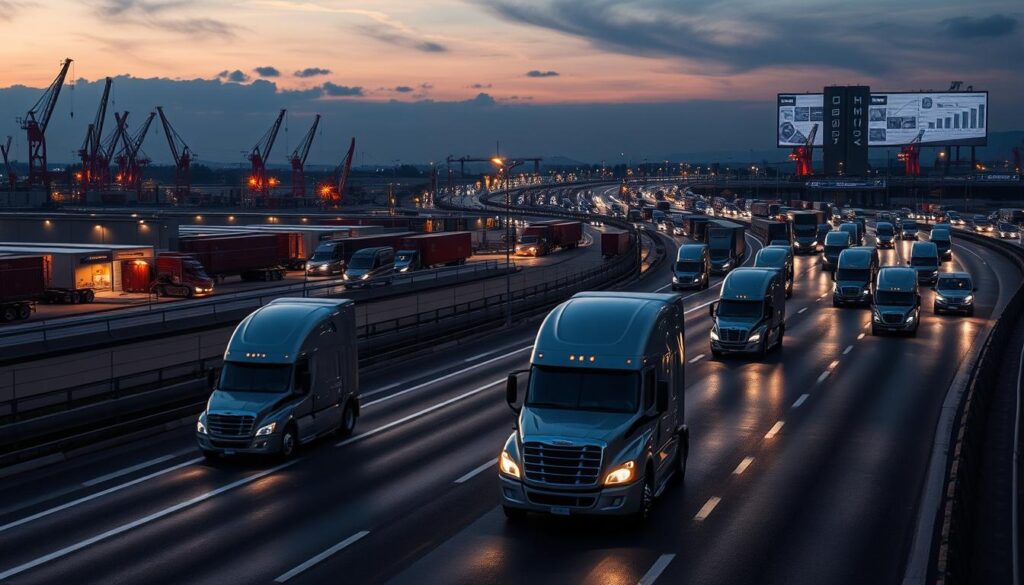
Autonomous trucks must safely navigate complex traffic scenarios while maintaining public confidence in the technology
Future Outlook
Industry analysts project significant autonomous trucking growth through the coming decade. Forecasts suggest autonomous trucks capturing 15-20% of long-haul freight miles by 2030, rising to 40-50% by 2035. These projections assume continued technology improvements, supportive regulatory development, and proven economic benefits driving adoption across the industry.
Geographic deployment patterns will vary based on regulatory environments, infrastructure readiness, and market conditions. Sunbelt states with favorable weather, progressive regulations, and high freight volumes should see earlier adoption. Regions with harsh winters, restrictive policies, or limited freight density will lag. This geographic patchwork creates operational complexity for carriers serving national markets, requiring hybrid strategies combining autonomous and conventional operations.
Technology evolution continues beyond current Level 4 systems. Level 5 autonomy—full self-driving capability without any restrictions—remains years away for commercial trucking applications. However, gradual expansion of Level 4 operational design domains will effectively cover most freight scenarios. Urban delivery, loading dock maneuvering, and complex construction zones will likely require human capabilities longest, suggesting sustained demand for skilled drivers even as autonomous systems handle increasing highway miles.
Frequently Asked Questions
What autonomy level do most commercial autonomous trucks operate at in 2026?
Most commercial deployments operate at SAE Level 4, meaning the truck handles all driving tasks within specific operational design domains—typically well-maintained highway routes between distribution centers. Remote monitors oversee operations and can intervene when systems encounter scenarios outside their capabilities. Level 5 full autonomy without any restrictions remains in research and development phases, with no clear timeline for commercial availability.
How much do autonomous trucks cost compared to conventional trucks?
Autonomous systems add $150,000-$250,000 to base truck prices depending on sensor sophistication and redundancy levels. However, operational savings from reduced labor costs (35-40% of total expenses), improved fuel efficiency (15-20% gains), and increased asset utilization justify these premiums for high-mileage applications. Fleet operators report payback periods of 3-5 years on routes covering 100,000+ annual miles, with economics improving as technology costs decrease and labor costs continue rising.
Are autonomous trucks safer than human-driven vehicles?
Early commercial deployment data suggests autonomous trucks achieve 15-25% lower collision rates per million miles compared to conventional operations. Advanced sensors provide 360-degree awareness, eliminate driver fatigue and distraction, and enable faster hazard response than human perception allows. However, autonomous systems struggle with edge cases that humans handle intuitively, including unusual construction zones, emergency vehicle interactions, and unpredictable behavior from other road users. Overall safety continues improving as systems accumulate operational experience.
How do autonomous trucks perform in adverse weather conditions?
Autonomous systems face limitations in heavy rain, snow, and fog due to reduced sensor effectiveness. Current regulations and operating procedures typically restrict autonomous operations during severe weather, requiring human takeover or trip suspension until conditions improve. Technology continues advancing with multi-spectral sensors and improved signal processing, but weather remains a key operational constraint. Fleet managers should factor weather-related downtime into utilization projections when evaluating autonomous deployment on corridors with frequent adverse conditions.
What happens to truck drivers as automation increases?
Driver roles are evolving rather than disappearing entirely. Many drivers transition to remote monitoring positions overseeing autonomous fleets from operations centers. Others focus on last-mile delivery, complex urban environments, or edge cases where human judgment excels. The industry projects workforce transformation rather than wholesale elimination, with retraining programs helping drivers develop skills for technology-focused roles. Carriers report success transitioning experienced drivers to monitoring positions where their operational knowledge proves valuable.
Which routes are best suited for autonomous truck deployment?
Ideal routes feature consistent highway travel between major distribution centers with minimal urban navigation, favorable weather patterns, and high freight volumes. Well-maintained interstates with clear lane markings and low construction frequency provide optimal operating conditions. Routes with 300-500+ mile distances allow maximum utilization of autonomous capabilities while justifying technology investment. Short-haul, variable routes, or those requiring complex maneuvering remain better suited for human drivers given current technology limitations.
Strategic Recommendations for Fleet Managers
Autonomous trucking has transitioned from experimental technology to operational reality. Level 4 systems now handle thousands of freight miles daily on approved corridors, demonstrating safety improvements, operational efficiency gains, and clear economic benefits for carriers with suitable route profiles. The technology addresses critical industry challenges including workforce constraints, rising labor costs, and demands for faster, more reliable service.
Success requires more than purchasing advanced vehicles. Supporting infrastructure, regulatory compliance, trained personnel, and realistic operational planning all contribute to sustainable autonomous operations. Companies implementing phased approaches—starting with partial automation, progressing through controlled pilots, and scaling based on proven results—show the strongest outcomes. Building organizational competency before committing to large-scale autonomous deployment reduces risk and improves long-term returns.
Fleet operators evaluating autonomous adoption should focus on routes matching current system capabilities: consistent highway freight between major facilities with favorable weather patterns. These applications deliver the clearest ROI while minimizing technical and operational risks. As technology matures and operational experience grows, autonomous operations will expand into more challenging applications, but the carriers building autonomous competency today will be best positioned to capture those opportunities when they emerge.
Share This Guide
Help other fleet managers and industry professionals stay informed about autonomous trucking developments.