

When your diesel engine won’t start cold, three primary failure points are responsible: insufficient combustion chamber heat from failed glow plugs, reduced battery capacity that drops by 50% or more at 0°F, and diesel fuel gelling that blocks fuel flow when temperatures approach 10-15°F. Unlike gasoline engines that rely on spark plugs, diesel engines depend entirely on compression-generated heat to ignite fuel—and cold metal components absorb this critical heat before combustion temperatures reach the 500°F threshold needed for ignition.
The challenges multiply as temperatures drop. Battery power plummets precisely when starting demands increase from thickened oil and glow plug electrical draw. Meanwhile, paraffin waxes in diesel fuel crystallize and clog filters, cutting off fuel supply to injectors. These diesel cold start problems are entirely preventable with proper preparation, but they require understanding the unique physics of compression ignition.
This guide walks fleet managers and diesel technicians through systematic diagnostic techniques, explains the science behind cold weather diesel starting failures, and provides proven prevention strategies that eliminate winter starting problems regardless of climate severity.
Last Updated: December 2025
Key Takeaways
- Three Failure Points: Glow plugs, batteries, and fuel quality represent the primary causes of cold-start failures in diesel engines.
- Battery Capacity Drops Dramatically: Cold weather reduces battery power by more than 50% at 0°F while starting demands actually increase.
- Fuel Gelling Blocks Flow: Standard #2 diesel forms wax crystals at 10-15°F (cloud point) and gels completely at 0-10°F.
- Compression Ignition Challenges: Diesel engines require 500°F+ combustion chamber temperatures that cold metal components absorb.
- Prevention Over Reaction: Pre-winter maintenance and fuel treatment virtually eliminate cold-start problems.
- Diagnostic Patterns Matter: Slow cranking, no-crank, and cranks-but-won’t-fire symptoms each indicate different root causes.
Why Diesel Engines Struggle to Start in Cold Weather
Cold weather transforms reliable diesel engines into reluctant starters for reasons that extend far beyond simple freezing temperatures. The fundamental differences between diesel and gasoline combustion create unique challenges when winter arrives, and understanding these diesel cold start problems helps identify solutions before frustrating morning failures occur.
Diesel engines operate on completely different principles than gasoline counterparts. While gasoline engines rely on spark plugs to ignite fuel, diesel engines depend entirely on heat generated through compression. This fundamental difference makes cold weather a formidable opponent for successful combustion.
The Science Behind Compression Ignition
The diesel compression ignition process relies on extreme pressure to generate heat. Diesel engines compress air to ratios between 14:1 and 25:1, far higher than gasoline engines. This compression creates temperatures exceeding 500°F under normal operating conditions—hot enough to spontaneously ignite diesel fuel when injected into the cylinder without any spark plug assistance.
Cold weather disrupts this delicate balance. The engine block, cylinder walls, and pistons act as massive heat sinks when temperatures drop. They absorb compression heat before it can reach ignition threshold, preventing the air-fuel mixture from achieving combustion temperature. At 0°F and below, starting becomes 2-3 times harder than at moderate temperatures as metal components draw away heat rapidly.
Temperature Effects on Fuel and Oil
Cold temperatures create multiple obstacles beyond compression heat loss. Diesel fuel requires higher temperatures than gasoline to transition from liquid to vapor state, and cold fuel fails to vaporize completely. This leads to poor atomization—larger droplets that don’t burn efficiently, producing incomplete combustion, white smoke, and failed start attempts.
Engine oil presents another significant challenge. Lubricating oil becomes dramatically thicker in cold weather, with viscosity increasing 200-300% at freezing temperatures. This thick oil creates massive resistance throughout the engine, resulting in slower piston movement, reduced compression effectiveness, and increased battery drain that compounds starting difficulties.
Diagnosing When Your Diesel Won’t Start in Winter
When your diesel refuses to fire on a frigid morning, the symptoms reveal exactly what’s gone wrong. Understanding these diagnostic patterns helps identify problems quickly and avoid replacing parts unnecessarily. Each cold start failure produces distinct patterns that point to specific system failures.
Slow Cranking or No Cranking
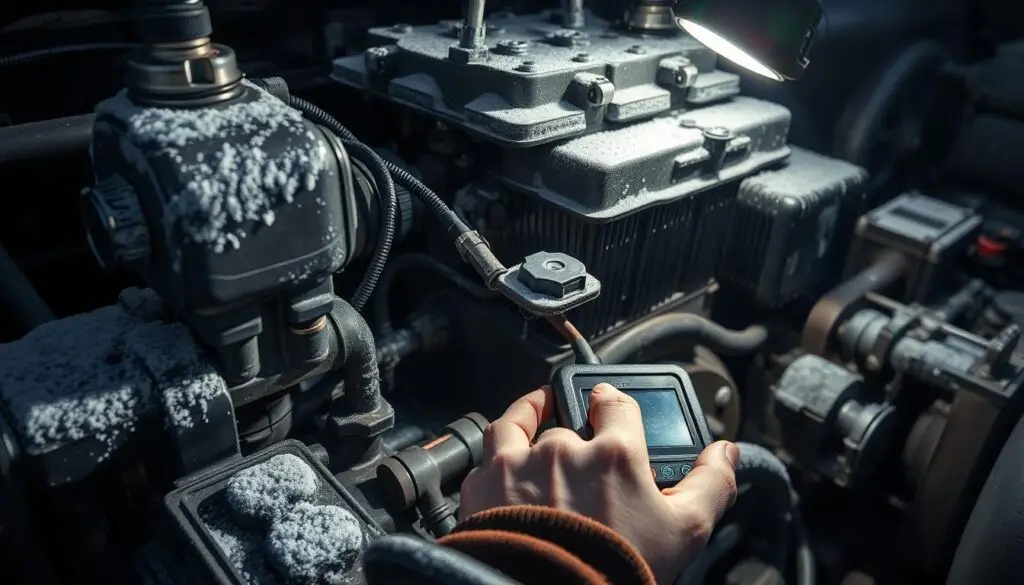
Slow cranking indicates the engine isn’t turning fast enough to build proper compression. You’ll hear a sluggish, labored sound as the starter struggles to rotate the engine. This weak rotation prevents the combustion chamber from reaching temperatures needed for ignition.
Battery weakness causes most slow cranking situations. Cold temperatures reduce battery capacity by 30-50%, leaving insufficient power to spin the engine at normal speed. Corroded terminals and loose cable connections also restrict current flow. Complete silence when turning the key indicates total battery failure, faulty starter motor, or broken electrical connections.
Engine Cranks Normally But Won’t Fire
When the engine spins at normal speed but refuses to start, the problem shifts from electrical to fuel or heat issues. You’ll hear consistent cranking with strong compression sounds, but the engine never catches. This eliminates battery and starter issues from diagnostic consideration.
Gelled diesel fuel cannot flow through filters and lines, preventing fuel from reaching injectors. Water contamination freezes and blocks fuel passages. Glow plug failure means the combustion chamber lacks sufficient heat to ignite cold diesel fuel, even though fuel is being delivered to the cylinders.
White Smoke and Rough Running
White or gray smoke billowing from the exhaust during cold starts signals incomplete combustion. Fuel enters cylinders and burns partially, but not efficiently, because combustion chamber temperatures remain too low. This is the hallmark of glow plug problems or marginal compression.
If the engine finally starts but runs rough with continued white smoke, some cylinders aren’t firing correctly. You’ll feel vibration and hear irregular engine rhythm indicating individual glow plug failures. The smoke should clear as the engine warms—persistent white smoke after several minutes suggests more serious problems requiring immediate attention.
| Symptom | Likely Cause | Diagnostic Clue |
|---|---|---|
| Slow cranking sound | Weak battery or poor connections | Labored, sluggish starter rotation |
| No cranking at all | Dead battery or starter failure | Complete silence or single click |
| Strong cranking, no ignition | Gelled fuel or failed glow plugs | Normal rotation speed, no firing |
| White smoke and rough idle | Incomplete combustion | Visible exhaust smoke, engine vibration |
Glow Plug Failure: The Primary Cold Weather Culprit
Glow plug failure stands as the leading cause of cold weather starting difficulties in diesel engines. These small but critical components become essential for successful engine starts when temperatures drop below freezing. Understanding how they work and recognizing failure signs can save hours of frustration on cold winter mornings.
How Glow Plugs Work
Diesel glow plugs are heating elements installed in each cylinder that preheat the combustion chamber before starting. These components rapidly heat to temperatures around 1,000°C (1,832°F) within seconds, creating thermal conditions necessary for diesel fuel ignition during cold starts.
Modern diesel engines equipped with functioning glow plugs can start in temperatures as low as -30°F when the system operates properly. The glow plug indicator light on your dashboard signals when the preheating cycle is active. Waiting for this light to extinguish before cranking is crucial—starting prematurely can lead to failed starts and potential glow plug damage.

Testing and Diagnosing Glow Plugs
Glow plug testing requires basic tools and systematic checking. A multimeter serves as your primary diagnostic instrument. Start by disconnecting the electrical connector from each glow plug, then set your multimeter to measure resistance in ohms. Touch the positive probe to the glow plug terminal and the negative probe to a clean ground on the engine block.
Functioning glow plugs typically show resistance between 0.6 and 2.0 ohms. Readings outside this range indicate a faulty plug. Infinite resistance means the plug has burned out completely, while zero resistance suggests an internal short circuit. Visual inspection after removal reveals blistered tips, broken heating elements, or heavy carbon deposits that indicate failure.
Replacing Glow Plugs Properly
Replacing diesel glow plugs requires careful attention to prevent damage during installation. Begin by allowing the engine to cool completely. Disconnect the battery negative cable to prevent electrical shorts, then remove glow plug electrical connectors and any components blocking access.
Apply penetrating oil to glow plug threads and let it soak for 15 minutes—this step prevents thread damage in the aluminum cylinder head. Use a proper glow plug socket and turn counterclockwise with steady, even pressure. Never force a stuck glow plug, as excessive torque can break the plug in the cylinder head, creating expensive repair complications.
Quality replacement parts matter significantly for cold weather performance. OEM or premium aftermarket glow plugs provide reliable service in harsh conditions. Installation torque specifications typically range from 15-20 ft-lbs, but always verify the exact requirement in your service manual.
Battery Performance in Cold Conditions
Cold weather creates a perfect storm of electrical challenges that can leave even well-maintained diesel engines unable to start. Your electrical system faces simultaneous pressures from reduced battery output and increased starting demands, making battery condition absolutely critical for reliable cold weather operation.
50%+ Capacity Loss
Battery power drops by more than half at 0°F while diesel starting demands increase — Battery Council International
Why Batteries Fail in Cold Weather
Battery capacity drops dramatically in cold weather due to basic chemistry. The electrochemical reactions inside your battery slow significantly as temperature falls, reducing available power precisely when your engine demands more of it.
This power reduction happens because cold temperatures increase the battery’s internal resistance. The chemical reaction between lead plates and sulfuric acid that generates electricity cannot proceed at normal speed when electrolyte becomes cold and sluggish. Meanwhile, thicker engine oil creates additional resistance that the starter motor must overcome, and glow plugs draw substantial current to heat combustion chambers.
Testing Battery Health Before Winter
Testing your diesel battery before cold weather arrives prevents unexpected failures. A fully charged battery should read 12.6 volts or higher when tested with a multimeter. Readings below 12.4 volts indicate the battery needs charging, while anything under 12 volts suggests potential problems.
Voltage testing alone doesn’t tell the complete story. Load testing applies resistance while measuring how well the battery maintains voltage under stress—the battery should maintain at least 9.6 volts when loaded to half its cold cranking amps rating for 15 seconds. Schedule annual battery testing each fall before winter temperatures arrive.
Cold Cranking Amps Requirements
Cold cranking amps represent a battery’s ability to start an engine at 0°F. The CCA rating indicates how many amps the battery can deliver for 30 seconds while maintaining at least 7.2 volts. Diesel engines require substantially more cranking power than gasoline engines due to higher compression ratios.
Match your battery CCA rating to your engine size and climate. Small diesels (4-cylinder) need minimum 600-700 CCA. Medium diesels (6-cylinder) require minimum 750-850 CCA. Large diesels (8-cylinder) demand minimum 900-1000 CCA. Extreme cold climates should add 20% to these minimums. Consider dual battery systems for maximum reliability in harsh conditions.
Stay Ahead of Cold Weather Challenges
Get expert diesel maintenance insights, cold weather preparation guides, and fleet management strategies delivered to your inbox weekly.
Diesel Fuel Gelling and Cold Flow Problems
Unlike gasoline, diesel fuel contains natural waxes that solidify in cold temperatures, creating a preventable but serious starting obstacle. These paraffin compounds remain dissolved in liquid fuel during warmer months but crystallize when temperatures drop, clogging filters and preventing fuel from reaching injectors.
Understanding Cloud Point and Gel Point
Diesel fuel undergoes distinct temperature-related transitions. Cloud point occurs when microscopic wax crystals begin forming, typically between 10°F and 15°F for standard #2 diesel—the fuel appears cloudy but still flows. Cold Filter Plugging Point (CFPP) represents when crystals become numerous enough to block fuel filters, typically 5-10°F below cloud point.
Gel point marks where diesel fuel loses its liquid characteristics entirely, transforming into thick gel that cannot be pumped through lines or filters. For #2 diesel, this typically occurs between 0°F and 10°F. Standard #2 diesel contains higher paraffin levels than #1 diesel, making it less suitable for extreme cold despite its higher energy content.

| Fuel Type | Cloud Point | Gel Point | Best Use |
|---|---|---|---|
| #1 Diesel | -10°F to 0°F | -20°F to -40°F | Below 20°F |
| #2 Diesel | 10°F to 15°F | 0°F to 10°F | Above 30°F |
| Winter Blend | 0°F to 10°F | -10°F to 0°F | 10°F to 30°F |
| #2 with Antigel | -10°F to 5°F | -10°F to 5°F | Down to 0°F |
Recognizing and Resolving Gelled Fuel
Gelled fuel produces distinctive symptoms. The engine may start initially but shut down after running for a few minutes as returning fuel carries cold, gelled fuel back through the system. Or your diesel won’t start despite a fully charged battery and functioning glow plugs—you hear normal cranking but the engine never fires because fuel isn’t reaching injectors.
Never attempt to force-start an engine with completely gelled fuel, as this can destroy injection pumps and injectors. Move the vehicle to a heated space and allow several hours for natural thawing. Replace fuel filters after thawing, as wax crystals often remain trapped in filter media even after fuel liquefies.
Preventing Fuel Gelling
Quality antigel additives provide your best defense against cold-weather gelling. These treatments modify wax crystal structure, preventing large crystals from forming and bonding together. Antigel products can lower the Cold Filter Plugging Point by 10-40°F depending on formula and concentration.
Add antigel treatments before fuel temperature drops below cloud point—once wax crystals form, additives become much less effective. The ideal time to treat fuel is when refueling at the pump, as fuel from underground storage tanks remains warmer and facilitates proper mixing. Keep fuel tanks as full as possible during winter to minimize condensation that introduces water into the fuel system.
Fuel System Issues Beyond Gelling
Winter weather creates several fuel system problems beyond gelling that can prevent cold starting. Fuel filters, water contamination, and air leaks each present unique challenges that multiply in cold conditions.
Filter Blockages and Water Contamination
Your fuel filter becomes especially vulnerable during cold weather because it concentrates wax crystals and ice particles. Even when bulk fuel remains liquid, the filter can become blocked rapidly. A clogged filter causes the engine to start briefly then die, or produces power loss under load as restricted flow can’t supply enough fuel for acceleration.
Water enters diesel fuel systems through condensation in partially-filled tanks, contaminated fuel from suppliers, or poorly sealed systems. Since water is heavier than diesel, it settles to tank bottoms where fuel pickups draw it into the system. In cold weather, this water freezes in fuel lines, filters, and injection components. Keep fuel tanks above three-quarters full throughout cold weather and drain water separators weekly during winter conditions.
Air Leaks and Bleeding
Air enters fuel systems through loose connections, cracked fuel lines, or during filter changes. Unlike pressurized gasoline systems, diesel fuel systems use suction to draw fuel from the tank, meaning even small air leaks prevent fuel from reaching injectors. Cold weather makes this worse as rubber fuel lines become stiff and brittle, allowing connections that seal properly in warm weather to develop tiny leaks.
Bleeding procedures remove air from diesel fuel systems, though exact methods vary by vehicle. Most systems require loosening fittings while cranking the engine to allow fuel to purge air from lines. Consult your specific vehicle’s service manual for proper procedures.
Starter and Electrical System Problems
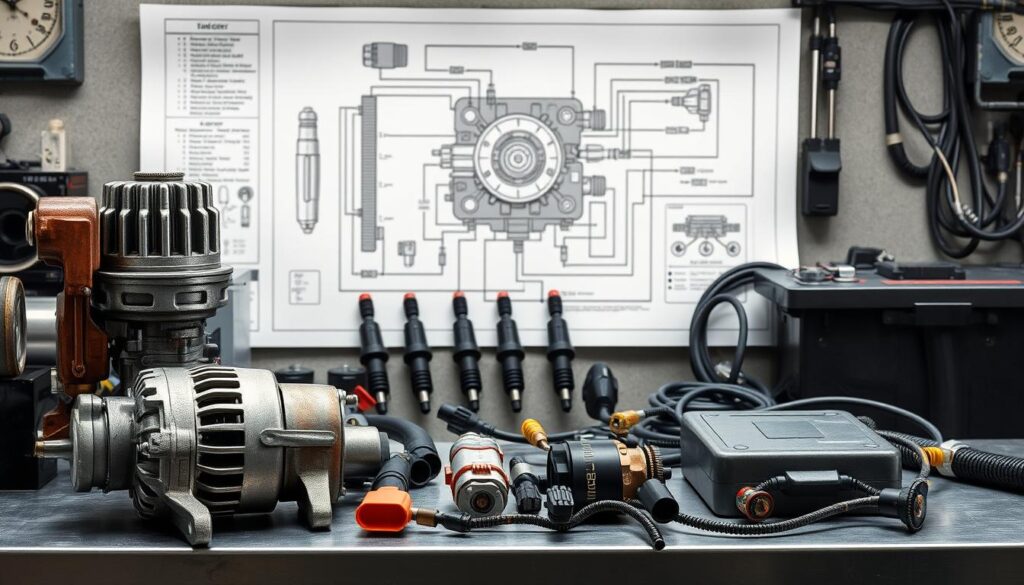
While batteries receive most attention, other electrical system components frequently cause cold weather starting failures. Diesel engines require much more powerful starter motors than gasoline engines—high compression ratios create greater resistance during cranking, demanding starters that draw between 150 and 400 amps.
Starter Motor Symptoms
A clicking sound without cranking indicates the solenoid engages but the motor itself has failed. This happens when the solenoid pulls in to connect the starter motor circuit but the motor cannot turn. Slow cranking that gradually decreases in speed suggests worn starter motor brushes that cannot deliver adequate current under cold conditions.
Cable and Connection Issues
Battery cable connections represent critical weak points. Corrosion at terminals creates resistance that drops several volts during high-current starting attempts. Clean terminals with a wire brush until you see bright metal, apply protective coating, and ensure connections are tight enough that no movement occurs when twisted by hand. Ground connections deserve equal attention—a poor ground limits current flow just as effectively as a poor positive connection.
Engine Compression Considerations
Mechanical problems inside your diesel engine can hide during summer, only revealing themselves when winter temperatures arrive. The internal mechanical condition determines whether the engine can generate sufficient heat for combustion.
Cold Weather and Compression Loss
Diesel engines typically maintain compression ratios between 14:1 and 25:1, creating temperatures around 900-1000°F necessary to ignite fuel without spark plugs. Cold weather transforms marginal compression into a critical failure point—even 10-15% compression loss that doesn’t affect warm weather operation can prevent cold weather starting.
Recognizing low compression symptoms helps diagnose problems early. Extended cranking before the engine catches indicates borderline compression. White smoke during cold starts signals incomplete combustion from insufficient heat generation. Rough running until the engine fully warms suggests compression issues affecting specific cylinders.
| Engine Condition | Compression (PSI) | Cold Start Ability |
|---|---|---|
| Healthy Engine | 400-550 PSI | Reliable below 0°F |
| Marginal Compression | 320-390 PSI | Difficult below 20°F |
| Low Compression | 250-310 PSI | Fails below 40°F |
| Critical Loss | Below 250 PSI | Cannot start cold |
Cold Weather Starting Solutions and Prevention
Cold weather starting challenges can be virtually eliminated through proper preparation and the right combination of heating solutions. The most effective approach combines multiple strategies that protect your engine, fuel system, and battery from winter’s harsh effects.
Block Heaters and Engine Warming
Electric block heaters represent the most common and effective solution for warming diesel engines before starting. These devices install directly into engine coolant passages or freeze plug locations, typically ranging from 400 to 1500 watts depending on engine size. The heated coolant circulates throughout the engine block, warming all internal components including crankcase oil.
A properly sized block heater can warm an engine from below zero to 70-80°F in just 2-4 hours, dramatically improving starting reliability and reducing engine wear. Small engines under 4 liters work well with 400-600 watt heaters, while larger engines from 5-8 liters benefit from 1000-1500 watt units.
Diesel-Fired Coolant Heaters
Diesel-fired coolant heaters provide engine preheating for remote locations without electrical access. These compact units burn small amounts of diesel fuel to heat engine coolant independently of external power sources, capable of preheating engines nearly to operating temperature. They’re particularly valuable for construction equipment, agricultural machinery, and vehicles operating far from electrical outlets.
Battery Protection Strategies
Battery blankets and heaters address the significant power loss batteries experience in cold weather. Thermal wrap solutions using foam or fiberglass insulation help retain heat generated during vehicle operation, maintaining battery temperatures 10-20°F warmer than ambient conditions. Electric battery warmers actively heat batteries using 50-150 watt heating elements.
Battery tender systems keep batteries fully charged during extended periods of non-use, preventing self-discharge that occurs naturally. Combined with heating elements, they provide comprehensive battery protection throughout winter months.
The HDJ Perspective
Fleet managers who invest in proactive cold weather preparation consistently report fewer roadside breakdowns and lower total maintenance costs than those who react to problems as they occur. The cost of a block heater installation or quality fuel additives is a fraction of a single emergency service call, lost productivity, or tow. As diesel emissions systems have become more sophisticated, cold starting has become even more critical—engines that don’t reach operating temperature quickly generate more soot, accelerate DPF loading, and trigger more forced regeneration cycles. The best cold weather strategy addresses all three failure points simultaneously: heat, power, and fuel quality.
Pre-Winter Preparation Checklist
A thorough maintenance program completed before cold weather arrives virtually eliminates starting problems. Begin preparation at least one month before typical cold weather arrives in your area.
| Component | Action Required | Winter Specification |
|---|---|---|
| Battery | Load test capacity | Replace if below 80% rated capacity |
| Glow Plugs | Test resistance on all plugs | Replace any exceeding specifications |
| Engine Oil | Change to winter weight | 5W-40 or 0W-40 synthetic |
| Fuel Filters | Replace before winter | Premium filters with water separator |
Test block heater operation before temperatures drop. Plug in the heater for 30 minutes, then carefully feel the heater cord and engine block area—the cord should be slightly warm and engine surfaces noticeably warmer. If not, the heater element may have failed and requires replacement.
Share Your Cold Weather Expertise
Have you developed effective cold weather starting protocols for your fleet? Heavy Duty Journal welcomes contributions from diesel technicians and fleet managers with real-world experience.
Frequently Asked Questions
Why won’t my diesel engine start in cold weather when it runs fine in summer?
Diesel engines rely on compression ignition rather than spark plugs, requiring compression ratios of 14:1 to 25:1 to generate heat above 500°F for fuel ignition. In cold weather, cylinder walls, pistons, and the engine block absorb compression heat before it reaches ignition threshold. Simultaneously, battery capacity drops by 50% or more, engine oil becomes 2-3 times thicker creating additional cranking resistance, and fuel may begin gelling. These combined factors make cold starting significantly more challenging for diesels than gasoline engines.
How can I tell if my diesel’s glow plugs are failing?
Failed glow plugs cause difficult starting in cold weather, excessive white smoke during cranking, and rough running when cold. Test glow plugs using a multimeter to measure resistance—functioning plugs typically show 0.6-2.0 ohms. Infinite resistance indicates a burned-out plug, while significantly higher readings suggest internal damage. Visual inspection after removal may reveal swollen tips, broken heating elements, or heavy carbon deposits. If your diesel engine won’t start cold but cranks normally, glow plugs should be among your first diagnostic checks.
At what temperature does diesel fuel gel?
Standard #2 diesel begins forming visible wax crystals at its cloud point, typically 10-15°F, and gels completely between 0-10°F. The Cold Filter Plugging Point—when crystals block fuel filters—occurs 5-10°F below cloud point. Winter-blend diesel and #1 diesel resist gelling at much lower temperatures. Using quality antigel additives before temperatures drop can lower the gel point by 10-40°F, providing critical protection against filter blockage and fuel flow problems.
How much cold cranking amps does my diesel battery need?
Diesel engines require 25-50% more cold cranking amps than comparable gasoline engines due to higher compression ratios and glow plug electrical demands. Minimum recommendations: small diesels (4-cylinder) need 600-700 CCA, medium diesels (6-cylinder) require 750-850 CCA, and large diesels (8-cylinder) demand 900-1000 CCA. In extreme cold climates, add 20% to these minimums. Many heavy-duty diesel trucks use dual battery systems for maximum reliability in harsh conditions.
Should I let my diesel engine idle to warm up in cold weather?
Modern diesel engines require minimal idle warm-up—typically 30 seconds to one minute for oil circulation before driving. Extended idling (10+ minutes) is generally unnecessary and can be harmful. Diesel engines warm up faster and more efficiently under light load than at idle. In extremely cold weather (below -10°F), 3-5 minutes of idle time may be beneficial before placing the engine under load, but avoid high engine speeds or heavy acceleration until the engine reaches normal operating temperature.
Can I use gasoline or kerosene to prevent diesel fuel from gelling?
While blending #1 diesel (kerosene) with #2 diesel in ratios of 10-50% is a common practice to improve cold flow properties, adding gasoline to diesel fuel is not recommended. Gasoline and kerosene have lower lubricity than diesel fuel, which can damage high-pressure fuel injection pumps and injectors in modern engines. Commercial antigel additives are the preferred solution—they maintain proper lubricity while preventing gelling and are specifically formulated for diesel fuel systems.
Ensuring Reliable Cold Weather Diesel Starts
Cold weather challenges don’t have to mean frustrating mornings or expensive repairs. Understanding why your diesel engine won’t start cold empowers you to take preventive action before problems occur. The three primary failure points—glow plugs, batteries, and fuel quality—all respond well to systematic maintenance performed before temperatures drop.
Most cold weather starting problems stem from preventable causes. Failed glow plugs that cost $100-200 to replace can leave you stranded. Weak batteries that cost $150-300 fail at the worst possible moment. Fuel gelling that a $15 bottle of antigel prevents can damage injection systems worth thousands. The investment in prevention consistently proves less expensive than emergency repairs in freezing weather—and keeps your fleet productive when it matters most.
Share This Cold Weather Guide
Help fellow fleet managers and diesel technicians prepare for winter. Share this comprehensive guide with your professional network.


