

By Michael Nielsen, Editor & Publisher | 15+ Years in Diesel Repair
Last Updated: December 2025
📖 Estimated reading time: 18 minutes
The heavy duty truck industry trends shaping 2025 reflect a sector navigating recovery while facing unprecedented transformation pressures. After weathering the sharp contraction of 2023 and an extended correction cycle through 2024, the American trucking sector now confronts a convergence of forces: tariff-driven cost increases, regulatory uncertainty around EPA 2027 emissions standards, and the accelerating push toward electrification.
The domestic freight trucking market stands at $532.7 billion, representing 80.7% of the nation’s freight bill. Globally, the heavy-duty truck market reached approximately $311 billion in 2024 and is projected to grow at rates between 4% and 8% annually through 2034, depending on how quickly fleets adopt zero-emission technologies. For fleet managers and owner-operators, understanding these shifts is no longer optional—it’s essential for survival.
This comprehensive analysis examines the market forces, technology developments, regulatory pressures, and sales forecasts that will define commercial trucking through 2030 and beyond. Whether you’re planning equipment purchases, evaluating alternative fuels, or positioning your fleet for the zero-emission transition, this guide delivers the intelligence you need.
Key Takeaways
- Market Recovery Underway: The U.S. trucking industry has reached $532.7 billion while recovering from 2023’s contraction, with global markets targeting $301-467 billion by 2030-2034.
- Class 8 Sales Remain Weak: Net orders are running well below replacement levels heading into 2026, with recovery unlikely until mid-2026 at earliest.
- Tariff Pressures Mount: Section 232 tariffs add $9,000-$10,000 per unit to Class 8 trucks, squeezing already-thin carrier margins.
- EPA 2027 Creates Uncertainty: Regulatory clarity remains elusive with less than 14 months until implementation, complicating fleet purchasing decisions.
- Electric Trucks Surge Globally: Over 90,000 electric trucks sold worldwide in 2024, with China capturing 80%+ of sales as U.S. and European adoption lags.
- Driver Wages Rise: Average trucker compensation has climbed to $73,147 annually as the industry faces over 3 million unfilled positions globally.
Current State of Heavy Duty Truck Industry Trends
The American trucking sector generates $940.8 billion in gross freight revenue annually, moving 11.46 billion tons of freight—representing 72.6% of total domestic freight tonnage. These numbers underscore why developments in commercial trucking ripple through every corner of the economy.
Yet the industry enters 2026 in a precarious position. According to ACT Research’s latest trucking industry forecast, 2025 marked one of the longest and most challenging downcycles on record, defined by weak freight demand, elevated costs, and sustained margin pressure across for-hire carriers. The correction phase that began in late 2023 continues, with capacity only beginning to tighten gradually.
Market Valuation and Growth Projections
Global market projections vary significantly depending on the source and methodology, reflecting genuine uncertainty about electrification timelines and regulatory outcomes. Conservative estimates project the heavy-duty truck market reaching $301 billion by 2030 at a 5.3% compound annual growth rate. More aggressive forecasts target $467 billion by 2034, assuming accelerated zero-emission vehicle adoption.
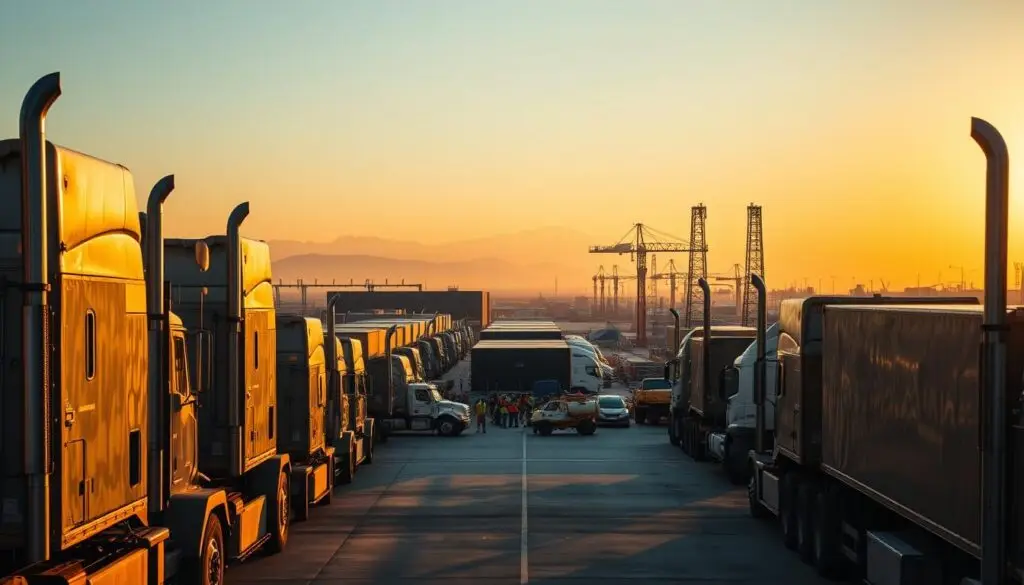
Regional dynamics create distinct market conditions. Asia Pacific leads with approximately 47% of global revenue, driven by China’s aggressive electrification push and India’s infrastructure expansion. North America holds the second-largest share, supported by freight-intensive commerce and established Class 8 truck culture. European markets pursue aggressive decarbonization, with the EU mandating 90% CO2 reduction by 2040.
Regional Market Dynamics
The U.S. market structure reveals a fragmented landscape where 96% of trucking fleets operate 10 or fewer trucks, while 99.7% run 100 or fewer vehicles. This diversity strengthens industry resilience but complicates standardization efforts—particularly as fleets face mounting pressure to invest in new technologies.
Cross-border operations remain critical. Trucks transport nearly two-thirds of the value of goods traded between the United States and Canada. Any disruption to these corridors—whether from tariffs, regulatory changes, or infrastructure limitations—immediately impacts freight capacity and pricing.
Fleet Composition and Operational Challenges
Operating costs reached $2.27 per mile in 2024, a 0.8% increase that compounds the margin pressure carriers face. According to industry surveys, 85% of truckers cite driver-related costs as their top concern, followed by insurance expenses at 66%.
The workforce challenge has reached crisis proportions. Over 3 million truck driver positions remain unfilled globally, with shortages forecast to double within five years. Currently, 3.54 million drivers work in U.S. trucking, with employment growing 1.5% year-over-year. Average annual wages have risen to $73,147, up from a median of $54,320 in 2023—reflecting the premium companies must pay to attract and retain qualified drivers.
| Challenge Category | Percentage Concerned | Operational Impact |
|---|---|---|
| Driver-related costs | 85% | Recruitment and retention difficulties |
| Insurance expenses | 66% | Rising premiums affecting profitability |
| Fuel costs | 58% | Variable expenses impacting budgets |
| Equipment maintenance | 52% | Increased downtime and repair costs |
Tariff Impacts on Heavy-Duty Truck Costs
Perhaps no factor weighs more heavily on 2025-2026 fleet purchasing decisions than tariff-driven cost increases. Section 232 heavy-vehicle tariffs are now fully embedded in equipment pricing, adding approximately $9,000-$10,000 per Class 8 unit—costs that come on top of already-elevated equipment prices.
With roughly one-third of North American Class 8 production originating in Mexico, these tariffs create immediate budget pressures for fleets already operating on recession-level margins. The timing compounds the challenge: carriers are entering the fourth consecutive year of generationally low profits, with publicly traded truckload carriers posting just 3.3% net margins in recent quarters.
$9,000–$10,000
Additional per-unit cost on Class 8 trucks due to Section 232 tariffs, according to ACT Research analysis
Smaller carriers face particularly acute pressure. Tight credit conditions, high operating costs, and now tariff-inflated equipment prices are accelerating consolidation. Forward-thinking fleet managers are extending equipment lifecycles and prioritizing maintenance investments over new acquisitions until market conditions improve.
Electric Heavy-Duty Vehicles Revolution
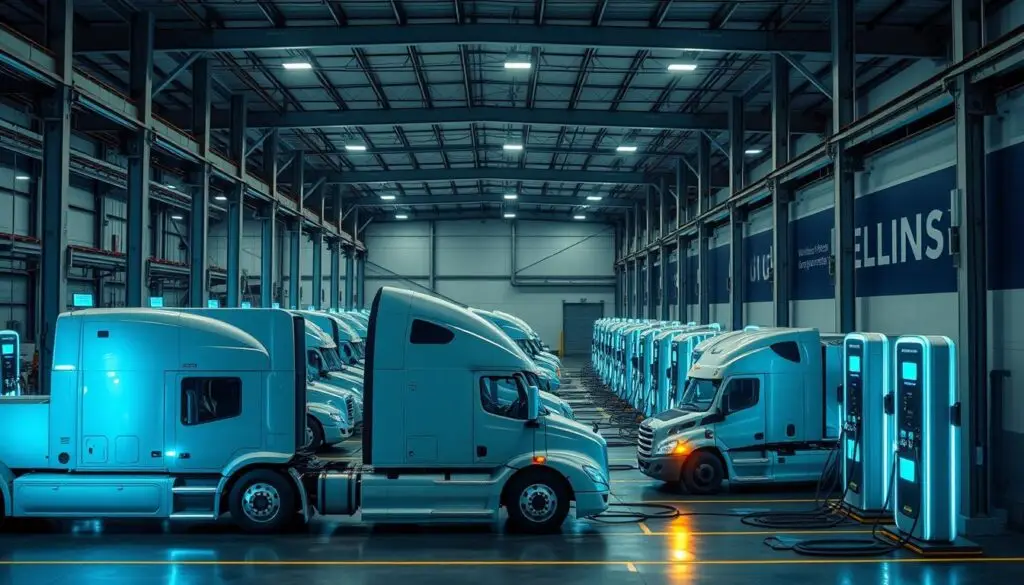
The trucking industry stands at a transformation point as electric heavy-duty vehicles gain momentum—though adoption rates vary dramatically by region. Global sales of electric medium- and heavy-duty trucks exceeded 90,000 units in 2024, representing nearly 80% year-over-year growth according to the International Energy Agency’s Global EV Outlook 2025.
China dominates this market, capturing over 80% of global electric truck sales. In the first half of 2025, electric trucks captured 22% of China’s heavy-duty market—a penetration rate that makes U.S. and European adoption look glacial by comparison. Less than 1% of heavy-duty trucks are electric in India, the United States, and Europe.
Market Growth and Investment Opportunities
Electric truck market projections show substantial growth ahead, though estimates vary. The market stood at approximately $5.2 billion in 2025 and is projected to reach between $32 billion and $57 billion by 2032-2035, depending on regulatory outcomes and infrastructure development.
The Biden administration invested $635 million in zero-emission infrastructure, deploying over 11,500 charging ports and hydrogen fueling stations across 27 states targeting commercial vehicle corridors. These investments address a critical barrier: without reliable charging networks along freight routes, electric truck adoption remains limited to predictable, short-haul applications.
Cost Analysis and TCO Benefits
Financial analysis reveals compelling advantages for fleet operators switching to electric power—in specific applications. Electric vehicles can deliver 13% lower total cost of ownership per mile than diesel equivalents. Class 8 electric trucks may generate $200,000 in savings over 15 years despite acquisition costs running 2-3 times higher than traditional diesel trucks.
Battery costs drive the economics. Current prices around $135/kWh represent 30-40% of vehicle costs. Industry projections suggest prices could fall to $40-60/kWh by 2030, potentially achieving purchase price parity with diesel. Falling battery prices have already enabled manufacturers to either extend vehicle range without increasing costs, or reduce costs to narrow the price gap.
Stay Ahead of Industry Trends
Get expert insights on fleet electrification, regulatory changes, and market forecasts delivered to your inbox weekly.
Infrastructure Development and Regional Differences
Charging infrastructure remains the critical bottleneck outside China. A typical large freight truck needs approximately one megawatt-hour of battery capacity—10 times what a Tesla Model 3 requires. In Europe, mandatory 45-minute driver breaks every 4.5 hours create natural charging windows. In regions where drivers routinely operate 10-18 hours straight, plug-in charging becomes impractical.
China has addressed this challenge through battery-swapping technology, now used in nearly 40% of its electric heavy-duty trucks. This approach allows trucks to swap depleted battery packs for fully charged units in minutes rather than waiting hours for charging. Whether Western markets will adopt similar solutions remains uncertain.
Commercial Truck Market Outlook and Sales Forecasts
The commercial truck market outlook reveals challenging conditions that have persisted longer than most analysts anticipated. Class 8 net orders continue running well below replacement demand, and the typical year-end order surge for 2026 equipment failed to materialize.
Class 8 Truck Sales Forecast
Class 8 production fell sharply in late 2025, with OEMs strategically slowing builds in response to excess inventories and recessionary-level carrier margins. According to ACT Research’s Class 8 order tracking, net orders remain significantly below historical seasonal norms, reflecting the defensive posture fleets have adopted.
A meaningful recovery appears unlikely until mid-2026 at the earliest, with stronger potential not emerging until 2027 if macroeconomic, regulatory, and freight fundamentals all align. The combination of tariff-driven cost inflation and unresolved EPA 2027 requirements has pushed fleets toward emphasizing asset efficiency, cost control, and risk mitigation over expansion.

Medium-Duty Segment Performance
Medium-duty market conditions remain soft, reflecting weakness across service, housing, and municipal sectors. While orders improved modestly in late 2025, they continue trailing historical norms. The 10-15 ton segment stands out with projected 9.5% compound annual growth through 2030, driven by urban delivery optimization and last-mile logistics needs.
| Truck Class | Market Share 2024 | Growth Rate (CAGR) |
|---|---|---|
| Class 8 | 70.80% | Declining (soft demand) |
| Class 7 | 12.50% | 8.30% |
| 15+ Ton | 61.40% | Moderate |
| 10-15 Ton | 18.20% | 9.50% |
Pre-Buy Activity and Market Cycles
The anticipated pre-buy activity ahead of EPA 2027 standards has not materialized as expected. While some analysts still predict order increases in late 2025 and 2026 as fleets attempt to secure MY2026 equipment before stricter compliance costs take effect, weak carrier profitability and regulatory uncertainty have dampened this activity.
Industry analysts at ACT Research note that “truckers buy trucks when they make money.” At current low levels of carrier profitability and returns on investment, a significant tractor pre-buy remains unlikely without an unforeseen shift in economic fortunes.
Sustainability Initiatives and Environmental Regulations
Environmental regulations are reshaping the commercial truck market outlook in ways that extend far beyond equipment specifications. Fleet operators must adapt to stringent emission standards while balancing operational efficiency and profitability. These changes represent a fundamental evolution in how the industry approaches transportation solutions.
EPA 2027 Compliance Standards
The Environmental Protection Agency’s Phase 3 standards mark a turning point for fleet management. Starting in 2027, these regulations require 50% of vocational vehicles to achieve zero-emission status by 2032.
However, regulatory uncertainty remains the central headwind. With less than 14 months until the scheduled compliance date, the industry still lacks implementation clarity. Consensus is shifting toward a potential rollback or delay of warranty and useful life extensions, though the core technology component is expected to remain intact.
Global Emission Mandates Impact
International regulations amplify the push toward cleaner transportation. The European Union demands 90% emission reductions by 2040, while California’s Advanced Clean Fleet rule mandates 100% zero-emission vehicle sales beginning in 2036. These strict mandates drive fleet renewal strategies and contribute an estimated 0.9% to worldwide market growth.
Cities worldwide are establishing zero-emission zones to combat air pollution. Diesel semi-trucks produce 18% of U.S. vehicle emissions. Research projects that transitioning to zero-emission trucking could prevent 66,800 premature deaths and eliminate 1.75 million asthma attacks by 2050—public health benefits that strengthen political support for aggressive regulations.
The HDJ Perspective
The convergence of regulatory pressure, tariff costs, and technology transitions creates unprecedented complexity for fleet purchasing decisions. In practice, most operators are extending equipment lifecycles rather than committing capital in this uncertain environment. The fleets that will emerge strongest are those treating this period as an opportunity to optimize maintenance programs, evaluate technology options, and position for eventual recovery—not those racing to purchase equipment ahead of unclear deadlines.
Autonomous Trucking Technology and AI Integration
The transportation sector approaches a technological crossroads as autonomous trucking technology and AI fleet management reshape operations. The AI fleet management software market reflects this transformation, with valuations projected to reach $14.4 billion by 2030, up from $5.2 billion in 2024.
Self-driving capabilities promise significant operational benefits. Autonomous trucks can operate nearly 24/7, addressing the critical driver shortage projected to reach 160,000 unfilled positions by 2030. With driver wages accounting for 43% of per-mile expenses, automation presents an attractive cost-reduction strategy for long-haul applications.
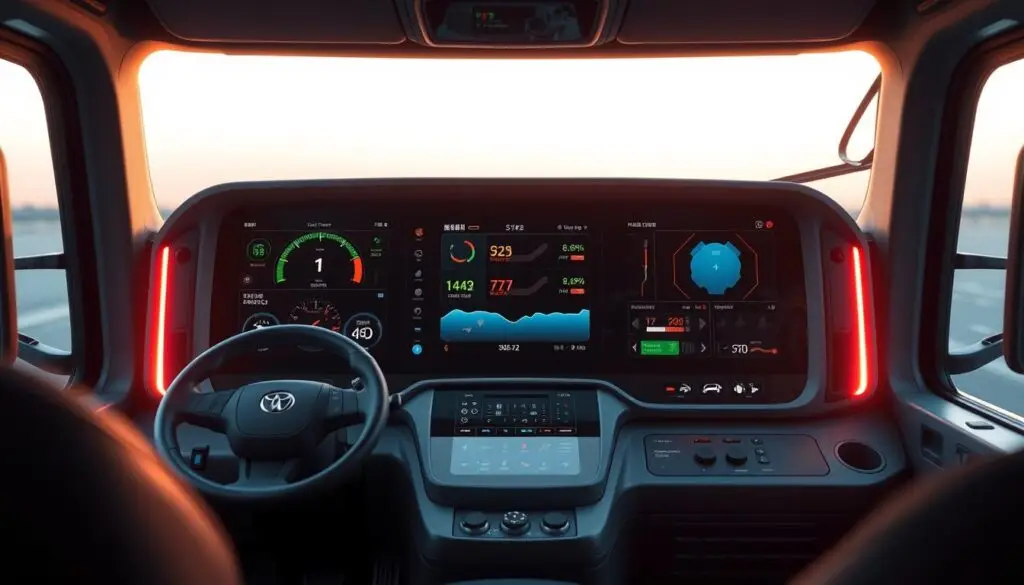
Safety improvements represent another compelling advantage. Human error causes 94% of road accidents, while AI-optimized systems demonstrate measurable risk reduction. Fleet telematics providers report significant improvements in collision-free miles when advanced driver assistance systems are deployed.
Major manufacturers are investing heavily. Scania partnered with Waabi to access AI-generated simulation libraries, accelerating development timelines. Tractor-trailer configurations maintain 48.60% market share with 10.90% compound annual growth through 2030, indicating strong confidence in autonomous adaptation. Software subscription models now generate recurring revenue as OEMs bundle insurance, maintenance scheduling, and energy management services into comprehensive fleet platforms.
Alternative Fuel Technologies and Diesel Alternatives for Trucks
While electric trucks capture headlines, diesel alternatives for trucks encompass a broader spectrum of technologies gaining momentum across global markets. Diesel engines maintain 83.9% market share in 2024, but fleet operators increasingly explore cleaner fuel options to meet environmental regulations and reduce operational costs.
Hydrogen Fuel Cell Development
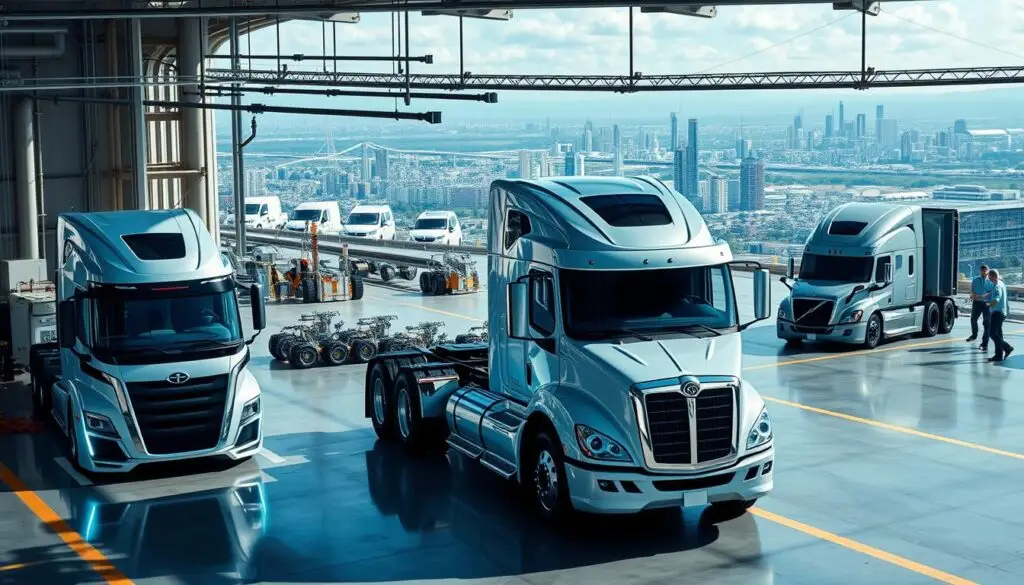
Japan leads hydrogen innovation with Toyota and Honda testing 12-meter fuel cell trucks on Tokyo highways. India’s National Green Hydrogen Mission has allocated Rs 496 crore for transport pilots, deploying 16 hydrogen trucks with ranges up to 500 kilometers. These Asia-Pacific corridor programs add 0.4% to regional market growth, establishing foundations for wider hydrogen adoption.
Natural Gas and Biodiesel Adoption
China’s liquefied natural gas (LNG) truck market demonstrates explosive growth that challenges the narrative of inevitable electrification. LNG truck sales reached 152,000 units in 2024, a 307% year-over-year increase that pushed LNG penetration to 16.7% of China’s market. This surge reflects favorable natural gas pricing relative to diesel and the practical advantages of LNG for long-haul applications.
Scandinavia pioneers biogas blending requirements, enabling carriers to cut lifecycle emissions using existing diesel engines without costly retrofits. Industry projections indicate alternative fuel vehicles will reach 14% of medium and heavy-duty truck sales by 2035, up from current levels below 5%.
| Fuel Type | 2024 Market Share | Key Region | Growth Trend |
|---|---|---|---|
| Diesel | 83.9% | Global | Declining (-2.3%) |
| LNG | 16.7% | China | Surging (+307%) |
| Hydrogen | 0.4% | Asia-Pacific | Growing (+12%) |
| Electric | 2.1% | Europe/US | Growing (+45%) |
Fleet Management Innovations and Digital Transformation
Digital technology adoption is reshaping fleet operations across North America, where trucks transport over 11 billion tons of freight annually. Fleet management innovations range from telematics-driven route optimization to predictive maintenance systems that reduce unplanned downtime.
Current adoption trends show European fleets leading electric vehicle integration at 2.03% of total vehicles, while North American fleets trail at 0.45%. These numbers reflect broader patterns in technology adoption—though the gap is narrowing as U.S. infrastructure investment accelerates.
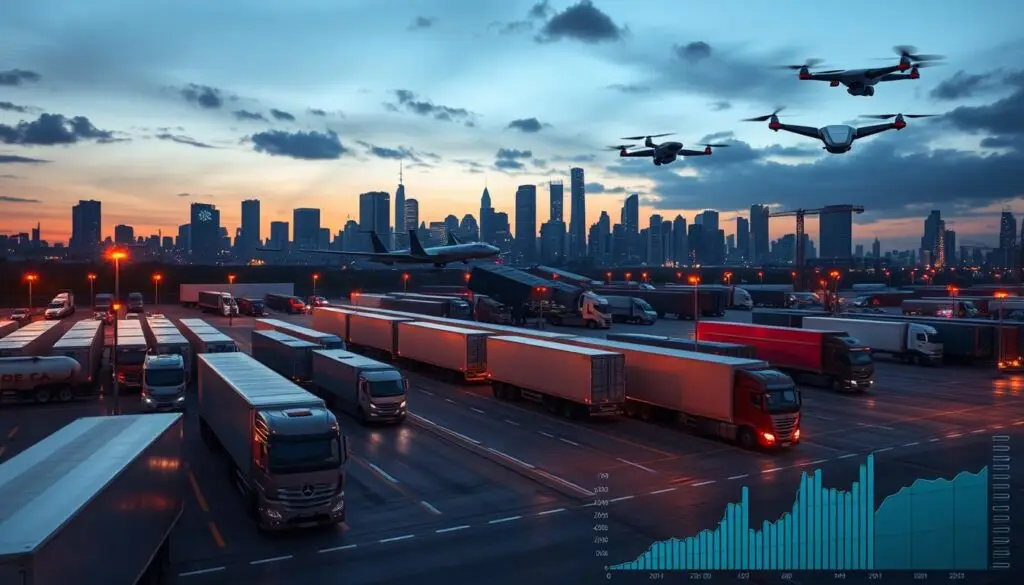
Major manufacturers recognize the transformation’s importance. Daimler and Volvo formed a joint venture to develop a common operating system for commercial vehicles. General Motors committed $4 billion to upgrade facilities for simultaneous production of traditional and electric heavy trucks. These investments signal a future where software differentiation matters as much as powertrain engineering.
Digital solutions improve fuel efficiency tracking, with real-time monitoring helping operators identify optimization opportunities. The Infrastructure Investment and Jobs Act provides $550 billion in new infrastructure spending over five years, including significant allocations for freight corridors and charging networks that will enable more sophisticated fleet management approaches.
Logistics Industry Developments and Supply Chain Evolution
Rapid supply chain transformation continues reshaping freight transportation. E-commerce expansion adds 1.2% to global freight market growth annually, with online retail driving demand for faster, more frequent deliveries. Major retailers are rethinking delivery strategies, with Amazon ordering 100,000 electric delivery vehicles and UPS adopting renewable natural gas trucks.
Last-Mile Delivery Optimization
The final stretch from distribution center to customer presents unique challenges. Companies are testing smaller electric vehicles for dense urban areas, where zero-emission zone restrictions increasingly limit diesel vehicle access. Route optimization software reduces miles driven while improving delivery times, helping carriers meet growing customer expectations for fast, reliable service.
Medium-duty electric trucks gain popularity in cities where environmental regulations restrict diesel vehicles. The 10-15 ton segment’s strong growth projection reflects this urban logistics trend, as e-commerce fulfillment demands more frequent, lighter deliveries to residential addresses.
Cross-Border Trade Dynamics
International commerce drives demand for long-haul trucking capacity. The EU Green Deal funds sustainable transport infrastructure including charging networks and hydrogen refueling stations. Despite tariff pressures, cross-border trade between the U.S., Canada, and Mexico remains essential—trucks move nearly two-thirds of traded goods by value across North American borders.
Share Your Fleet Management Expertise
Have insights on navigating the trucking industry’s transition? Join Heavy Duty Journal as a guest author and reach thousands of fleet managers and owner-operators.
Navigating the Future of Heavy Duty Trucking
The heavy duty truck industry trends point toward transformation that will reshape fleet operations over the coming decade. The global market will grow from current valuations toward $3.4 trillion by 2030 according to some projections, though actual growth depends heavily on how quickly regulatory clarity emerges, freight demand recovers, and alternative fuel infrastructure develops.
Electric heavy-duty vehicles represent the most visible change, with the market expanding rapidly—particularly in China, where electric trucks now capture over 20% of heavy-duty sales. Yet diesel engines still power more than 80% of commercial trucks globally, and natural gas alternatives are gaining ground in markets where infrastructure and economics favor LNG over batteries.
For fleet managers navigating these crosscurrents, the path forward requires balancing immediate operational needs against long-term positioning. EPA 2027 standards, tariff costs, and freight market conditions create short-term uncertainty that favors conservative equipment strategies. Yet operators who invest in understanding emerging technologies and infrastructure developments will be better positioned when market conditions improve.
The road ahead demands strategic thinking, careful planning, and realistic assessment of both opportunities and risks. Fleets that balance operational efficiency with measured technology adoption will be best positioned to thrive as the industry transforms.
Frequently Asked Questions
What is the current market valuation of the trucking industry?
The U.S. trucking industry generates $940.8 billion in gross freight revenue, with the freight trucking market valued at $532.7 billion. Globally, the heavy-duty truck market reached approximately $311 billion in 2024, with projections ranging from $301 billion to $467 billion by 2030-2034 depending on electrification adoption rates. Trucking accounts for 80.7% of the U.S. freight bill and transports 72.6% of domestic freight tonnage.
What is the Class 8 truck sales forecast for 2025-2026?
Class 8 truck sales remain weak, with net orders running well below replacement demand. ACT Research indicates a meaningful recovery is unlikely until mid-2026 at earliest, with stronger potential not emerging until 2027. Section 232 tariffs adding $9,000-$10,000 per unit, combined with weak carrier profitability and EPA 2027 regulatory uncertainty, have pushed fleets toward defensive purchasing strategies focused on lifecycle extension rather than expansion.
How much do electric heavy-duty trucks cost compared to diesel?
Zero-emission trucks carry acquisition costs 2-3 times higher than diesel equivalents, with battery packs representing 30-40% of vehicle price at current rates around $135/kWh. However, Class 8 electric trucks can deliver 13% lower total cost of ownership per mile and generate $200,000 in savings over 15 years for applications with high utilization and predictable routes. Battery costs are projected to fall to $40-60/kWh by 2030, potentially achieving purchase price parity.
What are the EPA 2027 emissions standards requiring for trucking fleets?
EPA Phase 3 standards require 50% of vocational vehicles to be zero-emission by 2032, with implementation beginning in 2027. However, significant regulatory uncertainty remains with less than 14 months until the scheduled compliance date. Industry consensus is shifting toward potential rollback or delay of warranty and useful life extensions, though core technology requirements are expected to remain intact. The EU mandates 90% emission reductions by 2040, while California requires 100% zero-emission vehicle sales by 2036.
What is the current driver shortage in the trucking industry?
Over 3 million truck driver positions remain unfilled globally, with shortages forecast to double within five years. Currently, 3.54 million drivers work in U.S. trucking, with employment growing 1.5% year-over-year. Average annual wages have risen to $73,147, up from a median of $54,320 in 2023. Driver-related costs are cited by 85% of truckers as their top industry challenge, reflecting both recruitment difficulties and the premium required to retain qualified operators.
Which alternative fuels for trucks are gaining traction?
While diesel retains 83.9% market share, alternatives are advancing. China’s LNG truck sales reached 152,000 units in 2024, a 307% year-over-year increase representing 16.7% market penetration. Electric trucks exceeded 90,000 global sales in 2024, with China capturing over 80% of that market. Hydrogen fuel cells remain nascent at 0.4% share but are advancing in Asia-Pacific pilots. Industry projections indicate alternative fuel vehicles will reach 14% of medium and heavy-duty truck sales by 2035.
Moving Forward in an Uncertain Market
Heavy duty truck industry trends reflect an industry navigating one of its most complex periods. Tariff pressures, regulatory uncertainty, and technology transitions create challenges—but also opportunities for fleet operators who position strategically. Success requires balancing immediate operational efficiency with long-term preparation for the zero-emission transition, informed by accurate market intelligence and realistic assessment of both risks and opportunities.
Share This Industry Analysis
Help your network stay informed on the trends shaping commercial trucking. Share this analysis with fleet managers and industry colleagues.