By Michael Nielsen, Editor & Publisher | 15+ Years in Diesel Repair
Last Updated: December 2025
📖 Estimated reading time: 18 minutes
Supply chain disruptions continue reshaping how heavy equipment manufacturers and fleet operations manage parts procurement. More than 80% of logistics leaders expect these obstacles to persist or intensify, according to industry surveys. For fleet managers and equipment dealers, the financial stakes are significant—production delays, inventory imbalances, and rising costs have become persistent operational challenges that demand systematic solutions.
The specialized nature of heavy-duty components creates unique vulnerabilities that standard supply chain strategies often fail to address. Limited supplier pools, extended lead times for critical assemblies, and fragmented logistics operations generate costly blind spots that affect everything from maintenance scheduling to customer satisfaction. Forward-thinking operations are implementing cost management strategies that balance procurement efficiency with supply resilience.
This guide examines proven approaches for navigating ongoing heavy-duty parts supply chain challenges while protecting profitability and maintaining equipment uptime.
Key Takeaways
- Specialized components face extended lead times due to limited supplier networks and production complexity—some critical parts now require 6-12 months advance ordering
- Production downtime from unavailable parts costs heavy equipment operations $250,000-$500,000 per day in combined revenue loss and penalty expenses
- Traditional just-in-time inventory models require reassessment—many fleets are shifting to just-in-case strategies for critical components
- Digital visibility tools deliver measurable ROI: 10-15% freight cost reductions and 5-20% route efficiency improvements
- Multi-source procurement frameworks with geographic diversification significantly reduce disruption vulnerability
- Remanufactured components offer 40-65% cost savings with warranties matching OEM coverage when sourced from certified suppliers
Understanding Current Heavy-Duty Parts Supply Chain Challenges
Supply chain vulnerabilities across manufacturing, transportation, and raw materials have created persistent challenges for heavy-duty parts procurement. These interconnected disruptions extend beyond temporary setbacks, fundamentally reshaping operational strategies for equipment manufacturers and fleet operators.
Unlike consumer goods supply chains that stabilized after pandemic peaks, the heavy equipment sector continues facing structural constraints. Semiconductor manufacturers currently operate at over 95% utilization—well above the normal 80% threshold—leaving virtually no buffer for demand spikes. When specialized components become unavailable, the ripple effects cascade across multiple manufacturers and product lines.

Manufacturing Bottlenecks and Capacity Constraints
Production facilities worldwide operate under severe capacity constraints that limit output potential for heavy-duty components. Manufacturing bottlenecks intensify when single-source suppliers control specialized parts. These concentrated markets create vulnerability points throughout the heavy equipment ecosystem—when one facility experiences production delays, the effects cascade across multiple manufacturers and product lines.
The concentration of specialized component suppliers has created critical dependency points that amplify disruption impacts across the entire manufacturing network. Fleet managers increasingly find themselves competing for limited inventory of hydraulic systems, transmission components, and engine parts that once shipped within days.
Specialized Transportation and Logistics Constraints
Heavy-duty parts require specialized transportation infrastructure that standard freight networks cannot accommodate. Unlike conventional shipments, these components demand flatbed, lowboy, or multi-axle trailers capable of handling oversized loads. Fewer carriers possess the heavy-haul capacity needed, forcing shippers into limited choices that drive up accessorial costs and extend delivery timelines.
Truck driver shortages compound transportation constraints significantly. Complex routing requirements for oversized loads add further delays. The result: what once was a three-day delivery window has stretched to three weeks for many critical assemblies.
Raw Material Shortages and Pricing Volatility
Upstream material disruptions create cascading effects throughout production cycles. Steel, aluminum, specialized alloys, and rubber compounds face unpredictable availability that complicates manufacturing schedules. These raw material shortages force manufacturers to navigate pricing volatility that undermines financial planning.
Lead times fluctuate dramatically, making customer quotations increasingly difficult to guarantee. This uncertainty affects both production planning accuracy and long-term contract stability for fleet operations and equipment dealers.
Financial Impact of Supply Chain Disruptions on Fleet Operations
Supply chain disruptions deliver a financial punch that reverberates through every corner of heavy-duty parts operations. The American Transportation Research Institute’s 2025 report found the average cost of operating a truck reached $2.26 per mile in 2024—and that’s before accounting for parts-related downtime. Manufacturing respondents in various industry surveys report negative profit impacts reaching up to 13% from supply chain challenges alone.
The true cost encompasses direct procurement expenses, hidden operational charges, and lost revenue opportunities. Each category demands careful analysis to understand the complete financial picture and develop effective responses.

Direct Procurement Cost Increases
Procurement costs have surged as supply constraints force buyers into volatile spot markets. Critical components like hydraulic systems, transmissions, and engine parts now command premium prices. The shift from predictable contract pricing to unpredictable spot rates has forced finance teams to revise budgeting processes entirely.
Many fleet operations now build contingency reserves of 15-20% above historical parts spending to accommodate price volatility. Emergency procurement situations compound these challenges—when production lines face imminent shutdown or trucks sit idle awaiting parts, buyers often pay 200-300% above normal rates for expedited delivery.
Hidden Operational Expenses
Beyond purchase orders, operational expenses multiply through less visible channels. Premium freight charges represent a major cost driver, with air cargo rates running 8-10 times higher than standard ground freight for the same components. Additional warehouse space rental for expanded safety stock adds monthly overhead.
Organizations also face increased headcount requirements in procurement and supply chain teams. Managing multiple suppliers, negotiating contracts, and expediting critical parts demands significantly more personnel resources than traditional purchasing operations once required.
Downtime Revenue Loss
Production stoppages and vehicle downtime create the most devastating financial impact through direct revenue loss and damaged customer relationships. When assembly lines shut down awaiting parts or trucks sit idle in the yard, companies face idle labor costs, delayed deliveries, and contractual penalties.
Industry data suggests that each day of unplanned downtime can cost heavy equipment manufacturers $250,000 to $500,000 in combined revenue loss and penalty expenses. For trucking fleets, the cost calculation is more granular but equally painful—every truck sitting in the yard represents lost revenue and ongoing fixed costs.
These measurable impacts represent only the beginning. Customer defection to competitors who maintain more reliable service creates permanent market share erosion. Relationship damage and competitive positioning losses add unmeasured consequences that compound over time, making supply chain resilience an existential business priority.
Strategic Inventory Optimization for Heavy-Duty Parts
Optimizing inventory positions demands sophisticated techniques that balance parts availability with financial constraints. Heavy equipment operations are shifting focus from pure cost minimization to resilience-based inventory management. This evolution requires implementing structured methodologies for parts prioritization and strategic buffer stock planning.
The move away from traditional lean approaches reflects a fundamental recognition: supply assurance has become as critical as cost efficiency in maintaining operational continuity.
Critical Parts Identification and Prioritization
Effective parts prioritization begins with developing a comprehensive scoring framework that evaluates components across multiple risk dimensions. Organizations should create detailed scorecards assessing supply chain vulnerability, lead time exposure, and operational impact.
The evaluation criteria for critical parts typically includes four primary factors: supply risk assessment analyzing single-source dependencies, lead time duration identifying components with extended manufacturing cycles exceeding 90 days, stockout cost impact calculating production shutdown expenses, and demand variability patterns measuring forecast accuracy.
This structured approach to inventory optimization enables more sophisticated allocation decisions. Rather than applying blanket policies across all components, fleet operations can direct working capital toward the highest-risk, highest-impact parts.
Safety Stock Calculation for Heavy-Duty Components
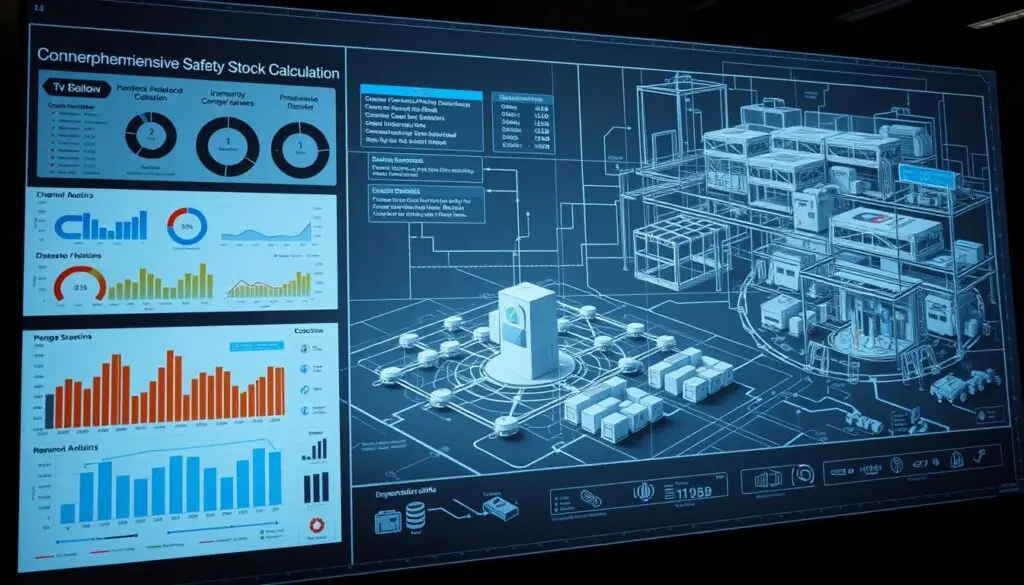
Determining optimal safety stock levels for high-value heavy-duty components requires specialized formulas that account for unique industry characteristics. Fleet managers must consider supplier reliability metrics, transportation time variability, and demand forecast accuracy when establishing buffer inventory targets.
Lead time length for specialized heavy equipment parts often ranges from six to twelve months. This extended timeline necessitates larger protective buffers than standard manufacturing components. Higher labor and materials costs, logistics bottlenecks, and workforce shortages have made just-in-case inventory strategies increasingly attractive for critical assemblies.
The challenge lies in preventing safety stock from ballooning into excess inventory that consumes working capital and storage space. Without proper visibility into consumption patterns and supplier performance, backup inventory can eat up cash flow while still leaving operations vulnerable to the wrong shortages.
Just-in-Time vs. Just-in-Case Approaches
The shift from just-in-time to just-in-case inventory models represents one of the most significant changes in fleet parts management since the pandemic. Before COVID-19, many fleets operated under JIT systems, ordering and receiving parts only as needed to minimize storage costs and avoid tying up capital in surplus inventory. When global supply chains collapsed, JIT fleets were hit hardest.
Many heavy equipment operations are now adopting hybrid models. They maintain lean practices for readily available, low-risk components while building strategic buffers for critical parts with vulnerable supply chains. This balanced approach recognizes that different component categories warrant different management strategies based on part criticality, supplier reliability, and replacement difficulty.
ABC Classification for Parts Management
ABC classification remains a proven methodology for optimizing parts management across diverse inventory portfolios. This system categorizes components into three distinct tiers based on value contribution and movement characteristics.
| Category | Value Contribution | Management Approach | Review Frequency |
|---|---|---|---|
| Category A (Critical) | 70-80% of total value | Intensive monitoring, supplier partnerships | Weekly or daily |
| Category B (Moderate) | 15-20% of total value | Standard controls, periodic assessment | Monthly |
| Category C (Low-Value) | 5-10% of total value | Simplified replenishment systems | Quarterly or annual |
Applying differentiated strategies to each ABC classification tier optimizes both capital investment and parts availability. Category A items warrant intensive monitoring and precise forecasting, while Category C items can be managed with larger order quantities to minimize administrative overhead.
Stay Ahead of Supply Chain Challenges
Get practical strategies for fleet parts management, supplier diversification, and cost control delivered to your inbox.
Supplier Diversification and Risk Mitigation
The vulnerability of single-source procurement became painfully clear during recent global disruptions, driving fleet operations to fundamentally rethink supplier strategies. While survey data reveals that nine out of ten companies maintain multiple suppliers, only 44% have achieved meaningful regional diversification. This gap represents a critical weakness in supply chain resilience.
Organizations with geographically distributed suppliers consistently experience fewer disruptions than those concentrated in single regions. The challenge lies in balancing risk mitigation benefits against increased management costs—approximately 43% of respondents identify cost as the primary constraint when implementing multi-supplier strategies.

Building a Multi-Source Procurement Framework
Developing an effective procurement framework requires systematic planning beyond simply adding more vendors. Fleet managers must determine optimal supplier quantities for each parts category based on criticality and volume requirements.
The framework should establish clear protocols for qualifying backup suppliers before they’re needed during emergencies. This advance qualification ensures alternative sources can activate quickly when primary suppliers face disruptions. Contract structures must maintain relationships even when order volumes are split among multiple partners.
Major manufacturers exemplify this approach. GM recently secured agreements with multiple lithium suppliers and separate cathode material deals. Tesla signed long-term supply agreements bringing its total to seven nickel suppliers distributed across multiple regions. These moves demonstrate that multi-sourcing critical materials justifies the additional relationship management investment.
Strategic Geographic Distribution
Regional concentration creates unnecessary vulnerability to localized disruptions such as natural disasters, political instability, or transportation bottlenecks. The trend toward nearshoring and domestic sourcing reflects growing recognition of this principle.
Strategic geographic distribution doesn’t require abandoning cost-effective international suppliers entirely. Instead, it means ensuring that critical components have backup sources in different regions, creating redundancy that activates when specific areas face challenges. For fleet operations, this might mean qualifying both domestic and international sources for the same critical transmission or hydraulic components.
Supplier Performance Metrics
Effective supplier management demands data-driven evaluation systems that extend beyond basic price comparisons. Comprehensive scorecards should assess suppliers across multiple performance dimensions: on-time delivery rates targeting 95% or higher, quality defect rates below 0.5%, demand responsiveness within 48 hours, and financial stability indicators.
Regular performance reviews using standardized metrics enable fleet managers to identify underperforming suppliers early and make proactive adjustments. This systematic approach transforms supplier performance from subjective impressions into actionable intelligence that drives continuous improvement across the entire supply network.
Technology-Driven Supply Chain Solutions
Advanced supply chain technology delivers the visibility and agility fleet operations need to navigate persistent disruptions. Digital capabilities have become essential enablers of cost control and operational resilience in the heavy-duty parts sector.
Industry data confirms this technological shift. According to research from e2open, 78% of surveyed manufacturing executives agree that digital solutions enhance visibility and transparency throughout their supply networks. The correlation between advanced visibility and technology adoption is striking—73% of companies with visibility beyond Tier 2 suppliers have already implemented comprehensive digital solutions.
Predictive Analytics for Smarter Planning
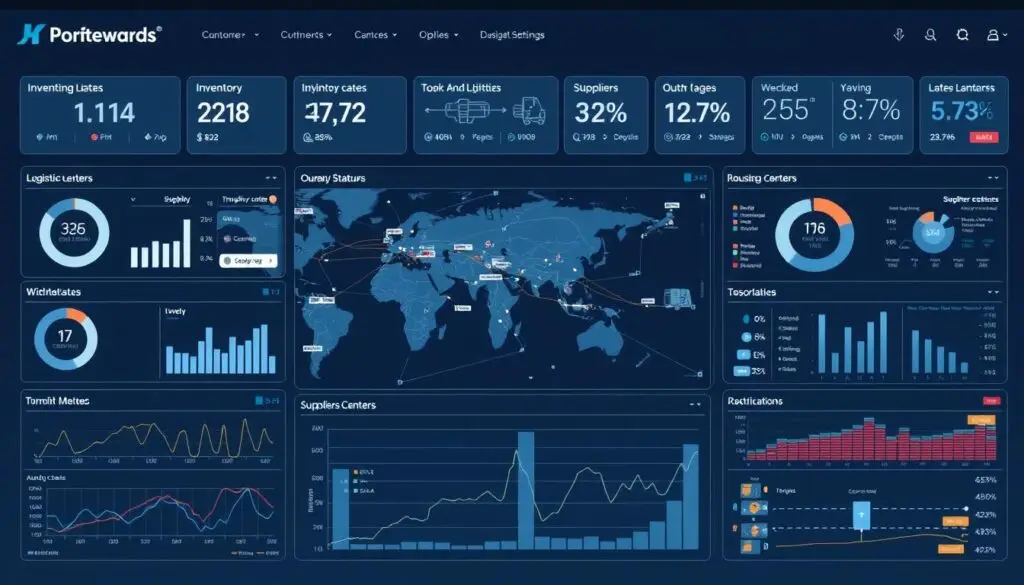
Predictive analytics platforms are replacing outdated manual forecasting methods that rely on stale historical data. Machine learning algorithms now analyze multiple variables simultaneously—historical demand patterns, market signals, weather forecasts, and geopolitical developments—to generate accurate demand forecasting models.
These advanced systems identify potential disruptions before they impact operations. By monitoring supplier financial health, transportation network congestion, and regional risk factors, predictive analytics enable proactive intervention rather than crisis management. Fleet managers shift from firefighting mode to strategic planning with early warning capabilities.
Real-Time Visibility Through Advanced Tracking
Modern inventory tracking systems provide continuous visibility into stock levels across multiple warehouses and distribution centers. IoT sensors and RFID technology enable parts tracking from supplier loading docks through transportation networks to receiving facilities, eliminating blind spots in fragmented legacy systems.
These platforms automate reorder point triggers and optimize allocation decisions across facilities. Real-time data eliminates guesswork and reduces both stockouts and excess inventory carrying costs.
End-to-End Transparency with Integrated Platforms
Centralized transportation management systems (TMS) and supply chain control towers aggregate data from multiple sources to provide comprehensive supply chain visibility. These systems track critical components across global networks, monitor previously invisible Tier 2 and Tier 3 suppliers, and coordinate rapid responses to disruptions.
The financial benefits are substantial. Fleet operations implementing these visibility platforms achieve 10-15% freight cost reductions and 5-20% route efficiency improvements through optimized transportation decisions and proactive exception management.
The HDJ Perspective
After watching fleet operations navigate supply chain challenges for the past three years, one pattern stands out: the organizations that invested in visibility technology before disruptions hit fared dramatically better than those scrambling to implement solutions during crisis. The lesson isn’t just about having the right tools—it’s about building institutional knowledge of your supply network before you desperately need it. Fleet managers who know their Tier 2 suppliers, understand regional risk factors, and have established backup relationships can make decisions in hours that take unprepared operations weeks to sort out.
Negotiation Strategies for Cost Control and Price Stability
Mastering negotiation approaches with suppliers delivers measurable financial benefits when supply chains face disruption. Strategic negotiation tactics enable fleet operations to secure favorable pricing agreements while building partnerships that withstand market volatility.
The right contract structures and payment arrangements create mutual value that strengthens supply chain resilience. Fleet managers must balance efficiency and risk reduction, finding ways to operate at low cost while ensuring operations can withstand supply chain shocks.

Leveraging Volume Commitments
Consolidating orders across multiple facilities unlocks significant volume discounts and price stability protections. Fleet managers can negotiate tiered pricing structures that reward increased commitment levels. Group purchasing arrangements with other operations amplify collective bargaining power beyond what individual companies achieve alone.
Combined freight volumes across specialized transport needs enable better rate negotiations. Market rate intelligence tools using real-time benchmarks from billions of dollars in freight transactions help ensure competitive rates while maintaining budget predictability.
Multi-Year Partnership Frameworks
Long-term supplier contracts shift relationships from transactional spot purchasing to strategic partnerships. These agreements should include price adjustment mechanisms tied to specific input cost indices rather than arbitrary increases. Collaborative improvement targets and volume flexibility clauses balance commitment with operational adaptability.
Sustained contracts proved invaluable during peak disruption periods when fleet operations with established relationships maintained supply access. Transactional buyers faced allocation challenges that long-term partners avoided through predictable order patterns and mutual commitment.
Payment Terms Optimization
Creative payment terms reduce total cost of ownership while improving supplier working capital positions. Early payment discount programs capture savings of 1-3% by accelerating cash flow to suppliers. Dynamic discounting platforms automate these arrangements and maximize opportunities for both parties.
Supply chain financing programs enable fleet operations to extend their payment terms without harming supplier liquidity. These structures separate the buyer’s payment timeline from the supplier’s cash receipt, creating win-win scenarios that strengthen partnerships and reduce overall procurement costs.
Alternative Sourcing: OEM, Aftermarket, and Remanufactured Parts
Cost pressures and supply constraints are driving equipment operators to carefully evaluate alternative parts sourcing options. Companies are undertaking value stream mapping of their supply chains to determine where components come from and identify potential points of failure. Alternative sourcing approaches provide both immediate cost savings and long-term supply resilience when implemented with proper evaluation frameworks.

Evaluating OEM vs. Aftermarket Components
The decision between OEM and aftermarket parts requires systematic evaluation beyond simple price comparison. Fleet managers must assess warranty implications, as some equipment manufacturers void coverage when non-OEM components are installed. Quality and reliability data from independent testing organizations now provide objective performance metrics for aftermarket alternatives.
Aftermarket parts have improved significantly in manufacturing quality over the past decade. Many aftermarket suppliers now meet or exceed OEM specifications for non-critical applications. Equipment operators should develop clear sourcing policies that identify which components can utilize aftermarket options while maintaining reliability standards.
Remanufactured Component Quality Standards
Remanufactured parts offer substantial cost advantages while meeting rigorous quality standards through comprehensive restoration processes. Major assemblies like transmissions, hydraulic pumps, and engines undergo complete disassembly, inspection, and rebuilding to like-new specifications. Industry certifications from organizations such as the Remanufacturing Industries Council validate quality testing protocols and manufacturing processes.
Warranty coverage for remanufactured parts typically matches or approaches OEM warranty periods. Many remanufacturers offer 12 to 24-month warranties that demonstrate confidence in their quality standards. The environmental benefits of remanufacturing—reducing resource consumption by up to 85%—also align with corporate sustainability goals.
Decision Framework for Component Selection
A comprehensive cost-benefit analysis framework extends beyond initial purchase price to include total lifecycle considerations. Expected service life, failure rates, and maintenance requirements all impact the true cost of ownership. Downtime risk assessment helps quantify the potential operational impact of component failures.
| Criteria | OEM Parts | Aftermarket | Remanufactured |
|---|---|---|---|
| Cost Savings | Baseline (0%) | 15-40% reduction | 40-65% reduction |
| Warranty | Full manufacturer | Component only | 12-24 months typical |
| Certification | Original specs | Varies by supplier | RIC/ISO standards |
| Lead Time | Extended during disruptions | Often faster | Moderate |
Strategic implementation of alternative sourcing requires continuous supplier evaluation and performance tracking. Organizations that systematically apply these frameworks can reduce parts costs by 20-30% while maintaining operational reliability and equipment uptime.
Share Your Supply Chain Expertise
Are you a fleet manager, procurement specialist, or equipment dealer with proven strategies for navigating parts supply challenges? HDJ readers want to learn from your experience.
Building Resilient Distribution Networks
Heavy-duty parts operations are implementing comprehensive risk management frameworks to withstand disruptions and maintain uninterrupted operations. Leading companies now use the PPRR model for supply chain resilience: prevention, preparedness, response, and recovery. This systematic approach helps fleet managers avoid controllable risks, prepare contingency plans for unavoidable disruptions, execute preset responses to minimize impact, and restore normal capacity quickly.
For quick action such as switching suppliers, having preapproved response plans proves critical. Proactive planning that outlines contingencies for various disruption scenarios—from parts shortages to transportation delays—exemplifies how resilient supply chain networks operate under pressure.
Regional Distribution Network Design
Fleet operations are moving away from single centralized warehouses toward multiple regional distribution centers that balance efficiency with redundancy. This warehouse strategy positions safety stock closer to equipment and customers, reducing transportation time and costs while providing backup if one location experiences disruption.
Site selection for distribution centers requires careful evaluation of proximity to major customer concentrations, access to diverse transportation infrastructure including highways, rail, and ports, geographic risk diversification to avoid common disaster zones, and scalability potential for future capacity expansion.
Collaborative Industry Approaches
Former competitors are discovering value in strategic partnerships that strengthen supply chains collectively while still competing on product innovation. Industry alliances pool purchasing power, develop new supplier capacity through joint ventures, and establish information-sharing arrangements that provide early warning of potential disruptions.
Collaborative logistics networks that share warehouse space or transportation capacity reduce costs while improving flexibility. For smaller fleet operations, these partnerships provide access to volume pricing and supply commitments that would otherwise be unavailable.
Backup Supplier Development
Systematic supplier qualification processes enable fleet managers to prequalify alternative suppliers before emergencies arise. Having vendors “on the bench” and ready to activate dramatically reduces response time when primary suppliers experience disruptions.
Comprehensive backup supplier onboarding includes technical capability assessments and production capacity reviews, quality audits verifying compliance with specifications, financial stability analysis to ensure long-term viability, pilot production runs validating performance, and contract framework negotiations establishing terms before activation. This preparation allows operations to switch suppliers within days rather than months.
Cash Flow Management During Supply Disruptions
When supply chain challenges strike, fleet operations face a complex financial balancing act between maintaining adequate parts inventory and preserving cash reserves. Effective financial management becomes essential to maintaining business continuity without depleting liquidity.
The key to survival lies in implementing strategic cash flow management practices that address competing financial demands. Right-sizing safety stock levels without increasing stockout risk enables improved cash flow by cutting excess inventory investment. This approach requires careful analysis to ensure operational stability while optimizing capital deployment.
Working Capital Optimization
Fleet managers must adopt sophisticated approaches to preserve working capital while maintaining adequate inventory buffers. Inventory segmentation applies different stocking strategies based on criticality and cost, allowing operations to allocate resources efficiently. High-value, slow-moving components receive different treatment than critical, fast-moving parts.
Consignment inventory arrangements shift ownership to suppliers until parts are consumed, reducing carrying costs. Vendor-managed inventory programs transfer inventory responsibility entirely, freeing up capital for other operational needs. Just-in-sequence delivery for high-value components minimizes inventory investment while ensuring production continuity.
Financing Options for Parts Procurement
Financial tools become critical when working capital pressure intensifies from inventory buildup and extended receivables. Revolving credit facilities provide flexible access to funds during demand spikes. Supply chain financing programs offer innovative solutions where financial institutions provide early payment to suppliers at discounted rates while extending terms to buyers.
Inventory financing secured by parts stock enables fleet operations to leverage existing assets for liquidity. Purchase order financing supports large component orders without straining cash reserves. These financing options create breathing room during extended disruption periods while strengthening supplier relationships.
Industry-Specific Considerations by Equipment Sector
Across construction, agriculture, mining, and commercial transportation sectors, heavy equipment operators require industry-specific approaches to parts supply management. While general supply chain principles provide a foundation, each sector faces unique operational demands that shape procurement strategies.
Construction Equipment Parts Management
Construction equipment manufacturers producing excavators, dozers, loaders, and cranes face distinct challenges in parts availability. Seasonal demand patterns create fluctuations that require flexible inventory strategies capable of scaling up during peak building months. The wide variety of models and configurations leads to parts proliferation that complicates stock management.
Dealer networks play a critical role in construction equipment support, as machines operate at dispersed job sites requiring local parts availability. Leading manufacturers balance centralized distribution for slow-moving components with regional positioning of high-demand items. Telematics data from connected equipment increasingly enables predictive parts ordering based on actual usage patterns and component wear rates.
Agricultural Machinery Supply Chain
Agricultural machinery presents unique supply chain dynamics driven by highly seasonal demand cycles. Parts availability during planting and harvest windows becomes mission-critical for farmer customers who cannot afford equipment downtime during these narrow operational periods. Fleet managers employ sophisticated demand planning models to anticipate these predictable but intense seasonal peaks.
Commercial Transportation Fleet Parts
Commercial transportation fleets demand extremely high parts availability to minimize vehicle downtime. Fleet operators’ profitability depends directly on vehicle uptime, creating pressure for rapid delivery capabilities. Modern fleet management systems now integrate parts ordering with maintenance scheduling, enabling proactive procurement before failures occur.
| Sector | Primary Challenge | Critical Success Factor | Inventory Strategy |
|---|---|---|---|
| Construction | Seasonal demand fluctuation | Dealer network readiness | Flexible regional positioning |
| Agriculture | Extreme seasonal peaks | Harvest window availability | Sophisticated demand forecasting |
| Mining | Remote location operations | Maximum reliability focus | Higher safety stock levels |
| Transportation | Downtime cost sensitivity | Rapid delivery capability | Predictive maintenance integration |
Measuring and Improving Supply Chain Performance
Organizations that measure supply chain performance systematically outperform competitors during disruptions. Establishing comprehensive performance metrics creates visibility into operational effectiveness and identifies improvement opportunities. Leading fleet operations monitor supplier performance through contract compliance, operational standards, and financial health indicators.
Essential Performance Metrics
Tracking the right KPIs reveals critical gaps in parts supply operations. The most impactful performance metrics include fill rate percentages showing order completion accuracy, on-time delivery rates measuring schedule adherence, and perfect order rate capturing complete accuracy across parts, quantities, and timing. Additional indicators include backorder rates, stockout frequency and duration, and emergency order occurrences.
Leading fleet managers establish performance targets at granular levels by supplier, part category, and facility. Dashboard reporting provides real-time visibility while exception alerts notify managers when metrics fall below thresholds. Companies using advanced reporting platforms achieve 8% lower spot market rates and 5-10% improvement in on-time delivery.
Continuous Improvement Methodologies
Continuous improvement processes drive ongoing performance gains in disruption environments. Regular supplier scorecarding combined with root cause analysis addresses systemic supply failures. Cross-functional improvement teams tackle complex challenges using structured methodologies.
Dynamic disruption conditions make continuous improvement essential rather than optional for maintaining competitive operations. Fleet managers who establish regular review cycles and improvement targets build organizational capability that compounds over time.
Frequently Asked Questions
How can fleet managers reduce parts procurement costs without sacrificing availability?
Effective cost reduction starts with ABC inventory classification to focus resources on high-impact components. For Category A critical parts, maintain strategic safety stock with multiple qualified suppliers. For Category C items, consolidate orders and accept slightly longer lead times. Volume consolidation across facilities, group purchasing arrangements, and early payment discounts of 1-3% also reduce total procurement costs. The key is matching inventory strategy to component criticality rather than applying blanket policies.
What inventory strategy works best during ongoing supply chain disruptions?
Most successful fleet operations now use hybrid inventory models combining just-in-time efficiency for readily available, low-risk components with just-in-case buffer stock for critical parts with vulnerable supply chains. Calculate safety stock based on supplier reliability metrics, lead time variability, and stockout cost impact. Components with single-source suppliers or lead times exceeding 90 days warrant larger protective buffers, while commodity parts with multiple reliable sources can maintain leaner inventory levels.
When should fleet operations consider remanufactured parts over OEM components?
Remanufactured parts make strong financial sense for major assemblies like transmissions, hydraulic pumps, and engines when sourced from certified suppliers meeting RIC or ISO quality standards. These components typically offer 40-65% cost savings with 12-24 month warranties matching OEM coverage. Evaluate remanufactured options for components outside warranty periods, non-safety-critical applications, and situations where OEM lead times create unacceptable downtime. Always verify certification credentials and request quality documentation before purchasing.
How many suppliers should fleet operations maintain for critical components?
Industry best practice suggests maintaining at least two qualified suppliers for any component classified as critical to operations—parts where unavailability would halt production or significantly impact revenue. Geographic diversification matters as much as supplier count; having two suppliers in the same region provides limited protection against regional disruptions. For the most critical 5-10% of your parts inventory, consider qualifying suppliers across different geographic zones and maintaining active relationships through periodic orders even during normal operations.
What technology investments deliver the fastest ROI for parts supply chain management?
Fleet management software with real-time inventory tracking delivers the most immediate returns by eliminating blind spots and automating reorder triggers. Operations implementing visibility platforms typically achieve 10-15% freight cost reductions and 5-20% route efficiency improvements. The next priority is predictive analytics for demand forecasting, which reduces both emergency orders and excess inventory. Start with visibility tools that integrate with existing systems, then layer on predictive capabilities as data quality improves.
Building Sustainable Supply Chain Resilience
Supply chain challenges persist across the heavy equipment industry. More than 80% of supply chain leaders expect difficulties to remain or intensify in coming months. This reality demands a fundamental shift in how fleet operations approach heavy-duty parts management and procurement strategies.
The path forward requires balancing cost efficiency with operational resilience. Fleet managers can no longer optimize solely for lowest unit costs—supply chain resilience must become equally important in procurement decisions. This balanced framework protects profit margins while ensuring business continuity during unexpected disruptions.
Successful organizations implement comprehensive cost control strategies addressing multiple risk categories simultaneously. Digital visibility tools provide real-time insights into inventory levels and supplier performance. Strong supplier relationships create flexibility when market conditions shift rapidly. Strategic partnerships expand sourcing options and reduce dependence on single suppliers.
Fleet managers who evaluate current capabilities against the best practices outlined in this guide and address gaps in supplier diversification, inventory management, or technology adoption will navigate future disruptions with confidence while maintaining cost competitiveness in an uncertain environment.
Help Your Network Navigate Supply Chain Challenges
Know fleet managers or procurement professionals who could benefit from these strategies? Share this guide with your industry network.