

By Michael Nielsen, Editor & Publisher | 15+ Years in Diesel Repair
Last Updated: December 2025
📖 Estimated reading time: 18 minutes
Fleet technology adoption has reached a defining milestone in commercial trucking. For five consecutive years, at least 80% of fleet operators have utilized some form of digital management solution—transforming what was once optional equipment into essential operational infrastructure. The 2025 Fleet Technology Trends Report from Verizon Connect, based on survey responses from 543 professionals, confirms that GPS tracking, telematics, and predictive analytics now drive strategic decision-making across fleets of all sizes.
For heavy-duty fleet managers and owner-operators, these statistics translate into real competitive advantages. Fuel cost savings doubled from 8% to 16% between 2021 and 2025, while accident-related cost reductions jumped from 11% to 22%. Nearly half of GPS tracking users achieved positive ROI in less than one year. Understanding how to leverage these tools effectively can mean the difference between profitable operations and struggling margins in today’s cost-pressured trucking environment.
Key Takeaways
- Adoption is universal: Over 80% of fleets have used digital solutions for five consecutive years, with 69% deploying GPS tracking as standard practice.
- ROI is accelerating: 47% of GPS users achieved positive returns within 12 months; 33% saw payback in under six months.
- Cost savings have doubled: Average fuel savings increased from 8% to 16%, and accident cost reductions climbed from 11% to 22% since 2021.
- Fleet size matters: Enterprise fleets (500+ vehicles) show 87% GPS adoption versus 59% for small fleets under 50 vehicles.
- Video telematics delivers: 75% of in-cab video users report improved driver safety; 68% rate the technology as extremely beneficial.
- EV preparation is underway: 28% of fleets now use GPS tracking to identify routes suitable for electric vehicle deployment.
Current State of Fleet Technology in Commercial Trucking
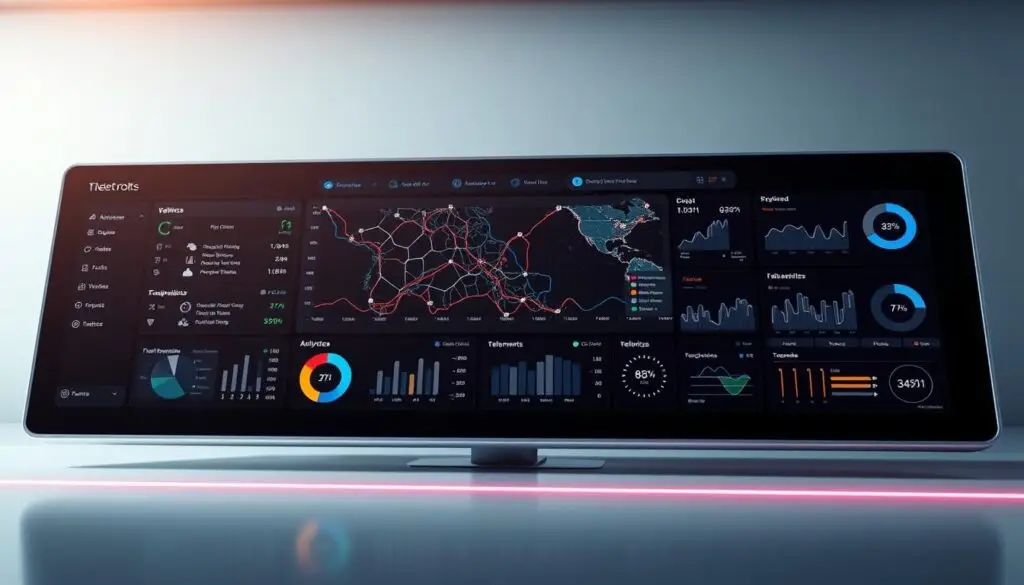
The heavy-duty trucking industry has fundamentally transformed how operations are managed. What began as basic vehicle location tracking has evolved into comprehensive platforms integrating artificial intelligence, machine learning, and predictive analytics. Fleet managers now access real-time dashboards consolidating fuel consumption, driver behavior, maintenance alerts, and route optimization into actionable intelligence.
This shift reflects broader market acceptance rather than experimental adoption. Companies maintain technology investments year after year because measurable returns justify ongoing costs. The transition from reactive management—responding to breakdowns and violations—to proactive strategy marks the most significant operational change in modern fleet oversight.
The Data Behind Technology Transformation
Survey data from the 2025 Fleet Technology Trends Report reveals clear adoption patterns across the industry. GPS fleet tracking leads all technology categories with 69% of fleets actively using location-based systems. Among users, 72% rate their GPS solutions as extremely or very beneficial—exceptionally high satisfaction for enterprise software.
Adoption rates have remained consistently above 80% for five consecutive years, indicating stable market penetration across transportation sectors. This consistency signals that telematics solutions have achieved mainstream acceptance, particularly among trucking fleets where FMCSA electronic logging device requirements have accelerated technology integration since the 2019 mandate.
| Technology Category | Adoption Rate | User Satisfaction |
|---|---|---|
| GPS Fleet Tracking | 69% | 72% extremely/very beneficial |
| In-Cab Video Telematics | 38-50% | 68% extremely/very beneficial |
| Workforce Management | 30-43% | 48% one-year ROI |
| Asset Tracking | 18-34% | 53% one-year ROI |
What’s Driving Technology Investment
Multiple factors sustain investment momentum despite high existing adoption rates. Rising operational costs pressure fleets to extract maximum efficiency from every asset. The American Transportation Research Institute reports average operating costs reached $2.26 per mile in 2024, making any efficiency gain financially significant.
Driver shortages force operations to optimize workforce deployment through better scheduling and route planning. When experienced CDL holders are scarce, technology helps fleets accomplish more with available personnel. Regulatory pressures related to safety compliance—particularly 49 CFR Part 395 hours of service requirements—demand detailed documentation that manual systems cannot reliably provide.
Customer service expectations have similarly evolved. Shippers now demand real-time visibility into delivery status and accurate arrival windows. Fleets without tracking capabilities find themselves at a competitive disadvantage when bidding for freight that requires transparency throughout the supply chain.
Survey Methodology and Participant Demographics
Understanding who participated in this research matters for interpreting findings. The 2025 Fleet Technology Trends Survey ran from May 14 through June 28, 2024, capturing mid-year perspectives when fleet managers had sufficient operational data to assess technology performance against annual objectives.
Bobit Business Media conducted the research on behalf of Verizon Connect, leveraging established publications including Heavy Duty Trucking, Automotive Fleet, Business Fleet, Work Truck, and Government Fleet. A total of 543 fleet management professionals completed the comprehensive survey, providing statistical significance for industry-wide conclusions.
Decision-Maker Representation
Respondent titles reveal strong participation from those with budget authority. Executive-level participants (25%), upper management (25%), and fleet management roles (24%) together represent 74% of respondents. This concentration ensures insights reflect strategic planning perspectives rather than exclusively operational viewpoints.
Industry representation spans both public and private sectors. Government fleets comprised the largest single segment at 28%, followed by transportation (22%), general freight (12%), services (12%), and construction (5%). Manufacturing, retail, food distribution, utilities, and petroleum sectors contributed the remaining participation.
Fleet Size Distribution
Fleet size distribution closely mirrors the actual composition of the U.S. fleet market. Organizations with 1-49 vehicles represented 45% of respondents, medium fleets of 50-499 vehicles comprised 33%, and large enterprises operating 500 or more vehicles accounted for 22%. This balanced representation enables meaningful comparison of adoption patterns across operational scales.
77%
of fleet operators identify increasing costs as their top challenge—for five consecutive years
Technology Adoption Rates by Fleet Size
Fleet size emerges as one of the strongest predictors of technology adoption rates and implementation depth. The survey data reveals clear stratification across three operational segments, with each facing unique challenges and opportunities that influence their digital investment decisions.
Small Fleets: 1-49 Vehicles
Small fleet operators face distinct budget constraints shaping their technology decisions. Despite these limitations, 72% of small fleets now utilize at least one form of fleet management technology, with GPS tracking leading adoption at 59%. This represents a significant shift from five years ago when most small operations relied entirely on manual tracking methods.
Cloud-based solutions have democratized access for smaller operations by eliminating substantial upfront infrastructure investments. Monthly subscription models allow owner-operators and small fleet managers to adopt sophisticated tracking and management tools without capital outlays that might otherwise be prohibitive.
Video telematics adoption has reached 38% among small fleets, driven primarily by rising insurance costs and the potential for rate reductions through demonstrated driver safety improvements. Asset tracking remains the least adopted technology at 18% for small fleets, as many operators prioritize core vehicle tracking over broader equipment management.

Mid-Size Fleets: 50-499 Vehicles
Mid-size operations represent a critical inflection point in technology maturity. These fleets demonstrate substantially higher adoption rates, with 76% utilizing GPS tracking and 84% implementing at least one technology solution. The operational complexity at this scale demands more systematic management approaches than manual methods can provide.
This segment shows broader technology portfolio adoption compared to smaller fleets. Workforce management solutions reach 43% adoption, reflecting the challenges of coordinating larger driver pools and more complex routing requirements. Asset tracking climbs to 34% as operations expand beyond vehicle-only focus to include trailers, equipment, and specialized tools.
ROI justification becomes clearer at this scale. The volume of vehicles and transactions creates sufficient data to demonstrate tangible savings that overcome initial implementation cost concerns.
Enterprise Fleets: 500+ Vehicles
Enterprise fleet operations show near-universal technology adoption, with 87% implementing GPS tracking and 90% utilizing at least one fleet management technology. At this scale, centralized visibility becomes operationally essential rather than merely beneficial. Geographic dispersion across multiple facilities and markets makes manual coordination virtually impossible.
Interestingly, in-cab video adoption for large fleets (42%) falls slightly below mid-size fleet rates (50%). This counterintuitive pattern reflects different priorities, with enterprise operations often focusing on integration and system consolidation rather than deploying every available technology type independently.
| Fleet Size | GPS Tracking | In-Cab Video | No Technology |
|---|---|---|---|
| Small (1-49) | 59% | 38% | 28% |
| Medium (50-499) | 76% | 50% | 16% |
| ✓ Enterprise (500+) | 87% | 42% | 10% |
Industry-Specific Patterns
Industry vertical significantly influences both adoption rates and perceived technology value. Transportation and distribution companies lead adoption at 84% usage rates, with 80% of users reporting high value from their implementations. Route-intensive operations benefit most dramatically from telematics, as efficiency gains directly impact competitive positioning.
Construction, field services, and utilities demonstrate 74% adoption rates with 59% finding the technology valuable. Government fleets show the lowest adoption at 56%, yet report 70% value perception among users—suggesting that procurement processes and budget cycles slow implementation rather than skepticism about benefits.
Stay Ahead of Fleet Technology Trends
Get weekly insights on telematics, maintenance technology, and regulatory updates delivered directly to fleet managers and diesel professionals.
Most Adopted Technologies and Their Benefits
Survey data identifies specific technology categories that have moved beyond early adoption to become essential operational tools. These solutions address fundamental challenges while delivering measurable returns on investment.
GPS Tracking and Telematics Systems
GPS fleet tracking represents the foundation of modern fleet management. With 69% of fleets currently utilizing location-based systems and 72% of users rating solutions as extremely or very beneficial, the technology has become standard operational practice.
The documented outcomes from GPS tracking implementation demonstrate tangible improvements:
- Increased efficiency: 62% of users documented measurable productivity gains
- Improved driver safety focus: 57% enhanced their safety programs
- Reduced harsh driving events: 49% decreased speeding and aggressive maneuvers
- Eliminated unauthorized use: 39% reduced personal use of company assets
- Reduced idling: 34% cut unnecessary engine runtime
- Improved vehicle recovery: 23% increased stolen vehicle recovery rates
Real-time location monitoring enables dispatchers to provide accurate arrival estimates and respond dynamically to service requests. This capability contributed to 50% of GPS users achieving their customer service goals. Route optimization features helped 46% of participants achieve routing improvement goals by calculating efficient paths considering traffic patterns, delivery sequences, and appointment windows.

Predictive Maintenance Solutions
Modern fleet platforms integrate artificial intelligence and machine learning to monitor vehicle health metrics continuously. Predictive maintenance systems analyze patterns in engine diagnostics, fluid conditions, and component wear to forecast failures before breakdowns occur.
Fleet operators reported a 16% reduction in maintenance costs through early problem detection and optimized service scheduling. Beyond direct savings, predictive maintenance minimizes roadside breakdowns that impact customer service and driver safety. Unexpected failures create service delays, require expensive emergency towing, and potentially strand drivers in unsafe locations.
Advanced systems now provide maintenance recommendations based on actual vehicle usage patterns rather than generic time or mileage intervals. This usage-based approach ensures maintenance occurs when actually needed—avoiding both premature service and delayed repairs that lead to component failures.
Driver Behavior Monitoring and Video Telematics
Telematics systems track critical driving behaviors including speeding, harsh braking, rapid acceleration, and aggressive cornering. Driver behavior monitoring provides objective data replacing subjective observations as the basis for coaching conversations.
In-cab video technology represents an advanced form of behavior monitoring, with adoption varying by fleet size. Video system users report exceptional satisfaction levels, with 68% rating the technology as extremely or very beneficial.
| Video System Benefit | Achievement Rate |
|---|---|
| Improved driver safety | 75% |
| Increased distracted driving awareness | 61% |
| Improved driver coaching sessions | 60% |
| Reduced accident frequency | 47% |
Objective video evidence protects fleets against fraudulent insurance claims. Dash cam recordings frequently exonerate drivers in accidents where the other party falsely claims fleet vehicle fault, delivering significant financial benefits through avoided claim payouts and preserved insurance ratings.
Fuel Management Systems
Fuel typically represents 20-30% of total fleet operating budgets, making consumption management a high-priority concern. Fuel management systems monitor consumption patterns, identify inefficient vehicles or routes, detect fuel card fraud, and track excessive idling.
Survey data shows fuel cost savings doubled from 8% in 2021 to 16% in 2025. This improvement reflects both enhanced technology capabilities and increased organizational focus on efficiency driven by volatile energy prices. Idling reduction represents a significant opportunity, with 34% of GPS users achieving measurable reductions through automated monitoring and driver coaching.
Measured ROI from Technology Implementation
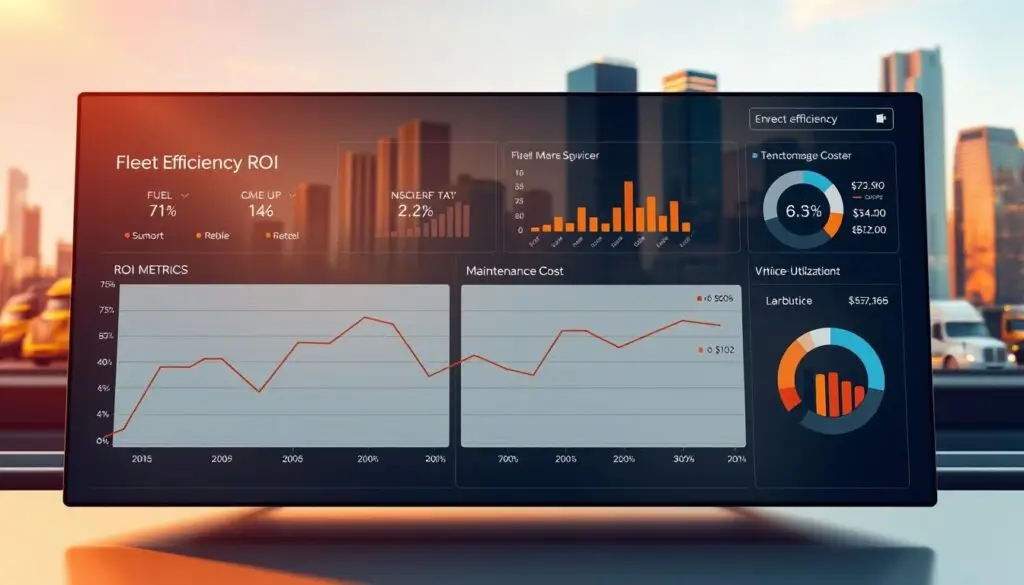
The financial impact of fleet management technology extends beyond implementation costs, creating sustainable reductions across multiple operational categories. Survey data reveals organizations implementing GPS tracking, telematics, and asset tracking systems achieve measurable returns validating these investments as strategic business decisions.
Cost Reduction Across Categories
Cost savings have accelerated dramatically over five years as platforms incorporate more sophisticated algorithms and predictive capabilities. The financial benefits satisfy capital expenditure approval thresholds across organizations of all sizes.
| Cost Category | 2021 Savings | 2025 Savings | Improvement |
|---|---|---|---|
| Fuel Costs | 8% | 16% | +100% |
| Accident Costs | 11% | 22% | +100% |
| Labor Costs | 10% | 16% | +60% |
| Maintenance Costs | 12% | 16% | +33% |
| Insurance Premiums | — | 13% | New metric |
Payback Period Analysis
The speed at which technology investments achieve positive ROI has accelerated, making financial justification increasingly compelling. 47% of GPS fleet tracking users achieved positive ROI in less than one year, up from 41% in 2024. Perhaps most striking, 33% of organizations reached payback in less than six months.
A six-month payback period represents an effective annual return exceeding 200%, demonstrating that telematics technology competes favorably against alternative uses of capital. Asset tracking systems delivered comparable results, with 53% achieving positive ROI within one year. Field service and workforce management solutions reached the same milestone for 48% of users.
Key Recommendation
For fleets evaluating technology investments, prioritize GPS tracking with integrated fuel management as the foundation. The documented 16% fuel savings and sub-year payback timelines make this the lowest-risk, highest-return starting point for digital transformation.
Maintenance and Labor Efficiency
Technology-enabled maintenance management delivered a 16% reduction in maintenance costs across survey respondents. This substantial savings stems from the shift from reactive repairs to preventive scheduling enabled by diagnostic data integration. Industry data consistently shows preventive interventions cost 25-30% less than reactive emergency repairs for the same mechanical issues.
Labor cost reductions averaging 16% reflect multiple efficiency mechanisms. Route optimization algorithms enable drivers to complete 15-25% more stops per day by identifying efficient sequences and travel paths. Automated mileage logging eliminates manual logbook completion, saving drivers 10-15 minutes daily while improving accuracy for IRS mileage reimbursement and regulatory compliance purposes.
Insurance Premium Benefits
Insurance cost savings averaging 13% reflect growing insurer recognition of telematics data as evidence of proactive risk management. Carriers increasingly offer premium discounts to fleets implementing GPS tracking and driver behavior monitoring, acknowledging that these technologies correlate with reduced claim frequency and severity.
Video telematics systems provide particularly strong leverage for premium negotiations by offering objective evidence of driver behavior and incident circumstances. When not-at-fault accidents occur, video footage enables rapid claim resolution without lengthy investigations, protecting experience modification ratings that influence premium calculations for subsequent policy periods.
The HDJ Perspective
Having worked with commercial fleets across the heavy-duty spectrum, we’ve observed that the gap between technology adopters and holdouts is widening into a competitive chasm. Fleets that implemented telematics five years ago aren’t just saving money—they’re building institutional knowledge through years of operational data. That historical baseline for fuel consumption, maintenance patterns, and driver performance creates decision-making advantages that new adopters can’t immediately match. For fleet managers still relying on spreadsheets and driver phone calls, the question isn’t whether to adopt technology, but how quickly you can close the data gap with competitors who started years ago.
Implementation Challenges and Barriers
Despite compelling ROI data, fleet managers encounter substantial roadblocks when attempting to implement new systems. Survey findings reveal that 28% of small fleets, 16% of medium fleets, and 10% of large fleets still operate without any fleet technology—highlighting persistent adoption barriers that transcend awareness of potential benefits.

Budget Constraints and Total Cost Considerations
A striking paradox emerges when examining financial barriers. While 77% of fleet operators identify increasing costs as their top challenge—for five consecutive years—many hesitate to invest in solutions proven to reduce those expenses. This contradiction reveals how procurement cycles and capital allocation decisions can override operational logic.
For smaller operators, monthly subscription fees of $30-50 per vehicle represent meaningful commitments requiring formal approval processes. Implementation expenses extend beyond software to include hardware installation ($200-800 per vehicle for GPS devices and cameras), training time, and potential tablet or smartphone purchases for drivers.
Driver Resistance and Training Requirements
Human factors present obstacles as formidable as financial constraints. Driver concerns about monitoring and surveillance frequently trigger resistance undermining implementations before they begin. When tracking systems are introduced without transparent communication, employees often perceive them as punitive enforcement tools rather than safety enhancements.
Successful fleet managers invest significant time in change management, explaining how technology benefits drivers through better routing, simplified reporting, and documentation that protects them in accident disputes. Training requirements extend beyond drivers to dispatchers learning new workflows, maintenance personnel interpreting diagnostic alerts, and managers developing dashboard analysis competency.
Integration with Existing Systems
Organizations with established maintenance management platforms, fuel card programs, or enterprise software face difficult integration requirements. Without proper connectivity between systems, operations must accept duplicate data entry negating efficiency gains or abandon historical information providing valuable context.
Survey data indicates 43% of fleets now cite increased regulation as a significant challenge, up from 38% the previous year. This growing regulatory complexity makes integration capabilities increasingly critical, as operations need systems sharing compliance data across multiple platforms to satisfy reporting requirements without redundant processes.
Share Your Fleet Technology Experience
Have you implemented telematics, predictive maintenance, or EV charging solutions? Heavy Duty Journal welcomes contributions from fleet managers sharing real-world implementation lessons.
Critical Success Factors for Technology Deployment
The difference between transformative technology adoption and disappointing underutilization lies in how fleets manage the deployment process. Survey data reveals that 72% of GPS users find their technology extremely or very beneficial, demonstrating successful implementations share identifiable characteristics.
Leadership Commitment and Cultural Change
Executive buy-in establishes the foundation for successful deployment. Leadership commitment extends beyond budget approval to active championing of how platforms support strategic priorities around cost management, customer service, and operational excellence.
Successful implementations position fleet technology as tools empowering employees rather than surveillance mechanisms for punitive oversight. This framing proves critical for video telematics adoption, where 75% of users achieve driver safety goals when the technology is positioned as protection rather than monitoring.
Phased Rollout Strategies
High-performing fleets avoid overwhelming deployments introducing simultaneous process changes across all operational areas. Instead, they implement phased strategies validating technology performance, refining workflows, and building internal expertise before full-scale rollout.
Effective pilots start with a vehicle subset or single division testing technology in real-world conditions. This controlled approach identifies training gaps, technical issues, and workflow adjustments before broader deployment. Pilot programs should establish clear success metrics aligned with strategic objectives rather than merely confirming technical functionality.
Vendor Selection Criteria
Vendor selection extends beyond feature comparisons and pricing analysis. Fleets achieving rapid ROI evaluate providers using comprehensive criteria predicting long-term partnership success, including implementation support quality, ongoing customer success resources, and product roadmap alignment with fleet priorities.
Reference checks with current customers operating similar fleet profiles provide invaluable insights into vendor performance beyond marketing materials. Organizations should specifically inquire about post-sale support responsiveness, issue resolution timeframes, and whether vendor relationships improve operational outcomes beyond technology functionality.
Future Trends: AI, Electric Vehicles, and Autonomous Integration
Forward-thinking fleet managers are already preparing for technology transformations reshaping transportation over the next five years. Survey data reveals significant momentum toward capabilities addressing sustainability mandates, operational intelligence, and workforce evolution.
Artificial Intelligence and Machine Learning
AI fleet management has transitioned from experimental to operational reality across the industry. Machine learning algorithms now continuously improve predictive maintenance accuracy by identifying failure patterns across thousands of similar vehicles and operating conditions, detecting subtle anomalies human analysts would miss.
Intelligent video analysis distinguishes truly risky driver behaviors from false positives, reducing alert fatigue among safety managers. Natural language processing capabilities are democratizing data access, allowing fleet managers to query systems in plain English rather than navigating complex reporting structures.
Electric Vehicle Fleet Integration
Survey results indicate 28% of fleets already use GPS tracking to identify applications and routes suitable for potential EV utilization. This represents early mainstream adoption as electrification transitions from experimental programs to operational reality.
Among fleets currently operating electric vehicles, performance metrics demonstrate clear benefits: 35% report improved fleet visibility, 35% enhanced efficiency, 30% reduced maintenance costs, and 28% advanced sustainability performance. Fleet platforms now integrate charging station status, energy costs, and vehicle charge levels into unified dashboards optimizing charging schedules against electricity rate structures.
Accurate range prediction prevents costly roadside charging emergencies and builds driver confidence. Advanced algorithms account for weather conditions, driving patterns, and payload characteristics, providing realistic expectations rather than optimistic estimates that leave drivers stranded.
Preparing for Autonomous Integration
Forward-looking fleet platforms are incorporating frameworks to eventually manage mixed fleets of human-driven and autonomous vehicles. While fully autonomous commercial deployments remain years away for most applications, technology foundations are being established now.
Current survey data shows 43% of respondents cite increased regulation as a top challenge, largely driven by sustainability and emission reduction requirements. The California Air Resources Board’s Advanced Clean Fleets regulation is pushing larger fleets toward zero-emission vehicle adoption, with compliance deadlines beginning in 2024 for drayage trucks. Organizations strategically investing in these emerging capabilities position themselves for sustained competitive advantage.
Frequently Asked Questions
What percentage of commercial fleets use GPS tracking technology?
According to the 2025 Fleet Technology Trends Report, 69% of fleets across all industries currently use GPS fleet tracking technology. Adoption rates vary significantly by fleet size, ranging from 59% for small fleets (1-49 vehicles) to 87% for enterprise operations (500+ vehicles). Transportation and distribution companies show the highest adoption at 84%, while government fleets trail at 56% despite reporting 70% satisfaction among users. The technology has become standard operational infrastructure, with 72% of users rating their GPS solutions as extremely or very beneficial.
How quickly can fleets expect ROI from telematics technology?
Payback timelines have accelerated considerably in recent years. The 2025 survey data shows 47% of GPS fleet tracking users achieved positive ROI in less than one year—up from 41% in 2024. Remarkably, 33% of organizations reached payback in under six months. Asset tracking systems delivered comparable results with 53% achieving positive ROI within one year, while workforce management solutions reached the same milestone for 48% of users. These rapid payback periods make technology investments increasingly compelling for capital expenditure approval.
What are the biggest barriers to fleet technology adoption?
Budget constraints remain the primary barrier, with 77% of fleet operators identifying increasing costs as their top challenge for five consecutive years. Small fleets face particular challenges with monthly per-vehicle fees, hardware installation costs ($200-800 per vehicle), and training investments. Driver resistance to monitoring represents a significant human factor, requiring transparent communication about safety benefits rather than surveillance purposes. Integration challenges with existing maintenance management, fuel card, and enterprise systems also complicate implementation for established operations.
How much can fleets save on fuel costs with GPS tracking?
Survey data shows average fuel cost savings doubled from 8% in 2021 to 16% in 2025. This improvement reflects both enhanced technology capabilities—including route optimization and idle reduction alerts—and increased organizational focus on efficiency driven by volatile fuel prices. For a fleet spending $500,000 annually on fuel, 16% savings represents $80,000 in reduced costs. Idling reduction alone contributed measurable fuel savings for 34% of GPS users, with route optimization helping 46% achieve routing improvement goals.
What percentage of fleets are preparing for electric vehicle integration?
Currently, 28% of fleets use GPS tracking to identify applications and routes suitable for potential EV utilization. Among fleets already operating electric vehicles, 35% report improved fleet visibility and enhanced efficiency, 30% document reduced maintenance costs, and 28% demonstrate advanced sustainability performance. Fleet management platforms are increasingly integrating charging infrastructure monitoring, battery status visibility, and range optimization tools to support the transition from internal combustion to electric powertrains in commercial operations.
Positioning Your Fleet for Technology-Driven Success
Fleet technology adoption has reached a defining milestone. Five consecutive years of 80%+ usage rates demonstrate that telematics platforms have become essential operational infrastructure rather than experimental tools. The financial case strengthens annually, with fuel and accident cost savings doubling since 2021 and nearly half of GPS users achieving positive ROI within twelve months.
For heavy-duty fleet managers and owner-operators evaluating technology investments, the data provides clear direction. GPS tracking with integrated fuel management offers the lowest-risk starting point, delivering documented 16% fuel savings and sub-year payback timelines. Video telematics justifies investment through both safety improvements and insurance premium reductions. Predictive maintenance capabilities transform reactive repairs into scheduled interventions, reducing costs while improving vehicle uptime.
The 77% of fleets citing increasing costs as their primary challenge now have proven tools to address that pressure. Technology adoption no longer represents an optional enhancement—it’s become the baseline requirement for competitive operation in modern commercial trucking.
Share This Guide With Your Team
This fleet technology analysis provides data-driven insights for technology investment decisions. Share it with operations managers and fleet directors evaluating telematics solutions.