

By Michael Nielsen, Publisher | 15+ Years in Diesel Repair & Fleet Operations
Last Updated: September 2026
⏱ Estimated reading time: 13 minutes
Fleet equipment financing is the use of a loan, lease, or line of credit to acquire trucks, trailers, or heavy machinery without paying the full purchase price upfront. Instead of tying up working capital in a single transaction, a fleet or owner-operator spreads the cost of equipment across monthly payments while putting the asset to work generating revenue immediately.
Financing arrangements generally fall into two categories: loans, where the borrower owns the equipment and builds equity from the first payment, and leases, where a company pays for the use of equipment over a fixed term with an option to purchase, renew, or return it at the end. The right structure depends on cash flow, tax strategy, and how long the equipment will stay in service.
For growing fleets, the decision to finance rather than pay cash usually comes down to protecting cash reserves for fuel, payroll, and unplanned repairs. Rather than draining a bank account on a single tractor or excavator, most operators finance the purchase and keep working capital available for the swings that come with freight demand and seasonal work.
Independent lenders that specialize in commercial equipment — offering heavy equipment financing for agriculture, construction, and transportation businesses — typically underwrite based on the equipment itself and the applicant's cash flow, rather than demanding the extensive collateral a traditional bank loan might require.
Understanding how that underwriting works, and where loans and leases diverge, is the first step toward a financing decision that fits how a business actually operates — the same lens Heavy Duty Journal (heavydutyjournal.com) applies across its coverage of fleet costs and equipment strategy.
Key Takeaways
- ✓Fleet equipment financing includes loans (ownership, equity) and leases (lower payments, flexibility) — the right choice depends on how long the equipment will stay in the fleet.
- ✓Lenders typically evaluate business cash flow, time in operation, and the value of the equipment itself, not just personal credit history.
- ✓The Section 179 deduction allows qualifying businesses to write off up to $2,560,000 of equipment placed in service in 2026, subject to a phase-out above $4,090,000.
- ✓SBA-backed loans, bank term loans, and independent equipment finance companies each serve different credit profiles, timelines, and equipment types.
- ✓Carrier-controlled lease-purchase programs — where a motor carrier both finances the truck and employs the driver — carry documented risks that don't apply to independent, third-party equipment financing.
- ✓Rising per-mile operating costs are pushing more fleets toward financing over cash purchases to preserve working capital.
In This Guide
- What Is Fleet Equipment Financing and How Does It Work
- Equipment Loans vs. Leasing: Which Fits Your Fleet
- How Lenders Evaluate Fleet Financing Applications
- Financing Options by Equipment Type
- Common Fleet Financing Mistakes That Cost Owner-Operators Money
- Frequently Asked Questions
- Getting Your Fleet's Next Piece of Equipment Financed
What Is Fleet Equipment Financing and How Does It Work
At its core, fleet equipment financing works the same way any secured business financing works: a lender advances funds (or provides equipment) in exchange for scheduled payments, and the equipment itself typically serves as collateral.
That collateral structure is what makes equipment financing more accessible than unsecured business loans — the lender has a tangible asset to repossess if payments stop, which reduces the lender's risk and, in turn, often speeds up approval.
Financing sources fall into a few broad categories. Banks and credit unions offer competitive rates but usually require longer relationships, more documentation, and stronger credit profiles. Manufacturer captive finance arms (in-house lending tied to a specific brand of truck or equipment) can offer promotional rates on new units but rarely finance used or cross-brand equipment.
Independent equipment finance companies specialize in loans and leases across agriculture, construction, and transportation equipment, and generally underwrite based on business cash flow and the equipment's value rather than requiring years of banking history.
Payment structures within these financing arrangements are more flexible than fleets often expect. Most lenders can match payment schedules to how a business actually earns revenue — level monthly payments for a fleet with steady freight volume, seasonal or step-up schedules for agricultural operations, or deferred first-payment structures that give a business a month or two before payments begin while new equipment gets put to work.
Interest rates and terms are driven by a mix of factors: the age and type of equipment (new equipment typically qualifies for longer terms and lower rates than older used equipment), the term length relative to the equipment's expected useful life, and the applicant's overall credit and cash flow profile.
A well-structured deal matches the loan or lease term to how long the equipment will realistically stay productive — financing a truck for eight years when a fleet plans to trade it in after four creates unnecessary risk if the equipment is sold before it's paid off.
The scale of this market is larger than most fleet owners realize. According to the Equipment Leasing and Finance Association, roughly 8 in 10 U.S. companies use some form of financing — loans, leases, or lines of credit — when acquiring equipment, and a majority of what businesses invest in capital equipment and software each year is financed rather than paid in cash.
Fleet and transportation equipment is one of the largest single categories in that financing volume, which means a fleet that finances its trucks and trailers is following the norm for the industry, not the exception.
Equipment Loans vs. Leasing: Which Fits Your Fleet
The loan-versus-lease decision usually comes down to three questions: How long do you plan to keep the equipment? How important is ownership and equity? And how does each option affect your taxes and monthly cash flow?
Equipment loans work like a traditional term loan. The borrower makes a down payment (commonly 10–20%, though this varies by lender, equipment age, and credit profile), then pays down principal and interest over a fixed term — typically matched to the equipment's useful life. Ownership transfers immediately, which means the fleet builds equity with every payment and can sell or trade the equipment at any time.
Loans generally make sense for core equipment a fleet plans to run for its full service life, such as a primary tractor or an excavator used across multiple job sites.
Equipment leases come in a few structures. A true (or "fair market value") lease functions more like a long-term rental: lower monthly payments, and at the end of the term the business returns the equipment, renews the lease, or buys it at its then-current market value. A capital lease, or $1 buyout lease, functions more like a loan — the business is effectively financing a purchase and takes ownership for a nominal amount at the end of the term.
Leasing tends to fit equipment that depreciates quickly, gets upgraded often (specialized attachments, technology-heavy equipment), or is needed for a defined project or season.
Tax treatment is one of the most consequential differences, and it's worth understanding before signing either type of agreement. Because the Section 179 deduction applies to property a business owns for tax purposes, a loan or a $1 buyout lease typically qualifies for the deduction, while a true fair-market-value lease generally does not, since the business never takes ownership.
Per IRS Publication 946, the Section 179 deduction limit for property placed in service in tax years beginning in 2026 is $2,560,000, with the deduction phasing out dollar-for-dollar once total qualifying purchases exceed $4,090,000. A fleet weighing a large equipment purchase against year-end tax planning should talk to a tax professional about which financing structure preserves that deduction.
How Lenders Evaluate Fleet Financing Applications
Underwriting standards vary significantly depending on where a fleet applies. Traditional banks and SBA-backed lenders tend to weigh personal and business credit history heavily, along with time in business and detailed financial statements.
Independent equipment finance companies, by contrast, often place more weight on the equipment's value and the applicant's demonstrated cash flow — which is part of why approval timelines can run same-day to a few business days rather than several weeks.
The U.S. Small Business Administration's 7(a) loan program is one common path for fleets that qualify: it can be used to purchase machinery and equipment, offers loans up to $5 million, and requires the applicant to be creditworthy and demonstrate a reasonable ability to repay from business cash flow. The trade-off is a slower approval process and more documentation, since a bank or SBA-approved lender is underwriting the full relationship, not just the equipment purchase.
Across virtually every financing path, lenders are looking at a similar set of factors: time in business (generally at least one to two years, though some independent lenders work with newer operations), business and personal credit, the age and resale value of the specific equipment being financed, and the down payment offered.
A larger down payment can offset a thinner credit file, and equipment with strong resale value (a well-maintained tractor or a widely used excavator model) typically qualifies for better terms than specialized equipment with a narrow resale market.
Documentation requirements also scale with the size and complexity of the request. A straightforward loan for a single used trailer might require little more than a credit application and basic business information, while a larger purchase — several trucks, a fleet expansion, or specialized construction equipment — often calls for financial statements, tax returns, and a breakdown of existing debt obligations.
Fleets that keep clean, current financial records generally move through underwriting faster regardless of which type of lender they approach, since incomplete documentation is one of the most common reasons an otherwise qualified applicant experiences delays.
Financing Options by Equipment Type (Trucks, Trailers, and Heavy Machinery)
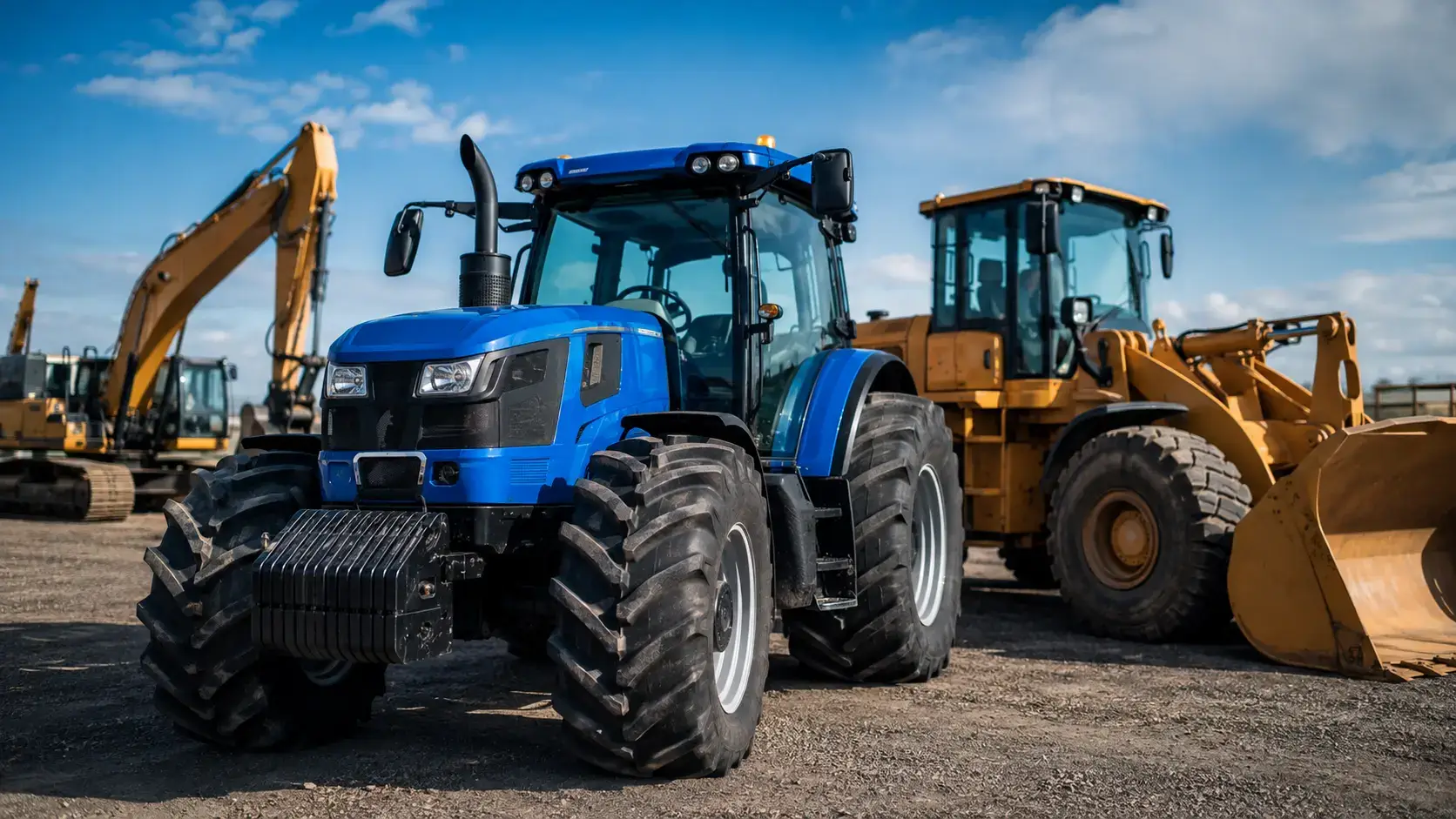
Financing considerations shift depending on the type of equipment and the industry segment it serves:
Transportation equipment (trucks and trailers) tends to have the most established financing market, since resale values and depreciation curves for common tractor and trailer models are well documented. Lenders financing over-the-road tractors often structure terms around a 3–5 year window that roughly matches typical trade-in cycles, while trailers — which depreciate more slowly — can support longer terms.
Owner-operators financing their first truck should expect somewhat stricter down payment requirements than an established fleet adding a unit, since first-time borrowers carry less operating history for a lender to evaluate. HDJ's guide to leasing versus owning a truck for new owner-operators breaks down that first-truck financing decision in more depth, including the down payment ranges specific to first-time borrowers with limited credit history.
This distinction matters more than ever as operating costs climb: the American Transportation Research Institute found that the average cost to operate a truck reached $2.336 per mile in 2025, the highest per-mile figure in the report's history, driven largely by rising maintenance, tolls, and tire costs. When per-mile costs are climbing industry-wide, financing rather than paying cash for a new tractor or trailer helps a fleet keep enough cash on hand to absorb those rising operating expenses without falling behind on other obligations.
Construction equipment (excavators, loaders, dozers, and specialized attachments) often carries higher price tags and longer useful lives than transportation equipment, which can support longer financing terms — sometimes five to seven years. Because construction equipment frequently changes hands between contractors, used equipment financing is common in this segment, and lenders familiar with the category can often move faster on used-equipment applications than a generalist bank.
Contractors should also factor project timelines into the financing decision: a piece of equipment tied to a specific job may make more sense leased for the project's duration, while equipment that will see steady use across multiple contracts over several years usually justifies the equity-building path of a loan.
Agricultural equipment (tractors, irrigation systems, and specialized harvesting equipment) has a financing rhythm tied to planting and harvest cycles. Seasonal payment structures — where payments are scheduled around when a farm actually generates revenue, rather than a flat monthly amount — are more common in agricultural financing than in other equipment categories, and they can meaningfully ease cash flow pressure during off-season months.
Across all three categories, the underlying financing mechanics (loan vs. lease, down payment, term length matched to useful life) stay consistent. What changes is how a lender weighs resale value, seasonality, and typical usage patterns for that specific type of equipment.
Common Fleet Financing Mistakes That Cost Owner-Operators Money
The single most consequential mistake in this space isn't a bad interest rate — it's confusing independent equipment financing with a carrier-controlled lease-purchase program, which are structured very differently and carry very different risk.
In a carrier lease-purchase arrangement, a motor carrier finances a driver's truck and requires the driver to work exclusively for that same carrier under a separate contract, with truck payments deducted directly from the driver's settlement.
According to a January 2025 report from the Department of Transportation's Truck Leasing Task Force, data collected by the task force suggests that fewer than 1 in 100 drivers who enter a carrier-controlled lease-purchase program actually complete it to take ownership of the truck, and the task force found no substantial evidence that these programs function as a viable path to ownership for most participants.
The report is explicit, however, that this finding does not extend to independent truck leasing or financing businesses that operate under traditional underwriting and commercial terms outside of a motor carrier's control — the risk is specific to the employer-lender arrangement, not to equipment financing broadly.
The practical takeaway for an owner-operator or small fleet: a financing arrangement where the lender is a separate, licensed finance company — not the same company controlling your dispatch, your loads, and your paycheck — operates under fundamentally different incentives and oversight than the carrier lease-purchase programs described in the report.
Beyond that structural distinction, a handful of narrower mistakes show up repeatedly:
- Financing 100% of the purchase price with no money down. This maximizes monthly payments and can leave a fleet owing more than the equipment is worth if it needs to be sold early.
- Ignoring the total cost of financing, not just the monthly payment. A longer term with a lower payment often costs meaningfully more in total interest — run the full amortization schedule before signing.
- Skipping an independent equipment inspection on used equipment. Hour meters, maintenance logs, and prior repair history affect both the equipment's reliability and its resale value later.
- Underestimating the maintenance reserve needed alongside the loan payment. A truck or excavator payment is predictable; a major repair usually isn't, and a fleet that budgets only for the financing payment can get caught short.
- Not comparing terms across at least two or three financing sources. Down payment requirements, term length, and total cost can vary meaningfully between a bank, an SBA lender, and an independent equipment finance company for the exact same piece of equipment.
Owner-operators weighing whether to pursue independent authority and financing at all — rather than leasing on to an established carrier — should also read HDJ's real cost and timeline of getting trucking authority guide before committing to either path, since the financing decision and the authority decision are usually made together.
Frequently Asked Questions
What's the difference between an equipment loan and an equipment lease for a fleet?
An equipment loan transfers ownership to the borrower immediately, building equity with each payment, and is typically best for core equipment a fleet plans to run for its full useful life. An equipment lease is closer to a long-term rental with lower monthly payments; at the end of the term the fleet returns the equipment, renews, or purchases it, depending on the lease structure.
How much down payment do I need for heavy equipment financing?
Down payment requirements commonly range from 10% to 20% of the equipment's cost, though this varies by lender, the age and type of equipment, and the applicant's credit profile. A larger down payment can help offset a thinner credit history or secure better financing terms.
Can I use the Section 179 deduction on financed equipment?
Generally yes, for equipment financed through a loan or a $1 buyout capital lease, since the deduction applies to property the business owns for tax purposes and places in service during the tax year. A true fair-market-value lease, where the business never takes ownership, typically does not qualify. Consult a tax professional to confirm how a specific financing structure affects your deduction.
What credit score do I need to qualify for fleet equipment financing?
There's no single universal minimum — banks and SBA lenders typically expect stronger credit and longer business history, while independent equipment finance companies often weigh cash flow and the equipment's collateral value more heavily, which can open financing to newer or thinner-credit businesses at a different rate structure.
Getting Your Fleet's Next Piece of Equipment Financed
Fleet equipment financing isn't a single product — it's a set of tools, from bank term loans to SBA-backed programs to independent equipment loans and leases, each suited to different credit profiles, timelines, and equipment types.
The right choice comes down to how long you'll keep the equipment, how much cash flow flexibility you need in the near term, and how the financing structure interacts with deductions like Section 179.
As operating costs continue to climb across the industry, preserving working capital through financing — rather than paying cash for every truck, trailer, or piece of machinery — has become standard practice rather than a fallback option for most fleets and owner-operators.
For more on managing fleet costs and equipment decisions, Heavy Duty Journal continues to track financing and operating trends at heavydutyjournal.com — a subject Michael Nielsen has followed closely across 15+ years of diesel repair and fleet operations experience.
Weighing a Truck or Equipment Purchase This Quarter?
Send this to a fleet manager or owner-operator who's comparing financing options before their next purchase — the loan-versus-lease breakdown and the placed-in-service deadline reminder can both save real money.


