
By Michael Nielsen, Editor & Publisher | 15+ Years in Diesel Repair
Last Updated: December 2025
📖 Estimated reading time: 18 minutes
Diesel engine troubleshooting separates profitable fleets from those drowning in unplanned downtime. Whether you’re diagnosing a Cummins ISX that won’t start on a cold Monday morning or tracking down intermittent power loss in a Detroit DD15, systematic diagnostics protect your bottom line. This guide delivers the proven workflow fleet managers and diesel technicians need to identify failures fast, repair them right the first time, and prevent costly comebacks.
Modern diesel engines—particularly those manufactured after 2007 with advanced emissions systems—demand a blend of traditional mechanical knowledge and electronic diagnostics expertise. Hard starts, power loss, excessive smoke, overheating, oil consumption, and sensor faults account for the vast majority of diesel failures across Class 6 through Class 8 trucks. Emissions-equipped engines rely on selective catalytic reduction and diesel exhaust fluid systems that require additional diagnostic attention. Master these core diagnostic categories, and you’ll resolve 90% of the problems that roll through your shop door.
The key to effective diesel engine troubleshooting lies in following a repeatable process: gather data with scan tools and live parameters, isolate the fault through systematic testing, perform targeted repairs, then verify the fix with pressure checks, balance rate analysis, and road testing. This approach minimizes diagnostic time, reduces parts churn, and keeps trucks earning revenue instead of occupying bay space.
Key Takeaways
- Start with data: On 2007+ engines, scan tool data and live parameters should guide every diagnostic decision before turning a wrench.
- Follow the system: Test, isolate, repair, verify—this workflow prevents comebacks and reduces diagnostic time by 40% or more.
- Know the failure clusters: Hard starts, power loss, smoke, overheating, oil leaks, and sensor faults cover most diesel failures.
- Verify before delivery: Confirm repairs with compression tests, pressure checks, and balance rate analysis to ensure lasting fixes.
- Recognize escalation triggers: Metallic knocking, persistent codes, or repeat failures signal mechanical damage requiring specialist intervention.
- Integrate diagnostics into PM: Scheduled scan-based health checks catch sensor drift and developing faults before roadside breakdowns.
Diesel Engine Fundamentals Every Technician Must Master
Strong diesel engine troubleshooting begins with understanding how compression ignition differs from gasoline systems. Diesel engines generate heat through compression alone—no spark plugs required. This fundamental difference shifts your diagnostic focus toward cylinder pressure, fuel atomization quality, and heat management rather than ignition timing and coil health.
Reliable combustion requires three elements working in precise harmony: clean air at the correct mass flow, properly atomized fuel delivered at exact timing, and sufficient compression heat to ignite the charge. When any element falls short—whether from a restricted air filter, worn injector tips, or low compression—the result shows up as rough running, smoke, or power loss.
High-Pressure Common-Rail Systems and Modern Fuel Delivery
Today’s high-pressure common-rail (HPCR) systems from Bosch, Denso, and Delphi operate at pressures exceeding 30,000 PSI. The ECU controls injection timing, duration, and multiple injection events per combustion cycle with microsecond precision. Faults in rail pressure sensors, pressure regulators, or injectors manifest as hard starts, black smoke, or power derates.
Experienced technicians approach common-rail diagnostics by comparing commanded versus actual rail pressure during cranking and at various load points. Excessive injector return flow, measurable with graduated cylinders and stopwatch, reveals worn internal components before codes set. This proactive approach catches developing failures before they strand trucks.
ECU Control and Its Impact on Troubleshooting Workflows
Modern engine control modules manage fuel timing, boost targets, EGR flow, DPF regeneration, and SCR dosing through thousands of calibrated parameters. Effective troubleshooting requires pairing scan tool data with mechanical verification—codes without context can mislead even experienced technicians.
Live data trending reveals problems that snapshot code reading misses. Watch fuel trim corrections, boost error percentages, and injector balance rates over time. A cylinder contribution value drifting negative across several data logs often predicts injector failure weeks before a hard code sets, giving fleets time to schedule repairs rather than react to breakdowns.
⚠️ Safety Warning
High-pressure common-rail fuel systems operate at pressures capable of penetrating skin and causing severe injury. Never loosen fuel fittings with the engine running. Wait at least 30 seconds after shutdown for system pressure to bleed down. Always wear safety glasses when working around fuel injection components.
Diagnosing Hard Starts and No-Start Conditions
When a diesel won’t fire on a cold morning with drivers waiting for loads, systematic diagnosis saves hours of frustration. Start with the fundamentals: cranking speed, cold-start aids, fuel delivery, and compression. Work through each system methodically rather than shotgunning parts at the problem.
Glow Plugs, Intake Heaters, and Cold-Start Aids
Below 40°F, most diesel engines rely on glow plugs or intake air heaters to achieve combustion temperatures. Failed glow plugs produce white smoke during extended cranking as raw fuel exits unburned. Verify glow plug operation by checking current draw during the preheat cycle—a plug drawing significantly less amperage than its neighbors has failed.
Grid heaters in the intake manifold serve the same function on many Cummins and PACCAR engines. Monitor intake air temperature rise during the preheat cycle with your scan tool. A functional grid heater should increase intake temps by 50-100°F within the preheat period. No temperature rise indicates a failed relay, blown fuse, or damaged heating element.
Battery Health and Cranking Speed Requirements
Diesel engines require sustained cranking speeds above 150 RPM to generate adequate compression heat. Cold-soaked batteries deliver dramatically reduced power—a battery showing 12.6V static voltage may drop below 9V under cranking load when cold. Test batteries under load, not just at rest.
Check cable connections at both terminals and at the starter and ground points on the block and frame. Voltage drop testing under cranking load reveals hidden resistance that static voltage checks miss. More than 0.5V drop across any connection indicates corrosion or loose hardware requiring attention.
Fuel System Air Leaks and Delivery Problems
Air in the fuel system mimics pump failure and creates extended cranking or stall-start-stall symptoms. Inspect suction-side connections from tank to transfer pump for wet spots, cracked fittings, or deteriorated o-rings. Install a clear section of hose in the return line and watch for bubbles during cranking.
Clogged fuel filters restrict flow, particularly with biodiesel blends in cold weather when wax crystals form. Many fleets operating in northern climates maintain shorter filter change intervals during winter months and use fuel conditioners to prevent gelling. Check filter restriction pressure with a gauge at the filter housing—more than 8-10 inches of mercury indicates a restricted filter.
Compression Testing for Mechanical Condition
When cold-start aids, batteries, and fuel delivery all check normal, perform a compression test to verify mechanical condition. Diesels typically require 300+ PSI cranking compression for reliable starting. Uniform low readings across all cylinders suggest timing issues or widespread wear, while a single low cylinder points to valve, ring, or gasket problems.
Document individual cylinder readings and compare to manufacturer specifications. A cylinder reading 50 PSI below its neighbors will cause rough running and potential misfire codes. Correlate low compression findings with oil consumption data—rising oil use often accompanies compression loss from ring wear.
| No-Start Symptom | Primary Suspect | Key Diagnostic Test | Action |
|---|---|---|---|
| Long crank, white smoke (cold) | Glow plugs/intake heater | Current draw per plug, intake temp rise | Replace failed cold-start aids |
| Slow cranking speed | Battery/connections | Load test, voltage drop under crank | Replace batteries, clean terminals |
| Starts, stalls, won’t restart | Air in fuel system | Clear line inspection for bubbles | Find and repair suction leak |
| Cranks normally, no smoke | No fuel delivery | Rail pressure during crank | Check pump, filter, supply lines |
| Normal crank, won’t fire | Low compression | Compression test all cylinders | Plan mechanical repairs |
Troubleshooting Power Loss and Turbo System Faults
When drivers report sluggish acceleration, failure to maintain highway speeds, or automatic derates under load, air and fuel delivery problems top the suspect list. A quick visual inspection for oil mist at charge-air connections, loose clamps, or collapsed hoses often reveals the culprit before electronic diagnostics begin.
Restricted Airflow: Filters, Intercoolers, and Intake Deposits
Air filter restriction increases with accumulated dirt and operating hours. Most modern trucks include restriction indicators or scan tool parameters showing intake vacuum. Replace filters when restriction exceeds 20-25 inches of water—waiting until they’re completely plugged damages turbochargers and costs more in the long run.
Intercooler leaks reduce charge air density and sap power. Pressurize the charge-air system to 30 PSI with shop air and listen for leaks at boots, clamps, and the intercooler core itself. Oil accumulation inside the intercooler suggests turbo seal wear and potential compressor wheel imbalance—address the turbo problem before it destroys the intercooler.
Turbocharger Boost Verification and VGT Diagnostics
Variable geometry turbochargers (VGT) provide broad-range boost control but add diagnostic complexity. Sticking vanes from soot accumulation cause intermittent power loss without necessarily setting codes. Command an actuator sweep test through your scan tool and watch for smooth, full-range motion.
Compare commanded boost to actual boost across the RPM range. A turbo that makes 20 PSI when the ECU commands 35 PSI has mechanical problems—worn bearings, damaged wheels, or stuck geometry. Catch turbo failures early through oil sampling; elevated aluminum and bearing metals in analysis results predict turbo failure weeks before catastrophic destruction.
Fuel Delivery Validation and Injector Testing
Verify low-side fuel supply pressure meets specifications during loaded operation, not just at idle. Many lift pumps deliver adequate pressure at idle but fall off under high fuel demand. Install a pressure gauge at the secondary filter and monitor during a loaded acceleration or dyno pull.
Injector balance rates reveal individual cylinder performance. Most scan tools display contribution values as percentages or fuel quantity corrections. A cylinder running consistently 15-20% lean or rich indicates an injector problem. Confirm with injector return flow testing—excessive return flow signals internal wear requiring injector replacement or rebuild.
Stay Ahead of Diagnostic Challenges
Heavy Duty Journal delivers practical diesel diagnostics insights, regulatory updates, and fleet maintenance strategies to your inbox weekly.
Understanding Diesel Exhaust Smoke Colors
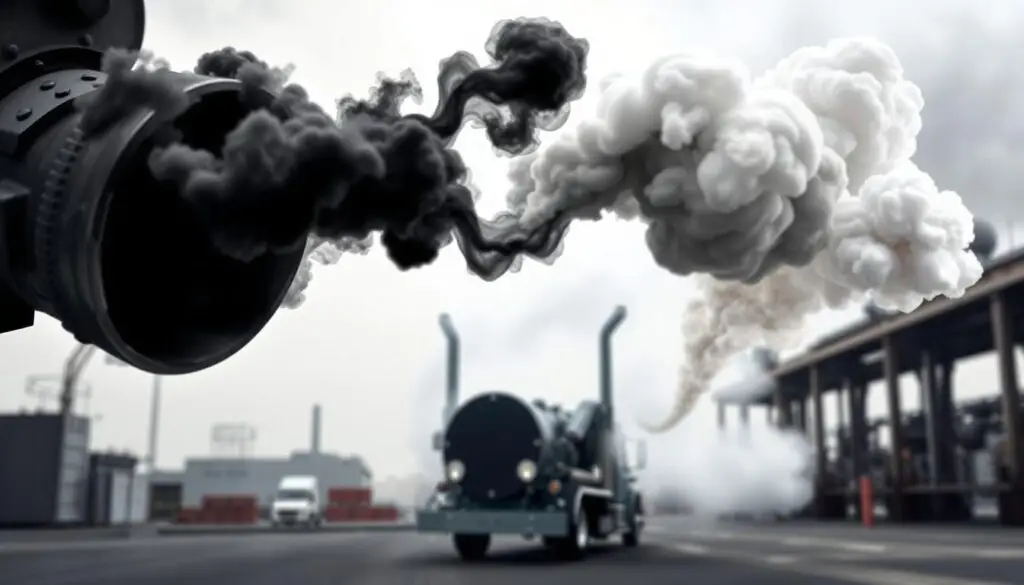
Exhaust smoke color provides immediate diagnostic direction. Black, blue, and white smoke each point to distinct problem categories. Combine visual observation with scan tool data and operating conditions to narrow your focus quickly.
Black Smoke: Air-Fuel Ratio Imbalance
Black smoke indicates incomplete combustion from too much fuel or insufficient air. Common causes include restricted air filters, failed turbochargers, intercooler leaks, or over-fueling injectors. On EGR-equipped engines, stuck-open EGR valves also create rich conditions by displacing intake air with exhaust gas.
Approach black smoke diagnosis by first restoring proper airflow. Check filter restriction, verify boost pressure under load, and inspect charge-air plumbing integrity. If air delivery checks normal, shift focus to fuel system—injector balance rates, return flow, and timing parameters. Injectors that dribble after commanded shutoff or deliver uneven spray patterns upset combustion chemistry.
Blue Smoke: Oil Consumption Sources
Blue smoke signals oil burning in the combustion chamber. Oil enters through three primary paths: worn piston rings, degraded valve stem seals, or leaking turbocharger seals. Steady blue haze at idle that worsens on deceleration typically points to valve seal problems, while smoke under load suggests ring or turbo issues.
Quantify oil consumption before disassembly. Track oil additions between services and calculate consumption per mile or per hour. Oil analysis identifies the contamination source—elevated iron and aluminum suggest ring and cylinder wear, while chromium indicates ring face degradation. This data guides repair decisions between in-frame work and major overhaul.
White Smoke: Unburned Fuel Versus Coolant
White smoke at cold startup that clears within a few minutes usually indicates unburned fuel from inadequate combustion heat. Weak cold-start aids, low compression, or retarded timing cause this condition. Address the underlying cause rather than masking it with starting fluid.
White smoke that persists after warmup and carries a sweet odor suggests coolant intrusion. Head gasket failure, cracked heads, or leaking EGR coolers allow coolant into combustion chambers. Check for coolant loss without visible external leaks, milky residue on the oil cap, and cylinder-specific misfire codes. Pressure test the cooling system and perform a combustion gas detection test to confirm head gasket failure before teardown.
The HDJ Perspective
Smoke diagnosis remains one of the most valuable skills in diesel troubleshooting because it costs nothing and provides instant direction. In our experience working with fleet maintenance operations, technicians who learn to “read” exhaust smoke cut their diagnostic time significantly compared to those who jump straight to code reading. Train your team to observe smoke color, density, and operating conditions as part of every road test—this old-school skill complements modern electronic diagnostics rather than replacing it.
Cooling System Failures and Overheating Prevention
Overheating events damage engines faster than almost any other failure mode. Sustained high temperatures warp cylinder heads, crush head gasket fire rings, degrade lubricating oil, and score pistons. When temperature gauges climb, immediate controlled shutdown prevents catastrophic damage that turns routine repairs into engine replacements.
Common Cooling System Failure Points
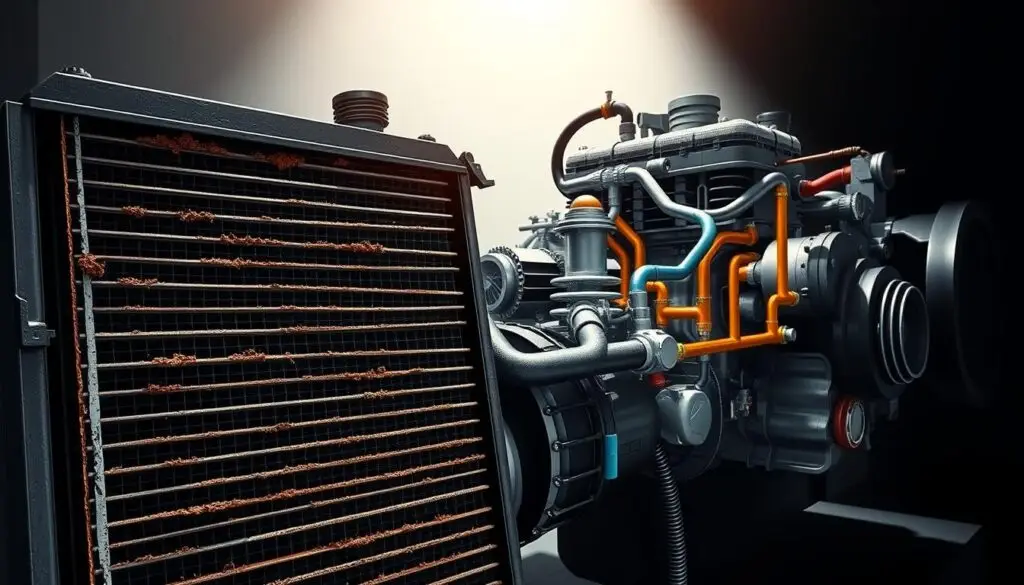
Low coolant level remains the most common overheating cause—and the most preventable. Establish daily walk-around checks that include coolant reservoir level verification. Small seepage leaks at hose connections, water pump weep holes, or radiator tanks compound over days until sudden overheating results.
Clogged radiator cores restrict airflow and heat transfer. External debris accumulation from bugs, cottonwood seeds, or road grime requires periodic cleaning with compressed air or pressure washing from the engine side outward. Internal scaling from hard water or neglected coolant change intervals restricts flow through tubes—chemical flush or radiator replacement may be required.
Thermostat and Water Pump Diagnostics
Stuck-closed thermostats prevent coolant flow to the radiator, causing rapid overheating. Stuck-open thermostats allow constant flow that prevents proper warmup and reduces heater performance. Monitor coolant temperature rise after cold start—temperature should climb steadily to thermostat opening point, then stabilize. Erratic fluctuations suggest thermostat problems.
Water pump impeller erosion reduces flow capacity without creating obvious external symptoms. Measure temperature differential between radiator inlet and outlet during loaded operation. More than 20°F difference indicates adequate flow; minimal difference suggests pump problems or severe internal restriction. Some pumps also develop bearing failures evidenced by play in the shaft or coolant weeping from the weep hole.
Preventing Heat-Related Engine Damage
Cooling system maintenance follows manufacturer intervals but adjusts for operating conditions. Heavy-haul operations, sustained idle time, and desert climates accelerate coolant degradation and component wear. Test coolant protection level and condition with refractometers and test strips at every PM service.
Supplemental coolant additives (SCAs) protect wet-sleeve liners from cavitation erosion in many heavy-duty applications. Maintain SCA levels per OEM specifications—both under-treatment and over-treatment cause problems. Modern extended-life coolants reduce additive maintenance requirements but still require periodic testing and topping.
Fuel Quality Management and Injector Protection
Clean fuel protects precision injection components that cost thousands to replace. Water, microbial growth, and particulate contamination attack common-rail systems operating at extreme pressures, accelerating wear and causing premature failures. Fleets that manage fuel quality systematically see dramatically longer injector and pump life compared to those treating fuel as an afterthought.
Water, Microbes, and Particulate Contamination
Water enters fuel systems through condensation in storage tanks, loose fill caps, and contaminated deliveries. Even small amounts promote microbial growth at the fuel-water interface, creating acidic byproducts that corrode injection components. Drain water separators according to manufacturer intervals—daily checks cost nothing and prevent expensive repairs.
Particulate contamination from rust, tank sediment, or dirty deliveries overwhelms filtration systems and scores precision-lapped injector components. Fuel sampling and laboratory analysis identifies contamination sources and levels. Establish acceptance criteria for delivered fuel and reject loads that don’t meet standards—cleaning contaminated storage tanks costs far less than replacing injector sets.
Filtration Strategy and Tank Maintenance
Multi-stage filtration provides defense in depth. Primary water-separating filters capture free water and large particles. Secondary filters rated at 2-4 microns protect high-pressure components from fine contamination. Replace filters at OEM intervals or sooner based on restriction monitoring—extending filter life to save money often costs more in component damage.
Fuel tank maintenance prevents problems at the source. Keep tank vents clear but filtered. Minimize air space in tanks by maintaining adequate fuel levels. Consider tank-mounted suction filters in addition to engine-mounted filtration for older equipment. Periodic tank inspections and cleaning removes accumulated sediment before it reaches the fuel system.
Common-Rail Injector Service Considerations
Common-rail injectors from Bosch, Denso, and Delphi achieve precise fuel metering through internal clearances measured in microns. Contaminated or poor-quality fuel accelerates wear, leading to over-fueling, dribbling, or spray pattern deterioration. When injector replacement is required, many fleets choose remanufactured units that restore OEM performance at reduced cost.
Injector coding or programming is mandatory on most modern engines to compensate for manufacturing variations. After replacement, perform the required calibration procedure through OEM software or equivalent tools. Skipping this step causes rough running, increased emissions, and potential catalyst damage as the ECU operates with incorrect injector characterization data.
Share Your Diesel Troubleshooting Expertise
Heavy Duty Journal welcomes contributions from fleet managers, technicians, and industry experts. Share your diagnostic insights with thousands of industry professionals.
Electrical Systems and Sensor Diagnostics
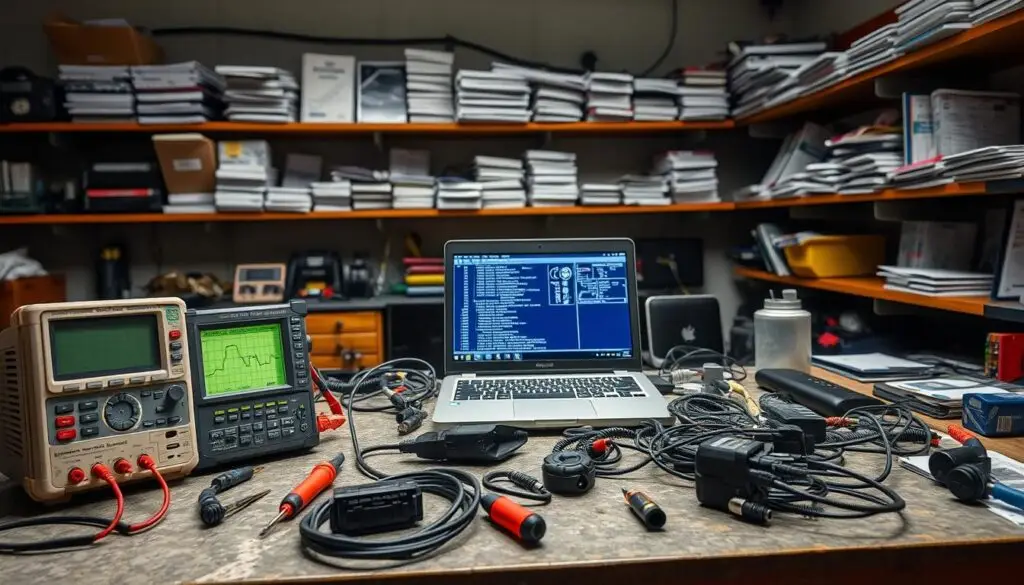
Modern diesel engine management depends on accurate sensor inputs and clean electrical signals. Intermittent connections, corroded grounds, and drifting sensors create frustrating driveability problems that may not set codes until conditions deteriorate significantly. Systematic electrical diagnosis prevents parts-cannon approaches that waste time and money.
Critical Sensors and Their Failure Patterns
Mass airflow (MAF) and manifold absolute pressure (MAP) sensors govern fueling calculations. Contamination from oil vapor or aftermarket air filter treatments causes MAF sensors to under-report airflow, creating lean conditions and reduced power. MAP sensor drift or cracked vacuum lines cause boost calculation errors that trigger limp mode under load.
Fuel rail pressure sensors manage injection system operation. Erratic signals cause misfires, hard starts, and fuel system fault codes. Crankshaft and camshaft position sensors provide timing references—intermittent signal loss causes stalling and no-start conditions. Replace these sensors proactively when oil analysis or operating hours suggest end-of-life, rather than waiting for complete failure.
Harness Inspection and Ground Integrity
Heat, vibration, and corrosion attack wiring throughout a vehicle’s service life. Inspect harnesses at firewall pass-throughs, near exhaust components, and at any location where movement creates chafing. Look for melted insulation, green corrosion at connector pins, and stretched or damaged terminals.
Ground integrity affects every electrical system. Check ground straps at the engine block, frame, and cab for corrosion and tight connections. Perform voltage drop testing between the battery negative terminal and various ground points while cranking or operating high-current loads. More than 0.1V drop indicates resistance that needs correction.
Integrating Electronic Diagnostics Into Preventive Maintenance
Make scan-tool health checks a standard PM procedure. Record sensor readings, adaptation values, and pending codes at each service interval. Trending this data over time reveals developing problems before they cause breakdowns—a MAP sensor reading that has drifted 5% over three PMs will likely fail before the next service.
Software updates and parameter changes sometimes address driveability concerns or improve fuel economy. Check with OEMs and authorized dealers for applicable updates when troubleshooting difficult problems. Calibration changes that address known issues can save significant diagnostic time and prevent unnecessary parts replacement.
Maintenance Scheduling and Professional Service Decisions
Effective maintenance scheduling balances manufacturer recommendations with actual operating conditions. Trucks running heavy loads through mountain grades need shorter service intervals than those covering flat highway miles. The TMC Recommended Practices Manual provides industry-consensus guidelines for maintenance intervals across all major systems. Track operating data and adjust maintenance timing based on real-world demands rather than calendar-only schedules.
Duty-Cycle-Based Interval Adjustments
Engine hour meters provide better maintenance timing than odometer readings for many applications. A truck idling eight hours daily accumulates engine wear without corresponding mileage. Calculate average speed from hours and miles to identify high-idle-percentage operations that need adjusted PM intervals.
Geographic and seasonal factors affect maintenance needs. Dust-belt operations require more frequent air filter service. Winter operations demand fuel system winterization and more frequent water separator draining. Coastal routes accelerate corrosion requiring more aggressive inspection and treatment programs. According to 49 CFR Part 396, motor carriers must systematically inspect, repair, and maintain all commercial vehicles—building maintenance programs that exceed minimum requirements protects both compliance standing and equipment investments.
Recognizing When Problems Exceed Shop Capabilities
Know when problems require specialist intervention. Persistent faults that don’t respond to standard repairs, metallic knocking or grinding from internal components, and repeat failures in the same system all signal deeper mechanical or calibration issues requiring advanced tooling and expertise.
Turbocharger rebuilding, injector reconditioning, and ECU-level calibration require specialized equipment and training most fleet shops don’t maintain. Establish relationships with qualified diesel specialists before emergencies arise. The ASE Medium/Heavy Truck certification program provides a benchmark for technician competency—verify that outside service providers maintain appropriate credentials.
Frequently Asked Questions
What diagnostic approach works best for 2007+ diesel engines with emissions systems?
Start with a comprehensive scan tool session to read active and pending codes, then review live data parameters before any disassembly. Modern diesel engines generate thousands of data points—commanded versus actual values for rail pressure, boost, EGR position, and injection timing reveal problems that physical inspection alone would miss. Use freeze frame data to understand conditions present when codes set, then validate electronic findings with targeted mechanical tests.
How do I distinguish between fuel system and air system causes of black smoke?
Begin by verifying adequate airflow. Check air filter restriction, confirm boost pressure meets commanded values under load, and inspect charge-air plumbing for leaks. If airflow checks normal, shift focus to the fuel system—review injector balance rates, measure return flow, and verify rail pressure stability. Black smoke from airflow restriction typically worsens under load, while injector problems often show as rough running and uneven exhaust pulses regardless of load.
When should compression testing be performed during no-start diagnosis?
Perform compression testing after ruling out cold-start aids, battery/cranking issues, and fuel delivery problems. If the engine cranks at normal speed without any smoke from the exhaust, low compression becomes a prime suspect. Uniform low readings suggest timing problems or widespread wear, while single-cylinder low readings point to valve, ring, or head gasket issues. Document findings per cylinder to guide repair planning.
What causes intermittent power loss without setting diagnostic codes?
Variable geometry turbocharger (VGT) sticking from soot accumulation commonly causes intermittent power loss before codes set. Commanded an actuator sweep test and watch for hesitation or incomplete travel. Other causes include intermittent sensor connections, fuel supply restrictions under high demand, and exhaust restrictions from damaged DPF substrates. Data logging during road tests often captures conditions that trigger power loss.
How can I extend common-rail injector service life?
Fuel quality management provides the greatest impact on injector longevity. Maintain water separator service, use quality filtration rated at 2-4 microns, purchase fuel from reputable suppliers, and consider fuel additives that improve lubricity and stability. Avoid extended idle periods that allow injector tips to carbon up. Monitor injector balance rates and return flow at each PM to catch developing problems early.
Mastering Diesel Engine Troubleshooting
Effective diesel engine troubleshooting combines systematic methodology with deep understanding of how compression ignition systems operate. The diagnostic workflow—gather data, isolate faults, repair, and verify—applies whether you’re chasing a no-start on a Cummins ISX or tracking down intermittent derates on a Detroit DD15. Master this approach, and you’ll resolve problems efficiently while avoiding the costly callbacks that plague shops lacking diagnostic discipline.
Modern emissions-equipped diesels demand electronic diagnostic competency alongside traditional mechanical skills. Scan tools, live data analysis, and software-based testing have become as essential as compression gauges and fuel pressure testers. Invest in quality diagnostic equipment and ongoing training to keep pace with evolving technology—the investment returns quickly through reduced diagnostic time and more accurate repairs.
Integrate diagnostic thinking into preventive maintenance programs. Scheduled scan-tool health checks, trending sensor data over time, and proactive component replacement based on operating hours rather than failure all reduce unplanned downtime. Fleets that treat diagnostics as a continuous process rather than a breakdown response consistently outperform reactive competitors on uptime and cost metrics. Apply the principles in this guide systematically, and diesel engine troubleshooting becomes a competitive advantage rather than a necessary evil.
Found This Guide Valuable?
Share this diesel engine troubleshooting resource with your maintenance team, fellow fleet managers, and industry colleagues who need reliable diagnostic guidance.