By Michael Nielsen, Editor & Publisher | 15+ Years in Diesel Repair
Last Updated: December 2025
📖 Estimated reading time: 28 minutes
DPF regeneration problems cost fleet operators thousands of dollars annually in unplanned downtime, forced service visits, and premature filter replacements. Since EPA 2007 emission standards made diesel particulate filters mandatory on heavy-duty highway engines, these sophisticated emission control devices have become essential components that demand proper understanding and maintenance.
When regeneration fails, the consequences cascade quickly. Soot accumulates beyond safe levels, exhaust backpressure climbs, and engines enter limp mode to protect themselves from damage. For fleets running tight schedules, even a single truck sidelined for DPF issues disrupts operations across the board—with aftertreatment-related downtime averaging 1.5 to 2.5 days per incident.
This guide covers everything fleet managers and diesel technicians need to diagnose, prevent, and resolve DPF regeneration failures. From understanding the regeneration process itself to recognizing warning signs before they become emergencies, you’ll find the practical knowledge that keeps trucks moving and maintenance costs under control.
Key Takeaways
- OEM Service Intervals Vary Significantly: Cummins Single Module systems can go 600,000-800,000 miles between DPF cleanings, while Detroit DD13/DD15 Gen 5 engines recommend 500,000 miles. Know your engine’s specific requirements.
- Upstream Problems Cause Downstream Failures: CARB fleet investigations found two-thirds of DPF issues trace back to engine component failures—EGR leaks, turbocharger seal failures, and injector problems create the excess soot that overwhelms filters.
- Cleaning Methods Differ Dramatically: Detroit’s proprietary liquid cleaning removes 95%+ of ash, while traditional “bake and blow” methods only remove 30-60%. Cleaning method selection directly impacts filter longevity.
- Telematics Enable Proactive Management: Modern connected services (Detroit Connect, Cummins Connected Diagnostics, Mack GuardDog Connect) can predict DPF issues and even initiate remote regenerations before warning lights appear.
- Tampering Penalties Are Severe: Federal fines reach $45,268 per non-compliant vehicle. One California carrier was fined $400,000 for DPF violations. Proper maintenance is far cheaper than non-compliance.
How Diesel Particulate Filters Work
Understanding DPF operation helps fleet managers recognize when problems develop and why certain maintenance practices matter. These filters serve as the final barrier between engine emissions and the atmosphere, capturing microscopic soot particles that diesel combustion produces.
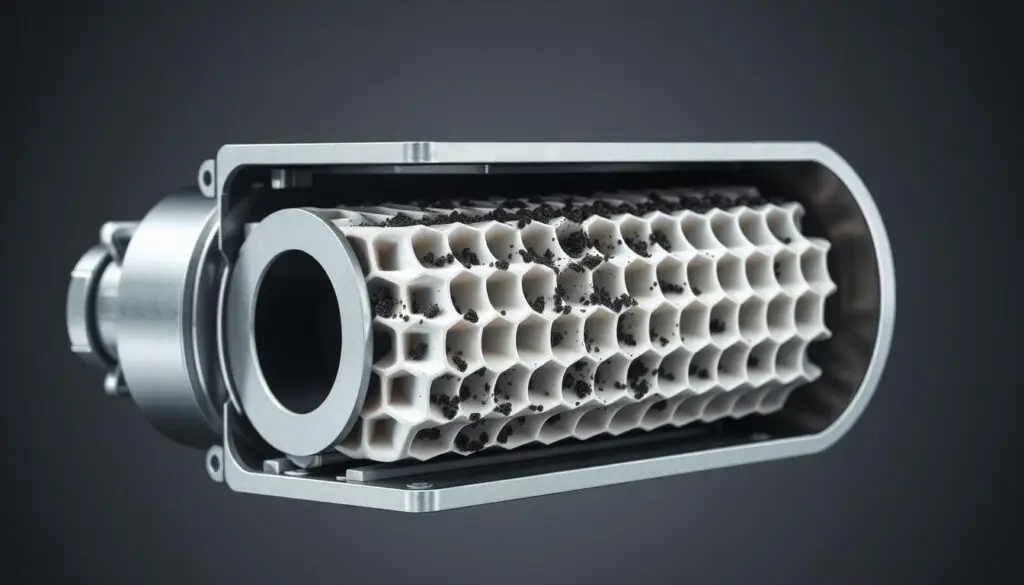
The technology has evolved significantly since mandatory adoption, but the core principle remains straightforward. Exhaust gases pass through a honeycomb structure made of ceramic or silicon carbide material, where soot particles stick to channel walls while cleaner gases exit to the atmosphere.
Filter Construction and Soot Capture
Modern DPF systems use wall-flow filter designs where exhaust enters through open channels, passes through porous walls, and exits through adjacent channels. This forces all exhaust gas to flow through the filter material, achieving capture rates of 85-95% of particulate matter.
The accumulated soot creates backpressure that increases as loading progresses. Pressure sensors monitor this buildup continuously, signaling the engine control unit when regeneration becomes necessary. Without regular cleaning cycles, this backpressure eventually restricts exhaust flow enough to trigger warning lights and reduce engine performance.
Research by the CDC’s National Institute for Occupational Safety and Health demonstrates that properly functioning DPF systems reduce elemental carbon concentrations by 88% to 99%, significantly decreasing occupational health risks for workers exposed to diesel exhaust.
EPA Emission Standards and Requirements
The EPA 2007 emission standards first required diesel particulate filters on heavy-duty highway engines, reducing permissible particulate matter emissions to 0.01 g/bhp-hr—a 90% reduction from previous standards that required advanced filtration technology to achieve.
The 2010 standards tightened NOx limits to 0.2 g/bhp-hr, driving adoption of selective catalytic reduction (SCR) systems alongside DPF technology. Today’s integrated aftertreatment systems combine diesel oxidation catalysts (DOC), DPF, and SCR into single-module designs that reduce weight while improving performance. The EPA maintains verification standards for these technologies, ensuring consistent emission reductions across applications.
| Emission Standard | Year | PM Limit (g/bhp-hr) | DPF Required |
|---|---|---|---|
| EPA 2004 | 2004 | 0.10 | No |
| EPA 2007 | 2007 | 0.01 | Yes |
| EPA 2010 | 2010 | 0.01 | Yes |
| GHG17 | 2017 | 0.01 | Yes |
Understanding DPF Regeneration Processes
Regeneration burns accumulated soot into ash and carbon dioxide, restoring filter capacity. Three distinct regeneration types exist, each triggered under different conditions and requiring different levels of intervention.
Knowing which regeneration type your vehicles use—and when each activates—helps diagnose problems and prevents unnecessary service visits. Many fleet operators schedule routes specifically to support natural regeneration cycles.
Passive Regeneration During Highway Operation
Passive regeneration occurs automatically when exhaust temperatures reach 650°F to 1,100°F during normal driving. Extended highway runs at steady speeds create these temperatures naturally, allowing continuous soot oxidation without any ECU intervention or additional fuel consumption.
For fleets with regular long-haul routes, passive regeneration handles most soot management automatically. The process requires sustained speeds above 40 mph for at least 20-30 minutes to maintain sufficient exhaust heat. Trucks that frequently climb grades or haul heavy loads generate even higher exhaust temperatures, making passive regeneration particularly effective.
Active Regeneration via ECU Control
When passive regeneration cannot keep pace with soot accumulation—typically when loading reaches 45%—the engine control unit initiates active regeneration. This process injects additional fuel into the exhaust system, raising temperatures to 1,100°F-1,300°F for 10-30 minutes.
Active regeneration occurs while driving but requires specific conditions. The ECU monitors coolant temperature, exhaust temperature, vehicle speed, and fuel level before initiating the cycle. If conditions change during regeneration—such as the driver stopping or fuel level dropping too low—the cycle aborts, leaving soot partially burned.
According to Cummins aftertreatment documentation, regeneration frequency has improved dramatically with newer systems. While 2007 systems might have regenerated every 12-24 hours, current systems can operate more than 100 hours before requiring regeneration due to better engine tuning and DPF catalyst technology improvements.
| Regeneration Type | Temperature Required | Duration | Trigger Condition |
|---|---|---|---|
| Passive | 650°F – 1,100°F | Continuous during driving | Automatic at highway speeds |
| Active | 1,100°F – 1,300°F | 10-30 minutes | 45% soot capacity |
| Forced/Parked | 1,200°F – 1,400°F | 30-60 minutes | 75%+ soot, shop-initiated |
Forced Regeneration Requirements
When soot accumulation exceeds 75% capacity, normal regeneration methods cannot safely clear the blockage. Forced regeneration requires diagnostic equipment to initiate and monitor the process while the vehicle remains stationary in a service bay.
The procedure generates extreme exhaust temperatures that make components dangerously hot. Professional oversight ensures safe completion and prevents damage from overheating. Technicians monitor pressure differential, exhaust temperatures, and soot percentage throughout the 30-60 minute process.
⚠️ High Temperature Warning
During forced regeneration, exhaust system components reach temperatures exceeding 1,200°F. The vehicle must remain stationary in a properly ventilated service bay, away from combustible materials. Never attempt forced regeneration outdoors near dry vegetation, fuel sources, or without proper fire suppression equipment available.
OEM Service Intervals by Manufacturer
One of the most common mistakes fleet managers make is applying generic maintenance intervals to all vehicles. In reality, DPF service intervals vary dramatically by engine manufacturer, model year, and duty cycle. Understanding your specific engine’s requirements prevents both premature service (wasted money) and delayed service (risk of failure).
Advancements in catalyst technology and packaging have allowed manufacturers to significantly extend service intervals in recent years. Cummins has moved DPF cleaning intervals out to 600,000-800,000 miles on their Single Module systems—practically maintenance-free for many owners and further than competitors in the industry.
| Manufacturer/Engine | DPF Cleaning Interval | Notes |
|---|---|---|
| Cummins Single Module (X15, L9, B6.7) | 600,000-800,000 miles | Industry-leading interval; return to Cummins authorized location for exchange |
| Detroit DD13/DD15 Gen 5 | 500,000 miles / 11,000 hrs | Check Engine indicator illuminates when ash requires removal |
| Volvo D11/D13/D16 (MY 2011+) | 400,000 miles | Extended from previous 250,000 miles; requires VDS-4 oil |
| Mack (MP7, MP8) | 400,000 miles | Same platform as Volvo; ClearTech One system |
| PACCAR MX-11/MX-13 | 200,000-300,000 miles | Duty-cycle dependent; vocational applications require shorter intervals |
| Navistar (Cummins aftertreatment) | Per Cummins specifications | Uses Cummins Single-Module aftertreatment |
These intervals assume proper operating conditions and adherence to OEM fluid specifications. Factors that shorten service intervals include excessive idle time (greater than 30%), vocational applications with frequent stop-and-go operation, and use of non-compliant lubricants.
Common Causes of DPF Regeneration Problems
Understanding why regeneration fails helps prevent recurrence. Most problems stem from operational patterns, maintenance oversights, or component failures that interrupt the precise conditions regeneration requires. CARB fleet investigations reveal that many DPF issues actually originate from upstream engine problems rather than the filter itself.
Upstream Engine Problems: The Hidden Cause
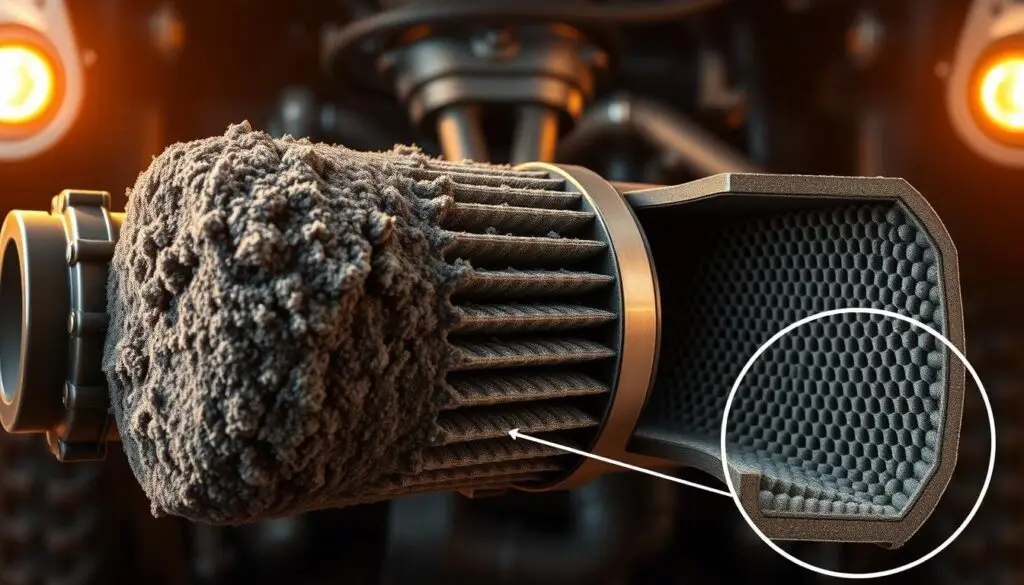
Data from CARB fleet inspections reveals a critical insight that many fleets overlook: approximately 20% of retrofit trucks had engine issues, and about 10% had EGR and turbocharger issues. Most importantly, in two-thirds of cases where fleets reported DPF problems, the filter issue was associated with an underlying engine problem.
This means that technicians diagnosing repeated DPF failures should look upstream before assuming the filter is at fault. Key upstream issues that cause downstream DPF problems include:
- EGR cooler leaks: Coolant entering the exhaust stream poisons DPF catalysts and causes filter plugging
- Turbocharger oil seal failures: Oil entering the exhaust contaminates the filter with material that cannot be regenerated
- Faulty fuel injectors: Incomplete combustion and excessive soot production overwhelm filter capacity
- Air intake leaks: Reduced oxygen flow creates rich combustion and more particulate matter
When a DPF is removed for cleaning, checking vehicle opacity helps determine if an engine problem exists. Addressing upstream issues before installing a cleaned or new filter prevents repeat failures.
Urban Driving Patterns and Short Routes
Short city routes rank as the leading cause of regeneration failures in commercial fleets. Stop-and-go traffic prevents exhaust temperatures from reaching passive regeneration thresholds, while frequent stops interrupt active regeneration cycles before completion.
Vehicles that primarily operate in urban environments rarely achieve the sustained speeds necessary for natural filter cleaning. Each incomplete regeneration cycle adds to cumulative soot buildup, eventually overwhelming the filter’s capacity faster than any cleaning process can address.
Fleet operators with urban delivery routes face this challenge consistently. Some schedule dedicated highway runs specifically to allow regeneration, while others rely more heavily on professional cleaning intervals to compensate for operational constraints.
Incorrect Engine Oil Selection
Using the wrong engine oil creates permanent filter damage that regeneration cannot reverse. Modern diesel engines with DPF systems require low-SAPS (Sulfated Ash, Phosphorus, Sulfur) oils carrying API CJ-4 or CK-4 classifications specifically designed to minimize ash production.
Standard engine oils produce excessive sulfated ash during combustion. Unlike soot, this ash cannot burn off during regeneration—it accumulates permanently, gradually reducing filter capacity until replacement becomes necessary. A single oil change with incorrect product can deposit enough ash to measurably impact filter life.
⚠️ Critical Oil Specification Warning
Always verify oil meets API CJ-4 or CK-4 specifications before use in DPF-equipped engines. Using non-compliant oil voids many manufacturer warranties and can reduce filter life by 50% or more. Volvo requires VDS-4 standard oils; Detroit requires DFS 93K222 (CK-4) or 93K223 (FA-4) approved oils. Check your vehicle’s service manual for specific requirements.
Fuel Quality and Contamination Issues
Poor quality diesel fuel containing excessive sulfur or contaminants accelerates soot production beyond normal levels. ASTM D975 standards specify ultra-low sulfur diesel (ULSD) with a maximum of 15 parts per million sulfur content—using non-compliant fuel dramatically increases particulate production.
Contaminated fuel also damages injectors, leading to incomplete combustion that produces even more soot. Water contamination promotes bacterial growth that clogs fuel filters and further degrades combustion quality. Regular fuel system maintenance and purchasing from reputable suppliers prevents most fuel-related DPF issues.
Stay Ahead of Emission System Issues
Heavy Duty Journal delivers practical maintenance insights and regulatory updates that help fleet managers prevent costly DPF problems before they sideline trucks.
Recognizing DPF Regeneration Failure Symptoms
Early symptom recognition prevents minor issues from becoming expensive repairs. Most regeneration problems announce themselves through predictable warning signs that experienced technicians and attentive drivers learn to spot quickly.
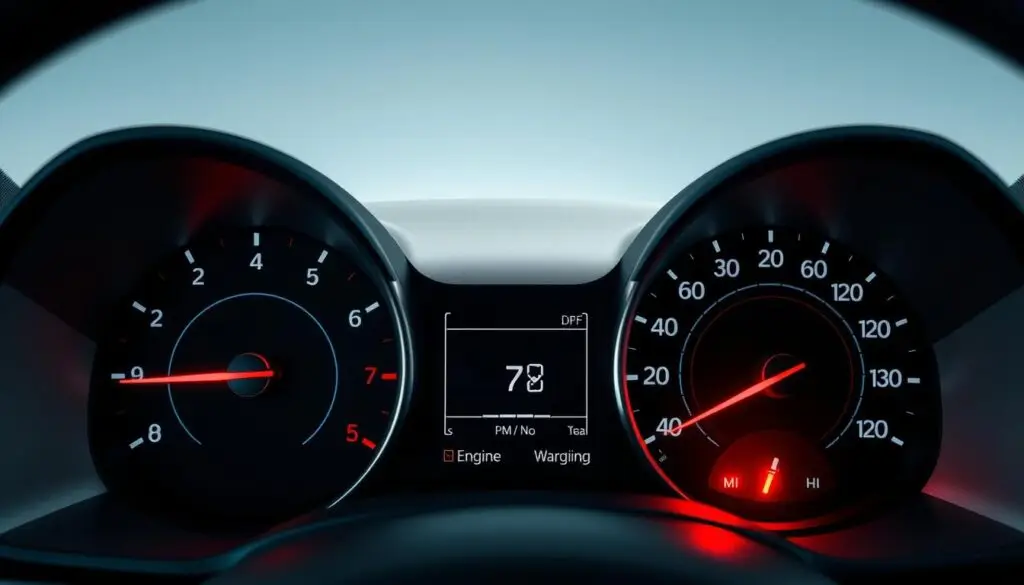
Dashboard Warning Light Progression
Warning light progression follows predictable stages that indicate increasing severity. Understanding this progression helps prioritize responses and prevent unnecessary emergency service calls.
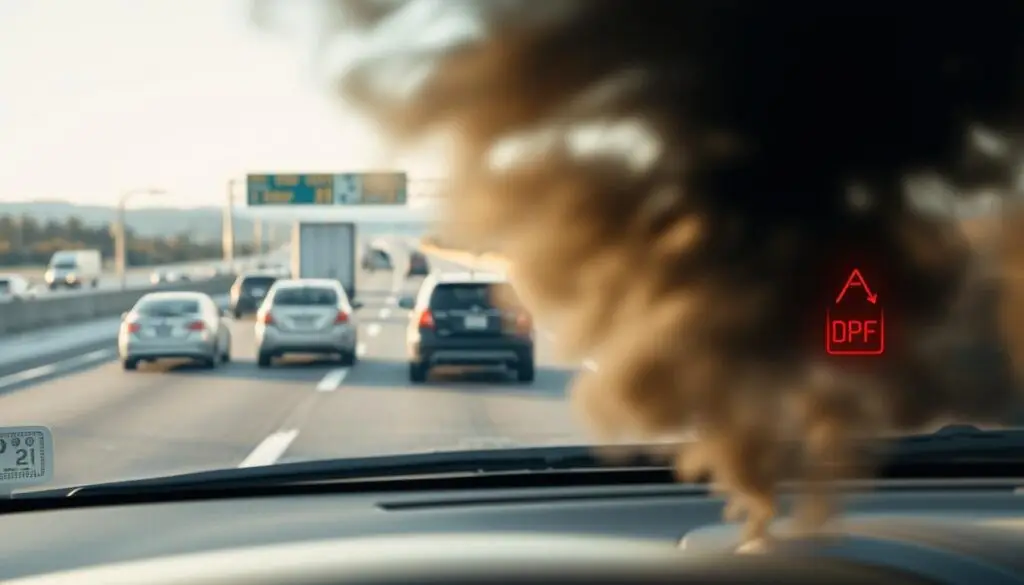
The first-stage DPF warning light—typically an exhaust pipe icon with dots—appears when the filter needs regeneration. At this point, driving for 10-15 minutes at highway speeds usually allows passive or active regeneration to complete successfully. Ignoring this warning allows soot to continue accumulating.
When soot reaches approximately 75% capacity, a more urgent second-stage warning appears. At this level, the vehicle requires forced regeneration at a service facility. Continuing to operate the vehicle beyond this point risks advancing to the third stage where the filter requires removal for professional cleaning or replacement.
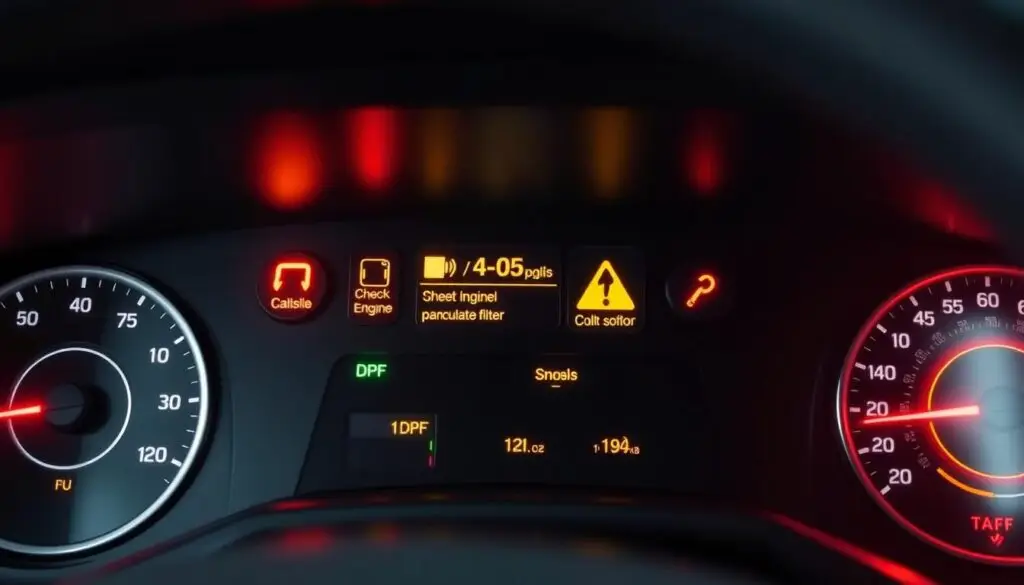
Performance and Power Loss Indicators
Clogged filters create exhaust backpressure that forces engines to work harder against the restriction. Drivers typically notice reduced acceleration responsiveness, sluggish throttle response, and difficulty maintaining highway speeds—especially under load or climbing grades.
Many vehicles enter limp mode when DPF restrictions become severe, limiting speed and power to protect internal components from damage caused by excessive backpressure. This protective measure forces immediate attention but often occurs at the worst possible times for delivery schedules.
Fuel consumption typically increases 5-15% as the engine compensates for reduced efficiency. Drivers may also notice the engine working harder at idle or producing unusual exhaust characteristics as the system attempts unsuccessful regeneration cycles.
| Symptom | Description | Severity | Action Required |
|---|---|---|---|
| DPF Warning Light (Stage 1) | Orange exhaust icon illuminated | Medium | Highway drive 15+ minutes |
| DPF Warning Light (Stage 2) | Red warning or flashing light | High | Schedule forced regeneration |
| Power Loss | Reduced acceleration, sluggish response | High | Diagnostic scan required |
| Limp Mode | Speed/power severely restricted | Critical | Immediate shop service |
| Excess Smoke | Black or white exhaust emissions | Medium-High | Investigate cause promptly |
Telematics and Remote DPF Monitoring
Modern fleet management increasingly relies on connected vehicle services that transform aftertreatment maintenance from reactive to proactive. Telematics systems can monitor DPF status in real-time, predict when service will be needed, and in some cases even initiate regenerations remotely—capabilities that dramatically reduce unplanned downtime.
The technology has matured significantly. A few years ago, truck telematics and remote diagnostics were considered separate functions. Today, with technology advancements and widespread adoption, they’re essentially the same integrated capability that delivers actionable maintenance intelligence to fleet managers.
OEM Connected Services
Major engine and truck manufacturers now offer sophisticated connected diagnostic services:
Detroit Connect Virtual Technician: When a truck’s check engine light illuminates, data is collected immediately, providing a technical snapshot of the engine’s status before, during, and after a fault code event. This information is sent to both the fleet and the Detroit Customer Support Center, where trained representatives can diagnose the issue and recommend service.
Cummins Connected Diagnostics: Compatible with all equipment manufacturers utilizing Cummins engines, this system instantly applies unique Cummins analytics to transform raw fault code data into useful, actionable information. Fleet maintenance supervisors can find regeneration frequency information in INSITE software to identify potential issues.
Mack GuardDog Connect: Standard on all Mack Class 8 models powered by Mack MP engines, this integrated telematics solution monitors critical fault codes and proactively contacts Mack’s 24/7 OneCall agents when it detects an event. Several service alerts can be resolved using Mack Over The Air (OTA) updates.
Volvo Remote Diagnostics: The truck’s advanced telematics system collects data through a device mounted on the truck and delivers it to a central server at the Volvo Uptime Center. Uptime specialists determine maintenance needs and communicate their diagnosis directly to the customer.
Remote Regeneration Capabilities
Perhaps the most valuable telematics capability for DPF management is the ability to initiate or schedule regenerations before problems escalate. Fleets can easily view vehicles that need attention and improve their current condition through driver actions—such as pulling over somewhere safe to force a DPF regen—without requiring a shop visit.
Third-party telematics providers like Geotab, Noregon’s TripVision, and Zonar offer similar capabilities across mixed fleets. These systems monitor and report vehicle performance and engine diagnostics in real-time, providing information to fleet and maintenance managers for needed repairs. Alert features can send instant notifications by text or email when DPF backpressure readings reach specific levels.
The ROI is compelling: fleets implementing remote diagnostics typically see downtime reduced by 30% and towing bills decrease by 80% or more after an initial 2-3 month period of proactively identifying and repairing failing vehicles.
The HDJ Perspective
After fifteen years covering diesel maintenance, we’ve seen DPF problems evolve from mysterious nuisances into well-understood challenges with proven solutions. The fleets that succeed treat DPF maintenance as predictable operating expense rather than emergency repair—scheduling cleaning intervals, training drivers to recognize warning signs, and investing in diagnostic capabilities that catch problems early. The technology isn’t going anywhere; emission standards will only tighten as EPA 2027 regulations approach with NOx limits dropping to 0.050 g/bhp-hr and useful life requirements extending to 650,000 miles. Building DPF competency into your maintenance program now pays dividends for years to come.
DPF Cleaning Methods: Understanding Your Options
Not all DPF cleaning methods are created equal. The Technology & Maintenance Council (TMC) has established Recommended Practice RP 374 to address the lack of industry-wide standards defining what a “clean” DPF actually is. Understanding the different approaches helps fleets make informed decisions about where to have filters serviced.
Cleaning Method Comparison
| Method | Process | Effectiveness | Considerations |
|---|---|---|---|
| Thermal (Bake) | High-temperature burnoff of soot and some ash | 30-60% ash removal | Some OEMs discourage; may shorten filter life |
| Pneumatic (Air Blast) | Compressed air to remove loose ash | 60-75% removal | Standard method for Cummins/Fleetguard systems |
| Liquid Cleaning | Chemical/water wash to dissolve contaminants | 90-95%+ removal | Detroit-approved proprietary method |
| Combination (Thermal + Air + Liquid) | Multi-stage process | 95%+ removal | Used by OEM reman programs |
According to Detroit’s aftertreatment support documentation, the only DPF cleaning method approved by Detroit is their proprietary liquid-cleaning process, which uses a combination of thermal, air, and liquid cleaning to ensure DPFs are over 95% cleaned. They explicitly state that aftermarket methods like “bake and blow” only remove between 30-60% of ash. Improper cleaning can lead to the 1-box overheating and potential failure—an expensive repair.
Cummins takes a similar position, recommending that aftertreatment DPFs requiring ash cleaning be returned to a Cummins Authorized Repair Location for exchange. Their documentation explicitly states that Cummins does not endorse localized air cleaning machines for ash removal.
Cleaning Cost Analysis
Understanding true cleaning costs requires looking beyond the service invoice. Current market rates for heavy-duty DPF cleaning range significantly based on method and provider:
| Service | Cost Range | What’s Included |
|---|---|---|
| Professional DPF cleaning (full service) | $800-$1,500 | Removal, cleaning, reinstall, gaskets, ECM reset |
| Cleaning only (core sent out) | $200-$650 | Filter cleaning; fleet handles R&R |
| OEM dealer service | $1,200-$1,800 | Full service with OEM cleaning process |
| DPF replacement (heavy-duty) | $5,000-$8,000 | New filter, installation, programming |
| One-Box replacement (Freightliner Cascadia) | $11,000+ | Complete DOC/DPF/SCR assembly |
The true cost calculation must include downtime: aftertreatment-related events average 1.5-2.5 days of vehicle out-of-service time. At typical daily revenue rates, that adds $1,500-$3,000 in opportunity cost per incident. Fleets that maintain proper cleaning schedules avoid the cascading costs of emergency failures.
Share Your DPF Management Expertise
Fleet managers and diesel technicians with effective DPF maintenance strategies can help the industry improve by sharing practical insights with Heavy Duty Journal readers.
Regulatory Compliance: Federal and California Requirements
Beyond the operational costs of DPF failures, fleets must consider regulatory compliance. Federal anti-tampering laws and California’s stringent Truck and Bus Regulation create serious financial and legal consequences for non-compliant vehicles.
Federal Anti-Tampering Penalties
According to Section 203 of the Clean Air Act, it is illegal to tamper with, remove, or be involved in the deletion of a truck’s DPF system—knowingly or unknowingly. It is equally illegal to use a DPF removal service provider. The EPA enforces significant civil penalties:
- Up to $45,268 per non-compliant vehicle or engine
- $4,527 per tampering event or sale of defeat device
- $45,268 per day for reporting and recordkeeping violations
These penalties apply to both the vehicle owner and any shop that performs the tampering. A larger company may be fined hundreds of thousands or even millions depending on income and intent. One California carrier was fined $400,000 for DPF violations—a stark reminder that proper maintenance is far cheaper than non-compliance.
California Truck and Bus Regulation
The CARB Truck and Bus Regulation affects all diesel trucks and buses with a Gross Vehicle Weight Rating greater than 14,000 pounds operating in California. As of January 1, 2023, vehicles with GVWR over 26,000 pounds must have 2010 or newer engines to operate legally in the state.
Key California compliance requirements include:
- Clean Truck Check program: Requires periodic emissions compliance testing for all non-gasoline heavy-duty trucks operating in California
- DMV enforcement: The California DMV cannot register any vehicle that does not meet Truck and Bus Regulation requirements
- Low-use exemption: Available for trucks operating less than 1,000 miles annually within California
- Three-day pass: Allows limited operation within the state for out-of-state vehicles
CARB also maintains strict requirements for replacement DPFs. Used DPFs cannot be sold for re-installation on another vehicle. Aftermarket filters must be CARB-verified with a specific Executive Order (EO) for each application. If your PM filter core is cracked or missing, it can cost thousands of dollars and violate California’s anti-tampering law, Vehicle Code Section 27156.
DOT Inspection Implications
DPF issues can affect DOT inspection compliance. Modern diesel engines with malfunctioning aftertreatment systems may trigger inspection failures through:
- Visible emissions (black smoke from clogged DPF)
- Check engine lights or warning indicators
- Excessive exhaust opacity readings
- Evidence of tampering or missing components
Maintaining functional DPF systems prevents these compliance issues during roadside inspections and terminal audits.
Preventive Maintenance for DPF Longevity
Proactive maintenance prevents most regeneration problems while extending filter life toward the upper range of manufacturer specifications. The investment in prevention consistently costs less than reactive repairs.
Driving Practices That Support Regeneration
Operational planning significantly impacts DPF health. Scheduling regular highway runs of 30+ minutes at speeds above 40 mph creates conditions for passive regeneration that keeps soot loading manageable. For fleets with primarily urban routes, dedicated regeneration runs may be necessary to compensate.
Driver training helps as well. When the first-stage warning light illuminates, drivers who understand the significance can often complete regeneration by continuing highway driving rather than pulling over unnecessarily or stopping for breaks that interrupt the cycle.
Avoid shutting down engines during active regeneration. The interrupted cycle leaves partially burned soot that may be harder to remove during subsequent attempts. If stopping becomes necessary, allow the regeneration to complete first when safely possible.
For fleets operating in cold climates or with high idle time, fuel-operated heaters (FOH) offer a preventive strategy. These devices pre-heat engines to approximately 160°F before starting, reducing cold-start soot production by up to 66% and NOx emissions by up to 40%. By raising initial engine temperature at startup, FOHs help shorten the time it takes for the DPF to become active, reducing wet stacking produced by cold starts.
Professional Maintenance Schedule
Regular professional attention catches developing problems before they cause failures. A structured maintenance schedule addresses both the DPF system directly and supporting components that affect its operation.
| Maintenance Task | Frequency | Purpose |
|---|---|---|
| Diagnostic System Scan | Monthly or per telematics alert | Detect pending fault codes before warning lights |
| Regeneration Frequency Check | Every 3 months | Verify regeneration cycles completing normally via telematics/INSITE |
| Professional DPF Cleaning | Per OEM interval (see table above) | Remove accumulated ash deposits |
| DEF Filter/Pump Filter | 150,000-300,000 miles (OEM-specific) | Maintain DEF system function |
| Oil Analysis | Every oil change | Detect fuel dilution from failed regenerations |
| Pressure/Temperature Sensor Inspection | Annually | Verify sensor accuracy |
Fluid and Consumable Selection
Using correct fluids throughout the vehicle protects DPF investment. Engine oil must meet API CJ-4 or CK-4 specifications designed for DPF-equipped diesels. Ultra-low sulfur diesel fuel (ULSD) meeting ASTM D975 standards minimizes soot production and protects emission system components.
For DEF quality, the CARB Truck Driver’s Guide to DPF Care emphasizes that poor-quality DEF or contamination can damage SCR catalysts and cause aftertreatment failures. Always use certified API-approved DEF from sealed containers. Never add anything other than DEF to the DEF tank—contamination with diesel fuel, coolant, or other fluids typically requires tank and pump replacement.
Diagnostic Trouble Codes for DPF Systems
Modern engine management systems store specific fault codes that pinpoint DPF problems with precision. Understanding these codes helps technicians diagnose issues accurately and avoid unnecessary part replacements.

Common DPF-Related Fault Codes
Diagnostic scanners retrieve standardized codes that follow SAE J1939 protocols for heavy-duty applications. There are more than 40 fault codes associated solely with diesel particulate filters, addressing issues from differential pressure to intake pressure to regeneration inhibition to filters that are missing entirely.
Common codes include SPN 3719 (soot accumulation), SPN 3251 (DPF pressure differential), P2002 (particulate trap efficiency below threshold), P2003 (particulate trap efficiency below threshold, bank 2), and P244A (differential pressure sensor circuit low).
Each code identifies specific subsystem failures within the DPF system. However, experienced technicians know that codes pointing to the DPF don’t always indicate filter problems—upstream issues like injector failures, EGR malfunctions, or sensor problems often trigger DPF-related codes while the filter itself remains functional.
Interpreting Pressure Sensor Data
The differential pressure sensor serves as the primary monitoring component for DPF condition. It measures pressure difference between filter inlet and outlet, indicating soot loading levels and identifying blockages or restrictions.
Sensor failures commonly trigger false warnings that send vehicles for unnecessary service. Before initiating forced regeneration, technicians should verify sensor accuracy by comparing readings to expected values for current operating conditions. A sensor reading high pressure while the filter is actually clean wastes time and money on unneeded procedures.
Conversely, a failed sensor reading low pressure might allow dangerous soot accumulation to continue undetected until severe blockage occurs. Regular sensor testing during preventive maintenance catches these failures before they cause problems.
Long-Term Consequences of Regeneration Failures
Repeated regeneration failures create cascading problems that extend far beyond the filter itself. Understanding these consequences helps justify preventive maintenance investments and drives proper response when problems first appear.
Oil Dilution and Engine Damage
Failed regeneration attempts inject extra fuel that doesn’t burn at low exhaust temperatures. This unburned fuel drains past piston rings into the crankcase, diluting engine oil and compromising lubrication quality throughout the engine.
Oil dilution manifests as rising oil levels on the dipstick—a dangerous indicator that requires immediate attention. Fuel-diluted oil loses viscosity and protective properties, leading to accelerated bearing wear, increased cylinder wear, and potential catastrophic failures in severe cases.
Regular oil analysis detects fuel contamination early, often before visible symptoms appear. This simple monitoring practice costs under $30 per sample but can save thousands by identifying problems while reversible.
Complete Filter Blockage Scenarios
When soot loading exceeds 85%, even forced regeneration cannot safely clear the filter. The excessive soot mass generates uncontrollable heat during burn-off attempts, risking thermal damage to the filter substrate and surrounding components.
At this stage, the filter requires removal for professional cleaning using specialized equipment that mechanically and chemically removes compacted soot and ash. Some filters sustain thermal damage during extreme blockage events—if the DPF is cracked or melted, it cannot be cleaned and must be replaced at costs often exceeding $5,000 for heavy-duty applications.
Frequently Asked Questions
What causes repeated DPF regeneration failures in commercial trucks?
Repeated failures typically stem from operational patterns that prevent completion of regeneration cycles. Short urban routes, frequent stopping during active regeneration, and insufficient fuel levels are the most common causes. However, CARB fleet investigations found that two-thirds of DPF issues trace back to upstream engine problems—faulty EGR systems, turbocharger oil seal failures, and worn injectors create excess soot that overwhelms the filter. Additionally, using non-compliant engine oil creates permanent ash accumulation that compounds with each regeneration attempt, gradually reducing filter capacity until cleaning or replacement becomes necessary.
How much does DPF cleaning cost and how often is it needed?
Professional DPF cleaning costs range from $800-$1,500 for full service including removal, cleaning, reinstall, and ECM reset. Cleaning the filter core alone (with fleet handling removal and reinstall) typically costs $200-$650. Service intervals vary dramatically by manufacturer: Cummins Single Module systems can go 600,000-800,000 miles, Detroit DD13/DD15 Gen 5 engines recommend 500,000 miles, and Volvo/Mack systems specify 400,000 miles. PACCAR MX engines typically need service every 200,000-300,000 miles depending on duty cycle. Always follow your specific engine’s OEM recommendations.
Can I remove or bypass my truck’s DPF system legally?
No. DPF removal or deletion violates Section 203 of the Clean Air Act and is illegal under federal law. The EPA can impose fines up to $45,268 per non-compliant vehicle, $4,527 per tampering event, and $45,268 per day for reporting violations. California’s Vehicle Code Section 27156 adds state-level penalties. One California carrier was fined $400,000 for DPF violations. DPF deletion also typically voids manufacturer warranties on the entire powertrain, and many reputable repair shops will refuse to work on vehicles with modified emissions systems.
What’s the difference between DPF cleaning methods?
Cleaning effectiveness varies significantly by method. Traditional “bake and blow” (thermal plus pneumatic) methods remove only 30-60% of ash according to Detroit Diesel. Detroit’s proprietary liquid cleaning process—which uses a combination of thermal, air, and liquid cleaning—removes over 95% of ash and is the only method Detroit approves. Cummins recommends returning DPFs to authorized locations for exchange rather than using localized cleaning machines. The cleaning method directly impacts how long the filter will last before needing service again and can affect whether the filter reaches its next scheduled cleaning interval.
How can telematics help prevent DPF problems?
Modern connected vehicle services transform DPF maintenance from reactive to proactive. OEM systems like Detroit Connect Virtual Technician, Cummins Connected Diagnostics, and Mack GuardDog Connect monitor aftertreatment system status in real-time and can alert fleet managers to developing issues before warning lights appear. Some systems enable remote-initiated regenerations, allowing drivers to complete forced regens without shop visits. Third-party telematics can track regeneration frequency and backpressure trends across the fleet, identifying vehicles that need attention. Fleets implementing remote diagnostics typically reduce downtime by 30% and towing bills by 80% or more.
What are the warning signs that my DPF needs immediate attention?
Warning light progression indicates severity: a first-stage DPF warning (orange exhaust icon) means regeneration is needed and often clears with 15+ minutes of highway driving. A second-stage warning (red or flashing) indicates soot has reached 75%+ capacity and requires forced regeneration at a service facility. Limp mode activation signals critical restriction requiring immediate shop service. Other warning signs include reduced acceleration, difficulty maintaining highway speeds under load, 5-15% increase in fuel consumption, black or white exhaust smoke, and more frequent regeneration attempts visible through dashboard temperature fluctuations.
Maintaining Peak DPF System Performance
Diesel particulate filters have become permanent fixtures in commercial vehicle fleets, and DPF regeneration problems will continue affecting operations until proactive management becomes standard practice. The technology successfully reduces harmful emissions by 85-95%, meeting increasingly stringent environmental requirements while creating new maintenance considerations.
Success with DPF systems requires understanding how they work, recognizing warning signs early, and implementing maintenance schedules that prevent problems rather than reacting to failures. The fleets achieving the best results combine driver education, regular professional service aligned with OEM specifications, operational planning that supports natural regeneration cycles, and telematics monitoring that catches developing issues before they cause downtime.
Investing in proper DPF maintenance costs far less than emergency repairs, unplanned downtime, and premature filter replacement—not to mention the severe federal penalties for tampering or non-compliance. With filters lasting 400,000-800,000 miles under proper care depending on manufacturer, the return on preventive investment compounds over years of reliable operation. Start with correct fluid selection, implement regular performance monitoring, address warning signs immediately, and know your specific engine’s service intervals. These fundamentals keep trucks running and emission systems compliant.
Share This Resource
Help fellow fleet managers and technicians prevent DPF problems by sharing this guide with your professional network.