By Michael Nielsen, Editor & Publisher | 15+ Years in Diesel Repair
Last Updated: January 2026
📖 Estimated reading time: 18 minutes
Finding the right replacement component for commercial vehicles and industrial equipment can drain both time and money. Fleet managers and technicians face persistent challenges with obsolete part numbers, limited availability, and premium dealer pricing that strains maintenance budgets. Modern diesel engine parts cross reference systems solve these problems by providing instant access to verified part numbers across multiple brands—transforming what once took hours of catalog searching into seconds of database queries.
The global diesel engine market reached approximately $236.5 billion in 2024 and continues expanding, underscoring the critical importance of efficient parts procurement for fleet operations. Whether you manage a regional trucking fleet, agricultural operation, or construction equipment, understanding how to cross-reference OEM components with quality aftermarket alternatives directly impacts your bottom line. This guide provides the technical precision required for selecting heavy-duty truck parts and industrial replacements with confidence—covering everything from manufacturer numbering systems to quality verification protocols.
Key Takeaways
- Cost savings potential: Quality aftermarket alternatives typically cost 20-50% less than OEM components while meeting equivalent specifications
- Database access: Modern platforms like Diesel Laptops contain over 2 million parts with 10 million cross-references for instant lookups
- Quality verification: ISO 9001 and IATF 16949 certifications indicate manufacturers meeting automotive-grade quality standards
- Systematic verification: Always confirm dimensional specs, material composition, and engine serial number coverage before ordering
- Safety considerations: Critical safety components (brakes, steering, fuel systems) require extra verification to prevent equipment failures
Understanding OEM and Aftermarket Diesel Engine Parts
The distinction between OEM diesel parts and aftermarket alternatives forms the foundation of smart procurement decisions. The diesel parts market offers two primary sourcing options, each with characteristics that impact cost, quality, and long-term performance. Making informed choices requires understanding what separates these categories and how to evaluate options within each tier.
Decisions between original equipment manufacturer components and aftermarket alternatives affect immediate repair costs and long-term engine reliability. Fleet managers and technicians must weigh multiple factors including price differentials, warranty coverage, and performance specifications. This knowledge becomes especially critical when managing large fleets or maintaining older equipment where original parts availability varies significantly.
What Makes a Part “OEM”
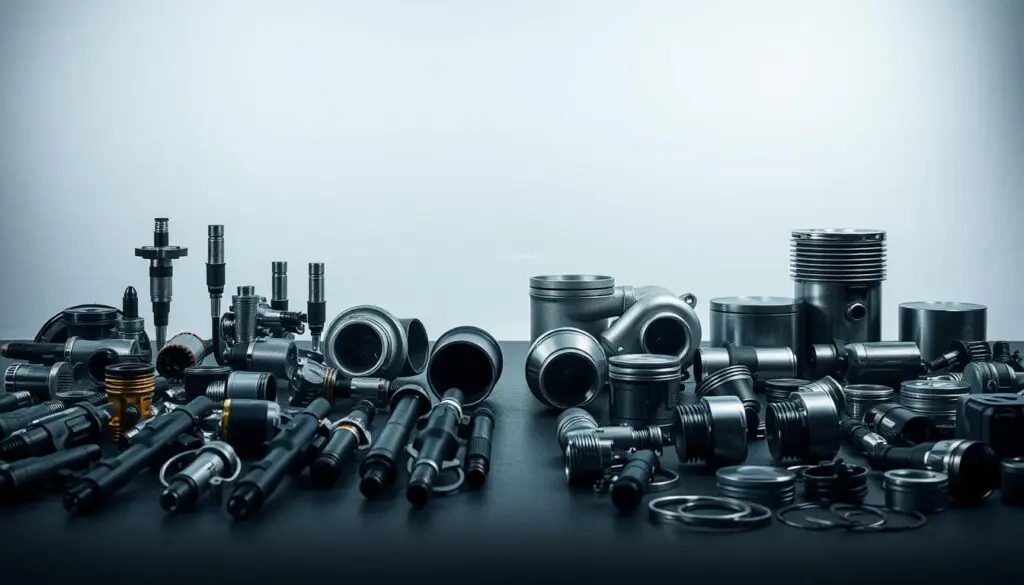
Original equipment manufacturer parts represent components built by the same company that supplied them during initial engine assembly. When a Bosch fuel injector comes factory-installed in a diesel engine, Bosch injectors remain the OEM option for that application throughout the engine’s service life. This designation extends beyond branding to encompass exact engineering specifications validated through extensive testing protocols.
OEM components undergo rigorous validation before reaching production lines. Manufacturers conduct testing that verifies dimensional accuracy, material composition, and performance characteristics. These parts meet the precise specifications engine designers intended, ensuring seamless integration with existing systems. Guaranteed compatibility eliminates fitment concerns and reduces installation time, while warranty support through authorized dealer networks provides protection against defects.
However, several factors balance these benefits. OEM components typically command premium pricing—often 30-70% above aftermarket alternatives. Availability challenges emerge particularly with older engine models or discontinued product lines. Lead times for special orders may extend repair downtime, creating operational disruptions for time-sensitive applications where every hour of downtime costs money.
Aftermarket Quality Tiers Explained
Aftermarket quality tiers create a structure that helps procurement professionals navigate replacement options effectively. Third-party manufacturers produce components ranging from premium-grade alternatives to economy-level solutions. Understanding these distinctions prevents mismatched expectations and guides appropriate application decisions.
Premium aftermarket brands represent the top tier, featuring components that meet or exceed original specifications. Companies like Fleetguard, Baldwin, Donaldson, and IPD invest heavily in engineering and testing. These manufacturers often supply parts to multiple OEM brands, bringing cross-platform expertise to their product lines. Material quality frequently matches or surpasses factory specifications through advanced metallurgy and composite technologies.
| Quality Tier | Typical Savings vs OEM | Quality Characteristics | Best Applications |
|---|---|---|---|
| Premium Aftermarket | 15-30% | Meets/exceeds OEM specs, IATF 16949 certified | Critical components, high-utilization fleets |
| Standard Aftermarket | 30-45% | Meets essential specifications, ISO 9001 certified | Regular maintenance, moderate-duty applications |
| Economy Grade | 50-70% | Basic functional requirements, limited certification | Equipment nearing retirement, temporary repairs |
Standard aftermarket options occupy the middle ground. These components provide reliable performance at reduced costs, typically 30-45% below OEM pricing. Manufacturers focus on essential specifications while streamlining production processes. Standard-grade parts suit regular maintenance intervals and moderate-duty applications where extreme operating conditions don’t apply.
Economy-grade components address budget-conscious applications and temporary repair scenarios. While these parts meet basic functional requirements, they may use simplified designs or alternative materials. Economy options work best for short-term solutions or equipment nearing retirement. Fleet managers should evaluate total cost of ownership rather than initial purchase price alone—a cheaper part that fails prematurely costs more in labor and downtime than a quality alternative.
Quality Certifications That Matter
Parts manufacturing standards provide objective frameworks for evaluating component quality regardless of brand designation. These certification systems establish minimum requirements for production processes, material specifications, and quality control protocols. Understanding these standards empowers informed decision-making when selecting between competing suppliers.
ISO 9001 certification represents the foundational quality management standard across global manufacturing. This framework ensures consistent processes for design, production, and customer service. Facilities achieving ISO 9001 certification demonstrate systematic approaches to quality control, document management, and continuous improvement initiatives.
IATF 16949 certification specifically addresses automotive quality systems, building upon ISO 9001 foundations with automotive-specific requirements. Originally developed by major vehicle manufacturers, this certification requires rigorous process controls and defect prevention methodologies. According to the Automotive Industry Action Group (AIAG), suppliers meeting IATF 16949 requirements prove their capability to deliver automotive-grade components with minimal variation and failure rates.
⚠️ Safety Warning
Cross-referencing safety-critical components—brakes, steering systems, fuel injection, and emissions controls—requires extra verification. Using incorrect specifications can cause equipment failures, regulatory violations, or safety hazards. Always verify application coverage and confirm specifications through multiple sources for critical systems.
How Parts Cross Reference Systems Work
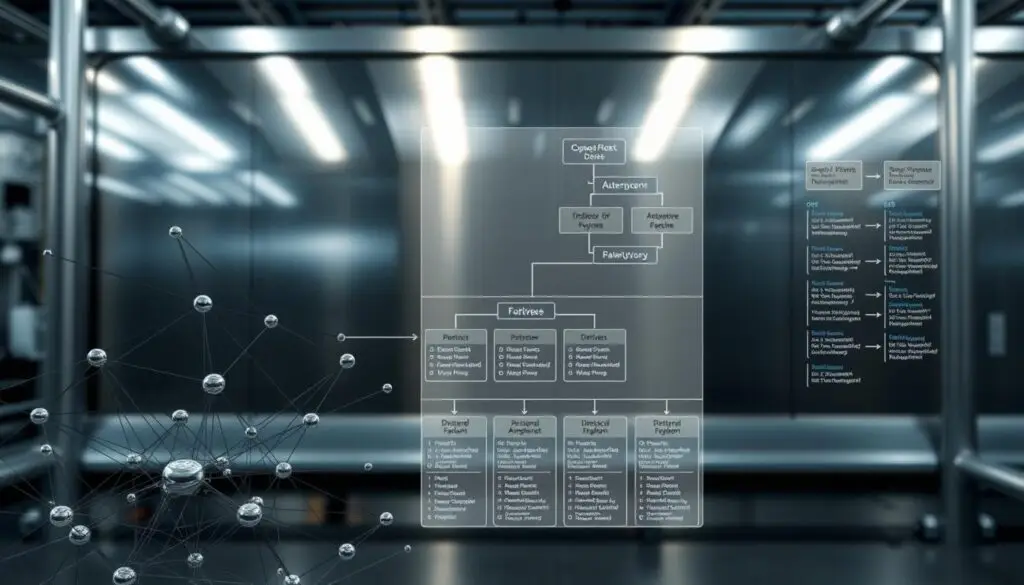
Behind every successful parts lookup stands a complex system that decodes, indexes, and verifies millions of component specifications. These diesel parts cross reference platforms allow technicians to enter a factory part number and instantly receive all compatible aftermarket alternatives. The reverse process works equally well—entering an aftermarket number reveals the original OEM designation and cross-references to every available substitute.
Advanced cross reference databases contain millions of part numbers complete with descriptions, specifications, and application data. Modern platforms like Diesel Laptops offer access to over 2 million parts with 10 million cross-references, automatically handling superseded components by updating obsolete numbers to current replacements throughout the entire supersession chain.
Understanding Manufacturer Code Structures
Part number decoding begins with recognizing the systematic structure manufacturers use to encode component information. Each alphanumeric sequence contains specific intelligence about the part’s origin, application, and specifications. The prefix typically identifies the manufacturer or product line, while the core number references the specific component type.
Cummins uses a numeric format typically ranging from seven to ten digits. A fuel injector for an ISX15 might carry a part number like 4903472, where the initial digits classify it within the fuel system category. Revision codes appear as suffix numbers or letters indicating engineering improvements that may affect compatibility.
Detroit Diesel combines alphanumeric characters that reflect both legacy Series 60 conventions and modern HDEP standards. Detroit typically uses a format like A4721401822, where the leading letter indicates the general component category. Caterpillar employs a sequential numeric format—typically six to eight digits—without categorical prefixes, requiring reliance on cross-reference tools for component identification.
Verification Process Before Ordering
Compatibility verification requires following a disciplined multi-step process that goes beyond simple number matching. Professional technicians employ a systematic approach that validates multiple data points before committing to a purchase, significantly reducing the risk of ordering incompatible components.
The initial step involves entering the part number into the reference system and reviewing all returned matches. Examine not just the part numbers but also accompanying specifications and application notes. Many systems flag potential compatibility concerns with warning indicators or notes about required modifications.
Specification comparison forms the second verification layer. Review critical dimensions, material compositions, and performance ratings against OEM standards. A fuel injector might share a similar part number but differ in flow rate or spray pattern—details that dramatically affect engine performance. Cross-reference the engine serial number to ensure the replacement matches the exact specification originally installed.
| Verification Step | What to Check | Tolerance/Requirement |
|---|---|---|
| Physical Dimensions | Length, diameter, mounting points | ±0.001 to ±0.005 inches |
| Material Composition | Alloy grade, heat treatment | Equal or superior to OEM |
| Performance Rating | Pressure, flow, load capacity | 100% minimum of OEM spec |
| Application Range | Engine model, serial number range | Exact model year coverage |
Essential Cross Reference Tools and Resources
Finding the right diesel engine component starts with choosing the appropriate cross-reference platform for your operational needs. Modern fleet operations demand reliable access to accurate compatibility data that reduces ordering errors and minimizes vehicle downtime. The marketplace offers options ranging from free web-based portals to comprehensive enterprise systems.
Professional technicians and parts managers evaluate these tools based on database comprehensiveness, update frequency, and user interface quality. Integration capabilities with existing inventory systems and procurement workflows determine long-term value for multi-location operations.
Web-Based Platforms and Mobile Apps
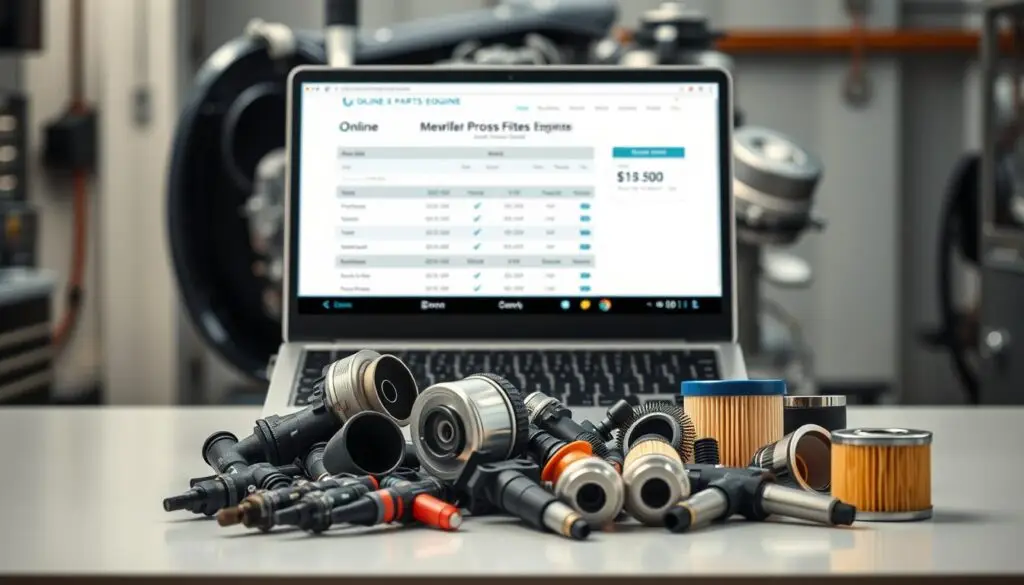
Web-based online parts lookup tools have transformed how technicians access compatibility information. These platforms eliminate local software installation requirements while providing real-time updates from manufacturers and distributors. Free portals serve as starting points for independent shops, while professional platforms like Diesel Laptops and FinditParts offer comprehensive features including photographic databases, exploded view diagrams, and supplier integration.
Mobile applications deliver instant reference capability for technicians working outside traditional shop environments. These tools prove invaluable during roadside diagnostics and emergency repairs. Leading applications integrate barcode and VIN scanning functionality, while GPS integration identifies nearby parts suppliers with compatible components in stock.
Enterprise Cross Reference Software
Enterprise-grade parts catalog systems deliver comprehensive functionality for high-volume commercial vehicle operations. Professional software like the Huggins Cross Reference System (XREF) includes coverage for OEM companies and aftermarket manufacturers with over one million part numbers, photographs for visual identification, and automatic supersession tracking.
Integration with manufacturer electronic parts catalogs represents a key differentiator for premium systems. Quick Reference tools enable starting searches with brand, year, horsepower, and model number to display common replacement parts for specific applications. These systems typically operate on Windows platforms with web-based versions available through subscription models.
Cross Referencing Critical Component Categories
Different component categories present unique cross-referencing challenges based on their complexity, safety criticality, and specification requirements. Understanding these nuances helps technicians and procurement specialists make informed decisions for each part type.
Fuel System Components
Fuel system components in modern diesel engines operate at pressures exceeding 30,000 PSI, making proper cross-referencing essential for reliable performance and safety. Common rail fuel injectors represent the most critical component—these electronically controlled precision devices must match exact specifications for nozzle configuration, flow rate, and electrical characteristics.
Companies specializing in diesel fuel systems provide OEM, remanufactured, and aftermarket options. Quality remanufactured injectors undergo complete disassembly, cleaning, and reassembly with new nozzles, seals, and plungers. Each unit receives bench testing to verify flow and pressure specifications before shipping.
The three dominant common rail technology suppliers—Bosch, Delphi, and Denso—often provide functionally equivalent injectors to different engine manufacturers. Cross-referencing requires matching flow rate specifications, nozzle hole configuration, and spray pattern characteristics. Electrical connector compatibility also requires verification, as Bosch typically uses two-pin connectors while Delphi and Denso may require adapter pigtails.
Filtration Systems
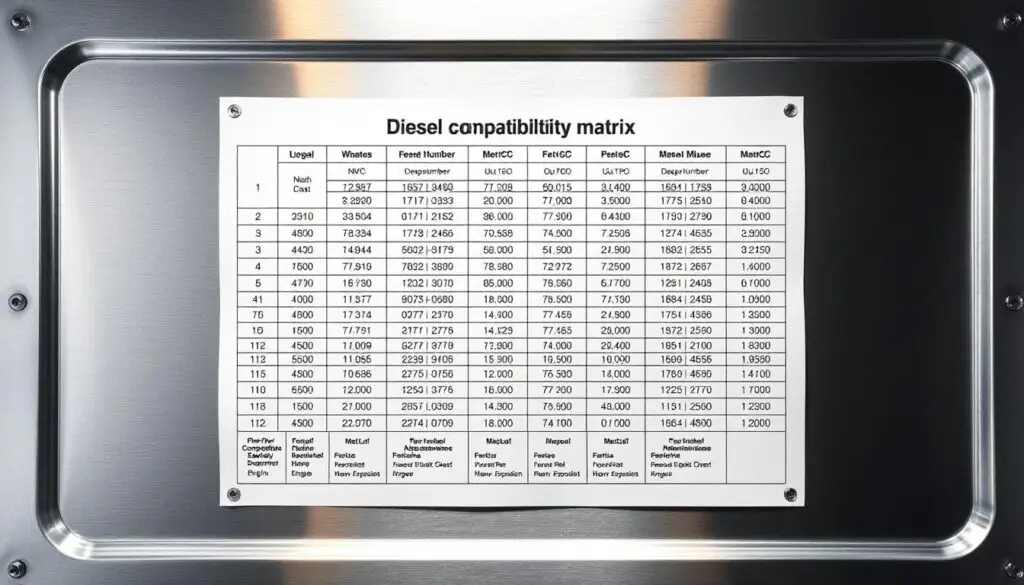
Diesel engine filtration systems offer significant cost-saving opportunities when aftermarket alternatives are properly matched to OEM specifications. These consumable maintenance items require frequent replacement, making them ideal candidates for strategic sourcing decisions.
Filter micron ratings determine the size of contaminant particles captured. Modern diesel engines require filters capable of trapping particles as small as 10-20 microns absolute. Understanding the difference between nominal ratings (50-60% efficiency) and absolute ratings (98-99% efficiency) proves essential when evaluating alternatives.
Major aftermarket filter manufacturers maintain extensive cross-reference databases linking their products to OEM part numbers. Baldwin, Fleetguard, Donaldson, Wix, and Mann-Filter represent trusted brands in heavy-duty filtration. These companies invest heavily in engineering analysis to ensure products meet or exceed original equipment standards.
The HDJ Perspective
Cross-referencing has evolved from catalog searches to instant database lookups, but the fundamentals remain unchanged: verify specifications, confirm application coverage, and source from reputable suppliers. The fleets that master this discipline consistently outperform competitors on maintenance costs while maintaining reliability. In our experience, investing time upfront in proper verification pays dividends through reduced comebacks and warranty claims—the hidden costs that erode apparent parts savings.
Electrical and Sensor Components
Cross-referencing electrical and sensor components demands attention to both physical specifications and electronic characteristics. Modern diesel engines rely on sophisticated systems controlling starting sequences, fuel delivery, and emission monitoring. Sensor interchange requires understanding both electrical signal characteristics and physical mounting requirements.
Heavy-duty starting systems present critical electrical component decisions. Proper diesel starter cross reference begins with identifying voltage configuration—commercial vehicles typically operate on 24-volt systems. Cranking amperage specifications, gear-reduction design, and mounting configurations all factor into compatibility verification.
Electronic sensors generate analog voltage signals, digital pulse trains, or resistance changes that engine control modules interpret. MAP sensors, MAF sensors, and position sensors each have specific signal output characteristics. Cross-referencing these components requires matching pressure ranges, signal output specifications, and connector configurations.
Engine Rebuild Components
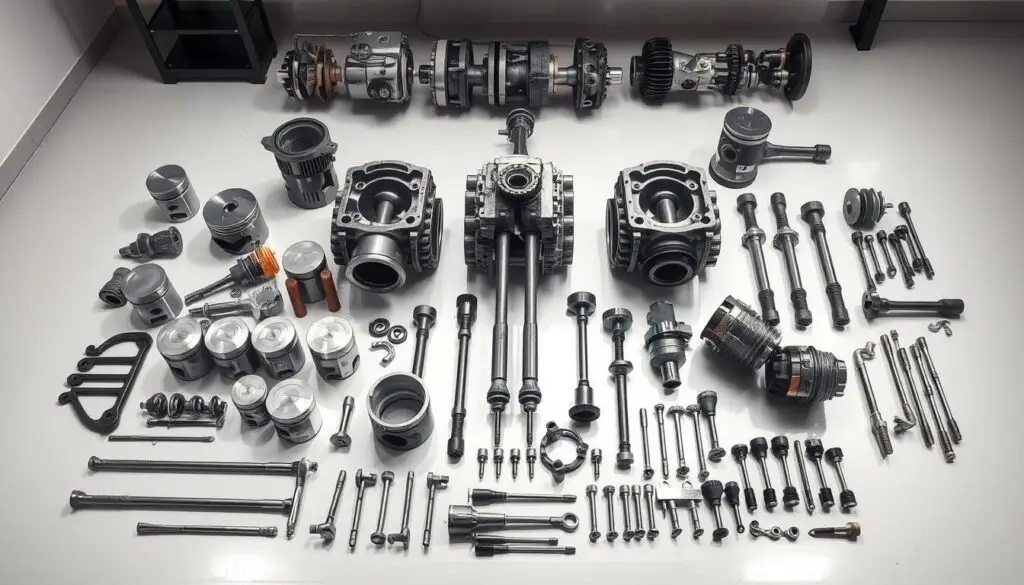
Cross-referencing diesel engine rebuild parts involves matching precise specifications that separate successful overhauls from catastrophic failures. Internal components operate under extreme temperatures, pressures, and mechanical stresses demanding exacting dimensional tolerances.
Piston cross reference requires understanding four critical measurements: bore size, compression height, ring groove dimensions, and piston pin diameter. Material specifications differentiate quality tiers—premium pistons feature hypereutectic aluminum alloy with silicon content between 12-16% for improved thermal expansion characteristics.
Main and rod bearing specifications demand the tightest tolerances. Oil clearance measurements typically fall between 0.0015 and 0.0035 inches for main bearings. Bearing crush—how much the bearing halves extend beyond the housing parting line—ensures proper seating. Manufacturers like IPD have established strong reputations in the heavy-duty engine parts market through consistent quality and engineering expertise spanning decades.
Cost-Benefit Analysis: OEM vs Aftermarket
The economic comparison between OEM and aftermarket diesel parts extends beyond initial purchase prices. Fleet managers and maintenance professionals must evaluate multiple financial factors to determine true value. While aftermarket components typically cost 20-50% less than OEM counterparts, this price advantage represents just one component of comprehensive financial analysis.
30-50%
Typical cost savings on quality aftermarket diesel engine rebuild kits compared to OEM pricing
The advertised savings masks significant variation across component categories. Filtration components often show 40-60% price differences, while specialized electronic components maintain narrower gaps. Fuel system components for common engines generally run 25-40% below OEM pricing, though cutting-edge common rail injectors for newest emissions-compliant engines may show only 15-20% discounts due to manufacturing complexity.
Industry data shows quality-tier aftermarket parts typically achieve 85-95% of OEM service life in field applications. A premium aftermarket fuel filter rated for 25,000 miles might consistently deliver 22,000-24,000 miles before requiring replacement—a slight reduction that rarely offsets the 45-50% cost savings. The key lies in selecting reputable manufacturers and verifying quality certifications rather than choosing based on price alone.
Total cost of ownership analysis transforms simple price comparisons into comprehensive financial models. This approach accounts for initial purchase price, installation labor, inventory carrying costs, expedited freight for rush orders, vehicle downtime costs, premature failure risk, and warranty processing time. For high-utilization fleet applications, a quality part that lasts through planned service intervals delivers better value than an economy alternative requiring mid-cycle replacement.
Free Professional Fleet Tools
Cost calculators, fault code lookup, maintenance planners, and more—built for owner-operators, fleet managers, and diesel techs. No signup required.
Common Compatibility Issues and Prevention
Even carefully cross-referenced aftermarket parts can present unexpected fitment problems, material incompatibility issues, and performance discrepancies during installation. Understanding these challenges before ordering components helps technicians avoid costly downtime and repeated part replacements.
Dimensional Tolerance Mismatches
Manufacturing tolerances represent the acceptable deviation range from specified dimensions. OEM components typically maintain tolerances within 0.001 to 0.003 inches for critical dimensions. Some aftermarket manufacturers allow tolerances of 0.005 inches or greater, creating fitment problems during installation.
Bore diameter variations cause particularly serious issues with pistons, liners, and bearings. A piston manufactured at the high end of tolerance paired with a liner at the low end creates excessive clearance—leading to blow-by, reduced compression, and accelerated wear. Prevention strategies include test fitting components before final installation and measuring critical dimensions using calibrated instruments.
Material and Chemical Compatibility
Material incompatibility creates failures that may not appear immediately but cause premature component deterioration. Modern diesel fuels including biodiesel blends and ultra-low sulfur diesel interact differently with elastomeric materials than traditional fuel. Viton seals resist biodiesel effectively, while standard nitrile deteriorates rapidly in B20 blends.
Extended-life coolants containing organic acid technology require compatible gasket materials. Some aftermarket head gasket sets use conventional materials that degrade when exposed to OAT coolants, causing seepage and eventual failure. Chemical resistance verification should confirm material specifications match OEM requirements for all sealing components in contact with modern fluids.
Performance Specification Discrepancies
Performance rating discrepancies occur when aftermarket components fail to meet OEM load capacity, pressure ratings, or operational specifications. A fuel pump rated at 15,000 PSI may actually produce only 13,500 PSI under load conditions, causing fuel delivery insufficiency that triggers diagnostic codes and power loss.
Pressure sensor accuracy specifications directly affect engine control module calibration. An aftermarket boost pressure sensor with ±5% accuracy versus OEM ±2% accuracy causes the ECM to miscalculate fuel injection timing—resulting in increased emissions, reduced power, and potential engine damage from incorrect air-fuel ratios.
Best Practices for Parts Selection
Implementing proven diesel parts best practices protects your investment while ensuring operational continuity. Successful parts procurement depends on systematic verification at every stage. The difference between seamless repairs and extended downtime often comes down to discipline in following established procedures.
Quick Reference: Verification Checklist
- Identify correct OEM part number from service documentation or component inspection
- Verify against engine serial number and production date range
- Search multiple cross-reference sources to identify all alternatives
- Compare specifications including dimensions, materials, and performance ratings
- Evaluate supplier reputation and return policies
- Confirm availability and lead times before committing to schedules
- Document cross-reference in maintenance management system
Comprehensive maintenance documentation forms the foundation of effective fleet management and warranty protection. Every parts replacement should include both OEM and aftermarket part numbers, supplier information, installation dates, and technician notes. Installation documentation helps technicians avoid repeating previous errors and identifies parts that consistently require modifications.
Strategic supplier relationships deliver benefits beyond competitive pricing—including technical support, inventory availability, and flexible return policies. Evaluate potential suppliers using comprehensive criteria assessing their ability to support long-term needs. Technical expertise separates exceptional suppliers from mere parts vendors. The best suppliers provide application engineering support, compatibility verification assistance, and stand behind cross-reference accuracy with clear warranties.
Post-installation testing verifies proper function before returning equipment to service. Functional testing for fuel system components includes checking for leaks under operating pressure and verifying proper delivery. Electrical component verification requires checking voltage output, resistance values, and signal characteristics against specifications. Road testing under real operating conditions reveals issues that static testing cannot detect.
Frequently Asked Questions
What is the difference between OEM and aftermarket diesel parts?
OEM parts are produced by the same company that supplied components during initial engine assembly, guaranteeing exact specifications and fit. Aftermarket parts are manufactured by third-party companies to match OEM specifications, typically costing 20-50% less while offering comparable quality when sourced from reputable manufacturers holding ISO 9001 or IATF 16949 certifications.
How do I find compatible aftermarket replacements for diesel engine parts?
Use dedicated cross-reference databases like Diesel Laptops Diesel Parts, FinditParts, or manufacturer-specific tools. Enter the OEM part number to retrieve verified aftermarket alternatives. Always verify compatibility by checking dimensional specifications, material composition, and application coverage for your specific engine serial number range before ordering.
Are aftermarket diesel parts as reliable as OEM components?
Premium aftermarket parts from manufacturers holding IATF 16949 certification often match or exceed OEM quality standards. Industry data shows quality aftermarket components typically achieve 85-95% of OEM service life. The key is selecting parts from reputable manufacturers with documented quality certifications rather than choosing based on price alone.
How much can fleets save by using aftermarket diesel parts?
Fleet operations typically save 20-50% on parts costs using quality aftermarket alternatives. Filtration components often show 40-60% savings, while fuel injectors and rebuild kits offer 25-40% cost reductions. Actual savings depend on component type, quality tier selected, and volume purchasing arrangements with suppliers.
What quality certifications should I look for in aftermarket diesel parts?
Look for ISO 9001 certification as the baseline quality management standard. IATF 16949 certification indicates automotive-grade quality controls with advanced defect prevention and statistical process control. Additional certifications like ISO 14001 demonstrate comprehensive quality commitment across manufacturing operations.
Implementing Your Cross Reference Strategy
Effective diesel engine parts cross reference systems transform parts procurement from a time-consuming challenge into a strategic advantage. Modern platforms eliminate manual sourcing processes, saving both time and money across fleet operations while reducing ordering errors that create downtime.
Smart aftermarket parts selection requires balancing multiple factors beyond price. Quality certifications, compatibility verification, and supplier reliability all play critical roles in successful component sourcing. Fleet managers who establish clear policies about when OEM specifications are mandatory versus when alternatives are acceptable gain measurable cost advantages without sacrificing reliability.
Your parts sourcing strategy should combine technical expertise with procurement intelligence. Understanding manufacturer numbering systems, quality evaluation criteria, and compatibility verification processes enables smarter component decisions. By investing time in proper verification and building relationships with quality suppliers, fleet operations can reduce maintenance costs significantly while maintaining the equipment reliability that keeps trucks moving and customers satisfied.
Share This Resource
Know a fleet manager or procurement specialist who could benefit from this cross-referencing guide? Share it with your network.