
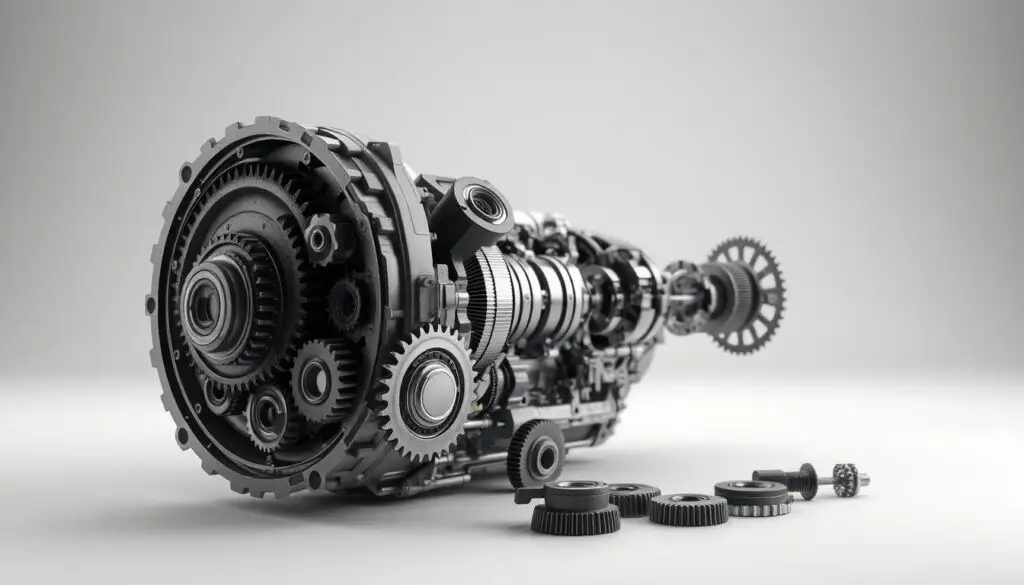
When a Class 8 tractor hesitates during acceleration or struggles to engage gears under load, the fleet manager faces a critical decision that directly affects safety, uptime, and the bottom line. Transmission slipping in heavy-duty commercial vehicles creates dangerous driving conditions that threaten both the driver and surrounding motorists while threatening compliance with FMCSA maintenance requirements. A slipping transmission on an 80,000-pound combination vehicle isn’t just an inconvenience—it’s a safety hazard that demands immediate attention.
Modern heavy-duty automatic transmissions from manufacturers like Allison, Eaton, and Detroit combine complex mechanical components with sophisticated electronic controls. Clutch packs, planetary gear sets, and torque converters work alongside sensors, solenoids, and transmission control modules (TCMs). Accurately determining whether your transmission problem stems from worn mechanical parts or faulty electronics shapes the entire diagnostic approach and repair strategy.
This guide provides fleet maintenance managers and diesel technicians with the systematic diagnostic knowledge needed to identify automatic transmission problems, distinguish between mechanical and electronic failures, and implement cost-effective repair solutions that minimize downtime and maximize asset utilization.
Last Updated: November 2025
Key Takeaways
- Transmission slipping symptoms include RPM surges without acceleration, delayed gear engagement, and unusual noises—each providing diagnostic clues about root causes.
- Mechanical vs. electronic diagnosis determines repair approach: worn clutch packs require internal work while faulty solenoids may be externally serviceable.
- Systematic diagnostic procedures using pressure testing, fluid analysis, and scan tools prevent misdiagnosis and unnecessary parts replacement.
- 49 CFR Part 396 compliance requires documenting all transmission repairs and maintaining systematic inspection programs for commercial motor vehicles.
- Preventive maintenance intervals of 30,000-60,000 miles for fluid service extend transmission life and reduce costly unplanned failures.
- Repair cost differentials range from $150-$300 for fluid service to $2,500-$4,500 for complete rebuilds—making accurate diagnosis critical.
Understanding Transmission Slipping in Heavy-Duty Applications
Transmission slipping occurs when the transmission loses its ability to maintain secure engagement between the engine’s power output and the drivetrain. In heavy-duty applications, this condition becomes exponentially more dangerous due to the gross vehicle weights involved. A Class 8 truck operating at 80,000 pounds GCWR demands reliable power transfer that worn or malfunctioning transmission components simply cannot provide.
Automatic transmissions in commercial vehicles rely on hydraulic pressure, clutch packs, and friction bands to transfer power from the engine through the torque converter to the wheels. When these components function correctly, they create solid mechanical connections enabling smooth gear changes under load. Each shift involves precise timing where clutch plates engage and bands tighten to hold specific planetary gear ratios in place.
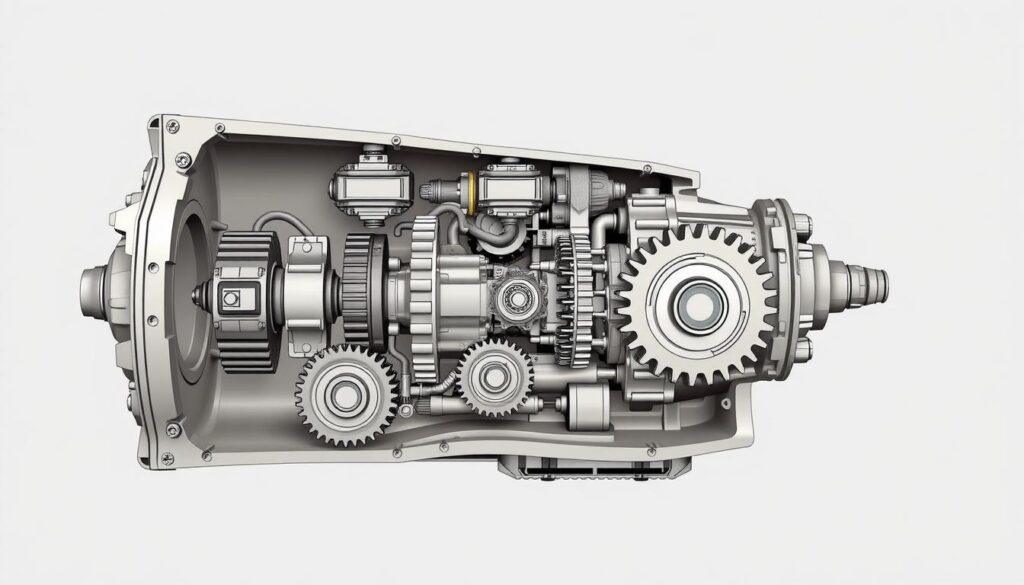
Proper diagnosis prevents costly misdiagnosis in heavy-duty transmission repairs.
Transmission failure occurs when this carefully balanced system breaks down. Operators notice the engine revving higher without corresponding vehicle acceleration. Power is lost somewhere within the transmission system, creating gear engagement problems that prevent efficient power transfer—a serious concern when hauling 45,000 pounds of freight up a 6% grade.
The severity of slipping varies significantly between vehicles and applications. Occasional slipping typically indicates early-stage problems where components are beginning to fail. Constant slipping points to severe internal damage requiring immediate attention. Some transmissions experience slipping in only one or two gears, while others show problems across the entire operating range.
Fleet maintenance managers must distinguish transmission slipping from related issues like hard shifting or delayed engagement. While erratic shifting may accompany slipping, true slipping specifically means the transmission cannot hold a gear once engaged. Hard shifts feel abrupt but maintain gear position, whereas slipping creates continuous power transfer loss that compromises both vehicle safety and operational efficiency.
Recognizing Transmission Slipping Symptoms
Identifying transmission problems early provides the best opportunity to address issues before they escalate into complete failures requiring expensive rebuilds. Understanding the specific symptoms of transmission slipping helps technicians diagnose whether problems originate from mechanical wear or electronic malfunction.
RPM Surges Without Corresponding Acceleration
The most distinctive sign of transmission slipping occurs when the engine revs higher without proportional vehicle speed increase. The operator presses the accelerator and hears RPM surge dramatically while the truck barely accelerates. This indicates power generated by the engine isn’t effectively transferring through the transmission to the drive wheels.
This symptom often appears during initial acceleration from stops or when the transmission attempts to upshift under load. Operators may also notice it when climbing grades or pulling heavy trailers. The sensation resembles driving with a slipping clutch—the tachometer needle climbs rapidly while acceleration remains sluggish and unresponsive.

RPM surges without acceleration indicate power transfer loss within the transmission.
Delayed or Rough Gear Engagement
Noticeable hesitation when shifting from Park to Drive or Reverse indicates internal component problems. Delayed shifting of several seconds before transmission engagement suggests either inadequate hydraulic pressure or electronic signal processing failures. These delays represent diagnostic opportunities to identify failing components before complete failure occurs.
Rough, harsh, or jerky shifting sensations often accompany delayed engagement. The transmission may feel like it’s slamming into gear rather than engaging smoothly. These symptoms typically worsen gradually over time—what starts as barely noticeable one-second delays can progress to five or six seconds of hesitation with increasingly harsh engagement.
Auditory and Olfactory Warning Signs
Grinding noises, whining sounds, or clunking emanating from underneath the vehicle indicate internal component wear or failure. These sounds often accompany the slipping sensation during gear changes and provide valuable diagnostic information about which components may be failing.
A distinctive burning smell from transmission fluid indicates severe overheating and material degradation. This burnt odor signals that friction materials inside the transmission are breaking down from excessive heat—often caused by sustained slipping that generates friction without productive power transfer.
Dashboard warning lights frequently illuminate alongside physical symptoms. The Check Engine Light or specific transmission warning indicators alert operators that onboard diagnostics have detected abnormal operating parameters. Modern heavy-duty transmissions store fault codes that technicians can retrieve during diagnostic procedures.
Mechanical vs. Electronic Transmission Problems
The distinction between mechanical and electronic transmission failures determines the entire diagnostic approach and repair strategy. Modern automatic transmissions function as hybrid systems combining traditional mechanical components with sophisticated computer controls. Correctly identifying whether problems stem from physical wear or electronic malfunction guides technicians toward appropriate repair solutions.
Mechanical transmission problems involve tangible components that physically move, create friction, or contain hydraulic pressure. These parts include clutch plates, bands, gears, seals, gaskets, and the torque converter. When these components fail, damage typically results from prolonged wear, excessive heat, fluid contamination, or inadequate lubrication. Physical damage develops gradually over thousands of operating hours as metal surfaces degrade, seals harden from temperature cycles, and friction materials wear thin.
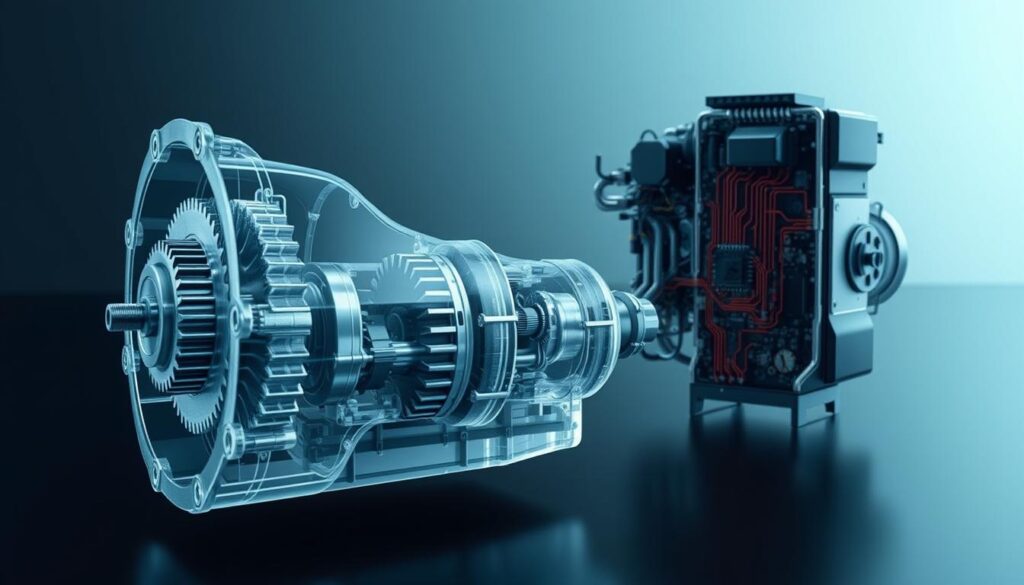
Understanding mechanical vs. electronic causes shapes the entire repair strategy.
Electronic transmission issues involve computer systems, sensors, solenoids, and wiring that control transmission operation. The Transmission Control Module serves as the transmission’s dedicated computer, receiving input from sensors monitoring speed, temperature, and pressure throughout the system. The TCM processes sensor data and commands solenoids to regulate hydraulic pressure and shift timing.
Electronic problems occur when sensors provide incorrect readings, solenoids fail to operate properly, the TCM malfunctions, or wiring connections corrode. The practical distinction matters immensely for diagnosis: electronic problems typically generate diagnostic trouble codes that scan tools can retrieve, while mechanical problems often produce no codes whatsoever despite causing identical symptoms.
Both failure types can create similar driving experiences. A transmission might slip whether a clutch pack has worn out or a shift solenoid has failed electrically. However, diagnostic approaches and repair solutions differ completely between these scenarios, making correct identification essential before attempting any repairs.
Initial Diagnostic Steps and Equipment Requirements
Beginning transmission diagnosis correctly saves time and prevents unnecessary parts replacement. A structured approach ensures technicians address actual problems rather than chasing symptoms. The diagnostic process requires specific equipment and follows a logical sequence building from basic checks to advanced testing procedures.
Essential Diagnostic Equipment
Quality transmission diagnostic tools form the foundation of accurate problem identification. An advanced OBD2 scanner capable of accessing transmission control modules represents the most important investment. Basic code readers provide limited information, while professional-grade scanners offer TCM access, bidirectional control features, and live data streaming capabilities that reveal real-time transmission performance.
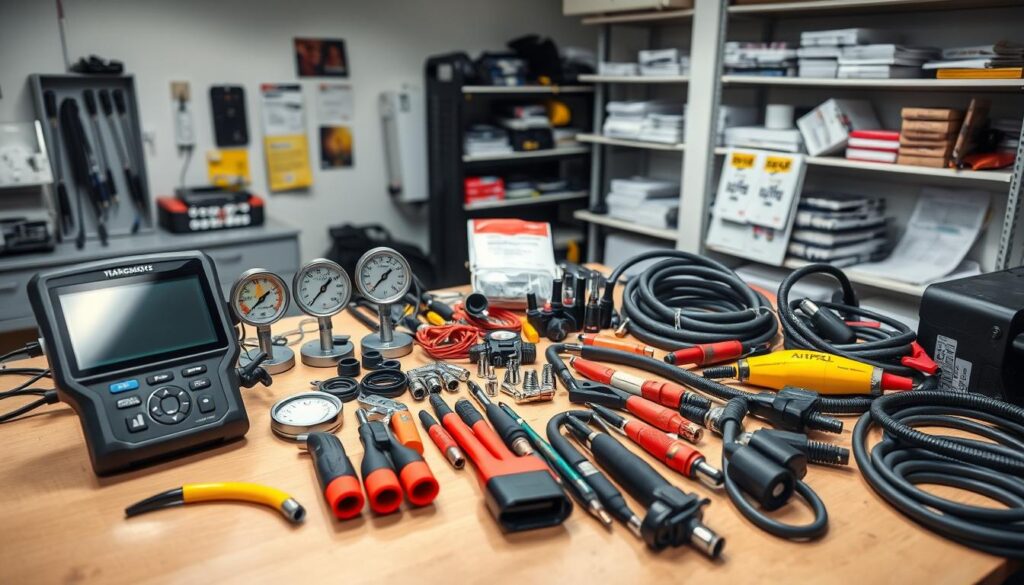
Professional diagnostic equipment prevents costly misdiagnosis in fleet operations.
A complete diagnostic toolkit should include a transmission pressure gauge for measuring hydraulic system performance, a digital multimeter for testing electrical circuits and sensor outputs, fluid analysis equipment for contamination assessment, and basic hand tools for accessing components and connections. These tools represent an investment that prevents costly misdiagnosis—spending $300-$500 on proper equipment can save thousands in unnecessary repairs.
Transmission Fluid Level and Condition Check
A thorough transmission fluid check provides immediate clues about internal health. This simple inspection reveals problems that expensive diagnostics might otherwise miss. Start by locating the transmission dipstick or fill plug—many heavy-duty transmissions require accessing a fill plug underneath the vehicle. Check fluid level with the engine warm and running, as most manufacturers specify this procedure for accurate readings.
Healthy transmission fluid appears bright red or amber with translucent quality and slightly sweet smell. Degraded fluid tells a different story: dark brown or black coloration, opacity, and burnt odor indicate serious internal problems. Low fluid levels point to leaks requiring immediate attention, while contaminated fluid suggests component wear or overheating issues demanding further investigation.
Diagnostic Trouble Code Retrieval
Electronic diagnostics reveal problems that visual inspection cannot detect. Modern vehicles store diagnostic trouble codes pinpointing specific transmission malfunctions. Connect the scanner to the diagnostic port, access both engine and transmission control module codes, and document all findings before clearing them from the system.
Diagnostic trouble codes follow standardized formats. P0700 series codes specifically relate to transmission issues—P0730 indicates incorrect gear ratio detection while P0750 points to shift solenoid malfunction. Test drive the vehicle after clearing codes to determine if they return, as intermittent codes may indicate environmental factors rather than permanent failures.
Visual Inspection Procedures
Careful visual inspection often reveals obvious problems before complex testing begins. Examine the area around and underneath the transmission for fluid leaks. Check seals, cooler lines, and pan gaskets for seepage—fresh fluid appears as red or pink spots while older leaks leave dark stains.
Inspect electrical connections and wiring harnesses for damage including corroded terminals, loose connectors, frayed wires, or physical damage from heat or abrasion. These problems commonly cause electronic transmission issues that mimic mechanical failures. Check the transmission case for cracks or impact damage, and examine mounting points for broken brackets or worn bushings that allow excessive movement.
Stay Current on Heavy-Duty Transmission Technology
Get the latest diagnostic techniques, maintenance best practices, and industry updates delivered to your inbox. Our newsletter keeps fleet managers and technicians informed about evolving transmission technology.
Mechanical Causes of Transmission Slipping
Mechanical failures inside the transmission housing create slipping conditions that worsen progressively as worn parts continue to degrade. Physical component problems account for most transmission slipping cases. Unlike electronic issues that may appear suddenly, mechanical wear develops gradually through normal operation and heat exposure.
Friction Component Deterioration
Worn clutch plates represent one of the most frequent mechanical causes of transmission slipping. Automatic transmissions use multiple clutch packs consisting of alternating friction and steel plates pressed together to hold specific gear sets. The friction material on these plates wears thin after thousands of engagement cycles, particularly in heavy-duty applications involving frequent shifting and high torque loads.
When friction material deteriorates, the clutch cannot maintain adequate grip under load. Slipping becomes most noticeable during acceleration or when climbing grades—conditions placing maximum stress on friction surfaces. Transmission bands function similarly to brake components, wrapping around drum assemblies to enable different gear ratios. These bands can stretch, wear, or require adjustment over time, with band failure typically affecting specific gears.

Clutch plate wear is a primary cause of transmission slipping in high-torque applications.
Fluid Level and Quality Problems
Transmission fluid serves three critical functions: lubricating moving parts, cooling the system, and providing hydraulic pressure for gear engagement. Low fluid levels caused by leaks prevent transmissions from maintaining adequate pressure, resulting in slipping and erratic shifting behavior.
Contaminated transmission fluid loses effectiveness even when level appears correct. Heat degradation, metal particles from worn components, or coolant contamination destroy the fluid’s friction-modifying properties. Dark color, burnt smell, and visible debris indicate fluid problems requiring immediate attention. Addressing fluid issues represents the easiest and least expensive solution to transmission slipping—simple fluid service can restore proper operation if caught before internal damage occurs.
Torque Converter Failures
Torque converter failure prevents proper power transfer between engine and transmission. The converter uses fluid coupling to multiply engine torque while allowing the vehicle to stop without stalling. Internal problems include worn needle bearings, damaged stator components, or faulty lock-up clutch mechanisms.
Specific symptoms point to converter issues: shuddering during acceleration, higher than normal stall speed, and overheating fluid. Diagnosis requires specialized stall speed testing, and replacement necessitates transmission removal from the vehicle—a significant labor expense in heavy-duty applications.
Internal Seal and Gasket Failures
Transmission seals and gaskets maintain hydraulic pressure throughout various internal circuits. When these components harden, crack, or wear out, pressure loss occurs even when overall fluid level appears adequate. Internal seal failures allow pressure to bypass intended clutch packs or bands, creating slipping in specific gears rather than universal problems across all ranges.
External seal and gasket failures produce visible leaks reducing overall fluid volume. Both conditions require disassembly to access and replace failed sealing components. Mechanical problems represent physical failures that typically worsen over time, making early detection crucial for limiting repair costs.
Electronic Causes of Transmission Slipping
Electronic failures represent an increasingly common source of slipping and shifting issues in modern heavy-duty transmissions. Sophisticated computer systems control every aspect of transmission operation, and when electronic components malfunction, they create symptoms closely resembling mechanical damage while requiring completely different repair approaches.
Electronic transmission problems often generate diagnostic trouble codes pointing directly to failing components. This advantage makes electronic issues easier to identify than internal mechanical wear when proper diagnostic equipment is available.

Electronic failures often generate retrievable fault codes for targeted diagnosis.
Transmission Control Module Failures
The Transmission Control Module manages all transmission functions as the dedicated computer receiving data from multiple sensors and commanding various solenoids. TCM malfunction occurs through several pathways: internal electronic components degrade from heat exposure, water intrusion damages circuit boards, or software corruption disrupts operating parameters.
When TCM failure occurs, operators experience erratic shifting patterns and transmission slipping between gears. The transmission may refuse to shift into certain gears entirely, or the vehicle may enter “limp mode” limiting operation to a single gear. Multiple diagnostic trouble codes appearing simultaneously often indicate TCM problems rather than individual sensor failures.
Shift Solenoid Malfunctions
Shift solenoids function as electrically controlled valves directing transmission fluid to specific clutch packs and bands. The TCM commands these solenoids to open and close at precise moments during gear changes. Solenoid failures typically affect specific gears or shift patterns—a failed 2-3 shift solenoid prevents third gear engagement or causes slipping exclusively in that gear.
Internal coil damage, stuck plungers from varnish buildup, and electrical circuit problems cause solenoid malfunctions. Many transmissions feature externally accessible shift solenoids that technicians can replace without complete disassembly—a significant labor savings compared to internal mechanical repairs.
Speed Sensor Failures
Transmissions rely on multiple speed sensors monitoring input shaft rotation, output shaft rotation, and vehicle speed. These sensors calculate gear ratios, detect slip percentages, and determine optimal shift timing. When speed sensors fail or provide inaccurate readings, the TCM receives incorrect operational data leading to transmission slipping, harsh shifts, or limp mode operation.
Worn magnetic pickups, damaged reluctor rings, and circuit problems compromise sensor accuracy. Diagnostic trouble codes identify specific sensor failures, and live data from scan tools allows comparison between sensor readings and actual vehicle operation to verify accuracy.
Wiring and Connection Problems
Transmission wiring problems represent frequently overlooked causes of electronic malfunctions. Wiring harnesses contain dozens of circuits connecting the TCM to sensors and solenoids throughout the transmission, enduring extreme conditions including heat, constant vibration, moisture exposure, and road contamination.
Corroded connector pins disrupt electrical signals while broken wires from vibration fatigue create open circuits. Chafed insulation causes short circuits between adjacent wires. These issues often create intermittent problems appearing and disappearing with temperature changes or vehicle movement. Addressing wiring problems before they cause secondary damage prevents unnecessary component replacement.
HDJ Perspective
The shift toward automated manual transmissions (AMTs) and fully automatic heavy-duty units has fundamentally changed fleet maintenance requirements. Technicians who mastered manual transmission diagnostics must now develop proficiency in electronic controls, CAN bus communication, and software-based troubleshooting. Fleets investing in ongoing technician training—particularly ASE T3 drivetrain certification and OEM-specific courses—position themselves to minimize diagnostic time and avoid the costly pattern of replacing components until problems disappear.
Testing Mechanical Components for Wear
After identifying potential mechanical issues through initial diagnostics, specific testing procedures pinpoint the exact source of transmission slipping. Mechanical transmission testing requires hands-on methods revealing problems that scan tools cannot detect. These procedures demand specialized equipment and technical knowledge to perform safely and accurately.
Hydraulic Pressure Testing Methods
The transmission pressure test stands as the most definitive method for diagnosing internal mechanical problems in automatic transmissions. This procedure involves connecting specialized pressure gauges to test ports on the transmission housing. Technicians monitor line pressure, clutch apply pressure, and governor pressure under various operating conditions including idle, acceleration, and specific gear ranges.
Pressure readings provide detailed information about internal transmission health. Low pressure across all gears typically suggests pump wear or severe internal leakage. Low pressure in specific gears indicates particular clutch pack or band problems. Pressure testing requires comparing results against factory specifications for the specific transmission model being tested.
Pressure testing provides definitive data about internal hydraulic system condition.
Fluid Analysis Results Interpretation
Professional fluid analysis examines used transmission fluid for metal content, particle size, and contamination levels. Specialized laboratories provide this service, offering detailed insights into component wear patterns. Different metal types reveal which components are experiencing wear: aluminum particles indicate bushing or case wear, steel particles suggest gear or bearing deterioration, brass particles point to thrust washer wear, and friction material debris confirms clutch degradation.
Fluid analysis provides early warning of component wear before complete failure occurs, enabling proactive repairs that prevent costly transmission damage. A sample of 4-6 ounces provides extensive diagnostic information when properly collected and analyzed.
Stall Speed Testing Procedures
The stall speed test evaluates torque converter condition and engine-to-transmission power transfer efficiency. This specialized procedure requires the vehicle to remain stationary with the parking brake firmly applied and wheels blocked for safety. During the test, shift the transmission into Drive while holding the brake pedal, briefly open the throttle fully, and note the maximum RPM achieved.
Lower than specified stall speed indicates torque converter problems or engine performance issues. Higher than specified stall speed suggests transmission slippage from worn clutches or bands. Critical safety precautions include limiting full throttle application to 5 seconds maximum to prevent transmission overheating and allowing adequate cooling time between tests.
Testing Electronic Systems and Sensors
Electronic transmission components demand methodical diagnostic approaches verifying proper operation of sensors, solenoids, and communication networks. Unlike mechanical testing examining physical wear, electrical transmission testing focuses on verifying voltage outputs, resistance values, and data communication accuracy.
Shift Solenoid Resistance Testing
Shift solenoids contain electromagnetic coils generating magnetic fields to control fluid flow through valve body passages. Solenoid testing begins by disconnecting the transmission electrical connector and accessing individual solenoid terminals. A digital multimeter set to ohms mode measures resistance across solenoid coil terminals—most solenoids display resistance values between 10 and 30 ohms when functioning properly.
Readings outside specification indicate component failure. Infinite resistance reveals an open circuit caused by broken internal coils, while zero or extremely low resistance indicates short circuits within solenoid windings. Advanced scan tools offer bidirectional control features that command specific solenoids to activate, confirming both electrical and mechanical operation without component removal.
Sensor Output Verification
Transmission sensors include speed sensors, temperature sensors, and pressure transducers sending critical data to the control module. Sensor diagnostics require comparing live data readings against actual operating conditions. Speed sensor verification involves monitoring input and output shaft speeds during operation—the ratio between sensors should match the engaged gear ratio precisely.
Erratic or implausible readings indicate failing sensors. Static readings remaining unchanged regardless of operating conditions suggest open circuits or completely failed sensors. Values that change but stay outside expected ranges reveal sensors drifted out of calibration.
| Sensor Type | Normal Output Range | Test Method | Failure Indication |
|---|---|---|---|
| Input Speed Sensor | 0-8000 RPM | Live data comparison | No signal or erratic readings |
| Temperature Sensor | 2000-5000 ohms at 68°F | Resistance measurement | Infinite or zero resistance |
| Pressure Transducer | 0.5-4.5 volts | Voltage output test | Fixed voltage regardless of pressure |
| Output Speed Sensor | 0-8000 RPM | Live data verification | Readings don’t match vehicle speed |
TCM Communication Diagnostics
The transmission control module processes sensor inputs and commands solenoid activation. TCM diagnostics verify the module communicates properly with other vehicle control systems and responds correctly to commands. Scan tools monitor TCM parameters including commanded versus actual gear, shift adaptation values, and clutch apply timing.
Communication failures appear as “No Communication with TCM” messages, multiple random diagnostic codes, or transmission codes stored in unrelated modules. Basic TCM diagnostics include verifying power and ground circuits with a voltmeter at the module connector—corroded or damaged TCM connectors frequently cause apparent module failures that are actually connection issues.
Repair Solutions for Mechanical Transmission Slipping
Mechanical transmission slipping requires repair solutions ranging from simple fluid services to complete overhauls depending on diagnostic findings. Understanding available options helps fleet managers make informed decisions about cost, repair timeline, and long-term reliability.
Fluid Service and Exchange Procedures
When transmission slipping results from low, contaminated, or degraded fluid, complete fluid service often resolves the problem without additional repairs. Three distinct service methods address different contamination levels: a simple drain-and-fill replaces 40-50% of total fluid capacity for regular maintenance, fluid exchange using specialized equipment replaces 90-95% of fluid for moderate contamination, and complete flush circulates cleaning solution before new fluid installation for significant varnish buildup.
Using the exact transmission fluid specification required by the manufacturer is absolutely critical—heavy-duty transmissions depend on specialized friction modifiers and additives. The fluid replacement process includes inspecting and replacing the transmission filter, examining the pan for metal debris or clutch material, and thoroughly cleaning the pan and magnet. Fluid service costs typically range from $150-$300 depending on fluid type and service method.
Targeted Component Replacement
When diagnosis confirms specific wear in clutch packs or bands, targeted component replacement can restore transmission function without complete disassembly. This repair requires removing the transmission from the vehicle, disassembling to access failed components, and replacing worn clutch plates, steel plates, springs, and bands.
Experienced technicians typically replace all seals, gaskets, and bushings in serviced areas even when addressing specific failed components. Partial repairs typically cost $1,000-$2,500 depending on components requiring replacement and labor rates. This approach offers significant savings compared to complete rebuilds when problems remain isolated to specific areas.
Complete Rebuild and Overhaul
Complete transmission rebuild becomes necessary when multiple internal components show wear, metal contamination indicates widespread damage, or partial repairs fail to resolve slipping. The overhaul process involves complete disassembly, thorough cleaning, comprehensive inspection of all components, and replacement of all wear items including clutches, bands, seals, gaskets, and bushings.
Quality rebuilds machine or replace hard parts as needed while incorporating updated components addressing known weak points in original designs. Rebuild costs typically range from $2,500-$4,500 for standard transmissions, with heavy-duty applications costing more. Rebuilt transmissions from reputable shops often include warranties comparable to remanufactured units while costing less than replacement options.
| Repair Type | Best Suited For | Cost Range | Typical Warranty |
|---|---|---|---|
| Fluid Flush | Degraded fluid, early-stage slipping | $150-$300 | 30-90 days |
| Clutch Pack Replacement | Isolated component failure | $1,000-$2,500 | 12 months/12,000 miles |
| Complete Rebuild | Multiple worn components | $2,500-$4,500 | 24-36 months/24,000-36,000 miles |
| Remanufactured Replacement | Severely damaged units | $3,000-$5,500 | 36 months/36,000 miles |
Repair Solutions for Electronic Transmission Problems
Addressing electronic transmission problems through targeted component replacement and reprogramming can restore proper shifting at significantly lower expense than mechanical repairs. When diagnostic testing confirms electronic failures, several repair options deliver excellent results with minimal downtime.
Shift Solenoid Replacement
Shift solenoids rank among the most common electronic transmission failures and among the most straightforward components to replace. The replacement process begins with draining transmission fluid and removing the transmission pan to access the valve body assembly. After disconnecting the electrical connector, remove the failed solenoid by loosening mounting bolts or releasing retaining clips.
Install the new solenoid with a fresh seal or O-ring to prevent fluid leaks. Reconnect all electrical connections before reinstalling the pan with a new gasket and refilling with manufacturer-specified transmission fluid. Many modern transmissions feature solenoid packs where multiple solenoids are replaced as a single unit. Solenoid replacement typically costs $200-$600 including parts and labor—significant savings compared to mechanical overhauls.
TCM Reprogramming and Replacement
Transmission Control Module issues may be resolved through software updates or require complete hardware replacement. TCM reprogramming involves connecting specialized diagnostic equipment to the vehicle and accessing the manufacturer’s programming server to download updated transmission control software. Software updates can resolve shift logic problems and eliminate slipping caused by programming errors rather than component failures, typically costing $100-$300 at facilities with proper equipment.
For complete TCM replacement, locate the module—it may be mounted on the transmission, under the dashboard, or in the engine compartment. After disconnecting electrical connectors and removing mounting bolts, install the replacement unit. New control modules require programming with the vehicle’s VIN and transmission calibration data to function correctly. TCM replacement costs range from $400-$1,200 depending on whether remanufactured or new units are selected.
Sensor and Wiring Repairs
Failed sensors require straightforward replacement procedures. Locate the faulty sensor, disconnect its electrical connector, and remove the component using appropriate tools. Install the new sensor at the correct torque specification to prevent damage and ensure accurate readings.
Quality wiring repair techniques include cutting out damaged wire sections and splicing in new wire of correct gauge using weatherproof connectors or solder joints protected with heat-shrink tubing. Protect all repairs from heat sources and abrasion points. Electronic component repairs can often be completed in hours rather than days, minimizing vehicle downtime while delivering reliable results.
Preventing Future Transmission Problems
Most transmission failures develop gradually over time, making preventive maintenance the strongest defense against costly breakdowns. The difference between a transmission lasting 300,000 miles versus 600,000 miles often comes down to consistent maintenance and proper operating practices. Understanding how to protect your fleet’s transmissions saves thousands of dollars compared to reactive repair costs.
Establishing Proper Maintenance Schedules
A structured maintenance schedule forms the foundation for preventing transmission problems. Recommended service intervals depend on driving conditions and vehicle usage patterns. Regular fluid changes should occur every 30,000-60,000 miles for normal highway operations, while severe service conditions including frequent towing, stop-and-go traffic, or extreme temperatures require more frequent intervals of 15,000-30,000 miles.
Fleet maintenance programs must comply with 49 CFR Part 396 requirements mandating systematic inspection, repair, and maintenance of all commercial motor vehicles. Documentation of all transmission services including dates, mileage, and fluid types preserves compliance records and supports warranty claims.
| Operating Condition | Service Interval | Required Actions |
|---|---|---|
| Normal highway operation | 30,000-60,000 miles | Fluid and filter replacement, pan inspection |
| Frequent towing/heavy loads | 15,000-30,000 miles | Complete fluid exchange, cooler inspection |
| Stop-and-go/urban delivery | 20,000-40,000 miles | Fluid replacement, external leak check |
| Extreme temperatures | 20,000-40,000 miles | Fluid condition analysis, seal inspection |
Operating Practices That Extend Transmission Life
Specific driving habits directly impact transmission longevity by reducing wear on internal components. Allow vehicles to warm briefly before aggressive operation to permit fluids to reach optimal operating temperature. Always ensure vehicles come to a complete stop before shifting between Drive and Reverse—never “rock” vehicles using alternating shifts, as this creates severe stress on clutch packs and bands.
Respect vehicle towing capacity limitations and consider installing supplemental transmission coolers when regularly operating at maximum GCWR. Each 20-degree reduction in transmission fluid temperature can potentially double transmission lifespan, making temperature management one of the most effective preventive measures. Use appropriate gear selection for operating conditions—selecting lower gears on steep descents utilizes engine braking and reduces transmission strain.
Early Warning Indicator Recognition
Monitoring specific symptoms enables early intervention before minor issues escalate into major failures. Watch for slight delays in engagement, occasional slipping sensations, or minor shifting harshness. Check transmission fluid monthly where accessible, noting any level changes between checks that indicate leaks requiring immediate attention.
Additional warning signs include slight whining noises, fluid color darkening earlier than expected, and dashboard warning lights. Addressing minor symptoms immediately prevents transmission problems from progressing to complete failure. The cost difference between fixing small problems versus complete rebuilds often exceeds ten times—making proactive maintenance the clear financial choice for fleet operations.
Share Your Transmission Diagnostic Expertise
Are you an ASE-certified technician or fleet maintenance manager with insights on heavy-duty transmission diagnostics? We’re looking for industry professionals to share their expertise with the Heavy Duty Journal audience.
Frequently Asked Questions
What causes transmission slipping in heavy-duty trucks?
Transmission slipping in heavy-duty applications results from either mechanical wear or electronic system failures. Mechanical causes include worn clutch packs, degraded friction bands, low or contaminated transmission fluid, torque converter problems, and internal seal failures. Electronic causes encompass faulty shift solenoids, failed speed sensors, TCM malfunction, and wiring problems. The key to effective repair is accurate diagnosis distinguishing between these root causes—mechanical problems typically require internal component replacement while electronic issues often involve externally serviceable parts. Professional pressure testing, fluid analysis, and electronic diagnostics identify the specific failure mode.
How much does it cost to fix a slipping transmission?
Repair costs vary dramatically based on the root cause and repair approach selected. Simple fluid service addressing degraded or low fluid costs $150-$300 and resolves many early-stage slipping problems. Solenoid replacement for electronic failures typically runs $200-$600 including parts and labor. Targeted clutch pack replacement costs $1,000-$2,500 when wear is isolated to specific components. Complete transmission rebuilds range from $2,500-$4,500 for standard units, while remanufactured replacement transmissions cost $3,000-$5,500. Heavy-duty commercial applications typically fall at the higher end of these ranges due to component costs and labor complexity.
Can I drive with a slipping transmission?
Operating a commercial vehicle with a slipping transmission creates serious safety and compliance concerns. FMCSA regulations under 49 CFR Part 396 prohibit operation of unsafe commercial motor vehicles except to reach the nearest safe repair location. Continued operation with transmission problems causes accelerated internal damage, potentially converting a $300 fluid service into a $4,000 rebuild. More critically, slipping under load—particularly on grades or during emergency maneuvers—can result in loss of vehicle control. Address slipping symptoms immediately through proper diagnosis and repair.
How often should heavy-duty transmission fluid be changed?
Transmission fluid change intervals depend on operating conditions and manufacturer specifications. Most heavy-duty automatic transmissions require fluid and filter service every 30,000-60,000 miles under normal highway operating conditions. Severe service applications—including frequent towing at maximum GCWR, stop-and-go urban delivery, or operation in extreme temperatures—should reduce intervals to 15,000-30,000 miles. Follow OEM-specified fluid types precisely, as modern transmissions require specific friction modifier formulations. The Technology & Maintenance Council recommends establishing documented maintenance schedules based on actual operating conditions rather than calendar intervals alone.
What diagnostic tools are needed for transmission troubleshooting?
Effective transmission diagnosis requires both electronic and mechanical testing equipment. Essential tools include an advanced OBD2 scanner with transmission control module access and bidirectional control capabilities, a transmission pressure gauge set for hydraulic system testing, a digital multimeter for electrical circuit verification, and fluid analysis capability for contamination assessment. Professional-grade scanners costing $200-$500 provide live data streaming showing real-time transmission parameters that basic code readers cannot access. Investing in proper diagnostic equipment prevents costly misdiagnosis and unnecessary parts replacement—a $400 scanner can save thousands in misdirected repairs.
What’s the difference between transmission rebuild and replacement?
Transmission rebuild involves disassembling your existing transmission, replacing all wear components (clutches, bands, seals, gaskets, bushings), and machining or replacing hard parts as needed. This approach typically costs $2,500-$4,500 with warranties of 24-36 months. Replacement involves installing either a remanufactured or new transmission, typically costing $3,000-$5,500 with warranties often extending to 36 months or longer. Rebuild makes sense when hard parts (case, pump, planetary gear sets) remain serviceable, while replacement becomes more economical when hard part damage is extensive. Turnaround time favors replacement when rebuilt units are available for immediate installation versus the multi-day process required for on-site rebuilds.
Conclusion
Understanding the distinction between mechanical and electronic transmission problems empowers fleet managers and technicians to make informed repair decisions that minimize downtime and control costs. Accurate transmission slipping diagnosis determines whether vehicles need internal component replacement or electronic system repairs—a distinction that can represent thousands of dollars in unnecessary expense when diagnosis is incorrect.
Early intervention protects fleet assets from catastrophic failure. Small problems grow into expensive repairs when ignored, and catching transmission slipping at first indication prevents the cascade of damage leading to complete transmission replacement. Systematic diagnostic procedures using pressure testing, fluid analysis, and electronic scanning identify root causes rather than treating surface symptoms.
Professional transmission service from qualified technicians with ASE certification provides the diagnostic expertise that pinpoints exact causes and implements appropriate repairs. Regular maintenance including fluid changes at recommended intervals, careful operating practices, and attention to warning signs extends transmission life significantly while maintaining FMCSA compliance. Your fleet’s transmission health directly impacts safety, profitability, and operational efficiency—making proactive maintenance the clear choice for professional fleet operations.
Help Fellow Fleet Professionals Avoid Costly Transmission Failures
If this diagnostic guide helped clarify the mechanical vs. electronic distinction for your operation, share it with colleagues facing similar transmission challenges.


