
By Michael Nielsen, Publisher | 15+ Years in Diesel Repair
Last Updated: September 2026
⏱ Estimated reading time: 15+ minutes
Modern diesel engines require Selective Catalytic Reduction technology to meet federal emission standards, and proper DEF system maintenance determines whether your trucks stay on the road or end up in the shop. This 32.5% urea and 67.5% deionized water solution converts harmful nitrogen oxides into harmless nitrogen and water vapor — but only when the system functions correctly.
Fleet operators know the stakes. Contamination events can damage an SCR system badly enough to run repair bills into five figures. Crystallization clogs injectors and lines, triggering progressive derates that can reduce a truck to a 5 mph crawl. Degraded fluid fails to reduce NOx emissions properly, putting an operation at regulatory risk. Michael Nielsen and Heavy Duty Journal's editorial team built this guide around the practices that prevent all three.
Key Takeaways
- ✓Critical composition: DEF requires 32.5% high-purity urea and 67.5% deionized water, with ISO 22241 allowing only a narrow tolerance around that figure — any real deviation degrades SCR performance and risks system damage.
- ✓Storage temperature window: Maintain DEF between 12°F and 86°F for optimal shelf life; temperatures above 95°F accelerate chemical breakdown within months.
- ✓Contamination prevention: Diesel fuel mixing causes damage that reliably exceeds $10,000 in repairs — use dedicated containers and verify blue cap identification before every fill.
- ✓Freezing doesn't harm quality: DEF freezes at 12°F and expands 7%, but freeze-thaw cycles don't degrade the fluid — built-in heaters restore function during warmup.
- ✓Daily maintenance matters: Top off tanks at shift end to prevent condensation, clean fill areas before opening, and monitor consumption patterns for early problem detection.
In This Guide
- How SCR Technology and DEF Work Together
- Common DEF Problems That Sideline Trucks
- DEF Storage Requirements That Protect Fluid Quality
- Handling Procedures That Prevent Contamination
- Component Maintenance Requirements
- Inspection Schedules for Long-Term System Health
- Identifying and Testing DEF Quality
- Understanding Warning Lights and Error Codes
- Cold Weather Operation and Winterization
- Frequently Asked Questions
How SCR Technology and DEF Work Together in Modern Diesel Engines
Understanding the chemistry behind the aftertreatment system helps maintain it effectively. Every diesel vehicle manufactured after 2010 uses this emission control technology, and the precision required for proper operation explains why DEF quality matters so much.
The EPA 2010 emission standards mandated a significant reduction in NOx emissions compared to previous regulations. Engine modifications alone couldn't achieve these targets, which is why manufacturers adopted SCR technology across the heavy-duty diesel fleet — a system that depends entirely on consistent DEF quality and proper injection timing.
The Chemical Process Inside Your Exhaust System
When DEF enters the hot exhaust stream, thermal decomposition breaks the urea into ammonia and carbon dioxide within milliseconds. This ammonia becomes the active agent that neutralizes NOx as exhaust gases flow through the catalyst substrate, converting nitrogen oxides into two harmless byproducts: nitrogen gas and water vapor.
The SCR catalyst operates most effectively at temperatures between 500°F and 800°F. Multiple sensors monitor DEF quality, temperature, and flow rate, communicating with the engine control module to optimize injection rates, adjusting dosing based on engine load, exhaust temperature, and NOx concentration to maintain maximum efficiency.
The 32.5% urea concentration isn't arbitrary — it's the eutectic mixture, the ratio that gives the lowest possible freeze point while still delivering optimal emission reduction efficiency. The deionized water component prevents mineral scaling and deposits from forming inside the injection system. When either component deviates meaningfully from specification, the entire aftertreatment process suffers.
Why System Maintenance Directly Impacts Your Bottom Line
A well-maintained DEF system keeps trucks compliant during roadside inspections and DOT audits. Failure to maintain emission systems can result in fines, vehicle impoundment, or operating authority revocation. Beyond compliance, proper maintenance prevents the progressive derate protocols that can strand trucks on the roadside.
When the SCR system malfunctions, the engine control module initiates inducement warnings that escalate over time — initial alerts give time to address issues, but continued neglect triggers power reductions. Severe derates can limit a vehicle's maximum speed to just 5 mph, effectively taking the truck out of service until repairs are completed.
Neglecting DEF system care leads to crystallization buildup that blocks injectors and lines, reduced fuel economy from inefficient combustion, shortened catalyst life, and unscheduled downtime from system failures. The financial impact extends beyond immediate repair cost — buyers scrutinize emission system condition during pre-purchase inspections, and a poor maintenance history reduces resale value.
Common DEF Problems That Sideline Trucks
Field technicians consistently identify four major issue categories behind most SCR system failures. Recognizing these problems early prevents expensive repair and keeps a fleet compliant with emission standards.
Crystal Formation and Flow Restrictions
DEF crystallization occurs when the fluid evaporates and leaves behind solid urea deposits. These white or yellow crystals form around tank caps, in supply lines, and within injector nozzles, restricting fluid movement throughout the entire system.
Temperature fluctuation accelerates crystal formation significantly. When DEF dries on exposed surfaces, the deposits create hard blockages that trigger warning lights indicating insufficient delivery. Reduced consumption rate, starting difficulty, and visible white residue around connections all signal a crystallization problem.
The problem intensifies when operators leave tank caps loose or damaged. Air exposure causes rapid evaporation that concentrates urea into solid form. Prevention requires keeping every fill point sealed properly and cleaning any visible residue immediately before it enters the system.
Contamination: The Most Expensive Mistake
DEF contamination is the costliest and most preventable problem in diesel emission systems. The fluid requires absolute purity to function correctly within the precise tolerances of SCR components — even minor contamination triggers cascading failures throughout the system.
Three scenarios cause repeated problems across fleets. Accidentally dispensing DEF into diesel tanks creates immediate and serious engine damage. The reverse mistake — diesel fuel in DEF tanks — destroys pumps, lines, and injectors within hours of operation. Both scenarios typically result in a repair bill reliably exceeding $10,000, and contamination severe enough to damage the SCR catalyst can void a warranty and require full catalyst replacement, given the rare metals used in its construction.
⚠️ Critical Warning
Never use containers that previously held diesel fuel, motor oil, or any other fluids for DEF storage or transfer. Residual contamination remains despite cleaning efforts and will damage your SCR system. Dedicated DEF-only equipment costs a fraction of system replacement.
Poor handling introduces subtler contaminants that gradually degrade system performance. Dirt, dust, or moisture around fill caps enters the tank during refueling. Watch for an unexpected increase in DEF consumption, SCR malfunction without an obvious mechanical cause, engine power reduction, and discolored or cloudy fluid with visible particles.
Chemical Breakdown and Quality Degradation
DEF maintains effectiveness only within a narrow band around the 32.5% urea specification. Environmental factors alter this precise ratio, with heat and sunlight exposure accelerating chemical breakdown that renders the fluid ineffective.
Degradation begins upon extended exposure to temperatures above 86°F — heat breaks down urea molecules and allows water to evaporate, and both changes shift the concentration away from optimal levels. Degraded fluid fails to reduce NOx emissions properly, and the SCR system compensates by increasing consumption, yet emission levels still rise.
Time also affects quality independent of storage conditions. Manufacturers specify shelf life limits because chemical stability decreases gradually. Visual inspection rarely reveals degradation until contamination becomes severe; testing concentration with a refractometer provides the only reliable verification method.
Sensor and Injector Failures
Electronic component breakdown accounts for significant downtime in modern diesel fleets. DEF sensors monitor fluid level, quality, and temperature, communicating with the engine control module to ensure proper operation. When a sensor fails, the ECM receives incorrect data, triggering a warning light even when fluid level remains adequate.
Injector problems stem from a clogged nozzle preventing proper atomization, an electrical fault that stops the injector from opening correctly, or mechanical wear that allows leaks. These failures produce distinctive symptoms: a dashboard warning light with a specific error code, engine power limitation, abnormal consumption pattern, and hard starting.
Contamination accelerates both sensor and injector failure — particles scratch delicate surfaces and lodge in small passages, and crystal deposits coat electronic contacts and block spray orifices. Regular system maintenance extends component life and prevents unexpected failure that strands a truck away from the shop.
DEF Storage Requirements That Protect Fluid Quality
The quality of diesel exhaust fluid in the tank depends entirely on how it's stored before use. Environmental factors can rapidly degrade DEF, rendering it ineffective for emissions control and potentially damaging expensive SCR components.
Temperature Control: The Single Most Important Factor
The optimal storage range extends from 12°F to 86°F, with 95°F serving as the absolute maximum for long-term storage. Temperatures exceeding this threshold accelerate urea degradation, breaking down the chemical structure that makes DEF effective. Direct sunlight degrades the urea component within hours, turning clear fluid cloudy or discolored.
Cold weather presents different challenges. DEF freezes at exactly 12°F, and the freezing process causes a seven percent volume expansion — expansion that can rupture standard containers, creating leaks and waste. Expandable containers become essential in cold climates, featuring flexible walls or expansion chambers designed specifically for freeze protection.
| Storage Temperature | Expected Shelf Life | Quality Considerations |
|---|---|---|
| 50°F–75°F (Optimal) | Up to 24 months | Maximum urea stability, minimal degradation |
| 12°F–86°F (Standard) | 12 months | Acceptable quality with proper monitoring |
| 86°F–95°F (Maximum) | 6 months or less | Accelerated degradation, frequent testing required |
Approved Container Materials
Container material directly affects fluid purity. Only two materials meet safety standards: stainless steel and manufacturer-approved high-density polyethylene plastics, both resistant to the chemical reactions with the urea solution that would introduce contaminants.
Never store DEF in standard metal containers. Carbon steel, aluminum, and copper react with diesel exhaust fluid, leaching particles into the solution that trigger sensor failure and injector blockage downstream. Even trace amounts of a previously stored substance compromise purity — the practice of repurposing containers creates a contamination hazard that erases any savings from reuse.
Inspect containers for cracks, residue, or discoloration before filling. Seal containers tightly to prevent moisture absorption and airborne contaminants. Label all storage clearly with contents and fill date to enable proper first-in-first-out rotation.
Shelf Life Management
Under standard storage conditions between 12°F and 86°F, diesel exhaust fluid maintains effectiveness for up to one year; optimal conditions extend this timeline to two years. Temperature stability determines actual shelf life — facilities maintaining consistent temperature in the 50°F to 75°F range preserve quality longest.
Stock rotation using first-in-first-out principles prevents expired DEF from entering service. Mark containers with purchase dates and set consumption schedules that prioritize older inventory. For lower-consumption operations, smaller containers minimize waste and reduce the risk of using degraded fluid compared to bulk storage that sits for extended periods.
Handling Procedures That Prevent Contamination
Protecting DEF from contamination requires strict protocol during every refueling operation. The majority of SCR system failures stem directly from improper handling rather than equipment defect — implementing proper procedure genuinely prevents most contamination-related breakdowns.
Step-by-Step Refueling Protocol
The refueling process begins before touching the tank cap. Clean the entire cap area and surrounding surfaces thoroughly with a lint-free cloth — even small amounts of dirt or dust fall directly into the tank when the cap opens.
Follow this sequence to maintain fluid purity: inspect the fill area for visible dirt, debris, or moisture; wipe down the cap and surrounding area with a clean, dry cloth before removing it; use only dedicated DEF containers that have never held other fluids; pour slowly and steadily to prevent splashing and airborne contamination; replace the cap immediately after filling and verify a proper seal.
Dedicated DEF containers are a minimal investment compared to system repair cost. Whatever gets saved by reusing another container disappears the first time contamination damages an SCR system.
Preventing Cross-Contamination With Diesel Fuel
Diesel fuel contamination causes the most serious damage in DEF systems. When operators use transfer containers for both fluids, residual diesel enters the system and damages the tank, pump unit, and lines — events that typically cost $10,000 or more to repair.
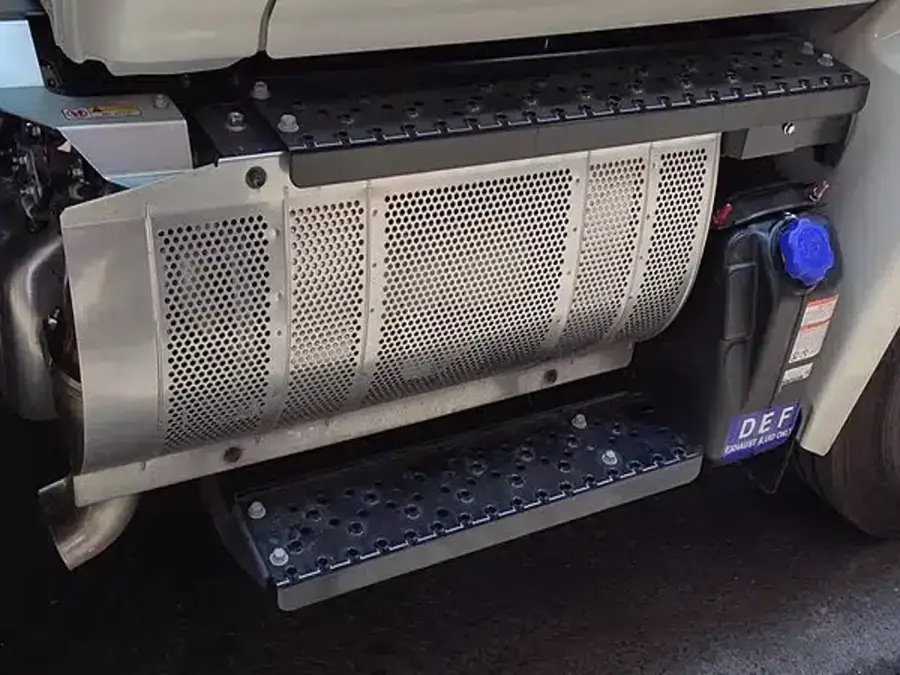
Manufacturers build in specific design features to prevent mixing. DEF fill caps use distinctive blue coloring differentiating them from diesel fuel caps, and DEF fill necks feature smaller diameters than diesel fills, preventing a standard diesel nozzle from fitting. Despite these safeguards, operator awareness remains the primary defense.
Implement these identification protocols across a fleet: label all DEF containers and dispensing equipment with clear, permanent markings; store DEF containers separately from diesel fuel containers in designated areas; train every operator to recognize blue caps and the smaller fill neck diameter; establish a verbal confirmation step before every refueling operation.
Dispensing Equipment Standards
Transfer containers are the second most common contamination source. Equipment previously used for other fluids retains contamination regardless of cleaning method — purchase separate containers, pumps, and nozzles specifically for DEF handling.
Establish regular cleaning schedules for all dispensing equipment. Inspect containers weekly for sediment accumulation or foreign material. Replace any equipment showing signs of degradation or contamination. Keep tanks capped when not actively refueling — exposure to air introduces moisture and airborne contaminants that degrade fluid quality.
| Contamination Source | Severity | Prevention Method |
|---|---|---|
| Diesel fuel mixing | Severe ($10,000+) | Dedicated containers, blue cap ID, operator training |
| Dirt and debris entry | Significant ($3,000–$7,000) | Clean fill area, use clean containers, immediate recapping |
| Residual contamination | Moderate to significant ($2,000–$5,000) | Never reuse containers, dedicated equipment only |
| Airborne contaminants | Moderate ($1,500–$3,000) | Minimize exposure time, keep tanks capped, covered storage |
Component Maintenance Requirements
Tank and Cap Inspection
DEF tank maintenance begins with thorough visual examination of exterior and interior surfaces, checking for cracks, stress marks, or physical damage that could lead to leaks — even small cracks expand over time and cause complete system failure.
Inspect the tank cap seal for wear, damage, or deterioration. A compromised seal allows air and moisture to enter, degrading fluid quality and promoting crystallization throughout the system. Proper venting is essential too — the vent must stay clear of debris and ice buildup.
DEF tanks naturally accumulate condensation overnight, especially with temperature fluctuation. Top off the tank at the end of each day to minimize airspace where moisture can condense and potentially dilute or contaminate the fluid.
Supply Lines and Connection Points
DEF lines transport fluid under pressure from the storage tank to the injection point. Any weakness in these lines compromises system performance — inspect all lines regularly for wear, cracking, or deterioration from heat and road debris exposure.
Check each connection point and fitting for leaks or seepage. Even a minor leak wastes fluid and lets air enter the system. Crystallization buildup around fittings indicates a leak requiring immediate attention — the crystalline deposits form when DEF evaporates, leaving behind urea crystals that block the connection.
Examine line routing to ensure proper support and protection from damage. Lines should never contact hot exhaust components or rub against a sharp edge. Replace a damaged section immediately to prevent system failure during operation.
Pump and Injector Service
The DEF pump delivers fluid from the storage tank to the injection system with precise pressure. Pump failure often results from electrical issues or blockages impeding fluid movement — check the power supply for adequate voltage, inspect for a blown fuse or faulty wiring connection, and verify proper voltage at the pump connector with a multimeter.
Inspect pump inlet and outlet for clogs or blockages. Crystallization in these areas restricts flow and forces the pump to work harder. If testing reveals a malfunction, replace the entire unit with an OEM-quality component.
DEF injectors spray fluid into the exhaust stream where it mixes with exhaust gases. Check injectors for clogging, damage, or excessive crystallization around the nozzle. Perform flow tests to verify correct delivery — most diagnostic tools can run injector tests measuring flow rate and spray pattern. Change DEF filters regularly per manufacturer service interval; this simple task extends the life of expensive components significantly.
Catalyst and Filter Maintenance
The SCR catalyst is where the chemical reaction converts harmful nitrogen oxides into harmless nitrogen and water. Never use contaminated or low-quality DEF, since impurities can poison the catalyst and render it permanently ineffective — most catalysts last the vehicle's lifetime with proper care, but contamination destroys them prematurely.
Monitor catalyst performance through diagnostic readings and emission test results; declining efficiency indicates potential degradation requiring investigation. The diesel particulate filter works alongside the SCR system to capture soot particles — regular DPF service per manufacturer interval maintains overall system efficiency. HDJ's SCR system failure guide and DPF cleaning guide both cover their respective components in full depth.
Watch for a regeneration cycle occurring too frequently, since that indicates filter loading issues. Replace a filter at the specified mileage interval, not just when a warning light appears — preventive replacement costs far less than emergency repair from a neglected component.
Inspection Schedules for Long-Term System Health
Free Diesel Maintenance Checklist
Get HDJ's free, field-tested diesel maintenance checklist delivered instantly to your inbox — print it, laminate it, keep it in the shop.
Instant PDF • 100% Free • No Spam

Daily and Weekly Checks
Daily and weekly inspection forms the foundation of effective DEF system maintenance — quick checks that take only minutes but provide critical early warning of a developing problem.
Verify DEF level each day before starting work. Topping off at shift end prevents the condensation buildup that leads to contamination and quality degradation. Monitor the dashboard for a warning light every time the engine starts — an empty tank will illuminate the indicator, and the engine will derate after a period of continued operation.
Weekly inspection should include checking visible connections for signs of leakage. Look for crystallization around fittings, which indicates DEF has escaped and dried. Track consumption rate week to week — abnormally high usage often signals contamination or system malfunction, and establishing a normal pattern helps spot an irregularity quickly.
Monthly and Annual Maintenance
Monthly maintenance examines components that develop problems over longer periods — comprehensive examination of all DEF lines and connections for crystallization buildup or a small leak not visible during weekly checks. Test DEF concentration with a digital refractometer to verify the fluid is genuinely within specification, since contamination or quality degradation shifts this reading.
When accessible, inspect the tank interior for sediment or contamination — some tank designs allow visual inspection through the fill opening with a flashlight. Sediment accumulation indicates a contamination problem requiring immediate attention. Verify proper pump operation and flow rate, listening for unusual noise that suggests wear or blockage.
| Inspection Item | Frequency | Warning Signs |
|---|---|---|
| DEF fluid level | Daily | Rapid consumption, low level warnings |
| Lines and connections | Monthly | Crystallization, leaks, dampness |
| DEF concentration | Monthly | Readings outside ISO 22241 tolerance |
| System diagnostics | Annually | Stored error codes, sensor failures |
Comprehensive annual assessment ensures long-term system reliability and typically requires professional diagnostic equipment. Professional scanning reveals stored error codes that may not trigger a warning light, giving valuable information about an intermittent problem or a component approaching failure. Complete inspection of electrical connections and sensors identifies corrosion or loose connections causing intermittent failure.
Thorough examination of the SCR catalyst and DPF filter condition determines remaining service life — expensive components that need replacement at specific intervals, and annual evaluation helps plan for that major maintenance expense. Pressure testing the DEF delivery system verifies pump performance and line integrity through the entire fluid path.
Identifying and Testing DEF Quality
Recognizing Contamination Signs
Several observable indicators reveal compromised fluid quality. An unexpected increase in DEF consumption often signals dilution or contamination affecting system efficiency. Dashboard warning lights provide critical alerts about SCR malfunction when a sensor detects improper urea concentration or a foreign substance.
Physical inspection reveals additional warning signs. Visible particulate or discoloration in the fluid indicates foreign material has entered the system — clear, water-like DEF should never appear cloudy or contain floating debris. Crystallization around the fill cap or tank opening suggests contamination or improper storage. An unusual odor from the tank indicates chemical degradation or foreign substance introduction. Engine performance issues provide final confirmation — power loss, rough idling, or an unexpected derate event all point to SCR system complications demanding investigation.
Testing Concentration and Purity
A digital refractometer serves as the authoritative tool for DEF concentration testing in professional maintenance operations, measuring the exact percentage of urea in a fluid sample and eliminating guesswork.
Under ISO 22241, the acceptable urea concentration range is genuinely narrow: 31.8% to 33.2%, centered on the 32.5% target — a tolerance far tighter than "close enough" would suggest. Fluid falling outside this range fails to properly neutralize nitrogen oxides in exhaust gases. Concentration below the minimum indicates dilution, while readings above the maximum suggest evaporation or contamination — and in either direction, the SCR system's performance and component longevity suffer.
Follow systematic steps for accurate testing: clean the refractometer lens thoroughly with distilled water, calibrate per manufacturer specification, place several drops of sample on the measurement surface, close the cover and wait for temperature stabilization, then record the concentration percentage displayed. Document results with date, location, and fluid source for maintenance records.
When testing reveals a value outside acceptable parameters, immediate corrective action prevents system damage. Complete system drainage removes all compromised fluid from tank and lines — partial drainage leaves residue that compromises fresh fluid quality. Thorough cleaning with approved solutions removes residual contaminant before refilling.
Selecting Quality DEF Products
Purchasing DEF that meets EPA emission system requirements supports compliance with rigorous industry standards for purity and concentration. Product meeting ISO 22241 international specification undergoes regular testing to verify it contains urea within that narrow 31.8%–33.2% band and deionized water, with no other additives.
Verify certification through careful label examination before purchase — certification logo, ISO 22241 compliance statement, and manufacturing date. Reputable suppliers provide batch testing documentation on request.
Non-certified or unknown-source DEF poses serious risk to expensive SCR components. Such products may lack proper quality control during manufacturing or storage — contaminant, incorrect concentration, or chemical instability causes catalyst poisoning and sensor failure that cost thousands in repair, far exceeding any savings from a cheaper alternative.
Understanding Warning Lights and Error Codes
Dashboard Alert Interpretation
The monitoring system generates specific warnings based on detected conditions. A low DEF level warning appears when the tank reaches roughly 10% capacity, giving time to refill before levels become critical. A DEF quality warning indicates a concentration or contamination issue requiring immediate investigation.
A system malfunction alert points to a pump or injector failure preventing proper delivery, often alongside reduced injection performance that needs component testing. An inducement warning is a serious alert preceding engine derate if the underlying problem isn't addressed — if operators ignore initial warnings, the machine starts logging diagnostic codes, and continued neglect leads to derating that forces a stop to address the issue. An empty tank warning means immediate action is required to prevent complete engine shutdown.
Systematic Troubleshooting
Start by verifying the actual DEF level against the sensor reading — open the tank and visually confirm gauge accuracy, since a sensor malfunction sometimes triggers a false warning.
Check fluid quality through visual inspection for contamination or discoloration. Review recent refueling events for a potential contamination point — a problem starting immediately after filling often traces back to contaminated fluid or improper handling.
Use a diagnostic scan tool to retrieve specific fault codes from the vehicle's computer, since these provide more detail than a basic dashboard warning. Record every code before attempting repair to establish a complete diagnostic picture, and clear codes after addressing the identified issue to verify the repair resolved it.
When to Seek Professional Service
Some situations exceed operator-level troubleshooting. A persistent warning after basic correction suggests a problem requiring specialized diagnostic equipment; multiple simultaneous system errors indicate a complex failure needing systematic diagnosis by a qualified technician.
A suspected internal component failure requiring disassembly demands professional service — opening a pump, injector, or control module without proper training risks additional damage. A contamination event involving diesel fuel in the DEF system requires complete system flushing; contact the equipment dealer immediately to minimize damage and cost. Professional intervention for a serious issue costs far less than an attempted repair without proper expertise, since incorrect diagnosis can multiply repair expense through component damage.
Cold Weather Operation and Winterization
Understanding DEF Freezing Behavior
Diesel exhaust fluid freezes at 12°F, transforming from liquid to a slushy consistency before solidifying completely. This freezing point stays constant regardless of brand or manufacturer. When freezing occurs, the fluid expands by roughly seven percent in volume, requiring adequate space within storage containers and vehicle tanks.
The critical fact about DEF freezing: freeze-thaw cycles don't degrade quality or performance in any way. The chemical composition stays completely stable through multiple cycles, and once thawed, the fluid functions exactly as it did before with no loss of effectiveness. Use expandable containers when storing DEF in an unheated location — standard vehicle tanks already account for expansion.
Cold Weather Starting Procedures
Modern diesel vehicles include integrated heating systems designed specifically for cold weather DEF operation. Built-in heating elements automatically thaw frozen fluid during engine startup — operators can start the engine normally even when DEF is completely frozen in the tank.
The thawing process typically needs 15 to 30 minutes of engine operation before full SCR functionality resumes. During this warm-up period, the engine operates normally but may show a temporary system warning that disappears automatically once heating restores fluid flow.
Follow cold weather starting procedure for the best result: start the engine without trying to force DEF system operation, allow the engine to reach normal operating temperature naturally, monitor the dashboard for status updates, wait for a warning light to clear before beginning work operation, and avoid shutting down during the initial thaw period.
Heating System Maintenance
DEF heater maintenance ensures reliable winter performance year after year. Electrical heating elements integrated into tanks and supply lines prevent operational failure in freezing climates, activating automatically when a sensor detects temperature approaching the freezing threshold.
Regular inspection should include electrical connection verification — check every wiring harness for corrosion, damage, or loose connection, since a compromised electrical system prevents the heater from functioning properly and leaves DEF vulnerable to freezing complications.
Resistance testing confirms heater element functionality before winter arrives — use a multimeter to measure resistance against manufacturer specification, and a value outside the acceptable range indicates a failing element requiring replacement.
Common heater system failure symptoms include a persistent quality warning appearing only in cold weather, an extended warm-up period exceeding 45 minutes before normal operation, a recurring freeze-related error code after the engine reaches operating temperature, and inconsistent SCR performance during winter months. Schedule a thorough system check during fall to ensure heating systems remain functional through the coldest periods.
Frequently Asked Questions
What exactly is DEF and why do modern diesel engines require it?
Diesel exhaust fluid is a precisely formulated solution of 32.5% high-purity urea and 67.5% deionized water. Modern diesel engines require it because EPA 2010 emission standards mandated a significant reduction in nitrogen oxide emissions that engine modifications alone couldn't achieve. The fluid enables SCR technology to convert harmful NOx into harmless nitrogen gas and water vapor — without it, a truck equipped with an SCR system will progressively derate and eventually refuse to start.
How long can DEF be stored before it loses effectiveness?
It depends primarily on storage temperature. Under optimal conditions between 50°F and 75°F, the fluid maintains effectiveness for up to 24 months. Standard storage conditions between 12°F and 86°F support a 12-month shelf life. Temperatures above 86°F accelerate degradation significantly, potentially compromising quality within 6 months. Use first-in-first-out rotation, check dates before use, and store in climate-controlled environments when possible.
What happens if diesel fuel accidentally gets into the DEF tank?
Diesel fuel contamination causes serious SCR system damage typically exceeding $10,000 in repair, potentially destroying the tank, pump, supply lines, injector, sensors, and possibly the catalyst. If this happens, stop the engine immediately and don't attempt to start it — contact a qualified diesel technician for complete system flushing and component replacement. Always verify the blue cap and smaller fill neck before dispensing to prevent this in the first place.
Does freezing damage DEF or affect its performance?
No. The fluid freezes at 12°F and expands roughly 7% during the process, but freeze-thaw cycles leave the urea concentration and effectiveness completely unchanged. Modern vehicles include built-in heating that thaws frozen DEF during engine warm-up, typically restoring full SCR functionality within 15–30 minutes. Use expandable containers for storage in unheated areas to accommodate expansion, and never add anything to help frozen DEF thaw faster — the heating system handles this automatically.
What's the acceptable concentration range for DEF quality?
ISO 22241 specifies a urea concentration between 31.8% and 33.2%, centered on the 32.5% target — a genuinely narrow tolerance, not a wide range. A refractometer reading outside that band means the fluid has degraded or been diluted and needs testing and, if confirmed, replacement before it damages the SCR system.
Protecting Your Investment Through Proper DEF System Maintenance
Consistent DEF system maintenance protects a fleet's investment far more effectively than reactive repair after failure occurs. The practice in this guide — proper storage, contamination prevention, regular inspection, and quality verification — forms the foundation of reliable SCR system operation.
Most issues stem from handling error rather than actual equipment defect. Educating drivers on proper procedure reduces the risk of a contamination event that causes expensive downtime. Simple daily habits — topping off tanks at shift end, cleaning fill areas before refueling, monitoring consumption pattern — catch problems before they escalate into a major repair, the same discipline Michael Nielsen and Heavy Duty Journal's editorial team hold every guide on heavydutyjournal.com to.
Share This Maintenance Guide
Help other fleet managers and diesel technicians protect their SCR systems. Share this comprehensive DEF maintenance guide with colleagues facing similar aftertreatment challenges.


