

By Michael Nielsen, Editor & Publisher | 15+ Years in Diesel Repair
Last Updated: December 2025
📖 Estimated reading time: 20 minutes
Choosing the right owner operator routes determines whether your trucking business thrives or struggles to break even. Every lane decision directly impacts your bottom line, fuel costs, and time away from home. The difference between earning $80,000 annually and $150,000 often comes down to consistent route selection based on solid economic principles rather than simply chasing the highest posted rate.
California to Texas runs might pay $3.50 to $4.00 per mile, making them among the high paying trucking lanes in the country. But the return trip matters just as much as the initial haul. A $3.50 per mile load that requires 300 empty miles back to productive freight generates far less profit than a $2.50 per mile load with strong backhaul options. Understanding this fundamental truth separates successful independent truckers from those barely covering expenses.
According to ATRI’s 2025 Operational Costs of Trucking report, the industry average cost of operating a truck reached $2.26 per mile in 2024. With empty miles averaging 16.7% across the industry, mastering profitable freight lanes becomes essential for maintaining margins in an increasingly challenging freight market.
Key Takeaways
- Backhaul determines profit: A premium outbound rate means nothing if you deadhead back empty—always evaluate round-trip economics.
- Regional rates vary significantly: Western refrigerated routes pay $2.53/mile on average versus $1.94/mile in the Northeast.
- Operating costs set your floor: With industry average costs at $2.26/mile, rates below this threshold lose money regardless of volume.
- Seasonal patterns create opportunity: Produce season (April–July) can boost reefer rates 30% or more above baseline.
- Equipment utilization matters most: Top performers achieve 85%+ utilization versus the 60-70% industry average.
- Technology accelerates decisions: Load board analytics and route optimization tools identify profitable opportunities before competitors.
Understanding What Makes Freight Lanes Profitable
Owner-operators who consistently maximize earnings share one common trait: they analyze the complete economic picture of every lane rather than chasing headline rates. The highest-paying single load doesn’t always translate to the most profitable week or month of operations. Sustainable profitability requires evaluating multiple factors simultaneously.
Several fundamental components work together to create genuinely profitable opportunities. Consistent freight volume reduces time spent searching for loads and minimizes unpaid downtime. The rate must exceed your all-in costs including fuel, maintenance, insurance, and desired profit margin. Strong backhaul availability ensures revenue generation in both directions rather than deadheading empty.

The type of freight you haul significantly impacts earning potential. Dry van freight averages approximately $2.07 per mile nationally, while refrigerated loads increase to around $2.44 per mile. Flatbed freight reaches roughly $2.58 per mile due to specialized equipment requirements and loading complexity. These differentials can translate to tens of thousands in annual revenue difference for operators running similar miles.
How Market Forces Shape Freight Rates
Freight markets function as dynamic economic ecosystems where carrier capacity and shipper demand constantly shift. The load-to-truck ratio serves as the primary indicator of market conditions, comparing available loads to available trucks in a specific market. When loads outnumber trucks, rates increase as shippers compete for limited capacity. The inverse drives rates down as carriers fight for available freight.
Seasonal patterns create predictable fluctuations in freight demand. The fourth quarter typically sees dramatically increased volume as retailers stock for holiday shopping. Summer months bring agricultural produce transportation peaks. Economic conditions in specific industries affect regional demand—manufacturing slowdowns reduce outbound freight from industrial areas, while port congestion creates equipment shortages and rate spikes in coastal markets.
Regional Rate Benchmarks
Regional freight rates vary significantly across the United States due to local economic conditions, freight volumes, and competitive factors. Understanding these benchmarks helps you evaluate whether a load offer represents fair compensation or substandard pay. Markets with strong outbound freight volumes typically offer better rates than areas requiring deadhead repositioning.
| Region | Dry Van (per mile) | Refrigerated (per mile) | Flatbed (per mile) |
|---|---|---|---|
| Northeast | $2.15 | $1.94 | $2.42 |
| Midwest | $2.21 | $2.49 | $2.68 |
| Southeast | $2.08 | $2.38 | $2.55 |
| Southwest | $2.18 | $2.41 | $2.61 |
| West Coast | $2.34 | $2.53 | $2.73 |
These benchmarks represent average spot market rates and should serve as baseline expectations rather than absolute standards. Contract rates with dedicated customers typically run 10-15% below spot market rates but provide volume consistency and reduced empty miles. This trade-off often delivers better overall profitability despite lower per-mile compensation.
Critical Factors That Determine Lane Profitability
Beyond basic rate calculations, three essential operational factors determine whether a freight lane will genuinely boost your bottom line or quietly drain profits: backhaul availability, fuel cost management, and freight volume consistency. Owner-operators who master these factors gain competitive advantages that transform average routes into reliable income generators.

Securing Return Freight and Minimizing Empty Miles
The ability to secure return freight represents one of the most critical determinants of lane profitability. According to ATRI’s latest research, empty miles rose to an industry average of 16.7% in 2024. This staggering figure reveals a massive profit drain that separates struggling operators from thriving businesses.
16.7%
Average empty miles across the trucking industry in 2024 — ATRI Operational Costs Report
The financial impact of deadheading extends far beyond obvious fuel costs. A 200-mile deadhead run costs approximately $100 in diesel alone, not including tire wear, maintenance expenses, and opportunity cost of lost revenue. When factoring in hidden expenses, each empty mile costs between $1.50 and $2.00—money coming directly out of your profit margin.
Smart strategies for deadhead miles reduction can dramatically improve your bottom line. Planning circular routes rather than simple out-and-back patterns often reveals better backhaul opportunities. A Chicago-to-Atlanta-to-Dallas-to-Chicago circuit might offer stronger return freight than a direct Chicago-to-Atlanta round trip. Sometimes accepting slightly lower-paying backhaul freight makes more financial sense than running completely empty.
Managing Diesel Expenses and Route Efficiency
Fuel costs typically represent 25-30% of total operating revenues, making fuel cost management one of the most impactful factors in lane profitability. A lane that appears profitable based on mileage rates can quickly become a money-loser when fuel expenses spike or route inefficiencies emerge.
Route characteristics dramatically affect fuel consumption in ways that don’t always appear in basic mileage calculations. Mountain passes consume significantly more diesel than flat terrain. A trip through the Rockies uses 20-30% more fuel than a comparable distance on flat Midwest highways. Urban congestion creates hidden fuel drains—stop-and-go traffic in major metropolitan areas can reduce fuel efficiency by 30-40% compared to highway driving.
Toll roads present an interesting calculation. While tolls add direct costs, they often provide fuel savings through reduced distance, less congestion, and better road conditions. A $40 toll might save 50 miles and two hours of driving, potentially yielding net savings when factoring in fuel and time value.
Seasonal Demand Patterns
The consistency of freight availability throughout the year profoundly affects business planning and income stability. Lanes serving major manufacturing or distribution corridors typically offer year-round demand with minimal seasonal variation. Routes connecting automotive plants, food distribution centers, or e-commerce fulfillment hubs maintain steady freight volumes regardless of season.
Seasonal lanes present a different profitability profile. Agricultural harvest routes see explosive demand during specific months but offer little freight during off-seasons. Holiday retail shipping creates intense demand from October through December, followed by significant slowdowns in January. Smart owner-operators balance their lane portfolio between stable, consistent routes and higher-paying seasonal opportunities.
Stay Ahead of Freight Market Shifts
Get weekly insights on rate trends, seasonal opportunities, and operational strategies that help independent truckers maximize profitability.
Best Freight Lanes by Region
Understanding regional freight dynamics allows owner-operators to target lanes that match their equipment, home base location, and income goals. Each region offers distinct advantages and challenges that affect overall profitability.
Northeast Corridor Opportunities
The Northeast Corridor from Boston to Baltimore creates a powerhouse of freight opportunities despite appearing less attractive on per-mile rate comparisons. This region combines the highest population density in the United States with extensive manufacturing infrastructure and distribution networks. The concentration of major metropolitan areas within relatively short distances creates unique advantages for operators willing to optimize turnover strategies.

Northeast freight lanes offer a different profitability model compared to long-haul routes. While per-mile rates may appear lower, reduced deadhead miles and rapid load turnover compensate significantly. Operators can complete multiple runs per week, creating consistent cash flow that rivals or exceeds longer routes with higher per-mile compensation.
Key corridors include New York City to Boston (215 miles, $2.50-$3.50/mile), Philadelphia to Pittsburgh (305 miles, $2.75-$4.00/mile for industrial freight), and Baltimore to Albany (330 miles, $2.50-$3.75/mile). The interconnected nature of these lanes creates circular route opportunities that minimize empty miles.
Midwest Manufacturing and Distribution Lanes
Owner-operators seeking maximum profitability should pay close attention to Midwest freight lanes, where refrigerated spot rates average $2.49 per mile—the highest in the nation according to USDA Agricultural Marketing Service data. This region combines concentrated manufacturing strength with robust agricultural production to create consistent freight demand throughout the year.
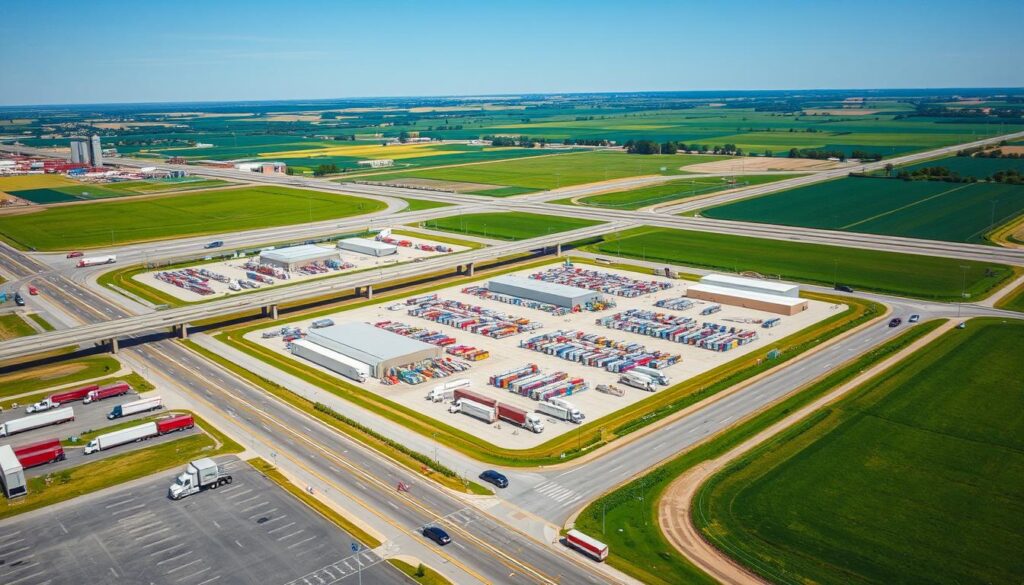
The Chicago to Detroit industrial corridor (280 miles) consistently offers rates between $2.20 and $2.80 per mile for dry van freight, with specialized automotive parts commanding even higher rates. The Indianapolis to Columbus short-haul lane (175 miles) exemplifies how shorter routes can generate exceptional weekly revenue through high turnover—operators can complete three to four round trips weekly with proper scheduling.
The Midwest’s central geographic position makes it a natural convergence point for freight moving between coasts. Balanced freight flows reduce deadhead exposure significantly, allowing operators to secure profitable backhauls without extensive repositioning.
Southern States Freight Opportunities
From Texas energy corridors to Florida agricultural routes, the South offers diverse freight opportunities with consistently strong demand. The region’s economic transformation continues accelerating, fueled by major population migration from higher-cost states, expanded manufacturing facilities, and strategic port locations.

The Dallas to Houston energy corridor (240 miles) represents one of the most lucrative short-haul lanes in the nation. Energy-related freight dominates load boards—oil field equipment, petrochemical products, and specialized industrial machinery command higher rates due to handling requirements and cargo value. Standard dry van freight maintains competitive rates averaging $2.20 to $2.80 per mile.
Florida freight routes benefit from the state’s position as a population magnet, agricultural producer, and tourism destination. During peak agricultural shipping periods, rates can jump substantially—spring produce season typically sees increases of $0.34 per mile or more above baseline rates. The Miami to Orlando corridor (235 miles) delivers unique opportunities across diverse freight categories.
Western Region High-Demand Routes
Owner-operators targeting Western freight lanes access the country’s most lucrative markets, where reefer rates average $2.53 per mile. This region dominates national freight economics through massive agricultural production, major port complexes, and significant population centers driving consistent consumer demand.

The distinctive characteristic of Western freight markets is directional freight imbalance. Far more freight moves eastbound from West Coast ports and agricultural regions than westbound, creating potential deadhead exposure requiring strategic management. Smart operators who master backhaul strategies capitalize on rates that consistently exceed national averages by 15-25%.
The Los Angeles to Phoenix Southwest corridor (375 miles) moves diverse freight including imported consumer goods and California agricultural products. Phoenix’s growing manufacturing sector generates substantial return freight at rates ranging from $2.25 to $2.85 per mile. The Seattle to Portland Pacific Northwest lane (175 miles) delivers profitability through frequency—operators complete multiple cycles weekly with bidirectional freight flow minimizing deadhead risk.
The HDJ Perspective
The most profitable owner-operators we’ve interviewed share a common approach: they stop chasing headline rates and start building lane portfolios. Like a diversified investment strategy, combining consistent year-round lanes with strategic seasonal opportunities creates income stability that pure spot market operators rarely achieve. The freight recession has made this approach even more critical—operators with established shipper relationships and diversified lane access are weathering the current market far better than those dependent on volatile spot rates.
Cross-Country Lanes With Premium Rates
Owner-operators targeting transcontinental routes can achieve exceptional profitability by understanding the unique dynamics of long-distance freight movement. These lanes offer substantially higher absolute revenue per load due to distances involved, often ranging from 1,400 to 2,800 miles. However, success requires sophisticated logistics planning and careful economic analysis.

The Los Angeles to Dallas Southwest corridor (1,435 miles) represents one of the most consistently profitable high-rate long-distance lanes. Peak period rates reach $3.50-$4.00 per mile, with total load values ranging from $4,000 to $5,750. Westbound freight from Dallas includes energy sector equipment and manufacturing components, while eastbound loads feature imported consumer goods from LA ports.
The Chicago to Los Angeles Central-West corridor spans approximately 2,015 miles and represents perhaps the most balanced transcontinental route. Chicago’s role as the nation’s primary inland freight hub creates massive volume in both directions. The balanced freight flow means backhaul rates typically run 80-95% of primary lane rates—a significant advantage over many coast-to-coast options.
For the ultimate haul, the New York to Los Angeles route (2,790 miles) offers substantial per-load revenue potential. A single load can generate $7,000 to $11,000 in revenue, but the multi-day commitment requires securing profitable return freight. The journey typically requires 4-5 days of driving across 10-14 states, demanding careful hours-of-service planning.
Seasonal Freight Opportunities for Peak Earnings
The freight industry operates on cyclical patterns creating distinct earning opportunities for owner-operators who position strategically for demand surges. Understanding these patterns allows you to maximize revenue during high-demand periods while preparing for slower stretches.
The trucking calendar moves through four predictable phases. The Quiet Season from January through March brings lower demand and softer rates as consumer spending declines after holidays. Produce Season from April through July creates substantial opportunities particularly for refrigerated operators—rates in some markets increase by $0.10 to $0.15 per mile during agricultural booms. Peak Shipping Season from August through October sees revenue per mile typically reaching annual highs as back-to-school and early holiday stocking combine. Holiday Shipping Season from November through early January delivers elevated rates driven by consumer demand and weather-reduced capacity.
For reefer operators specifically, produce season represents the absolute peak opportunity. The Owner-Operator Independent Drivers Association (OOIDA) notes that refrigerated operators who follow harvest schedules can generate substantially higher revenue by positioning equipment in production regions before harvest begins. California’s Central Valley to Chicago and Eastern markets consistently offer premium rates during peak harvest weeks when available reefer capacity cannot meet demand.
Share Your Lane Expertise
Have you discovered profitable routes or strategies that work for your operation? Heavy Duty Journal welcomes insights from experienced owner-operators.
Freight Lanes to Avoid and Common Profitability Pitfalls
Smart owner-operators recognize that avoiding unprofitable freight lanes protects the bottom line more effectively than chasing marginal opportunities. A single poor lane decision can cost hundreds or thousands of dollars in wasted fuel, lost time, and opportunity costs.
Routes with limited return freight opportunities often disguise their true cost by offering attractive outbound rates while providing virtually no backhaul options. These lanes terminate in areas with limited industrial infrastructure, minimal distribution centers, or economically declining regions. Rural destinations in Montana, Wyoming, and parts of the Dakotas frequently present this challenge outside seasonal energy boom periods. Securing backhaul freight from these locations often requires deadheading 200 miles or more just to reach markets with adequate freight availability.
Oversaturated freight markets develop when excessive carrier capacity floods specific corridors, creating destructive competition pushing rates below profitable thresholds. Markets exhibiting load-to-truck ratios below 2:1 indicate significant oversupply. The discipline to reject loads that don’t meet minimum profit requirements becomes essential for long-term survival.
High deadhead percentage lanes consistently generate excessive empty miles regardless of the loaded rate. While industry average deadhead sits at approximately 16.7%, successful owner-operators typically achieve 10-15% through strategic planning. Routes that consistently produce deadhead percentages above 25% deserve critical evaluation for true profitability.
The mathematics of deadhead miles reveal their devastating impact on apparent profitability. Consider a load paying $3.50 per mile for 400 miles generating $1,400 in revenue. If securing the next load requires 200 miles of deadhead, the total distance becomes 600 miles, reducing the effective rate to $2.33 per mile. Compare that to a load paying $2.50 per mile for 400 miles with only 50 miles of deadhead—the $1,000 revenue spread across 450 total miles yields $2.22 per mile, but when factoring in additional fuel costs and time consumption of the extra 150 empty miles, the lower-paying load with minimal deadhead often proves more profitable.
Strategic lane selection prioritizes routes with strong backhaul markets over those offering premium outbound rates but poor return opportunities. Building relationships with shippers who provide consistent round-trip freight eliminates deadhead exposure while creating predictable revenue streams. The most profitable owner-operators view every load decision through the lens of total miles—both loaded and empty—rather than focusing exclusively on the loaded rate.
Using Technology to Identify Profitable Lanes
Modern trucking technology tools provide access to real-time market intelligence that transforms freight selection from intuition-based decisions into calculated business strategy. While these platforms require subscription investments and learning time, the return typically exceeds costs through better rates, reduced empty miles, and improved decision-making.
Load board analytics have evolved far beyond simple freight listings into sophisticated market research tools. DAT One stands as the industry’s largest platform, posting 267 million loads and trucks annually with tiered subscription plans ranging from $49 to $299 monthly. Premium tiers include features like LaneMakers, which identifies available return freight on challenging backhaul lanes. Truckstop provides exceptional value for reefer operators through specialized refrigerated freight data. 123Loadboard offers cost-effective alternatives at $39 to $79 monthly, earning consistent high ratings from users.
Route optimization software minimizes fuel costs and deadhead miles through intelligent planning algorithms. These tools analyze multiple variables including fuel prices, terrain, weather conditions, and FMCSA Hours of Service regulations to identify the most profitable paths. GPS tracking and route planning tools serve hundreds of thousands of users worldwide, optimizing fuel consumption by routing around traffic congestion and identifying lowest-cost fuel stops.
Real-time freight matching platforms represent the newest evolution in trucking technology, using algorithms to automatically connect available trucks with suitable loads. Advanced matching considers your current location, equipment specifications, preferred lanes, and minimum rate requirements, then pushes notifications directly to your mobile device.
Beyond load matching, market intelligence tools help anticipate rate changes before they happen. DAT RateView accesses over $1 trillion in historical freight transactions to deliver real-time spot and contract rate benchmarks. This data empowers you to recognize when a broker’s offer represents fair market value versus an attempt at below-market pricing. Monitoring load-to-truck ratios across your preferred markets reveals when to push for premium rates versus when to accept standard pricing.
The most successful implementation combines multiple technology tools into an integrated system. Use load board analytics to understand market rates, apply route optimization software to plan efficient paths, and leverage freight matching platforms to identify quick reload opportunities. Track your technology return on investment by measuring changes in average deadhead percentage, rate per mile, and time spent searching for loads.
Building Strategic Shipper Relationships
The most profitable owner-operators understand that long-term shipper partnerships deliver more value than constantly chasing spot market rates. While load boards and spot freight provide flexibility, sustainable business success depends on cultivating direct relationships that command premium rates and preferential treatment.
Dedicated freight lanes represent commitments to provide capacity on specific routes with defined frequency. Unlike spot market transactions involving one-time arrangements, these agreements establish ongoing partnerships providing income predictability. Empty miles decrease dramatically through consistent backhaul arrangements built into lane structures. Industry data shows that building broker networks typically requires 40-60 calls to establish a solid pipeline, but the investment pays dividends.
Contract rates with dedicated customers typically run 10-15% below spot market rates but provide volume consistency and reduced empty miles. This trade-off often delivers better overall profitability despite lower per-mile compensation. The stability proves especially valuable during market downturns when spot rates collapse—operators with established relationships weather these periods far better than pure spot market players.
Converting reliability into premium terms requires demonstrating consistent value. On-time pickup and delivery means meeting appointment windows without delays or excuses. Proactive communication includes status updates, advance notice of potential issues, and responsive inquiry handling. Cargo care requires zero damage claims, proper handling procedures, and appropriate equipment maintenance. Shippers and brokers facing constant operational challenges value carriers who consistently deliver exceptional performance.
Leveraging this track record generates tangible benefits including priority dispatch on premium freight opportunities, load selection flexibility allowing you to decline less desirable loads without damaging relationships, accessorial compensation for detention and layover, and improved payment terms with faster cycles. Experienced owner-operators have transformed shipper relationships through sustained excellence, starting with difficult spot market loads, demonstrating reliability, and eventually securing dedicated contracts at premium rates.
Frequently Asked Questions
What makes a freight lane profitable for owner-operators?
Lane profitability depends on multiple factors working together: the rate per mile must exceed your operating costs (currently averaging $2.26/mile industry-wide), strong backhaul availability minimizes empty miles, consistent freight volume reduces time searching for loads, and reasonable transit times allow sustainable operations within hours-of-service limits. The highest-paying outbound rate means nothing if you deadhead back empty—evaluate total round-trip economics rather than one-way rates.
Which regions offer the highest trucking rates?
Western freight lanes currently command the highest rates, with refrigerated spot rates averaging $2.53 per mile. The Midwest leads specifically for reefer freight at $2.49 per mile due to heavy agricultural and food processing activity. California to Texas routes during peak periods can reach $3.50-$4.00 per mile. The Northeast shows the lowest refrigerated rates at $1.94 per mile, though rapid turnover and reduced deadhead can compensate for lower per-mile compensation.
How can owner-operators reduce deadhead miles?
Successful operators use multiple strategies: planning circular routes rather than simple out-and-back patterns, building relationships with brokers in destination markets, using multiple load boards simultaneously to compare available return freight, accepting slightly lower-paying backhaul freight when it beats running empty, and leveraging freight matching platforms that identify reload opportunities near delivery locations. Top performers achieve deadhead percentages below 15% versus the industry average of 16.7%.
When is the best time to run certain freight lanes?
Seasonal patterns create predictable rate fluctuations. Produce season (April–July) delivers premium rates for refrigerated operators, with reefer rates climbing as much as 30% during peak harvest. Holiday shipping season (November–January) creates elevated rates across all equipment types. Fourth quarter consistently produces the highest annual rates due to retail stocking demands. Understanding these cycles allows positioning equipment in high-demand markets before rate spikes occur.
Should owner-operators prioritize spot market or contract freight?
The most sustainable approach combines both. Contract rates typically run 10-15% below spot market but provide volume consistency, reduced empty miles, and predictable income. Spot market freight allows capitalizing on rate spikes during peak seasons and filling gaps between contracted loads. During the current freight recession, operators with established contract relationships are weathering market volatility far better than those dependent solely on spot rates.
What technology tools help identify profitable freight lanes?
Premium load boards like DAT One, Truckstop, and 123Loadboard provide real-time market intelligence on available loads and current rates. DAT RateView offers benchmarking data based on over $1 trillion in historical transactions. Route optimization software analyzes fuel costs, terrain, and traffic to identify efficient paths. Freight matching platforms automatically connect your equipment specifications and location with suitable loads. The key is combining multiple tools—using load board analytics to understand market rates while leveraging matching platforms to identify quick reload opportunities near delivery locations.
Maximizing Your Freight Lane Strategy
Achieving owner-operator success requires mastering freight lane profitability through strategic analysis rather than chasing the highest rates alone. The frameworks presented throughout this guide provide the foundation for data-driven decisions that separate profitable operations from those barely breaking even.
Your profitability depends on understanding true costs per mile, analyzing backhaul opportunities, and selecting routes with consistent year-round demand balanced against seasonal peaks. Successful operators treat lane selection as a core business capability, investing time in market analysis while building strategic shipper relationships and leveraging technology platforms to identify opportunities before competitors.
The freight industry remains dynamic with shifting rates and capacity conditions. Ongoing market awareness and disciplined execution of proven strategies position you not just for survival but for genuine prosperity. Focus on round-trip economics, maintain equipment utilization above 85%, and build the diversified lane portfolio that creates income stability through all market cycles.
Help Fellow Truckers Succeed
Know an owner-operator who could benefit from these lane strategies? Share this guide to help them make more informed decisions about route selection.