
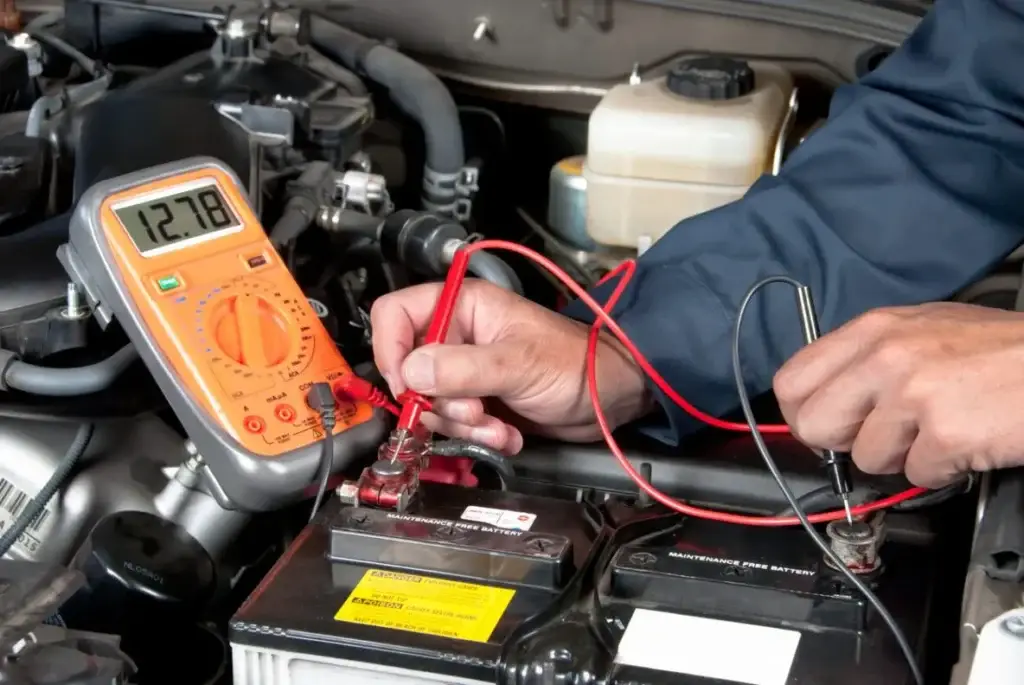
Keeping commercial vehicle charging systems healthy is mission-critical for uptime and safety. This alternator testing guide delivers a complete, step-by-step protocol used in fleet diagnostics across the industry. Whether you manage a Class 7–8 fleet or work in the shop bay, proper alternator evaluation prevents roadside failures, protects electronic modules, and reduces unnecessary parts swaps.
Dash lights and cluster voltmeters can mislead. Accurate diagnostic procedures confirm both voltage and current using a multimeter and clamp meter under load. The sequence matters: verify batteries, cables, and connections first, then evaluate alternator output. This approach follows the diagnostic discipline reflected in TMC RP 129A and industry best practices for heavy-duty vehicle cranking and charging troubleshooting.
Last Updated: December 2025
Key Takeaways
- Follow the correct sequence: Test batteries, wiring, and grounds before evaluating the alternator.
- Target voltage range: Running voltage should read 13.8–14.5 V at the alternator B+ terminal with ≤0.5 V drop to the batteries.
- Verify amperage under load: Use a clamp meter and carbon pile to confirm the alternator meets its rated output at 1,500–2,000 rpm.
- Protect electronics: Never disconnect batteries with the engine running and avoid grounding test equipment to the alternator housing.
- Make data-driven decisions: Determine whether the issue is wiring loss, regulator fault, or alternator replacement based on test results.
Understanding Heavy-Duty Charging Systems
A reliable heavy-duty charging system converts engine power into steady electrical energy for starting, lighting, HVAC, telematics, and safety electronics. The design balances alternator components, battery banks, and wiring integrity so voltage drop stays within acceptable limits during peak demand. Fleets running Freightliner, Volvo Trucks, Peterbilt, and Kenworth equipment rely on robust layouts that keep batteries charged while the engine operates.
System matching—pairing alternator output, battery type, and cable gauge—helps protect assets and prevents nuisance faults that mask real issues. When current demand rises, correct cable gauge keeps resistance low and protects connectors from excessive heat. Undersized cables and worn connectors invite voltage drop and intermittent shutdowns that frustrate drivers and increase costs.

Core Components of the Charging Circuit
The alternator contains a rotor, stator, rectifier, and regulator. These work with maintenance-free flooded, AGM, or Thin Plate Pure Lead (TPPL) AGM batteries found in Class 7–8 trucks and buses. The circuit also uses a magnetic switch, starter solenoid, ignition switch, and high-capacity cables that tie the system together.
The engine spins the rotor, creating a rotating magnetic field that induces AC in the stator windings. A rectifier bridge converts the AC to DC charging voltage, while the regulator commands field current to maintain system targets under changing loads. Because harness length and junctions create real resistance, alternators often regulate near 14.5 volts to overcome expected losses.
| Component | Role in Charging | Best-Practice Focus |
|---|---|---|
| Alternator (rotor, stator, rectifier, regulator) | Create AC, rectify to DC, regulate output | Match output to vehicle loads and battery type |
| Batteries (Flooded, AGM, TPPL) | Store energy and stabilize bus voltage | Proper capacity and temperature management |
| Wiring and grounds | Carry current between alternator and battery bank | Correct gauge and clean terminations |
| Magnetic switch and solenoids | High-current switching for start and charge paths | Contact health and proper torque specs |
Safety, Tools, and Test Equipment for Fleet Diagnostics
Accurate alternator testing starts with the right heavy-duty test equipment and a clear plan for technician safety. For 12V and 24V diagnostics, use tools that read clean, stable values and protect sensitive circuits. Keep electronic module protection in mind at every step to avoid voltage spikes or stray grounds.

Digital Voltmeter Requirements
A quality digital meter with the correct range prevents guesswork. Use a 0–16 V scale for 12-volt trucks and a 0–32 V scale for 24-volt platforms. For pinpoint voltage drop measurements, a 0–3 V low scale helps find hidden losses with resolution to 0.01 V. Digital meters from Fluke, Klein Tools, and Keysight offer stable readings, safe polarity handling, and clear displays.
Clamp-On Ammeter Advantages
A clamp-on ammeter reads current without opening the circuit, so wiring stays intact and intermittent defects remain undisturbed. Close the jaws fully, zero the meter, and align the arrow with current flow. This method is fast, repeatable, and protects harnesses from damage. Inductive clamps from Fluke, Amprobe, and Extech work well for heavy-duty diagnostics.
Carbon Pile Load Tester Use
A carbon pile tester applies controllable load to the battery bank and simulates real electrical demand. Choose a variable unit rated above 500 A, and on 24-volt systems, use a 24 V–rated model only. When loading the alternator for an amp test, connect the carbon pile to the battery side. Monitor voltage and temperature, and stage the load gradually to avoid sudden spikes that could damage modules or cables.
Critical Safety Rules
Use clean chassis or battery negative points—do not ground instruments to the alternator housing. Never disconnect a battery with the engine running, as this can trigger damaging voltage surges that harm ECUs and other electronic modules. Control loads, observe polarity, and avoid arcing. According to OSHA standard 1926.441, proper ventilation and personal protective equipment are required when working around batteries to prevent exposure to hazardous gases and electrolyte.
Baseline Electrical Checks Before Alternator Evaluation
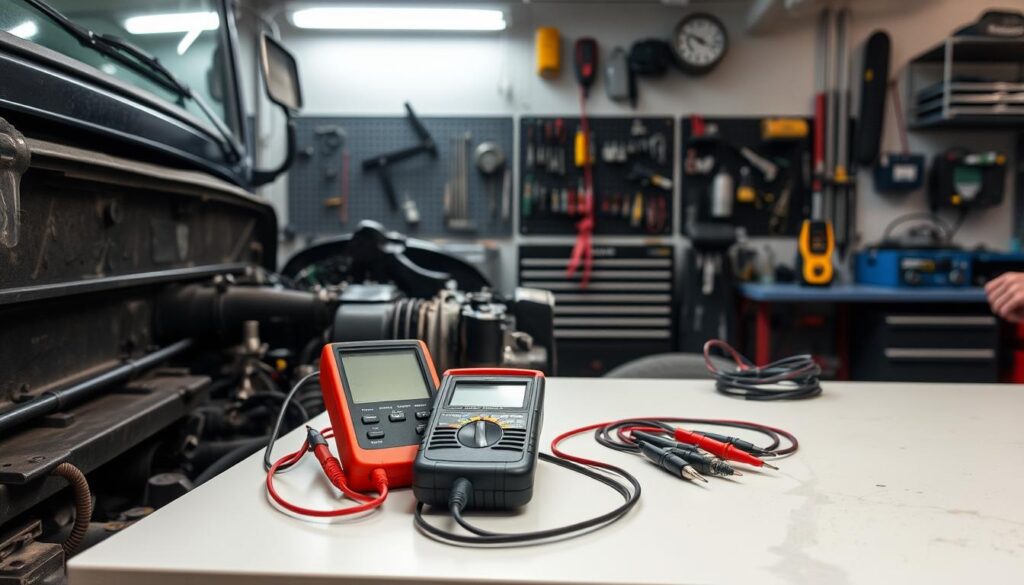
Start with a clean baseline before making any call on the alternator. Heavy-duty battery diagnostics begin at the batteries, then move through wiring and grounds. Confirm battery state of charge, verify ground integrity, and document losses with voltage drop testing. Only then does alternator data make sense.
Battery State-of-Charge Targets
Record resting voltage after the vehicle sits with the key off for at least 10 minutes. Recharge low batteries before testing. The Technology & Maintenance Council (TMC) recommends following RP 129A guidelines every three months to ensure optimal battery performance and catch issues before they result in downtime.
| Battery Type | 100% SOC | 75% SOC | 50% SOC |
|---|---|---|---|
| Flooded Lead-Acid | ≥ 12.70 V | 12.40 V | 12.20 V |
| AGM | ≥ 12.80 V | 12.60 V | 12.30 V |
| TPPL AGM | ≥ 12.84 V | 12.50 V | 12.20 V |
Prevent deep discharge events. Avoid letting packs sit below 10 V from storage or parasitic draw, which spikes cranking amps and stresses starters and cables.
Visual Inspection Checklist
Perform a visual inspection at the front end drive. Look for glazing, cracking, or dust on the drive belt that signals slip. Confirm tension and alignment on the alternator pulley. Check connectors for tight fit and clean pins. Trace harness runs for rub-through or heat damage near exhaust components. Verify ground integrity at the engine block and frame with clean, tight lugs free of corrosion.
Voltage Drop Testing Under Load
Losses only show with current flow, so load the circuit and measure. Use voltage drop testing across the positive path from battery to starter and from battery negative to engine block. Under a 500 A crank, a 1.0 V drop on the positive side and 0.3 V on the negative side point to resistance that needs attention. Pair voltage drop testing with cable loss testing to locate weak crimps, corroded lugs, or undersized jumpers.
Stay Current on Fleet Electrical Diagnostics
Charging system technology evolves with each model year. Get practical tips and industry updates delivered to your inbox.
Alternator Testing: Engine Running Voltage Checks
With the engine idling and accessories off, verify charging health using a precise alternator voltage test. Use a trusted handheld meter rather than the dash gauge to keep fleet diagnostics consistent across trucks. Keep an eye on belt tracking and tension while readings stabilize at idle and again near 2,000 rpm.

Measuring at the Alternator B+ Terminal
Perform the measurement with the meter’s positive lead on the alternator output post and the negative lead on a known clean chassis or battery negative ground—not on the alternator housing. This prevents stray resistance from skewing the voltage drop assessment. Set the meter to DC voltage in the 15–20 V range.
Acceptable Output Ranges and Overcharge Signs
Healthy output should settle between 13.8 and 14.5 volts. If the reading spikes well past this window, watch for regulator overcharge signs such as a climbing dash gauge, unusually bright lamps, or a hot battery case. Industry sources confirm that alternators should produce within this range while the engine is running—readings outside this band warrant further investigation.
13.8–14.5 V
Target alternator output voltage range at B+ terminal with engine running
Comparing Alternator Terminal vs. Battery Terminal
Repeat the voltage test at the battery posts under the same conditions. A small, stable difference confirms harness integrity; a larger gap highlights voltage drop to battery that merits cleaning terminals and checking grounds for corrosion or looseness. The acceptable drop between alternator output and battery terminals is 0.5 V or less.
| Test Point | Engine State | Target |
|---|---|---|
| Alternator B+ to chassis ground | Idle, accessories off | 13.8–14.5 V |
| Alternator B+ to chassis ground | ~2,000 rpm | 13.8–14.5 V |
| Battery positive to negative posts | Same conditions as B+ | ≤0.5 V below B+ reading |
Alternator Amp Output Verification with Clamp Meter
Voltage can look fine while current falls short. A complete alternator amperage test confirms real charging capacity under load, helping fleets avoid false passes and intermittent issues that strand drivers.

Step 1: Clamp Setup and Zeroing
Place a clamp-on ammeter on the alternator’s positive output cable and confirm the jaws are fully closed. Zero the meter before starting the engine, and align the arrow with the direction of current flow. Use a non-invasive clamp to avoid opening high-current circuits, which preserves connections and keeps potential faults intact for testing.
Step 2: Apply Load and Hold RPM
Connect a carbon pile load across the battery, then start the engine and hold 1,500–2,000 rpm to stabilize alternator speed. Apply the carbon pile load gradually to simulate real electrical demand without shocking the system. On 24-volt trucks, use a load unit designed for 24 V to prevent damage. Watch the clamp-on ammeter as the load increases and record the peak steady reading.
Step 3: Compare to Rated Output
As the carbon pile load rises, the alternator current should climb and approach the rated output. Read the spec tag on units from Delco Remy, Bosch, Denso, or Leece-Neville to verify the expected ceiling. A healthy system shows a smooth rise toward the nameplate number at the test speed. Large gaps between the reading and the rating suggest capacity limits that require further investigation.
Interpreting Low Current Results
If the amperage test reveals a shortfall, start a low current diagnosis that considers belt slip, low engine speed, weak grounds, or high-resistance wiring. Also consider regulator behavior and battery condition that may cap draw. Trend results across several runs—consistent underperformance at 1,500–2,000 rpm under carbon pile load points to mechanical drag, poor connections, or an alternator that no longer meets its rated output.
Diagnosing Undercharge and Overcharge Conditions
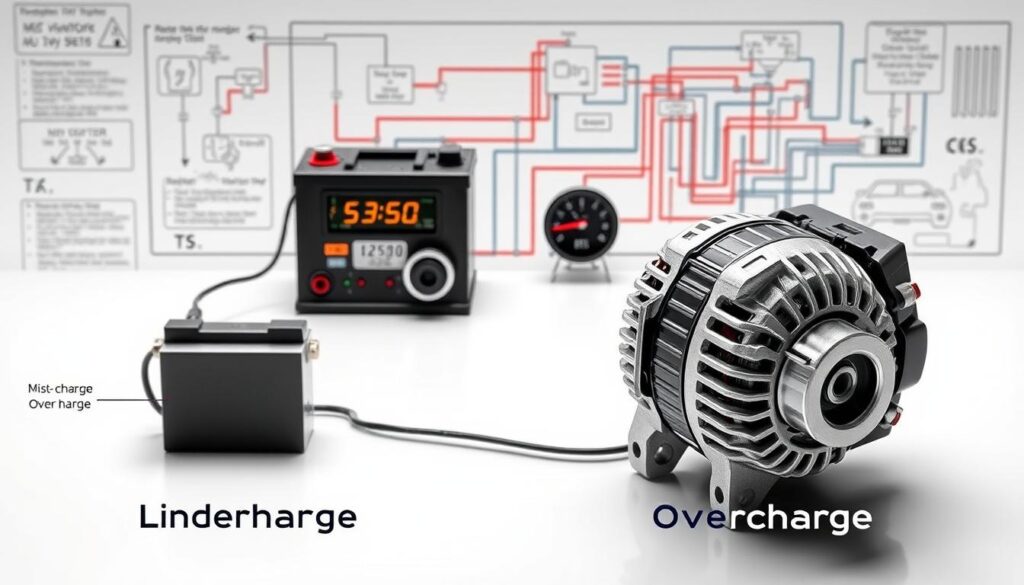
Real-world charging faults show up on the road first. A clean undercharge or overcharge diagnosis starts with what the driver reports and what the dash shows, then ties those clues to meter data gathered under load. Look for patterns and verify with instruments before swapping parts.
Recognizing Undercharge Symptoms
Undercharge often means dim headlamps, a slow crank on cold starts, and a steady battery light. Fans may lag, and the radio may cut out when the liftgate or HVAC loads rise. Common causes include low idle speed, loose belts, corroded connections, excessive voltage drop, deteriorated batteries, or a weak alternator.
Recognizing Overcharge Symptoms
Overcharge tends to push lights beyond normal brightness, sometimes burning bulbs and spiking the dash voltmeter. You may smell sulfur near the batteries or feel excessive case heat. Overcharging typically tracks back to a stuck internal or external regulator.
Decision Points for Repair vs. Replacement
If testing shows excessive wiring voltage drop, prioritize cable repair and clean, tight grounds. When voltage spikes or hunts, plan regulator service after confirming the sense circuit and battery health. When the unit cannot meet spec even with proper belt tension and clean circuits, alternator replacement is the practical path. Match the rated output to real accessory loads to avoid repeat issues. Per 49 CFR Part 396, motor carriers must ensure all commercial motor vehicles are properly inspected, maintained, and repaired.
The HDJ Perspective
In our conversations with fleet maintenance directors across the country, one theme emerges consistently: data-driven diagnostics pay for themselves. Shops that follow a systematic alternator testing protocol—batteries first, then wiring, then the unit itself—report fewer comebacks and more accurate first-time repairs. As trucks become more dependent on stable electrical systems for telematics, ELDs, and advanced safety features, mastering charging system diagnostics separates high-performing maintenance operations from those chasing intermittent failures.
Best Practices for Fleet Preventive Maintenance
Strong fleets treat electrical care as a daily habit. Emphasize preventive maintenance that guards charge health, protects wiring, and documents results. Pair routine checks with disciplined records to support warranty claims and trend analysis across routes and seasons.
Prevent deep discharge during storage or PTO work. Keep batteries from falling near 10 volts to avoid high cranking currents, low voltage events, starter overheating, and cable damage. Smart battery management keeps trucks ready at first key-on. Monitor state of charge with a quality voltmeter at the posts and recharge by chemistry—Flooded, AGM, or TPPL AGM.
Build an alternator PM cadence. Run end-of-use voltage and amperage tests rather than trusting dash icons alone. Confirm output against the unit’s rating and your route load profile to cut roadside calls. Clean grounds, tighten lugs, and check loom integrity. Schedule voltage drop inspections under load to catch rising resistance before it cooks connectors or strands a driver.
Inspect belt condition and tension regularly. Verify idle speed using service software so charge output holds steady at docks and lights. Slipping belts and low idle rob both voltage and current when accessories spike. Equip shops with a digital voltmeter, a clamp-on ammeter, and an appropriately rated carbon pile. Back the tools with annual training so technicians stay sharp on modern smart regulators and multiplexed systems.
Follow sequence discipline: batteries first, then wiring and connections, then alternator and regulator. This flow avoids unnecessary replacements and isolates root causes fast. Track results against alternator nameplate ratings and duty cycles. Keep service parts and a small stock of matched alternators from trusted brands to minimize downtime. The Fleet Maintenance article on battery maintenance reinforces that following TMC RP 129A every three months helps ensure optimal performance and catches issues before they cause breakdowns.
Share Your Alternator Testing Expertise
Are you a fleet maintenance professional or diesel technician with proven charging system diagnostic methods? Heavy Duty Journal welcomes contributions from industry experts.
Frequently Asked Questions
What components make up a heavy-duty charging system on commercial vehicles?
A typical system includes multiple batteries (often three to four, up to eight), the alternator, starter, magnetic switch or solenoid, ignition switch, and interconnecting wiring and grounds. The alternator contains a rotor, stator, rectifier, and regulator. Proper system matching and the correct wiring gauge are critical to avoid excessive voltage drop and charging complaints.
What voltage range should a heavy-duty alternator produce?
A healthy alternator should produce between 13.8 and 14.5 volts at the B+ terminal with the engine running and accessories off. Readings above 15 volts indicate possible regulator overcharge, while readings below 13 volts at 2,000 rpm suggest wiring, belt, or alternator faults. The voltage drop from alternator to battery terminals should not exceed 0.5 volts.
Why isn’t the dash voltmeter sufficient for diagnosing charging issues?
Instrument cluster gauges can be inaccurate and only show voltage trends. Accurate diagnosis requires a handheld digital voltmeter and a clamp-on ammeter to verify both voltage and current under load. Dash lights can miss wiring losses or low amperage output that a proper diagnostic sequence would catch.
What safety precautions apply when testing heavy-duty alternators?
Never ground test equipment to the alternator housing—use a clean chassis or battery negative. Never disconnect the battery with the engine running except in emergencies, as this can spike ECUs with damaging voltage surges. Wear appropriate PPE, control test loads to avoid spikes, and observe proper polarity to protect electronic modules.
How often should fleets perform charging system preventive maintenance?
Industry best practices recommend following TMC RP 129A guidelines every three months. This includes verifying resting state of charge by battery chemistry, performing alternator B+ voltage tests, and running an amperage verification under carbon pile load. Record results against the alternator’s rated output to spot trends before failures occur.
What causes low alternator amperage even when voltage looks normal?
Common causes include a slipping drive belt, low idle speed, poor grounds, corroded connectors, or excessive voltage drop in the wiring. If these are corrected and current still lags behind the rated output, the alternator or regulator may be failing. Always verify the root cause with systematic testing before replacing components.
Make Alternator Testing Part of Your Fleet Diagnostic Routine
Effective alternator testing ties the full diagnostic procedure into a clear, repeatable plan for a reliable fleet charging system. Start with healthy batteries and a verified state of charge, confirm clean grounds and tight belts, then move to voltage and amperage verification. Measure at the B+ terminal to a proper engine ground—not the housing—and aim for 13.8–14.5 V with the engine running. Compare alternator and battery posts; a drop of 0.5 V or less shows strong wiring health.
Load the system with a carbon pile and hold 1,500–2,000 rpm. Use a clamp meter to confirm current output approaches the unit’s rated capacity. If amperage falls short, step through the root-cause path: battery condition, cables and grounds, belt slip and RPM, then regulator and alternator internals. This approach prevents guesswork and points to the exact fix.
Apply this method across your fleet to cut roadside failures, shorten shop time, and extend component life. With disciplined alternator testing and a logical diagnostic sequence, you safeguard uptime and keep a reliable fleet charging system delivering on every route.
Found This Alternator Testing Guide Useful?
Share this step-by-step diagnostic protocol with your maintenance team and fellow fleet professionals to help reduce charging-related breakdowns industry-wide.