
By Michael Nielsen, Publisher | 15+ Years in Diesel Repair
Last Updated: September 2026
⏱ Estimated reading time: 12 minutes
Fleet maintenance software has quietly changed shape over the past year. The category used to mean digitizing a paper system — schedule PM by mileage, log the work order, track the invoice. What's shipping now is something closer to a decision engine: platforms that read fault codes as they happen, decide whether a truck needs to come in today or can wait, and generate the work order before a human ever looks at the data.
Heavy Duty Journal tracked this shift through Motive's product roadmap specifically, since the company launched a dedicated Maintenance product in 2026 and followed it within months with AI-powered "Automations" and an agentic-AI framing for the same data.
It's a useful lens for the industry-wide trend precisely because the timeline is so compressed — a case study in how fast "AI-driven maintenance" moved from marketing language to an actual product category. Michael Nielsen and HDJ's editorial team have covered fleet telematics extensively — see HDJ's fleet telematics orientation guide for how this maintenance layer fits into the broader telematics stack it depends on.
Key Takeaways
- ✓The real shift isn't "AI" as a feature — it's software moving from collecting data to acting on it: triaging fault codes, generating work orders, and scheduling service without a human in the loop for routine cases.
- ✓Predictive maintenance now means analyzing telematics and fault-code patterns continuously, not just flagging a code once it's already active.
- ✓Vendor-reported adoption numbers are directional, not audited — treat any single vendor's savings claim as a hypothesis to test against your own fleet, not a guaranteed outcome.
- ✓Automated triage reduces the labor cost of the busywork around maintenance — chasing fault codes, building work orders, processing invoices — more than it reduces the maintenance itself.
- ✓Integration depth — whether the platform actually connects telematics, parts, and work orders into one system — matters more to real-world ROI than any specific AI feature on its own.
In This Guide
- What's Actually Changing in Fleet Maintenance Software
- Predictive Maintenance: Reading the Data Before the Breakdown
- Automated Work Orders and the End of the Manual Handoff
- Inside an AI-Driven Platform: What Changed in One Product Cycle
- The Real Cost of Not Automating
- What Shops and Fleets Should Actually Look For
- Frequently Asked Questions
What's Actually Changing in Fleet Maintenance Software
Fleet maintenance software has always done three things: track vehicle and asset health, schedule preventive service, and manage the repair workflow — work orders, parts, invoices. What's new isn't the category. It's how much of that workflow now runs without a person actively driving it.
The mechanism is fault-code triage. A modern platform doesn't just log a code and wait for someone to notice it — it classifies severity, drafts a plain-language explanation of what the code means, and recommends (or in some configurations, initiates) a next step.
Motive frames this explicitly as a shift "from reactive to proactive" in its own product marketing for the Automations feature it shipped in May 2026, and the framing is accurate as far as it goes: the software is doing triage work a maintenance coordinator used to do by hand, at a speed no human triage process can match.
The second, less-discussed change is data-silo elimination. Motive's own description of its Maintenance product draws the distinction directly: traditional fleet software tracks location, safety, and compliance, while a maintenance-specific layer has to extend onto the actual shop floor — work orders, parts inventory, invoice capture, repair-cost accounting.
Combining both into a single system of record, rather than two systems a fleet manager has to reconcile by hand, is arguably the more durable improvement of the two, independent of how good the AI layer on top of it turns out to be.
Predictive Maintenance: Reading the Data Before the Breakdown
"Predictive maintenance" has been a marketing phrase in this industry for years, often describing nothing more than a slightly smarter mileage interval. What's shipping now is closer to the original promise of the term. Rather than relying on fixed mileage or calendar dates, current platforms continuously analyze telematics and diagnostic data — odometer readings, engine hours, DVIR defects, fault-code patterns — to flag developing problems before they trigger a check-engine light.
Motive's own maintenance roadmap material describes availability and downtime tracking that automatically blocks a vehicle marked out-of-service from being assigned to a driver until the flagged issue is resolved — a small feature, but one that shifts the software from advisory to load-bearing in the operational workflow.
The DVIR defect data feeding these systems is the same data 49 CFR 396.13's pre-trip inspection requirements already mandate drivers capture — automation's contribution is routing that data to the right person faster, not creating a new compliance obligation. HDJ's own diesel engine maintenance schedule guide covers the interval side of this in full detail — the point worth adding here is that condition-based triggers are increasingly replacing, not just supplementing, the fixed-interval baseline that guide describes.
This is also where the "agentic AI" framing several vendors have adopted in 2026 actually earns its name, rather than functioning as a buzzword. The distinguishing claim isn't that AI reads sensor data — dashboards have done that for years — it's that the software closes the loop from insight to action: recommending or scheduling service automatically, combining maintenance needs with technician availability and shop capacity, rather than surfacing a report and waiting for someone to act on it.
Automated Work Orders and the End of the Manual Handoff
The most concrete productivity claim in this category is around the handoff between "something's wrong" and "a technician has a work order in hand." Manually, that handoff involves someone reading a fault code, deciding it's real, writing up the issue, checking parts availability, and assigning it to a bay — five separate decisions, each one a place for a truck to sit idle a little longer than it needs to.
Automated triage compresses that into one step: the platform reads the fault code, assigns severity, drafts the explanation, and generates the work order in the same motion.
Motive's own materials estimate that organizations collectively spend on the order of hundreds of millions of hours annually on tasks that automation could handle, and put a multibillion-dollar figure on the downtime, idling, and compliance costs tied to manual, reactive processes — figures worth treating as a vendor's own framing of the problem it's selling a solution for, not an independently audited number, but directionally consistent with what shows up in HDJ's own coverage of preventive maintenance economics.
$448–$760
Average daily cost per vehicle of unplanned fleet downtime, per ATRI's Operational Costs of Trucking research — the independent benchmark against which any automation vendor's savings claim should be measured.
Invoice processing is the other place automation shows up concretely. AI-assisted invoice capture — reading a repair invoice, matching it to the work order, flagging discrepancies — targets a specific, chronic back-office cost: reconciling third-party shop invoices against what was actually authorized. It's a narrower win than predictive maintenance itself, but it's also one of the more reliably delivered ones, since it doesn't depend on model accuracy the way fault-code severity classification does.
Inside an AI-Driven Platform: What Changed in One Product Cycle
Motive's timeline is a useful illustration of how fast this category is moving, precisely because the steps are so close together. The company launched a dedicated Maintenance product as its own system within the broader platform — not a bolt-on feature — extending its existing telematics and compliance tools onto the shop floor for the first time.
Within months, it followed with "Automations," a workflow layer letting fleets define triggers and outcomes so routine issues get handled — an alert, a message, a scheduled service — without a manager initiating each one by hand.
The next step in that same sequence was framing the underlying technology explicitly as "agentic AI" — language meant to distinguish a system that takes action from one that just surfaces a report. Whether "agentic" turns out to be a durable technical distinction or the current cycle's preferred marketing term is genuinely unclear this early — but the underlying capability it's describing (automated triage, automated scheduling, automated invoice handling) is concrete enough to evaluate on its own merits regardless of what label the industry eventually settles on.
What this compressed timeline suggests for any fleet evaluating a platform in 2026: the specific AI feature set you see in a demo today will likely look dated within a year. The more durable question is whether the platform's underlying data architecture — does it actually unify telematics, parts, and work orders, or is the AI layer sitting on top of the same disconnected systems HDJ's fleet maintenance software integration guide describes fleets struggling with — is sound enough to keep benefiting from whatever AI capability ships next.
For a maintenance coordinator, the shift shows up less as a new screen to learn and more as a change in what the job actually is. The old workflow started with a fault code and ended with a technician — the coordinator's job was everything in between: reading the code, deciding if it was real, finding a bay, writing it up. The new workflow starts with a recommendation already drafted, a severity already assigned, and a work order already routed. What's left for a person to do is judgment — does this recommendation actually make sense for this truck, this route, this week's shop capacity — a narrower job than triage used to be, but a harder one to get wrong, since there's no longer a manual step standing between a bad call and a technician acting on it.
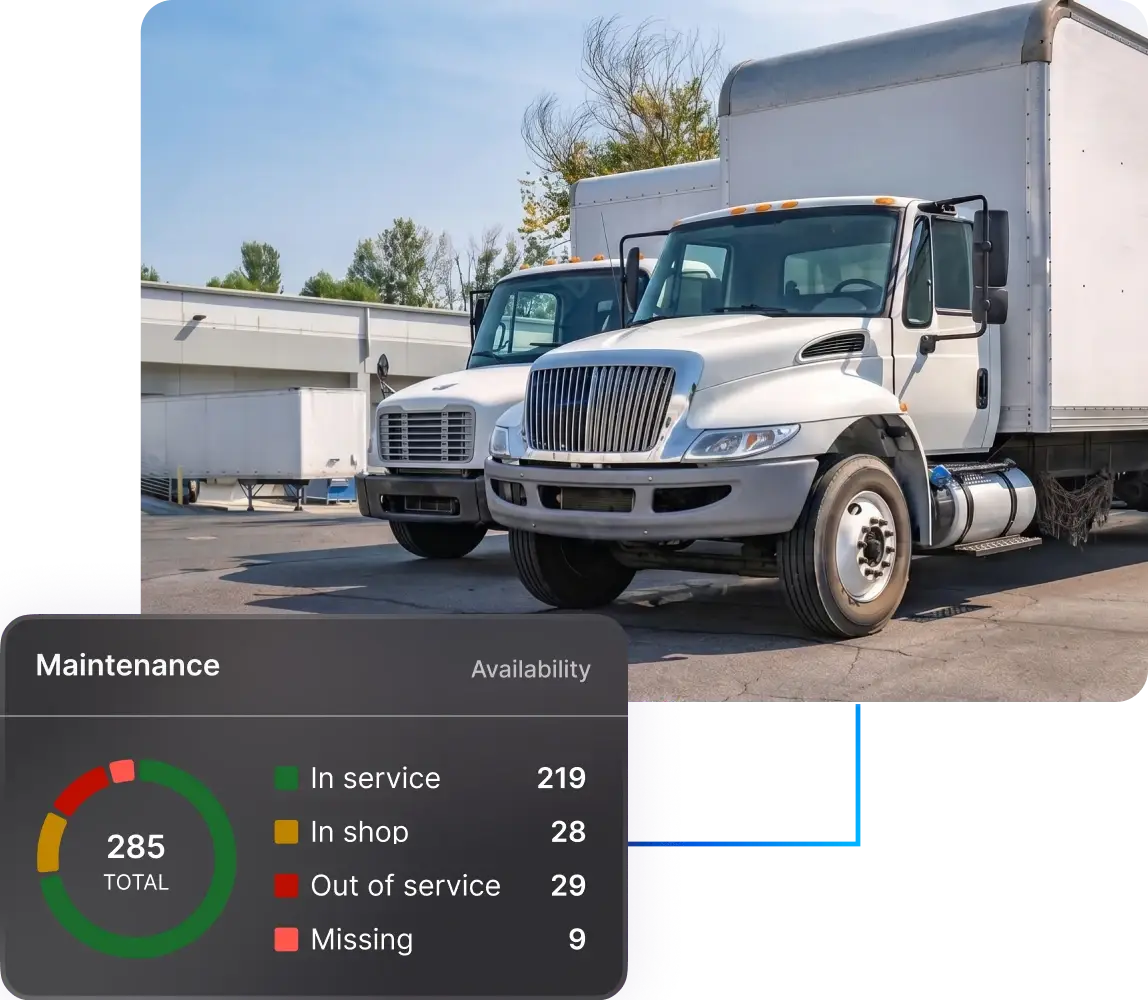
The coordinator's role shifts from generating triage decisions to reviewing and approving ones a platform has already drafted.
The Real Cost of Not Automating
The economic case for automation in this category isn't really about the maintenance itself — good technicians have always been able to fix a truck once they know what's wrong with it. It's about the time between "something is wrong" and "a technician knows about it and has what they need to act."
Every hour in that gap is an hour a truck sits that didn't need to, and it's an expensive hour to waste given that Bureau of Labor Statistics wage data puts skilled diesel technician labor at a premium most shops can't afford to spend on triage busywork instead of actual repair.
The Technology & Maintenance Council's Recommended Practices have documented for years that fleets running disciplined preventive maintenance consistently report lower total maintenance costs than fleets relying primarily on reactive repair — the mechanism automation targets is simply making "disciplined" easier to sustain at scale, since it no longer depends entirely on a coordinator remembering to check a dashboard. HDJ's how AI improves diesel diagnostics guide covers the shop-floor side of this same shift for readers evaluating diagnostic tools specifically, rather than fleet-level software.
The counter-risk worth naming honestly: automation that fires too many low-confidence alerts creates its own cost, in the form of alert fatigue that makes technicians start ignoring the system entirely — the same dynamic that undermines poorly tuned AI dashcam programs. A platform's real value isn't how much data it processes; it's whether the alerts it surfaces are worth a technician's attention often enough that they keep paying attention to begin with.
What Shops and Fleets Should Actually Look For
Given how fast the specific feature set is changing, evaluating a platform on today's AI capability list is a weaker approach than evaluating its fundamentals. Ask whether telematics, parts inventory, and work orders genuinely share one data model, or whether "integration" means a nightly data sync between separate systems — the difference determines whether next year's AI features actually have clean data to work with.
Ask for the false-positive rate on automated alerts, not just the detection rate — a platform that catches everything but buries technicians in noise isn't actually saving anyone time. Cross-reference vendor claims against independent user feedback on platforms like G2's fleet management category rather than relying solely on the demo — real users are usually more candid about false-positive rates than a sales deck.
Ask what happens when the AI is wrong: is there a fast, low-friction way for a technician to correct a misclassified fault code, or does overriding the system take longer than just doing the triage manually?
And ask specifically how invoice and cost data flows back into reporting — the back-office savings from automated invoice processing are real, but only if the fleet's own accounting workflow is actually set up to receive that data automatically rather than requiring a manual export step that recreates the exact bottleneck the feature was supposed to remove.
Frequently Asked Questions
What does "AI-driven" actually mean in fleet maintenance software?
In practice, it means the software classifies and acts on fault codes rather than just logging them — triaging severity, drafting an explanation, and generating a work order automatically. It's an automation layer on top of telematics data the platform was already collecting, not a fundamentally new data source.
Is predictive maintenance the same thing as condition-based maintenance?
They're closely related but not identical. Condition-based maintenance triggers service from current sensor readings; predictive maintenance goes a step further, using historical patterns to forecast a failure before current readings would flag it. Most 2026-era platforms blend both approaches.
Should I trust a vendor's own ROI numbers for AI maintenance features?
Treat them as directional, not audited. Vendor-reported figures describe the problem the product is built to solve, not a guaranteed outcome for your specific fleet. Weigh them against independent benchmarks like ATRI's operational cost data, and validate any claim against your own before-and-after numbers once deployed.
What's the biggest risk with automated fault-code triage?
Alert fatigue. If the system generates too many low-confidence flags, technicians start ignoring it entirely, and the automation stops adding value. Ask for false-positive rates specifically, not just detection accuracy, when evaluating a platform.
Does this replace the need for integrated telematics and work-order systems?
No — it depends on it. AI-driven triage is only as good as the data feeding it, which means the underlying integration between telematics, parts, and work orders matters more to long-term value than any single AI feature on top of it.
Where This Leaves Fleet Maintenance Buyers
The genuine shift in fleet maintenance software isn't a single feature — it's software crossing the line from reporting problems to handling the routine parts of solving them. That's a real, useful change, and it compounds: every fault code triaged automatically, every work order generated without a manual step, every invoice matched without a spreadsheet is an hour a coordinator gets back for the decisions that still need a person.
It's also a category still moving fast enough that today's feature comparison will look incomplete within a year. Evaluate the data architecture underneath the AI layer, ask vendors to show false-positive rates rather than just detection wins, and treat any single vendor's savings claim as a hypothesis to test against your own fleet's numbers — the fundamentals Michael Nielsen and HDJ's editorial team have covered across HDJ's maintenance and telematics guides for years still decide whether the AI on top of them actually pays for itself.
Evaluating Maintenance Platforms This Year?
Share this with whoever's about to sit through a vendor demo — the questions to ask matter more than any single feature on the slide.


