
By Michael Nielsen, Publisher | 15+ Years in Diesel Repair
Last Updated: September 2026
⏱ Estimated reading time: 13 minutes
Buying a used tool truck means purchasing a purpose-built mobile sales vehicle — typically a box truck or step van outfitted with custom shelving, display fixtures, point-of-sale hardware, and route management equipment — from a dealer who is exiting or scaling back their franchise territory. Done right, buying used rather than new can reduce startup costs by $50,000 to $150,000 compared to a fully equipped new unit while still delivering a road-ready, customer-facing vehicle.
Done wrong, it means inheriting a truck with a compromised chassis, outdated electrical systems, failing climate controls, or shelving configurations that don't match your product mix — all problems that drain cash flow before you've made your first route stop.
The difference between those two outcomes comes down to knowing exactly what to inspect, what questions to ask the seller, and what deal terms to negotiate before you sign anything. Heavy Duty Journal built this guide to cover each of those areas in the sequence you'll encounter them during the buying process on heavydutyjournal.com.
Key Takeaways
- ✓Engine hours matter more than miles on city-route tool trucks — a truck with 80,000 miles but 12,000 engine hours has been worked much harder than the odometer suggests.
- ✓The body is the business: inspect shelving, electrical systems, climate control, and flooring as seriously as you inspect the chassis — body repairs are expensive and downtime kills route momentum.
- ✓Get the route history, not just the vehicle history — how many customers were active on the route, what weekly paid sales averaged, and why the current owner is selling all matter as much as any mechanical detail.
- ✓A pre-purchase inspection by an independent diesel mechanic is non-negotiable — a few hundred dollars for a third-party inspection is trivial against the risk of a hidden powertrain problem.
- ✓Verify franchise brand approvals before finalizing any purchase — buying a tool truck body without confirming it meets the brand's current specifications for your territory can void your franchise agreement before you start.
In This Guide
- Why Mechanics and Route Dealers Buy Used Tool Trucks
- Start With Budget Reality, Not Wishful Thinking
- Chassis Inspection: What to Check Before the Body
- Body Inspection: The Business Is in the Box
- Vehicle History and Documentation
- Third-Party Inspection: Non-Negotiable Before Commitment
- Franchise Brand Approval: Confirm Before Committing
- Where to Find Used Tool Trucks for Sale
- Negotiating the Purchase Price
- Conclusion
- Frequently Asked Questions
Why Mechanics and Route Dealers Buy Used Tool Trucks
The used tool truck market exists for two distinct buyer categories, and understanding which one you are shapes the entire buying process. The first is a prospective franchise dealer — someone entering the Snap-on, Matco, Mac Tools, or Cornwell franchise system and looking to reduce startup costs by acquiring an existing vehicle rather than ordering a new unit.
The second is an independent mobile tool or service operator — a diesel mechanic, mobile welder, or specialty tool distributor who wants the infrastructure of a purpose-built mobile vehicle without the franchise system's brand and territory requirements.
For franchise candidates, the used tool truck path can compress startup timelines significantly. New franchise vehicles typically involve a custom build order, a production lead time, and a delivery window that can push the first route stop months into the future. A used truck already in the territory — already known to mechanics at shops along the route — can be route-ready within weeks.
The franchise brand's approval process is the key variable: all four major franchise systems require that a vehicle meet their current specifications and pass a brand inspection before it can be approved for franchise use. That approval step is not a formality, and it should be confirmed with the franchisor before any purchase commitment is made.
For independent operators, the used market offers access to purpose-built tool truck infrastructure — integrated shelving, electrical systems, security, and load capacity — that would cost far more to fabricate from scratch on a bare chassis. A well-maintained used tool truck body from a departing franchise dealer often includes display fixtures, pegboard systems, and drawer configurations that took the previous owner years to refine.
The vehicle serves the independent operator's needs whether they're distributing hand tools, operating a mobile mechanic service, or building a specialty equipment business that requires organized mobile storage and a professional customer-facing presentation.
Start With Budget Reality, Not Wishful Thinking
Before evaluating any specific vehicle, establish your total acquisition budget — and separate that number from your operating budget. A tool truck purchase that consumes your entire available capital leaves nothing for initial inventory, the time payment reserve account that franchise systems require, fuel, insurance, licensing, and the 60-to-90-day runway before route revenue stabilizes. Experienced franchise dealers consistently identify undercapitalization as the primary reason new route operators struggle in their first year — not product quality, not territory size, and not competition from other brands.
Used tool truck prices vary widely based on vehicle age, chassis brand, mileage, body condition, and how much purpose-built equipment is included. A ten-year-old unit with high miles and basic shelving may sell for $25,000–$40,000. A four-year-old truck with low hours, a functional POS system, climate-controlled body, and complete display infrastructure can command $80,000–$120,000 or more. Budget for the inspection, any identified repairs, registration, insurance binding, and brand approval fees before counting your net available working capital.
Chassis Inspection: What to Check Before the Body
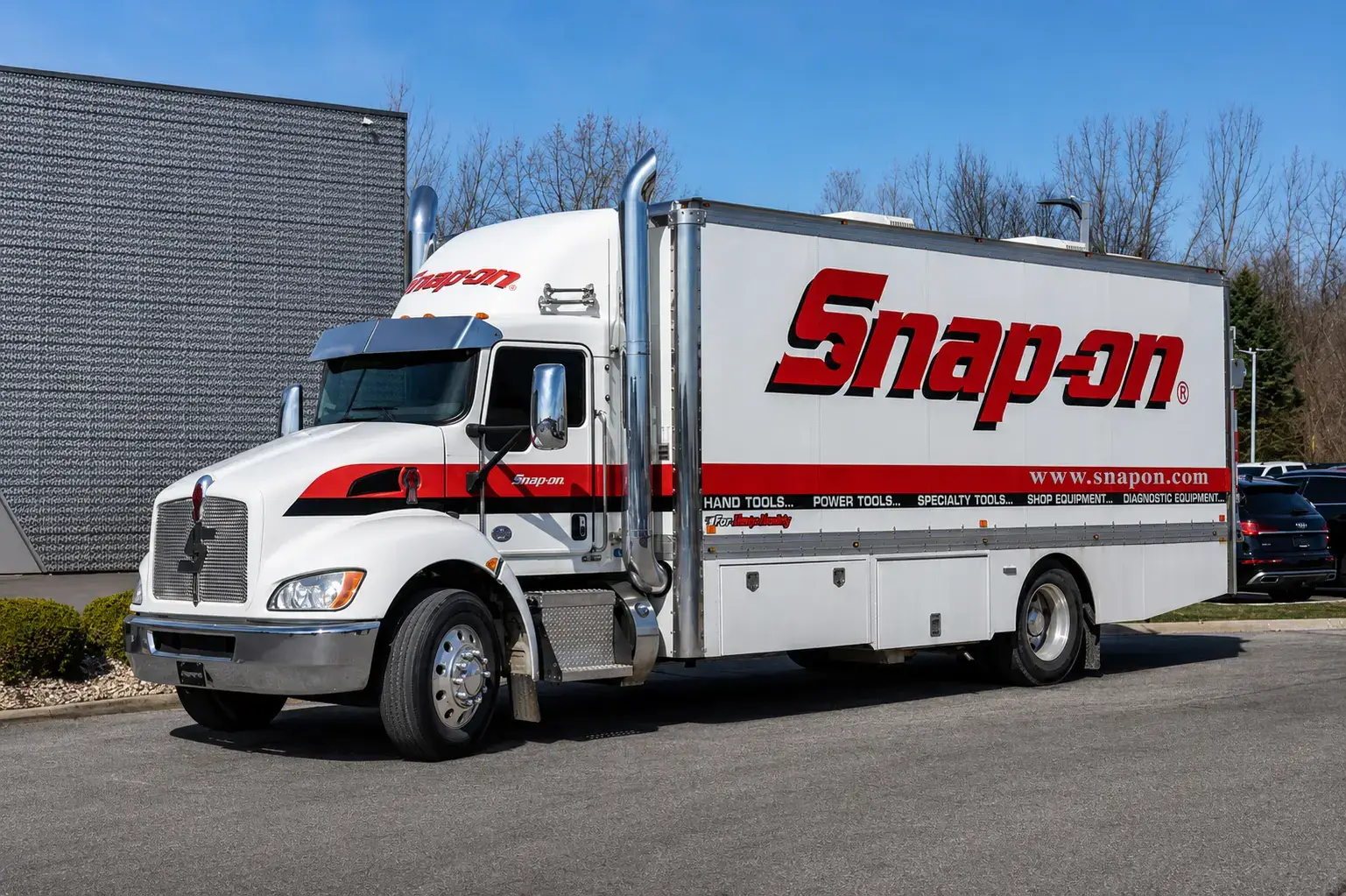
Tool trucks are built on commercial medium-duty chassis — most commonly Ford E-Series, Ford Transit, Freightliner MT-55, Workhorse, or Isuzu NPR platforms. The chassis is the foundation everything else depends on, and it is where inspection begins. A beautiful body on a compromised chassis is a money pit. A rough body on a solid chassis is a renovation project with a known endpoint.
Engine Hours vs. Miles
On a tool truck running city routes — short stops every few minutes, constant idling for body climate control, frequent cold starts — engine hours are a more accurate indicator of wear than miles. A truck covering a dense suburban route may log 15 miles of driving but three hours of engine operation per day. Always ask for engine hours from the hour meter or ECM data, not just the odometer reading.
A truck with 70,000 miles but 9,000 engine hours has been worked significantly harder than the odometer alone would suggest.
Frame and Undercarriage
Put the truck on a lift and inspect the frame rails from front to rear. Look for cracks, welds, or repairs that indicate prior overload damage — tool truck bodies are heavy, and operators who run overweight damage frame rails in ways that are not visible from the ground. Check crossmembers, outrigger brackets, and body mount points for rust-through.
Surface rust is cosmetic. Structural rust — pitting into the frame steel or perforated crossmembers — is a deal-breaker or a price negotiation point that needs to reflect actual repair cost.
Brakes, Suspension, and Steering
City route trucks are hard on brakes. Drum brake linings and rotors on a tool truck making 100+ stops per day wear faster than highway vehicles. Check remaining lining thickness, inspect drums and rotors for heat cracking, and test the parking brake function. Check wheel bearings by rocking each wheel at 12 and 6 o'clock — any play indicates worn bearings that need replacement.
Inspect shock absorbers for leaking seals. Check tie rod ends and ball joints for play by having someone turn the steering wheel while you watch the linkage from underneath. These are not difficult inspections for anyone with diesel shop experience, but they catch expensive problems before a purchase commitment.
The NHTSA VIN decoder is a free tool that reveals open safety recalls on any vehicle before you buy. Running the VIN takes two minutes and can surface issues the seller may not disclose — or may not know about. If open recalls exist, confirm whether they have been completed or whether parts are available and the repair is straightforward before factoring them into your offer.
Cooling System
Run the engine to full operating temperature and watch the temp gauge behavior, check for coolant seepage around hoses and the water pump, and observe whether the cooling fans cycle correctly. A tool truck engine that runs body HVAC while idling all day is genuinely harder on cooling systems than most commercial vehicles, and that wear is most pronounced during hot-weather months when the HVAC load runs longest.
Deferred coolant maintenance is one of the most common hidden problems in used tool trucks — check coolant freeze protection with a refractometer and inspect hose condition for cracking and soft spots.
$108K–$383K
Total investment range for a new Matco Tools franchise, per Matco's own published franchise cost breakdown. Used truck acquisition can meaningfully compress this figure — provided the vehicle is inspected and approved before purchase commitment. Source: matcotools.com franchise investment page.
Body Inspection: The Business Is in the Box
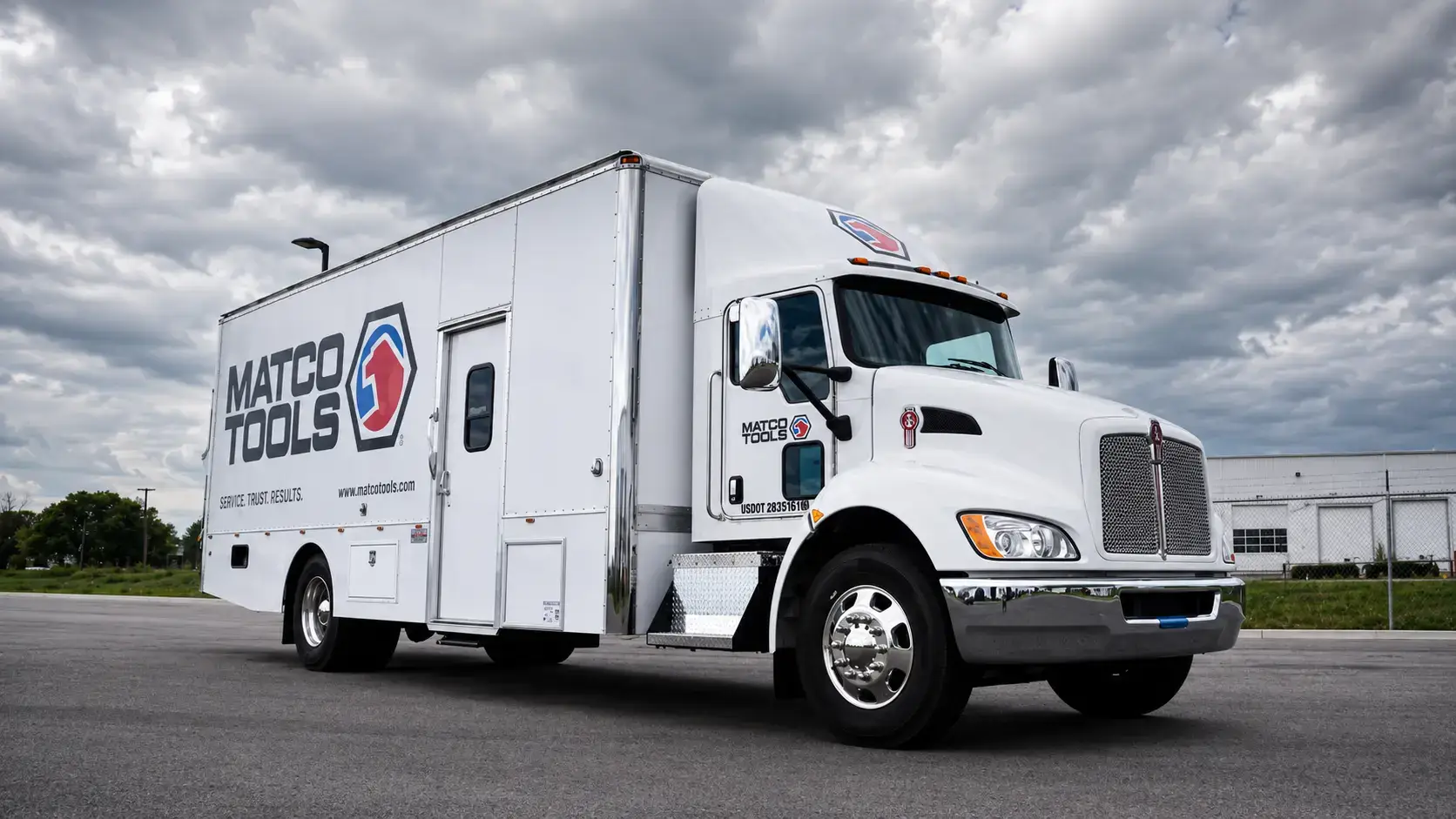
The tool truck body — the custom-built cargo compartment mounted to the chassis — is where a franchisee's daily business life happens. A mechanic looking at a tool truck for the first time tends to spend time under the hood and not enough time inside the box. Reverse that priority. The body components that require inspection are: flooring, shelving and display systems, electrical infrastructure, HVAC and climate control, security, and lighting.
Flooring
Tool truck floors take abuse from heavy rolling tool cabinets, dropped impact wrenches, and years of foot traffic from mechanics climbing in and out with greasy boots. Check the flooring material — most truck bodies use vinyl composite, aluminum diamond plate, or wood underlayment with a surface covering. Press firmly on the floor surface at multiple points, especially near the edges and near cabinet anchor points.
Soft spots or flex indicate deteriorated underlayment or compromised structural support. Check that floor anchors for display cabinets are solid — stripped or wallowed-out mounting points mean the anchor system needs replacement, and improperly secured cabinets are both a safety hazard and a CVSA inspection concern.
Shelving and Display Configuration
Shelving represents a significant portion of the body's value. A truck with well-configured, branded display shelving appropriate to the franchise system's current product lineup has immediate usable value. A truck with an outdated, poorly organized, or damaged shelving system may require a complete interior reconfiguration — a cost that can run $5,000–$15,000 for professional rebuilds.
Check that shelf brackets are secure, that pegboard surfaces are intact, that display lighting functions, and that overhead cabinets open and close without binding. Note which elements are specific to the previous dealer's brand (branded signage, brand-colored panels) and which are neutral infrastructure you can repurpose regardless of your franchise affiliation.
Electrical Systems
A tool truck body runs an electrical load that most mechanics underestimate. Fluorescent or LED lighting throughout the box, interior outlet circuits for POS equipment and diagnostics, external power connections, inverter or shore power systems, and the body HVAC draw significant current continuously. Inspect the wiring under shelving and behind panels for signs of amateur modification — electrical gremlins in tool truck bodies are common because previous owners frequently add circuits without following proper wiring practices.
Look for exposed splices, bypassed fuses, and circuits that don't trace back to a labeled breaker. Test every circuit — lighting, outlets, HVAC blower, external power — before leaving the inspection.
Climate Control
Body HVAC is not a luxury on a tool truck — it is a customer experience requirement. A mechanic who climbs into a sweltering or freezing truck spends less time browsing and buys less. The body climate system typically operates independently from the cab HVAC, either from a dedicated rooftop unit or a split system drawing from a secondary generator or shore power connection.
Run the system at both heating and cooling settings and confirm the thermostat responds correctly. Check condition of the evaporator coil and confirm there are no refrigerant leak indicators (oil residue around fittings, frosting on lines). Replacing a body HVAC unit on a fully equipped tool truck is a $3,000–$6,000 job when parts and labor are combined.
Security Systems
A tool truck carries $50,000–$150,000 worth of inventory. Security is not a checkbox — it is a business continuity requirement. Inspect the rear door locks and side access panel locks for wear. Ask whether an alarm system is installed, and whether it is monitored or self-contained.
Check whether a GPS tracking system is present and confirm its subscription status. Some franchise brands include GPS monitoring as part of their dealer support infrastructure — ask the franchisor whether their program applies to the specific vehicle you're considering. An inventory loss event without adequate insurance and security is a cash-flow catastrophe for a new route operator.
Vehicle History and Documentation
Every used tool truck should come with a paper trail. Ask for maintenance records — oil change intervals, filter service, brake jobs, any major component replacements — and treat gaps in that documentation as red flags. A well-maintained tool truck has receipts. A neglected one has excuses. Run the VIN through NMVTIS (the National Motor Vehicle Title Information System) to check for title brands — salvage, flood, and lemon designations are not uncommon in the used specialty vehicle market.
Commercial vehicle history services including CARFAX provide accident and title history for medium-duty trucks using the VIN, and the modest cost of that report is well worth the protection it provides.
For franchise territory acquisitions, documentation extends beyond the vehicle itself. Ask for the previous dealer's sales data — weekly paid sales averages, active customer count, and extended credit outstanding. The FTC Franchise Rule requires that all four major franchise systems provide a Franchise Disclosure Document to prospective franchisees — Item 19 of that document contains financial performance representations from current dealers, which gives you a baseline against which to evaluate whether the seller's claimed route performance is realistic for its market.
Third-Party Inspection: Non-Negotiable Before Commitment
Regardless of how well you know diesel equipment, an independent pre-purchase inspection by a mechanic with no relationship to either buyer or seller is mandatory before finalizing a used tool truck purchase. Your own familiarity with diesel engines is an asset during the walkthrough phase — but your financial interest in finding a deal can unconsciously influence what you give weight to during that walkthrough.
A third-party inspector has no stake in the outcome. Their job is to find problems, document them in writing, and give you an accurate picture of the vehicle's mechanical condition.
The inspection should cover all systems: engine, transmission, cooling, brakes, suspension, steering, electrical (both chassis and body), HVAC, and structural integrity. A complete inspection from a commercial truck shop typically costs $200–$500 and takes three to four hours on a lift. That cost is immaterial compared to any single significant repair the inspection might identify — or might allow you to negotiate off the purchase price if identified before signing.
Never skip this step for any reason the seller offers — urgency, convenience, or claimed familiarity with the vehicle's history are not substitutes for an independent report. The CVSA North American Standard Inspection criteria provide a useful reference framework for what commercial vehicle inspectors look at during roadside inspections — the same categories that determine whether a vehicle is placed out of service. A used tool truck that would fail a Level I inspection is a commercial liability before it ever makes a route stop.
Used Tool Truck Pre-Purchase Checklist
- Engine hours: Pull from ECM or hour meter — not just odometer
- VIN check: Run through NHTSA recall database and NMVTIS title history
- Frame inspection: On a lift — check rails, crossmembers, body mount points
- Brakes: Lining thickness, drum/rotor condition, parking brake function
- Cooling system: Hose condition, coolant quality (refractometer test), fan operation
- Body electrical: Every circuit, outlet, and lighting system — tested individually
- Body HVAC: Both heat and cool modes — check for refrigerant leaks
- Flooring: Press test for soft spots, check cabinet anchor points
- Shelving: Structural integrity, bracket security, display lighting
- Security: Lock condition, alarm presence, GPS system status
- Maintenance records: Full service history or documented gaps
- Franchise approval: Written confirmation from brand before purchase commitment
- Independent inspection: Third-party commercial truck mechanic report
Franchise Brand Approval: Confirm Before Committing
If you are acquiring a used tool truck as part of entering or expanding a franchise territory, brand approval is not a step that happens after the purchase — it is a step that must be completed, or at minimum formally initiated, before you finalize the deal. All four major franchise systems (Snap-on, Matco, Mac Tools, and Cornwell) maintain vehicle specification requirements that determine whether a given unit can be approved for franchise use in their system.
Those requirements cover vehicle age, chassis type, body configuration, branded exterior graphics, and interior display standards.
A truck that was approved for one brand's franchise may not meet another brand's current specifications — and within the same brand, older vehicles may not meet current configuration standards even if they were approved at the time of original purchase. Contact your franchise development representative directly and get written confirmation of whether the specific vehicle you're considering is eligible for franchise approval before you spend money on an inspection or sign a purchase agreement.
This single step prevents the most costly possible outcome: a completed purchase on a vehicle your franchisor won't approve.
Where to Find Used Tool Trucks for Sale
The used tool truck market is thin by the standards of general commercial vehicle sales — these are purpose-built specialty vehicles, and finding one in the right configuration, at the right price, in a geographically relevant territory requires knowing where to look. General classifieds, auction platforms, and commercial truck dealers occasionally list tool trucks, but the inventory is inconsistent, descriptions are often incomplete, and sellers rarely understand the specialized nature of what they're selling.
Purpose-built platforms that focus exclusively on this vehicle category deliver better search outcomes because sellers are specifically motivated to reach buyers who understand the product. Browsing current tool truck listings for sale on a dedicated marketplace gives you access to verified sellers — departing franchise dealers, independent operators upgrading their fleet, and companies consolidating routes — with complete specs, photos, and seller contact information presented in a format that makes comparison straightforward.
In addition to dedicated listings platforms, the following channels are worth working in parallel: contact your target franchise brand's regional development team directly — they often know of dealers who are planning to exit before vehicles are publicly listed; attend regional franchise dealer meetings where route transfers are sometimes arranged informally; and ask within professional networks of working dealers, since route acquisitions within active franchise communities are frequently word-of-mouth before they hit any public marketplace.
Negotiating the Purchase Price
Used tool truck pricing is not standardized. Sellers price based on what they've heard other trucks sold for, what their original investment was, or what they need to cover their outstanding obligations — not necessarily on a systematic assessment of the vehicle's actual market value. That information asymmetry works in favor of a prepared buyer.
Your negotiating leverage comes from the inspection report. A written third-party inspection identifying $8,000 in deferred maintenance — brake work, cooling system service, body electrical repairs — is not just information. It is a documented basis for a $7,000–$10,000 price reduction request, with receipts available for every itemized repair. Sellers who resist adjusting the price in response to documented inspection findings are telling you something about how forthcoming they've been about the vehicle's history generally.
Financing a used tool truck through a lender familiar with specialty commercial vehicles typically yields better terms than general commercial vehicle financing. The American Transportation Research Institute (ATRI) documents that commercial vehicle operating costs are one of the largest financial pressures facing small fleet and owner-operator businesses — keeping the acquisition cost and financing structure sound from the start protects route profitability during the critical first year of operation.
Key Recommendation
Never finalize a used tool truck purchase without three things in hand: (1) a written third-party inspection report from an independent commercial truck mechanic, (2) written franchise brand confirmation of vehicle eligibility if you're entering a franchise system, and (3) a clear understanding of available operating capital after the purchase is complete. Any one of these missing at closing is a correctable oversight before signing and an expensive problem after.
Frequently Asked Questions
How much does a used tool truck cost?
Used tool truck prices range from approximately $20,000–$40,000 for older high-mileage units with basic configurations to $80,000–$130,000 for recent low-hour trucks with complete display infrastructure. Brand-new franchise builds typically start well above $100,000, so a well-maintained used unit can deliver comparable capability at meaningfully lower cost.
Can I buy a used Snap-on or Matco tool truck and use it independently without joining their franchise?
Yes. The vehicle itself isn't contractually tied to a franchise agreement once it changes hands. You can operate a former franchise truck as an independent distributor or mechanic service without affiliation, though you'll need to remove brand-specific graphics first. You just can't use the brand's name or product network without an active agreement.
What chassis brands are most common on used tool trucks?
Ford E-Series (older units), Ford Transit, Workhorse W-Series, Freightliner MT-55, and Isuzu NPR. Workhorse is worth specific due diligence — parts availability has become constrained. Ford Transit and Isuzu NPR enjoy stronger parts networks through standard commercial truck dealers.
How do I verify whether a used tool truck has any open recalls?
Run the VIN through the NHTSA VIN lookup tool at nhtsa.gov before making any purchase commitment. It's free, takes less than two minutes, and returns all open recalls with remedy information. If recalls exist, confirm with the manufacturer that the work has been completed on the specific unit.
What should I ask the seller before inspecting a used tool truck?
Ask for current engine hours, complete maintenance records, accident history, and why they're selling. For franchise territory sales, also ask about weekly paid sales averages, active customer count, and any outstanding extended credit balance. How readily these answers come tells you a lot about the seller's good faith.
Conclusion
Buying a used tool truck is one of the highest-leverage capital decisions a new or expanding route dealer can make. A well-chosen used vehicle at the right price delivers the operational foundation of a route business at a fraction of new-build cost. A poorly chosen vehicle — bought without a proper inspection, without franchise approval confirmation, or with more purchase price than available working capital — can end a route business before the first route cycle is complete.
The inspection framework, documentation requirements, and negotiating approach in this guide are designed to put you in the second category, not the first. Take your time, apply the checklist, get the independent report, and make sure the vehicle and the deal both hold up to scrutiny before you commit — a discipline Heavy Duty Journal returns to across its shop-business guides on heavydutyjournal.com.
Know a Dealer Who Could Use This Before They Buy?
If someone in your network is looking at tool trucks or thinking about starting a mobile route business, this guide covers the key inspection and negotiation steps they'll need before committing — pass it along before they write a check.


