
By Michael Nielsen, Publisher | 15+ Years in Diesel Repair
Last Updated: September 2026
⏱ Estimated reading time: 23 minutes
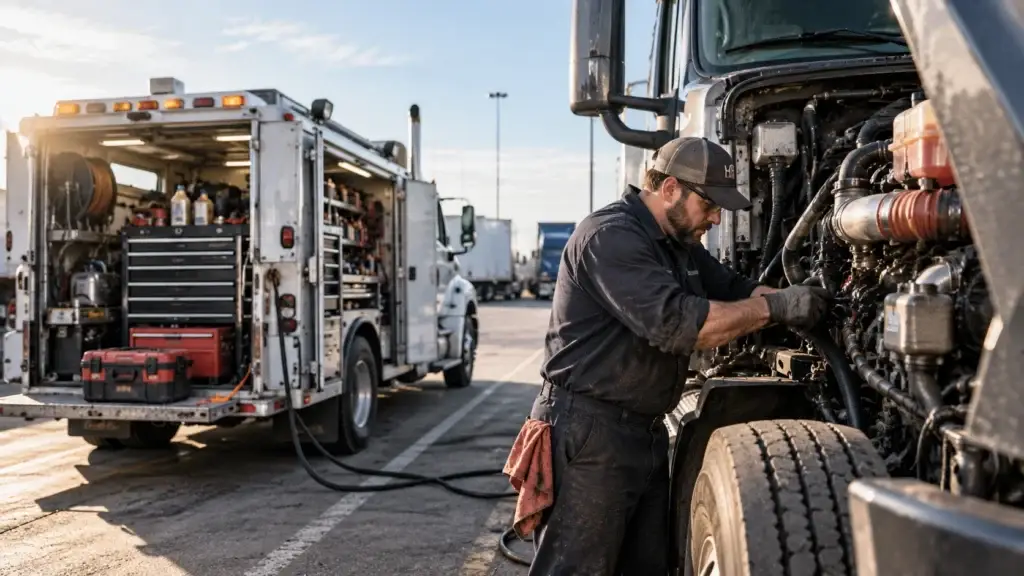
Starting a mobile diesel repair business offers qualified technicians a proven path to six-figure and seven-figure annual revenue. The commercial truck industry's persistent technician shortage — combined with fleet operators' desperate need for on-site service — creates an unprecedented opportunity for skilled mechanics ready to launch their own ventures.
Mobile operations command premium pricing because they eliminate what fleet managers fear most: downtime. Every hour a truck sits idle costs operators real money, making your ability to reach broken-down equipment worth far more than traditional shop rates. Lower overhead, flexible scheduling, and recurring fleet contracts translate into profit margins that brick-and-mortar operations struggle to match.
This comprehensive guide maps the journey from initial licensing to achieving $1M in annual revenue. You'll discover proven strategies for equipment acquisition, customer acquisition, and systematic scaling that experienced mobile operators have used to build thriving enterprises in America's essential commercial vehicle sector.
Key Takeaways
- ✓Profit advantage: Field service operations deliver higher margins than traditional shops due to reduced overhead and 20-40% premium pricing for on-site convenience.
- ✓Market demand: Fleet operators prioritize mobile technicians who minimize downtime, creating consistent demand and recurring revenue through maintenance contracts.
- ✓Startup investment: Launch costs range from $75,000 to $150,000 depending on new versus used equipment, with phased expansion approaches protecting working capital.
- ✓Revenue potential: Scaling to $1M annual revenue requires 4-5 service trucks generating $200,000-$250,000 each through commercial accounts and systematic operations.
- ✓Foundation essentials: ASE certifications, proper insurance ($1M-$2M coverage), and strategic business structure establish credibility with commercial clients from day one.
- ✓Technology integration: Field service management software for scheduling, invoicing, and inventory accelerates growth and professionalism.
In This Guide
- Understanding the Mobile Diesel Repair Market Opportunity
- Legal and Licensing Foundations
- Building Your Mobile Service Fleet and Essential Equipment
- Pricing Strategies That Maximize Revenue
- Customer Acquisition: Landing Your First 20 Commercial Accounts
- Operational Systems That Drive Efficiency and Profit Margins
- Scaling to Multiple Trucks and Technicians
- Revenue Milestones: Your Roadmap from Zero to $1M
- Financial Management for Sustainable Growth
- Frequently Asked Questions
Understanding the Mobile Diesel Repair Market Opportunity
Diesel-powered vehicles and equipment form the backbone of American commerce, creating constant demand for specialized repair services. Before investing your capital and time, you need clear insights into market size, customer profiles, and geographic hotspots that will shape your business trajectory.
Current Market Size and Growth Projections
The diesel repair market in the United States generates substantial annual revenue across commercial and industrial segments. Industry analysts project consistent growth of 3-4% per year through 2030, driven by expanding logistics networks and infrastructure development. The Bureau of Labor Statistics reports approximately 26,500 annual openings for diesel technicians, with most resulting from the need to replace workers who transfer occupations or retire.
Mobile repair services capture an increasing share of this revenue as fleet operators prioritize minimizing downtime. The average commercial truck experiences multiple roadside breakdowns annually, creating millions of service calls. Each incident costs businesses hundreds to over a thousand dollars in lost productivity, making on-site repair services highly valuable to operations that can't afford idle equipment.
High-Value Customer Segments: Fleet Operators and Construction Companies
Two customer categories deliver the highest profitability for mobile diesel repair businesses. Fleet operators with 10 or more vehicles require regular preventive maintenance and emergency repairs, generating predictable monthly revenue through service contracts. These accounts form the foundation of sustainable mobile operations.
Construction companies represent the second premium segment, operating dozers, excavators, and loaders that demand specialized knowledge. These clients typically need service every 150-200 operating hours and pay 15-25% premiums for on-site convenience. Equipment sitting idle on a job site costs project managers far more than a mobile service call.
| Customer Type | Average Service Frequency | Monthly Revenue Potential | Contract Likelihood |
|---|---|---|---|
| Regional Trucking Fleets | 2-3 services per vehicle/month | $2,800-$4,500 | High (70%+) |
| Construction Companies | 1-2 services per machine/month | $1,900-$3,200 | Moderate (45-60%) |
| Municipal/Government Fleets | 1.5 services per vehicle/month | $3,200-$5,800 | Very High (85%+) |
| Agricultural Operations | Seasonal peaks (3-5/month) | $1,400-$2,600 | Low (25-35%) |
Geographic Markets with Highest Demand
Location selection dramatically impacts your business trajectory. Industrial corridors near major highways and distribution centers offer the densest concentration of potential clients. Texas, California, Florida, and Pennsylvania lead in construction equipment repair demand due to ongoing infrastructure projects and high commercial vehicle registration counts.
Port cities like Houston, Los Angeles, and Savannah show particularly strong need for diesel technicians serving container transport fleets. Agricultural regions including the Central Valley and Midwest generate seasonal surges during planting and harvest periods. Markets with limited competition but substantial commercial activity provide the fastest path to establishing market dominance and premium pricing.
$448 – $760 per day
Average cost of unplanned truck downtime for fleet operators — a figure widely cited across the industry, tracing back to research from the Technology & Maintenance Council (TMC) of the American Trucking Associations.
Starting Your Mobile Diesel Repair Business: Legal and Licensing Foundations
Getting the legal groundwork right protects your mobile diesel repair business from costly compliance issues and liability exposure. Building a solid foundation requires three critical components: proper certifications, adequate insurance coverage, and the right business entity structure.
Professional Credentials That Build Customer Trust
Automotive Service Excellence certifications establish your credibility in the diesel repair industry. The most valuable credentials for mobile operations include the ASE Medium/Heavy Truck series: T2 for Diesel Engines, T3 for Drive Train systems, T4 for Brakes, and T8 for Preventive Maintenance. Master technician status requires passing T2 through T8, demonstrating comprehensive expertise to commercial clients.
State licensing requirements vary significantly across the country. Some jurisdictions require a master mechanic license, while others mandate specific mobile service permits. California represents one of the stricter states, requiring Bureau of Automotive Repair registration for mobile operations — including registering each service vehicle and maintaining records at a physical address. Research your state's specific requirements before launching.
Most diesel technician certification programs take six to twelve months to complete. You can obtain ASE credentials through testing centers nationwide, with each certification requiring both documented work experience and successful examination. These credentials differentiate serious professionals from unlicensed competitors.
Coverage That Protects Your Assets
Comprehensive mobile mechanic insurance protects your business from financial catastrophe. General liability coverage should start at $1 million to $2 million, protecting against property damage and bodily injury claims that could otherwise end your business. HDJ's heavy duty shop insurance guide covers coverage types and cost-reduction strategies in more depth than a startup checklist can.
Commercial auto insurance differs from personal coverage because it covers your service vehicle and equipment while conducting business operations. Garage keepers insurance provides additional protection when you have custody of customer vehicles for extended repairs.
Expect to pay between $3,000 and $7,000 annually for adequate coverage. Rates vary significantly by carrier based on your claims history and coverage levels, so shop multiple carriers annually rather than auto-renewing with the first policy you find.
Entity Selection for Tax Efficiency
Your diesel repair business structure impacts both liability protection and tax obligations. Limited Liability Companies offer simplicity and flexibility, making them ideal for new operations with revenues under $60,000 annually. The Small Business Administration provides detailed guidance on registering your business and selecting the appropriate structure for your state.
S-Corporation election becomes advantageous once your business generates consistent profits above $60,000 annually. This structure allows you to split income between salary and distributions, potentially reducing self-employment taxes significantly. The IRS Form 2553 must be filed to make this election, typically within 2 months and 15 days of the beginning of your tax year.
| Business Structure | Best For | Tax Advantage | Administrative Complexity |
|---|---|---|---|
| LLC | Startups under $60K revenue | Pass-through taxation | Low – minimal paperwork |
| S-Corporation | Established businesses over $60K | Self-employment tax savings | Medium – payroll requirements |
| Sole Proprietorship | Testing business concept | Simple filing | Very low – basic reporting |
Consult with a CPA who understands trucking industry business structures before making your final decision. The right choice depends on your projected revenue, risk tolerance, and long-term growth plans.
Building Your Mobile Service Fleet and Essential Equipment
The foundation of any successful mobile diesel repair business starts with the right service truck and professional-grade equipment. Your vehicle selection and tool inventory determine which jobs you can accept and how efficiently you operate. These initial equipment decisions directly impact your revenue potential and service capabilities for years to come.
Service Truck Selection: Ford F-550 vs. Ram 5500 Chassis
Choosing the right diesel service truck platform is your most critical startup decision. The Ford F-550 and Ram 5500 dominate the mobile repair market, each offering distinct advantages for different business models. Both trucks provide the 10,000 to 12,000-pound payload capacity needed for service bodies and equipment.
The Ford F-550 typically offers better parts availability and a larger dealer network, which translates to easier maintenance nationwide. The Ram 5500 often delivers a smoother ride quality and superior towing capacity if you plan to transport heavy equipment trailers. Used options in good condition can reduce your initial investment significantly while still providing reliable service.
| Feature | Ford F-550 | Ram 5500 |
|---|---|---|
| New Purchase Price | $70,000 – $85,000 | $72,000 – $90,000 |
| Payload Capacity | 10,800 – 12,000 lbs | 11,200 – 12,300 lbs |
| Dealer Network | Extensive nationwide | Growing coverage |
| Resale Value | Strong after 5 years | Competitive retention |
Service body manufacturers like Knapheide, Reading, and Stellar offer upfitting packages ranging from $15,000 to $30,000. The configuration matters as much as the chassis — prioritize drawer accessibility, generator mounting, and compressor integration for maximum workflow efficiency.
Diagnostic Tools: Professional-Grade Equipment Investment
Modern diesel engines require sophisticated diagnostic scan tools to identify and repair complex electronic systems. Your diagnostic equipment investment separates professional operations from amateur mechanics who can't solve the problems fleets actually face.
Multi-brand diagnostic platforms provide coverage for most commercial diesel engines and cost between $5,500 and $6,500. However, brand-specific adapters deliver deeper diagnostic capabilities. The Cummins INLINE adapter system ($3,200-$4,800) is essential for fleets running Cummins powertrains, offering full parameter programming and fault code analysis that generic tools can't match.
Budget $8,000 to $15,000 for comprehensive diagnostic coverage across Cummins, Detroit Diesel, International, and Caterpillar engines. Many suppliers offer financing with 24 to 36-month payment plans at competitive interest rates, allowing you to spread this investment over time while generating revenue. HDJ's diesel mechanic tools list breaks down a complete inventory by work environment if you want the itemized version of this budget.
Diagnostic capability sets your rate ceiling
A technician who can only swap known parts is limited to standard shop rates. One who can accurately diagnose an intermittent electrical fault or a complex emissions-system code — the kind of problem that sends other shops guessing — is the one fleet managers pay a specialist premium to call first.
Must-Have Hand Tools and Specialty Equipment
Your diesel repair tools inventory requires both standard automotive equipment and specialized diesel components. Quality tools reduce diagnostic time and prevent repeated service calls that damage your reputation and profitability.
Essential mobile repair equipment includes impact and torque wrenches in 1/2-inch and 3/4-inch drive sets ($1,500-$3,000), heavy-duty diesel compression testers with adapters ($800-$1,200), professional multimeters like the Fluke 87V ($400-$600), portable MIG welders for field repairs ($1,200-$2,500), and hydraulic pullers and presses for bearing and seal installation ($1,000-$1,800).
Plan to invest $8,000 to $12,000 in hand tools and specialty equipment during your first year. Quality tools from Snap-on, Mac, and Matco retain resale value and withstand the demanding mobile service environment better than economy alternatives.
Startup Investment Breakdown: $75K to $150K
Understanding where your startup capital goes helps you make informed financing decisions. The difference between a $75,000 budget and $150,000 investment primarily reflects whether you purchase used equipment or start with new assets.
| Investment Category | Basic Startup ($75K) | Premium Startup ($150K) |
|---|---|---|
| Service Truck | $35,000 (used) | $85,000 (new) |
| Diagnostic Equipment | $8,000 | $15,000 |
| Hand Tools & Equipment | $8,000 | $12,000 |
| Insurance & Licensing | $6,000 | $8,000 |
| Parts Inventory & Working Capital | $18,000 | $30,000 |
Most successful operators start with quality used trucks and reinvest profits into newer equipment after establishing steady cash flow. This conservative approach preserves working capital for the critical first six months when customer acquisition costs run high.
Pricing Strategies That Maximize Revenue
Strategic pricing frameworks transform mobile diesel repair services from low-margin operations into highly profitable businesses. Your pricing determines not only immediate revenue but also customer perception and long-term sustainability. The right pricing structure balances competitive positioning with profitability while accounting for the unique value mobile services deliver.
Mobile operations command premium rates compared to traditional shop-based repair. Customers pay more because you eliminate their downtime, travel to their location, and provide immediate solutions. Understanding how to structure and communicate these rates separates thriving businesses from those struggling to cover costs.
Setting Labor Rates Based on Market Position
Mobile mechanic rates typically range from $95 to $175 per hour depending on your geographic market and service specialization. Rural markets generally support rates between $95 and $125 per hour, while suburban areas command $115 to $145 per hour. Urban markets with higher operating costs justify premium rates of $135 to $175 per hour.
Your rates should reflect a 20 to 40 percent premium over local shop-based competitors. This premium accounts for travel time, mobile service convenience, and specialized equipment investment. Fleet operators and construction companies readily accept higher rates because mobile service eliminates costly equipment downtime that exceeds repair expenses.
Regional benchmarks provide guidance for competitive positioning. Research three to five local competitors by calling for quotes on common services. Position your rates in the upper-middle range to signal quality while remaining accessible to price-conscious fleet managers.
Structuring Travel Fees and Geographic Coverage
Service call fees represent a critical revenue component that protects profitability on every job. Implement a base service radius of 30 to 50 miles from your primary location with a flat trip charge of $75 to $150. This covers your travel time, fuel costs, and opportunity cost of serving distant customers.
Beyond your base radius, charge additional mileage fees of $2 to $5 per mile. This distance-based pricing discourages unprofitable long-distance calls while fairly compensating you when necessary. Clearly communicate these boundaries to customers during initial inquiries to prevent disputes.
Establish minimum service charges of $150 to $250 that apply regardless of repair complexity. This protects against losing money on quick diagnostic calls or minor repairs that consume travel time and resources. Fleet accounts appreciate transparent minimums that simplify budgeting.
Stay Current on Fleet Maintenance Strategies
Get weekly insights on diesel technology, business operations, and industry trends delivered to fleet professionals and shop owners.
Capturing Premium Revenue Through Emergency Services
Emergency service premiums generate 30 to 40 percent of total revenue for established mobile diesel operations. After-hours calls command rates of 1.5x to 2x your standard hourly rate. Weekend service typically adds a 1.5x multiplier, while holidays justify 2x to 2.5x premium rates.
Fleet managers facing critical equipment failures accept premium pricing because downtime costs exceed repair expenses. A construction company losing thousands per day on an idle excavator gladly pays elevated rates for immediate repair versus waiting until Monday at standard rates.
Structure emergency pricing transparently with clear rate cards. Present after-hours rates as standard business practice rather than negotiable surcharges. This positioning establishes professionalism and prevents rate objections during crisis situations. Emergency service availability differentiates your business from competitors working standard hours only.
| Service Type | Rate Structure | Typical Range | When Applied |
|---|---|---|---|
| Standard Labor Rate | Base hourly rate | $95 – $175/hour | Regular business hours (Mon-Fri, 8AM-5PM) |
| Trip Charge (Base Radius) | Flat fee per service call | $75 – $150 | All calls within 30-50 mile radius |
| Extended Travel Fee | Per-mile charge beyond base | $2 – $5/mile | Service calls beyond primary service area |
| After-Hours Premium | 1.5x multiplier on labor | $140 – $260/hour | Evenings (5PM-10PM), early mornings (5AM-8AM) |
| Weekend/Holiday Emergency | 2x – 2.5x multiplier | $190 – $440/hour | Weekends, holidays, overnight (10PM-5AM) |
Customer Acquisition: Landing Your First 20 Commercial Accounts
Securing your first 20 commercial accounts requires a systematic approach that combines digital marketing, direct outreach, and strategic partnerships. These high-value customers will generate predictable revenue streams and establish your reputation in the market. A focused marketing strategy targeting fleet operators delivers better results than scattered advertising efforts.
The most successful mobile repair businesses allocate 60% of their customer acquisition budget to direct outreach and 40% to digital presence optimization. This balance ensures immediate revenue generation while building long-term visibility.
Dominating Local Search Results
Your Google Business Profile serves as the foundation for attracting commercial truck repair clients searching for immediate solutions. Optimize your profile with the primary business category "Mobile Diesel Repair" and secondary categories including "Truck Repair Service" and "Fleet Maintenance Service."
Write a keyword-rich business description that highlights emergency response capabilities and commercial specializations. Include phrases like "24-hour mobile diesel repair" and "fleet maintenance contracts available" to capture high-intent searches from fleet managers needing immediate service.
Post weekly service updates showcasing completed repairs with before-and-after photos. These posts signal activity to Google's algorithm and demonstrate your expertise to potential clients browsing your profile. Define your service area to cover a 50-mile radius initially, expanding as you add technicians.
Reaching Decision-Makers Directly
Fleet maintenance managers at trucking companies and construction firms control substantial repair budgets. Direct outreach to these decision-makers produces faster results than waiting for inbound inquiries alone.
Build a prospect list using LinkedIn Sales Navigator and industry databases. Target companies operating 10+ commercial vehicles within your service radius. Focus on businesses that show signs of growth or have aging fleets likely to need more frequent service.
Your initial contact should reference specific pain points like maintenance scheduling conflicts and downtime costs. Highlight how mobile service eliminates towing costs and minimizes downtime — the two factors fleet managers care about most. Offer a discounted trial repair to demonstrate service quality and build trust.
Follow up three times over two weeks. Persistence matters because maintenance managers receive numerous vendor proposals. Your third contact often generates the response that leads to a meeting. Schedule in-person visits to present your capabilities and tour their facility.
Creating Referral Partnerships
Equipment dealers and rental companies need reliable mobile technicians to service customers at job sites. These partnerships provide steady referral streams without direct advertising costs.
Approach dealers who sell Caterpillar, Volvo, and Freightliner equipment with a partnership proposal. Offer to become their preferred mobile service provider for warranty work and customer support outside dealership hours. Construction equipment rental companies frequently need repairs performed at customer locations.
Document partnership terms in simple agreements specifying response times, hourly rates, and payment schedules. Clear expectations prevent disputes and maintain professional relationships that generate consistent referrals over years.
Editorial Insight
The HDJ Perspective
The mobile diesel repair model represents one of the most accessible paths to business ownership for experienced technicians, in Michael Nielsen's view. Unlike traditional shop startups requiring $500,000+ in real estate and equipment, mobile operations let you test markets, build relationships, and generate cash flow while controlling overhead. The operators who succeed fastest are those who treat commercial accounts as partnerships rather than transactions — they become embedded in fleet operations rather than waiting for breakdown calls. This relationship-first approach transforms a service business into a recurring revenue operation that supports the transition from solo technician to multi-truck fleet owner.
Establishing Trust Through Social Proof
Online reviews and detailed case studies convert website visitors into paying customers. Fleet managers research mobile repair options extensively before making contact, and your digital reputation influences their decision significantly.
Request reviews from satisfied commercial accounts immediately after completing complex repairs. Send a text message with direct links to your Google Business Profile and Facebook page to simplify the process. Achieve 20+ five-star reviews within your first six months to establish credibility.
Create case studies documenting challenging repairs with specific details: the customer's problem and business impact, your diagnostic process and solution, time saved compared to shop-based repair, and a customer testimonial with company name. Video testimonials from fleet maintenance managers carry exceptional weight with prospective clients.
Operational Systems That Drive Efficiency and Profit Margins
Smart operational systems enable mobile diesel repair businesses to handle more service calls, reduce overhead, and dramatically improve profit margins. The right technology stack transforms daily chaos into organized workflows. These systems create the foundation for scaling beyond a single truck operation.
Choosing the Right Field Service Management Platform
Field service management software serves as your business's central nervous system. It coordinates scheduling, dispatching, customer communications, and financial tracking from one platform. The right mobile repair software can increase your daily service capacity by 20-30% through optimized routing and automated reminders.
ServiceTitan offers comprehensive features designed for larger operations, including advanced dispatch optimization, detailed reporting analytics, and integrated marketing tools. Monthly costs range from $300 to $500, making it ideal once you reach two or more service trucks.
For solo operators and small teams, Housecall Pro provides essential functionality at $50 to $150 monthly. The platform covers scheduling, invoicing, and customer management without overwhelming complexity. Both solutions integrate seamlessly with QuickBooks for accounting synchronization.
| Feature | ServiceTitan | Housecall Pro |
|---|---|---|
| Monthly Cost | $300-$500 | $50-$150 |
| Best For | Multi-truck operations (3+ vehicles) | Solo operators and small teams (1-2 trucks) |
| Dispatch Optimization | Advanced AI-powered routing | Basic scheduling and routing |
| Reporting Capabilities | Comprehensive analytics dashboard | Standard financial reports |
Managing Parts Stock for Mobile Operations
Effective diesel parts inventory management balances availability against capital investment. Your service truck should carry $3,000 to $8,000 in common maintenance items. This includes filters, belts, hoses, and fluids that address 70-80% of typical service calls.
ABC analysis helps identify which parts deserve truck space. Category A items — high-frequency parts like oil filters and fuel filters — should always be stocked. Category B items need moderate inventory levels. Category C specialty parts can be ordered as needed from local suppliers offering same-day delivery.
Establish vendor accounts with multiple parts distributors in your service area. This strategy prevents delays when unusual components are required. Mobile inventory tracking through your field service management platform alerts you when stock levels drop below reorder points.
Streamlining Payment Collection and Invoicing
Mobile payment systems eliminate the cash flow delays that plague service businesses. Equip technicians with Square, PayPal, or Stripe card readers to collect payment immediately upon job completion. On-site payment collection improves cash flow by 40-60% compared to traditional invoicing.
Structure your payment terms based on customer type. Fleet operators and established commercial accounts typically require NET-30 payment terms. Smaller businesses and individual customers should pay upon service completion. This dual approach maintains competitive positioning while protecting cash flow.
Automated invoicing systems reduce administrative burden and accelerate collections. Configure your field service management software to generate and email invoices automatically when technicians mark jobs complete. Automated payment reminders sent at 15, 25, and 35 days significantly reduce late payments.
Share Your Mobile Repair Expertise
Heavy Duty Journal welcomes insights from experienced mobile diesel technicians and shop owners building successful field service operations. Submit Your Expertise →
Scaling to Multiple Trucks and Technicians
Growing your mobile diesel repair operation from one truck to multiple technicians requires careful attention to timing, resources, and operational systems. Mobile repair team expansion represents your fastest path to six-figure revenues, but premature scaling can drain cash reserves and compromise service quality.
The transition from solo operator to employer fundamentally changes your business model. You shift from technician to manager, focusing on systems rather than wrenches. This evolution demands new skills in leadership, quality assurance, and financial oversight that determine long-term success.
Hiring Your First Technician: Timing and Compensation Structures
Three clear indicators signal readiness for hiring diesel technicians: consistently turning down profitable work, working 60+ hours weekly, and generating monthly revenue exceeding $40,000. These metrics confirm sustainable demand that justifies adding payroll expenses.
Post positions on Indeed, Monster, and specialized trades platforms like DieselJobs.com. Screen candidates for ASE certifications, hands-on experience with your target equipment types, and customer service aptitude. Technical skills matter, but attitude and reliability prove harder to teach.
Technician compensation typically ranges from $25 to $40 per hour based on certifications and experience. Consider performance-based structures that align incentives with business growth. Commission models paying 20-30% of labor revenue motivate technicians to work efficiently while maintaining quality standards.
Training Programs and Quality Control Standards
Systematic onboarding establishes consistency across your growing team. Develop written standard operating procedures for common repairs, diagnostic processes, customer interactions, and safety protocols. The Technology & Maintenance Council's Recommended Practices — developed by ATA's technical council over nearly 70 years — provide peer-reviewed industry standards that many fleet customers expect service providers to follow.
Implement quality control checklists for every service call. Require technicians to photograph completed work, verify repairs with diagnostic scans, and obtain customer signatures confirming satisfaction. These practices prevent callbacks and maintain reputation standards.
Support ongoing professional development through manufacturer training programs and ASE certification advancement. Allocate budget for two training events annually per technician. This investment keeps skills current with evolving diesel technology and retains top talent.
Adding Service Vehicles: Fleet Expansion Timing
Financial metrics guide expansion timing more reliably than gut feelings. Add service vehicles only when existing trucks generate $15,000 to $20,000 monthly revenue consistently for three consecutive months. This threshold ensures adequate cash flow to support additional equipment and payroll.
Lease subsequent trucks to preserve working capital for unexpected expenses. Three-year commercial leases typically cost $800-$1,200 monthly for fully equipped service bodies. Fleet scaling strategies that maintain liquidity withstand market fluctuations better than aggressive debt-financed expansion.
Standardize equipment across vehicles to simplify parts inventory and technician transitions. When all trucks carry identical diagnostic tools and equipment, any technician can operate any vehicle without efficiency losses. This flexibility maximizes resource utilization.
Revenue Milestones: Your Roadmap from Zero to $1M
Reaching $1 million in annual revenue follows a systematic progression through three distinct growth phases. Understanding these diesel repair revenue goals helps you set realistic expectations and make informed decisions about when to expand. Each milestone builds on the previous one, creating a foundation for sustainable truck repair business growth.
Building Your Foundation: First-Year Revenue of $150K to $250K
Your first year as an owner-operator establishes the baseline for future expansion. This translates to approximately $12,000 to $20,000 in monthly revenue, or $600 to $1,000 in daily billings when you're actively working.
The revenue ramp follows a predictable pattern. Months 1-3 focus on customer acquisition, typically generating $5,000 to $8,000 monthly as you build your reputation. Months 4-8 show acceleration as word spreads, reaching $12,000 to $18,000 monthly. By months 9-12, you should achieve consistent performance at $18,000 to $25,000 monthly.
The Expansion Phase: Reaching $400K to $600K in Year Two
Year two marks your transition from full-time technician to business manager. This shift is critical for scaling to seven figures because your time becomes focused on operations and business development rather than wrench work.
Adding 1-2 technicians increases your capacity by 150-200%, pushing monthly revenue to $35,000 to $50,000. The key is landing 3-5 major fleet accounts that provide recurring revenue streams. These commercial relationships stabilize cash flow and reduce the feast-or-famine cycle common in service businesses.
Breaking Through to Seven Figures: The 4-5 Truck Operation
Achieving $1 million in annual revenue requires specific performance benchmarks across your entire operation. Each truck must generate $200,000 to $250,000 annually, which demands consistent execution on multiple fronts.
Critical metrics include maintaining 70%+ technician utilization rates and achieving average tickets of $500 to $800. Long-term maintenance contracts should represent 40-50% of total revenue, providing predictable income that supports payroll and overhead. Well-managed operations typically reach this milestone in years 3-4.
Financial Management for Sustainable Growth
Profitability in the mobile diesel repair industry demands more than just technical expertise and customer acquisition. Strong financial management separates businesses that scale successfully from those that generate revenue but struggle with cash shortages. Understanding your numbers and tracking the right metrics creates the foundation for sustainable growth.
Tracking Performance Metrics That Matter
Your mobile diesel repair business depends on monitoring specific key performance indicators weekly. Revenue per truck should consistently average $15,000 to $20,000 monthly, translating to $180,000 to $240,000 annually for each service vehicle. Falling below these benchmarks signals pricing issues or insufficient customer demand.
Technician utilization rates measure the percentage of available hours that generate billable revenue. Target utilization should maintain 65% to 75% for optimal diesel repair profitability. Rates below 60% indicate scheduling inefficiencies or gaps in your customer pipeline.
Gross profit margins represent your revenue after subtracting direct labor costs and parts expenses. Successful operations maintain margins between 45% and 55%, providing sufficient cushion for overhead expenses and owner compensation. Additional metrics deserve weekly attention: average ticket value, callback rates under 3%, and customer acquisition cost.
Managing Capital and Payment Cycles
Commercial accounts typically require NET-30 payment terms, creating significant cash flow challenges during growth phases. You'll complete repair work today but wait 30 days for payment while covering immediate payroll and parts expenses. This gap strains operations without proper planning.
Maintain working capital equal to 60 to 90 days of operating expenses as a safety buffer. This cushion prevents cash crunches when multiple large invoices remain outstanding simultaneously. A line of credit provides additional protection during unexpected gaps.
Accelerate receivables by offering 2% early payment discounts for invoices paid within 10 days. Many fleet operators take advantage of this discount, improving your cash conversion cycle. Invoice immediately after completing work rather than batching invoicing weekly.
Controlling Expenses Without Sacrificing Quality
Four major cost categories drive mobile diesel repair business expenses. Labor typically consumes 25% to 35% of revenue, making competitive technician compensation essential while protecting margins. Parts and supplies represent 15% to 25% of revenue, vehicle expenses account for 10% to 15%, and insurance costs run 3% to 5%.
Establish wholesale accounts with major parts suppliers to secure volume discounts of 20% to 30% below retail pricing. Stock frequently needed components to avoid emergency purchases at premium prices. Negotiate pricing based on projected annual volume across your entire fleet.
Preventive maintenance on your service vehicles prevents costly breakdowns that eliminate billable hours. Schedule regular oil changes, tire rotations, and inspections to maximize uptime. One day of downtime on a truck generating $1,000 daily in revenue creates significant lost opportunity that compounds over time.
| Key Performance Indicator | Target Benchmark | Warning Threshold | Monitoring Frequency |
|---|---|---|---|
| Revenue Per Truck (Monthly) | $15,000 – $20,000 | Below $12,000 | Weekly |
| Technician Utilization Rate | 65% – 75% | Below 60% | Weekly |
| Gross Profit Margin | 45% – 55% | Below 40% | Monthly |
| Callback Rate | Under 3% | Above 5% | Monthly |
| Working Capital Reserve | 60-90 Days Operating Expenses | Below 45 Days | Monthly |
Frequently Asked Questions
How much does it cost to start a mobile diesel repair business?
Startup costs range from $75,000 to $150,000 depending on new versus used equipment — see the investment breakdown table above. The largest line items are the service truck, diagnostic equipment, and working capital for parts inventory. Most successful operators start used and upgrade as revenue grows.
What certifications do I need to start a mobile diesel repair business?
ASE Medium/Heavy Truck certifications (T2-T8) establish credibility, though requirements vary by state. California, for example, requires Bureau of Automotive Repair registration for mobile operations. Check your state's specific licensing rules before launching, since they differ significantly across jurisdictions.
How long does it take to reach $1 million in annual revenue?
Well-managed operations typically reach $1 million within 3-4 years — see the revenue milestones section above for the year-by-year progression. Success depends on landing recurring fleet contracts, maintaining 70%+ technician utilization, and reaching 4-5 trucks each generating $200,000-$250,000.
What insurance coverage do mobile diesel mechanics need?
General liability ($1-2 million), commercial auto for your service vehicle, and garage keepers insurance for customer vehicles in your custody. Expect $3,000-$7,000 annually for adequate coverage, and shop multiple carriers each year since rates vary significantly by claims history.
What's the most profitable customer segment for mobile diesel repair?
Municipal and government fleets offer the highest contract likelihood (85%+) and revenue potential, followed by regional trucking fleets at 70%+ contract rates — see the customer segment table above. Government accounts require longer procurement processes but provide stable, predictable revenue once established.
The pathway to mobile diesel repair success requires more than technical skills — it demands strategic planning, disciplined execution, and unwavering commitment to customer service. The roadmap presented here provides qualified diesel technicians with a proven framework for transforming their expertise into a thriving enterprise.
This business opportunity stands apart from traditional shop-based models. Lower overhead costs, premium pricing justified by convenience, and recurring revenue from commercial accounts create exceptional profit potential. The persistent technician shortage and essential nature of commercial vehicle maintenance ensure sustained demand for qualified mobile service providers who can minimize fleet downtime.
Reaching $1M in annual revenue within three to four years is achievable through systematic execution, as Heavy Duty Journal has seen play out across the operators it's covered. Start with proper licensing and strategic equipment investments. Implement competitive pricing models that reflect the value you deliver. Secure 20+ commercial accounts through targeted outreach and exceptional service delivery. Your journey toward financial independence begins with the first commercial account and builds through the relationships and reputation you establish along the way.
Share This Guide with Fellow Technicians
Know a skilled diesel technician considering entrepreneurship? Share this roadmap to help them evaluate the mobile repair business opportunity.