By Michael Nielsen, Publisher | 15+ Years in Diesel Repair
Last Updated: September 2026
⏱ Estimated reading time: 14 minutes
DOT inspection certification transforms an automotive repair shop from a reactive service provider into a strategic compliance partner for commercial fleets. This federal authorization enables your facility to conduct official safety evaluations, creating predictable annual revenue while positioning your business at the center of fleet maintenance operations.
The regulatory requirement that every commercial motor vehicle undergo inspection at least once every 12 months guarantees consistent demand. Industry experience shows shops typically see 20-30% increases in overall revenue within the first year of offering inspection services — and the real opportunity extends beyond inspection fees to the repair work identified during evaluations and the fleet relationships that follow.
Key Takeaways
- ✓Predictable revenue: Federal authorization creates recurring annual demand, with most shops achieving full ROI within 8-14 months.
- ✓Certification requirements: Facility standards, state authorization, and qualified inspectors with documented training under 49 CFR 396.19.
- ✓Repair multiplier: Findings from inspections typically generate 3-5x the inspection fee in follow-up repair revenue.
- ✓Fleet contracts: Transform transactional service into recurring monthly agreements worth $750-$30,000 depending on fleet size.
- ✓Guaranteed demand: Commercial operators legally cannot inspect their own vehicles, ensuring sustained need for certified third-party facilities.
In This Guide
- Understanding DOT Inspection Requirements
- The Financial Impact of Adding DOT Inspection Services
- How DOT Certification Transforms Your Business Model
- Eligibility Requirements for DOT Inspector Certification
- Essential Equipment and Facility Upgrades
- Marketing DOT Inspection Services to Fleet Operators
- Pricing Strategies for DOT Inspection Services
- Challenges and Expanding Beyond Basic Inspections
- Frequently Asked Questions
Understanding DOT Inspection Requirements
FMCSA regulations under 49 CFR Part 396 mandate periodic safety inspections for commercial vehicles exceeding 10,000 pounds GVWR operating in interstate commerce — many states extend similar requirements to intrastate operations. The Commercial Vehicle Safety Alliance's North American Standard Inspection Program categorizes inspections into levels, but two matter most for independent shops.
Level I comprehensive inspections cover 37 vehicle components plus driver documentation and typically take 60-90 minutes, including brake systems, steering, suspension, tires, lighting, and driver credentials. Level V vehicle-only inspections fulfill the annual requirement for most fleets and represent the primary service opportunity for independent shops — 45-75 minutes depending on vehicle size, with a CVSA decal valid for up to three months upon passing. Level VI, for radioactive material transport, requires additional certification and remains a niche opportunity near major shipping corridors.
Covered vehicles include Class 4-8 trucks, semi-trucks, buses seating 9+ passengers, and trailers exceeding 10,000 pounds GVWR — encompassing local delivery, regional distribution, long-haul carriers, and passenger transport. HazMat carriers face additional inspection frequency and inspector certification requirements regardless of vehicle weight, commanding premium pricing but requiring extra training investment. Motor carriers must retain inspection documentation for 14 months per federal requirement, and both the vehicle's inspection sticker and the underlying report need to be produceable on request during a roadside encounter or a compliance review.
Understanding this scope matters when you're deciding whether certification fits your shop's existing customer base. A facility already servicing local delivery fleets and regional carriers is looking at near-certain demand from day one; a shop whose customer base is mostly light-duty and passenger vehicles is starting from closer to zero and needs to build fleet relationships alongside the certification itself.
~4 Million
Commercial motor vehicle inspections conducted annually across North America — CVSA.
The Financial Impact of Adding DOT Inspection Services
Current market rates vary by complexity and geography: Level V annual inspections typically run $75-$150 per vehicle, while comprehensive Level I inspections command $200-$300. A 45-minute Level V at $125 represents an effective hourly rate exceeding $165 — well above typical general repair labor rates, making this a high-margin service before you even factor in follow-up work.
The real transformation comes from that follow-up work. Industry experience consistently shows 60-70% of vehicles undergoing DOT inspections need some repair to pass or maintain compliance, generating 3-5 times the original inspection fee — not aggressive upselling, but legitimate safety issues fleet operators must address to avoid roadside violations and out-of-service orders. A shop performing five inspections weekly at $125 average generates roughly $32,500 in annual inspection revenue alone; factor in the repair multiplier and total annual revenue from those same customers often reaches $100,000-$150,000.
Typical certification costs: $2,000-$5,000 per inspector for training, $3,000-$8,000 for required tools. Shops already servicing commercial trucks may own much of the equipment already, reducing capital needs. Most shops achieve full ROI within 8-14 months at moderate market penetration (5-10 inspections weekly) — a timeline that accelerates once volume contracts with local fleet operators begin generating consistent monthly revenue.
The math holds up even in slower markets. A shop running below the 5-inspection weekly threshold still generates meaningful supplemental revenue while building the fleet relationships that eventually push volume higher, and the equipment investment — unlike a specialty diagnostic platform tied to one manufacturer — retains value across virtually any commercial vehicle work the shop takes on afterward.
How DOT Certification Transforms Your Business Model
DOT certification repositions your shop from the unpredictable cycle of emergency repairs toward relationship-based revenue built on mandatory annual touchpoints. Fleet contracts typically follow one of three structures, each matched to fleet size:
| Contract Type | Fleet Size | Monthly Revenue | Key Benefit |
|---|---|---|---|
| Per-Vehicle Retainer | 5-15 vehicles | $750-$2,250 | Predictable income, guaranteed volume |
| Volume Discount Program | 15-50 vehicles | $2,500-$7,500 | Service consolidation, competitive edge |
| Comprehensive Maintenance | 50+ vehicles | $10,000-$30,000 | Full partnership, maximum stability |
Each structure typically bundles annual inspections with discounted repair rates and priority scheduling. Inspection appointments booked weeks in advance also improve bay utilization — 15-25% gains are typical — by filling traditionally slow periods without disrupting emergency repair priorities.
When presenting findings to fleet managers, the most successful shops frame the conversation around safety implications and cost-effectiveness rather than a sales pitch, positioning themselves as a trusted advisor rather than a transactional vendor.
Eligibility Requirements for DOT Inspector Certification
Becoming authorized involves three distinct approval layers — facility infrastructure standards, state DOT authorization to operate as an inspection station, and individual inspector certification — typically taking 3-6 months from application to full operational status.
State Authorization and Facility Standards
While FMCSA sets baseline standards, state DOT authorization is what actually permits your shop to perform official inspections, and requirements vary widely — California requires Brake Adjuster and Inspector licensing through the CHP's Commercial Vehicle Section; Texas requires Commercial Vehicle Inspection Station authorization through DPS; Pennsylvania adds annual facility audits. Processing runs anywhere from 2-4 weeks to three months or longer, so budget for potential facility modifications state inspectors might require during authorization.
Facility standards center on lighting, ceiling height, bay width, and lift capacity:
| Facility Component | Minimum Requirement | Typical Investment |
|---|---|---|
| Bay Lighting | 1,000 lumens at floor level | $500-$2,000 per bay |
| Ceiling Height | 14-16 feet minimum | Varies if modification needed |
| Vehicle Lift | 20,000-40,000 lb capacity | $15,000-$40,000 |
| Documentation Area | Secure, climate-controlled | $1,000-$5,000 |
Standard passenger-vehicle lifts are inadequate and potentially dangerous for commercial inspections — the weight and wheelbase of Class 6-8 trucks demands purpose-built capacity, not a stretch of existing light-duty equipment.
Inspector Training and Certification
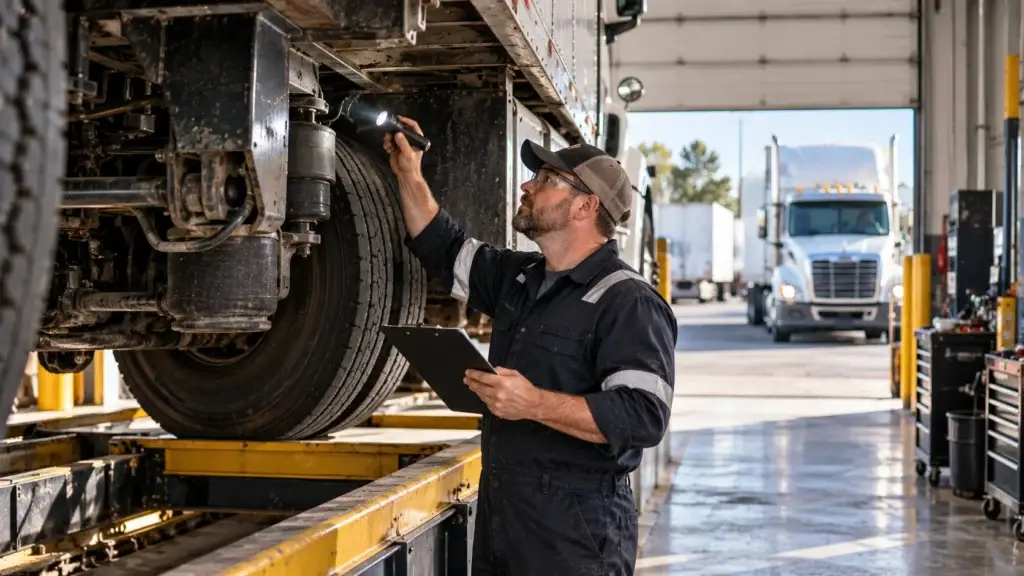
Per 49 CFR 396.19, qualified inspectors must understand inspection criteria and demonstrate capability through training, experience, or both — typically at least one year combined. The brake inspector certification under 49 CFR 396.25 is essential — without it, your shop cannot perform complete inspections, effectively eliminating fleet market access.
Training must come from CVSA-approved providers and typically requires 40-80 hours covering federal safety regulations, inspection procedures, brake system adjustment, and out-of-service criteria. A written exam (100-150 questions, 80%+ passing) and a practical exam performing a full Level I inspection under observation follow.
Most states require annual or biennial renewal with 8-16 hours of continuing education, and many require recertification exams every 3-5 years. ASE Medium/Heavy Truck certifications in T4 Brakes, T5 Suspension, or T6 Electrical build additional credibility with fleet managers. One key regulatory note: owner-operators legally cannot inspect their own vehicles, which is exactly why this market exists for independent certified facilities.
Essential Equipment and Facility Upgrades
Federal regulations mandate specific calibrated tools for certified facilities: brake stroke measurement tools, torque wrenches calibrated to spec, tire tread depth gauges (32nds of an inch precision), tire pressure gauges accurate to within 2 psi, wheel bearing end-play tools, fifth-wheel measurement devices, headlight aim equipment, and sound level meters for exhaust testing. All instruments require regular calibration with audit-ready documentation. Complete inspection tool kits from reputable suppliers run $3,000-$8,000 depending on quality.
Heavy-duty lifting capacity is the other major line item — 20,000-pound minimum for medium-duty trucks, 40,000+ for Class 7-8 vehicles. Some shops use inspection pits instead where overhead clearance is limited; either approach must provide safe, adequate undercarriage access. On the documentation side, federal rules require detailed records of vehicle ID, inspection dates, inspector credentials, findings, and repairs — modern inspection management platforms provide standardized procedures, automatic report generation, and automated customer reminders for a typical $50-$150 monthly per-user cost, a modest expense relative to the operational benefit.
Marketing DOT Inspection Services to Fleet Operators
Fleet managers oversee dozens or hundreds of vehicles and choose service providers only after establishing trust through multiple interactions — this relationship-building process typically spans 6-12 months before converting a prospect to an active account. Start by compiling a database of local trucking companies, logistics providers, construction firms, and government agencies, and research each to identify the actual decision-maker.
Fleet managers prioritize compliance, minimized downtime, and predictable costs over the lowest inspection price — positioning yourself as a compliance partner rather than a transactional vendor justifies premium rates. Display certifications prominently, offer a compliance guarantee, and bundle inspections with preventive maintenance on simplified billing. Flexible scheduling, including after-hours and weekend appointments, differentiates your shop from competitors with rigid hours.
On the digital side, a dedicated fleet-services page with client testimonials, local SEO targeting terms like "DOT inspection [your city]," and consistent LinkedIn engagement with local logistics directors all compound over time. Offering complimentary compliance seminars for local transportation companies positions your shop as an industry resource rather than another vendor pitching business.
These efforts work together rather than in isolation — a fleet manager who attends a compliance seminar, then finds your shop again through a local search a month later, arrives at that second touchpoint already primed to trust your expertise. That layered visibility is what shortens the 6-12 month relationship-building window rather than a single tactic executed well.
Digital marketing on a diesel budget — practical local SEO, reputation, and advertising strategies for heavy-duty repair shops.
Pricing Strategies for DOT Inspection Services
Rates vary by market — rural areas typically see $75-100 for basic annual inspections, urban markets $125-200 or more. Identify every certified provider within a 25-mile radius, understand their pricing, and calculate your true cost per inspection (labor, equipment depreciation, documentation time, overhead) before setting prices; most shops discover actual costs run $60-90 per vehicle once everything is included, and should target 40-60% gross margins.
Surveying local fleet operators directly about their current inspection costs and service expectations often reveals more than competitor research alone — price sensitivity varies dramatically based on fleet size and sophistication, and a sophisticated fleet manager evaluating total cost of a partnership will weigh turnaround time and reliability well above a small per-inspection price gap.
Fleet contracts favor monthly per-vehicle agreements over per-transaction invoicing, with tiered pricing that automatically improves rates as inspection volume increases — a transparent structure that eliminates negotiation friction and encourages growth with your shop. Priority scheduling and guaranteed turnaround times, included in fleet contracts as value-added terms, cost little to offer but justify premium pricing without discounting per-service rates.
Challenges and Expanding Beyond Basic Inspections
Most shops experience a 3-6 month adjustment period integrating inspection services into daily operations. Inspections run on compliance deadlines rather than customer convenience, so dedicated time blocks — a specific inspection day or morning slot — work better than squeezing them between repair jobs.
Certified inspectors also assume real legal exposure when certifying federal safety compliance; specialized compliance insurance (typically adding $1,500-$4,000 annually) and a peer-review step before issuing reports both reduce that risk. Subscribing to FMCSA updates and CVSA resources keeps your program current as out-of-service criteria and procedures evolve.
Your certification also opens higher-margin services once basic inspections are running smoothly. Mobile inspection services address a real pain point for large fleets struggling to bring vehicles in during business hours — a fully-equipped service vehicle runs $25,000-$50,000, and mobile pricing typically carries a 20-40% premium over in-shop rates to cover travel and convenience. HDJ's complete DOT inspection checklist is worth reviewing alongside this if you want the itemized, component-by-component version of what a Level I or Level V inspection actually covers.
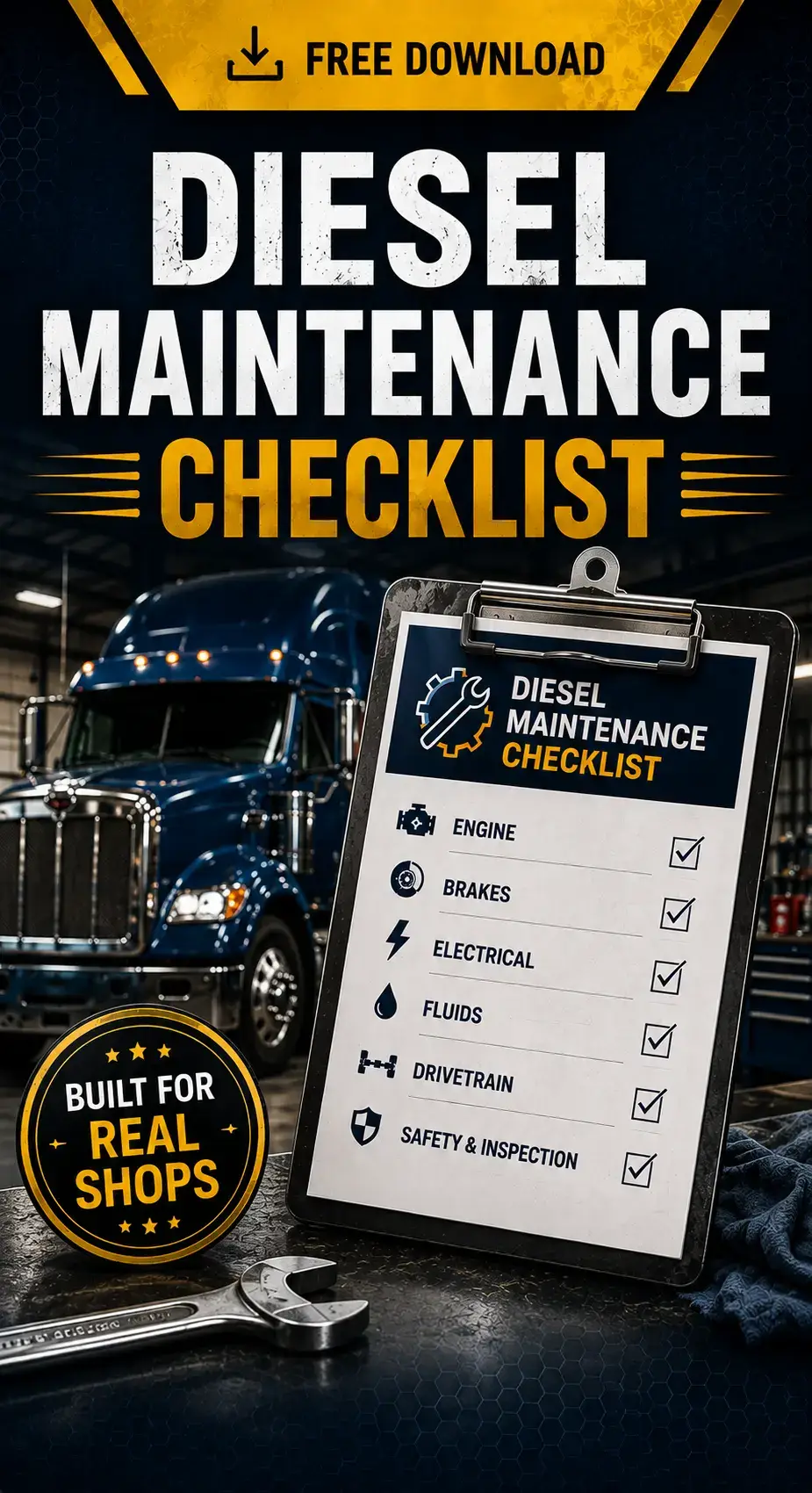
Free Diesel Maintenance Checklist
Get HDJ's free, field-tested diesel maintenance checklist delivered instantly to your inbox — print it, laminate it, keep it in the shop.
Instant PDF • 100% Free • No Spam
Structured preventive maintenance programs build on regular DOT inspections to transform your shop from reactive provider to proactive fleet partner, generating highly predictable recurring revenue. Build customized PM schedules per fleet account incorporating manufacturer recommendations and usage patterns — tiered service levels (basic maintenance every 15,000 miles, comprehensive service aligned with DOT inspection timing) work well for most accounts.
Deep DOT expertise also supports compliance consulting — driver qualification file reviews, safety program development, and DOT audit preparation command $100-$250 hourly or project fees reaching several thousand dollars for comprehensive audits. HDJ's state-by-state inspection requirements guide is a useful reference to have on hand for these conversations, since state supplemental requirements — beyond the federal baseline this guide covers — vary significantly and come up constantly with multi-state fleet clients.
Share Your DOT Inspection Expertise
Heavy Duty Journal welcomes insights from shop owners who've built successful DOT inspection programs. Submit Your Expertise →
Frequently Asked Questions
How long does it take to become a certified DOT inspector?
Typically 3-6 months from application to conducting official inspections. Training runs 40-80 hours, followed by written and practical exams. State authorization timelines vary — 2-4 weeks in some jurisdictions, up to three months in others. Running facility prep and training concurrently shortens the total timeline.
Can owner-operators inspect their own trucks?
No — federal regulations prohibit owner-operators from performing annual DOT inspections on their own vehicles. Carriers with certified in-house inspectors can handle internal inspections, but independent owner-operators must use authorized third-party facilities, which is exactly what guarantees demand for certified shops.
What equipment investment is required for DOT inspections?
Essential tool kits run $3,000-$8,000; heavy-duty lifts run $15,000-$40,000 depending on capacity. Shops already servicing commercial vehicles may own much of this already. Total startup costs including training typically land at $10,000-$25,000 for facilities with existing commercial infrastructure.
How much can a shop earn from DOT inspection services?
Five inspections weekly at $125 average generates roughly $32,500 in annual inspection revenue alone. Add the repair multiplier (3-5x the inspection fee) and shops with established fleet contracts report combined income between $100,000 and $200,000 annually.
What are the most common reasons vehicles fail DOT inspections?
Brake system deficiencies remain the single largest category — CVSA's most recent International Roadcheck attributes roughly 39% of vehicle out-of-service violations to brake-related issues, combining brake system defects and the 20%-defective-brakes criterion. Tires, lighting, and steering/suspension round out the most common failure categories.
DOT inspection certification represents one of the most accessible pathways for automotive shops to build sustainable commercial revenue. The regulatory framework guarantees ongoing demand — every commercial motor vehicle requires annual inspection, and owner-operators legally cannot perform their own. Heavy Duty Journal has tracked this pattern across the shops it's covered: those that establish DOT capabilities first in their markets capture fleet relationships spanning years, because once a fleet manager finds a trusted inspection partner, switching costs are high.
Found This Guide Helpful?
Share this resource with fellow shop owners considering DOT certification. Building a stronger network of qualified inspection facilities benefits the entire commercial trucking industry.