By Michael Nielsen, Publisher | 15+ Years in Diesel Repair
Last Updated: October 2026
⏱ Estimated reading time: 14 minutes
Diesel industry trade shows put fleet managers, shop owners, parts buyers and equipment decision-makers in one building for a few days, which is why exhibitors keep paying for them. The same events can also drain a budget. The difference is a plan that ties every booth decision to return on investment (ROI), measured against your own numbers.
This guide from Heavy Duty Journal (HDJ), written by publisher Michael Nielsen, covers choosing a show, setting goals, promoting the booth, designing the space, capturing leads, following up and calculating results.
HDJ removed the unsourced statistics that earlier versions of this guide relied on. Dollar figures below are illustrative examples, labeled as such, and the sourced guidance comes from U.S. government pages. Where the text is editorial judgment, it says so.
Key Takeaways
- ✓Pick the show by its buyers. Ask the organizer who attends, then compare that list with your customer profile and buying cycle.
- ✓Set numbers before you book. Work out how many customers cover the cost, then decide how many qualified leads that takes.
- ✓Promote early and specifically. A landing page, personal invitations and booked appointments beat hoping for foot traffic.
- ✓Qualify, rank and record. Note what each buyer said and how soon they need to act, and keep those leads with you.
- ✓Follow up fast, then measure. Contact leads quickly, follow the federal email rules and review results within a week.
In This Guide
- Why Diesel Industry Trade Shows Can Pay Off
- Choose the Right Diesel Industry Trade Shows
- Set Goals and ROI Targets Before You Commit
- Promote Your Booth Before the Show Opens
- Design a Booth That Earns Conversations
- Qualify and Capture Leads on the Show Floor
- Build Relationships Beyond the Booth
- Follow Up Quickly and Stay Compliant
- Measure Trade Show ROI
- Frequently Asked Questions
- The Bottom Line
Why Diesel Industry Trade Shows Can Pay Off
Heavy-duty buying is rarely impulsive. A fleet manager comparing diagnostic tools, a shop owner choosing a parts supplier and a distributor adding a product line all want to see the product, ask technical questions and judge the people behind it. A show compresses that process into days, and a booth is where it happens.
The U.S. International Trade Administration guide to preparing for a business trade show lists the benefits: you can showcase products or services and build brand awareness through increased visibility. The agency's first article in the International Trade Administration's trade show series adds a caution: exhibitors can spend heavily in cash and staff hours, then lose the value by staying on their phones or skipping follow-up.
What a Show Can and Cannot Do
A show gives you concentrated access to buyers, live demonstrations and a chance to hear objections face to face. It does not guarantee leads, and it does not replace a sales process. In HDJ's editorial judgment, the exhibitors who profit are the ones who treated the show as the middle of a campaign, not the whole of it.
Exhibit or Attend?
Attending without a booth costs far less and suits a first look. Walk the floor, sit in the sessions, meet suppliers and study how competitors present. In HDJ's editorial judgment, attending once as a visitor before committing to a booth is a sensible step when the show is new to you.
HDJ's guide to heavy-duty parts marketing covers the wider marketing plan that a show should fit into.
Choose the Right Diesel Industry Trade Shows
Not every event reaches your buyer. HDJ does not name specific shows here, because dates, locations and attendance change each year and HDJ could not verify them from a primary source. Check the organizer's current materials, and compare each candidate against the criteria below.
| Show type | Usually best for | Watch out for |
|---|---|---|
| National aftermarket and specialty-parts shows | Suppliers, distributors and tool or equipment makers seeking wide reach | High cost and a crowded floor; your buyer may be a small share of attendees |
| Commercial diesel repair conferences | Products and services aimed at shop owners and service managers | A smaller audience, so confirm that your buyers attend |
| Regional equipment and construction shows | Local fleets, contractors and equipment dealers | Variable quality; ask who attended last time |
| State or regional trucking events | Carriers and owner-operators in your service area | Limited reach outside the region |
Questions to Ask the Organizer
Ask for the attendee profile by job title and company type, the number of buyers versus vendors, the schedule of sessions and receptions, and the exhibitor list. The International Trade Administration suggests requesting a targeted attendee list, which can cost less than the full list. Ask what past exhibitors saw before you pay.
Match the Show to Your Buying Cycle
Fleets set budgets and plan purchases on a calendar. A show that falls just before those decisions can produce orders, while one that falls just after may produce only contacts.
Set Goals and ROI Targets Before You Commit
That guide tells exhibitors to set ROI benchmarks and work out the sales needed to cover expenses. That is the right order. Decide what the show must produce before the booth deposit goes down, not after the invoices arrive.
Start With the Break-Even Number
Break-even customers equal total show cost divided by the gross profit one new customer brings. Take a purely illustrative case: a show costs $24,000 all in, and a new customer is worth $12,000 in first-year gross profit. You need two new customers to break even, and everything beyond that is return.
Work backward from there. If one lead in eight becomes a customer in your own history, two customers need about sixteen qualified leads. HDJ has no verified industry close rate to offer, so use your own sales records.
Set Leading and Lagging Indicators
Leading indicators tell you during the show whether the plan is working: appointments kept, demonstrations given, conversations that met your qualification test and follow-up meetings booked. Lagging indicators arrive later: deals closed, revenue and gross profit from show leads, and the length of the sales cycle.
Stay Ahead in Diesel Marketing and Fleet Sales
Get practical marketing, sales and shop-management guidance delivered to your inbox. Join the shop owners, suppliers and fleet professionals who read Heavy Duty Journal.
Build the Budget Honestly
List every cost, including the ones that hide in other budgets. The table shows the categories to include. Add your own quotes, because show fees and freight vary widely.
| Cost category | What to include | How to control it |
|---|---|---|
| Space and fees | Booth rental, utilities, furniture, lead-scanner rental and any required services | Compare locations on the floor and ask about early-payment terms |
| Booth and materials | Display design, graphics, demo units, literature and giveaways | Reuse modular parts and print less paper |
| Shipping and setup | Freight, handling, storage and labor to build the booth | Ship early and consolidate loads |
| People and travel | Staff wages, airfare, lodging, meals and lost time at the shop | Send fewer, better-trained people |
| Marketing | Pre-show promotion, invitations and follow-up materials | Build the invitation list from your own customers first |
HDJ's guide to the diesel shop marketing plan shows where a show budget fits among the other channels you pay for.
Promote Your Booth Before the Show Opens
The show begins before the doors open. Fleet managers at diesel industry trade shows arrive with a list of meetings and limited time, so a booth they have never heard of competes against names they already know. Start promotion weeks ahead, and give each audience a specific reason to visit.
Build a Landing Page and Use Every Channel
The same guide recommends a landing page on your website that announces your presence and uses trade show keywords. It also suggests promoting any video on social media and putting a specific web address or social account on handouts and business cards, so attendees can find you again.
Put the booth number, demonstration times and the reason to visit on the page. Link to it from your email signature, your social posts and every invitation. HDJ's guide to fleet sales email marketing covers building the invitation sequence.
Book Appointments With Priority Buyers
Pre-booked meetings are the highest-value hours at a show. Review your customer relationship management (CRM) records for customers due for replacement, prospects in an active sales cycle and old leads worth reviving, then invite them by name. Offer something concrete, such as a demonstration of the exact equipment they run.
That series also suggests offering free entry to invited buyers and requesting a targeted attendee list for new prospects. Both ideas cost little compared with the booth itself.
Digital marketing on a diesel budget — practical local SEO, reputation, and advertising strategies for heavy-duty repair shops.
Design a Booth That Earns Conversations
A booth has seconds to answer one question: is this relevant to me? Design for that glance, then for the conversation that follows. In HDJ's editorial judgment, the booths that earn the most time are the ones where a visitor can see the product working and talk to someone who knows it.
Plan Space and Traffic Flow
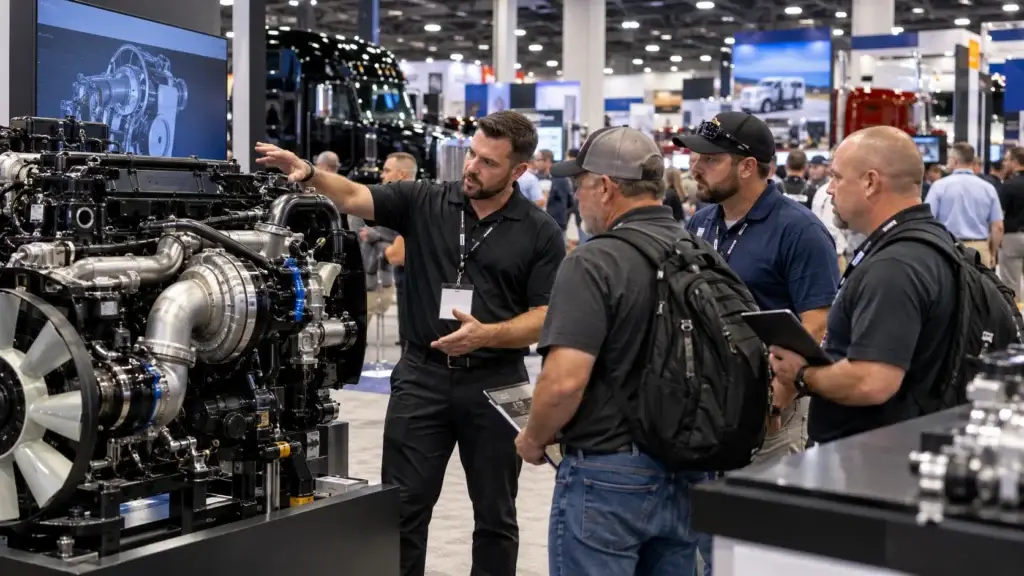
Keep the layout open so visitors can see activity from the aisle without committing to walk in. Put the most interesting piece, such as an engine cutaway or a working demonstration, deep enough in the space to draw people inside. Leave a quieter corner where a serious conversation about specifications and pricing can happen.
Lead With Outcomes, Not Features
Large graphics and headlines should speak to the buyer's problem: less downtime, simpler diagnosis, lower cost of ownership. State only claims you can document. A headline promising a specific percentage savings invites a challenge at the booth if you cannot show where the number came from.
Demonstrations and Display Rules
Schedule live demonstrations at set times, announce them in advance and keep each one short. Rope off the area, post clear signs and assign a trained person to watch it. Check the venue's rules for fuel, fluids, noise and powered equipment before you ship anything.
If you plan to show an engine or machine that does not meet current emission standards, check the federal rule first. 40 Code of Federal Regulations (CFR) 1068.220 covers display exemptions and sets conditions on operation, sale and labeling. Confirm with the Environmental Protection Agency (EPA) whether it applies to your product.
Prepare Your Booth Staff
The second article in that series says to brief every salesperson in the booth on your target buyer before the show. It also advises staying visibly approachable, opening with a question instead of a pitch, and politely ending conversations that are not going anywhere. A staffer on a phone, head down, is an expensive empty spot.
Editorial Insight
The HDJ Perspective
According to Heavy Duty Journal, the exhibitors who get the most from a show treat the booth as a conversation room, not a billboard. In HDJ's editorial judgment, technical credibility wins diesel buyers, so staff the booth with people who can answer an engineering question on the spot. A friendly face that has to fetch someone else costs more than it saves.
Qualify and Capture Leads on the Show Floor
Collecting cards at diesel industry trade shows is not the same as generating leads. A qualified lead is a person who has a need, a role in the decision and a realistic timeline. The sooner your staff can tell the difference, the less time they spend on visitors who are not buyers.
Five Questions That Qualify a Buyer
- Role: decision-maker, influencer or researcher?
- Timeline: when will they decide or buy?
- Situation: what do they run now, and what problem are they trying to solve?
- Authority: who approves the purchase, and how?
- Fit: does what you sell match their operation?
The same article adds that you should record what you discussed with each buyer and rank buyers by how soon they need to act. Write the note while the conversation is fresh, since you will not remember the details by the end of day three.
Capture Leads Without Losing Them
Use whatever method your team will actually use: a badge scanner from the organizer, a mobile form or a notebook. The same source advises keeping leads with you instead of packing them with the booth, so follow-up can start the day you return. A fishbowl of cards in a shipping crate is a lead lost.
Literature and giveaways should be earned. The International Trade Administration advises bringing no more than 100 to 150 pieces of literature and handing items to qualified buyers, not leaving them in an open bowl.
Rank Leads So Follow-Up Matches the Need
The tiers below are a suggested starting structure, not an industry standard. Adjust the criteria and timing to your own sales cycle.
| Lead tier | Typical criteria | Suggested follow-up |
|---|---|---|
| Hot | Decision-maker or approver with a defined need and near-term timeline | Personal call or meeting request within one to two business days |
| Warm | Influencer, or a buyer with a longer timeline | Personalized email with relevant material within a few days |
| Cool | Researcher or a future opportunity | Add to a nurture sequence and check back later |
HDJ's guide to fleet service lead generation explains how to keep those leads warm after the show.
Build Relationships Beyond the Booth
Much of a show's value happens away from the booth. The International Trade Administration advises attending the relevant educational sessions to network and gather industry information, and going to receptions, since a key client could be there and ready to deal.
Use Sessions and Receptions
Sessions show you which topics buyers care about and who asks the questions. Receptions let you meet people without the formality of a booth visit. Set a goal for each, such as meeting three new fleet contacts, so the time has a purpose.
Host a Small Private Event
A dinner or suite for a short invitation list can build a relationship that a crowded aisle cannot. Invite specific people for specific reasons, keep the group small and plan the conversation. In HDJ's editorial judgment, quality matters more than headcount.
Follow Up Quickly and Stay Compliant
Follow-up is where the money spent on diesel industry trade shows is either earned or lost. HDJ has no verified statistic for how many leads convert, so do not rely on any number you have seen quoted. Build the habit that does not depend on one: contact every qualified lead quickly and keep going until they decide.
Move Within the First Few Days
The third article in that series says follow-up should reference your discussion, using the buyer's name and the needs they raised. It also warns that one post-show email does not cut it anymore. Plan a schedule of email, phone or in-person contact based on the buyer's potential.
Assign every lead to a person before you leave the show. Tag each record in your CRM with the show name, the date, who met the buyer and the lead tier. Those tags make results measurable months later.
Key Recommendation
Reference the actual conversation in every follow-up. A message that could have gone to anyone looks like it did.
Know the Federal Email Rules
Follow-up email is commercial email, so the Controlling the Assault of Non-Solicited Pornography and Marketing (CAN-SPAM) Act applies. As of October 2026, the Federal Trade Commission (FTC) CAN-SPAM compliance guide requires accurate header information, non-deceptive subject lines, a clear ad identification, a valid physical postal address and a clear way to opt out.
The FTC also says you must honor an opt-out request within 10 business days, and that you remain responsible for what others do on your behalf. Texting and phone outreach have their own rules, so confirm them with legal counsel before adding those channels. HDJ is not a law firm.
Stay Helpful, Not Pushy
The same article advises being persistent and helpful but not pushy, and finding out where each buyer is in the buying process so that sets how often you contact them. Do not put every lead on the same weekly mass email.
Measure Trade Show ROI
Measure within a week, while the details are fresh. The International Trade Administration says to evaluate the show soon afterward, not six months later. Ask whether you met the right buyers, whether any are likely to convert and what to change if you return.
The Core Formulas
- Cost per qualified lead = total show cost ÷ qualified leads.
- Cost per new customer = total show cost ÷ new customers won.
- ROI (%) = (gross profit from show customers − total show cost) ÷ total show cost × 100.
Use gross profit, not revenue, in the ROI formula. A large order at a thin margin can look like success and still lose money. Count only qualified leads in the first formula, not every card collected.
A Worked Example
Take a purely illustrative case: a show costs $24,000, produces 40 qualified leads, and five become customers worth $12,000 each in first-year gross profit. Cost per qualified lead is $600. Cost per new customer is $4,800. Gross profit is $60,000, so ROI is ($60,000 − $24,000) ÷ $24,000, or 150%.
Those numbers are made up to show the arithmetic. Your own history is the benchmark, and a result that looks weak in year one may improve as the longer deals close.
Count the Value After the First Sale
A customer won at a show may stay for years, so first-year profit understates the return. Track deals over a longer window, and note which leads came back for service or added trucks. HDJ's guide to fleet account management covers growing those accounts.
Decide What to Do Next Year
Compare the result with your break-even number, review which leads performed best, and decide whether to return, change the booth or switch events. Record the reasons.
Frequently Asked Questions
What are diesel industry trade shows?
Diesel industry trade shows are events where manufacturers, distributors, shops and service providers display products and meet buyers such as fleet managers and shop owners. They range from large national shows to regional equipment and trucking events. Choose the one whose attendees match your customers.
How do I calculate trade show ROI?
Subtract total show cost from the gross profit won from show leads, divide by total show cost, and multiply by 100. Use gross profit, not revenue. Track leads in your customer relationship management system so you can attribute deals months later, when long sales cycles close.
How much should I budget for a trade show?
HDJ has no verified average. Request quotes for space, booth, shipping, staff time, travel and marketing, then work backward from break-even: total cost divided by gross profit per new customer. If the number of customers needed looks unrealistic for your sales record, pick a smaller show.
When should I start promoting my booth?
Start several weeks ahead so you have time to build a landing page, send invitations and book appointments. HDJ has no verified ideal lead time, so work backward from the show date and your slowest step. Invite priority customers and prospects personally.
What should I do with leads after the show?
Contact qualified leads quickly, reference what you discussed, and use more than one channel over time. Tag every lead with the show, date and tier in your records. Follow commercial email rules, including an opt-out and a valid postal address, and review results within a week.
Can I display an engine that does not meet emission standards?
Possibly, under limited conditions. The EPA display exemption in 40 CFR 1068.220 covers nonconforming engines or equipment used for displays, but operation and sale need approval and a permanent label is required. Confirm with the EPA that the exemption fits your product.
The Bottom Line
Diesel industry trade shows reward the exhibitor who plans the numbers first, picks the right show, promotes early, qualifies leads and follows up fast. None of it requires a large booth. It requires a break-even number, a way to capture and rank leads, and the discipline to review results within a week.
Michael Nielsen and the HDJ editorial team publish more marketing and shop-business guidance at heavydutyjournal.com. Start with your break-even calculation for the next show you are considering, and let the result decide whether to book.
Share This Trade Show Guide
Know a supplier, shop owner or sales manager planning to exhibit? Share this guide with them. Michael Nielsen and Heavy Duty Journal publish it free at heavydutyjournal.com.