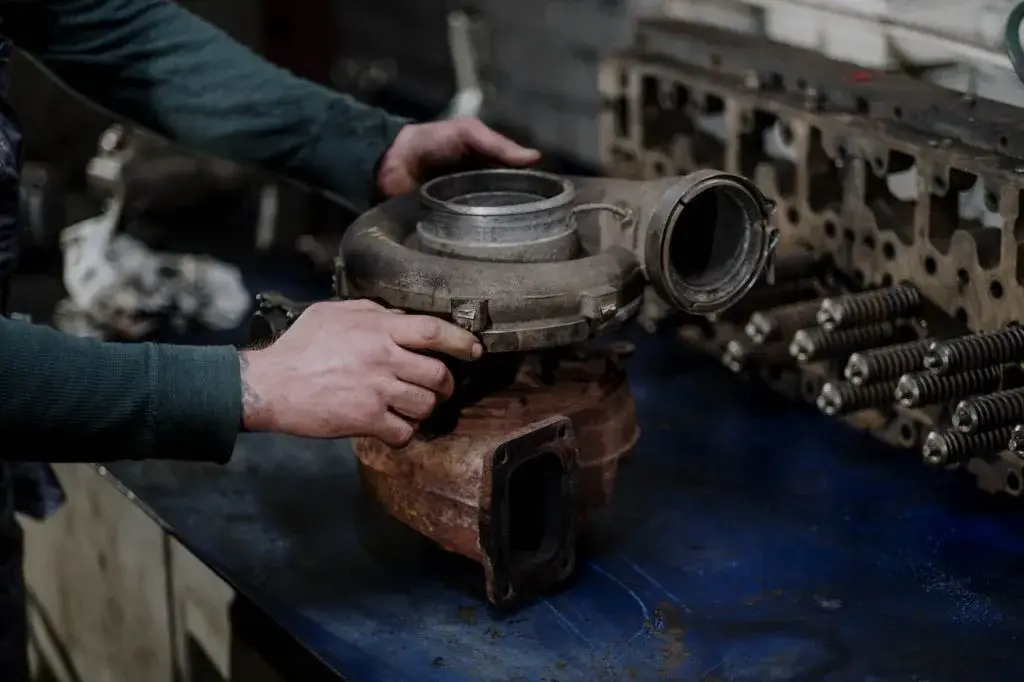
Turbocharger failure in heavy-duty diesel engines can reduce power output by up to 50% and cost fleets between $2,500 and $8,000 in replacement costs alone. For fleet managers and diesel technicians, recognizing the warning signs early transforms an emergency breakdown into a scheduled maintenance event—saving thousands in downtime and preventing catastrophic engine damage.
The turbocharger is the heart of modern diesel performance, forcing compressed air into the combustion chamber to boost power and fuel efficiency. When this precision component begins to fail, every aspect of your operation suffers. Approximately 30% of Class 8 truck engine failures trace back to turbocharger issues, making early detection essential for protecting your bottom line.
This guide covers seven critical warning signs that indicate developing turbocharger problems, along with diagnostic procedures and prevention strategies that keep your fleet running.
Last Updated: December 2025
Key Takeaways
- Early detection saves money: Recognizing turbo warning signs prevents costly roadside breakdowns and reduces repair expenses by catching problems during scheduled maintenance.
- Smoke color matters: Blue exhaust indicates oil burning from seal failure; black smoke signals incomplete combustion from insufficient boost pressure.
- Sound changes signal bearing wear: High-pitched whining or grinding noises indicate bearing problems requiring immediate inspection before catastrophic failure.
- Oil system integrity is critical: Excessive oil consumption (more than 1 quart per 1,000 miles) and visible leaks around the turbo indicate advanced seal deterioration.
- Proper maintenance extends turbo life: Quality oil, clean air filtration, and proper cool-down procedures can extend turbocharger service life beyond 400,000 miles.
How Turbochargers Work in Heavy-Duty Diesel Engines
Understanding turbocharger operation helps explain why even minor component degradation triggers complete system failure. The turbocharger uses exhaust gas energy to compress intake air, enabling smaller engines to produce power equivalent to much larger naturally-aspirated units while consuming significantly less fuel.
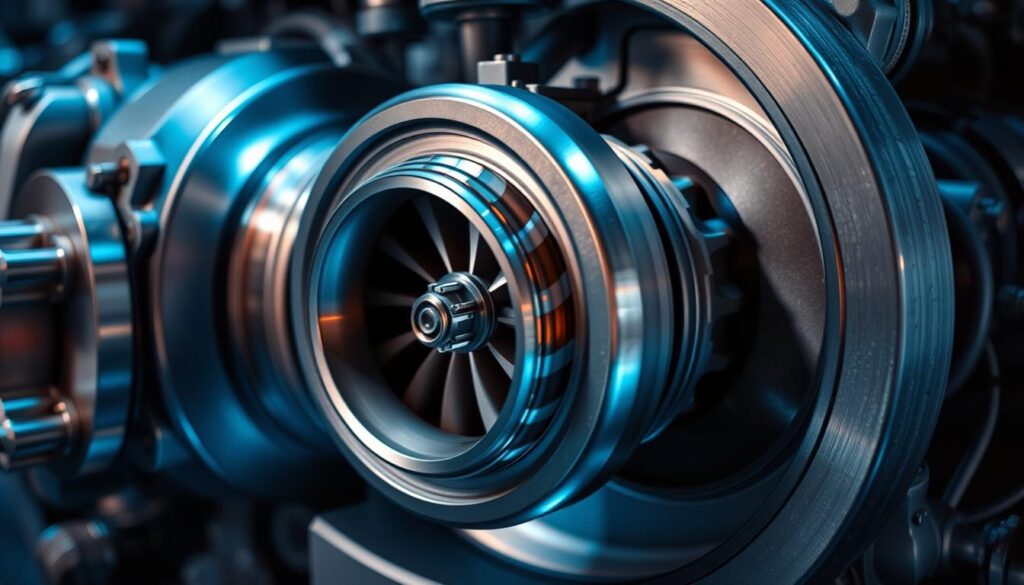
Hot exhaust gases exit the cylinder at temperatures exceeding 1,400°F, striking the turbine wheel and causing it to spin at speeds surpassing 100,000 RPM. This turbine connects via a shaft to the compressor wheel, which draws in ambient air and compresses it before forcing it into the intake manifold. The result is 30-40% improved power output compared to engines without forced induction.
Modern emissions standards have made turbochargers absolutely essential. EPA regulations for heavy-duty vehicles require diesel engines to meet stringent NOx and particulate matter limits. Turbochargers enable complete fuel combustion at lower temperatures, reducing harmful emissions while maintaining the torque needed for hauling loads exceeding 80,000 pounds.
Extreme Operating Conditions
The operating environment inside a turbocharger ranks among the most extreme in any mechanical system. Components endure sustained temperatures above 1,400°F, rotational speeds exceeding 100,000 RPM, and constant thermal cycling with every startup and shutdown sequence.
| Operating Parameter | Typical Range | Critical Threshold |
|---|---|---|
| Turbine Speed | 80,000-120,000 RPM | Above 150,000 RPM |
| Exhaust Gas Temperature | 1,200-1,400°F | Above 1,600°F |
| Boost Pressure | 15-30 PSI | Above 35 PSI |
| Oil Temperature | 220-260°F | Above 300°F |
Shaft bearings maintain tolerances measured in thousandths of an inch while rotating at speeds equivalent to traveling over 300 miles per hour. These bearings depend entirely on continuous clean, pressurized engine oil for lubrication and cooling—making oil system integrity critical to turbocharger survival.
1. Excessive Blue or Black Exhaust Smoke
When your diesel engine produces unusual amounts of colored smoke, it’s broadcasting a clear message about potential turbo problems. Modern heavy-duty diesel engines with functioning emissions systems should produce minimal visible smoke during normal operation. Any consistent smoke production indicates a malfunction requiring immediate attention.

Blue Smoke Indicates Oil Burning
Blue-tinted exhaust carries a specific diagnostic message: oil is entering the combustion chamber or exhaust system. This distinctive color comes from engine oil burning at high temperatures where it shouldn’t be present.
Turbocharger-related blue smoke occurs when shaft seals deteriorate or bearing clearances increase due to wear. Engine oil that normally lubricates the turbocharger center section gets drawn into the intake system or exhaust stream. This smoke typically appears most prominently during deceleration or after extended idling when manifold vacuum reaches its highest levels.
Oil accumulation in the charge air cooler and intake piping confirms that turbocharger seals have failed. In severe cases, the engine can begin consuming its own lubricating oil as fuel, creating a dangerous diesel runaway condition.
Black Smoke Signals Incomplete Combustion
Black exhaust smoke indicates the engine isn’t receiving enough air to completely burn the injected fuel. When the turbocharger fails to provide adequate boost pressure, insufficient air reaches the cylinders while the fuel system continues injecting diesel at normal rates.
Turbo-related black smoke typically increases under load and acceleration when boost demand is highest. Damaged compressor wheels, restricted exhaust flow, boost leaks, or stuck variable geometry vanes all prevent adequate air delivery for clean combustion.
30% of Class 8 engine failures
trace back to turbocharger-related issues
Diagnostic Actions for Smoke Problems
Begin diagnosis by examining the charge air cooler and intake piping. Remove the intake tube between the turbo and intercooler and check for oil accumulation—significant coating confirms seal failure. Inspect the air filter for oil saturation, which indicates oil is being drawn backward through the intake system.
Perform a boost pressure test comparing actual readings against manufacturer specifications during acceleration. Low boost pressure combined with black smoke indicates the turbo cannot supply adequate air for combustion. Check for excessive shaft play by moving the compressor wheel by hand—any noticeable movement indicates bearing wear requiring immediate service.
2. Loud Whining or Grinding Noises
Turbochargers produce distinctive sounds when internal components begin to fail, offering valuable advance notice of impending breakdowns. These acoustic warnings often appear weeks or months before complete failure, providing critical time to schedule repairs during planned maintenance.
High-Pitched Whining Indicates Bearing Wear
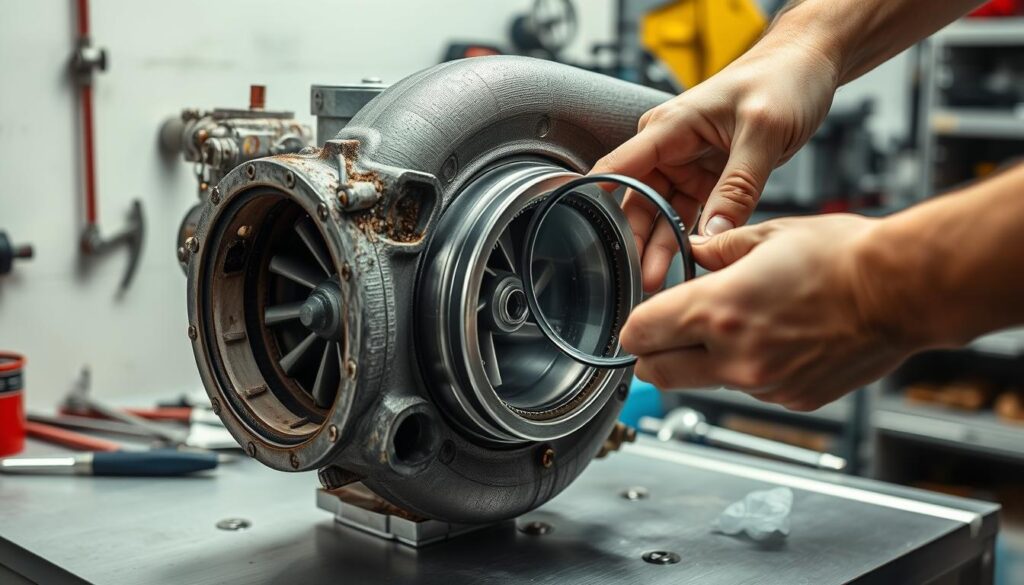
The siren-like sound of turbocharger whining signals that internal bearings have worn beyond acceptable tolerances. This characteristic noise increases in both pitch and volume as engine RPM rises because turbocharger shaft speed correlates directly with exhaust gas flow.
Worn bearings allow increased shaft movement, permitting the rapidly spinning compressor or turbine wheels to contact stationary housings. Even microscopic contact at 100,000+ RPM speeds generates the distinctive whining sound. This symptom often begins intermittently during aggressive acceleration, then becomes constant as bearing degradation advances.
Grinding Sounds Require Immediate Attention
Harsh grinding noises indicate more severe problems than whining and suggest immediate inspection is essential. These sounds signal complete bearing failure or significant wheel damage where actual metal-to-metal contact is occurring between components designed to maintain precise clearances.
Operators should treat grinding noises as emergency situations requiring immediate engine shutdown. Continued operation risks catastrophic turbocharger destruction, potentially sending metal fragments into the engine intake system and causing extensive damage to pistons, valves, and cylinder walls.
Root Causes of Turbo Noise Problems
Several specific failure mechanisms generate characteristic turbocharger sounds. Oil starvation during cold starts, when lubrication flow is slowest, can starve bearings of critical protection. Contaminated oil containing abrasive particles acts like grinding compound on precision bearing surfaces.
Thrust bearing failure allows excessive axial shaft movement, permitting wheels to contact housings front-to-back. Heat-related degradation from sustained high exhaust temperatures breaks down oil film strength and accelerates wear. Impact damage from foreign object ingestion creates immediate bearing distress when wheels strike debris.
3. Noticeable Loss of Engine Power
A noticeable loss of engine power represents one of the most operationally critical symptoms of turbocharger problems. When your truck struggles to accelerate or maintain highway speeds, the turbocharger may be experiencing significant degradation that directly impacts your ability to meet delivery schedules.
Power loss often develops gradually rather than suddenly. Drivers may unconsciously adapt to declining performance without recognizing a developing problem, making baseline performance documentation essential for early detection.
Performance Decline Indicators
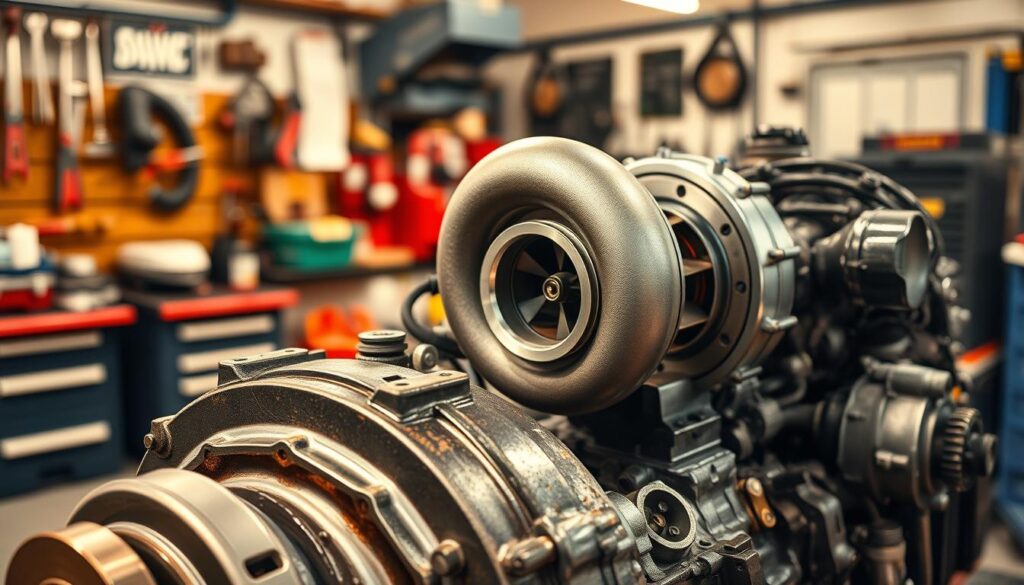
The most common sign is extended time required to reach highway speeds when merging onto interstates. A truck with a healthy turbocharger delivers consistent torque and reaches 60 mph predictably under standard load conditions. When acceleration time increases noticeably, turbocharger degradation should be suspected.
Inability to maintain speed on grades presents another clear indicator. Hills that previously posed no challenge suddenly require downshifting or result in significant speed reduction. Other signs include reduced maximum speed capability, longer passing times, and excessive throttle input required to maintain cruise speeds.
How Turbo Problems Reduce Power
Diesel engine power output is directly proportional to the mass of air available for combustion. The turbocharger is solely responsible for providing air beyond what atmospheric pressure naturally supplies. When turbocharger efficiency declines, air mass flow decreases proportionally.
Even a 5 PSI reduction from typical operating pressures of 25-35 PSI represents a significant power loss of 15-20%. The engine control system responds by reducing fuel delivery to maintain proper air-fuel ratios, which directly reduces torque output to the drivetrain.
Carbon buildup in variable geometry turbochargers creates additional performance problems. The vane mechanism that controls exhaust gas flow becomes restricted by accumulated deposits, reducing turbine efficiency and limiting boost pressure capability. EGR-equipped engines are particularly susceptible to this carbon accumulation.
Stay Ahead of Turbo Problems
Get the latest diesel maintenance insights, diagnostic tips, and fleet management strategies delivered to your inbox.
4. Excessive Oil Consumption and Turbo Oil Leaks
Excessive oil consumption and visible oil leaks around the turbocharger signal advanced wear conditions that can rapidly escalate into complete failure. These oil-related symptoms indicate that internal sealing components have deteriorated beyond functional limits, creating a cascade of secondary damage affecting both the turbocharger and the engine.
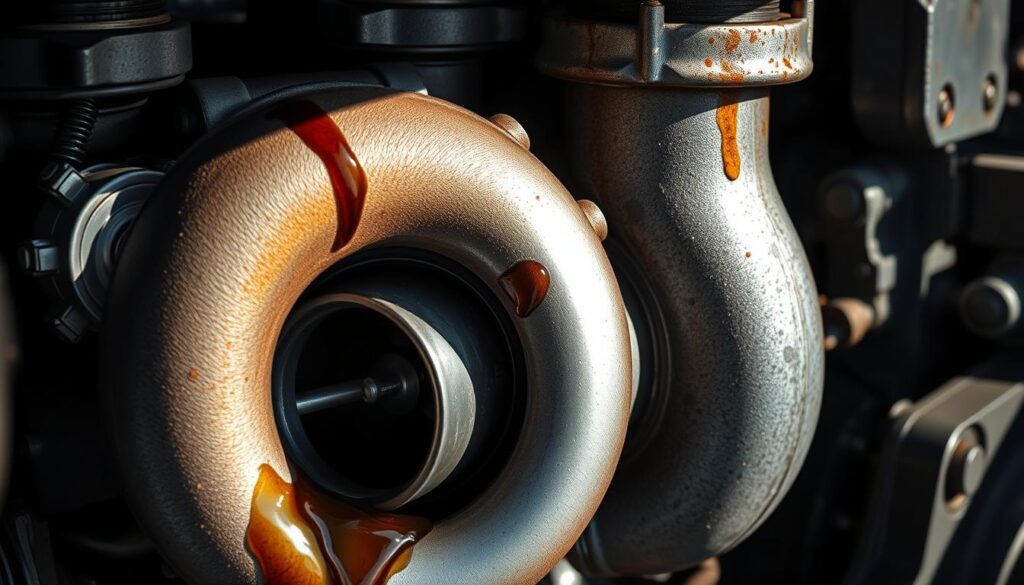
Signs of Oil-Related Turbo Problems
Fleet managers should become concerned when a vehicle consumes more than one quart of oil per 1,000 miles between service intervals. This consumption rate typically accelerates as seal and bearing degradation progresses.
Visible oil accumulation in specific locations provides clear diagnostic evidence. Oil residue inside the charge air cooler and intercooler piping indicates that compromised seals are allowing oil to pass through the compressor housing. Oil saturation of the air filter element, fresh oil around turbocharger mounting flanges, and blue exhaust smoke all confirm developing problems.
Seal and Bearing Failure Mechanisms
Turbocharger shaft seals don’t create absolute seals but rather regulate oil movement through controlled clearances. Excessive heat exposure accelerates seal ring degradation dramatically. When operators shut down engines immediately after high-load operation, the turbocharger experiences heat-soaking without oil circulation to remove heat, causing temperatures to spike beyond material limits.
Oil coking—the formation of hard carbon deposits from degraded oil—interferes with seal ring movement and reduces their ability to maintain proper tension. As bearings wear and permit shaft deflection, seals can no longer function effectively, and oil leakage increases as clearances grow.
Root causes include oil starvation during cold starts, contaminated oil containing abrasive particles, extended operation at extreme temperatures, and using incorrect oil viscosity. Each factor is preventable through proper attention to maintenance schedules and operating procedures.
5. Check Engine Light with Turbo Fault Codes
When your check engine light illuminates, onboard sensors have likely detected turbocharger problems requiring immediate attention. Modern heavy-duty diesel engines continuously monitor boost pressure, air temperature, exhaust gas conditions, and actuator positions. When discrepancies exceed programmed thresholds, the system logs specific fault codes and triggers dashboard warnings.
Common Turbo-Related Diagnostic Codes
The P0234 through P0238 code series addresses boost pressure and turbocharger conditions. P0234 indicates an overboost condition, typically pointing to wastegate or variable geometry actuator failures. P0235 signals a boost pressure sensor circuit malfunction, while P0236 indicates sensor range or performance issues.
P0237 shows boost pressure sensor circuit low voltage, suggesting wiring damage or sensor failure. P0238 indicates high voltage from similar electrical problems. These sensor-specific codes are crucial because they prevent unnecessary turbocharger replacement when only the sensor has failed.
Heavy-duty diesel engines also use manufacturer-specific codes providing greater diagnostic detail. Cummins, Detroit Diesel, and PACCAR each maintain proprietary code structures that distinguish between related problems. Accessing these codes requires manufacturer diagnostic software rather than generic OBD-II scanners.
Interpreting Fault Codes Correctly
Proper diagnostic procedure involves comparing boost pressure sensor readings against known-good mechanical gauge measurements. Significant discrepancies between sensor readings and mechanical gauge measurements confirm sensor problems rather than turbo mechanical failures.
According to FMCSA regulations, vehicles with active engine fault codes affecting safe operation must be addressed before continuing service. Professional diagnostics become essential when initial troubleshooting doesn’t clearly identify problems or when multiple related codes appear simultaneously.
6. Visible Damage to Turbo Components
Direct visual inspection exposes mechanical damage that remains hidden from scan tools and sensors. While diagnostic codes and performance measurements provide valuable information, they cannot reveal the physical condition of internal components such as cracks, wear patterns, and foreign object damage.
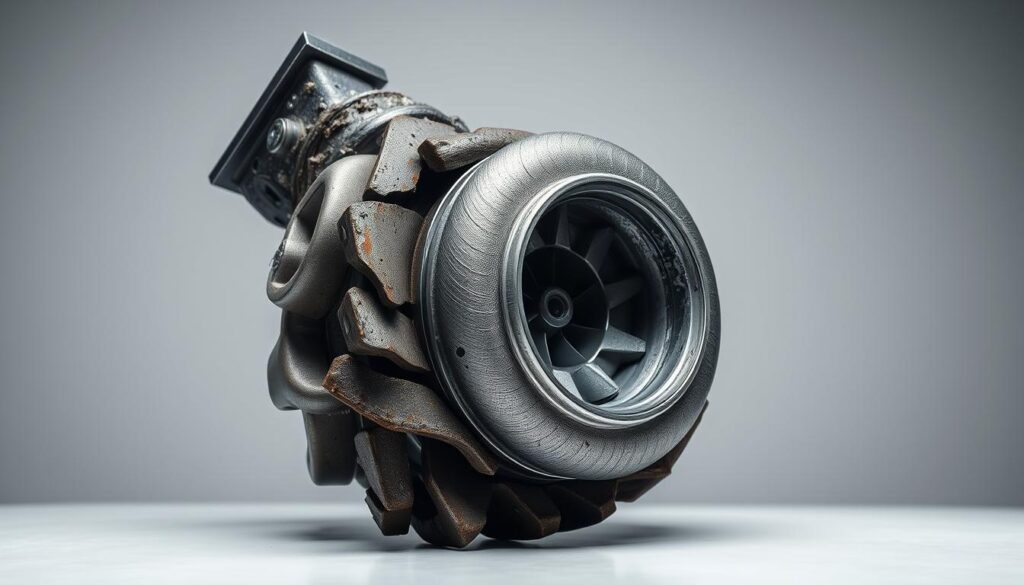
Physical Inspection Points
A thorough turbo inspection follows systematic procedures checking all accessible components. Key inspection points include the compressor inlet (remove air intake duct to view wheel condition), compressor outlet (disconnect charge air piping), and external housing for cracks, oil leakage, and mounting integrity.
Manually rotate the compressor wheel by hand to inspect the full 360-degree surface and verify smooth rotation without binding. Check for excessive shaft play by gently pushing and pulling the wheel in radial and axial directions. Any noticeable movement indicates excessive bearing clearance.
Compressor and Turbine Wheel Damage
Common compressor wheel damage patterns include shiny wear marks on blade tips indicating housing contact, leading edge erosion from dust ingestion, blade bending or cracking from foreign object impacts, and oil or carbon deposits reducing efficiency. Witness marks on the housing interior confirm where contact occurred.
Turbine housing cracks typically develop at stress concentration points including mounting flanges and around fastener holes. Look for discoloration patterns indicating cracks beneath the surface. Cracks allow exhaust gas leakage that reduces energy available to drive the turbine wheel, causing noticeable performance deterioration.
Foreign Object Damage Prevention
Foreign object damage represents a significant threat to turbocharger longevity. Compressor-side damage typically originates from deteriorated air filter elements, loose intake components, or failed upstream parts. Turbine-side damage usually results from valve fragments, piston debris, or broken exhaust manifold hardware.
When foreign object damage is discovered, the source must be identified and corrected before installing a replacement turbocharger—or repeated failure is virtually guaranteed.
The HDJ Perspective
The turbocharger diagnostic landscape has shifted significantly with the integration of variable geometry technology and sophisticated electronic controls. While this complexity can intimidate some fleet operators, it actually provides more warning signals than ever before—if you know where to look. The fleets achieving the longest turbocharger service life are those treating these components as precision instruments requiring dedicated attention beyond standard PM intervals. Investing in proper diagnostic equipment and technician training pays dividends that far exceed the upfront costs.
7. Slow Turbo Spool-Up and Boost Lag
Delayed boost response transforms routine acceleration into a challenge, indicating developing turbocharger problems requiring immediate attention. When experienced operators notice their equipment taking longer to deliver power after throttle application, this change signals mechanical or electronic issues within the turbocharger system.
Operators familiar with their equipment develop an instinctive understanding of normal boost response characteristics. When this familiar pattern changes—especially suddenly—the underlying cause requires immediate investigation.
Variable Geometry Actuator Problems
Modern heavy-duty diesel turbochargers predominantly use variable geometry technology to optimize boost response across the engine operating range. VGT systems employ movable vanes in the turbine housing to adjust effective turbine size dynamically, closing during low exhaust flow to accelerate spool-up and opening at higher flow rates to prevent overboost.
Common actuator problems include pneumatic diaphragm leaks, electronic motor failures, seized linkages from corrosion or carbon deposits, and position sensor failures. When actuator problems develop, vanes typically stick in one position, compromising boost response across the operating range.
Carbon Buildup Effects on Response
EGR-equipped diesel engines face carbon accumulation throughout the intake system. High temperatures in the turbocharger cause soot particles to carbonize and adhere to metal surfaces, creating friction that restricts vane movement. This progressive problem often goes unnoticed until significantly advanced because performance degradation occurs gradually.
Variable geometry mechanism cleaning uses approved chemical cleaners designed specifically for turbocharger applications. When chemical cleaning proves insufficient, mechanical cleaning or component replacement becomes necessary. Prevention focuses on operating temperature management to burn off light deposits before they harden.
Share Your Turbocharger Expertise
Are you a fleet manager or diesel technician with insights on turbocharger maintenance? Heavy Duty Journal welcomes industry professionals to contribute their expertise.
Preventing Turbocharger Failure in Your Fleet
While recognizing warning signs is important, preventing turbo failure before it occurs delivers the greatest return on investment. A systematic approach to turbocharger care reduces downtime, extends component life, and protects your entire diesel engine from costly secondary damage.
Scheduled Inspections and Performance Monitoring
Establish regular turbocharger-focused inspections at minimum during standard PM services, typically every 15,000 to 25,000 miles. Severe-service operations require more frequent attention. Boost pressure verification testing creates performance baselines that reveal degradation trends before they cause failures.
Documentation practices separate successful preventive maintenance programs from ineffective ones. Maintain turbocharger-specific logs tracking boost pressure readings, oil consumption rates, fault codes, and inspection findings. This data enables trend analysis identifying problems in their earliest stages.
Oil, Air, and Filtration Standards
Only oils meeting current API CK-4 or FA-4 specifications should be used in modern turbocharged diesels. These formulations provide the oxidation stability, detergency, and anti-wear properties necessary for extreme operating conditions. Oil change intervals must never exceed manufacturer recommendations.
Air filtration quality directly determines compressor wheel lifespan. Any dust or debris passing through the filter immediately impacts rapidly-spinning compressor blades, causing erosion and imbalance. Use quality filters meeting OEM specifications, ensure proper installation with complete sealing, and shorten replacement intervals in dusty environments.
Operator Practices for Maximum Service Life
Proper startup procedures allow oil pressure to build before increasing engine speed—particularly critical in cold weather. Shutdown procedures are equally important: immediate shutdown after high-load operation leaves the turbocharger heat-soaked without oil circulation, causing oil coking that accelerates bearing damage.
Implement cool-down idle periods of three to five minutes after sustained high-load operation. This allows the turbocharger to slow down and temperatures to decrease while oil circulation continues removing heat. Per 49 CFR Part 396 requirements for vehicle maintenance, addressing performance problems promptly prevents secondary damage that escalates repair costs.
Frequently Asked Questions
What are the most common symptoms of turbocharger failure in diesel trucks?
The most common turbocharger failure symptoms include excessive blue or black exhaust smoke, unusual whining or grinding noises during operation, noticeable loss of engine power and acceleration, excessive oil consumption exceeding one quart per 1,000 miles, check engine lights with turbo-related fault codes, visible damage to turbocharger components, and slow turbo spool-up or increased boost lag. These symptoms often appear in combination rather than isolation, and recognizing them early can prevent costly emergency repairs and extensive engine damage from catastrophic turbo destruction.
How long should a turbocharger last in a heavy-duty diesel engine?
Under proper operating conditions with appropriate maintenance, heavy-duty diesel turbochargers typically achieve service lives of 400,000 to 500,000 miles—potentially lasting the operational life of the engine. However, actual service life varies significantly based on operating conditions, maintenance practices, and application severity. Severe-service applications including frequent high-load operation and extreme temperature environments typically result in shorter service lives. Fleets implementing systematic preventive maintenance, quality lubricants, and proper operating procedures consistently achieve the upper end of service life expectations.
Can I continue driving with a failing turbocharger?
Continuing to operate with a failing turbocharger is not recommended and can cause significant secondary damage. A failing turbo can send metal fragments into the engine intake, damaging pistons, valves, and cylinder walls. Oil consumption from failing seals can contaminate the diesel particulate filter, and severe oil leakage can create diesel runaway conditions. Grinding noises in particular indicate imminent catastrophic failure requiring immediate engine shutdown. The relatively modest cost of early turbocharger service is minimal compared to engine replacement costs following catastrophic failure.
What causes turbochargers to fail prematurely?
Premature turbocharger failure typically results from oil starvation during cold starts, contaminated or degraded engine oil, extended drain intervals, inadequate air filtration allowing debris ingestion, immediate shutdown after high-load operation causing heat-soaking, foreign object damage from failed engine or exhaust components, and carbon buildup in variable geometry mechanisms. Each of these causes is preventable through proper maintenance practices, quality lubricants and filters, correct operating procedures including cool-down periods, and prompt attention to developing problems before they escalate.
How much does turbocharger replacement cost for commercial trucks?
Turbocharger replacement costs for heavy-duty commercial trucks typically range from $2,500 to $8,000 including parts and labor, depending on the turbocharger model and application. This base cost doesn’t include potential downtime expenses of 3 to 5 days, which can add thousands in lost revenue and missed delivery windows. Quality remanufactured turbochargers from reputable suppliers often represent the best value, providing like-new performance with warranty protection at costs substantially below new OEM units. Early detection of problems through regular inspection significantly reduces total repair expenses.
Protect Your Fleet from Turbocharger Failure
Early detection of turbocharger failure symptoms separates minor repair costs from catastrophic failures that can exceed $8,000 per unit. The seven warning signs covered in this guide—smoke patterns, unusual sounds, power decline, oil consumption, diagnostic codes, physical damage, and boost lag—provide fleet operators with clear indicators demanding immediate attention.
Effective fleet management depends on systematic approaches to turbocharger care: quality filtration, proper lubrication, correct operating procedures, and prompt response to developing symptoms. The investment in preventive maintenance pays dividends through extended component life and reduced downtime across your entire operation.
Help Fellow Fleet Professionals
Know a fleet manager or diesel technician who could benefit from this turbocharger diagnostic guide? Share it with your network.