
By Michael Nielsen, Editor & Publisher | 15+ Years in Diesel Repair
Last Updated: January 2026
📖 Estimated reading time: 28 minutes
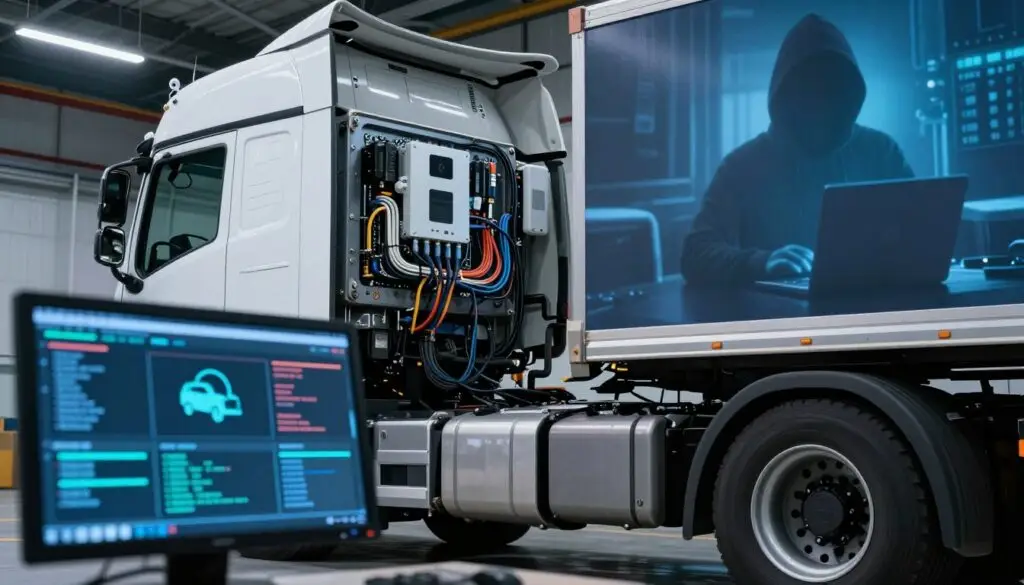
Your truck’s Electronic Logging Device does more than track hours of service. It creates a digital gateway into your entire fleet operation. Modern trucking depends on connected technology, from telematics systems to cloud-based logistics platforms. Each connection represents a potential entry point for cyber criminals targeting fleet cybersecurity vulnerabilities.
The numbers tell a concerning story. A 2024 TSA report reveals that 75% of surveyed trucking companies use at least one cloud-based logistics tool. Yet fewer than half have implemented formal security protocols to protect these systems. This gap creates serious fleet hacking risks that extend far beyond stolen data.
When hackers breach an ELD, they can access Transportation Management Systems, disable vehicles remotely, or compromise cargo security. The mandate that improved compliance has simultaneously introduced telematics vulnerabilities that threaten driver safety and business continuity. Understanding connected truck security isn’t just an IT department concern anymore—it’s a fundamental operational issue that affects every aspect of your fleet management.
Key Takeaways
- Electronic Logging Devices serve as potential entry points for cybercriminals to access entire fleet networks and management systems
- 75% of trucking companies use cloud-based logistics tools, but less than half have formal cybersecurity protocols in place
- The average cost per breach in transportation exceeds $4 million according to IBM’s 2024 research, with ransomware demands ranging from $500,000 to $2 million
- ELD breaches can result in remote vehicle disabling, GPS spoofing for cargo theft, and compromised driver personal information
- Current FMCSA regulations contain minimal cybersecurity requirements, leaving fleet operators responsible for implementing additional protections
- Multi-factor authentication, regular firmware updates, driver training, and network segmentation form the foundation of effective ELD security
The Rising Cyber Threat Landscape for Connected Fleets
The transportation sector has emerged as a frontline battleground in the escalating war against sophisticated cybercrime operations. As fleets adopt digital technologies to improve efficiency and compliance, they simultaneously create new vulnerabilities that hackers exploit with increasing frequency. The convergence of valuable cargo, time-sensitive operations, and interconnected systems has transformed trucking into one of the most attractive targets for cyber threats transportation networks face today.
Every connected device in a modern truck—from electronic logging devices to GPS units and in-cab tablets—expands the potential attack surface. These entry points give cybercriminals multiple pathways to penetrate fleet networks and compromise critical systems. The rapid digital transformation across the industry has outpaced security implementations, leaving many operators exposed to devastating breaches.

Why Trucking Has Become a Cybercrime Magnet
The trucking industry presents a unique combination of factors that make it exceptionally vulnerable to trucking cybercrime. Unlike traditional tech sectors with dedicated security teams, most fleet operators have limited cybersecurity budgets and minimal in-house expertise. This resource gap creates opportunities that sophisticated criminal organizations actively exploit.
High-value cargo represents immediate financial gain for attackers. Criminals can redirect shipments through GPS manipulation, steal competitive intelligence about routes and customers, or hold entire operations hostage through ransomware. The time-sensitive nature of logistics operations makes fleet operators more likely to pay ransom demands rather than endure prolonged downtime.
The industry’s regulatory environment adds another layer of complexity. While the Federal Motor Carrier Safety Administration mandates ELD usage for compliance, current regulations contain minimal cybersecurity requirements. This regulatory gap leaves fleet operators responsible for implementing security measures without clear federal guidance or standards.
Consider these vulnerability factors that attract cybercriminals to trucking operations:
- Aging digital infrastructure with outdated security protocols
- Third-party integrations that create multiple access points
- Driver turnover that complicates security training initiatives
- Dispersed operations across multiple geographic locations
- Reliance on wireless communications vulnerable to interception
“The transportation industry’s rapid adoption of connected technologies without corresponding security investments has created a target-rich environment for cyber attackers. Every unpatched system, every default password, and every unencrypted connection represents an open door.”
— Cybersecurity and Infrastructure Security Agency (CISA), Transportation Security Guidelines
The Staggering Financial Toll of Fleet Cyber Attacks
Transportation sector breaches carry devastating financial consequences that extend far beyond immediate ransom payments. According to IBM’s 2024 Cost of a Data Breach Report, the average cost per breach in the transportation sector exceeds $4 million. This figure encompasses direct costs like ransom payments and system recovery, plus indirect expenses including operational downtime, legal fees, and regulatory fines.
Ransomware has emerged as the predominant threat vector targeting fleet operations. These attacks typically encrypt critical fleet management systems, forcing operators to choose between paying substantial ransoms or facing weeks of operational paralysis.
Real-world fleet cyber attacks have demonstrated the scope of potential damage. Delivery disruptions caused by system breaches create cascading failures across supply chains, resulting in missed deadlines and contract penalties. GPS spoofing incidents have enabled vehicle hijackings, leading to complete cargo losses valued in the hundreds of thousands of dollars.
| Cost Category | Average Impact | Recovery Timeline |
|---|---|---|
| Ransomware Payments | $50,000 – $500,000 | Immediate |
| Operational Downtime | $10,000 – $100,000 per day | 3-14 days |
| Data Breach Remediation | $200 – $400 per compromised record | 6-12 months |
| Regulatory Fines | $50,000 – $2 million | Ongoing compliance |
Customer and driver data theft creates long-term legal exposure through class-action lawsuits and regulatory penalties. When hackers exfiltrate personal information, hours of service records, and delivery details, fleet operators face obligations under state privacy laws and sector-specific regulations. These legal proceedings can drag on for years, multiplying the initial breach costs.
Operational shutdowns represent perhaps the most immediate crisis. When ransomware locks fleet management systems, dispatchers cannot assign routes, drivers cannot receive load information, and customers cannot track shipments. Each hour of downtime translates directly to lost revenue and damaged customer relationships that may take months or years to repair.
Small and mid-sized fleets face disproportionate impacts from these costs. While large carriers can absorb million-dollar losses and maintain dedicated security teams, smaller operators often cannot survive a major breach. Industry data suggests that nearly 60% of small businesses close within six months of experiencing a significant cyber attack.
Understanding Electronic Logging Devices and Fleet Network Architecture
The foundation of ELD device security begins with comprehending how these devices connect and communicate within fleet networks. Electronic logging devices are not simple standalone gadgets that merely record hours of service. They function as deeply embedded components within a complex digital ecosystem that spans from vehicle hardware to cloud-based management platforms.
The FMCSA mandated ELDs primarily for Hours of Service compliance tracking. However, these devices have evolved into comprehensive data collection hubs that monitor virtually every aspect of vehicle and driver performance. This evolution has created a sophisticated fleet network architecture where multiple systems interact continuously.
Understanding this architecture reveals why ELD device security has become such a critical concern. Each connection point represents a potential entry vector for malicious actors seeking to compromise fleet operations.
Integration with Vehicle Systems and Telematics
Modern ELDs connect directly to a vehicle’s Controller Area Network (CAN) bus system. This connection provides access to the vehicle’s internal diagnostic network where critical operational data flows continuously. The CAN bus serves as the central nervous system for modern trucks, managing everything from engine performance to braking systems.
Through this connection, telematics integration enables ELDs to capture real-time vehicle diagnostics. The devices monitor engine hours, fuel consumption rates, tire pressure readings, and diagnostic trouble codes as they occur. This deep integration means that ELDs have unprecedented visibility into vehicle operations.
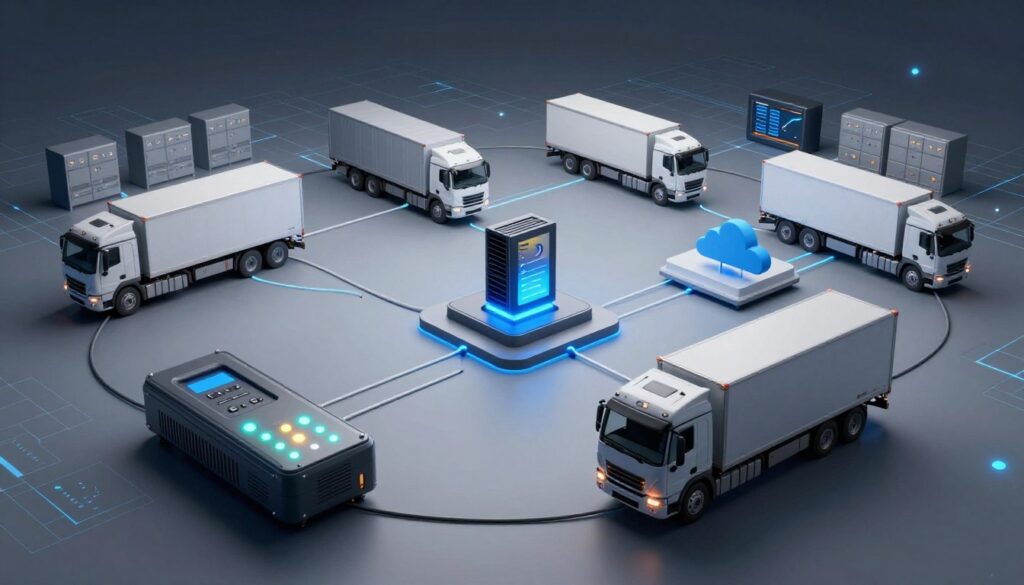
The telematics platform extends beyond the ELD itself to include additional hardware components. Wi-Fi-enabled dashboard displays allow drivers to view their hours of service and receive dispatch instructions. In-cab tablets connect to the ELD for electronic documentation and communication purposes.
These interconnected devices create multiple communication pathways within the vehicle environment. Bluetooth connections facilitate wireless data exchange between the ELD and driver smartphones or tablets. Cellular modems enable constant communication with back-office systems regardless of the vehicle’s location.
The complexity of telematics integration introduces numerous potential vulnerabilities. Each wireless protocol, each hardware component, and each software interface represents a point where security measures must be implemented and maintained.
Data Collection, Storage, and Transmission
The volume and sensitivity of data that ELDs handle is staggering. These devices collect, store, and transmit information that goes far beyond basic compliance records. Understanding the scope of this data reveals why protecting ELD data transmission pathways is paramount.
Hours of Service records form the foundational data set that ELDs were designed to capture. These records document when drivers start their shifts, take required breaks, and end their duty periods. This information includes precise timestamps and duty status changes mandated by federal regulations.
GPS location data provides another critical data layer. ELDs continuously track vehicle position with high precision, creating detailed route histories that show exactly where trucks traveled and when. This geospatial intelligence reveals patterns about customer locations, preferred routes, and operational territories.
| Data Category | Information Collected | Transmission Frequency |
|---|---|---|
| Compliance Records | HOS logs, duty status changes, driver identification | Real-time sync with periodic batch uploads |
| Location Intelligence | GPS coordinates, route histories, geofence events | Continuous streaming every 1-5 minutes |
| Vehicle Diagnostics | Engine data, fuel consumption, speed, maintenance alerts | Event-triggered and scheduled intervals |
| Driver Behavior | Acceleration patterns, braking events, idle time | Aggregated daily reports with real-time alerts |
Personal driver information represents another sensitive data category. Driver licenses, contact details, and employment records often get stored within ELD systems. Some platforms even capture biometric data for driver authentication purposes.
The temporary storage of data on the ELD device itself creates security concerns. Most devices maintain local data buffers to ensure information isn’t lost during connectivity interruptions. This locally stored data can be accessed if someone gains physical or remote access to the device.
Network Connections to Back-Office Systems
The journey of data from the ELD to back-office systems involves multiple network hops and connection points. Each transition creates opportunities for interception or manipulation if proper security protocols aren’t enforced. Understanding this data flow is essential for implementing effective ELD device security measures.
Data leaves the vehicle through cellular modems embedded in or connected to the ELD. These devices establish connections with commercial cellular networks, creating the first external communication link. The data travels encrypted or unencrypted depending on the manufacturer’s security implementation.
Cloud-based platforms serve as the central collection point for fleet data. These platforms receive incoming data streams from hundreds or thousands of vehicles simultaneously. Application programming interfaces facilitate this data ingestion process, parsing incoming information and routing it to appropriate database tables.
The fleet network architecture extends from these cloud platforms to various back-office applications. Dispatch systems query the platform to retrieve real-time vehicle locations and driver availability. Route optimization software analyzes historical travel data to plan more efficient delivery schedules.
Third-party integrations add another layer of complexity to the network architecture. Many fleets use specialized software for specific functions like fuel tax reporting, customer relationship management, or freight brokerage operations. These external systems often require API access to ELD data, creating additional connection points that must be secured.
Critical ELD Cybersecurity Vulnerabilities Exploited by Hackers
Despite their mandatory role in the trucking industry, ELDs often feature fundamental security gaps that hackers routinely target. These devices were designed primarily for compliance monitoring rather than cybersecurity defense. As a result, many electronic logging systems contain exploitable weaknesses across authentication protocols, data transmission methods, software maintenance practices, and wireless connectivity standards.
Understanding these ELD vulnerabilities provides fleet managers with essential knowledge to assess their risk exposure. The security landscape for connected trucks continues to evolve as cybercriminals develop more sophisticated attack methods.

Weak or Default Authentication Credentials
The most prevalent security weakness in ELD systems stems from inadequate authentication controls. Many devices ship with default usernames and passwords that fleet operators never change during installation. These factory settings are often publicly available in online documentation, creating an easily exploitable entry point for attackers.
Research indicates that 32% of hackers view privileged accounts as the easiest entry point to steal sensitive data. This statistic takes on heightened significance when considering that stolen credentials are involved in over 80% of all data breaches. Authentication weaknesses represent the primary vulnerability in most fleet systems.
Several factors contribute to this persistent security gap:
- Shared credentials across multiple users eliminates accountability and access tracking
- Absence of multi-factor authentication leaves systems reliant solely on password protection
- Infrequent password rotation policies allow compromised credentials to remain valid indefinitely
- Weak password complexity requirements accept simple, easily guessed passwords
Unencrypted Communication Channels
The transmission of data between ELD devices and back-office systems frequently occurs without proper encryption protocols. This fundamental security oversight exposes sensitive information to interception during transit. Unencrypted ELD data travels across cellular networks, Wi-Fi connections, and cloud infrastructure where attackers can monitor and capture communications.
When fleet data moves without encryption, several critical risks emerge. Location information transmits in plain text, allowing unauthorized parties to track vehicle movements in real-time. Hours of service records travel exposed, making driver compliance data accessible to competitors or malicious actors.
Attackers can execute man-in-the-middle attacks where they position themselves between the ELD device and the receiving server. In these scenarios, hackers not only read the transmitted information but can also modify data before forwarding it to its intended destination.
Outdated Firmware and Unpatched Software Flaws
Electronic logging devices run on firmware that requires regular updates to address newly discovered security vulnerabilities. However, the update process in trucking operations faces significant challenges. Manufacturers release security patches, but fleet operators often delay or completely neglect firmware installations.
These firmware security flaws remain exploitable for extended periods when updates aren’t applied promptly. Known vulnerabilities documented in public databases give attackers detailed roadmaps for compromising specific ELD models. The longer a fleet operates with outdated software, the greater their exposure to targeted attacks.
Several operational factors contribute to poor patch management practices:
- Update deployment complexity requiring coordination and often vehicle downtime
- Fear of operational disruption from compatibility issues
- Lack of automated update mechanisms requiring manual intervention
- Limited security awareness treating patches as optional rather than critical
Insecure Wireless Connections and Bluetooth Pairing
Modern ELD systems rely on multiple wireless technologies for connectivity and functionality. These wireless protocols introduce additional attack surfaces when implemented without adequate security controls. Cellular connections, Wi-Fi networks, and Bluetooth pairing all present distinct vulnerability profiles that hackers actively exploit.
Bluetooth connectivity represents a particularly concerning weakness. Many ELD devices use Bluetooth to communicate with driver smartphones, peripheral sensors, or diagnostic equipment. When these Bluetooth connections lack proper authentication, attackers within physical proximity can intercept communications or inject malicious commands.
⚠️ Security Warning
Never connect ELD devices or fleet tablets to unsecured public Wi-Fi networks at truck stops or rest areas. These networks are prime targets for hackers deploying rogue access points that mimic legitimate networks. Use cellular data connections or a secure VPN when accessing fleet systems remotely.
How Cybercriminals Penetrate Truck Systems Through ELDs
Fleet operators face an evolving threat landscape where cybercriminals employ increasingly sophisticated truck hacking methods to compromise ELD-connected systems. These attacks don’t require advanced technical skills in every case. Instead, many successful breaches exploit fundamental weaknesses in human behavior, network architecture, and supply chain integrity.

Targeting the Human Element Through Deceptive Communications
The most common entry point for cyber attacks doesn’t involve complex code or technical exploits. Social engineering and phishing attacks targeting trucking companies represent the primary threat vector, with research indicating that human error accounts for the majority of successful breaches.
Hackers craft convincing communications that appear legitimate to drivers and dispatchers working under pressure. These fraudulent messages often impersonate trusted sources like the FMCSA, promising urgent compliance updates or mandatory ELD software patches.
Drivers receive text messages that appear to come from dispatch with links to updated route details or new delivery instructions. A single click on these malicious links can install malware that provides backdoor access to the entire fleet network. Voice calls from individuals claiming to be IT support or ELD vendor representatives request login credentials under the guise of system maintenance or security verification.
Intercepting Data in Real-Time Transmissions
Man-in-the-middle attacks represent a technically sophisticated threat where hackers position themselves between the ELD device and back-office systems. This invisible interception allows criminals to read, capture, and potentially alter data transmissions without either party detecting the intrusion.
These attacks typically occur when ELD devices connect through unsecured wireless networks. A truck stop offering free Wi-Fi might actually be a hacker’s trap, with compromised routers capturing every data packet transmitted by connected devices. Attackers can intercept driver credentials, hours of service data, location information, and cargo details in real-time.
Backdoor Access Through Connected Applications
Modern ELD ecosystems rarely operate in isolation. They integrate with numerous third-party applications for fuel management, route optimization, maintenance scheduling, and driver communication. Each integration point represents a potential vulnerability that hackers systematically exploit.
Security researchers have documented numerous cases where the core ELD platform maintained robust security measures, but poorly secured third-party applications provided unrestricted backdoor access. These apps often request excessive permissions during installation, gaining access to far more system resources than their functionality requires.
Compromised Components Before Installation
Perhaps the most insidious threat comes from supply chain cyber attacks, where ELD devices arrive pre-compromised with malicious code already installed. This attack methodology provides immediate, undetected access from the moment fleet operators connect the device to their vehicles and networks.
These supply chain compromises can occur at multiple points in the manufacturing and distribution process. Counterfeit ELD devices sold through unauthorized channels may contain hidden backdoors designed for data theft or system control. Even legitimate devices can be compromised if cybercriminals infiltrate the manufacturing facility or intercept shipments during transit.
| Attack Method | Primary Target | Detection Difficulty |
|---|---|---|
| Social Engineering | Drivers and dispatchers | Low to Medium |
| Man-in-the-Middle | Data transmission channels | High |
| Third-Party Apps | Integration points and APIs | Medium to High |
| Supply Chain | Hardware and firmware | Very High |
Documented Cyber Attacks and Real-World Breach Scenarios
The trucking industry has witnessed a surge of confirmed cybersecurity incidents that paralyzed operations and exposed critical vulnerabilities. These real-world cyber attacks demonstrate that connected fleet systems face active exploitation by criminal networks with devastating consequences. Fleet data breaches have moved from theoretical discussions to documented business disasters costing companies millions in losses and operational downtime.
Location Manipulation Through GPS Signal Interference
GPS spoofing incidents have emerged as a sophisticated method for cargo theft and route disruption. Hackers transmit false GPS signals that override legitimate satellite data, tricking vehicle navigation systems into displaying incorrect locations. This technique allows criminals to reroute high-value cargo shipments to locations where theft can occur without triggering traditional security alarms.
Security researchers documented several cases where attackers positioned GPS spoofing equipment near truck stops and rest areas. The false signals gradually altered the displayed location, causing drivers to follow manipulated routes that diverted them from intended destinations. In one documented incident, a shipment of electronics valued at over $2 million was rerouted to an industrial area where the trailer was quickly detached and stolen.
Encryption Attacks That Paralyze Fleet Operations
Ransomware attacks on trucking companies have increased with devastating operational impact. A 2023 incident involving a major logistics provider demonstrated the catastrophic consequences when hackers encrypted fleet management systems. The attack grounded over 1,000 trucks for nearly 48 hours, halting all dispatch operations, driver communication, and load tracking capabilities.
The attackers gained initial access through compromised ELD vendor credentials, then moved laterally through the company’s network infrastructure. Once positioned within core fleet management systems, the ransomware encrypted databases containing route assignments, customer information, maintenance schedules, and driver hours-of-service records. The company could not legally dispatch vehicles without access to compliance documentation.
A 2024 survey found that over 40% of fleets experienced a cybersecurity incident in the past 12 months, yet only 22% of fleets under 50 trucks reported having cyber insurance coverage. This insurance gap leaves small and medium-sized carriers financially vulnerable to attacks that can threaten business survival.
The HDJ Perspective
After covering fleet technology for over 15 years, the cybersecurity gap in trucking represents one of the most underappreciated risks facing the industry. The combination of mandatory connectivity through ELDs, limited IT resources at most carriers, and increasingly sophisticated criminal organizations creates a perfect storm. The fleets investing in security today—even basic measures like multi-factor authentication and regular training—will have significant competitive advantages as customers and insurers demand proof of cyber resilience. This isn’t about fear; it’s about operational maturity. The carriers that treat cybersecurity as essential infrastructure rather than optional expense will survive the inevitable attacks that now target every connected fleet.
What Hackers Can Access After Breaching Your ELD System
When hackers penetrate ELD defenses, the range of accessible information creates risks across operational, personal, and physical security dimensions. A successful breach doesn’t just expose one type of data—it opens multiple vulnerabilities simultaneously. The interconnected nature of modern telematics systems means that stolen fleet data often includes far more information than fleet managers realize their systems contain.
Real-Time Vehicle Location and Route Intelligence
Location data represents one of the most immediately exploitable assets within breached ELD systems. Hackers gain access to real-time GPS coordinates that reveal exactly where every vehicle in a fleet is located at any given moment. This information updates continuously as trucks move along their routes.
Beyond current location, ELD systems store extensive historical route data that creates predictable patterns. Criminals can analyze weeks or months of location history to identify regular delivery schedules and high-value routes. This route intelligence enables sophisticated cargo theft operations where attackers know precisely when and where valuable shipments will be vulnerable.
Driver Personal Data and Hours of Service Records
The personal information stored in ELD systems creates serious privacy violations and identity theft risks when exposed. These devices collect and transmit detailed driver identification data including full names, driver’s license numbers, and in some cases Social Security numbers from integrated payroll systems. Many drivers remain completely unaware of how much compromised driver information their ELD devices actually contain.
Hours of Service logs reveal intimate details about driver schedules, work patterns, and rest periods. This data exposes when specific drivers are working versus sleeping, creating personal security vulnerabilities. Criminals can use this information for targeted scams, phishing attempts, or even physical threats against drivers carrying valuable cargo.
Cargo Information and Customer Delivery Details
Breached ELD systems frequently provide access to integrated transportation management platforms containing detailed cargo manifests. Attackers can view what products each truck carries, their declared values, and sensitivity classifications. This intelligence transforms random cargo theft into targeted operations focused on cargo security risks involving high-value shipments.
Potential Vehicle Control Systems and Safety Functions
Perhaps the most alarming aspect of ELD breaches involves potential access to vehicle control systems. While not all ELD devices connect directly to critical vehicle functions, many advanced fleet management platforms include remote capabilities that create vehicle control hacking opportunities. Some systems feature remote engine shutdown capabilities designed originally for theft prevention or repossession scenarios.
Telematics systems often integrate with engine control units to monitor fuel consumption, performance metrics, and diagnostic trouble codes. These same communication pathways could theoretically provide attack vectors into more critical vehicle systems. Security researchers have demonstrated that compromised telematics units can serve as entry points for accessing braking systems, transmission controls, and other safety-critical functions.
The Financial and Operational Consequences of ELD Security Breaches
Understanding the full financial impact of ELD security breaches requires examining costs that ripple through every aspect of fleet operations. The transportation sector faces unique vulnerabilities that translate into extraordinary financial exposure when hackers penetrate connected truck systems.
Direct Financial Losses from Cyber Incidents
The immediate financial toll from ELD security breaches begins with ransom demands that have escalated dramatically in recent years. Ransomware operators now commonly demand $1 million or more from trucking companies, knowing that operational pressure creates urgency to pay. These cyber attack costs represent just the opening chapter in a much longer financial story.
Beyond ransom payments, carriers face substantial forensic investigation expenses. Cybersecurity firms charge $300 to $500 per hour to determine breach scope, identify compromised systems, and develop remediation strategies. A thorough investigation for a mid-sized fleet can easily exceed $150,000 before any actual repairs begin.
Operational Disruptions and Fleet Downtime Costs
The fleet downtime expenses from cyber incidents often dwarf direct breach costs. A documented case involving a carrier whose systems were compromised for 48 hours illustrates this reality. With 1,000 trucks grounded during system recovery, the company lost approximately $2.5 million in revenue during those two days alone.
| Cost Category | Typical Range | Business Impact |
|---|---|---|
| Ransom Payment | $500,000 – $2,000,000 | Direct cash outflow with no recovery guarantee |
| Forensic Investigation | $150,000 – $400,000 | Essential for breach scope and prevention |
| Fleet Downtime Revenue Loss | $1,000,000 – $5,000,000 | Immediate revenue impact and customer damage |
| System Replacement | $200,000 – $800,000 | Unplanned capital expenditure |
Long-Term Reputational Damage and Customer Trust Erosion
The most devastating costs from ELD security breaches often emerge months or years after the initial incident. Reputational damage affects competitive position and growth trajectory. Shippers increasingly evaluate carrier cybersecurity capabilities when awarding contracts, particularly for high-value or sensitive freight.
Contract cancellations following publicized breaches represent direct revenue loss that compounds over time. A major shipper who moves 100 loads monthly at $2,000 per load represents $2.4 million in annual revenue. Losing just three such customers after a security incident costs $7.2 million annually in recurring revenue—far exceeding the immediate breach costs.
Free Professional Fleet Tools
Cost calculators, fault code lookup, maintenance planners, and more—built for owner-operators, fleet managers, and diesel techs. No signup required.
Federal Regulations and Current ELD Security Standards
While federal agencies have established clear rules for ELD functionality and data recording, comprehensive cybersecurity protections remain largely absent from mandatory compliance requirements. The regulatory framework governing electronic logging devices focuses primarily on accurate Hours of Service tracking rather than protecting fleet systems from cyber threats.
FMCSA Mandate Requirements and Security Shortcomings
The FMCSA ELD requirements establish technical specifications for recording driver duty status and transmitting data to enforcement officials. These regulations mandate specific data elements, standardized output formats, and tamper-resistant designs. However, they contain minimal provisions addressing external cybersecurity threats.
The federal mandate focuses on preventing drivers or carriers from manipulating Hours of Service records. It requires data integrity protections to detect unauthorized modifications. Yet these safeguards were designed to stop internal tampering, not sophisticated external hackers.
Encryption requirements under current regulations apply only to data transfers between the device and enforcement systems during roadside inspections. Communications between ELDs and back-office systems face no mandatory encryption standards. This leaves vast amounts of fleet data vulnerable during transmission.
Authentication requirements remain similarly limited. The regulations don’t mandate multi-factor authentication or specify password complexity standards. Many ELD systems continue operating with weak default credentials that sophisticated attackers easily compromise. The certification process for ELD manufacturers emphasizes functional compliance rather than security testing, with no mandatory penetration testing according to NIST Cybersecurity Framework standards.
Voluntary Industry Cybersecurity Frameworks and Guidelines
Several voluntary frameworks provide guidance for trucking cybersecurity regulations beyond basic federal requirements. The Transportation Security Administration has published cybersecurity guidelines for surface transportation that recommend specific security controls for connected vehicle systems.
The American Trucking Associations offers best practice recommendations addressing industry security standards. These guidelines cover network architecture, access controls, and incident response planning specifically tailored to fleet operations. However, voluntary adoption means implementation varies significantly across carriers.
The NIST Cybersecurity Framework provides adaptable security controls that transportation companies can implement. This framework organizes security measures into five core functions: Identify, Protect, Detect, Respond, and Recover. The voluntary nature of these industry security standards creates inconsistent protection across the trucking sector.
State-Level Data Protection and Privacy Regulations
A growing patchwork of state privacy laws now impacts data protection compliance for trucking companies. California’s Consumer Privacy Act establishes strict requirements for businesses collecting personal information from state residents, including driver and customer data that fleet operations routinely gather.
The CCPA grants individuals rights to know what personal information companies collect, request deletion of their data, and opt out of data sales. Violations can result in penalties up to $7,500 per intentional violation. Fleet operators suffering data breaches may face substantial regulatory fines if they fail to protect driver or customer information adequately.
Essential Security Measures to Protect Your Fleet from ELD Threats
Every fleet operator faces a critical choice: implement robust ELD security measures now or risk becoming the next cyber attack victim. The good news is that most successful attacks exploit basic security gaps that fleet managers can close with systematic defensive strategies. A layered security approach addresses vulnerabilities at multiple points, from the initial selection of ELD providers through ongoing staff education and system maintenance.
Vetting ELD Providers for Robust Security Certifications
Selecting the right ELD provider represents the single most important security decision a fleet manager makes. This choice establishes the security foundation for your entire connected fleet infrastructure. Yet many operators focus solely on price and features while overlooking critical security credentials.
Security-conscious providers demonstrate their commitment through recognized certifications and transparent practices. Look for vendors who maintain ISO 27001 certification, which validates comprehensive information security management systems. SOC 2 compliance reports provide independent verification that providers meet strict data security standards.
Ask potential vendors specific questions about their security posture:
- How frequently do they conduct penetration testing by independent security firms?
- What encryption standards protect data both in transit and at rest?
- What is their documented incident response history and average resolution time?
- Do they provide transparent security policies and regular security updates?
- How do they handle vulnerability disclosures and security patches?
Implementing Strong Authentication and Access Controls
Stolen login credentials account for more than 80% of all cyber breaches across industries. This staggering statistic makes authentication controls your most critical technical defense. Weak passwords and single-factor authentication create open doors for cybercriminals.
Multi-factor authentication must be non-negotiable for all ELD system access. MFA requires users to provide two or more verification factors to gain access. Even if hackers steal a password, they cannot access systems without the second authentication factor.
Key Recommendation
Implement role-based access controls that limit system permissions based on job function. Drivers need access to their own logs and navigation functions but should not access fleet-wide operational data or administrative settings. Conduct quarterly audits of all user accounts and immediately revoke credentials when employees leave or change roles.
Establishing Regular Update and Patch Management Protocols
Unpatched software represents one of the easiest ways for hackers to gain access to fleet systems. Cybercriminals actively scan for known vulnerabilities in outdated software versions. When vendors release security patches, attackers reverse-engineer them to identify exploitable weaknesses in unpatched systems.
Systematic patch management protocols protect against known vulnerabilities before attackers exploit them. Create a structured update process that includes monitoring vendor security bulletins, assessing patch criticality, testing updates in controlled environments, maintaining detailed update logs, and automating updates wherever possible.
Conducting Driver and Staff Cybersecurity Training
Technology controls fail when users fall victim to social engineering and phishing attacks. Drivers and staff members represent both your greatest vulnerability and your strongest defense. Comprehensive driver cybersecurity training transforms your workforce from potential targets into active security participants.
Mandatory training programs should cover practical, real-world scenarios that drivers and office staff encounter regularly. Generic cybersecurity presentations fail to resonate with transportation professionals. Tailor content to fleet operations and the specific threats targeting the trucking industry.
| Training Topic | Key Learning Objectives | Practical Application |
|---|---|---|
| Phishing Recognition | Identify suspicious emails, texts, and calls | Report before clicking links or providing info |
| Password Security | Create strong, unique passwords; use managers | Avoid password reuse across accounts |
| Public Wi-Fi Safety | Understand risks at truck stops and rest areas | Use VPN when accessing company systems |
| Incident Reporting | Know what constitutes a security incident | Contact designated security personnel immediately |
Make training mandatory for all personnel with fleet system access and revisit it quarterly. Cyber threats evolve rapidly, and annual training becomes outdated before the next session. Quarterly refreshers keep security awareness current and reinforce critical behaviors.
Developing a Comprehensive Fleet Cybersecurity Defense Program
Protecting your connected fleet demands a strategic, multi-layered approach that prepares your organization for both prevention and response. A robust fleet security program extends beyond installing antivirus software or changing passwords. It requires systematic planning, continuous monitoring, and coordinated efforts across your entire operation.
Conducting Proactive Security Evaluations and Vulnerability Testing
Regular security assessments form the foundation of any effective defense strategy. Fleet operators should establish a continuous evaluation cycle that identifies weaknesses before cybercriminals exploit them.
Annual comprehensive security audits examine every connected system in your fleet infrastructure. These thorough reviews assess ELD devices, telematics platforms, back-office software, and communication networks. Qualified security professionals evaluate configurations, access controls, and data protection measures across your entire technology stack.
Quarterly vulnerability scans provide more frequent checkpoints between annual audits. Automated scanning tools identify outdated software, misconfigured systems, and known security flaws. These scans focus on network infrastructure, connected devices, and internet-facing systems that attackers typically target first.
Penetration testing takes assessment further by simulating real-world attacks. Ethical hackers attempt to breach your defenses using the same techniques criminals employ. This hands-on testing reveals exploitable weaknesses that automated scans might miss. Organizations should conduct penetration testing at least annually, with additional testing after major system changes.
Building Response Frameworks and Recovery Procedures
Cybersecurity experts emphasize that prepared organizations respond faster with significantly less business impact. Incident response planning transforms potential chaos into coordinated action when breaches occur.
An effective incident response plan includes designated response teams with clear roles and decision-making authority. When systems fail or breaches occur, everyone must know their responsibilities without confusion or delay. Contact lists should include internal stakeholders and external experts, with immediate access to legal counsel, forensic investigators, law enforcement contacts, and insurance carriers.
Regular drills and tabletop exercises test response plans before real incidents occur. These simulations identify gaps, clarify responsibilities, and build muscle memory for crisis situations. Organizations that practice response procedures recover faster and with less disruption.
Isolating Systems Through Strategic Network Design
Network segmentation creates defensive barriers that limit breach impact even when attackers penetrate outer defenses. This strategy divides networks into separate zones, each with specific security controls and limited communication pathways.
Fleet operators should isolate ELD and telematics systems from critical business operations. Vehicle-based systems operate in one network zone, while financial systems, customer databases, and operational software function in separate protected zones. This separation prevents attackers who compromise a truck’s ELD from immediately accessing payroll systems or customer information.
Leveraging External Expertise and Continuous Monitoring
Most fleet operators cannot maintain in-house cybersecurity teams with specialized expertise and 24/7 monitoring capabilities. Managed security services provide professional protection without the expense of building internal departments.
Cybersecurity experts bring specialized knowledge that general IT staff typically lack. They understand emerging threats, advanced attack techniques, and industry-specific vulnerabilities. This expertise proves especially valuable for transportation companies without dedicated security personnel. The investment in comprehensive defense programs pays dividends through reduced breach risk, faster incident response, and demonstrated commitment to security.
Emerging Technologies and the Future of Connected Truck Protection
Tomorrow’s fleet protection relies on technologies that seem like science fiction today, from blockchain ledgers to intelligent threat detection systems. The transportation industry is experiencing a technological transformation that will fundamentally reshape how connected trucks defend against increasingly sophisticated cyber threats.
Next-Generation Encryption and Distributed Ledger Protection
Advanced cryptographic technologies are transforming how ELD data remains secure throughout its entire lifecycle. End-to-end encryption now protects information from the moment sensors capture it in the vehicle until it reaches back-office systems. This comprehensive protection ensures that data remains unreadable to unauthorized parties even if intercepted during transmission.
Blockchain ELD security represents a paradigm shift in data integrity and tamper protection. Distributed ledger technology creates immutable audit trails for every piece of ELD data collected. Each record receives a cryptographic hash that links it to previous entries, making unauthorized modifications immediately detectable.
Intelligent Systems for Continuous Threat Monitoring
Artificial intelligence and machine learning are revolutionizing real-time threat detection capabilities for connected fleets. These intelligent systems analyze millions of data points continuously, identifying patterns that human operators would never notice. AI threat detection transforms cybersecurity from a reactive discipline into a predictive science.
Behavioral analytics form the foundation of modern AI threat detection systems. These platforms establish baseline patterns for normal fleet operations, including typical login locations, standard data access patterns, and expected system commands. When deviations occur, the system immediately flags them as potential security incidents.
Automated threat response represents the next evolution in detection technology. These systems don’t just identify potential breaches—they take immediate action to contain them. Compromised devices can be isolated from the network automatically. Suspicious traffic gets blocked without requiring human intervention.
Collective Defense Through Information Exchange
The transportation industry is building collaborative cybersecurity infrastructure that benefits all participants. Information Sharing and Analysis Centers specific to trucking and logistics enable companies to share threat intelligence without compromising competitive information. The Transportation Systems Sector through CISA serves as a coordination hub for these collaborative efforts.
Fleet operators contribute anonymized data about security incidents they experience. In return, they receive real-time alerts about emerging threats targeting the industry. This collective intelligence dramatically improves each participant’s security posture.
| Technology | Primary Security Function | Key Benefits |
|---|---|---|
| Blockchain ELD Security | Data integrity and tamper detection | Immutable audit trails, transparent compliance |
| AI Threat Detection | Real-time anomaly identification | Proactive identification, automated response |
| Quantum-Resistant Encryption | Future-proof data protection | Protection against advanced computing threats |
| Collaborative Cybersecurity | Industry-wide threat intelligence | Shared defense knowledge, reduced costs |
Frequently Asked Questions
Can hackers remotely disable a commercial truck through ELD systems?
Yes, this is technically possible in some cases. Advanced fleet management platforms include remote engine shutdown capabilities designed for theft prevention. If hackers gain access through compromised ELD systems connected to the vehicle’s CAN bus, they could potentially send commands to other vehicle components. While sophisticated attacks of this nature require considerable technical expertise, security researchers have demonstrated that compromised telematics units can serve as entry points for accessing braking systems, transmission controls, and other safety-critical functions. Fleet operators should verify what remote capabilities their ELD systems include and ensure robust access controls protect these features.
What is the average cost of a cybersecurity breach for trucking companies?
According to IBM’s 2024 Cost of a Data Breach Report, the average cost per breach in the transportation sector exceeds $4 million. This figure includes direct costs like ransom payments and system recovery, plus indirect expenses including operational downtime, legal fees, and regulatory fines. Ransomware demands alone typically range from $500,000 to $2 million for trucking companies. When factoring in long-term consequences like customer attrition and competitive disadvantages, total economic impact can reach $10 million to $20 million for mid-sized carriers. Small fleets face disproportionate impacts since they often lack resources to survive major breaches.
Are ELDs required to meet specific cybersecurity standards under federal regulations?
Current 49 CFR Part 395 ELD requirements contain minimal cybersecurity provisions. The federal mandate focuses primarily on preventing drivers or carriers from manipulating Hours of Service records through data integrity protections and tamper-resistant designs. However, these safeguards address internal tampering rather than external cyber threats. Encryption requirements apply only to data transfers during roadside inspections, and there are no mandatory multi-factor authentication or penetration testing requirements. Fleet operators are largely responsible for implementing additional security measures without clear federal guidance.
How can fleet managers protect their ELD systems from phishing attacks?
Protecting against phishing requires a multi-layered approach combining technology and training. Implement mandatory cybersecurity training for all drivers and staff covering phishing recognition, password security, and incident reporting. Deploy multi-factor authentication for all ELD system access so stolen credentials alone cannot provide entry. Establish clear policies for verifying unexpected communications claiming to be from vendors, regulators, or IT support. Create dedicated channels for reporting suspicious messages and conduct quarterly training refreshers with simulated phishing exercises to maintain awareness.
What data can hackers access if they breach an ELD system?
A successful ELD breach can expose multiple categories of sensitive information. This includes real-time GPS coordinates and historical route data revealing delivery patterns and customer locations. Driver personal information such as names, license numbers, and potentially Social Security numbers from integrated systems becomes vulnerable. Hours of Service records, driver behavior analytics, cargo manifests with declared values, and customer delivery schedules are also at risk. In advanced fleet management systems, attackers may gain access to remote vehicle control functions including engine shutdown capabilities.
Should small fleets invest in cyber insurance for ELD-related risks?
Yes, cyber insurance has become increasingly important for fleets of all sizes. A 2024 survey found that over 40% of fleets experienced a cybersecurity incident in the past 12 months, yet only 22% of fleets under 50 trucks reported having cyber insurance coverage. Industry data suggests nearly 60% of small businesses close within six months of a significant cyber attack. Cyber insurance can cover ransom payments, forensic investigation costs, legal expenses, and business interruption losses. However, insurers increasingly mandate specific security controls before providing coverage, so implementing basic protections like multi-factor authentication is essential for obtaining affordable policies.
Securing Your Fleet’s Digital Future
The importance of ELD cybersecurity cannot be overstated in today’s threat landscape. Cybercriminals actively target connected trucks, viewing them as vulnerable entry points to valuable data and operational systems. Your fleet faces real risks every day that demand proactive protection strategies.
Small and mid-sized fleets are particularly vulnerable. These operations often rely on outdated technology and lack dedicated security resources. Hackers know this and specifically target smaller companies because weak defenses make attacks easier and more profitable. The financial and operational consequences of a breach can threaten business survival.
A robust fleet protection strategy delivers measurable business benefits beyond security. Strong cybersecurity reduces operational downtime, prevents costly regulatory penalties, and protects customer trust. Many insurers offer lower premiums for fleets with documented security protocols. Shippers increasingly require strict data security standards when awarding contracts, making security investment a competitive advantage.
Start with fundamental steps today. Vet your ELD provider’s security certifications carefully. Implement multi-factor authentication across all systems. Establish regular firmware update protocols. Train every driver and staff member on recognizing phishing attempts and social engineering tactics. The connected truck security future demands comprehensive defense programs that treat cybersecurity as essential infrastructure rather than optional expense.
Share This Guide With Your Network
Know a fleet manager or owner-operator who could benefit from this cybersecurity guidance? Help protect the trucking industry by sharing these essential protection strategies.


