By Michael Nielsen, Editor & Publisher | 15+ Years in Diesel Repair
Last Updated: January 2026
📖 Estimated reading time: 24 minutes
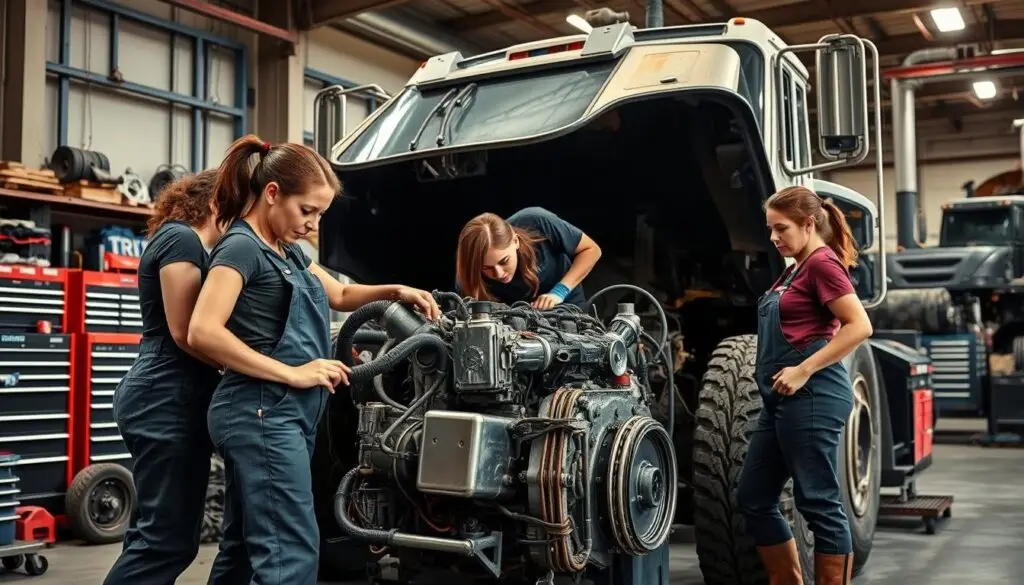
The heavy equipment repair industry is experiencing a fundamental transformation as more women in heavy equipment repair enter a field once dominated exclusively by men. These professionals bring technical expertise and fresh perspectives to maintenance operations nationwide. According to the 2023 Women in Trucking Index, female diesel technicians now comprise over 7% of the transportation maintenance workforce—a figure that has doubled from just 3.7% the previous year.
This shift represents more than demographic change. It signals a new era of capability-driven employment where competence determines success, not conformity to outdated stereotypes. Jennifer Hedrick, president and CEO of the Women In Trucking Association, emphasizes their critical role: skilled truck maintenance technicians keep professional drivers productive, on the road, and delivering on-time. Drivers cannot complete their mission when their trucks are in the shop or broken down.
This comprehensive guide explores how female diesel mechanics succeed at every level—from apprentices to shop owners. We examine the barriers women overcome, the education pathways available, and how their presence is transforming shop culture for the better.
Key Takeaways
- Female representation has doubled: Women now comprise over 7% of diesel technicians in transportation, up from 3.7% the previous year according to industry research.
- Multiple education pathways exist: Technical schools, community colleges, and manufacturer apprenticeships offer accessible routes into the profession with starting wages near $20/hour.
- Compensation is competitive: Experienced diesel technicians earn $28-$45/hour depending on specialization, with management roles exceeding $70,000-$100,000 annually.
- Progressive employers actively recruit women: Major fleet operators and equipment dealers offer mentorship programs, properly sized PPE, and inclusive workplace policies.
- Technical capability defines success: Women demonstrate excellence across all skill areas from diagnostics and hydraulics to complete engine overhauls.
- Diverse perspectives strengthen shop culture: Female technicians bring communication skills, attention to detail, and professionalism that benefit entire maintenance teams.
The Rising Presence of Women in Diesel Technology
Numbers tell a compelling story about the evolving face of diesel repair in America today. The workforce composition in heavy equipment shops has shifted dramatically over recent years. More women are choosing careers that were once considered exclusively male domains, and the industry is welcoming them.
The 2023 Women in Trucking Index reveals that women now account for over 7% of diesel technicians in transportation, up from just 3.7% the previous year. This represents nearly a doubling of female representation in a single reporting period. The momentum shows no signs of slowing as recruitment initiatives gain traction nationwide.
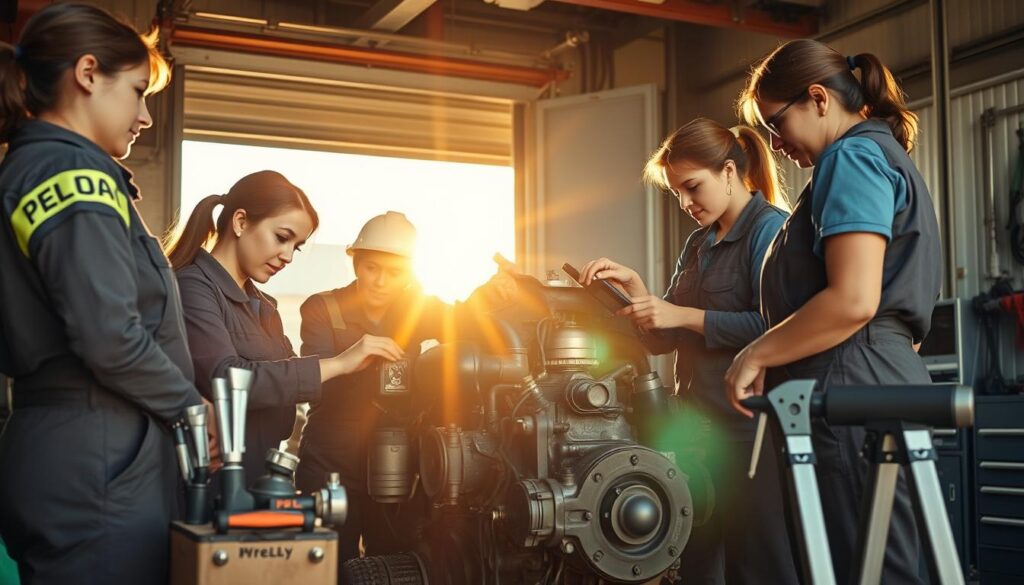
Industry leaders have taken notice of this transformation. Equipment dealers nationwide recognize the significant growth of women in the trucking industry—not just as drivers and technicians, but also as owners. This expansion reflects broader changes in workforce diversity across skilled trades that address the critical technician shortage affecting fleet operations.
Demographics and Workforce Composition
Understanding who is entering the field provides insight into the changing landscape of diesel technology. Female technician demographics reveal diverse backgrounds and motivations driving this career choice. The data shows patterns that challenge traditional assumptions about technical trades.
Many women entering heavy equipment repair come from families with mechanical backgrounds. They grew up around tools, engines, and repair shops. However, an increasing number are first-generation technicians with no prior family connection to the industry.
These newcomers are drawn by career stability and competitive compensation. According to the Bureau of Labor Statistics, diesel technician employment is projected to grow 5% through 2032, faster than average for all occupations. Starting salaries often exceed those of careers requiring four-year degrees, while technical training programs typically take two years or less to complete.
Age ranges among female diesel technicians span from recent high school graduates to mid-career changers in their forties. Educational backgrounds vary from GED holders to those with associate or bachelor’s degrees in unrelated fields. This diversity strengthens the talent pool and brings fresh perspectives to traditional repair environments.
Regional Patterns Across America
The geographic distribution of women in heavy equipment repair shows fascinating regional variations. Certain areas have normalized female participation in trades far ahead of national averages. Other regions are experiencing rapid growth as cultural attitudes shift.
Western states like Wyoming, Montana, and Idaho show higher concentrations of female diesel technicians. Rural communities with strong agricultural and construction sectors have historically accepted women in mechanical roles. These areas often face labor shortages that accelerate workforce diversification.
Urban centers present a different pattern. Cities like Denver, Portland, and Austin are seeing accelerated growth in female technician hiring. Technical schools in these metropolitan areas actively recruit women through targeted outreach programs. Employer partnerships with community organizations further support this expansion.
| Region | Female Technician % | Growth Rate (2020-2023) | Primary Industry Sector |
|---|---|---|---|
| Western States | 9.2% | 127% | Agriculture & Mining |
| Midwest | 6.8% | 156% | Transportation & Construction |
| Southern States | 5.4% | 178% | Energy & Logistics |
| Northeast | 7.1% | 143% | Municipal & Commercial |
Several factors contribute to these regional differences. Local technical training program initiatives play a crucial role in pipeline development. Employer recruitment strategies vary significantly by market. Community attitudes toward women in non-traditional careers also influence participation rates.
A Decade of Accelerating Progress
Tracing the trajectory of women in heavy equipment repair reveals remarkable momentum building over the past ten years. In the early 2010s, female representation barely reached 2-3% of the diesel technician workforce. The numbers seemed stagnant for years despite industry-wide labor shortages.
The mid-2010s marked the beginning of measurable change. Technical schools began targeted recruitment campaigns. Social media platforms gave visibility to female mechanics and technicians. These women shared their experiences and challenged stereotypes about who could succeed in the field.
200,000+
Estimated unfilled diesel technician positions nationwide according to industry workforce studies
Several inflection points accelerated growth rates after 2018. Economic factors, including rising wages for skilled trades, attracted career changers. Industry marketing campaigns specifically highlighted opportunities for women. High-profile success stories in trade publications and online platforms inspired new entrants.
The COVID-19 pandemic paradoxically boosted interest in hands-on technical careers. Many people reconsidered desk jobs and sought work that couldn’t be automated or outsourced. Essential worker status during lockdowns elevated the perception of skilled trades.
Current projections suggest continued acceleration through the remainder of this decade. The technician shortage remains acute. Industry partnerships with educational institutions are expanding rapidly. Manufacturers now actively recruit women through scholarships and apprenticeship programs.
Despite impressive percentage increases, the absolute numbers reveal significant room for expansion. Women still represent less than 10% of diesel technicians in most sectors. Reaching parity would add hundreds of thousands of qualified technicians to address the workforce gap. The industry recognizes that diversifying recruitment is not just about equity—it’s an economic necessity.
From Rosie the Riveter to Modern Mechanics: A Historical Perspective
From wartime necessity to modern opportunity, women have repeatedly proven their expertise in heavy equipment maintenance. The journey spans eight decades of accomplishment, setback, and renewal. Understanding this history reveals why today’s female diesel technicians represent both a continuation and a revolution.
The path from World War II factory floors to contemporary repair shops tells a story of capability consistently demonstrated despite systemic resistance. Each generation of women in diesel technology has built upon previous achievements while confronting unique challenges.
Wartime Innovation and Technical Mastery
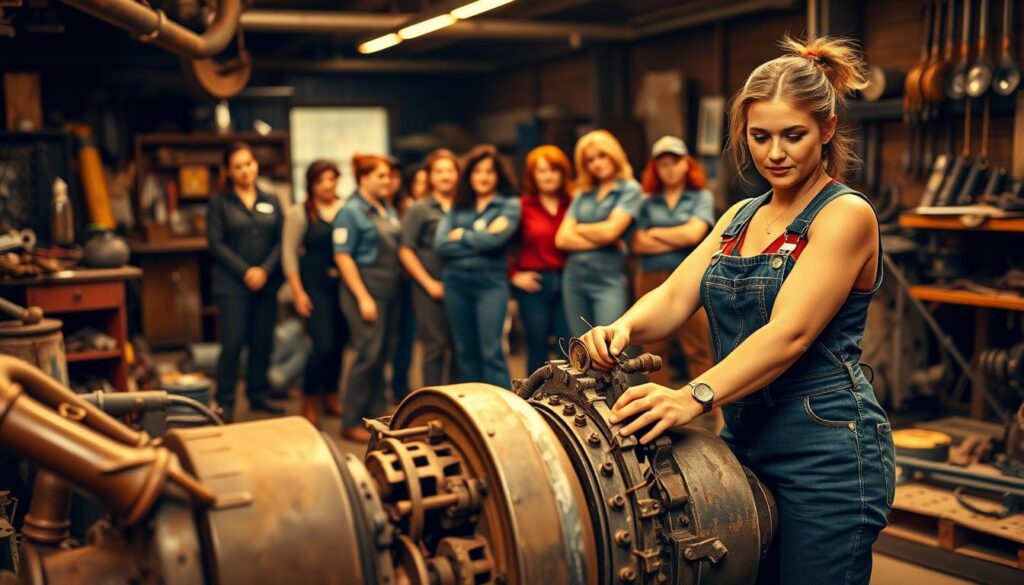
World War II created unprecedented labor demands that transformed women’s participation in mechanical trades. With millions of men serving overseas, American industries recruited women to maintain military vehicles, aircraft engines, and industrial machinery. These positions required advanced technical knowledge and physical stamina previously deemed exclusively male territory.
Women mechanics serviced diesel-powered trucks, tanks, and generators essential to military operations. They performed engine overhauls, diagnosed complex mechanical failures, and executed precision repairs under demanding conditions. Their work proved that gender had no bearing on technical aptitude or mechanical skill.
Documentation from defense contractors shows women completing training programs at rates comparable to their male counterparts. They mastered heavy equipment systems with proficiency that challenged prevailing stereotypes. These women mechanic success stories established a foundation that would remain largely forgotten for decades.
Beyond symbolic representation, female technicians contributed measurably to wartime production efficiency. They maintained equipment reliability that kept supply chains operational and military forces equipped. Their technical contributions were substantive, not merely supplementary.
Systematic Exclusion and Institutional Barriers
The post-war period witnessed deliberate efforts to remove women from skilled mechanical positions. Returning servicemen reclaimed jobs, and social campaigns promoted domestic roles as women’s proper sphere. Training programs closed their doors to female applicants, creating educational barriers that would persist for generations.
Institutional policies explicitly excluded women from diesel technology programs through the 1970s. Trade unions restricted membership, employers maintained discriminatory hiring practices, and vocational schools directed girls toward clerical training. These barriers operated simultaneously across multiple systems, creating comprehensive exclusion.
Physical infrastructure reinforced gender segregation in mechanical workplaces. Repair facilities lacked appropriate restroom facilities, safety equipment was sized exclusively for male bodies, and workplace cultures became increasingly hostile to female participation. The message was clear and consistent: women did not belong in diesel repair shops.
| Historical Period | Participation Level | Primary Barriers |
|---|---|---|
| 1940-1945 (WWII) | High (18-22%) | Social skepticism, limited training infrastructure |
| 1946-1989 (Post-War) | Minimal (under 1%) | Explicit discrimination, closed programs, cultural pressure |
| 1990-2010 (Early Resurgence) | Growing (2-4%) | Workplace culture, lack of mentorship, equipment design |
| 2010-Present (Modern Era) | Accelerating (5-8%) | Persistent stereotypes, mentorship gaps, work-life balance |
Contemporary Renaissance and Regional Variations
The 1990s marked the beginning of women’s gradual return to diesel technology. Legal protections against workplace discrimination, changing social attitudes, and labor shortages created new pathways. Pioneering female technicians faced significant resistance but established visibility that inspired subsequent generations.
Early adopters often came from families with mechanical backgrounds or rural communities where practical skills transcended gender expectations. These women developed expertise through informal apprenticeships, self-directed learning, and sheer persistence. Their success created proof points that challenged prevailing assumptions.
The 2000s and 2010s witnessed accelerating participation as institutional barriers gradually weakened. Technical schools began actively recruiting female students, employers recognized the business case for diversity, and federal initiatives promoted women in skilled trades. Female technician mentorship programs emerged, though they remained limited compared to available demand.
Regional variations significantly affected women’s experiences in diesel technology. Melissa Petersmann, known as “The Diesel Queen,” represents the modern generation of female diesel technicians who grew up around equipment. Her father operated a logging business in Wyoming, exposing her to logging equipment, diesel trucks, and machinery repair from childhood.
“In Wyoming, women in the trades is not a weird thing, it’s not an odd thing, that’s normal.”
— Melissa Petersmann, “The Diesel Queen”
This acceptance reflected rural communities where practical necessity often outweighed gender conventions. However, this regional acceptance was not universal across all areas or time periods. Urban and suburban markets showed different patterns, with women often encountering more resistance in traditional dealership environments.
Social media platforms transformed visibility and recruitment in the 2010s and 2020s. Female technicians demonstrated their expertise through video content, creating women mechanic success stories that reached audiences far beyond their local communities. These platforms provided both inspiration and practical knowledge for aspiring technicians.
Overcoming Obstacles: What Women Diesel Technicians Face Daily
Daily realities for women in construction equipment repair reveal both persistent barriers and evolving workplace dynamics. While the industry has made significant progress toward inclusion, female technicians still encounter challenges that their male counterparts rarely face. These obstacles range from initial skepticism about technical capabilities to practical issues with equipment designed without diverse body types in mind.
Understanding these challenges provides insight into the resilience required for women breaking barriers in diesel industry environments. The experiences vary significantly based on geographic location, company culture, and individual workplace dynamics. However, patterns emerge that highlight both systemic issues and the creative solutions women employ to succeed.
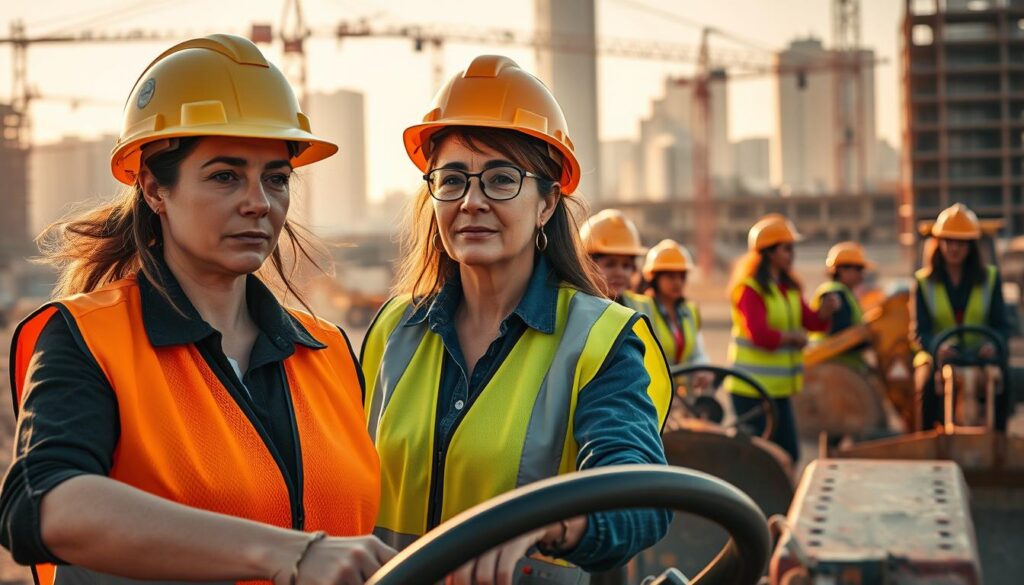
Combating Gender Stereotypes and Workplace Bias
The assumption that heavy equipment repair requires masculine traits remains surprisingly persistent in some sectors. Female diesel technicians frequently encounter initial doubt about their mechanical aptitude and technical knowledge. This skepticism often manifests subtly rather than through overt discrimination.
Melissa Petersmann, who experienced limited bias during her Wyoming career, recalls one notable exception during interviews with a major equipment dealership in Denver. She emphasizes an important perspective that counters common misconceptions about the industry.
“There’s a skewed image that men in this industry are evil to women and that’s just usually not true.”
— Melissa Petersmann, Diesel Technician
Progressive employers actively work to create equitable environments where capability matters more than gender. This philosophy translates into daily practice through fair work assignments and equal opportunities.
Proving Technical Competence
Female technicians often face a higher initial burden of proof regarding their technical abilities. While male apprentices may be given the benefit of the doubt, women frequently must demonstrate competence more extensively before gaining full trust. This dynamic requires strategic approaches to establishing credibility quickly.
Successful female technicians tackle challenging assignments head-on. They consistently produce quality work that speaks louder than assumptions. Kelly Hanson, a diesel technician specializing in refuse equipment, observes this equality in action: everybody is treated pretty much equal across the board, whether male or female. If they give a challenging job to a guy, they’ll give it to her too.
Petersmann addresses a common misunderstanding about workplace treatment. She notes that apprentice-level assignments reflect training status rather than gender discrimination. New technicians cannot expect better opportunities just because they’re women—advancement comes from demonstrated skill.
Dealing with Customer Skepticism
Customer reactions present another dimension of challenge for female technicians. Some clients initially request male technicians or question diagnoses provided by women. This skepticism requires confidence in technical expertise and communication skills that convey authority without defensiveness.
Experienced women develop strategies for handling these situations professionally. They provide detailed explanations of diagnostic findings and repair procedures. They document their work thoroughly and maintain composure when customers express doubt.
Forward-thinking employers support their female technicians during these interactions. Management teams back up diagnoses and repairs performed by qualified technicians regardless of gender. This organizational support proves essential for retention and professional development.
Navigating Physical Demands and Equipment Design
The physical aspects of diesel technology work present practical challenges rooted in equipment design rather than inherent limitations. Most tools, workstations, and heavy equipment components were engineered with average male body dimensions in mind. This creates accessibility and ergonomic issues for women in construction equipment repair.
⚠️ Safety Warning
Improperly fitted personal protective equipment creates genuine safety hazards. Loose gloves can catch on rotating components, oversized boots reduce stability on ladders, and ill-fitting respirators fail to seal correctly during exposure to hazardous materials. Always ensure PPE fits properly before beginning work.
Differences in average physical strength between genders become less relevant when women apply problem-solving approaches to mechanical tasks. Intelligence, technique, and proper tool selection often prove more valuable than raw strength alone.
Female technicians frequently adapt their approaches to accomplish tasks effectively. They use different leverage angles, position themselves strategically, and select tools that maximize mechanical advantage. These adaptations demonstrate that multiple valid methods exist for completing repair procedures.
Some women modify tool handles or use extensions to gain better leverage on stubborn fasteners. Others develop techniques for breaking loose seized components that rely on precision and timing rather than brute force. These innovations often prove useful for all technicians regardless of gender.
Shops that invest in ergonomic equipment benefit their entire workforce. Adjustable workbenches, quality lifting equipment, and properly maintained pneumatic tools reduce physical strain for everyone. These improvements enhance productivity while reducing injury risk across the board.
Building Networks Without Female Mentorship
The scarcity of experienced female mentors creates networking challenges for women breaking barriers in diesel industry careers. Traditional mentorship models assume same-gender relationships that simply aren’t available when women comprise such a small percentage of experienced technicians. This requires creative approaches to professional development and support.
Most female diesel technicians build their primary workplace relationships with male colleagues. These cross-gender mentorships can be highly effective when both parties approach them professionally. Male mentors who recognize talent regardless of gender provide invaluable technical training and career guidance.
Women supplement workplace mentorship through industry associations and social media networks that connect female technicians across companies and regions. Online communities provide spaces to discuss challenges, share solutions, and celebrate successes. These virtual networks compensate for the limited local availability of female mentors.
Industry conferences and training events offer opportunities for face-to-face networking among female technicians. These connections often evolve into lasting professional relationships. Women who attend such events report feeling energized and validated by meeting others who share similar experiences.
Balancing Family Life with Demanding Schedules
Diesel technology careers involve demanding hours, physical exhaustion, and sometimes unpredictable schedules. These factors create work-life balance challenges that affect technicians of all genders but present specific complications for women who often shoulder disproportionate family care responsibilities.
The physical nature of heavy equipment repair means technicians arrive home genuinely exhausted. Long days in the shop leave limited energy for household management and childcare. Overtime demands during peak seasons can disrupt carefully planned family schedules.
Some employers increasingly recognize that flexible scheduling and family-friendly policies help retain skilled technicians regardless of gender or parental status. Shops that accommodate school schedules, provide predictable time off, and respect personal boundaries see lower turnover rates. These policies benefit the entire workforce while particularly supporting working parents.
Female technicians who successfully balance career and family often credit supportive partners and realistic expectations. They prioritize efficiently and communicate clearly about their availability. Many report that the financial stability provided by skilled trades careers outweighs the scheduling challenges.
| Challenge Category | Common Obstacles | Effective Solutions |
|---|---|---|
| Gender Stereotypes | Initial skepticism, customer requests for male technicians | Quality work, strong communication, employer support |
| Physical Demands | Equipment designed for larger body types, ill-fitting PPE | Leverage techniques, tool modifications, ergonomic equipment |
| Professional Networks | Limited female mentors, isolation in male-dominated shops | Cross-gender mentorship, industry associations, online communities |
| Work-Life Balance | Long hours, physical exhaustion, unpredictable overtime | Employer flexibility, supportive family, clear boundaries |
The obstacles women face in diesel technology careers reflect broader societal patterns rather than industry-specific hostility. As more women enter the field and prove their capabilities, workplace cultures gradually evolve. Each female technician who perseveres creates a slightly easier path for those who follow.
“Here, they treat you like a person, not just a number on a paper.”
— Kaylee, Diesel Technician
Essential Skills Driving Success in Heavy Equipment Repair
Technical excellence in diesel repair is built on four fundamental pillars of expertise that define professional competency in this demanding field. These capabilities are identical for all technicians regardless of gender, and women consistently demonstrate mastery across every technical domain. The skill requirements have evolved significantly as equipment becomes more sophisticated, combining traditional mechanical knowledge with advanced computer systems.
Success requires years of dedicated learning through diesel technology training programs and hands-on experience. The most accomplished technicians develop expertise across multiple systems simultaneously. This comprehensive skill set separates entry-level workers from master technicians who command premium salaries and respect throughout the industry.
Advanced Diagnostic and Troubleshooting Expertise
The ability to accurately diagnose complex mechanical problems represents the cornerstone of effective diesel repair. This skill combines technical knowledge with critical thinking, pattern recognition, and systematic problem-solving abilities. Technicians must analyze symptoms, understand how various systems interact, and isolate the root cause rather than simply addressing surface-level issues.
Effective diagnostic work begins with careful observation and customer interviews. Technicians gather information about when problems occur, under what conditions, and what changes preceded the issue. This investigative approach prevents wasted time replacing components that aren’t actually defective.
Many female technicians excel particularly in this analytical domain. Their methodical approaches and attention to detail accelerate accurate diagnosis, saving customers money and building trust. The process requires patience and persistence, especially when dealing with intermittent problems that don’t present consistent symptoms.
Diagnostic procedures vary significantly across equipment types. Agricultural machinery presents different challenges than construction equipment or over-the-road trucks. Experienced technicians develop intuition that guides their troubleshooting process, recognizing familiar patterns from previous repairs.
The most complex diagnostic challenges involve multiple interacting systems. A power loss problem might originate in the fuel system, air intake, exhaust, or electronic controls. Skilled technicians systematically eliminate possibilities using both traditional mechanical testing and modern computerized diagnostics.
Hydraulic and Electrical System Mastery
Hydraulic circuits control virtually every function in modern heavy equipment, from bucket movement to steering systems. Understanding pressure, flow, circuit design, and component interaction requires sophisticated technical knowledge. Technicians must read complex schematics, trace hydraulic lines through machinery, and diagnose problems in systems operating under thousands of pounds of pressure.
Hydraulic system repair demands precision and safety awareness. Even small contamination can damage expensive pumps and valves. Proper filtration, fluid selection, and cleanliness protocols separate professional work from amateur attempts that create recurring problems.
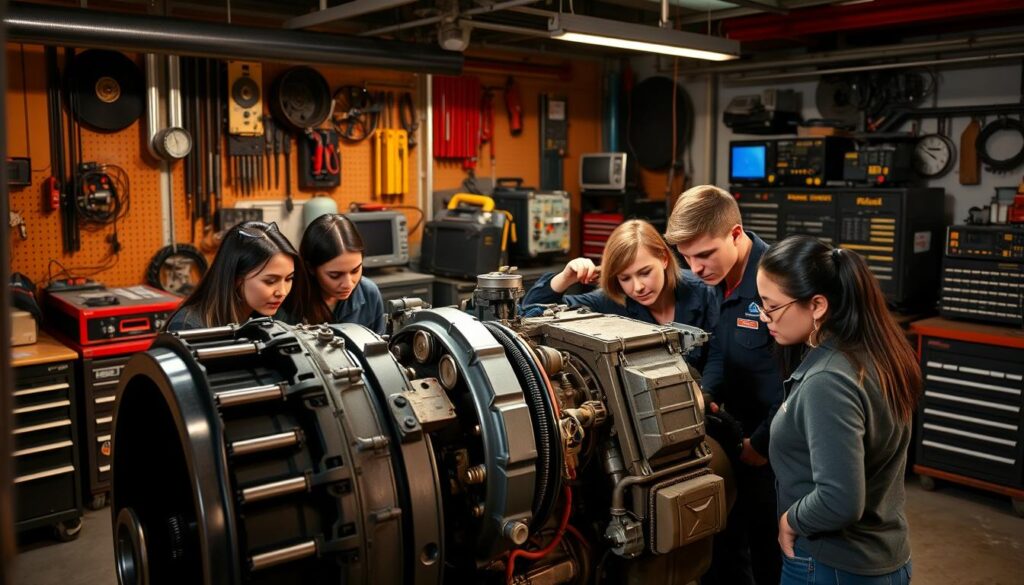
Electrical systems have grown exponentially more complex as equipment manufacturers integrate computerized controls. Modern machines feature intricate networks managing engine performance, emissions controls, safety systems, and operator interfaces. Technicians must understand voltage, current, resistance, and circuit protection to effectively diagnose and repair these systems.
Reading electrical schematics represents a critical skill that many technicians find challenging initially. These diagrams use specialized symbols and conventions that require training to interpret correctly. ASE certification programs dedicate substantial time to electrical theory and practical application.
Women entering the field often bring strong analytical skills that translate well to electrical troubleshooting. The work requires logical thinking rather than physical strength, creating opportunities for technicians who enjoy puzzle-solving and systematic investigation.
Diesel Engine Overhaul and Rebuild Capabilities
Complete engine overhaul represents what many consider the pinnacle of diesel technician expertise. This complex process involves disassembling engines weighing thousands of pounds, inspecting hundreds of components, replacing worn parts, and reassembling everything to precise manufacturer specifications. The work requires extensive technical knowledge, specialized tools, and meticulous attention to detail.
Engine rebuild capabilities vary from small agricultural equipment powerplants to massive construction machinery engines. Tolerances measured in thousandths of an inch determine whether an engine runs smoothly or fails catastrophically. Technicians must understand metallurgy, thermodynamics, and mechanical engineering principles.
Women who achieve this level of expertise definitively disprove lingering stereotypes about female mechanical capability. Petersmann developed specialized expertise over seven years with agricultural equipment dealerships, focusing on large tractors. She describes her work: engine work and transmissions became specialties, along with hydraulic cylinders where she developed exceptional proficiency.
Her confidence reflects the competence that comes from mastering complex repair procedures. Engine work requires understanding how components work together as integrated systems. Technicians must diagnose problems using compression tests, leak-down tests, oil analysis, and visual inspection.
The physical demands of engine work shouldn’t be minimized, but proper equipment and techniques make the work manageable. Engine hoists, transmission jacks, and pneumatic tools reduce the pure strength requirements. Problem-solving ability and technical knowledge matter far more than raw physical power.
Computer Diagnostics and Telematics Technology
Modern diesel equipment relies heavily on computerized engine management, emissions controls, and operational monitoring systems. Technicians must be as comfortable with laptops and diagnostic software as with wrenches and micrometers. This technological evolution creates opportunities for people with diverse skill sets and challenges the outdated stereotype of diesel work as purely physical labor.
Computer diagnostic systems provide unprecedented access to engine performance data. Technicians can monitor hundreds of parameters in real-time, review historical fault codes, and perform active tests of individual components. Interpreting this data requires understanding both computer systems and mechanical operation.
Telematics technology allows remote equipment monitoring, transmitting performance data, location information, and diagnostic codes directly to service departments. This capability enables proactive maintenance and reduces unexpected breakdowns. Technicians who master these systems become invaluable to fleet operators managing hundreds of machines.
The rapid pace of technological change means continuous learning is essential. Kelly Hanson works primarily on refuse trucks, enjoying the challenge each truck presents. Each vehicle is different, and figuring out the unique issues is rewarding. This adaptability to varied challenges applies equally to evolving technology.
Kaylee notes the industry’s ongoing transformation: training on newest model years is already being discussed. She still prefers mechanical systems over electronics, but adapts to the changing landscape. Her comment reflects how diesel technology training programs must constantly update curriculum to match manufacturer innovations.
The integration of electronics doesn’t eliminate traditional mechanical skills. Instead, it adds another dimension to technician capabilities. The most valuable professionals combine deep mechanical knowledge with technological proficiency, bridging the gap between conventional repairs and modern computerized systems.
The HDJ Perspective
The technician shortage facing fleets today isn’t just about numbers—it’s about recognizing untapped talent pools. Women have demonstrated excellence across every technical domain in diesel repair, from complex diagnostics to complete engine overhauls. Fleet managers and shop owners who create genuinely inclusive environments gain competitive advantages in recruiting and retention. The success stories emerging from progressive employers prove that investing in diverse workforces delivers measurable business results alongside the obvious benefits of expanded talent access.
Education Pathways and Certification Programs
The journey to becoming a diesel technician begins with selecting the right training program that fits individual needs and career goals. Women entering this field today have access to comprehensive educational options ranging from intensive trade schools to structured apprenticeships with major employers. The financial investment varies significantly, but numerous scholarships and employer-sponsored programs make diesel technician careers for women more accessible than ever before.
Multiple routes lead to successful careers in heavy equipment repair. Some women thrive in traditional classroom settings with hands-on labs, while others excel through earn-while-you-learn apprenticeships. Understanding these pathways helps aspiring technicians make informed decisions about their educational journey.
The diesel technology field rewards practical skills and continuous learning. Technical competency matters more than the specific educational path chosen, though formal training provides essential foundational knowledge that accelerates career advancement.
Technical Schools and Community College Programs
Formal diesel technology education provides structured learning environments where students master both theoretical principles and practical applications. These programs typically range from six-month intensive courses to two-year associate degrees, depending on the depth of specialization and credential level desired.
Trade schools focus exclusively on technical training with minimal general education requirements. Students spend the majority of their time in shop environments working directly on equipment. Community colleges offer broader educational experiences that include foundational courses alongside diesel-specific training.
Petersmann’s experience demonstrates the value of dedicated technical education. She attended a specialized trade school for semi-truck training and secured employment before graduation. Her advice emphasizes a critical point about learning styles.
“While traditional classroom experience is beneficial, I learned the most by physically working on vehicles.”
— Melissa Petersmann, Trade School Graduate
This hands-on emphasis characterizes quality diesel technology programs. The best schools maintain extensive equipment fleets and provide individual workstation access where students perform actual repairs rather than simply observing demonstrations.
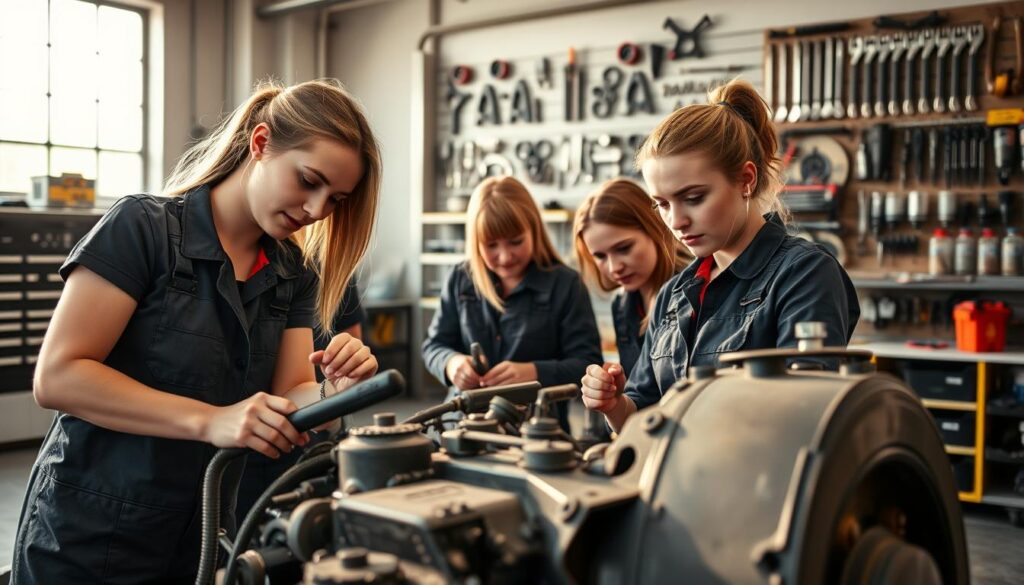
Several institutions have established reputations for producing job-ready diesel technicians. Private trade schools operate campuses nationwide offering specialized programs in diesel and heavy equipment technology. Their accelerated formats allow students to complete training in nine months to two years, entering the workforce quickly.
Community colleges present affordable alternatives with comparable training quality. Many regional technical colleges provide excellent education at significantly lower costs than private trade schools. Program costs vary considerably: private trade schools typically charge $20,000-$35,000 for comprehensive diesel training, while community college programs range from $4,000-$12,000 for associate degrees. Job placement rates at top programs exceed 85%, with many graduates receiving multiple employment offers.
Scholarships and Financial Aid for Women
Financial barriers should not prevent women from pursuing diesel technology careers. Numerous organizations offer scholarships specifically for women entering skilled trades, recognizing the value of gender diversity in technical fields.
The Women in Trucking Association provides annual scholarships to female students enrolled in diesel technology programs. These awards range from $1,000-$5,000 and require only basic application materials including transcripts and brief essays about career goals.
Major equipment manufacturers sponsor scholarship programs targeting women. Caterpillar, Volvo, and Kenworth all maintain educational funding initiatives. These manufacturer-sponsored programs often include internship opportunities and preferred hiring consideration upon graduation.
Community college students access federal financial aid through FAFSA applications. Many women complete two-year diesel programs with minimal or no educational debt, particularly when combining grants, scholarships, and part-time employment. The strong earning potential in diesel careers allows graduates to quickly offset any educational investments.
Apprenticeship Opportunities with Major Employers
Structured apprenticeship programs combine classroom instruction with paid work experience, creating debt-free pathways to diesel careers. These initiatives allow students to earn while they learn, avoiding educational debt while gaining practical experience. Major equipment manufacturers and dealers operate robust apprenticeship programs actively recruiting women.
The apprenticeship model benefits both students and employers. Companies develop technicians trained specifically on their equipment and service procedures. Apprentices receive compensation throughout their training period, typically starting at $15-$18 per hour and increasing with skill development.
Experienced technicians emphasize the value of early workplace exposure. Getting a part-time job as an entry-level technician while still in school provides knowledge and background that accelerates success in diesel programs.
This combined approach accelerates skill development. Students apply classroom concepts immediately in real-world situations, reinforcing learning through repetition and practical problem-solving. Female diesel apprenticeships provide supportive environments where women develop confidence alongside technical competency.
Manufacturer-Sponsored Training Programs
The Caterpillar Think BIG program represents one of the most respected apprenticeships in heavy equipment. This two-year initiative places students at Cat dealerships while they complete coursework through partnering educational institutions. Think BIG apprentices work four days weekly at dealerships performing actual repairs under journeyman technician supervision. They attend classes one day per week, studying diesel engines, hydraulics, electrical systems, and electronic diagnostics.
Program participants earn competitive wages throughout the apprenticeship. Starting compensation typically ranges from $16-$20 hourly, with regular increases based on competency development. Upon completion, graduates possess both associate degrees and extensive hands-on experience. Post-graduation employment rates exceed 95%.
Cummins operates specialized training focused on diesel engine technology and service. Their technical education program partners with select schools to provide manufacturer-specific engine training alongside general diesel mechanic instruction. Students receive detailed instruction on engine design, fuel systems, emissions controls, and electronic engine management. The program includes paid internships and ongoing support after completion.
John Deere maintains comprehensive apprenticeship programs focused on agricultural and construction equipment. Students alternate between classroom instruction and paid work at participating dealerships. The curriculum covers precision agriculture technology, hydraulic systems, diesel engines, and electronic controls. Kaylee attended a trade school and was recruited through an equipment dealer career fair, demonstrating how these programs create direct employment pipelines.
| Program Type | Duration | Starting Pay | Employment Rate |
|---|---|---|---|
| Caterpillar Think BIG | 2 years | $16-$20/hour | 95%+ |
| Cummins Technical Education | 18-24 months | $15-$19/hour | 90%+ |
| John Deere Tech | 2 years | $14-$18/hour | 92%+ |
| Volvo/Mack Apprenticeship | 2 years | $15-$20/hour | 88%+ |
ASE Certification and Specialized Credentials
Automotive Service Excellence certification provides industry-recognized validation of technical competency. While voluntary, these credentials significantly enhance employment prospects and earning potential. ASE offers specific certifications relevant to heavy equipment and diesel technology that demonstrate specialized expertise to employers.
The ASE certification process requires passing comprehensive examinations covering specific systems and repair procedures. Technicians must also document relevant work experience before earning credentials. This combination of theoretical knowledge and practical application ensures certified technicians possess genuine competency.
Several ASE certifications directly apply to diesel technology careers. The Medium-Heavy Truck series includes tests for diesel engines (T2), drive train (T3), brakes (T4), suspension and steering (T5), electrical/electronic systems (T6), heating and air conditioning (T7), and preventive maintenance (T8). Earning multiple certifications demonstrates comprehensive capabilities.
Master Technician status requires passing all tests in a certification series. This achievement distinguishes top professionals and often correlates with higher compensation and advancement opportunities. Many employers offer pay increases for each ASE certification earned, making these credentials financially rewarding. Certification maintenance requires retesting every five years to ensure technicians remain current.
Continuing Education and Manufacturer-Specific Training
Technical education never truly ends in the diesel industry. Equipment manufacturers continually introduce new models with advanced electronic controls, emissions systems, and telematics technology requiring updated training. Leading employers recognize this reality and provide ongoing educational opportunities that keep technicians current while creating pathways for advancement.
Major carriers and fleet operators offer continuous on-the-job training for diesel technicians. This commitment to employee development creates opportunities for specialization and promotion. Technicians who pursue additional training often advance to diagnostic specialist, shop foreman, or service manager positions.
Manufacturer factory training represents the highest level of specialized education. Companies like Caterpillar, Cummins, Detroit Diesel, and John Deere operate dedicated training centers where technicians learn about new product introductions and complex repair procedures. These courses typically last one to two weeks and cover specific systems in depth.
Emissions technology training has become particularly important as EPA regulations drive equipment design. Modern diesel engines feature complex aftertreatment systems including diesel particulate filters, selective catalytic reduction, and diesel exhaust fluid injection. Specialized training ensures technicians properly diagnose and repair these sophisticated systems.
Free Professional Fleet Tools
Cost calculators, fault code lookup, maintenance planners, and more—built for owner-operators, fleet managers, and diesel techs. No signup required.
Pioneers and Success Stories Inspiring the Next Generation
Real-world achievements by women in diesel repair showcase what’s possible when talent meets determination. These pioneers have built successful careers, launched businesses, earned prestigious awards, and created powerful online communities. Their visibility transforms the industry by proving that excellence in heavy equipment repair knows no gender boundaries.
The women mechanic success stories emerging across the nation serve a vital purpose beyond individual accomplishment. They provide tangible evidence that careers in diesel technology offer rewarding opportunities for women. Young people considering this field can now see themselves reflected in successful professionals who share their experiences and challenges openly.
Entrepreneurial Leadership in Diesel Repair
Women-owned repair shops represent the pinnacle of career progression in this field. Female entrepreneurs who transition from technician roles to business ownership face unique challenges. Securing financing often proves difficult when lenders harbor outdated assumptions about women in trades.
Building credibility with parts suppliers, equipment manufacturers, and commercial clients requires consistent demonstration of technical expertise. Many women business owners report that their deep technical knowledge becomes their greatest asset in establishing trust. Customers appreciate working with owners who can diagnose problems firsthand rather than relying solely on employee reports.
Successful women-owned repair shops often develop distinctive business models that set them apart. Some focus on specialized services like mobile hydraulic repair or fleet preventive maintenance. Others build reputations for exceptional customer communication and transparent pricing practices.
Female shop owners frequently create workplace cultures that emphasize both technical excellence and professional respect. These environments naturally attract diverse talent pools. The combination of skilled work and inclusive culture becomes a competitive advantage in tight labor markets.
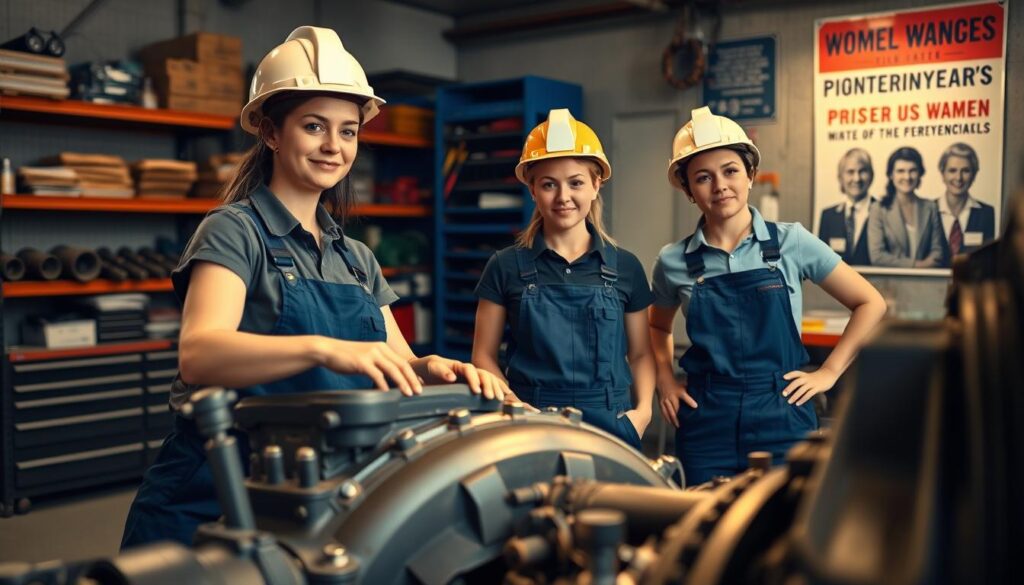
Recognition Through Competition and Awards
Technical competitions provide public platforms where skill speaks louder than stereotypes. Women who excel in diagnostic challenges, rebuild competitions, and troubleshooting events earn recognition that transcends gender. Industry award winners demonstrate definitively that the highest levels of expertise are absolutely achievable.
Competition success carries significance beyond individual achievement. When a female technician wins a manufacturer’s diagnostic competition, she validates the capabilities of all women in the field. These victories inspire younger women by providing concrete proof that mastery is possible.
Industry recognition programs increasingly acknowledge women who demonstrate exceptional technical skill and leadership. Manufacturer awards, trade association honors, and employer recognition initiatives spotlight achievements. This visibility helps normalize the presence of women in diesel technology roles.
Award winners often become unofficial ambassadors for the profession. Their achievements attract media attention and speaking opportunities. Many use these platforms intentionally to encourage young women to consider diesel careers they might never have imagined otherwise.
Military Experience Creating Civilian Opportunities
Female veterans bring valuable assets to civilian diesel technology careers. Military service provides comprehensive technical training on heavy equipment systems. Service members gain hands-on experience maintaining vehicles under demanding conditions with high accountability standards.
The transition from military to civilian heavy equipment repair follows a natural pathway. Skills developed on military trucks, armored vehicles, and support equipment translate directly to commercial applications. Female veterans often possess troubleshooting abilities and diagnostic thinking that civilian training programs take years to develop.
Military experience provides additional benefits beyond technical skills. Veterans understand disciplined work processes, safety protocols, and team coordination. These attributes make them valuable employees who integrate smoothly into civilian shop operations.
Veteran-focused recruitment initiatives recognize the untapped potential in this population. Major fleet operators and equipment dealerships actively recruit female veterans. Programs that facilitate credential recognition and provide transition support help women leverage their military training into rewarding civilian careers.
Digital Influence Reshaping Industry Perceptions
Social media platforms have fundamentally changed how female diesel mechanics connect with audiences and each other. Instagram, TikTok, YouTube, and Facebook enable technicians to document their daily work and share expertise with thousands of followers. This visibility transforms public perception about who belongs in diesel repair careers.
Melissa Petersmann exemplifies the power of digital influence in changing industry dynamics. Known as “The Diesel Queen,” she has built a substantial following by sharing her experiences and technical knowledge. Her work on industry podcasts amplifies important conversations about the technician shortage and career opportunities.
“I’m trying to use my voice to show kids that you don’t have to grow up with a logger as a father to be a diesel mechanic. You don’t have to grow up with daddy owning a truck shop to be a diesel mechanic.”
— Melissa Petersmann, “The Diesel Queen”
Petersmann’s intentional mentorship extends beyond digital content. She actively engages with aspiring female diesel mechanics who seek guidance. One memorable connection involved a 17-year-old who drove to her Wyoming shop seeking advice about entering the field—a young woman she describes as a little mini me.
Companies that showcase their female employees create powerful recruitment tools. Diverse teams including women in body shops, diesel mechanics, and parts specialists demonstrate inclusive environments in action. This visible representation matters for attracting the next generation of technicians.
Social media influence creates virtual mentorship networks that overcome geographic isolation. Female diesel mechanics can connect with peers nationwide, share troubleshooting advice, and discuss workplace challenges. These digital communities provide support that many women cannot find in their physical workplaces.
The recruitment impact of social media visibility cannot be overstated. Young women scrolling through their feeds encounter female diesel mechanics explaining complex repairs, celebrating career milestones, and demonstrating genuine enthusiasm for their work. This exposure plants seeds that traditional recruitment methods rarely reach.
How Female Technicians Are Transforming Shop Culture
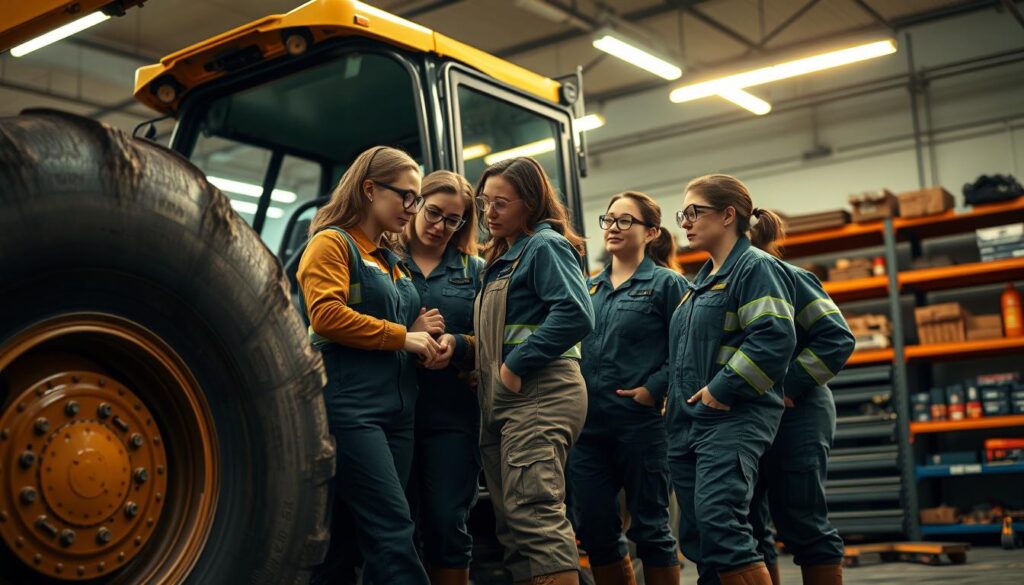
Female diesel technicians bring transformative influences to repair facilities that extend beyond technical competence to fundamentally improve shop culture. The presence of women in heavy equipment repair has created measurable changes in how shops operate, communicate with customers, and maintain professional standards. These improvements benefit entire teams and strengthen business performance across multiple metrics.
Progressive employers recognize that diversity initiatives align with operational excellence rather than conflicting with business objectives. The cultural shifts driven by female technicians demonstrate how inclusive environments create competitive advantages in talent retention, customer satisfaction, and workplace safety.
Enhanced Communication and Customer Relations
Many female technicians excel at translating complex mechanical issues into accessible language that customers understand. This communication strength builds trust and reduces the frustration customers often experience when facing expensive repairs. Clear explanations help customers make informed decisions about their equipment maintenance.
These communication abilities often develop from having to consistently justify expertise in male-dominated environments. Female technicians frequently refine their capacity to explain diagnostic findings, repair options, and preventive maintenance recommendations with exceptional clarity. This skill directly improves customer satisfaction scores and reduces disputes over repair costs.
Shop managers report that strong communicators on their teams create positive service experiences that drive customer loyalty. Repeat business and referrals increase when customers feel respected and informed throughout the repair process. The ability to build rapport while maintaining technical authority represents a valuable asset in competitive diesel repair markets.
Meticulous Attention to Detail and Quality Control
Shop managers consistently observe exceptional thoroughness in diagnostics and repairs from many female technicians. This meticulous approach reduces comebacks and warranty issues that drain shop profitability. Precision in initial repairs saves time and resources compared to addressing problems that resurface after inadequate fixes.
Quality control attention extends to documentation, parts ordering, and follow-up procedures that ensure complete repairs. Detailed work orders and accurate record-keeping prevent communication gaps between service advisors and technicians. These practices minimize errors that result from incomplete information or assumptions about previous work.
Whether this meticulousness stems from inherent tendencies or develops through pressure to prove competence, the business impact remains substantial. Shops with strong quality control cultures experience higher customer retention rates and enhanced reputations. Attention to details that prevent future failures demonstrates professional commitment to customer equipment longevity.
| Performance Metric | Quality-Focused Shops | Industry Average | Impact |
|---|---|---|---|
| Comeback Rate | 3-5% | 8-12% | 60% reduction |
| Customer Retention | 78-85% | 62-70% | 20% improvement |
| Warranty Claims | 1.5-2% | 4-6% | 65% reduction |
| First-Time Fix Rate | 88-92% | 75-80% | 15% improvement |
Creating More Inclusive and Professional Work Environments
The presence of women in diesel shops frequently elevates overall workplace professionalism. Behaviors that were normalized in all-male environments often become unacceptable when shops commit to inclusive workplace culture. This shift reduces tolerance for inappropriate language, offensive jokes, and unprofessional conduct that creates hostile atmospheres.
Progressive employers actively build cultures where people are evaluated on competence rather than conformity to particular social norms. These environments attract quality technicians of all backgrounds who seek professional respect and growth opportunities. Technicians describe working in clean, well-run shops where employees are treated well as key factors in job satisfaction.
Inclusive workplace culture delivers measurable business benefits beyond moral imperatives. Shops with professional environments experience reduced turnover, easier recruitment, and stronger team cohesion. These advantages directly impact profitability through lower hiring costs and improved productivity from stable teams.
Companies recognized for supporting women in diesel careers by organizations like the Women in Trucking Association’s Top Companies designation demonstrate how diversity initiatives align with business success. When organizations provide equal opportunities, employees can focus on mastering skills and advancing in roles without unnecessary barriers.
Elevating Safety Standards and Compliance Protocols
Women’s presence in shops often corresponds with improved attention to safety procedures and protective equipment use. Whether female technicians are particularly safety-conscious or their presence makes shops more attentive to policies, the outcome strengthens workplace safety cultures. Proper protocol adherence reduces injury rates and associated costs.
Enhanced safety compliance extends to lockout-tagout procedures, proper lifting techniques, and hazardous material handling. Shops with strong safety cultures experience fewer OSHA violations and lower workers’ compensation insurance premiums. These financial benefits complement the ethical importance of protecting employee wellbeing.
Regular safety training and equipment maintenance become priorities in shops committed to professional standards. Personal protective equipment is readily available and properly maintained rather than being treated as optional. This emphasis on safety creates environments where all technicians can work without fear of preventable injuries.
The correlation between diversity initiatives and safety improvements demonstrates alignment between inclusive practices and business interests. Shops investing in professional cultures benefit from reduced injury costs, improved regulatory compliance, and enhanced reputations as quality employers. These advantages strengthen competitive positioning in tight labor markets where skilled technicians have employment options.
Career Opportunities and Advancement in the Diesel Industry
Diesel technician careers for women encompass diverse opportunities with substantial earning potential at every level. The field offers clear advancement pathways from apprentice positions through management roles. Women who enter this industry find financial stability that exceeds many other careers accessible without four-year degrees.
Understanding the full career landscape helps women make informed decisions about entering diesel technology. The industry actively seeks talented individuals regardless of gender. Compensation grows steadily with experience and specialized skills.
Entry-Level Positions and Starting Salaries
New technicians begin their careers with positions that provide foundational experience while offering immediate income. These roles establish essential competencies that support long-term career growth. Women without formal training can start gaining hands-on experience through entry-level opportunities.
Lube Technician and Apprentice Roles
Lube technicians perform preventive maintenance services that keep heavy equipment operating reliably. These positions involve oil changes, lubrication services, fluid level checks, and basic visual inspections. The work provides newcomers with systematic exposure to different equipment types and mechanical systems.
Apprentice roles pair on-the-job training with classroom instruction. Many technical school students work part-time as apprentices while completing their education. These positions allow individuals to demonstrate reliability and develop basic competencies before advancing to complex repairs.
Entry-level roles offer more than just basic tasks. They provide opportunities to observe experienced technicians diagnosing problems and executing repairs. This exposure accelerates learning and builds confidence in handling sophisticated equipment.
Compensation Ranges Across Different Regions
Women entering diesel technology can expect entry-level wages typically ranging between $17 and $22 per hour depending on location and training. Technical school graduates command higher starting rates than untrained apprentices. This compensation significantly exceeds minimum wage and many other accessible occupations.
“When I started in this industry, I started at 17 bucks an hour. That was seven years ago. Now starting wages are getting close to $20 an hour for mechanics.”
— Melissa Petersmann, Diesel Technician
Regional variations affect starting compensation considerably. Metropolitan areas with higher living costs typically offer wages at the upper end of the range. Rural locations with lower expenses may start closer to $17 per hour but offer proportional affordability. Areas experiencing acute technician shortages drive wages higher through competition for talent.
| Region | Entry-Level | Mid-Career | Senior/Specialist |
|---|---|---|---|
| Northeast Metro | $20-$22/hr | $28-$35/hr | $38-$45/hr |
| Southern States | $17-$20/hr | $24-$30/hr | $32-$40/hr |
| Midwest Rural | $17-$19/hr | $25-$31/hr | $34-$42/hr |
| Western States | $21-$23/hr | $30-$36/hr | $40-$48/hr |
Specialization Areas and High-Demand Niches
Technicians advance their careers by developing expertise in specific equipment categories or mechanical systems. Specialization increases earning potential and job security. Women who master particular niches become highly valued assets to employers serving those markets.
Construction Equipment Specialists
Construction equipment technicians focus on excavators, dozers, loaders, and other machinery used in building and infrastructure projects. This specialization requires understanding hydraulic systems, undercarriage components, and attachment interfaces. The work involves both preventive maintenance and emergency repairs at job sites.
Demand for construction equipment specialists remains strong in growing metropolitan areas. Equipment dealerships and large construction companies employ dedicated technicians. These positions often include travel opportunities to various project locations. Compensation for experienced construction equipment specialists ranges from $28 to $42 per hour depending on expertise level.
Agricultural Machinery Technicians
Agricultural technicians specialize in tractors, combines, planters, and other farm equipment. Modern agricultural machinery incorporates sophisticated electronics, GPS guidance systems, and precision control technologies. This specialization requires both mechanical aptitude and computer diagnostic skills.
Seasonal demand patterns characterize agricultural work. Spring planting and fall harvest create peak service periods requiring long hours. Winter months allow for major overhauls and continuing education. Rural areas offer particularly strong opportunities for agricultural specialists.
Fleet and Transportation Specialists
Transportation fleet technicians maintain trucks, buses, and delivery vehicles for companies operating large fleets. Fleet maintenance emphasizes rapid turnaround and preventive service to maximize vehicle uptime. These positions often include regular schedules and benefits through major carriers.
Niches include over-the-road truck maintenance, municipal fleet service for city buses and utility vehicles, delivery fleet maintenance for shipping companies, and emergency vehicle service for fire departments and ambulance services. Each transportation niche offers distinct advantages including consistent schedules or premium pay for specialized shifts.
Pathways to Shop Foreman and Management Positions
Technical expertise opens doors to leadership roles that combine mechanical knowledge with people management. Shop foremen oversee daily operations, assign work orders, and ensure quality standards. Service managers handle customer relationships, estimate preparation, and business development.
Advancement to management typically requires five to ten years of progressive technical experience. Women who demonstrate not only mechanical competence but also communication skills and business acumen position themselves for these opportunities. Leadership roles leverage technical backgrounds while developing new professional capabilities.
Petersmann describes her career progression: regular pay raises came consistently throughout her career. Bosses weren’t scared to give her big jobs and multiple responsibilities. She received approximately $2 per hour increases regularly as she demonstrated expanding capabilities.
Management positions offer compensation ranging from $70,000 to $100,000+ annually depending on facility size and responsibilities. Parts managers, warranty administrators, and fleet coordinators represent alternative advancement paths. Each requires different skill combinations beyond technical repair abilities.
Industry Partnerships and Active Recruitment Initiatives
Major employers actively seek female technicians through targeted recruitment programs. These initiatives recognize that expanding the talent pool requires intentional effort to reach underrepresented groups. Companies partner with technical schools to identify promising students early in their training.
Equipment dealers, fleet operators, and manufacturers implement programs specifically supporting women entering diesel careers. These efforts include mentorship pairing, workplace accommodations, and career development planning. The industry understands that retention requires supportive environments beyond initial hiring.
One technician notes there is significant opportunity for women to thrive in maintenance roles. Recruitment initiatives include attendance at women-focused career fairs and partnerships with organizations promoting skilled trades. Some companies offer signing bonuses or tuition reimbursement to attract qualified candidates.
Recruitment efforts include partnerships with technical schools for dedicated events, mentorship programs pairing female technicians with newcomers, flexible scheduling accommodations supporting work-life balance, professional development funding for certification and advanced training, and women’s employee resource groups within larger organizations.
Women considering diesel technology careers find an industry eager to welcome them. The combination of competitive compensation, clear advancement pathways, and active recruitment support creates genuine opportunity. Financial stability and professional growth await those willing to develop specialized technical skills in this essential field.
Frequently Asked Questions
What percentage of diesel technicians are women?
According to the 2023 Women in Trucking Index, women now comprise over 7% of diesel technicians in transportation maintenance roles. This represents a significant increase from just 3.7% the previous year, effectively doubling female representation in the field within a single reporting period. Regional variations exist, with Western states showing higher concentrations around 9.2% while Southern states average approximately 5.4%. The momentum continues as recruitment initiatives gain traction and more women discover the career opportunities available in diesel technology.
What education do women need to become diesel mechanics?
Women can enter diesel technology through multiple pathways. Technical schools offer intensive 6-month to 2-year programs providing hands-on training on diesel engines, hydraulics, and electronics. Community colleges offer associate degrees at lower cost with similar training quality. Manufacturer-sponsored apprenticeships from companies like Caterpillar, Cummins, and John Deere combine paid work experience with classroom instruction, creating debt-free entry pathways. ASE certification validates technical competency and enhances career advancement opportunities regardless of initial education path.
What is the average salary for female diesel technicians?
Entry-level diesel technicians typically earn $17-$22 per hour, with starting wages now approaching $20 hourly for graduates from quality training programs. Experienced technicians with specializations command $28-$45 per hour depending on region and expertise area. Senior specialists and management positions can exceed $70,000-$100,000 annually. Compensation is generally equal regardless of gender, with advancement based on certifications, demonstrated experience, and specialized technical skills rather than demographic factors.
What challenges do women face in diesel repair careers?
Common challenges include initial skepticism about technical competence from some customers or colleagues, equipment and PPE designed for male body dimensions that may not fit properly, limited availability of female mentors for guidance, and work-life balance difficulties with demanding schedules. Progressive employers address these through inclusive workplace policies, properly sized safety equipment procurement, cross-gender mentorship programs, and flexible scheduling options. The industry is actively working to reduce barriers as more women demonstrate excellence.
Are there apprenticeship programs specifically for women in diesel technology?
Major equipment manufacturers actively recruit women for apprenticeship programs. Caterpillar’s Think BIG program, Cummins Technical Education, and John Deere Tech partnerships all provide debt-free pathways combining paid work with structured education. These programs typically last two years with starting compensation of $15-$20 hourly. Post-completion employment rates exceed 90%, and many programs offer scholarships specifically targeting women entering skilled trades. The Women in Trucking Association also provides scholarship opportunities for women in diesel technology programs.
How can women find supportive employers in the diesel industry?
Look for employers recognized by the Women in Trucking Association’s Top Companies for Women designation. Ask about mentorship programs, PPE availability in appropriate sizes, and diversity initiatives during interviews. Research company culture through online reviews and industry forums. Companies that actively showcase female technicians in recruitment materials typically maintain more inclusive workplace environments. Request to speak with current female employees when possible to understand the day-to-day culture before accepting positions.
Moving Forward: Building the Future of Diesel Technology
The diesel technology industry stands at a turning point. Women in heavy equipment repair are reshaping shop floors across America, bringing technical excellence and fresh perspectives to an industry desperate for skilled professionals. Jennifer Hedrick of Women In Trucking Association captures this reality: skilled truck maintenance technicians are indispensable in keeping professional drivers productive, on the road, and delivering on-time.
Female diesel mechanics prove daily that capability matters more than conformity to outdated stereotypes. Petersmann puts it simply: she’s trying to use her voice to show kids that you don’t need to grow up in a mechanical family to succeed. You don’t need a father who owns a truck shop to become a diesel mechanic.
Progress requires action from everyone. Employers must create genuinely inclusive environments that attract and retain talented technicians. Educational institutions need to encourage young women to explore diesel technician careers. Experienced mechanics should mentor newcomers regardless of gender. Young women should recognize the substantial opportunities in this field offering competitive pay, job security, and intellectual challenge.
The trajectory points upward. Barriers continue falling. The next generation will find more open doors than their predecessors, though continued advocacy remains essential to fully realize the industry’s potential. Women considering this career path will find an industry increasingly ready to welcome their talents and reward their contributions.
Help Build a Stronger Industry
Know someone considering a career in diesel technology? Share this guide to help them understand the opportunities available and the pathways to success.