Sponsored Content: This article is brought to you by Liebherr Group, a trusted partner of Heavy Duty Journal.
When equipment failure means millions in lost production, when projects demand machines capable of moving 800-ton loads, when mining operations require 24/7 reliability in the world's harshest environments—industry leaders don't gamble on equipment choices. They turn to manufacturers with proven engineering excellence, global support infrastructure, and a track record measured in decades, not marketing campaigns.
For 75 years, one name has consistently delivered on that standard across construction sites, quarries, and mining operations worldwide. From the tower cranes building the world's tallest structures to the ultra-class haul trucks moving mountains of earth daily, Liebherr Group has engineered solutions for the industry's most demanding applications.
A Legacy Built on Innovation and Family Values
Founded in 1949 by Hans Liebherr in Kirchdorf, Germany, with the invention of the first mobile tower crane, Liebherr transformed from a single-product startup into a global technology powerhouse. Today, the company remains entirely family-owned—a rarity among multinational equipment manufacturers—with third-generation family members leading strategic direction while maintaining the founder's commitment to engineering excellence and customer success.
This family ownership structure provides critical advantages: long-term thinking unconstrained by quarterly earnings pressures, consistent reinvestment in R&D and manufacturing capabilities, and unwavering commitment to product quality over short-term profit maximization. The results speak for themselves—€14.6 billion in revenue for 2024, marking the highest in company history, with over 54,000 employees across 150+ companies in more than 50 countries.
Comprehensive Solutions Across 13 Product Segments
Liebherr's diversified portfolio spans 13 distinct product segments, creating unique synergies between divisions. This breadth enables cross-segment innovation—aerospace technology influences mining equipment design, component division advances benefit construction machinery, and insights from one industry accelerate solutions in another.
For the heavy-duty commercial sector, Liebherr's most relevant divisions include earthmoving equipment (hydraulic excavators, wheel loaders, crawler tractors), mining machinery (ultra-class haul trucks, hydraulic excavators, crawler dozers), mobile and crawler cranes (capacity up to 3,000 tonnes), tower cranes (the world's most powerful models), concrete technology (mixing plants, truck mixers, concrete pumps), and the components division providing drivetrain, hydraulic, and control systems to OEMs industry-wide.
Mining Excellence: Equipment Built for Extreme Performance
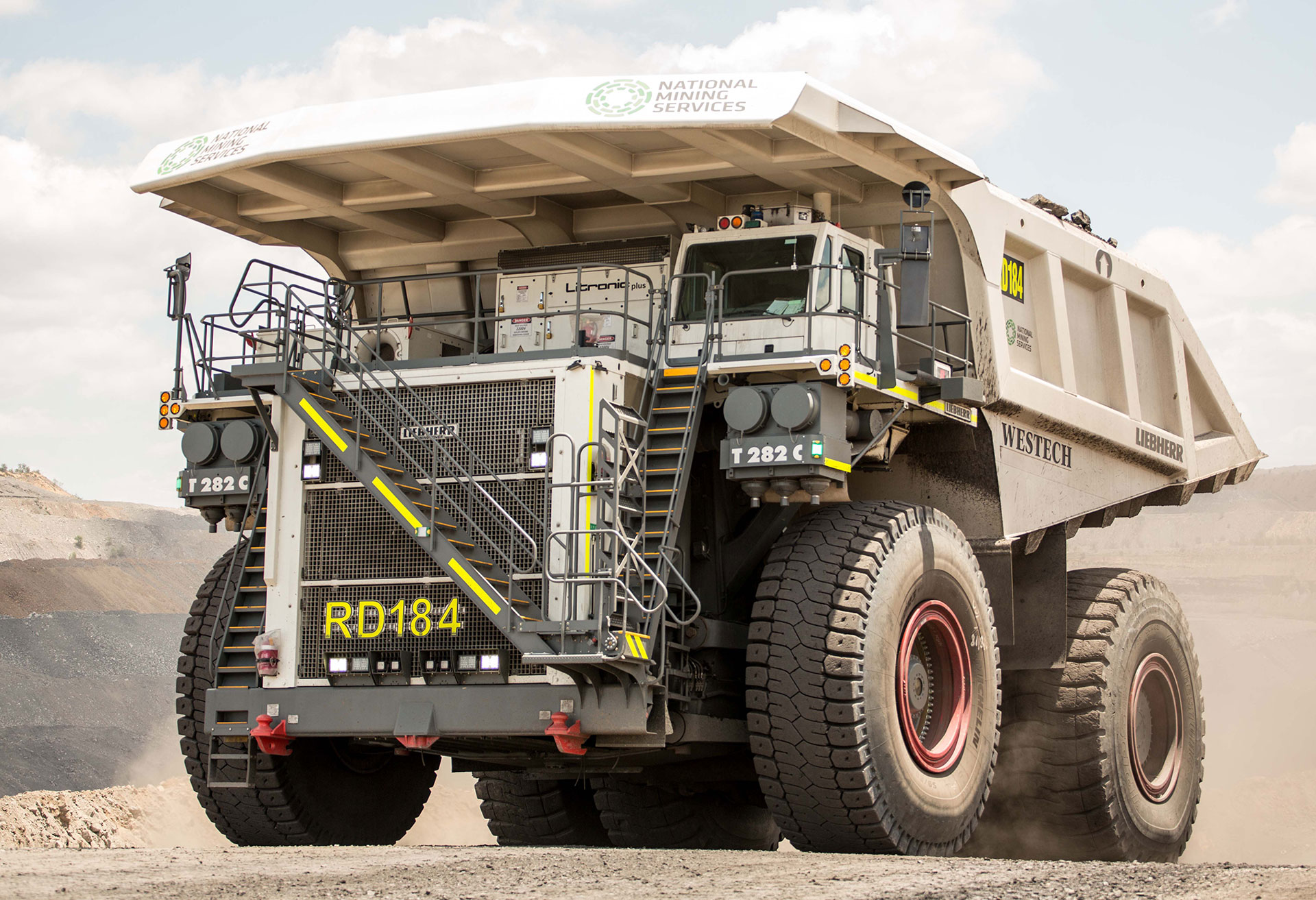
Liebherr's mining division produces some of the world's largest and most technologically advanced equipment. The T 264 ultra-class haul truck, with a 240-tonne payload capacity and proven diesel-electric drive system, delivers exceptional fuel efficiency and reliability in operations running 24/7/365. The company's hydraulic excavators range from 100 to 800 tonnes operating weight, with bucket capacities reaching 47.5 cubic meters—designed specifically for the extreme duty cycles and harsh environments that define modern mining operations.
The flagship PR 776 Generation 8 crawler dozer represents the most efficient dozer in the 70-tonne class, featuring hydrostatic drive technology that's been refined over six decades. This design delivers constant high torque, low cost-per-ton productivity, and significantly reduced environmental impact compared to conventional mechanical drive systems. With mining operations facing increasing pressure to maximize efficiency while reducing emissions, Liebherr's engineering delivers measurable advantages in both operational performance and sustainability metrics.
Construction & Earthmoving: Precision Engineering for Maximum Uptime
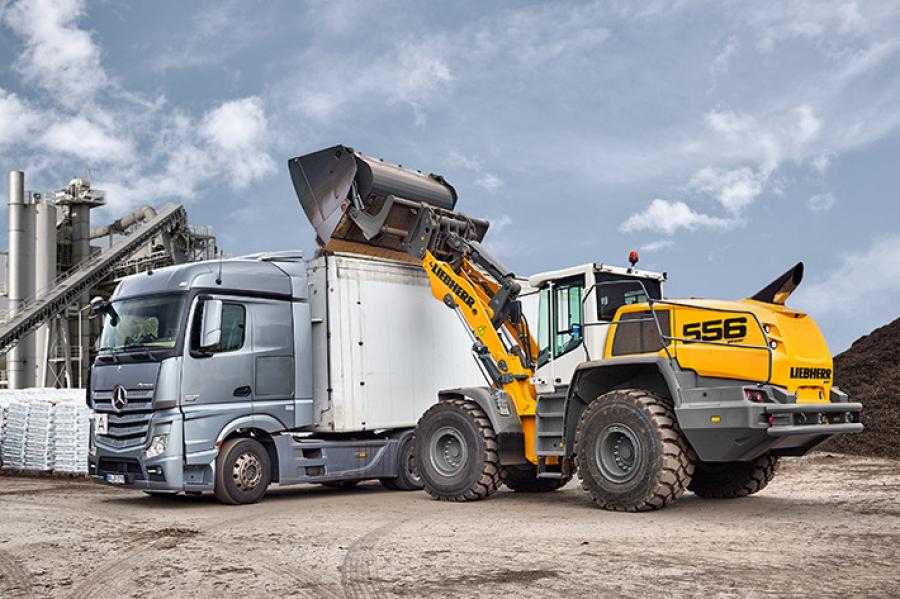
Liebherr's construction equipment division offers one of industry's most comprehensive product lines—hydraulic excavators from compact models to 800-tonne giants, wheel loaders optimized for everything from aggregate handling to waste management, and crawler tractors built for severe-duty applications. Each machine incorporates Liebherr-designed and manufactured components: engines, hydraulic systems, drive technology, and control systems engineered as integrated solutions rather than assembled from generic parts.
This vertical integration provides critical advantages. When hydraulic systems, electronic controls, and powertrains are designed together from the ground up, optimization opportunities exist that simply aren't possible with assembled components. The result: lower fuel consumption, extended component life, reduced maintenance complexity, and superior parts availability backed by Liebherr's global service network. For contractors and rental fleets where equipment uptime directly determines profitability, these engineering advantages translate to measurable bottom-line improvements.
Crane Technology: The World's Most Powerful Lifting Solutions
Liebherr stands as the world's largest crane manufacturer, a position earned through continuous innovation in mobile cranes, crawler cranes, and tower cranes. The LR 13000 crawler crane represents the world's most powerful model, capable of lifting 3,000 tonnes with a maximum pulley height of 248 meters—specifications that redefine what's achievable in heavy lifting operations. The LTM 11200-9.1 mobile crane, featuring a 100-meter telescopic boom, received the heavy-lifting industry's Development of the Year award as the world's most powerful machine in its class.
Tower cranes bearing the Liebherr name have built the world's tallest structures, from Dubai's Burj Khalifa to Europe's landmark projects. This isn't coincidental—Liebherr tower cranes incorporate advanced control systems, precision load management, and modular designs that enable rapid erection and reconfiguration as project needs evolve. For construction companies managing multiple projects simultaneously, this flexibility, combined with Liebherr's global parts and service network, minimizes equipment idle time and maximizes utilization across diverse applications.
Explore Liebherr's complete equipment portfolio and find solutions for your operation. Visit Liebherr.com →
Leading the Zero-Emissions Revolution
While many manufacturers discuss sustainability as a future goal, Liebherr is delivering production equipment today. At MINExpo 2024, Liebherr and global mining company Fortescue announced the largest order in Liebherr's history—475 machines including 360 battery-electric mining trucks, 55 electric excavators, and 60 battery-electric crawler dozers. This partnership aims to make Liebherr and Fortescue the world's first providers of locally emission-free yet fully autonomous machines in the mining sector.
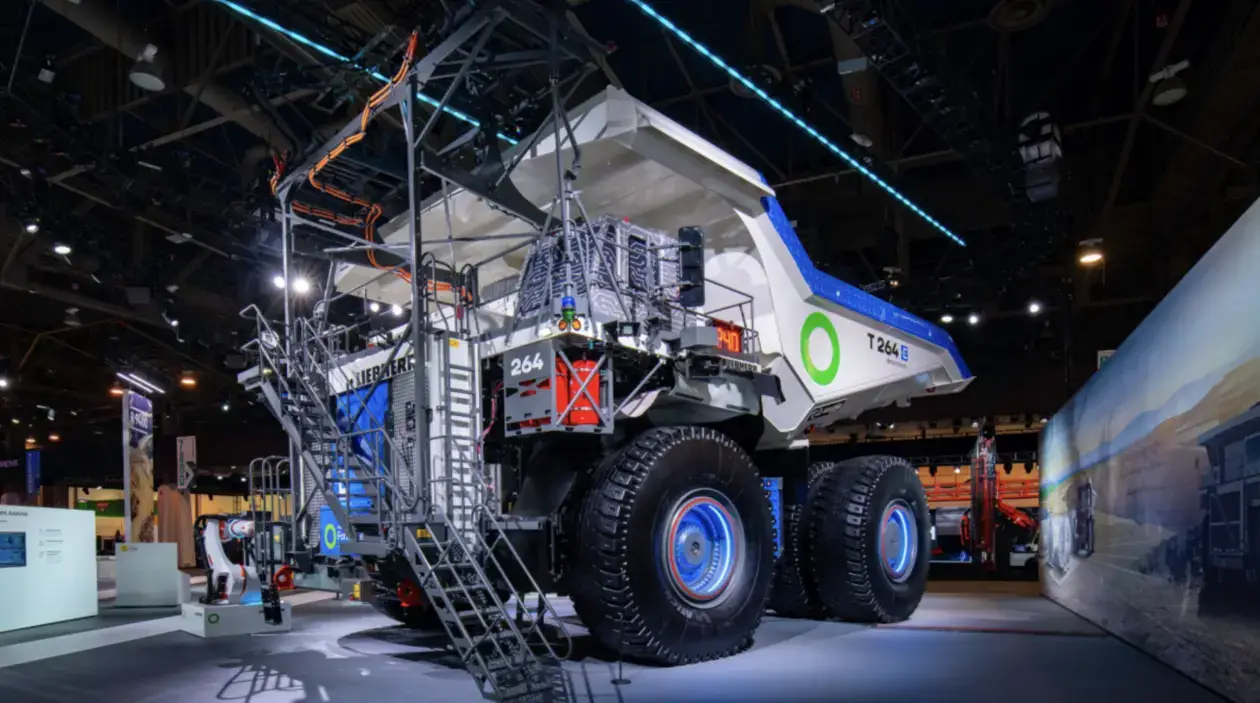
The unveiled autonomous battery-electric T 264 haul truck represents years of engineering development, combining zero-emissions operation with fully autonomous capabilities. Liebherr's stated goal: ensure the entire mining product range operates independently of fossil fuels by 2030. This isn't marketing rhetoric—it's backed by €666 million invested in research and development in 2024 alone, with alternative drives, autonomy, and digitalization as primary focus areas. The company has also developed hydrogen engine prototypes for wheel loaders and continues advancing fuel cell technology through its aerospace division's high-speed compressor development.
North American Presence and Support Infrastructure
Liebherr's commitment to the North American market began in 1970 with construction of its Newport News, Virginia manufacturing facility and headquarters. Today, Liebherr USA, Co. coordinates nine product segments with enhanced capabilities in customer service, technical support, and parts distribution from state-of-the-art facilities that opened in 2020.
The Newport News location serves as the dedicated manufacturing facility for ultra-class mining trucks—some of the largest and most advanced haul trucks in the world—serving customers across the Americas, Australia, and beyond. Additional U.S. facilities in Elko, Nevada and Gillette, Wyoming provide regional sales, service, and component rebuilding capabilities for mining equipment. The Saline, Michigan aerospace service center handles aftermarket support for Liebherr aerospace components on civil aviation platforms. This distributed network ensures local support backed by global resources—the optimal combination for equipment operating in mission-critical applications.
The Liebherr Difference: Engineering, Service, Partnership
What separates industry leaders from equipment sellers? Three fundamental commitments: engineering products for extreme duty cycles and maximum uptime, building service infrastructure that keeps equipment operating regardless of location, and viewing customer relationships as long-term partnerships rather than transactional equipment sales.
Liebherr's vertical integration—designing and manufacturing engines, hydraulics, drivetrains, controls, and final machines—enables optimization impossible with assembled components. The company's global service network provides genuine parts availability, factory-trained technicians, and technical support across continents. And family ownership enables investment decisions based on long-term customer success rather than quarterly financial engineering.
For mining operations where a single haul truck represents millions in annual production, for construction companies managing fleets worth tens of millions, for contractors whose project success depends on equipment reliability—these commitments aren't marketing talking points. They're the foundation of equipment investment decisions that will impact operations for decades.
75 Years Forward, Eyes on the Future
In 2024, Liebherr celebrated its 75th anniversary under the motto "75 years of moving forward"—a reflection on the company's history and a statement about its approach to the future. While competitors chase quarterly targets, Liebherr invests €989 million annually in production facilities, logistics networks, and service infrastructure. While others outsource engineering to reduce costs, Liebherr maintains in-house R&D across all product segments, with an AI competence center established to accelerate innovation.
This isn't the approach of a company optimizing for the next earnings call. It's the strategy of a family-owned enterprise committed to serving customers' evolving needs for generations to come. Whether pioneering zero-emissions mining equipment, advancing autonomous systems, or simply ensuring a wheel loader purchased today will still have parts support in 2045, Liebherr's actions demonstrate that some manufacturers view their role differently—as long-term partners in their customers' success.