By Michael Nielsen, Editor & Publisher | 15+ Years in Diesel Repair
Last Updated: December 2025
📖 Estimated reading time: 22 minutes
Understanding used heavy-duty truck values has become essential for fleet managers and owner-operators navigating today’s volatile commercial vehicle marketplace. With Class 8 sleeper tractors averaging 431,028 miles at retail and mid-age equipment depreciating at 2.1% monthly, pricing dynamics have shifted significantly from pandemic-era peaks. Whether you’re acquiring replacement equipment or liquidating aging assets, knowing current market conditions and valuation factors directly impacts your bottom line.
The used truck market has absorbed excess capacity throughout 2024 and into 2025 without experiencing extreme depreciation crashes—a sign of underlying market stability despite subdued freight conditions. Low-mileage commercial vehicles continue attracting strong buyer interest as cost-effective alternatives to new trucks carrying increasingly steep price tags, while older equipment faces accelerated value decline as it approaches major component replacement intervals.
This comprehensive guide examines the primary factors driving used Class 8 truck pricing, current depreciation rates by age and configuration, brand-specific value considerations, and practical valuation resources. Fleet managers will find actionable guidance for timing equipment transactions, while owner-operators gain insight into what variables most impact resale values when the time comes to trade or sell.
Key Takeaways
- Market stability amid oversupply: Used truck values have normalized from 2022 peaks but remain 33% above late-2019 levels in nominal dollars, with subdued conditions expected through mid-2026.
- Accelerated mid-age depreciation: Trucks in the 4-6 year age range are depreciating at 2.1% monthly, while late-model equipment under 3 years maintains depreciation below 1% monthly.
- Mileage thresholds matter: Retail sleeper tractors now average 56 months old with 431,028 miles—buyers have become increasingly selective about acceptable mileage parameters.
- Brand premiums persist: Kenworth and Peterbilt command 10-15% premiums over mid-tier manufacturers, while Cummins-powered trucks consistently achieve stronger resale values across all brands.
- Documentation drives value: Fleet-maintained trucks with complete service histories typically justify 10-15% price premiums over comparable units lacking verifiable maintenance records.
- Strategic timing essential: Industry forecasts predict conditions won’t improve appreciably until second half of 2026 as truck-to-freight ratios normalize.
Understanding the Used Heavy-Duty Truck Market Landscape
Market conditions for used heavy-duty trucks have evolved significantly as buyers demonstrate increased selectivity regarding vehicle age and accumulated mileage. The secondary market for commercial vehicles operates within a complex framework where economic indicators, freight demand, and inventory availability converge to establish pricing benchmarks that fleet managers must navigate daily.
The commercial truck marketplace encompasses multiple transaction channels, including dealer retail sales, auction platforms, and private transactions between fleet operators and independent purchasers. Each channel serves distinct buyer segments with varying needs and budget constraints. For fleet maintenance managers cycling equipment on regular schedules, understanding how these channels interact provides essential context for evaluating current pricing trends and projecting optimal replacement timing.
Current Market Dynamics Shaping 2025 Pricing
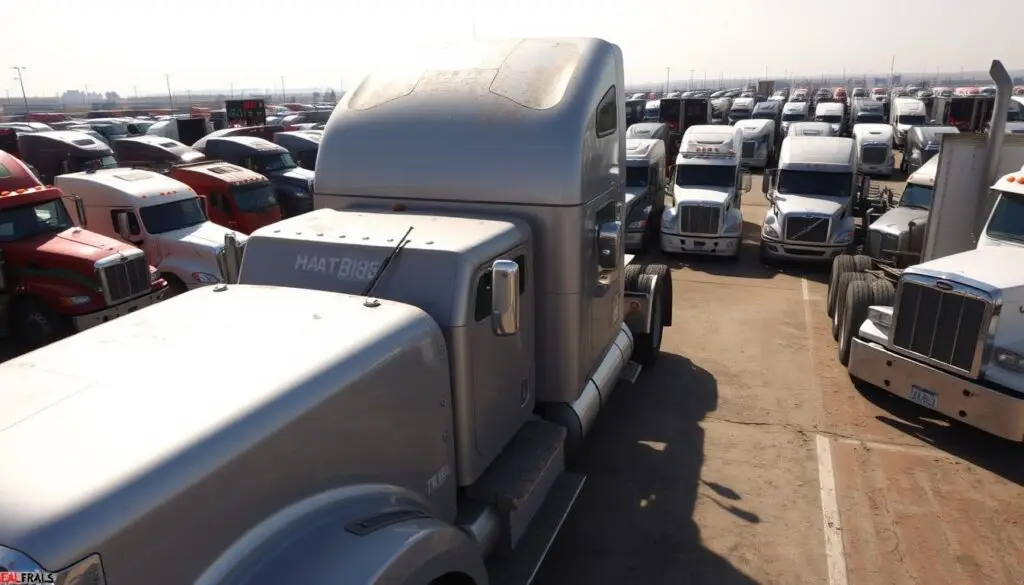
Recent data from J.D. Power Valuation Services reveals important trends shaping the commercial truck marketplace heading into 2026. In August 2025, retail sales per rooftop matched July’s performance at 3.4 trucks sold. However, total retail sales declined 4.2% compared to July while registering a 2.4% increase over August 2024 figures—indicating gradual market stabilization rather than dramatic recovery.
The dataset of sold sleeper tractors provides clear insight into evolving buyer preferences. These vehicles averaged 56 months old with 431,028 miles on the odometer—figures that tell fleet managers exactly where the sweet spot sits for pre-owned equipment acquisition. Retail customers have become more selective about acceptable age and mileage parameters when making purchase decisions, driving premiums for well-maintained, lower-mileage units.
+33% Above 2019
Current nominal pricing remains elevated compared to late-2019 levels, though inflation-adjusted values show only a 5.5% real gain. — J.D. Power Commercial Truck Guidelines
Market analysts predict subdued conditions will persist until the second half of 2026. This forecast reflects ongoing adjustment as the number of trucks in service becomes more proportional to available freight volume. The market continues absorbing excess capacity without experiencing severe depreciation, particularly for well-maintained units with documented service histories.
Low-mileage used trucks remain in strong demand as cost-effective alternatives to expensive new models. This trend supports pricing stability for premium inventory while creating clear value tiers based on condition and specifications. Buyers recognize that quality pre-owned equipment can deliver reliable performance without the substantial financial commitment required for new truck purchases that now routinely exceed $180,000 for well-equipped Class 8 sleeper tractors.
Key Market Participants and Transaction Channels
The used truck market involves several distinct participant categories, each contributing to overall transaction volume and pricing dynamics. Understanding these stakeholder groups helps explain market behavior and pricing variations across different sales channels.
Large fleet operators regularly cycle equipment, typically divesting units between 4-7 years of age to upgrade with newer technology while maintaining optimal operational efficiency. These trade-ins create the largest supply stream for quality used equipment. Independent owner-operators seeking quality pre-owned equipment represent a significant buyer segment, prioritizing reliable performance at lower acquisition costs than new trucks require.
Established dealerships and specialized used truck dealers source inventory from auctions, trade-ins, and direct fleet purchases. Their reconditioning capabilities and retail facilities add value but also add cost compared to direct fleet-to-buyer transactions. Equipment leasing companies return off-lease units to the market after lease terms expire, typically offering well-maintained vehicles with documented service histories that command premium pricing.
Physical and online auction services facilitate wholesale transactions between sellers and buyers, establishing baseline market values that inform retail pricing across all channels. Understanding auction pricing trends provides fleet managers with leading indicators of where retail values are heading in the months ahead.
Class 7 and Class 8 Truck Categories Explained
The commercial truck market divides into distinct weight classifications that serve different operational purposes. Class 7 trucks and Class 8 trucks represent the heavy-duty segments, each with unique characteristics that influence market demand and pricing patterns.
Class 7 trucks feature gross vehicle weight ratings between 26,001 and 33,000 pounds. These vehicles typically serve regional delivery operations, construction applications, and specialized vocational purposes. The segment includes medium-duty tractors, delivery trucks, and specialized equipment carriers that require substantial hauling capacity without the size and operational complexity of larger tractors.
Class 8 trucks exceed 33,000 pounds GVWR and represent the largest category of commercial vehicles. This classification includes over-the-road tractors, heavy-haul equipment, and specialized heavy-duty applications. The Class 8 segment dominates long-haul freight operations and accounts for the majority of commercial trucking activity across North American transportation networks.
| Characteristic | Class 7 Trucks | Class 8 Trucks |
|---|---|---|
| GVWR Range | 26,001–33,000 lbs | 33,001+ lbs |
| Primary Applications | Regional delivery, construction, vocational | Long-haul freight, heavy hauling, OTR |
| Market Volume | Moderate transaction frequency | High transaction frequency |
| Typical Configurations | Single-axle tractors, straight trucks | Tandem-axle tractors, sleepers, day cabs |
| Annual Mileage Range | 40,000–60,000 miles | 80,000–120,000 miles |
Major manufacturers dominate both segments, though brand preferences vary by application and buyer profile. Freightliner, Kenworth, Peterbilt, Volvo, International, and Mack collectively represent the majority of inventory available in the used truck market. Each manufacturer has established reputation characteristics that influence resale values and buyer preferences—factors we’ll examine in detail later in this guide.
Primary Factors Influencing Used Heavy-Duty Truck Values
Determining accurate pricing for used heavy-duty trucks involves analyzing multiple vehicle attributes that collectively establish market value. Buyers and sellers both benefit from understanding how specific characteristics translate into dollar amounts. The market assigns different weight to various factors, creating a complex but predictable valuation framework that fleet managers can leverage for better transaction outcomes.
Four primary elements dominate the pricing equation for used commercial trucks: model year, accumulated mileage, physical and mechanical condition, and specification packages. These factors work independently and in combination to create final market value. Recognizing how each element affects pricing helps stakeholders make informed decisions about when to buy, when to sell, and what price points represent fair market value.
How Model Year Creates Value Separation
The model year of a heavy-duty truck creates immediate and substantial pricing differences in the marketplace. Recent data from August 2025 illustrates this reality with precision. A 2024 model year truck retails at $119,417 on average, while a 2023 model commands $96,674—a decrease of nearly $23,000 in just one year. This steep first-year depreciation creates opportunities for fleet managers willing to acquire late-model used equipment rather than purchasing new.
The depreciation pattern continues through subsequent model years, though the rate of decline moderates after the initial steep drop. Understanding these patterns helps fleet managers identify optimal acquisition windows where value per dollar spent maximizes operational benefit.
| Model Year | Average Retail Price | Year-Over-Year Decline | Cumulative Depreciation |
|---|---|---|---|
| 2024 | $119,417 | — | — |
| 2023 | $96,674 | $22,743 | 19.0% |
| 2022 | $73,947 | $22,727 | 38.1% |
| 2021 | $55,442 | $18,505 | 53.6% |
| 2020 | $44,379 | $11,063 | 62.8% |
The steepest value decline occurs during the first two years of a truck’s life. After this initial period, depreciation moderates but continues consistently. Buyers have become increasingly selective about purchasing older units, preferring newer trucks that offer better fuel efficiency, updated emissions technology, and lower near-term maintenance requirements.

Odometer Readings and Their Pricing Consequences
Accumulated mileage serves as a critical indicator of remaining vehicle life and future maintenance costs. Current market data shows that sold sleeper tractors average 431,028 miles when they change hands. This figure represents the midpoint where buyers balance affordability against remaining useful life—a benchmark fleet managers should reference when evaluating acquisition candidates.
Industry benchmarks establish expected annual mileage at 100,000 to 125,000 miles for over-the-road applications. Trucks operating significantly above this range face valuation penalties because the additional wear compresses remaining component life. Conversely, units with unusually low mileage for their age may command premium pricing, though experienced buyers sometimes question why such trucks accumulated fewer miles—potentially indicating extended downtime or operational issues.
The mileage impact extends beyond simple odometer numbers. High-mileage units approaching 500,000 miles or more typically require major component replacements soon. Engine overhauls, transmission rebuilds, and rear-end replacements represent significant capital expenses that buyers factor into their pricing calculations. Fleet trucks with documented service histories often justify higher prices despite elevated mileage because comprehensive maintenance records provide confidence about vehicle condition and proper care.
Physical and Mechanical Condition Variables
The vehicle condition assessment process examines multiple dimensions of truck quality that collectively determine market positioning. Two trucks with identical age and mileage can differ by 15 to 25 percent in value based solely on condition factors. This substantial variance makes thorough condition evaluation essential for accurate pricing on both the buy and sell sides.
Exterior cosmetic condition includes paint quality, body panel integrity, and the absence of accident damage. While cosmetic issues matter less than mechanical soundness from an operational standpoint, appearance affects buyer perception and negotiating dynamics. Professional reconditioning that addresses visible defects typically returns value greater than the repair cost—a strategy sellers should consider before listing equipment.
Mechanical integrity encompasses engine performance, transmission operation, brake system condition, and electrical system functionality. Buyers increasingly request pre-purchase inspections that identify deferred maintenance or developing problems. Issues discovered during inspection provide negotiating leverage or cause buyers to walk away entirely. For sellers, addressing known mechanical issues before listing often proves more cost-effective than the price concessions buyers will demand upon discovery.
⚠️ Critical Inspection Point
Frame and structural soundness represents a non-negotiable condition element. Cracks, rust-through, or previous repairs to frame rails can eliminate 30% or more of market value instantly and may render a truck unsaleable to commercial buyers concerned about liability and longevity.
Specification Packages and Equipment Features
The specific configuration and equipment installed on a heavy-duty truck create significant value differentiation within the same model year and mileage category. Engine specifications represent the most impactful equipment consideration, with horsepower ratings, torque output, and emission compliance status all affecting desirability and pricing.
Sleeper cab size and amenities matter substantially for over-the-road tractors. A 72-inch sleeper with premium appointments commands higher prices than basic 48-inch sleepers. Amenities like refrigerators, inverters, premium mattresses, and entertainment systems add incremental value that appeals to owner-operators prioritizing driver comfort during extended time away from home.
Transmission type creates clear market segments. Automated manual transmissions have gained strong preference over traditional manual transmissions for their ease of operation and fuel efficiency benefits. This preference translates into pricing advantages for trucks equipped with automation, particularly among fleet buyers who value reduced driver training requirements and more consistent fuel economy across diverse driver skill levels.
Axle configuration affects capability and operating costs simultaneously. Tandem rear axles provide the pulling capacity required for heavy loads, while single rear axles offer weight savings and potentially better fuel economy for lighter applications. The optimal configuration depends on intended use, making specification matching crucial for maximizing value in both acquisition and disposition.
Stay Ahead of Market Shifts
Get weekly insights on used truck pricing trends, fleet management strategies, and industry developments delivered directly to your inbox.
Depreciation Rates by Truck Age and Class
Depreciation represents one of the most significant ownership costs for heavy-duty trucks, following predictable yet complex patterns that vary substantially by truck age and classification. Understanding these depreciation rates enables buyers to identify optimal acquisition windows and helps sellers recognize strategic divestment timing that maximizes asset recovery.
The rate at which heavy-duty trucks lose value depends on multiple interconnected factors including age, accumulated mileage, equipment configuration, and broader economic conditions. Current industry analysis shows that the 4-to-6-year-old cohort experienced depreciation averaging 2.1% per month in August 2025, according to J.D. Power research. This acceleration reflects market normalization following pandemic-era supply constraints that temporarily elevated used truck values across all segments.
First-Year Depreciation Patterns
The initial twelve months of ownership represent the most acute phase of value loss for heavy-duty trucks. New trucks typically experience 20-30% depreciation during their first year as they transition from new to used status. This substantial decline reflects the loss of factory warranty premium, the psychological impact of “latest model” appeal, and the immediate availability of comparable used units with minimal wear.
First-year depreciation disproportionately affects buyers of new equipment but creates compelling value opportunities for purchasers of late-model used units. Fleet operators who purchase new trucks and maintain them for extended periods can absorb this initial depreciation across longer ownership cycles, reducing the per-year cost of depreciation. Conversely, buyers seeking late-model equipment benefit from acquiring nearly-new trucks at significantly reduced prices compared to dealership MSRP.
The severity of first-year depreciation varies by manufacturer, with premium brands like Kenworth and Peterbilt often experiencing slightly lower percentage declines due to stronger brand loyalty and perceived quality advantages. Economic conditions at the time of original purchase also influence first-year value retention, as trucks acquired during peak demand periods may experience steeper depreciation as market conditions normalize.
Years Two Through Five: The Moderate Decline Phase
After the initial steep decline, depreciation rates typically stabilize to a more moderate pace during years two through five. Historical patterns show annual depreciation of 8-12% during this period, though current market dynamics present a somewhat different picture. For late-model sleeper tractors aged 3 to 5 years, depreciation in 2025 year-to-date is averaging well under 1% per month despite month-over-month declines observed in July and August.
This relatively stable value retention suggests that well-maintained trucks in this age bracket continue to command premium pricing in the current market. The moderate decline phase represents the period when trucks deliver optimal value to owners, as operational capabilities remain high while acquisition costs have already absorbed the steepest depreciation. Fleet managers often target this age range for used equipment purchases, seeking to balance reliability with affordability.
Current market data demonstrates that late-model sleepers are bringing 2.5% more than the strong pre-pandemic period of early 2019 in nominal dollars, though this translates to approximately 20% less when adjusted for inflation. This context is essential for understanding whether current market pricing represents opportunity or overvaluation relative to historical norms.
Long-Term Depreciation for Older Units
Trucks beyond six years of age enter a fundamentally different valuation paradigm where condition and maintenance history eclipse age as primary value determinants. Depreciation rates for these older units can actually accelerate as they approach major component replacement intervals or face regulatory considerations related to emission standards compliance. The 4-to-6-year-old cohort’s acceleration to 2.1% monthly depreciation illustrates this transition phase clearly.
Remaining useful life becomes the critical calculation for older trucks rather than simple age-based formulas. A well-maintained 8-year-old truck with comprehensive service records may command prices comparable to poorly-maintained 6-year-old units. Buyers in this segment conduct more thorough mechanical inspections and place premium value on documentation proving proactive maintenance throughout the vehicle’s operational life.
Emission standard compliance significantly impacts long-term depreciation trajectories. According to the EPA’s regulations on commercial truck emissions, trucks meeting current standards retain value better than older units potentially facing operational restrictions in certain jurisdictions. This regulatory dimension creates additional depreciation pressure on trucks approaching or exceeding ten years of age, particularly those serving operations in states with stringent environmental requirements like California.
Sleeper Versus Day Cab Depreciation Dynamics
Configuration type substantially influences depreciation patterns within the Class 8 category. Sleeper tractors typically retain value better in percentage terms than day cab trucks, despite experiencing higher absolute dollar depreciation due to elevated starting prices. This differential reflects stronger demand in the long-haul segment where sleeper-equipped units are essential for over-the-road operations requiring overnight capabilities.
Day cabs serve primarily local and regional applications where drivers return home daily, creating a more limited buyer pool compared to sleepers’ broader market appeal. However, day cabs’ lower initial acquisition costs mean their absolute depreciation dollars remain smaller even when percentage declines are steeper. Buyers should consider their operational requirements when evaluating which configuration offers better long-term value retention for their specific use case.
| Truck Age Cohort | Monthly Depreciation | Configuration Impact | Market Position |
|---|---|---|---|
| First Year | 1.7%–2.5% | Sleepers retain 3-5% better | Normalizing from elevated levels |
| Years 2-5 | Under 1.0% | Sleepers show strongest stability | +2.5% nominal vs. early 2019 |
| Years 4-6 | 2.1% | Configuration impact diminishes | +33% nominal vs. late 2019 |
| Years 7+ | 1.5%–3.0% (variable) | Condition supersedes config | +5.5% inflation-adjusted vs. 2019 |
How Mileage Affects Truck Valuation
The odometer reading on a used heavy-duty truck directly translates into pricing adjustments that can range from substantial premiums to significant discounts. Accumulated miles serve as a critical indicator of remaining component lifespan and predict future maintenance requirements with reasonable accuracy. Buyers in today’s market have become increasingly selective about acceptable mileage thresholds, making this factor more influential than ever in determining final sale prices.
The mileage impact extends beyond simple wear and tear calculations. Each mile recorded represents operational stress on the engine, transmission, drivetrain, and suspension systems that brings the vehicle closer to major maintenance intervals. According to ACT Research’s September 2025 data, retail sleeper tractors averaged 410,000 miles—a figure that provides context for understanding whether a specific truck falls into low-mileage, average-mileage, or high-mileage categories.

Low-Mileage Premium Pricing
Trucks with significantly below-average miles for their age command substantial pricing premiums in the current market. These units typically sell for 10-20% above comparable high-mileage trucks of the same year and specification. The premium reflects reduced wear on critical components and extended remaining useful life before major overhauls become necessary.
Low-mileage used trucks have become particularly attractive as new truck prices have escalated dramatically. Buyers view these vehicles as cost-effective alternatives that deliver near-new reliability without the substantial depreciation hit of purchasing brand-new equipment. Competition for well-maintained, low-mileage units has intensified, supporting premium pricing that previous market cycles might not have sustained.
The vehicle condition assessment process favors low-mileage trucks because they typically require fewer immediate repairs. Buyers can defer major maintenance expenses, improving their return on investment calculations. This financial advantage justifies paying higher acquisition costs for trucks that promise lower near-term operating expenses.
Average Annual Mileage Benchmarks by Application
Industry standards provide reference points for evaluating whether a truck’s odometer reading aligns with normal operational expectations. These benchmarks vary significantly based on application type and operational profile. Understanding these standards helps buyers identify trucks that have been utilized appropriately versus those with unusual mileage patterns that may indicate problems or opportunities.
| Application Type | Annual Mileage | 5-Year Expected Total | Valuation Impact |
|---|---|---|---|
| Over-the-Road | 100,000–125,000 mi | 500,000–625,000 mi | Standard pricing if maintained |
| Regional Delivery | 50,000–80,000 mi | 250,000–400,000 mi | Premium for lower wear |
| Local Distribution | 25,000–50,000 mi | 125,000–250,000 mi | Highest premium potential |
| Specialized Hauling | 40,000–70,000 mi | 200,000–350,000 mi | Application-dependent |
Trucks tracking close to these benchmark averages generally receive standard market pricing. Buyers view them as having been utilized normally without excessive wear or concerning underutilization. Significantly lower mileage may raise questions about extended idle time, operational issues, or partial-year usage that limited accumulation. The assessment process compares a truck’s actual mileage against age-appropriate expectations to determine appropriate pricing adjustments.
High-Mileage Value Reduction
Trucks exceeding mileage benchmarks face pricing penalties that accelerate as odometer readings climb higher. The discounts become particularly steep as trucks approach or exceed major maintenance intervals. Engine overhauls typically occur around 500,000-750,000 miles depending on engine type and maintenance history, creating significant valuation thresholds that buyers carefully consider.
Transmission rebuilds and rear-end replacements represent additional high-cost maintenance events that buyers factor into their pricing calculations. A truck approaching these intervals requires immediate capital investment beyond the purchase price. Sellers must discount their asking prices to compensate buyers for these anticipated expenses—or complete the work themselves before listing if the math supports that approach.
High-mileage trucks may still represent value for certain buyer segments, particularly those operating in lower-margin applications where minimizing acquisition cost takes priority. Owner-operators in regional markets sometimes prefer purchasing high-mileage equipment at substantial discounts, accepting higher maintenance requirements in exchange for minimized upfront investment. These transactions typically occur at 30-40% below comparable low-mileage units.
Brand and Manufacturer Impact on Resale Values
Different truck manufacturers command distinctly different price points in secondary markets based on established reputations for quality, reliability, and support infrastructure. The brand name on a truck’s hood influences buyer confidence and purchasing decisions as powerfully as mechanical condition or maintenance records. This brand effect creates measurable variations in truck resale value that persist across all vehicle ages and condition levels.
Manufacturer reputation encompasses multiple factors beyond initial build quality. Dealer network density affects service accessibility and parts availability in different regions. Brand-specific technologies may require specialized maintenance capabilities that influence operational costs. Buyer familiarity with particular manufacturer platforms creates comfort levels that translate directly into willingness to pay premium prices.

Market Leaders With Sustained Demand
Freightliner trucks dominate the Class 8 market with the largest market share in the United States. The Cascadia model has become the benchmark for over-the-road applications among both fleet operators and owner-operators. This widespread acceptance creates robust secondary market demand that supports value retention across the vehicle lifecycle.
The extensive Freightliner dealer network provides parts availability and service accessibility in virtually every major trucking corridor. This practical advantage reduces downtime concerns for buyers evaluating used equipment. Fleet maintenance managers appreciate the standardization benefits when operating predominantly Freightliner fleets, which increases trade-in demand from large carriers replacing equipment on regular cycles.
Kenworth trucks reflect premium positioning within the PACCAR family of manufacturers. The T680 aerodynamic model and the iconic W900 long-hood design maintain particularly loyal buyer segments. Owner-operators often cite build quality, driver comfort, and brand prestige as factors justifying higher acquisition costs for Kenworth equipment. Kenworth trucks consistently command a 10-15% premium over comparable models from mid-tier manufacturers in the used market, reflecting buyer perception of superior long-term reliability.
Premium Positioning and Owner-Operator Appeal
Peterbilt resale values benefit from the brand’s reputation as the premium choice for discerning professionals. The 579 model competes directly with Kenworth’s T680 in aerodynamic efficiency while maintaining the distinctive styling that attracts brand loyalists. Owner-operators view Peterbilt ownership as a business statement that reflects commitment to quality equipment.
Customization options available on Peterbilt trucks create differentiation in the used market. Buyers seeking specific configurations or premium interior appointments often find more options within the Peterbilt inventory. This variety supports pricing flexibility, with exceptionally equipped examples commanding significant premiums over basic specifications.
The Peterbilt resale market demonstrates particular strength in regional variations. Western states show stronger demand and higher pricing for Peterbilt equipment compared to some Southeastern markets. These geographic preferences create opportunities for buyers willing to transport equipment between regions to capitalize on price differentials.
Technology Leaders and Value Segments
Volvo trucks occupy a distinct market position emphasizing integrated technology and fuel efficiency. The VNL series incorporates European engineering principles that appeal to progressive fleets prioritizing driver retention and operational efficiency. Volvo’s integrated powertrain approach, featuring proprietary engines and transmissions, creates brand-specific service requirements that influence resale considerations.
Buyers evaluating Volvo equipment in the used market often represent fleet operators already familiar with the brand’s operational characteristics. This somewhat specialized buyer base can create pricing advantages for knowledgeable purchasers but may extend selling timeframes compared to higher-volume brands. Truck resale value for Volvo equipment depends significantly on finding buyers who appreciate the technology advantages rather than viewing them as maintenance complications.
International trucks serve price-sensitive market segments with competitive acquisition costs. The LT series represents Navistar’s return to competitive positioning in over-the-road applications after challenging periods with previous engine platforms. Resale value patterns for International equipment vary considerably by model generation and engine platform, with newer trucks featuring Cummins power demonstrating improved market acceptance.
| Manufacturer | Market Position | Value Retention | Primary Buyer Segment |
|---|---|---|---|
| Freightliner | Market leader, highest volume | Strong, stable demand | Large fleets, owner-operators |
| Kenworth | Premium PACCAR brand | Excellent, 10-15% premium | Owner-operators, quality fleets |
| Peterbilt | Premium, customization focus | Excellent, regional variations | Owner-operators, specialty |
| Volvo | Technology leader | Good, specialized buyers | Progressive fleets, Volvo operators |
| International | Value positioning | Variable by generation | Price-sensitive fleets, vocational |
| Mack | Vocational strength | Strong in segment | Construction, refuse, regional |
Engine Type and Specifications in Used Truck Values
Powertrain selection stands among the most consequential decisions affecting long-term truck value, with engine type, manufacturer, and emission certification creating distinct pricing tiers in the used market. The engine represents the most expensive single component in a heavy-duty truck and directly influences operating costs, maintenance expenses, and regulatory compliance. Buyers scrutinize engine specifications more carefully than almost any other factor when evaluating used trucks.
Engine-related considerations create measurable value differentials that can amount to thousands of dollars between otherwise comparable trucks. A truck with a preferred engine manufacturer may command a premium of $3,000 to $8,000 over an identical model with a less-favored powertrain. Emission certification levels create similar value tiers, with specific EPA standards attracting distinct buyer segments with different priorities regarding maintenance complexity and operational flexibility.
Diesel Engine Preferences and Pricing
Diesel engines dominate the Class 7 and Class 8 truck market with near-total market share based on their superior fuel efficiency, durability, and torque characteristics. Alternative fuel options remain minimal in the used heavy-duty market, with diesel powertrains representing the standard configuration that buyers expect and value.
Market pricing reflects strong buyer preferences for specific diesel engine families based on reliability reputation and service cost history. Engines with established track records of dependable performance command premiums, while powertrains associated with problematic reliability or expensive maintenance face value discounts. These reputations develop over years of real-world operation and become deeply embedded in market perception.
Mechanic familiarity represents another crucial factor driving diesel engine preferences. Powertrains with widespread service availability and extensive technician experience attract buyers who prioritize maintenance accessibility. According to FMCSA regulations, motor carriers must maintain systematic inspection and maintenance programs—having access to qualified technicians familiar with your engine platform directly impacts compliance capability and downtime management.
Emission Standards Compliance Effect
EPA emission standards have created distinct generations of diesel engine technology, with each regulatory phase introducing new emission control systems that significantly affect maintenance complexity and operational costs. These emission certification levels represent one of the most important specifications influencing used truck values, creating clear market segmentation based on regulatory compliance.
Pre-2007 engines without diesel particulate filters attract specific buyer segments seeking to avoid regeneration systems and their associated maintenance requirements. These older powertrains command premiums in certain niche markets, particularly for vocational applications where DPF regeneration cycles may prove problematic. However, pre-emission trucks face operational restrictions in some jurisdictions and may encounter difficulties with certain shipping contracts that require newer equipment.
EPA 2010 and newer engines incorporate SCR technology with DEF consumption, representing the current regulatory standard for heavy-duty diesel powertrains. These engines dominate mainstream market demand and typically command the strongest values for trucks manufactured from 2011 forward. Buyers recognize that EPA 2010+ engines provide the broadest operational flexibility, universal regulatory acceptance, and access to the complete range of hauling opportunities.
Key Recommendation
For fleet operators prioritizing maximum operational flexibility and resale value retention, target EPA 2013 or newer engines. These platforms have demonstrated improved reliability compared to early SCR implementations while meeting all current regulatory requirements and commanding stronger market values.
Cummins, Detroit Diesel, and PACCAR Engine Values
Three manufacturers dominate the heavy-duty truck engine market, with Cummins engines, Detroit Diesel powertrains, and PACCAR engines accounting for virtually all Class 7 and Class 8 installations. Each supplier maintains distinct market positioning with specific value characteristics that influence used truck pricing.
Cummins engines consistently command strong resale values based on widespread dealer support, extensive mechanic familiarity, and generally positive reliability reputations across multiple engine families. The ISX engine series and its X15 successor represent the most common powertrains in the used market, appearing in Kenworth, Peterbilt, International, and Freightliner applications. This broad installation base creates universal service availability and parts access that buyers highly value.
Detroit Diesel engines feature proprietary integration in Freightliner trucks, with DD13, DD15, and DD16 models representing the primary offerings across various power ratings. These powertrains benefit from factory optimization and engineered integration that can deliver fuel efficiency advantages in matched chassis applications. Detroit platform engines have earned improved reliability reputations in recent years, particularly with EPA 2013 and newer generations.
PACCAR engines (MX-11 and MX-13) represent proprietary powertrains for Kenworth and Peterbilt trucks, with steadily growing market acceptance since their introduction in 2010. These engines have demonstrated improving reliability performance and fuel efficiency characteristics that have gradually enhanced their market reputation. PACCAR engine values reflect their evolving market position, with newer MX powertrains (2016+) commanding increasingly competitive pricing as reliability data improves.
The HDJ Perspective
The used truck market has reached an inflection point where patient buyers hold significant leverage. With freight conditions not expected to normalize until mid-2026, fleets cycling equipment can find quality pre-owned units at attractive prices relative to new truck MSRPs that continue climbing. However, this buyer’s market won’t last indefinitely—when freight demand recovers, used truck values will likely follow with lag of 3-6 months. Fleet managers should view current conditions as an opportunity window for strategic acquisitions rather than waiting for further price declines that may not materialize.
Market Demand Cycles and Seasonal Pricing Trends
Beyond mileage and condition, the broader economic landscape and freight industry cycles determine much of a used truck’s market value. These external forces create pricing fluctuations that can impact transaction prices as significantly as vehicle specifications. Understanding market demand cycles and seasonal pricing trends enables buyers and sellers to time transactions strategically for maximum financial advantage.
The interplay between macroeconomic health and equipment values creates opportunities for informed market participants. Timing considerations often separate successful transactions from disappointing outcomes, regardless of individual vehicle quality. Fleet managers who understand these patterns can optimize both acquisition timing and disposal strategies.

Economic Conditions and Freight Demand
The fundamental relationship between macroeconomic health and truck values cannot be overstated. Freight volumes correlate closely with economic activity measures such as GDP growth, manufacturing output, retail sales, and housing starts. When these indicators strengthen, carriers experience increased shipping demand and expand capacity by purchasing equipment—driving up demand and prices for both new and used trucks.
Conversely, economic downturns trigger freight volume reductions that leave carriers with excess capacity. Carriers respond to oversupply by idling trucks and liquidating equipment, which depresses market prices substantially. The freight industry currently faces precisely this challenge following the post-pandemic freight boom that ended in late 2022.
Current market conditions reflect significant oversupply relative to available freight volumes. According to industry analysts, most forecasts predict a subdued holiday shipping season and continued offloading of excess trucks in service, with conditions not predicted to change appreciably until the second half of 2026 as the number of trucks in service becomes more proportional to freight volume available.
Seasonal Fluctuations in Truck Pricing
Recurring annual patterns create predictable pricing variations throughout the calendar year. These seasonal pricing trends typically show stronger pricing in late winter and spring as carriers prepare for busy summer shipping seasons. The spring preparation period represents optimal selling conditions as buyers compete for quality equipment before peak freight seasons, with prices often strengthening 8-12% from winter lows to spring peaks in normal market conditions.
Conversely, prices typically soften in late fall and winter as seasonal freight declines. Carriers focus on fleet optimization rather than expansion during these months, reducing buyer competition and creating opportunities for patient purchasers seeking value. The current forecast of a subdued holiday shipping season suggests limited seasonal price recovery in the upcoming months.
| Season | Market Characteristics | Pricing Trend | Advantage |
|---|---|---|---|
| Winter (Jan-Feb) | Low freight, reduced activity | Weakest pricing | Strong buyer advantage |
| Spring (Mar-May) | Pre-season preparation | Rising to peak | Strong seller advantage |
| Summer (Jun-Aug) | Peak freight season | Elevated, stabilizing | Balanced market |
| Fall (Sep-Nov) | Declining seasonal freight | Softening | Moderate buyer advantage |
Maintenance History and Its Effect on Valuation
A well-documented service history transforms a used truck from an uncertainty into a calculable investment. The maintenance records attached to a heavy-duty truck provide tangible evidence that separates responsible ownership from neglectful operation. Buyers consistently identify comprehensive documentation as a primary factor that justifies premium pricing and accelerates purchase decisions.
Complete maintenance documentation can command pricing premiums between 5% and 15% compared to identical trucks lacking verifiable records. This substantial value difference reflects the reduced risk buyers perceive when purchasing trucks with transparent operational histories. The financial impact of thorough record-keeping often exceeds the influence of minor specification differences.
Complete Documentation Standards
Quality service history begins with systematic record-keeping that captures every significant maintenance event throughout the vehicle’s operational life. Professional buyers evaluate documentation completeness as a reflection of overall vehicle care standards. The most valuable records provide chronological detail that allows assessment of maintenance consistency and investment patterns.
Comprehensive maintenance records should include specific documentation categories that establish credibility: dated service records from reputable repair facilities, receipts showing parts purchases and labor costs, compliance records showing adherence to manufacturer maintenance schedules, inspection reports detailing condition assessments at regular intervals, and component replacement records with specifications and installation dates.
Electronic fleet management records represent the gold standard for documentation comprehensiveness. These systems capture maintenance data automatically and create audit trails that independent operators rarely match. The systematic nature of fleet documentation eliminates gaps that create valuation uncertainty.
High-Value Component Replacement Impact
Recent replacement of major powertrain or emissions components substantially enhances truck values by extending remaining service life. Engine overhauls or replacements eliminate the largest single maintenance expense buyers face with high-mileage units. Transmission rebuilds, differential replacements, and emissions system component installations similarly reduce near-term maintenance probability.
Major component work typically adds measurable value: complete engine overhaul or replacement adds $8,000-$15,000, transmission rebuild or replacement adds $4,000-$7,000, rear differential overhaul adds $2,000-$4,000, and DPF/DOC system replacement adds $3,000-$6,000. Documentation quality directly determines whether buyers credit full replacement value—incomplete records for expensive component work often receive discounted valuation recognition.
Share Your Fleet Experience
Have insights on used truck acquisition strategies or valuation approaches that have worked for your operation? Heavy Duty Journal welcomes contributions from fleet managers and industry professionals.
Valuation Methods and Pricing Resources
Understanding the various truck valuation methods available ensures informed pricing decisions in the commercial vehicle marketplace. Buyers and sellers need access to reliable data sources to establish fair market values. Multiple resources exist, each offering distinct perspectives on pricing that contribute to accurate valuations.
Professional valuations require triangulating information from several sources rather than relying on single estimates. Market participants who understand these methodologies gain negotiating advantages. The right valuation approach depends on transaction type, timeline, and accuracy requirements for the specific situation.
Professional Appraisal Services
Certified truck appraisers provide formal written valuations based on physical inspection and market analysis. These appraisal services deliver authoritative third-party assessments particularly valuable for high-stakes situations. Professional appraisals typically cost between $200 and $500 depending on vehicle complexity and documentation requirements.
Financing institutions often require certified appraisals before approving commercial truck loans above certain thresholds. Estate settlements, legal proceedings, and insurance claims represent additional scenarios where formal appraisals prove essential. Specialized commercial vehicle appraisal firms employ experts familiar with heavy-duty truck markets who consider factors that automated tools cannot evaluate fully.
Online Valuation Tools and Databases
Digital resources have transformed how market participants access pricing information. J.D. Power Valuation Services (formerly NADA) offers commercial truck valuations leveraging extensive transaction databases to generate estimated values. Users input specifications including make, model, year, mileage, condition, and equipment to receive preliminary valuations that establish negotiating parameters.
Black Book commercial vehicle valuations provides wholesale market focus with dealer auction data updated monthly, offering an alternative perspective using different data sources. Comparing estimates from multiple platforms establishes realistic value ranges. Professional buyers typically consult both sources before making offers.
Auction Results and Market Comparables
Actual transaction data provides reality-based market pricing that reflects what buyers truly paid. Major truck auctions such as Ritchie Bros. and IronPlanet publish results showing hammer prices for specific units. These auction outcomes reveal market sentiment more accurately than estimated values because they represent completed transactions rather than projections.
Wholesale auction results typically run 10-20% below retail pricing due to buyer type and volume considerations. Researching comparable trucks currently listed on Commercial Truck Trader and TruckPaper establishes market positioning effectively. Identify trucks matching your specifications, document asking prices for at least five comparable units, adjust for specification differences and geographic factors, then calculate average asking price as baseline for negotiations.
Frequently Asked Questions
What factors most significantly impact used Class 8 truck values?
Model year, accumulated mileage, maintenance documentation, and engine manufacturer create the largest value differentials in the used Class 8 market. A 2024 model year truck averages $119,417 at retail while a 2023 model brings $96,674—demonstrating nearly $23,000 in first-year depreciation alone. Trucks with complete service histories command 10-15% premiums over comparable units lacking documentation, while Cummins-powered trucks consistently achieve stronger resale values across all chassis brands. Condition and specification alignment with buyer needs also significantly influence final transaction prices.
When is the best time to buy or sell a used heavy-duty truck?
Seasonal patterns create predictable pricing variations that strategic buyers and sellers can leverage. Winter months (January-February) typically offer the weakest pricing and strongest buyer leverage as freight volumes decline and dealer inventories accumulate. Spring months (March-May) represent optimal selling conditions as carriers prepare for busy summer shipping seasons, with prices often 8-12% above winter lows. Current market conditions with freight oversupply favor buyers through mid-2026, creating an extended opportunity window for acquisitions.
How do emission standards affect used truck pricing?
EPA emission certification creates distinct market segments with meaningful price differentials. EPA 2010 and newer trucks with SCR/DEF systems command the strongest values due to universal regulatory acceptance and operational flexibility across all jurisdictions. Pre-2007 engines without DPF systems attract niche buyers seeking simpler maintenance but face geographic operating restrictions. EPA 2013+ engines generally achieve premium pricing due to improved reliability compared to early SCR implementations, making them the optimal balance point for fleet operators prioritizing both value retention and operational capability.
What mileage threshold significantly reduces used truck value?
The 500,000-mile threshold represents a significant valuation inflection point for most Class 8 trucks. Retail sleeper tractors currently average 431,028 miles at sale, indicating buyer preference for units below this level. Trucks approaching 500,000 miles face pricing pressure as buyers anticipate major component replacements including engine overhauls ($15,000-$30,000), transmission rebuilds ($7,000-$12,000), and rear differential work. High-mileage trucks exceeding 600,000 miles typically sell at 30-40% discounts compared to lower-mileage equivalents of the same model year and specification.
Which truck brands hold value best in the used market?
Kenworth and Peterbilt consistently command the strongest resale values, typically achieving 10-15% premiums over mid-tier manufacturers for comparable age and specification. Freightliner maintains strong, stable demand due to market-leading volume and extensive dealer network support. Volvo attracts a specialized buyer base that values technology integration, while International and Mack serve distinct segments—International for value-conscious buyers and Mack for vocational applications. Engine choice within each brand also significantly impacts value, with Cummins-powered versions often outperforming proprietary engine options.
Strategic Approaches to Used Truck Value Optimization
The used heavy-duty truck market presents both challenges and opportunities for fleet managers and owner-operators navigating current conditions. With subdued freight markets expected through mid-2026 and pricing normalized from pandemic-era peaks, buyers hold significant leverage for quality acquisitions while sellers must adjust expectations to reflect market realities.
Success in this market demands continuous monitoring of pricing trends and economic indicators. Timing transactions strategically around seasonal patterns and market cycles optimizes financial outcomes. Whether acquiring equipment for fleet expansion or liquidating aging assets, informed decision-making rooted in solid valuation principles separates profitable transactions from costly mistakes.
For fleet managers, the current buyer’s market creates opportunity to upgrade equipment at attractive prices relative to new truck MSRPs that continue climbing. For those disposing of equipment, comprehensive documentation and professional presentation maximize recovery. Understanding how model year, mileage, condition, brand, and engine specifications interact to create market value positions both buyers and sellers for successful outcomes.
Share This Guide With Your Team
Know a fleet manager or owner-operator who could benefit from these used truck valuation insights? Help them make better equipment decisions.