By Michael Nielsen, Editor & Publisher | 15+ Years in Diesel Repair
Last Updated: January 2026
📖 Estimated reading time: 19 minutes
Trailer landing gear maintenance ranks among the most overlooked preventive tasks in commercial fleet operations—until a stripped gearbox strands a loaded trailer at a distribution center or bent legs fail a roadside inspection. These support systems handle tremendous stress during daily coupling operations, yet many maintenance programs treat them as an afterthought until something breaks.
The consequences extend beyond repair costs. A single landing gear failure can sideline revenue-generating equipment for hours or days, create safety hazards during loading operations, and trigger DOT violations that impact CSA scores. Fleet managers who implement systematic inspection and service protocols routinely extend component life by years while virtually eliminating emergency repairs.
This guide covers everything fleet managers, owner-operators, and diesel technicians need to know about keeping landing gear systems operational—from daily pre-trip inspections through complete overhaul procedures for both manual and electric systems.
Key Takeaways
- Lubrication intervals: Service every 3-6 months depending on operating environment—harsh conditions require quarterly attention
- Gear selection matters: Using high gear under load damages gearboxes—switch to low gear once feet contact ground
- Pre-trip essentials: Check for bent legs, loose mounting hardware, crank handle engagement, and proper retraction before every trip
- Repair vs. replace: Rebuild kits run $40-$100, complete legs $275-$325—narrow price spread favors replacement for reliability
- DOT compliance: Landing gear inspection is part of annual requirements under 49 CFR 396.17—document all maintenance
- Winter protection: Road salt accelerates corrosion—pressure wash after exposure and use low-temperature grease rated to minus 65°F
Understanding Trailer Landing Gear Components
Trailer landing gear—also called landing legs or trailer jacks—serves as the primary support system when trailers disconnect from tractors. Understanding how these components work together helps technicians diagnose problems quickly and perform maintenance correctly.
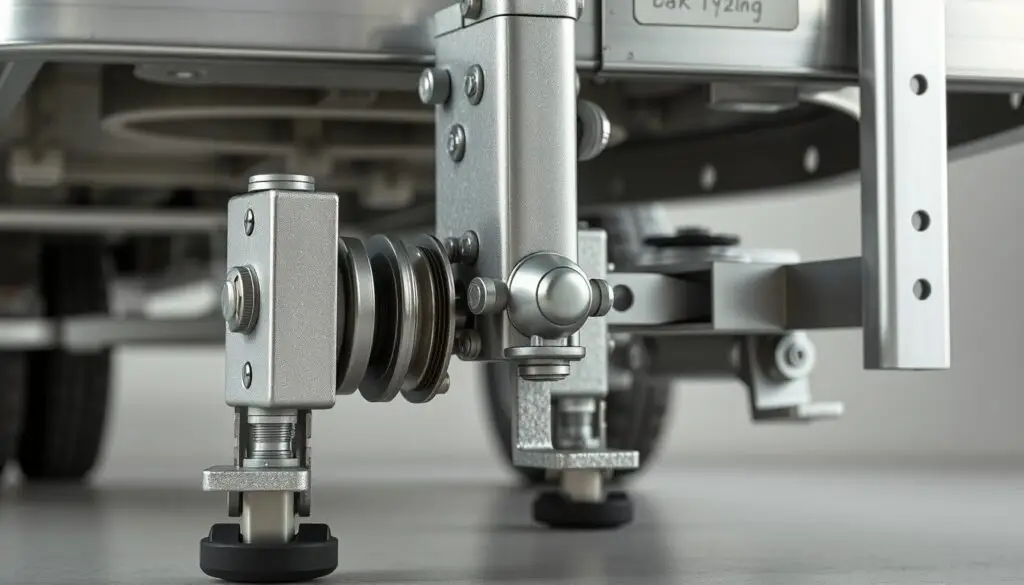
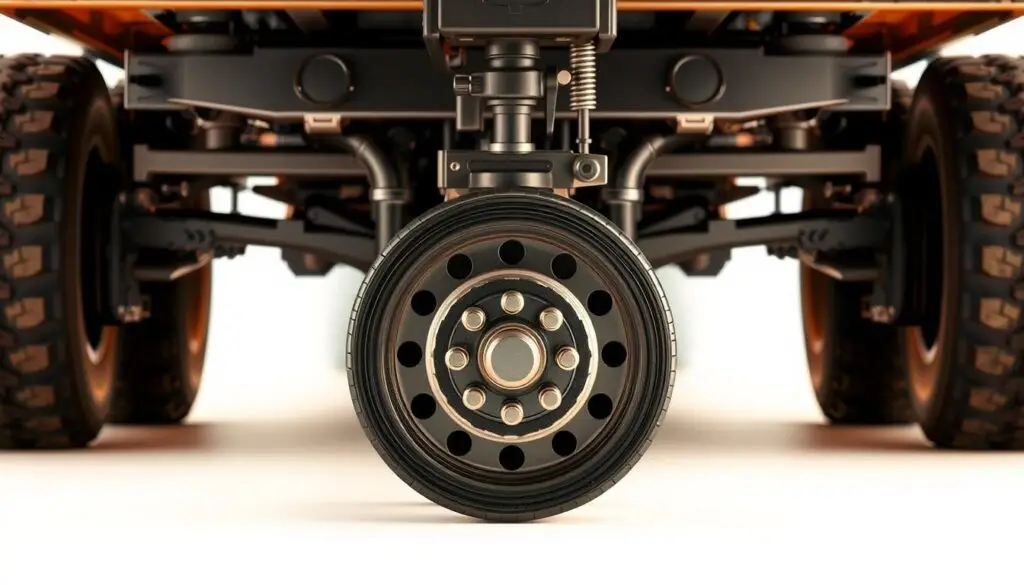
Every landing gear assembly includes several key elements working together. Telescoping legs extend and retract through internal lift screws driven by the gearbox mechanism. The gearbox converts rotational input from the crank handle into vertical movement of the legs. Cross shafts connect both legs to ensure synchronized operation—when you turn the crank, both legs move equally.
Mounting brackets secure the assembly to the trailer frame using heavy-duty bolts. These brackets transfer the entire front-end trailer weight to the landing gear when disconnected from the tractor. Sand shoes or foot pads at the base of each leg distribute weight across ground surfaces, preventing the legs from sinking on soft terrain.
Manual vs. Electric Landing Gear Systems
Manual systems dominate the commercial trailer market due to their reliability and simplicity. Operators turn a crank handle to raise and lower legs through physical effort. These systems feature two speeds—high gear for quick movement when legs carry no weight, and low gear for controlled operation under load.
Electric landing gear eliminates manual cranking through motor-driven mechanisms powered by the trailer’s electrical system. Major manufacturers including JOST and SAF-Holland offer electric options that reduce operator fatigue and accelerate coupling operations. For operations involving frequent stops—such as LTL delivery or intermodal container handling—electric systems provide measurable productivity gains.
Each system type requires specific maintenance approaches. Manual systems need regular lubrication of gears and lift screws. Electric systems require the same structural maintenance plus attention to motors, wiring harnesses, and control switches.
Critical Mounting and Structural Elements
Upper couplers transfer trailer weight to fifth wheel plates during tractor connection. The kingpin—that critical connection point between trailer and tractor—must remain undamaged and properly aligned. Any visible damage to kingpins creates serious coupling safety risks.
Cross bracing provides lateral stability, preventing leg movement during transport and coupling operations. Inspect all bracing where landing gear connects to trailer frames, paying particular attention to weld points that can crack under repeated stress.
Pre-Trip Landing Gear Inspection Procedures
Thorough pre-trip inspections take only minutes but provide critical information about equipment readiness. Federal regulations under 49 CFR 396.3 require motor carriers to maintain all parts and accessories in safe operating condition—landing gear included.
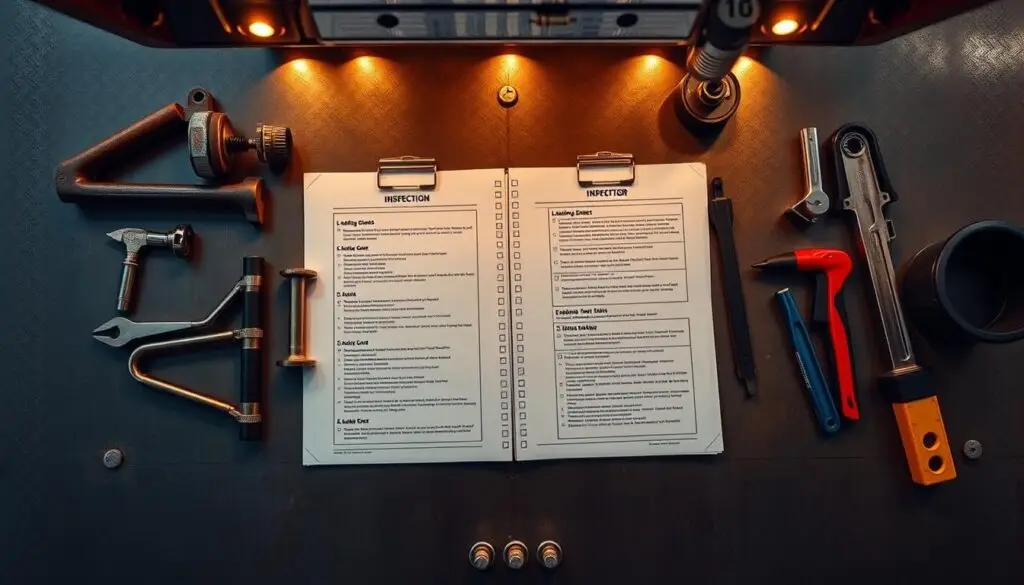
Visual Inspection Checkpoints
Start at the trailer’s front. Examine upper couplers and kingpins for visible damage, rust, or unusual wear patterns. Walk around both landing gear legs, checking for bent components, cracks in the metal, or excessive corrosion.
Key visual inspection points include:
Legs should be straight and parallel when viewed from the front. Any bowing or misalignment indicates internal damage or improper loading stress. Check that both legs fully retract with adequate ground clearance—a minimum of 6 inches prevents contact with road surfaces during transit.
Examine mounting brackets for loose bolts, cracked welds, or stress marks around attachment points. These brackets handle tremendous loads during coupling and uncoupling—any structural compromise here creates serious failure risk.
Verify sand shoes or foot pads show no excessive wear or damage. These components distribute weight across ground surfaces. Worn pads can allow legs to sink into soft ground, creating instability during loading operations.
Operational Testing
After visual inspection, test landing gear operation. With the trailer coupled to a tractor (brakes set), crank legs down until they contact the ground. The mechanism should operate smoothly in both directions without binding, grinding, or excessive resistance.
Test gear selection by operating in both high and low positions. High gear should move legs quickly with less effort when no weight rests on them. Low gear should provide noticeably more mechanical advantage with slower movement.
Verify the crank handle locks securely in its keeper when not in use. A loose handle during transit can catch on obstacles and damage the mechanism.
| Inspection Point | What to Check | Action if Problem Found |
|---|---|---|
| Leg Alignment | Both legs straight and parallel | Do not operate—schedule replacement |
| Mounting Hardware | Bolts tight, no cracked welds | Torque to spec or weld repair |
| Crank Operation | Smooth in both gears, both directions | Lubricate or inspect gearbox |
| Ground Clearance | Minimum 6 inches when retracted | Verify full retraction, check mechanism |
| Sand Shoes | No excessive wear or damage | Replace worn pads |
Essential Maintenance Requirements and Schedules
Systematic maintenance extends landing gear life by years while preventing costly emergency repairs. The following procedures form the foundation of effective preventive care.
Lubrication Schedules and Specifications
Proper lubrication prevents premature wear and operational failures. Service intervals depend on operating conditions and environmental exposure. JOST International recommends lubrication at least every 3 months—more frequently when landing gear experiences excessive moisture, dust, or extended periods without use.
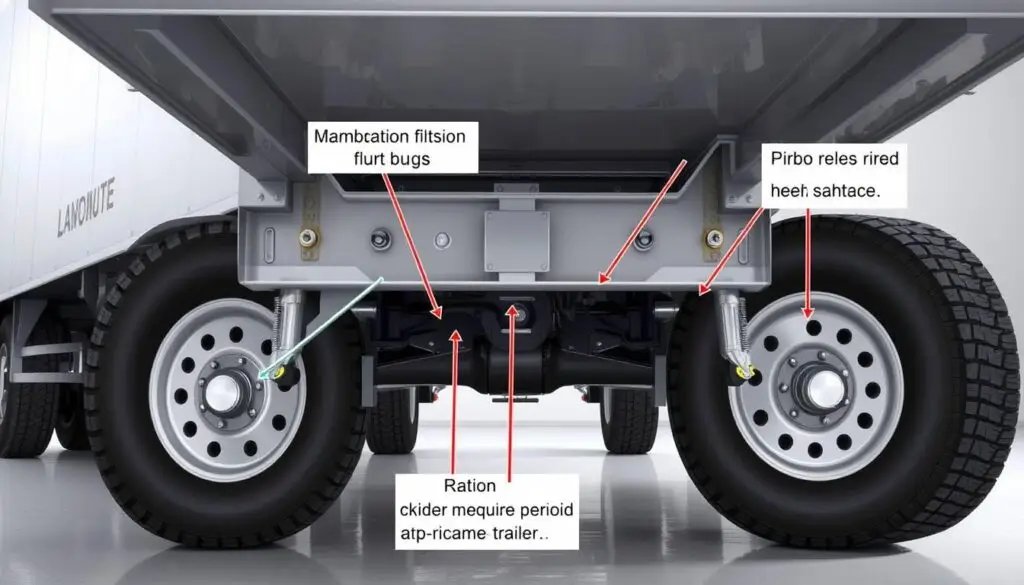
Use NLGI Grade 2 lithium-based grease rated for extreme pressure (EP) applications. For cold climate operations, SAF-Holland recommends anhydrous calcium extreme pressure grease rated to minus 65°F.
2 oz. Per Fitting
Standard grease application—approximately 6-8 pumps per zerk fitting on each leg
Most landing gear assemblies have three grease fittings per leg: one on the gearbox, one at the top for bevel gears, and one below for the lift screw. Follow this procedure for comprehensive lubrication:
Raise and secure the trailer off the landing gear—the simplest approach is hitching to a tractor with brakes applied. Crank legs fully up, then in high gear, lower three turns. Apply 2 ounces of grease (about 6-8 pumps) to each fitting on both legs. Raise legs, then lower them completely. Operate in both low and high gear positions, verifying smooth movement in both directions.
| Operating Conditions | Lubrication Interval | Recommended Grease |
|---|---|---|
| Standard Highway | Every 6 months | NLGI Grade 2 Lithium EP |
| Heavy Moisture/Dust/Salt | Every 3 months | NLGI Grade 2 Lithium EP |
| Extended Storage | Before and after | NLGI Grade 2 Lithium EP |
| Cold Climate (<0°F) | Every 4 months | Low-temp EP (rated to -65°F) |
Identifying Wear Points and Damage
Regular inspection prevents catastrophic failures by catching problems early. Key wear points include lift screws, mounting brackets, gearbox components, and cross shaft connections.
Look for visible cracks in mounting structures, excessive play in moving components, and signs of corrosion around attachment areas. Bent legs indicate internal damage requiring immediate replacement—continuing to operate with bent components risks complete failure.
Irregular cranking resistance often signals gearbox wear. If the handle slips or requires excessive force, internal gears may be stripped. Usually the defective leg requires replacement, though rebuild kits can address worn top gears if the worm drive shaft remains intact.
Documentation and Record Keeping
Federal regulations mandate comprehensive maintenance documentation for commercial operations. Under 49 CFR 396.3, motor carriers must maintain records including vehicle identification, inspection schedules, and all maintenance performed.
Required documentation elements include company fleet numbers, manufacturer specifications, service dates, and specific work completed. Digital maintenance management systems simplify compliance while providing instant access to service history. Accurate records protect operators during DOT inspections and support warranty claims when component failures occur.
Manual Landing Gear Operation and Adjustment
Operating manual landing gear correctly prevents equipment damage and reduces operator injury risk. Understanding the two-speed system and following proper procedures extends component life significantly.
High and Low Gear Selection
Manual systems feature two speeds designed for different load conditions. Understanding when to use each gear prevents the most common cause of gearbox damage—using high gear under load.
High gear provides faster operation with reduced mechanical advantage. Push the crank handle or shaft inward to engage high gear. Use this setting during initial lowering before sand shoes contact ground, or during final raising after trailer weight transfers to the tractor.
Low gear delivers greater mechanical advantage but moves more slowly. Pull the crankshaft outward to engage low gear. Use this selection after sand shoes contact ground and begin supporting trailer weight. The increased torque prevents strain on gearbox components while lifting heavy loads.
⚠️ Critical Operating Warning
Never use high gear when trailer weight rests on landing gear legs. This strips internal gear threads and damages lift screws—the most common cause of premature landing gear failure.
Proper Cranking Techniques
Before cranking, verify the handle shank connects fully with the crankshaft. Hinge bolts alone cannot support cranking forces—the handle must fully seat into the drive mechanism.
Stand with secure footing and position yourself to step away quickly if mechanisms fail. Turn crank handles clockwise to extend legs downward, counterclockwise to retract them upward. Count turns to ensure both legs extend equally, preventing uneven weight distribution.
For safe trailer disconnection: Lower legs in high gear until sand shoes approach the ground. Switch to low gear, then continue lowering until legs firmly support trailer weight. Disconnect air and electrical lines, release fifth wheel, and pull tractor forward slowly. Verify trailer remains stable before walking away.
Troubleshooting Common Manual System Issues
Difficulty turning cranks often indicates incorrect gear selection or inadequate lubrication. If handles slip, check that they engage completely with crankshafts. Uneven leg extension suggests bent components or obstruction in one gearbox.
Grinding sounds during operation typically indicate worn gears requiring rebuild or replacement. If resistance increases progressively during retraction, lift screw threads may be stripped—a condition requiring leg replacement rather than repair.
Electric Landing Gear System Service
Electric landing gear systems eliminate manual cranking but add complexity through motors, wiring, and control components. These systems require the same structural inspections as manual units plus attention to electrical elements.
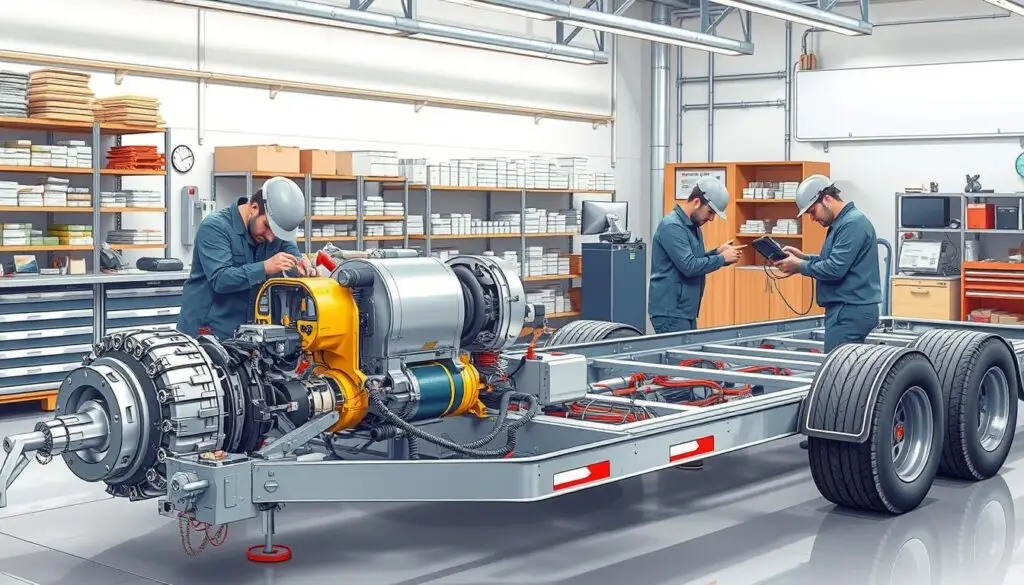
Electrical Component Inspection Schedule
Electric systems require regular inspection of both mechanical and electrical components. Follow this maintenance schedule for comprehensive coverage:
| Component | Interval | Common Issues |
|---|---|---|
| Motor Housing | Monthly | Water intrusion, seal damage |
| Electrical Connections | Quarterly | Corrosion, loose terminals |
| Control Switches | Quarterly | Sticky operation, intermittent contact |
| Wiring Harness | Semi-annually | Chafing, connector corrosion |
| Gear Reduction Unit | Annually | Low lubricant, worn gears |
Check motor housings monthly for moisture or debris intrusion. Water damage to electric motors typically requires complete unit replacement. Inspect electrical connections quarterly for corrosion—particularly at battery connections and ground points.
Test control switches by operating the system through full extension and retraction cycles. Switches that stick, require multiple presses, or produce intermittent operation need replacement before complete failure strands equipment.
Troubleshooting Electric System Failures
When electric landing gear fails to operate, start with power supply verification. Check battery voltage under load—weak batteries may not provide sufficient current for motor operation. Inspect fuses and circuit breakers in the trailer’s electrical system.
If power supply tests normal, check the motor itself. Listen for motor sounds when operating controls—a clicking relay with no motor noise suggests motor failure. Motor operation with no leg movement indicates gearbox or drive mechanism problems.
Most electric systems include manual override capabilities. Locate the manual crank access point—typically behind a removable cover—to operate legs when electrical systems fail. Familiarize drivers with override procedures before they’re needed on the road.
The HDJ Perspective
Landing gear maintenance often falls through the cracks because these components work reliably for years—until they don’t. The fleets we see with the lowest unplanned downtime treat landing gear service as seriously as brake or tire maintenance. They build inspection and lubrication into regular PM schedules rather than waiting for problems. The investment in 15 minutes of attention every few months pays dividends when that trailer uncouples smoothly at 2 AM instead of stranding a driver with a seized gearbox.
Safe Coupling and Uncoupling Procedures
Proper coupling and uncoupling techniques protect landing gear from damage while ensuring secure tractor-trailer connections. Poor technique ranks among the leading causes of premature landing gear failure.
Height Adjustment and Alignment
Position tractors directly in front of trailers, maintaining center alignment. Approaching at angles stresses landing gear and can bend legs or damage mounting brackets.
Adjust trailer height so pickup plates sit slightly below fifth wheel connection pivot points. Use air suspension adjustment to achieve correct ride height. This positioning allows solid contact when backing up and prevents dropping the trailer onto landing gear when disconnecting.
Step-by-Step Coupling Procedure
Back up slowly until initial contact occurs between fifth wheel and kingpin. Stop and verify alignment. Continue backing until fifth wheel jaws lock around kingpin shank. Pull forward slowly to test connection strength—the trailer should move with the tractor without separation.
Connect air supply lines (glad hands) with proper slack to prevent stress during turns. Attach 7-way electrical plug securely. Test all lights before moving.
Use low gear to retract landing gear until sand shoes clear the ground. Verify adequate clearance—minimum 6 inches. Switch to high gear for rapid final retraction. Secure crank handles in keepers.
Step-by-Step Uncoupling Procedure
The best way to preserve landing gear during uncoupling: dump air from tractor suspension to gently lower trailer weight onto landing gear legs. This prevents the sudden drop that occurs when pulling away with legs barely touching ground—a common practice that eventually strips lift screw threads.
Lower legs in high gear until sand shoes approach ground. Switch to low gear, then continue lowering until legs firmly support trailer weight. Chock trailer wheels. Disconnect electrical and air lines. Release fifth wheel lock. Pull tractor forward slowly while watching landing gear for any signs of instability.
Common Landing Gear Problems and Solutions
Understanding frequent landing gear issues helps technicians diagnose problems quickly and determine whether repair or replacement provides the best solution.
Gearbox Failures
Gearbox damage typically results from using high gear under load or applying excessive force during cranking. Worn gears within the box make landing gear difficult or impossible to operate.
Rebuild kits addressing top gear wear generally cost $40-$100. However, if the worm drive shaft is stripped, the entire leg requires replacement—worm drive shafts are not available as separate service parts from most manufacturers. Complete leg assemblies cost $275-$325 per pair.
Bent or Misaligned Legs
Bent legs result from improper loading, parking on uneven surfaces, or impact damage. When weight distribution is uneven, one leg bears more load than designed, causing bending over time.
Bent legs require immediate replacement—there is no effective repair. Continuing to operate with bent components risks complete failure, potentially dropping loaded trailers. Place wooden blocks or stabilizing pads under legs on rough terrain to distribute weight evenly.
Corrosion and Rust Damage
Trailers frequently exposed to wet environments or road salt suffer accelerated corrosion. Rust weakens metal components, reducing structural integrity and making landing gear susceptible to other problems.
Combat rust through regular inspection, protective coatings on exposed surfaces, and thorough washing after salt exposure. Winter operations require particular attention—magnesium and calcium chlorides used for ice control cause significant damage within a single season if not cleaned promptly.
Free Professional Fleet Tools
Cost calculators, fault code lookup, maintenance planners, and more—built for owner-operators, fleet managers, and diesel techs. No signup required.
Repair vs. Replace Decision Framework
The narrow price spread between rebuilding and replacing landing gear legs means replacement often makes more economic sense, particularly for fleets prioritizing reliability over minimal upfront cost.
Key Recommendation
Choose repair when damage is limited to top gears (rebuild kit $40-$100) and you have time for disassembly and diagnosis. Choose replacement when legs are bent, worm drive shafts are stripped, or downtime costs exceed the price difference. For revenue-critical equipment, replacement provides faster return to service and greater long-term reliability.
Preventive Maintenance Schedules
Structured preventive maintenance schedules extend equipment life and prevent costly breakdowns. The Commercial Vehicle Safety Alliance (CVSA) includes landing gear among items inspected during roadside checks—proper maintenance helps avoid out-of-service violations.
Daily, Weekly, and Monthly Routines
Daily pre-trip checks take only minutes but catch developing problems before they strand equipment. Verify full retraction, check for visible damage, and ensure crank handles are secured.
Weekly inspections focus on moving parts and attachment points. Test operation through full extension and retraction cycles. Check mounting bolt tightness—vibration during travel can loosen fasteners progressively.
Monthly reviews require deeper examination of wear patterns and operational smoothness. Inspect grease fittings for blockage, check cross shaft alignment, and verify both legs move evenly during operation.
| Frequency | Inspection Points | Time Required |
|---|---|---|
| Daily (Pre-trip) | Visual damage, full retraction, handle secured | 2-3 minutes |
| Weekly | Operation test, mounting bolt check | 5-10 minutes |
| Monthly | Full functional test, wear assessment, alignment | 15-20 minutes |
| Quarterly | Complete lubrication, structural inspection | 30-45 minutes |
Seasonal Considerations
Winter operations demand extra attention. Pressure-wash landing gear after exposure to road salt—the sooner the better. Drain air tank moisture daily during cold months to prevent ice formation that can affect connected systems.
Inspect undercoating protection every 24 months. Steam cleaning and solvent contact reduces protective coating effectiveness. Reapply as needed to prevent rust damage.
Summer heat can affect grease consistency in high-temperature environments. Standard lubricants may thin excessively in extreme heat. For sustained operations above 100°F, consider high-temperature grease formulations.
DOT Compliance and Regulatory Requirements
Meeting regulatory requirements protects fleets from violations and ensures safe operation. Every landing gear system must pass specific inspection standards verifying structural integrity and proper function.
Federal Inspection Standards
Under 49 CFR Part 396, commercial motor vehicles—including trailers—must be systematically inspected, repaired, and maintained. Parts and accessories shall be in safe and proper operating condition at all times.
Annual inspections required under 49 CFR 396.17 include landing gear examination. Inspectors verify that landing gear can safely lower and raise the trailer without risk. Any structural damage, excessive corrosion, or mechanical malfunction that prevents proper operation triggers violations.
The Technology & Maintenance Council (TMC) publishes Recommended Practices that many fleets use as maintenance standards. While not legally required, following TMC guidelines demonstrates industry-standard care that supports compliance efforts.
Documentation Best Practices
Proper documentation creates audit trails proving regulatory compliance. Required records include maintenance logs showing lubrication dates, component replacements, and repair work performed.
Digital record-keeping systems simplify document management and retrieval during DOT audits. Records must identify the vehicle (VIN, make, year), indicate scheduled maintenance due dates, and document all inspection and repair activities.
Retain maintenance records for the period the vehicle is controlled plus six months. For trailers frequently transferred between carriers, maintaining comprehensive records prevents gaps in service history that could raise questions during inspections.
Frequently Asked Questions
How often should trailer landing gear be lubricated?
Landing gear requires lubrication every 3-6 months depending on operating conditions. Trailers exposed to heavy moisture, road salt, or dust need service every 3 months. Standard highway operations can follow 6-month intervals. Use NLGI Grade 2 lithium-based grease rated for extreme pressure applications. Cold climate operations benefit from low-temperature grease rated to minus 65°F. Apply 2 ounces (approximately 6-8 pumps) to each grease fitting on both legs—typically three fittings per leg covering the gearbox, bevel gears, and lift screw.
What causes landing gear to fail during DOT inspections?
Common landing gear inspection failures include bent or cracked legs, stripped gearbox components, missing or broken crank handles, damaged sand shoes or foot pads, loose mounting brackets, and inoperable mechanisms that cannot support trailer weight. CVSA inspectors verify that landing gear can safely lower and raise the trailer without risk. Any structural damage, excessive corrosion, or mechanical malfunction that prevents proper operation triggers out-of-service violations requiring immediate correction before the trailer returns to service.
What is the difference between high and low gear on manual landing gear?
High gear provides faster operation with less mechanical advantage—use it when the trailer carries no weight on the legs. Push the crank handle inward to engage high gear for quick raising or initial lowering before sand shoes contact ground. Low gear delivers greater mechanical advantage but moves slower—use it after sand shoes contact the ground and begin supporting trailer weight. Pull the handle outward to engage low gear. Using high gear under load damages gearbox components and strips internal threads, making this the most common cause of premature landing gear failure.
How do you troubleshoot a landing gear leg that won’t extend or retract?
Start by checking gear selection—ensure you’re in the appropriate gear for the load condition. Verify the crank handle fully engages the crankshaft. Apply penetrating oil if rust or debris causes binding. For gearbox issues, listen for grinding sounds indicating worn gears. Check for bent lift screws by observing uneven leg movement. If one leg operates normally while the other binds, the problem is in the affected leg’s internal mechanism rather than the cross shaft or shared components. Severely damaged legs require replacement rather than repair.
What maintenance records are required for trailer landing gear under FMCSA regulations?
Under 49 CFR 396.3, motor carriers must maintain systematic inspection and maintenance records for all commercial motor vehicles including trailers. Required documentation includes vehicle identification (VIN, make, year, serial number), inspection dates and findings, repairs performed, and scheduled maintenance intervals. Records must be retained for the period the vehicle is controlled plus six months. Annual inspections under 49 CFR 396.17 must document landing gear condition as part of the complete trailer inspection.
Should you repair or replace damaged landing gear?
Repair when damage is limited to replaceable components like top gears or crank handles—rebuild kits cost $40-$100 and address worn bevel gears effectively. Replace when the worm drive shaft is stripped, legs are bent or cracked, or mounting brackets show structural damage. Complete leg assemblies cost $275-$325 per pair. With the narrow price spread between repair and replacement, many fleet managers choose replacement for reliability. Bent legs indicate internal damage that rebuilding cannot fix and require immediate replacement to prevent complete failure.
Keep Your Landing Gear Working
Trailer landing gear maintenance delivers reliable returns when built into systematic fleet programs. Regular lubrication every 3-6 months, proper gear selection during operation, and thorough pre-trip inspections prevent the vast majority of landing gear failures that sideline equipment.
Document all maintenance activities to support DOT compliance and track component performance over time. When problems do occur, understanding the repair-versus-replace decision framework helps fleet managers make cost-effective choices that minimize downtime.
The investment in consistent landing gear maintenance—measured in minutes per trailer per month—eliminates the far greater costs of emergency repairs, roadside violations, and lost revenue when equipment fails unexpectedly.
Share This Guide With Your Team
Know a fleet manager or technician who could use this reference? Help them keep their equipment running.