
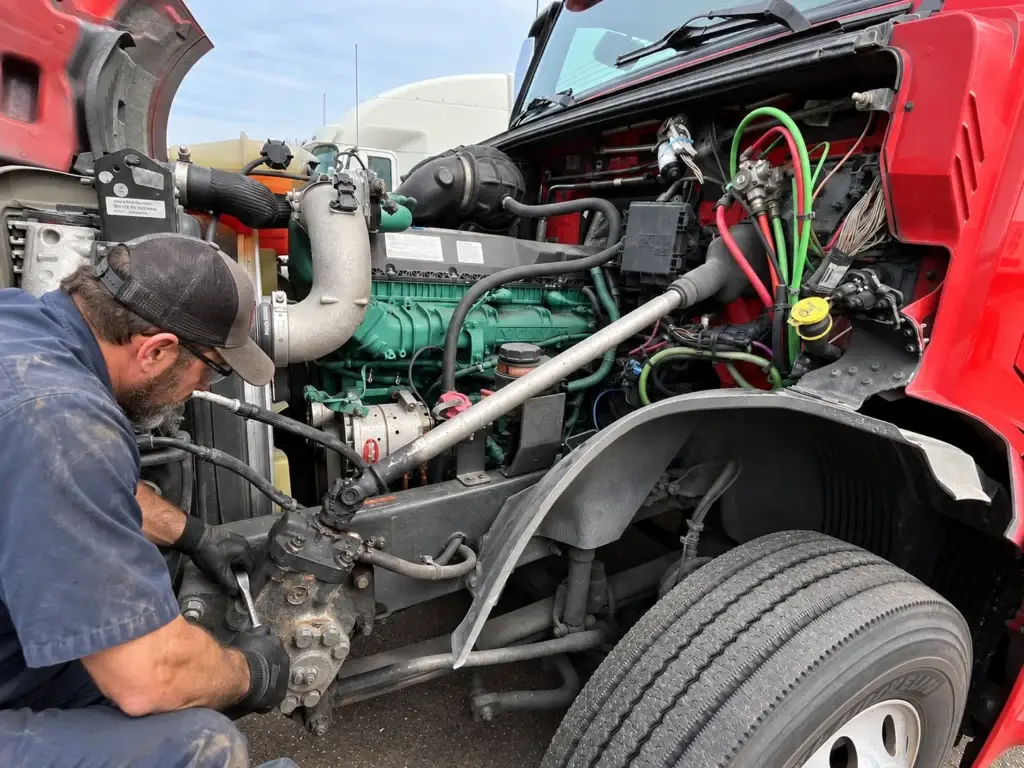
By Michael Nielsen, Publisher | 15+ Years in Diesel Repair
Last Updated: September 2026
⏱ Estimated reading time: 15+ minutes
A commercial truck's power steering system directly impacts driver safety, vehicle control, and operational uptime. In a Class 6–8 truck handling 26,000 to 80,000+ pounds, hydraulic steering assistance isn't a convenience — it's a critical safety system that prevents driver fatigue, enables precise maneuvering, and keeps equipment DOT-compliant.
Unlike a passenger vehicle, a commercial truck faces extreme steering demand: tight dock maneuvers, extended highway runs, and thousands of steering cycles daily. When a steering system fails, the consequence extends beyond inconvenience to a potential out-of-service order, a costly roadside repair, and a serious safety risk. Michael Nielsen and Heavy Duty Journal's editorial team built this guide around everything a fleet manager or diesel technician needs — system types, fluid specification, inspection procedure, troubleshooting, and preventive maintenance scheduling.
Key Takeaways
- ✓Inspect monthly, service annually: Check power steering fluid monthly and change it every 100,000–150,000 miles or annually for severe duty.
- ✓Use OEM-specified fluid only: The wrong fluid type causes seal damage, voids warranty coverage, and accelerates component wear in a heavy-duty application.
- ✓Know the DOT criteria: Per 49 CFR 393.209, a steering component defect results in an out-of-service order — most can't be fixed roadside.
- ✓Preventive maintenance ROI is real: A $200–300 fluid service is a fraction of what an $800+ pump replacement or a $1,800+ gear rebuild runs — especially at emergency-roadside rates.
- ✓Recognize symptoms early: Whining, heavy steering, and fluid discoloration signal a problem before catastrophic failure.
In This Guide
- Understanding Commercial Truck Power Steering Systems
- Why Power Steering Maintenance Matters for Commercial Fleets
- Power Steering Fluid Types for Commercial Trucks
- Power Steering Fluid Inspection Procedures
- Power Steering Fluid Change Procedure
- Steering Component Inspection and Service
- Recognizing Power Steering Problems Early
- Commercial Truck Power Steering Maintenance Schedule
- Frequently Asked Questions
Understanding Commercial Truck Power Steering Systems
A heavy-duty truck uses a significantly different steering architecture than a passenger vehicle, designed to handle substantially higher load and operating demand. Understanding a truck's specific system type is essential for proper maintenance and component sourcing.
Integral Power Steering Gears
Most Class 7–8 trucks use an integral power steering gear — a self-contained unit where the hydraulic valve and power piston are built into the steering gear housing. Major manufacturers include TRW (now ZF), Sheppard, and Ross. These robust designs handle the high loads and continuous duty cycles of commercial applications.
TRW/ZF gears dominate the market in Freightliner, Peterbilt, and Kenworth trucks. Sheppard steering gears, known for their durability, appear frequently in Mack, Volvo, and International applications. Each manufacturer specifies different rebuild intervals, fluid types, and adjustment procedures.
The integral design simplifies the hydraulic circuit but means a gear replacement or rebuild costs more than a component-level repair. A complete TRW steering gear rebuild typically runs $1,800–$2,500 at an authorized service center, as of September 2026.
Linkage-Assist (External Cylinder) Systems
Some medium-duty and vocational trucks use linkage-assist steering, where a separate hydraulic cylinder provides power assist through the steering linkage. This design allows easier component-level repair but needs additional maintenance points, including cylinder seals and linkage pivots.
Linkage-assist systems appear more commonly in specialty applications, refuse trucks, and certain medium-duty platforms. The external cylinder mounting exposes components to road debris and impact, making regular inspection particularly important.
Electrohydraulic Power Steering
A modern commercial truck increasingly features electrohydraulic steering, with an electric-motor-driven pump replacing the belt-driven unit. These systems reduce parasitic engine loss and enable a variable-assist algorithm that adjusts steering effort based on speed and load.
Electrohydraulic systems still use hydraulic fluid and need similar maintenance to a traditional system, but they add electronic components that need diagnostic attention. A fault code stored in the steering control module can indicate a problem before a physical symptom appears.
Critical Components Across All Systems
| Component | Function | Common Issues | Inspection Points |
|---|---|---|---|
| Power Steering Pump | Generates hydraulic pressure (1,500–2,000 PSI) | Shaft seal leaks, bearing wear, internal bypass | Fluid leaks, whining noise, output pressure |
| Steering Gear | Converts hydraulic pressure to mechanical force | Sector shaft seal leaks, internal wear, binding | Mounting security, output shaft play, external leaks |
| Pitman Arm | Transfers motion from gear to drag link | Spline wear, loose retention, cracks | Secure mounting, visible damage, proper torque |
| Drag Link & Tie Rods | Connect steering gear to wheels | Ball joint wear, boot damage, bending | Articulation, boot condition, structural integrity |
| High-Pressure Hoses | Carry pressurized fluid between components | Chafing, cracking, fitting leaks | Routing, condition, secure clamps, wetness |
Why Power Steering Maintenance Matters for Commercial Fleets
Commercial truck steering maintenance delivers a measurable return that justifies proactive investment. The math is straightforward: a preventive fluid service costs a fraction of a reactive repair, and a steering failure creates cascading expense beyond the repair invoice itself.
Safety and Compliance Requirements
Federal Motor Carrier Safety Regulation under 49 CFR 393.209 establishes specific steering system requirements for a commercial motor vehicle. Any steering defect affecting safe operation — including excessive free play, a loose component, or a power steering leak — constitutes a violation.
CVSA's out-of-service criteria specify that steering wheel lash exceeding manufacturer specification, a loose or missing steering component, and a power steering leak dripping on a moving part require immediate vehicle removal from service. Most steering defects can't be repaired roadside, meaning an out-of-service order translates directly into a towing charge plus the repair itself. HDJ's DOT pre-trip inspection guide covers where steering fits into the full daily walkaround.
$448–$760/day
Average cost of unscheduled commercial truck downtime, per vehicle, as of 2026 — Element Fleet Management.
The Financial Case for Preventive Maintenance
Steering system failure ranks among the most expensive unscheduled repair in commercial trucking. Beyond the component cost, consider the full expense profile of a roadside steering failure versus planned maintenance, as of September 2026.
| Service Type | Planned Shop Cost | Roadside/Emergency Cost | Typical Downtime |
|---|---|---|---|
| Fluid Service | $150–$300 | N/A (not emergency) | 1–2 hours (during PM) |
| Pump Replacement | $800–$1,500 | $1,200–$2,200 | 4–8 hours / 24–48 hours |
| Steering Gear Rebuild | $1,800–$2,500 | $2,800–$4,000 | 1 day / 2–3 days |
| Steering Gear Replacement | $2,500–$5,000 | $4,000–$6,500 | 1–2 days / 3–5 days |
An emergency roadside repair typically costs roughly 30–50% more than the equivalent shop repair once a mobile-service premium, expedited parts, and towing are factored in. Add revenue loss from a missed load, driver detention, and a potential customer penalty, and the true cost of reactive maintenance becomes clear.
Progressive Degradation Patterns
A power steering problem rarely appears suddenly. Contaminated fluid begins wearing a component months before a symptom becomes obvious. An experienced fleet manager knows that catching a problem during routine inspection — when fluid shows slight discoloration or a pump develops a barely audible whine — prevents the cascade of damage that follows when the issue is ignored.
A small seal leak left unaddressed becomes pump cavitation, which creates metal debris, which scores cylinder walls and valve surfaces, which accelerates gear wear. By the time steering effort noticeably increases, internal damage may require a complete gear replacement rather than a simple seal kit.
Power Steering Fluid Types for Commercial Trucks
Selecting the correct power steering fluid for a heavy-duty application requires more care than passenger vehicle maintenance. A commercial truck system operates at higher pressure, endures greater temperature extremes, and demands a fluid that maintains viscosity stability across a demanding duty cycle.
Automatic Transmission Fluid Specifications
Many commercial trucks specify automatic transmission fluid for power steering use. Dexron VI and Mercon V remain common specifications for a truck designed during the ATF-compatible era. These formulations provide adequate lubrication and viscosity for an integral steering gear.
Using ATF in a system designed for it offers convenience, since a fleet often stocks transmission fluid anyway. Verify the specific ATF type, though — Dexron III, Dexron VI, and Mercon LV have different additive packages and viscosity characteristics. The wrong ATF specification can accelerate seal wear.
Synthetic Power Steering Fluids
A high-mileage commercial truck and a severe-duty application benefit from a synthetic power steering fluid engineered for extended temperature range and oxidation resistance. A synthetic formulation maintains viscosity better during a hot summer run and a cold winter start, reducing pump wear during initial circulation.
A premium synthetic formulation from a major lubricant manufacturer often includes a seal conditioner that helps maintain seal pliability in an aging system. These products cost more per quart but may extend component life in a truck exceeding 500,000 miles. When selecting synthetic power steering fluid, verify compatibility with the specific OEM specification — not every synthetic meets every manufacturer requirement.
OEM-Specific Formulations
Some manufacturers require a proprietary fluid that shouldn't be substituted. Volvo and Mack trucks, for example, may specify a particular fluid formulation matched to their steering gear design. Freightliner/Detroit and PACCAR trucks have their own fluid recommendations that should be verified before service.
Using a non-specified fluid in these applications risks seal damage, warranty denial, and accelerated wear. When in doubt, contact the dealer's parts department with the VIN to confirm the correct specification. The cost difference between the correct and incorrect fluid is trivial compared to component replacement.
Fluid Selection Quick Reference
Quick Reference
- Freightliner/Detroit: Dexron VI ATF or Detroit Diesel-approved fluid
- Peterbilt/Kenworth (PACCAR): Consult service manual; many accept Dexron VI
- Volvo/Mack: Volvo-specification synthetic steering fluid
- International/Navistar: Dexron III/VI or Navistar-approved fluid
- Always verify: Check the reservoir cap label, service manual, or dealer
Power Steering Fluid Inspection Procedures
Monthly fluid inspection catches contamination and level issues before they cause component damage. The procedure takes less than five minutes but provides critical insight into system health. Make it part of every PM service and driver pre-trip routine — a driver must verify steering system condition before each trip as part of the required pre-trip inspection.
Locating the Reservoir
A commercial truck power steering reservoir is typically mounted on or near the pump, which sits on the front of the engine driven by an accessory belt. On most Class 8 trucks, the reservoir sits on the driver's side of the engine, accessible from either the engine bay or a fender access panel.
Clean the reservoir cap and surrounding area before opening. Road grime on a commercial truck runs significantly worse than a passenger vehicle — never introduce a contaminant into a precision hydraulic system.
Reading Fluid Levels Correctly
Most commercial truck reservoirs feature a dipstick cap with hot and cold level markings. For an accurate reading, check fluid after the truck has sat overnight (cold check) or immediately after highway operation (hot check). Thermal expansion causes a significant level change between these conditions.
If fluid falls below the minimum mark, the system may be drawing air during a tight turn, creating cavitation that damages the pump. Top off to the appropriate mark and investigate the source of fluid loss — a healthy system shouldn't consume fluid.
Evaluating Fluid Condition
Fresh power steering fluid ranges from clear to light red or amber depending on the formulation. Healthy fluid flows freely and appears translucent when wiped on a white paper towel or rag.
Condition indicators requiring attention: dark brown or black fluid signals oxidation from overheating or age — schedule a fluid replacement. A milky or cloudy appearance signals water contamination — flush the system and investigate the source. Metal flakes or particles signal internal component wear — the system may need repair beyond a fluid change. Foaming or bubbles signal air ingestion from a low level, a loose connection, or a pump seal failure. A burnt smell signals thermal breakdown, needing immediate service.
Document fluid condition at every inspection. Tracking the change over time helps predict maintenance need and identify a truck with a developing problem.
Power Steering Fluid Change Procedure
Complete fluid replacement removes contaminated oil that causes progressive component wear. While the basic procedure resembles passenger vehicle service, a commercial truck system holds more fluid and benefits from a thorough flush technique.
⚠️ Safety Warning
Power steering systems operate at 1,500–2,000 PSI. Never loosen a fitting while the engine is running. Allow the system to cool before service — hot fluid causes burns. Wear eye protection, since pressurized fluid can spray unexpectedly.
Tools and Materials Required
Gather these items before beginning the fluid service: manufacturer-specified fluid (3–4 quarts typical for a commercial truck), a fluid transfer pump or large syringe, a drain pan (minimum 2-gallon capacity), a clean funnel and container, shop towels and absorbent pads, basic hand tools for a hose clamp if disconnecting a line, and safety glasses and nitrile gloves.
Extraction and Refill Method
The simplest service method extracts old fluid from the reservoir and replaces it with fresh fluid. This approach works well for a maintenance interval but doesn't remove all contaminated fluid trapped in the hoses, the gear, and the pump.
With the engine off and cooled, use a transfer pump to remove as much fluid as possible from the reservoir. Refill with fresh fluid to the appropriate level. Start the engine and turn the steering wheel slowly from lock to lock several times to circulate the new fluid. Shut down, extract again, and repeat the process 3–4 times until the fluid runs clear.
This technique replaces roughly 60–70% of system capacity, significantly improving fluid quality without disconnecting a hydraulic line.
Complete System Flush
For a severely contaminated system or high-mileage truck, a complete flush removes nearly all old fluid. This requires disconnecting the return line at the reservoir and directing it into a drain container.
With an assistant maintaining reservoir level using fresh fluid, start the engine briefly (5–10 seconds maximum) while slowly cycling the steering. Old fluid purges through the disconnected return line while fresh fluid enters the system. Monitor reservoir level continuously — running the pump dry causes immediate damage.
Repeat until fluid exiting the return line matches the color of fresh fluid. Reconnect the line, top off the reservoir, and bleed the system by cycling the steering through its full range repeatedly with the engine running.
Bleeding Air from the System
Air trapped in hydraulic steering causes a spongy feel, a groaning noise, and reduced assist. After any service that opens the system, proper bleeding ensures full performance.
With the reservoir filled and the engine off, slowly turn the steering wheel from lock to lock 10–15 times. This manually cycles fluid without introducing pump pressure. Start the engine and repeat the lock-to-lock procedure at idle, pausing briefly at each extreme. Monitor for a bubble rising in the reservoir — continue until no air appears and steering response feels consistent.
Environmental Disposal Requirements
Used power steering fluid is a regulated hazardous waste in most jurisdictions. Never pour it into a drain, onto a ground surface, or into regular trash. A commercial shop typically has a waste oil collection service that accepts power steering fluid. An owner-operator can take a small quantity to an auto parts store or a municipal hazardous waste facility.
Document disposal to demonstrate compliance with EPA used oil management guidelines and any applicable state requirement. Improper disposal can result in a significant fine.
Steering Component Inspection and Service
Beyond fluid maintenance, a commercial truck steering system needs regular component inspection to ensure DOT compliance and prevent failure. Many steering defects develop gradually, making routine examination essential.
Power Steering Pump Evaluation
The pump generates the hydraulic pressure that powers the entire steering system. A belt-driven pump needs attention to both the pump and its drive system.
Listen for whining or groaning during operation — noise increasing with steering input indicates internal wear, low fluid, or air in the system. Check for external leaks around the shaft seal (behind the pulley) and body seals. A wet area indicates current leakage; dried residue suggests past leakage that may have stopped or slowed.
Verify proper belt tension and alignment — a slipping belt reduces pump output and accelerates wear on both the belt and pulley surfaces. Most manufacturers specify a belt tension procedure using a deflection measurement or an automatic tensioner position indicator.
Pressure testing with a hydraulic gauge confirms pump output. Specification varies by manufacturer, but most commercial truck pumps should develop 1,500–2,000 PSI under steering load. Low output indicates internal bypass that may require pump replacement.
Steering Gear Assessment
The steering gear — whether TRW, Sheppard, or another brand — converts hydraulic pressure into the mechanical force that turns the wheels. Inspect for an external leak at the input shaft seal, the output shaft (sector shaft) seal, and housing seams.
Check steering gear mounting bolt torque. A loose mounting creates steering play that may be mistaken for internal wear. Verify the frame bracket isn't cracked or damaged, particularly on a truck that's been in a collision or operates in severe service.
Measure steering wheel free play with the engine running. Under 49 CFR 393.209(b), the allowable lash for a power steering system scales with steering wheel diameter — roughly 4¼ inches for a 16-inch wheel or smaller, up to roughly 5¾ inches for a 22-inch wheel, measured at the rim before the front wheel begins to move.
This is meaningfully more generous than the manual-steering table for the same wheel sizes (2 to 2¾ inches), and the two get confused often enough that it's worth checking the actual diameter-specific table rather than working from a single remembered number.
Excessive play beyond the applicable limit indicates internal gear wear or a genuine adjustment need.
Linkage and Joint Inspection
The mechanical linkage — pitman arm, drag link, tie rod end, and king pin — transfers steering force from the gear to the wheels. These components endure constant stress and road exposure, making regular inspection essential.
Check every ball joint and tie rod end for play. With the wheels on the ground and steering unlocked, have an assistant turn the steering wheel slightly while observing each joint — any visible looseness indicates wear requiring replacement.
Inspect the dust boot on every joint. A torn boot lets in contamination that rapidly destroys the joint — a $15 boot replacement prevents a $200+ tie rod end failure.
Verify drag link and tie rod end tightness. A loose connection creates dangerous steering play that escalates quickly. Torque specification varies by component and manufacturer — always verify the proper value.
Hydraulic Hose Inspection
A high-pressure hose carries fluid between the pump, steering gear, and cooler (if equipped). These hoses must withstand constant pressure cycling, vibration, and temperature extremes.
Examine hose along its entire length for bulging, cracking, chafing, or weeping. Pay particular attention to an area near a clamp, a fitting, or where a hose passes near a hot component. Check that hose routing maintains clearance from a moving part and heat source.
A hose failure on the high-pressure side can spray hot fluid rapidly, creating a fire and burn hazard. Replace a hose showing any deterioration proactively — the $100–200 cost is minimal compared to the consequence of a roadside failure.
Recognizing Power Steering Problems Early
Catching a steering issue before it escalates prevents a roadside failure and reduces repair cost. A commercial truck operator should know the warning signs below and respond promptly when a symptom appears.
Audible Symptoms
Sound often provides the earliest warning of a steering system problem — train a driver to report any unusual noise during pre-trip or operation. A whining noise increasing with engine RPM typically indicates low fluid, air in the system, or pump wear, with pitch rising as the pump works harder; address this promptly, since continued operation damages the pump.
Groaning during a turn suggests the pump is struggling to maintain pressure, often accompanying a low fluid level or severe contamination — check fluid immediately. Squealing from the belt indicates slippage that reduces pump output; tighten or replace the belt before reduced steering assist creates a safety issue. Grinding or clunking points to mechanical wear in the steering gear, linkage, or pump bearings, indicating more advanced damage requiring professional diagnosis.
Steering Feel Changes
A change in how the steering wheel feels and responds signals a developing problem: increased effort from reduced power assist (low fluid, pump weakness, or internal gear wear); intermittent heavy steering from air in the system, a failing pump, or an electrical issue in an electrohydraulic system; steering wander from worn linkage, a gear adjustment issue, or misalignment; a slow return to center from binding in the gear, column, or linkage; and vibration in the wheel from a worn joint, an unbalanced tire, or a damaged component.
Visual Warning Signs
Regular inspection catches a visual indicator before it causes an operational problem: fluid on the ground under the steering area warrants investigation; a low reservoir level, since a healthy system doesn't consume fluid; fluid discoloration — dark, milky, or foamy — indicating contamination; a wet component anywhere on the pump, gear, or hose indicating leakage; and a damaged boot on a joint, letting in contamination that accelerates wear.
Key Recommendation
When multiple steering symptoms appear together — noise plus increased effort plus visible leakage — the system likely has significant damage. Schedule professional diagnosis immediately rather than attempting component-level troubleshooting. Continued operation risks complete steering failure.
Commercial Truck Power Steering Maintenance Schedule
Effective maintenance scheduling balances OEM recommendation with real-world operating condition. The interval below provides a starting point, current as of September 2026 — adjust based on a fleet's specific duty cycle, operating environment, and experience. The Technology & Maintenance Council's Recommended Practices library provides additional guidance on interval and procedure developed through industry consensus. HDJ's diesel engine maintenance schedule guide covers how steering service fits into the broader fleet PM calendar.
Free Diesel Maintenance Checklist
Get HDJ's free, field-tested diesel maintenance checklist delivered instantly to your inbox — print it, laminate it, keep it in the shop.
Instant PDF • 100% Free • No Spam
Standard Service Intervals
| Service Item | Standard Duty | Severe Duty | Notes |
|---|---|---|---|
| Fluid Level Check | Monthly / Each PM | Weekly / Each PM | Include in driver pre-trip |
| Fluid Condition Inspection | Each PM Service | Each PM Service | Document color/clarity |
| Complete Fluid Change | 100,000–150,000 miles | 75,000 miles | Or annually; sooner if contaminated |
| Hose Inspection | Each PM Service | Each PM Service | Check routing, condition, clamps |
| Belt Inspection/Tension | Each PM Service | Each PM Service | Replace per OEM interval |
| Linkage Inspection | Each PM / Annual | Each PM Service | Check play, boot condition |
| Steering Gear Adjustment | As needed (based on play) | As needed (based on play) | Requires torque wrench, experience |
Severe Duty Definitions
Apply a severe-duty interval when a truck regularly experiences frequent low-speed maneuvering (city delivery, refuse collection, construction site), an extended idle period with steering input, extreme temperature operation (sustained above 95°F or below 10°F), a dusty or contaminated operating environment, a heavy load approaching GVWR limit, or high annual mileage (over 150,000 miles/year).
Documentation and Tracking
Maintain a record of every steering system service, including a fluid change, component replacement, and inspection finding. This documentation supports a warranty claim, identifies a truck with a recurring issue, and demonstrates regulatory compliance during an audit.
Fleet management software should track steering maintenance alongside other PM items. Set an alert for upcoming service based on both a mileage and a time trigger.
When to Seek Professional Service
Some steering work needs specialized tools, training, or facilities — consider professional service for a steering gear rebuild or adjustment (needing precise torque setting and experience), a pump replacement requiring belt system disassembly, a complete system flush with contamination diagnosis, an electronic steering system diagnosis on an electrohydraulic truck, or any repair beyond the shop's own capability or equipment.
A factory-trained technician at an OEM dealer has access to current service information, proper tooling, and a genuine replacement part. For steering — a critical safety system — this expertise often justifies the premium over an independent shop.
Frequently Asked Questions
How often should commercial truck power steering fluid be changed?
Most heavy-duty manufacturers recommend a change every 100,000 to 150,000 miles or annually, whichever comes first. A severe-duty application — a vocational truck, frequent city delivery, or extreme temperature operation — should shorten this to roughly 75,000 miles. Monthly fluid inspection helps catch contamination between scheduled changes.
What are signs of power steering pump failure in a semi truck?
The most common early symptoms are a whining noise increasing with steering input or engine RPM, a groaning sound during low-speed turns, and gradually increasing steering effort. Advanced signs include discolored fluid, a visible leak around the pump shaft seal, and erratic power assist. Any irregularity needs prompt inspection — a failing pump left running accelerates damage elsewhere.
Can you use ATF in heavy-duty truck power steering systems?
Many commercial trucks use automatic transmission fluid for power steering, but this isn't universal — Dexron VI and Mercon V are common specifications. Volvo, Mack, and certain other model years require a specific synthetic formulation that shouldn't be substituted. Verify the correct fluid via the reservoir cap label, service manual, or the dealer with the VIN. The wrong fluid can damage seals and void warranty.
What power steering components are checked during DOT inspections?
Per 49 CFR 393.209, a DOT inspection examines steering wheel free play, column security, gear mounting and condition, every linkage component, hose condition, and any fluid leak. CVSA out-of-service criteria treat excessive lash, a loose or missing component, and a leak dripping on a moving part as grounds for immediate removal from service. Most steering defects can't be fixed roadside.
How much does commercial truck power steering repair cost?
Cost varies by component and platform, as of September 2026. Routine fluid service runs $150–$300 at a commercial shop. Pump replacement generally costs $800–$1,500. A gear rebuild runs $1,800–$2,500, while full gear replacement can reach $2,500–$5,000 installed. Emergency roadside repair typically costs 30–50% more, plus towing. Factor in downtime valued at roughly $450–$760 per day.
Protect Your Fleet's Steering Systems
Commercial truck power steering maintenance delivers a clear return: every dollar invested in preventive fluid service and inspection prevents multiple dollars in reactive repair, downtime, and compliance penalty. The procedure in this guide — monthly inspection, proper fluid selection, timely service interval, and component monitoring — represents proven practice used by a successful fleet across the industry.
A steering system failure doesn't happen without warning. The whining pump, the darkening fluid, the slight increase in effort during a docking maneuver — these are the signals that separate proactive maintenance from an expensive emergency repair. Train a driver to report a change, document inspection consistently, and address a symptom before it escalates — the same discipline Michael Nielsen and Heavy Duty Journal's editorial team hold every guide on heavydutyjournal.com to.
Share This Guide With Your Team
Know a fleet manager or diesel technician who could use this information? Share this comprehensive power steering maintenance guide to help more operators keep their trucks running safely.


