

Unexpected equipment failures cost fleet operations and commercial repair shops thousands of dollars in repairs and lost productivity every year. Unplanned downtime disrupts operations and creates cascading problems across entire production lines and service schedules. The challenge facing maintenance teams is finding the sweet spot between doing too much preventive maintenance scheduling and not doing enough.
Many organizations simply follow manufacturer recommendations for maintenance intervals without question. This one-size-fits-all approach often leads to wasted resources or unexpected breakdowns. Your equipment operates in unique conditions that manufacturers can’t predict when they set their guidelines.
Finding the right maintenance frequency requires analyzing multiple factors together. Equipment criticality, usage patterns, operating environment, and budget constraints all play important roles. A data-driven approach to equipment uptime maximization delivers measurable improvements in asset reliability and operational efficiency.
This guide examines proven methodologies and technologies that help maintenance professionals move beyond generic scheduling. You’ll discover strategies for optimizing maintenance timing based on real-world data from your specific operations.
Last Updated: November 2024
Key Takeaways
- Unexpected failures generate significant costs: Unplanned downtime impacts profitability through repair expenses, lost production, and customer satisfaction erosion.
- Manufacturer recommendations need context: OEM guidelines rarely account for your specific usage intensity, environmental conditions, or historical performance data.
- Multiple factors determine optimal timing: Equipment criticality, usage patterns, operating environment, and financial constraints must be analyzed together.
- Data-driven approaches deliver results: Organizations using systematic analysis reduce unplanned downtime by 30-50% while cutting maintenance costs 12-18%.
- Continuous refinement is essential: Maintenance intervals must evolve as equipment ages, conditions change, and performance data accumulates.
Understanding the Strategic Importance of Preventive Maintenance Scheduling
The difference between thriving fleet operations and struggling facilities often traces back to how they schedule preventive maintenance. Companies that implement strategic maintenance interval optimization experience fewer unexpected breakdowns and more predictable operational costs. This fundamental shift moves organizations from reactive crisis management to proactive strategic control.
Preventive maintenance schedules address equipment issues before they escalate into costly failures. When organizations establish the right maintenance frequency, they transition from expensive emergency repairs to planned interventions. This strategic approach transforms maintenance departments from cost centers into value-generating business units.
Well-calibrated preventive maintenance programs deliver measurable improvements across multiple business dimensions. Research shows that companies with optimized schedules reduce unplanned downtime by 30 to 50 percent compared to reactive approaches. These improvements directly impact customer satisfaction, production commitments, and profit margins.

The strategic benefits of proper maintenance scheduling extend throughout organizations. Reduced unplanned downtime through early detection of potential failures protects operational continuity. Extended equipment lifespan results from addressing wear before critical damage occurs. Lower repair costs compared to emergency breakdown expenses improve financial performance.
Improved workplace safety by eliminating hazardous equipment failures protects personnel. Better resource allocation with predictable maintenance windows enables efficient technician deployment. Enhanced compliance with regulatory and safety requirements reduces liability exposure. Increased overall equipment effectiveness across production environments strengthens competitive positioning.
Organizations that embrace downtime reduction strategies gain competitive advantages in their markets. Reliable equipment performance enables consistent delivery schedules and quality standards. These operational improvements strengthen customer relationships and protect market position.
However, not every asset warrants the same maintenance investment. Strategic maintenance planning requires careful assessment of equipment criticality and failure impact. Low-cost, non-critical items with minimal failure consequences may be better managed through alternative approaches.
A run-to-failure strategy proves more cost-effective for certain equipment categories. Items with low replacement costs, readily available spares, and no safety implications don’t justify preventive maintenance expenses. This selective approach concentrates resources on assets that truly drive business value.
| Maintenance Approach | Suitable Equipment Types | Primary Benefits | Business Impact |
|---|---|---|---|
| Preventive Maintenance | Critical production equipment, safety systems, high-value assets | Reliability, predictability, extended lifespan | Reduced downtime, protected production capacity |
| Run-to-Failure | Low-cost components, redundant systems, non-critical items | Minimal maintenance costs, simplified scheduling | Optimized resource allocation to critical assets |
| Hybrid Strategy | Mixed criticality environments with diverse equipment | Balanced risk management, cost optimization | Maximum operational efficiency across facility |
The financial case for maintenance interval optimization becomes compelling when analyzing total operational costs. Organizations tracking maintenance expenses discover that strategic scheduling reduces total maintenance spending by 12 to 18 percent. These savings result from fewer emergency repairs, reduced overtime costs, and lower inventory requirements.
Production reliability improvements generate even greater financial returns. Each percentage point increase in equipment availability translates directly to additional production capacity. For high-volume operations, these gains represent millions in additional revenue without capital investment.
Asset criticality classification forms the foundation of effective maintenance strategy. Equipment that directly impacts production throughput, product quality, or worker safety demands rigorous preventive care. Supporting systems with minimal failure consequences require less intensive maintenance frequency.
Strategic maintenance scheduling also strengthens compliance positioning. Occupational Safety and Health Administration (OSHA) and other regulatory agencies increasingly scrutinize equipment maintenance records during audits. Organizations demonstrating systematic preventive maintenance programs face fewer compliance challenges and reduced regulatory risk.
The transformation from reactive to strategic maintenance management requires executive support and cross-functional collaboration. Maintenance decisions impact production scheduling, inventory management, and capital planning. Successful programs integrate these functions into unified operational strategies.
Organizations investing in preventive maintenance optimization position themselves for sustainable competitive advantage. The operational stability, cost predictability, and reliability improvements create compounding benefits over time. These advantages become increasingly difficult for competitors to replicate as systems mature and data accumulates.
Critical Factors That Determine Optimal PM Intervals
Several critical factors influence how frequently your equipment needs preventive maintenance, and understanding these elements forms the foundation for effective scheduling strategies. Each variable contributes unique insights into equipment deterioration rates and failure probabilities. When combined, these factors create a comprehensive picture that allows maintenance teams to move beyond generic schedules toward precision planning.
The challenge lies not in identifying individual factors but in understanding how they interact within your specific operational context. A manufacturing facility in the Southwest faces different maintenance requirements than a similar operation in the humid Southeast, even with identical equipment. This complexity demands a systematic approach to interval determination.
Age, Operational Demands, and Environmental Conditions
Equipment age significantly impacts maintenance requirements, but not in the simple linear progression many assume. Newly installed equipment typically experiences a higher failure rate during the break-in period as manufacturing defects surface and components settle into operational tolerances. This phenomenon, known as infant mortality, often necessitates more frequent inspections during the first months of operation.
After the initial break-in phase, equipment enters a period of relatively stable performance where random failures dominate. During this mature operational phase, usage patterns analysis becomes the primary driver of maintenance scheduling. Equipment operating continuously at high capacity accumulates wear at dramatically different rates than assets used intermittently or at partial loads.
Usage intensity manifests through multiple metrics that maintenance professionals must track systematically. Operating hours provide the most basic measure, but production cycles, start-stop frequency, and load variations offer deeper insights into component stress levels. A motor running continuously at 70% capacity experiences fundamentally different wear patterns than one cycling between full load and standstill multiple times per shift.

The operating environment introduces another layer of complexity that can accelerate or decelerate equipment degradation. Temperature extremes stress components beyond their design specifications, while humidity promotes corrosion and electrical system failures. Dust and particulate contamination compromise moving parts, seals, and ventilation systems.
Vibration exposure, whether from the equipment itself or surrounding machinery, loosens fasteners and accelerates bearing wear. Chemical exposure in process environments can degrade seals, gaskets, and protective coatings far more rapidly than manufacturers anticipate. These environmental factors often require condition-based maintenance approaches that respond to actual equipment condition rather than predetermined calendar schedules.
Technical Guidelines and Regulatory Frameworks
Manufacturer specifications provide valuable starting points for establishing maintenance intervals, representing the equipment designer’s understanding of component lifecycles and failure modes. Original Equipment Manufacturer recommendations typically include inspection schedules, lubrication intervals, and component replacement timeframes based on design testing and field experience.
However, these specifications deserve critical evaluation rather than blind adherence. OEM recommendations often reflect conservative estimates designed to minimize warranty claims and protect manufacturers from liability. They typically assume average operating conditions that may not match your specific application.
Industry standards and regulatory requirements establish minimum maintenance frequencies for certain equipment categories, particularly in safety-critical applications. These standards incorporate collective industry experience and risk assessment to protect workers and the public. Compliance with Federal Motor Carrier Safety Administration (FMCSA) regulations and other regulatory frameworks represents the baseline, not the optimal interval for your specific circumstances.
The integration of reliability-centered maintenance principles encourages organizations to evaluate manufacturer recommendations within their operational context. An asset operating in benign conditions with excellent preventive care may safely extend intervals beyond OEM suggestions. Conversely, harsh environments or intensive usage may necessitate more frequent maintenance than manufacturer guidelines indicate.
Professional judgment plays a crucial role in contextualizing technical specifications. Maintenance leaders must balance manufacturer expertise with operational reality, using OEM recommendations as one data point among many rather than the sole determinant of maintenance frequency.
Performance Records and Failure Analysis
Historical failure patterns and performance data provide the most reliable foundation for optimizing maintenance intervals within your specific operational environment. Empirical evidence from your own equipment eliminates assumptions and reveals actual deterioration rates under real-world conditions. This data-driven approach transforms maintenance scheduling from educated guessing into precision engineering.
Comprehensive maintenance records document every failure event, including failure mode, root cause, equipment condition at failure, and time since last maintenance. This information enables usage patterns analysis that identifies recurring problems and calculates mean time between failures for specific components and assemblies. Patterns emerge that reveal which intervals prove too long and which represent unnecessary over-maintenance.
Failure mode analysis categorizes equipment problems by type, frequency, and operational impact. Some failures prove catastrophic, causing complete shutdowns and safety risks. Others represent minor nuisances with minimal consequences. This classification enables risk-based prioritization where critical failure modes receive more aggressive preventive measures while low-impact issues justify less frequent attention.
Statistical analysis of failure data supports interval optimization through quantitative methods. Mean time between failures calculations establish baseline expectations for component lifecycles. Trend analysis reveals whether failure rates are increasing, suggesting the need for shorter intervals, or decreasing, indicating opportunities to extend maintenance cycles without increased risk.
The implementation of condition-based maintenance strategies enhances historical data collection by documenting equipment condition at each inspection. Vibration readings, temperature measurements, oil analysis results, and visual inspection findings create a comprehensive performance profile. Over time, this data reveals the deterioration curve for each asset, showing exactly how quickly components degrade under actual operating conditions.
Organizations that systematically capture and analyze performance data gain competitive advantages through optimized maintenance intervals. They avoid both the excessive costs of over-maintenance and the operational disruptions of under-maintenance. This evidence-based approach represents the cornerstone of modern maintenance management, transforming subjective scheduling decisions into objective, data-driven strategies that maximize equipment reliability while minimizing maintenance expenditures.
The Financial Impact of Suboptimal Maintenance Timing
The economic consequences of poorly timed maintenance decisions ripple throughout an organization’s entire operational structure. When equipment fails unexpectedly or receives excessive servicing, the resulting financial burden extends far beyond what appears on maintenance budget reports. Understanding these comprehensive costs enables organizations to make informed decisions about optimal preventive maintenance scheduling intervals.
Organizations that rely exclusively on manufacturer recommendations without considering their specific operational context often face unnecessary expenses. This approach can lead to premature maintenance activities that consume resources without proportional reliability benefits. The central challenge lies in balancing maintenance expenditures against the genuine risk of equipment failure.
Quantifying Downtime Costs and Lost Production
Unplanned equipment downtime transforms minutes into hours and hours into days of lost productivity. Each moment of unexpected failure carries compounding costs that accumulate across multiple business dimensions. A comprehensive maintenance cost analysis must account for these interconnected financial impacts to reveal the true price of inadequate preventive maintenance scheduling.
The most visible expense during equipment failure is the direct repair cost, but this represents only a fraction of total downtime impact. Production loss calculation requires examining the hourly value of manufacturing output, which varies significantly based on equipment criticality and production schedules. For high-volume manufacturing lines, a single hour of downtime can translate to tens of thousands of dollars in unrealized revenue.

Beyond immediate production losses, organizations face cascading expenses that magnify the financial damage. Missed delivery commitments trigger contractual penalties and damage customer relationships. Expedited parts procurement requires premium shipping costs and rush orders from suppliers. Overtime labor expenses for maintenance technicians and production staff working extended hours add to the burden.
Customer satisfaction erosion leads to long-term revenue decline and competitive disadvantage. Safety incident risks increase when equipment operates in degraded conditions before failure. Quality defects produced during the period leading up to complete equipment failure create additional costs and reputation damage.
Establishing accurate production loss calculation methodologies requires categorizing equipment by operational criticality. Critical assets that halt entire production lines demand different financial analysis than redundant systems with backup capacity. Manufacturing operations should calculate hourly downtime costs by multiplying production rate by product profit margin, then adding all associated penalty and recovery expenses.
Real-world examples demonstrate the substantial nature of these costs. A packaging line failure at a food processing facility can cost $50,000 per hour when accounting for spoilage, labor, and missed distribution windows. An injection molding machine breakdown may generate $30,000 in daily losses from unfulfilled orders and expedited alternative production arrangements.
The Hidden Expenses of Over-Maintenance
While insufficient maintenance receives appropriate scrutiny, excessive preventive maintenance generates equally significant but less visible financial waste. Organizations adopting overly conservative maintenance intervals unnecessarily consume labor hours, deplete parts inventory prematurely, and paradoxically increase equipment failure rates. These hidden costs undermine operational efficiency without delivering corresponding reliability improvements.
Premature component replacement wastes the remaining useful life of parts that could have operated safely for extended periods. This practice inflates spare parts consumption and increases procurement expenses without tangible benefit. Maintenance labor allocated to unnecessary tasks represents opportunity cost—skilled technicians performing unneeded work cannot address genuinely beneficial activities.
The phenomenon of maintenance-induced failures represents the most counterintuitive cost of excessive servicing. Each time technicians open equipment for inspection or component replacement, they introduce potential for human error, contamination, or improper reassembly. Studies consistently demonstrate that equipment failure rates increase immediately following maintenance interventions, a pattern known as the infant mortality phenomenon.
| Over-Maintenance Impact | Financial Consequence | Typical Cost Range |
|---|---|---|
| Premature Parts Replacement | Wasted component useful life and inflated inventory costs | 15-30% of parts budget |
| Excessive Labor Allocation | Maintenance hours applied to unnecessary tasks | 20-40% of labor capacity |
| Maintenance-Induced Failures | Equipment failures caused by intrusive interventions | 10-25% of total failures |
| Production Disruption | Scheduled downtime exceeding actual requirements | 5-15% of available production time |
Intrusive maintenance activities carry inherent risk that must be weighed against potential reliability benefits. Opening sealed systems exposes internal components to contamination. Disassembly and reassembly introduce opportunities for torque specification errors, gasket misalignment, and connector damage. Each unnecessary intervention increases the probability of these maintenance-induced failures occurring.
The infant mortality phenomenon manifests as elevated failure rates during the hours and days immediately following maintenance work. Equipment that has operated reliably for months may experience unexpected failures within days of scheduled service. This pattern reveals that more frequent maintenance does not automatically translate to superior reliability outcomes.
Optimizing preventive maintenance intervals requires balancing these competing financial pressures. The goal is identifying the maintenance frequency that minimizes combined costs from both equipment failures and excessive servicing. This economic equilibrium point varies by equipment type, operational intensity, and criticality classification, necessitating individualized analysis rather than universal scheduling rules.
Stay Ahead of Maintenance Challenges
Get practical maintenance management strategies, equipment reliability insights, and regulatory compliance updates delivered to your inbox. Our newsletter helps fleet managers and maintenance supervisors optimize operations and reduce unexpected downtime.
Data-Driven Methodologies for Establishing PM Intervals
Modern maintenance professionals rely on three proven analytical frameworks to determine when equipment truly needs attention. These methodologies transform raw operational data into strategic maintenance decisions that balance cost efficiency with reliability. By applying structured approaches rather than arbitrary calendar dates, organizations can establish PM intervals that align with actual equipment condition and failure patterns.
The shift from reactive scheduling to evidence-based planning represents a fundamental change in how maintenance teams operate. Data-driven methodologies provide objective criteria for interval decisions, removing subjectivity and replacing it with reproducible analysis. This scientific approach ensures that every PM task serves a documented purpose in preventing specific failure modes.
Reliability-Centered Maintenance (RCM) Framework
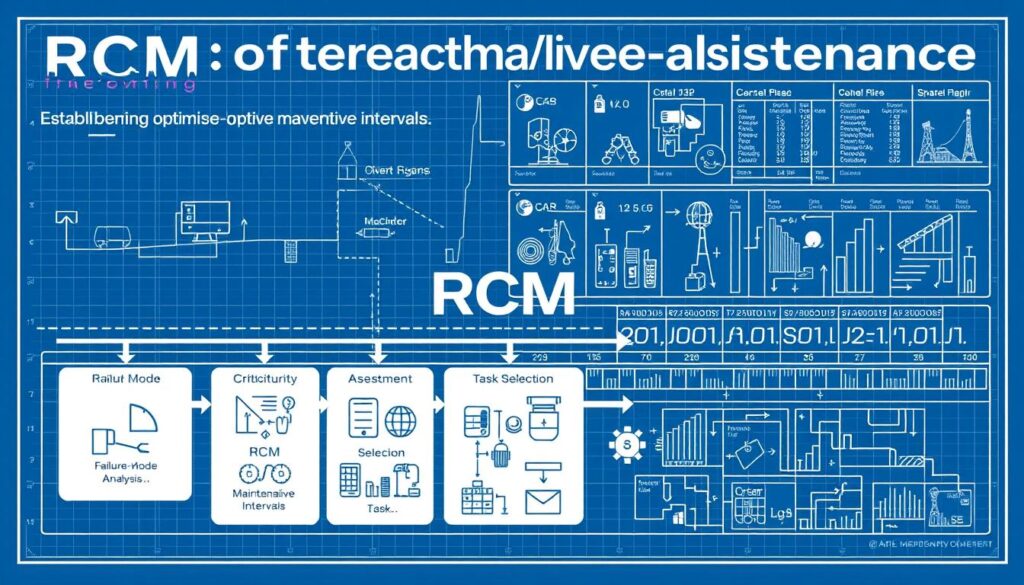
The RCM methodology offers a systematic process for determining what maintenance is truly necessary for each piece of equipment. This framework begins by identifying all equipment functions and the operational context in which assets perform. Maintenance teams document what each system is supposed to do before analyzing how it might fail.
Once functions are established, the next step involves cataloging potential failure modes for each component. Every mechanical system can fail in multiple ways, and RCM requires teams to consider all possibilities. This comprehensive failure mode analysis ensures that maintenance strategies address actual risks rather than assumed vulnerabilities.
The RCM methodology then evaluates the consequences of each identified failure mode. Not all failures carry equal weight—some result in safety hazards, others cause environmental damage, and still others simply impact production efficiency. By categorizing consequences, teams can prioritize maintenance resources toward the most critical failure scenarios.
After assessing consequences, RCM determines the appropriate maintenance strategy for each failure mode. The framework recognizes four distinct approaches: scheduled restoration, scheduled discard, condition-based monitoring, or run-to-failure. If no proactive maintenance task can effectively prevent a failure mode at reasonable cost, that task is deemed redundant and eliminated from the PM program.
This structured decision-making process ensures that PM intervals align with engineering reality. Equipment receives attention based on the effectiveness of preventive actions, not arbitrary time periods. The result is a maintenance program where every scheduled task has a documented technical justification.
Failure Mode and Effects Analysis (FMEA) Application
FMEA preventive maintenance provides a systematic methodology for prioritizing maintenance activities based on risk assessment. This approach synthesizes three critical factors: the severity of potential failures, their expected frequency, and the likelihood of detecting problems before they cause damage. By quantifying these dimensions, maintenance teams can focus resources where they deliver maximum value.
The FMEA process begins with identifying all potential failure mechanisms for each component. Teams examine how equipment might degrade, what environmental factors accelerate deterioration, and which operational stresses contribute to breakdowns. This comprehensive failure mode analysis creates a complete inventory of risks that maintenance must address.
For each identified failure mode, analysts assign numerical ratings across three dimensions. Severity scores reflect the impact of failure on operations, safety, and costs. Occurrence ratings estimate how frequently each failure mode appears based on historical data. Detection scores evaluate how easily current monitoring systems can identify developing problems before catastrophic failure occurs.
These three scores multiply together to produce a Risk Priority Number (RPN) for each failure mode. Higher RPN values indicate failure scenarios that demand immediate attention through preventive maintenance. Lower RPN values may warrant run-to-failure strategies or less frequent inspection intervals.
FMEA preventive maintenance reveals which PM tasks actually prevent failures versus those providing minimal protective value. For example, a monthly lubrication task might score high if it prevents a severe bearing failure that occurs frequently without proper lubrication. Conversely, a weekly inspection that rarely detects problems before they become obvious would receive a low RPN, suggesting the interval should be extended or the task eliminated entirely.
| FMEA Component | Assessment Criteria | Impact on PM Intervals |
|---|---|---|
| Severity Rating (1-10) | Consequences of failure on safety, operations, and compliance | Higher severity demands more frequent preventive intervention |
| Occurrence Rating (1-10) | Frequency of failure mode based on historical performance data | More frequent failures require shorter maintenance intervals |
| Detection Rating (1-10) | Ability of current monitoring to identify developing failures | Poor detection capabilities necessitate more frequent inspections |
| Risk Priority Number | Product of Severity × Occurrence × Detection scores | Higher RPN values justify increased maintenance frequency |
Statistical Analysis Using Mean Time Between Failures (MTBF)
MTBF analysis provides the mathematical foundation for predicting when equipment is likely to fail. This metric calculates the average operational time between breakdowns by dividing total operational hours by the number of failure events. Understanding MTBF patterns enables maintenance teams to schedule interventions before the statistical probability of failure becomes unacceptably high.
The calculation itself is straightforward: MTBF equals total operational time divided by number of failures. However, collecting accurate data requires disciplined record-keeping. Maintenance teams must document when equipment enters service, when failures occur, and distinguish between actual breakdowns and scheduled maintenance stops. This data discipline forms the foundation of reliable statistical analysis.
Once MTBF values are established, analysts can plot failure probability curves that show how breakdown risk increases with operating time. Most mechanical equipment follows a bathtub curve pattern—higher failure rates during initial break-in, a stable period of random failures, and increasing failures as wear-out begins. Optimal PM intervals target the transition point before wear-out failures accelerate.
MTBF analysis also incorporates a complementary metric: Mean Time To Repair (MTTR). This value calculates as total repair time divided by number of repairs and represents the average duration needed to restore failed equipment. Together, MTBF and MTTR enable calculation of equipment availability: MTBF divided by the sum of MTBF plus MTTR. This availability metric helps justify PM intervals by demonstrating how preventive actions reduce downtime.
Applying statistical confidence intervals to MTBF data allows maintenance planners to schedule with appropriate safety margins. Rather than setting PM intervals exactly at the calculated mean time between failures, prudent practice establishes maintenance at 70-80% of MTBF. This approach accounts for natural variation in failure timing while preventing excessive over-maintenance.
The challenge with MTBF analysis lies in handling incomplete datasets and accounting for equipment modifications that reset failure patterns. When major overhauls or component upgrades occur, previous MTBF data may no longer accurately predict future performance. Maintenance teams must segment their statistical analysis by equipment configuration, treating each significant modification as establishing a new baseline for failure prediction.
Together, these three methodologies—RCM, FMEA, and MTBF analysis—provide a comprehensive analytical toolkit. They transform PM scheduling from guesswork into data-driven science, ensuring maintenance resources focus on activities that genuinely prevent failures and protect operational continuity.
Building a Cost-Benefit Model for Maintenance Frequency
Every maintenance decision carries economic consequences that extend far beyond the immediate repair budget. Organizations that implement structured financial analysis gain competitive advantages by allocating resources where they generate maximum returns. The challenge lies in quantifying both tangible costs and intangible benefits within a framework that supports confident decision-making.
A comprehensive approach to maintenance ROI evaluation transforms scheduling from reactive habits into proactive strategy. This methodology requires systematic comparison of different maintenance frequencies against their associated costs and risks. The goal is identifying the optimal balance point where total expenditure reaches its minimum while maintaining acceptable performance standards.
Developing an economic optimization model demands attention to both immediate expenses and long-term consequences. Maintenance managers must consider direct costs, opportunity costs, and probability-weighted failure scenarios. This multi-dimensional analysis reveals insights that simple cost-cutting measures often overlook.
Developing Your Economic Analysis Framework
The foundation of effective maintenance planning starts with establishing baseline costs for various interval scenarios. Organizations should calculate the total expense associated with weekly, monthly, quarterly, and annual maintenance schedules for each asset category. These calculations must include labor costs, material expenses, equipment downtime, and administrative overhead.
Next, maintenance teams should quantify the probability-weighted cost of failures under each scheduling scenario. This calculation multiplies the likelihood of failure by the total cost of that failure, including emergency repairs, production losses, and secondary damage. Historical failure patterns provide the data necessary for accurate probability estimates.
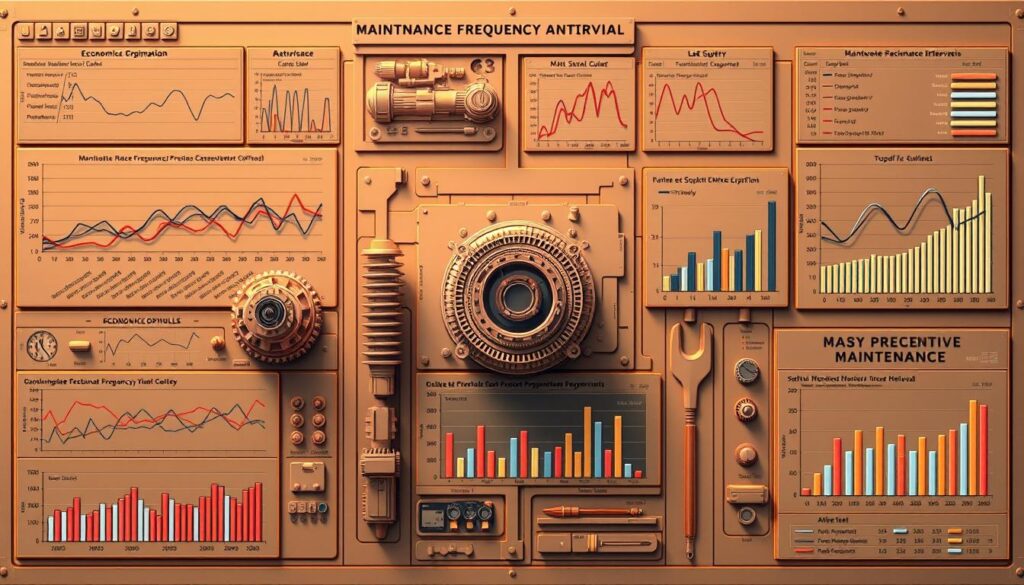
The comparison reveals which interval minimizes total cost while maintaining acceptable risk levels. Consider this simplified breakdown of cost components across different maintenance frequencies:
| Cost Component | Monthly PM | Quarterly PM | Annual PM |
|---|---|---|---|
| Direct Maintenance Costs | $12,000/year | $6,000/year | $2,500/year |
| Expected Failure Costs | $3,000/year | $8,500/year | $22,000/year |
| Downtime Impact | $4,000/year | $6,000/year | $15,000/year |
| Total Annual Cost | $19,000 | $20,500 | $39,500 |
This analysis demonstrates how maintenance ROI improves when intervals align with actual equipment needs rather than arbitrary schedules. The optimal frequency balances preventive investment against failure consequences. Organizations should develop similar worksheets for their specific equipment portfolios, adjusting variables to reflect their operational realities.
Less tangible factors also influence the economic optimization model without compromising analytical rigor. Production flexibility requirements may justify more frequent maintenance for equipment that supports multiple product lines. Customer satisfaction considerations might warrant tighter intervals for assets that directly impact service quality. Safety concerns always take precedence regardless of pure cost calculations.
Practical worksheets should capture both quantitative metrics and qualitative factors. Maintenance professionals can adapt standardized templates to accommodate industry-specific variables and organizational priorities. The key is consistency in application across all equipment categories to enable valid comparisons.
Risk Assessment and Equipment Criticality Classification
Moving beyond subjective assessments requires structured evaluation frameworks that apply consistent criteria across all assets. Equipment criticality assessment determines which machines deserve intensive preventive attention and which can operate reliably with less frequent intervention. This systematic approach prevents both wasteful over-maintenance and dangerous under-maintenance.
Organizations should prioritize equipment based on criticality and potential impact of failure. A multi-criteria decision matrix provides the necessary structure for objective evaluation. Equipment should be ranked considering these five dimensions: production impact measuring revenue loss per hour of downtime, safety risks assessing potential for worker injury or environmental damage, repair costs including emergency repair expenses, maintenance requirements examining complexity and resource intensity, and compliance needs addressing regulatory mandates.
Each dimension receives a weighted score based on organizational priorities. A typical scoring system might assign values from 1 to 5, with higher scores indicating greater criticality. The cumulative score places equipment into distinct categories that receive differentiated maintenance strategies.
Critical equipment—typically scoring above 18 on a 25-point scale—warrants frequent inspection, comprehensive PM procedures, and condition monitoring technology. These assets receive maximum attention because their failure consequences justify substantial preventive investment. Examples include primary production lines, safety systems, and equipment without redundancy.
Semi-critical equipment with moderate scores receives appropriate but less intensive maintenance. Standard PM intervals apply, with adjustments based on performance trends. Non-critical assets scoring below 10 may operate effectively with minimal preventive intervention, relying primarily on run-to-failure strategies when economically justified.
This classification system enables maintenance departments to optimize resource allocation effectively. PM optimization evaluates and refines existing activities to verify they truly add value. The process may result in elimination of redundant tasks, optimization of existing procedures, or addition of lacking maintenance activities.
Real-world implementation demonstrates significant benefits from proper equipment criticality assessment. Manufacturing facilities report 20-30% reductions in maintenance costs while simultaneously improving equipment availability. The savings come from focusing intensive efforts where they deliver maximum business value while avoiding wasteful over-maintenance of low-impact equipment.
Documentation of criticality classifications should include the scoring rationale for each piece of equipment. This transparency ensures consistency as new assets enter the portfolio and helps train personnel in systematic decision-making. Annual reviews update classifications based on changing operational conditions, production requirements, and equipment performance history.
The combination of economic analysis and criticality assessment creates a powerful framework for maintenance interval optimization. Organizations gain the confidence to make defensible decisions that balance competing priorities. This structured approach replaces guesswork with data-driven strategy, delivering measurable improvements in both equipment performance and financial results.
Leveraging Technology to Optimize Maintenance Scheduling
Technology integration enables maintenance teams to achieve scheduling precision that manual methods cannot deliver. Modern digital platforms transform preventive maintenance from administrative burden into strategic advantage through automation, real-time data collection, and intelligent analytics. Organizations that embrace these technological solutions gain visibility into equipment performance patterns that reveal optimal maintenance timing with unprecedented accuracy.
The evolution from spreadsheet-based tracking to sophisticated digital systems represents more than convenience. It fundamentally changes how maintenance professionals establish intervals, allocate resources, and respond to equipment condition changes. This technological foundation supports data-driven decision-making that continuously improves maintenance effectiveness while reducing operational costs.
Computerized Maintenance Management Systems (CMMS) Capabilities
CMMS preventive maintenance platforms serve as the central nervous system for modern maintenance operations. These systems automate recurring work order generation based on predefined intervals, eliminating manual scheduling errors and ensuring no preventive maintenance task falls through organizational cracks. Digital maintenance management solutions can reduce monthly maintenance costs by 30% through better scheduling, resource allocation, and communication.
The automation capabilities extend far beyond simple calendar reminders. Advanced CMMS platforms track maintenance history with precision, creating comprehensive equipment records that reveal performance trends over time. This historical data becomes invaluable for identifying scheduling inefficiencies and adjusting intervals based on actual failure patterns rather than theoretical assumptions.
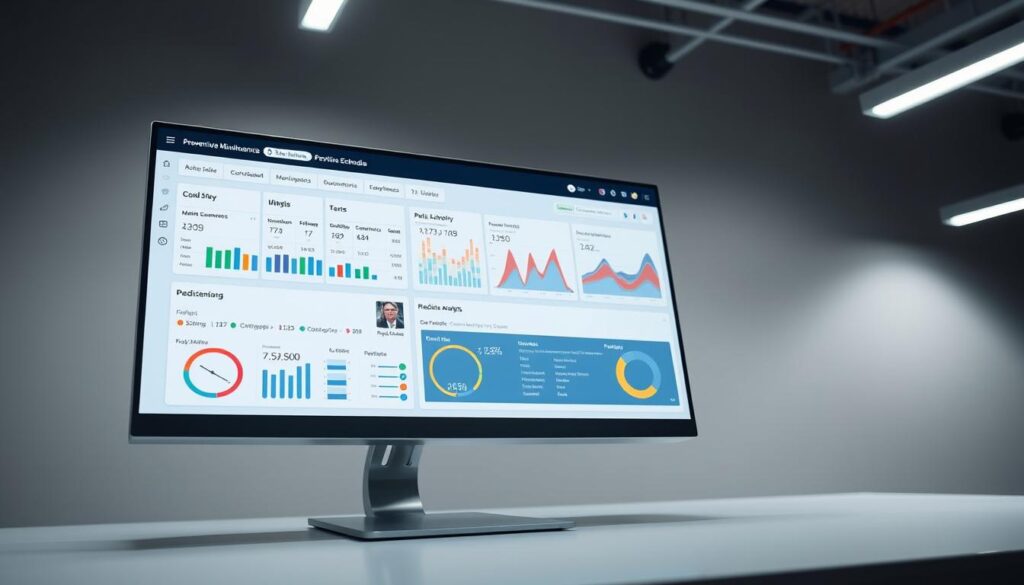
Key features that directly support interval optimization include automated interval adjustment recommendations based on failure pattern analysis and completion data. Resource capacity planning prevents maintenance bottlenecks by balancing workload across available technicians. Mobile accessibility ensures field technicians document observations that inform future interval decisions. Dashboard visibility provides real-time PM compliance rates and schedule adherence metrics. Centralized maintenance records eliminate information silos between shifts and departments.
These systems improve communication between teams by automatically notifying stakeholders about upcoming tasks, completion status, and any issues discovered during maintenance activities. The transparency this creates helps maintenance managers identify patterns that suggest interval adjustments may improve equipment reliability or reduce unnecessary interventions.
Predictive Maintenance and Condition-Based Monitoring
Predictive maintenance technology moves organizations beyond fixed time intervals to dynamic maintenance triggering based on actual equipment condition. Rather than performing maintenance at predetermined calendar points, condition monitoring systems continuously assess equipment health and signal when intervention becomes necessary. This approach prevents both premature maintenance and unexpected failures.
Condition-based maintenance performs maintenance based on actual equipment condition as determined by monitoring and diagnostic techniques. The sophistication of these technologies allows maintenance teams to detect subtle changes that indicate developing problems long before catastrophic failure occurs.
The most effective monitoring technologies for different equipment types include vibration analysis for rotating equipment such as motors, pumps, and compressors to detect bearing wear, misalignment, and imbalance. Thermography for electrical systems checks connections, identifies hot spots, and prevents potential fire hazards. Oil analysis for lubricated components assesses contamination levels, viscosity changes, and wear particle concentration. Ultrasound detection identifies compressed air leaks, steam trap failures, and early bearing deterioration.
Selecting appropriate monitoring technologies requires matching equipment criticality with detection capabilities. High-value assets that impact production warrant more sophisticated monitoring investments, while less critical equipment may need only basic condition checks during routine inspections.
Establishing condition thresholds that trigger maintenance interventions represents a critical implementation decision. These thresholds must balance early detection with practical response capabilities. Setting thresholds too sensitive creates excessive false alarms that erode confidence in the system, while overly conservative thresholds may allow equipment to operate too close to failure conditions.
Internet of Things (IoT) Sensors and Advanced Analytics
IoT maintenance monitoring represents the cutting edge of maintenance optimization, where continuous sensor monitoring feeds machine learning algorithms that predict optimal maintenance timing with remarkable precision. These connected sensors collect operational parameters in real-time, creating data streams that reveal equipment behavior patterns invisible to periodic manual inspections.
The power of IoT-enabled maintenance strategies lies in their ability to identify subtle performance degradation patterns that develop gradually over time. Temperature fluctuations of just a few degrees, minor vibration increases, or slight pressure variations often signal developing problems weeks or months before traditional detection methods would notice anything unusual.
Advanced analytics transform this sensor data into actionable intelligence. Machine learning algorithms establish baseline performance signatures for each piece of equipment, then continuously compare current operation against these established patterns. When deviations exceed acceptable parameters, the system generates predictive alerts that enable just-in-time maintenance interventions.
| Technology Approach | Data Collection Method | Maintenance Trigger | Cost Efficiency Impact |
|---|---|---|---|
| CMMS Platforms | Manual entry with automated tracking | Time-based with historical analysis | 20-30% cost reduction potential |
| Condition Monitoring Systems | Periodic testing and inspection | Condition-based thresholds | 30-40% reduction in unplanned downtime |
| IoT Sensors with Analytics | Continuous real-time data streams | Predictive algorithms and machine learning | 40-50% improvement in maintenance efficiency |
Organizations typically progress through these technological stages as their maintenance maturity advances. Starting with robust CMMS preventive maintenance provides the foundational data infrastructure necessary for more advanced approaches. Adding condition monitoring systems for critical equipment creates targeted predictive capabilities where they deliver the highest value.
The ultimate integration of IoT maintenance monitoring with machine learning represents the future of maintenance optimization. These systems learn continuously from equipment behavior, automatically refining maintenance recommendations as operational patterns change. This adaptive intelligence ensures maintenance intervals remain optimized even as equipment ages, operating conditions shift, or production demands fluctuate.
Implementation success requires careful technology selection aligned with organizational capabilities and equipment criticality. Not every asset justifies sophisticated predictive maintenance technology, but strategic deployment on high-impact equipment delivers measurable returns that justify progressive expansion across the maintenance portfolio.
Adaptive Strategies for Refining PM Intervals Over Time
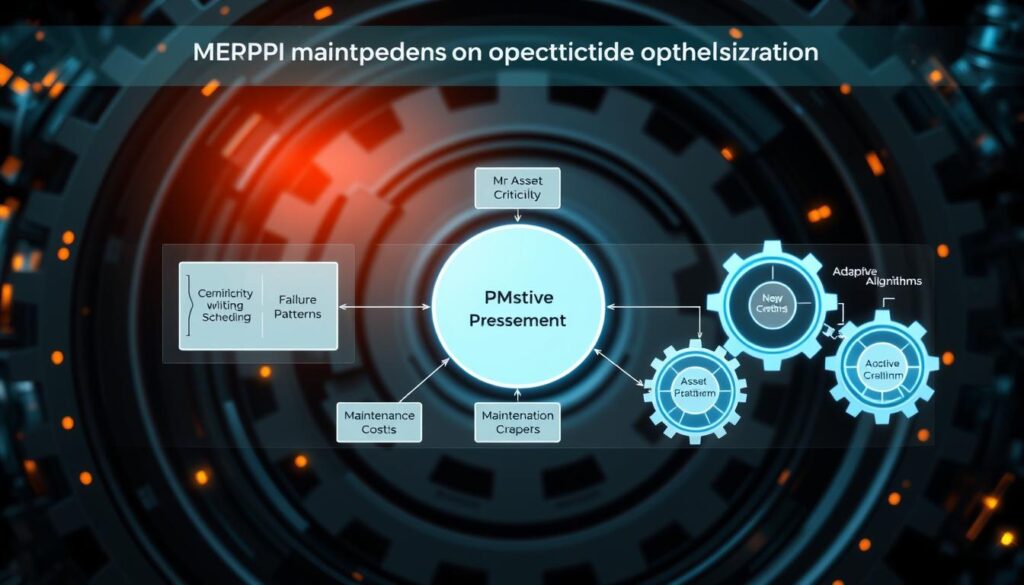
Achieving maintenance excellence requires organizations to treat PM schedule optimization as an evolving discipline rather than a one-time decision. Equipment conditions change as assets age, operating environments shift with production demands, and performance data accumulates to reveal patterns invisible during initial scheduling. Organizations that implement structured refinement processes consistently outperform those relying on static maintenance calendars established years earlier without subsequent adjustment.
The most effective approach recognizes that maintenance intervals must respond to real-world performance evidence. This adaptive methodology transforms preventive maintenance from rigid compliance activities into dynamic systems that self-optimize over time. Organizations should implement formal review processes to periodically analyze and evaluate maintenance programs to ensure they achieve the primary objective of minimizing unanticipated asset failures.
PM activities and procedures require regular evaluation to confirm they remain accurate, relevant, and scheduled at proper frequencies. This verification process proves paramount to ensuring asset maintenance activities deliver value and remain cost-effective as operational conditions evolve.
Building Performance Baselines and Measurement Standards
Effective maintenance performance benchmarking begins with establishing clear baseline metrics that document current-state performance. Without accurate baseline measurements, organizations cannot determine whether interval adjustments produce meaningful improvements or simply introduce unnecessary change. The foundation of any optimization effort rests on knowing precisely where performance stands today.
Organizations should establish comprehensive baseline metrics across multiple performance dimensions. PM compliance rates measure the percentage of scheduled maintenance tasks completed on time without deferrals. Equipment availability percentages calculate total operational hours divided by scheduled production time. Maintenance cost per operating hour allocates direct maintenance expenses across actual equipment runtime.
Failure frequency by equipment category tracks breakdown incidents by asset type and severity level. Mean time between failures (MTBF) documents average operational duration between unplanned maintenance events. These metrics create a comprehensive performance profile that enables meaningful comparison over time.
Benchmarking extends baseline establishment by providing comparative context for performance evaluation. Organizations gain meaningful perspective by comparing internal metrics against manufacturer specifications for similar equipment operating under comparable conditions. Industry standards published by professional associations offer additional reference points that reveal whether performance falls within expected ranges or indicates optimization opportunities.
Historical performance trends within your own organization provide the most relevant benchmarks for continuous improvement. Tracking how metrics evolve over time reveals whether refinements move performance in desired directions. Data quality directly determines the reliability of baseline and benchmark measurements.
Inconsistent or incomplete maintenance records fundamentally undermine optimization efforts. Organizations must address data quality issues through systematic remediation strategies including standardized data entry protocols, regular data validation audits, and training programs that emphasize accurate documentation importance.
Structured Cycles for Ongoing Program Enhancement
The continuous improvement process transforms static maintenance plans into self-optimizing systems through disciplined review cycles. Organizations achieve maximum value with precise and consistent data derived from their CMMS, analyzed through structured evaluation frequencies that balance thoroughness with operational practicality.
Implementation requires establishing review schedules appropriate to equipment criticality and operational complexity. Monthly reviews for critical equipment involve detailed analysis of highest-priority assets including completion rate trends, recent failure incidents, and technician feedback regarding task relevance. Quarterly assessments provide broader program evaluation across all equipment categories, identifying systemic issues and optimization opportunities.
Annual strategic evaluations conduct complete program assessment examining whether overall maintenance strategy aligns with organizational objectives and industry best practices. Each review cycle should include specific analytical activities that drive meaningful refinements.
Organizations should analyze maintenance completion data to identify tasks consistently completed early or late, signaling potential interval misalignment. Review failure incidents to determine whether current PM intervals successfully prevent recurring problems or require frequency adjustments. Gathering structured feedback from maintenance technicians and equipment operators provides qualitative insights that quantitative data alone cannot reveal.
| Review Frequency | Primary Focus Areas | Key Metrics Analyzed | Typical Adjustments |
|---|---|---|---|
| Monthly | Critical equipment performance | Failure incidents, compliance rates, downtime hours | Immediate interval modifications for high-priority assets |
| Quarterly | Program-wide effectiveness | Cost ratios, availability trends, resource utilization | Systematic task elimination or frequency changes |
| Annual | Strategic alignment | ROI metrics, benchmark comparisons, technology adoption | Comprehensive strategy revisions and technology investments |
Implementing controlled interval adjustments with defined success criteria ensures changes deliver anticipated benefits. Rather than making sweeping modifications across multiple assets simultaneously, organizations should test interval changes on representative equipment samples. This approach allows performance comparison between adjusted and unchanged assets, providing clear evidence of effectiveness.
Organizations using disciplined continuous improvement approaches achieve progressive performance gains as data accumulates and organizational learning deepens. PM intervals become increasingly precise through iterative refinement cycles that systematically eliminate waste while maintaining reliability.
The most successful programs establish formal documentation requirements for each adjustment decision. Recording the rationale behind interval changes, expected outcomes, and actual results creates institutional knowledge that prevents repeated mistakes and accelerates future optimization efforts. This systematic approach to maintenance performance benchmarking ensures refinements build upon previous successes rather than repeating past failures.
Share Your Maintenance Optimization Experience
Are you a fleet manager, maintenance supervisor, or shop owner with insights on preventive maintenance optimization? Heavy Duty Journal welcomes technical articles and real-world case studies from industry professionals. Share your expertise with our community of fleet managers and diesel technicians.
Industry-Specific Approaches to Maintenance Interval Optimization
The optimal PM schedule for a factory production line differs fundamentally from maintenance requirements in hospitals or vehicle fleets. Each industry sector faces distinct operational pressures, regulatory environments, and equipment criticality factors that shape maintenance interval decisions. Developing industry-specific PM strategies requires understanding these unique contextual elements rather than applying generic maintenance formulas across all operational environments.
Equipment downtime can be a significant drain on manufacturing productivity and profitability. Different sectors demand tailored approaches that balance uptime requirements, safety considerations, and resource constraints. The following industry-specific frameworks demonstrate how fundamental PM optimization principles adapt to real-world operational contexts.
Manufacturing and Industrial Production Environments
Manufacturing maintenance schedules must account for the direct relationship between equipment availability and revenue generation. In production environments, a single machine failure can halt entire assembly lines, creating cascading financial impacts that extend far beyond repair costs. This operational reality demands a nuanced approach to maintenance interval planning that considers equipment criticality within the production system.
Production bottleneck equipment warrants more aggressive PM intervals than redundant assets. A CNC machine that represents the sole capacity for a critical machining operation requires different maintenance treatment than one of five identical units performing the same function. When equipment going down stops the entire production line, organizations must implement tighter preventive maintenance scheduling even if the approach appears to over-maintain from a pure equipment reliability perspective.
Usage patterns vary significantly across manufacturing operations. Some machines run continuously on 24/7 schedules while others operate only a few hours daily. This variation requires different maintenance approaches—high-utilization equipment benefits from condition-based monitoring that tracks actual operating hours and performance parameters rather than calendar-based intervals.
Maintenance scheduling strategies should align with production schedules to minimize operational disruption. Batch production environments offer natural maintenance windows during changeovers or scheduled production breaks. Continuous process operations require more sophisticated coordination, often necessitating redundant equipment capacity or planned shutdowns during periods of lower demand.
Consider these interval optimization strategies for critical manufacturing equipment categories. CNC machines should implement usage-based intervals tied to spindle hours rather than calendar time, with lubrication systems checked every 500 operating hours and precision calibration verified quarterly. Conveyor systems require preventive maintenance based on tonnage throughput combined with visual inspections for belt wear, bearing noise, and alignment issues.
Hydraulic presses need fluid contamination monitoring and pressure consistency tracking as condition indicators while maintaining time-based seal and filter replacement schedules. Automated assembly equipment benefits from balancing frequent minor adjustments daily or per shift with comprehensive preventive maintenance during scheduled production downtime.
Time-based, usage-based, condition-based, and predictive maintenance approaches each have specific applications depending on equipment characteristics. Modern manufacturing maintenance schedules increasingly combine multiple methodologies, using predictive analytics for high-value assets while maintaining simpler time-based intervals for non-critical equipment.
Healthcare Facilities and Critical Infrastructure
Healthcare facility maintenance operates under fundamentally different constraints than commercial manufacturing environments. Equipment reliability in hospitals and medical centers carries direct implications for patient safety and clinical outcomes. Regulatory oversight establishes minimum maintenance frequencies that often exceed what pure reliability analysis would recommend.
The challenge involves balancing aggressive PM scheduling that maximizes reliability against the need for equipment availability during critical operational periods. An MRI machine undergoing preventive maintenance cannot serve emergency patients. Environmental control systems in operating rooms cannot be taken offline during scheduled procedures. This operational tension requires sophisticated scheduling that maintains stringent reliability standards while optimizing maintenance resource utilization.
Regulatory compliance considerations establish baseline maintenance frequencies that organizations cannot reduce regardless of equipment performance history. Life-safety systems including fire suppression, emergency lighting, and medical gas delivery require documented preventive maintenance at intervals specified by Joint Commission standards, National Fire Protection Association (NFPA) codes, and manufacturer recommendations. These compliance-driven intervals represent minimum requirements rather than optimized schedules.
Critical infrastructure maintenance priorities differ significantly from commercial operations. Backup power generation systems demand monthly testing and quarterly comprehensive maintenance despite infrequent operational use, ensuring reliability during utility failures. Medical imaging equipment requires manufacturer-certified preventive maintenance at prescribed intervals to maintain diagnostic accuracy and regulatory compliance.
Environmental control systems serving sterile environments need continuous monitoring with preventive maintenance scheduled during non-critical operational windows. Patient monitoring equipment undergoes preventive maintenance based on usage intensity and manufacturer specifications, with backup units maintained in ready status.
Healthcare facility maintenance programs must document all preventive activities comprehensively to satisfy regulatory audits. This documentation requirement influences interval optimization by creating incentives for scheduled, predictable maintenance cycles rather than more flexible condition-based approaches. Organizations often maintain conservative PM frequencies to ensure regulatory compliance even when equipment performance data might support extended intervals.
The financial calculus in healthcare maintenance differs from manufacturing environments. While production downtime creates immediate revenue loss, healthcare equipment unavailability affects patient care quality and institutional reputation. These less quantifiable but critically important considerations justify more conservative maintenance approaches that prioritize reliability over pure cost optimization.
Fleet Management and Transportation Operations
Fleet maintenance intervals present unique optimization challenges due to dramatic usage variation between individual units, geographic dispersion that complicates maintenance scheduling, and regulatory compliance mandates specific to transportation operations. Unlike stationary facility equipment, mobile assets accumulate wear based on actual operational use rather than calendar time.
Meter-based PM intervals triggered by mileage or engine hours provide more accurate maintenance timing than calendar-based schedules. A delivery vehicle operating urban routes with frequent stops experiences different wear patterns than a long-haul truck accumulating highway miles. Implementing fleet maintenance intervals based on actual usage metrics ensures preventive activities align with equipment condition rather than arbitrary time periods.
Geographic dispersion creates logistical complexities for fleet maintenance scheduling. Organizations with vehicles distributed across multiple regions must balance centralized maintenance facilities offering specialized capabilities against decentralized service networks providing convenient access. This geographic consideration influences optimal PM intervals—longer intervals between major services become more practical when vehicles operate far from primary maintenance facilities.
| Fleet Type | Primary Interval Trigger | Typical PM Frequency | Regulatory Considerations |
|---|---|---|---|
| Light-duty delivery vehicles | Odometer mileage | Every 5,000-7,500 miles | State safety inspections annually |
| Heavy-duty commercial trucks | Engine hours and mileage | Every 15,000-25,000 miles | DOT inspections every 12 months |
| Passenger bus fleets | Mileage with condition monitoring | Every 6,000-12,000 miles | FTA requirements for transit agencies |
| Construction equipment | Engine hours primary metric | Every 250-500 operating hours | OSHA compliance for specific equipment |
Department of Transportation regulations under 49 CFR 396.17 mandate specific inspection frequencies for commercial vehicles regardless of maintenance history or condition. Annual DOT inspections establish regulatory minimums, but optimized fleet maintenance intervals typically include more frequent preventive services between required inspections. Organizations must design maintenance programs that satisfy regulatory requirements while incorporating additional preventive activities based on actual fleet performance data.
Balancing preventive maintenance scheduling across geographically distributed fleet assets requires sophisticated coordination. Telematics systems provide real-time data on vehicle location, mileage accumulation, and diagnostic trouble codes. This information enables maintenance coordinators to schedule PM activities when vehicles naturally return to service facilities or route units strategically to maintenance locations as they approach service intervals.
These industry-specific perspectives demonstrate how fundamental PM interval optimization principles must be adapted to sector-specific operational realities. What works for manufacturing equipment fails in healthcare settings, and fleet management demands yet another distinct approach to maintenance interval planning.
Critical Errors in PM Interval Planning and Prevention Strategies
Even well-intentioned maintenance programs fail when fundamental planning errors compromise interval optimization efforts. These mistakes create a ripple effect throughout organizations, leading to unexpected equipment failures, inflated maintenance costs, and reduced asset reliability. Understanding the most common maintenance scheduling errors helps teams build more effective preventive maintenance strategies.
The path to optimal PM intervals requires awareness of where organizations typically go wrong. Many facilities achieve high compliance rates on paper while their equipment continues to fail at alarming rates. This disconnect reveals a critical truth: completing scheduled maintenance tasks means nothing if those schedules fundamentally misalign with actual equipment needs.
The Pitfall of Calendar-Based Scheduling Without Context
Calendar-based maintenance limitations represent one of the most widespread yet problematic approaches in preventive maintenance. Organizations implement rigid monthly or quarterly schedules without considering how equipment actually operates. This one-size-fits-all mentality ignores the reality that identical assets can experience vastly different wear rates based on usage intensity.
Many organizations defer to OEM recommendations as the foundation of their PM strategy. These manufacturer specifications are usually highly conservative estimates based on design parameters and recommended operation. They rarely account for actual operational conditions or historical performance data from specific facilities.
This approach creates a false sense of security. Maintenance teams perform tasks on schedule and check boxes, believing they’re protecting assets. Meanwhile, heavily-used equipment deteriorates faster than the fixed schedule anticipates, while lightly-used assets receive unnecessary maintenance that wastes resources.
Fixed schedules run on predetermined calendar intervals regardless of previous completion dates or actual equipment condition. A machine serviced on January 15th receives its next PM exactly 30 days later, even if it only operated for five days during that period. Conversely, equipment running continuously receives the same 30-day interval despite accumulating six times more operating hours.
The consequences of these operational context factors extend beyond inefficiency. Maintenance-induced failures occur when unnecessary intrusive maintenance introduces new problems. Excessive disassembly and reassembly creates opportunities for assembly errors, contamination, and component damage that actually reduces reliability.
Common failures associated with context-free scheduling include unclear or delayed communication between operations and maintenance teams about actual equipment usage. Poor equipment inventory practices fail to track operating hours versus calendar time. Lack of consistent procedures for adjusting intervals based on performance data leads to premature maintenance that interrupts properly functioning equipment and delayed maintenance for intensively-operated assets.
Organizations may achieve 95% PM completion rates while experiencing high failure rates. This paradox reveals that schedule adherence metrics measure the wrong thing entirely. Compliance with a flawed calendar tells you nothing about maintenance effectiveness.
Neglecting Environmental and Operational Variables
Environmental conditions dramatically impact equipment deterioration rates, yet many maintenance programs ignore these site-specific factors. Baseline PM intervals developed for ideal operating conditions fail catastrophically when applied to harsh or variable environments. This oversight represents a critical category of maintenance scheduling errors that undermines even well-designed programs.
Temperature extremes accelerate wear on seals, lubricants, and electronic components. Humidity and moisture exposure cause corrosion and electrical failures at rates that standard intervals don’t anticipate. Airborne contaminants and particulate matter overwhelm filtration systems faster than generic schedules predict.
Vibration and shock loads from adjacent equipment or facility operations stress components beyond design specifications. Operational duty cycles that differ from manufacturer assumptions change failure patterns entirely. Ignoring these operational context factors guarantees that maintenance intervals will misalign with actual equipment needs.
Real-world examples demonstrate the magnitude of this problem. HVAC equipment in coastal environments with salt air exposure requires maintenance frequencies three to four times higher than identical units in controlled indoor settings. Production equipment in high-dust manufacturing environments needs filtration changes every 500 hours instead of the standard 2,000-hour interval.
Fleet vehicles operating in mountainous terrain with steep grades experience brake system wear at twice the rate of vehicles in flat regions. Yet many organizations apply uniform maintenance schedules across diverse operating environments, wondering why some locations experience chronic failures while others seem over-maintained.
| Scheduling Approach | Interval Basis | Adjustments Made | Typical Outcome |
|---|---|---|---|
| Calendar-Based Without Context | Fixed time periods (30, 60, 90 days) | None – rigid schedule regardless of conditions | Over-maintenance of light-use equipment, under-maintenance of intensive-use assets |
| OEM Recommendations Only | Manufacturer conservative estimates | Minimal – assumes ideal operating conditions | Excessive preventive work, maintenance-induced failures, inflated costs |
| Context-Aware Scheduling | Operating hours, cycles, or condition indicators | Regular adjustments for environment, usage, and performance data | Optimized intervals that balance reliability and efficiency |
| Hybrid Approach | Usage-based with calendar backstop | Dynamic intervals with maximum time limits for idle equipment | Comprehensive coverage adapted to actual operational patterns |
Systematic evaluation of environmental and operational variables requires structured assessment processes. Maintenance teams should document ambient temperature ranges, exposure to moisture or chemicals, contamination levels, and actual duty cycles for each asset. This information transforms generic baseline intervals into site-specific maintenance strategies aligned with operational realities.
The documentation process itself provides value beyond initial interval setting. Recording contextual considerations ensures maintenance strategies remain aligned with conditions as they change. When operations shift, facility expansions occur, or environmental controls fail, documented baseline assumptions enable rapid interval adjustments before failures occur.
Prevention strategies focus on building flexibility into PM programs from the start. Instead of treating manufacturer recommendations as absolute requirements, maintenance professionals should view them as starting points for optimization. Establishing feedback loops that capture failure data, operating conditions, and inspection findings creates the information foundation for continuous interval refinement.
Organizations that succeed in avoiding these critical errors share common practices. They implement condition-based triggers alongside time-based intervals, monitor actual equipment operating hours rather than calendar days, and systematically review failure patterns to identify interval misalignments. Most importantly, they recognize that optimal PM intervals evolve as equipment ages, operating conditions change, and performance data accumulates.
Executing a Flexible PM Interval Optimization Program
Building a flexible preventive maintenance program demands systematic implementation that transforms data-driven insights into operational reality. Even the most analytically sound maintenance strategies fail without effective organizational execution and cross-functional support. The transition from planning to implementation requires careful attention to human factors, documentation requirements, and performance monitoring systems.
Successful implementation begins with recognizing that maintenance schedulers, supervisors, and planners serve as the operational backbone of any PM program. These professionals balance maintenance requirements with operational demands to minimize disruptions while maintaining equipment reliability. Their expertise in coordinating resources and managing scheduling conflicts becomes critical when implementing optimized PM intervals that may differ from established practices.
Organizations that achieve maintenance compliance excellence understand that execution quality depends on addressing both technical and organizational challenges. The implementation framework must account for resistance to change, resource constraints, and the need for ongoing performance validation. This comprehensive approach ensures that interval optimization delivers measurable value rather than remaining a theoretical exercise.
Building Cross-Functional Alignment for Success
Effective stakeholder engagement requires understanding that different departments have legitimate but sometimes conflicting interests in maintenance scheduling decisions. Production managers prioritize equipment availability and throughput maximization. Operations supervisors focus on workflow continuity and minimizing schedule disruptions. Maintenance technicians emphasize safety, proper repair execution, and adequate time allocation. Financial stakeholders concentrate on cost control and return on investment.
Addressing these diverse perspectives demands a structured approach to building consensus. Production leadership responds most effectively to quantified downtime reduction projections and throughput improvement estimates. Present the business case using specific metrics that demonstrate how optimized PM intervals reduce unplanned failures that cause costly production interruptions.
Maintenance technicians provide invaluable field observations that enhance interval optimization decisions. Their hands-on experience reveals patterns that data analysis alone might miss. Incorporating technician input into scheduling decisions builds ownership and increases compliance with new maintenance protocols. Regular feedback sessions create opportunities for continuous refinement based on actual field conditions.
Financial approval requires demonstrating clear return on investment through detailed cost-benefit analysis. Calculate the total cost of ownership under current maintenance practices versus optimized intervals. Include direct costs such as parts and labor, plus indirect expenses like production losses and emergency repair premiums. This comprehensive financial picture provides the justification needed for resource allocation and program support.
Successful organizations establish cross-functional steering committees that provide oversight and resolve conflicts between maintenance requirements and production priorities. These committees meet regularly to review performance metrics, address scheduling obstacles, and adjust strategies based on operational feedback. The collaborative structure ensures that stakeholder engagement continues throughout implementation rather than ending after initial approval.
Change management considerations play a critical role in implementation success. Communicate interval changes clearly, explaining the rationale behind each adjustment. Address concerns about deviating from manufacturer recommendations or historical practices by presenting supporting data and risk assessments. Build confidence through pilot programs that demonstrate benefits on selected equipment before full-scale implementation across all assets.
Pilot programs offer several strategic advantages. They allow organizations to validate analytical predictions against actual performance outcomes. They provide opportunities to refine procedures and identify unforeseen obstacles before widespread rollout. They also create success stories that help overcome skepticism and build momentum for broader adoption.
Developing Comprehensive Maintenance Procedures
Creating robust documentation represents the administrative foundation for sustainable PM programs. Clear maintenance procedures eliminate guesswork and ensure consistent task execution regardless of which technician performs the work. Comprehensive standard operating procedures specify step-by-step task instructions that guide technicians through each maintenance activity systematically.
Effective procedures include several critical elements that support quality execution. Detailed inspection points identify exactly what technicians should examine and what conditions require attention. Required tools and materials lists ensure technicians arrive prepared with everything needed to complete the task efficiently. Acceptance criteria and quality checkpoints define what constitutes satisfactory completion versus work requiring correction or follow-up.
Safety precautions and lockout/tagout requirements protect personnel from equipment hazards. These protocols must be prominently featured in every procedure that involves potentially dangerous equipment or operations. Estimated task duration guides scheduling accuracy, allowing planners to allocate appropriate time blocks and avoid rushed work that compromises quality.
Documentation management strategies ensure that PM documentation standards remain current and accessible. Version control systems prevent technicians from using outdated procedures that may omit critical steps or reference obsolete specifications. Digital accessibility through mobile devices enables field reference without requiring technicians to return to offices for procedure lookup. Multilingual support accommodates diverse workforces, ensuring that language barriers don’t compromise safety or quality.
Organizations should implement regular review cycles that update procedures based on equipment modifications, lessons learned, and manufacturer bulletins. Technician feedback mechanisms capture field observations about procedure accuracy and completeness. Digital libraries with search functionality enable quick access to specific procedures. Visual aids and diagrams supplement text instructions with photos or technical drawings. Standardized formats create consistency across all maintenance procedures.
Establishing maintenance compliance monitoring processes ensures that optimized intervals translate into actual field execution. The widely accepted guideline allows scheduling tolerance of plus or minus 10 percent of the due date. This flexibility accommodates operational realities while maintaining schedule integrity. Tasks performed outside this window require investigation to determine whether systematic obstacles exist or isolated circumstances caused the deviation.
Daily schedule deviation meetings provide accountability and continuous improvement opportunities. These brief sessions verify that scheduled PMs were performed as planned and identify reasons for any deviations. The meetings should involve maintenance supervisors, schedulers, and relevant technicians. They create a forum for addressing recurring obstacles such as parts shortages, equipment unavailability, or inadequate time allocation.
A structured approach to these meetings maximizes their effectiveness. Review completion status for all PMs scheduled the previous day. Document deviation reasons using standardized categories that enable trend analysis. Identify corrective actions for systemic issues that prevent timely completion. Assign responsibility for implementing solutions and track follow-through. Escalate chronic issues to steering committee or management when necessary.
Escalation procedures for chronic compliance issues prevent small problems from becoming persistent obstacles. When the same equipment, work type, or organizational factor repeatedly causes schedule deviations, formal escalation triggers more intensive problem-solving. This might involve resource reallocation, procedure revision, or equipment replacement analysis.
The implementation framework recognizes that interval optimization delivers value only through consistent field execution. Technical analysis establishes optimal intervals, but organizational discipline ensures those intervals become operational reality. The combination of stakeholder alignment, comprehensive documentation, and rigorous compliance monitoring creates sustainable performance improvement.
Performance accountability extends throughout the organization. Maintenance technicians must execute standard operating procedures consistently. Supervisors must address obstacles promptly and fairly. Schedulers must balance competing demands while maintaining schedule integrity. Management must provide resources and support necessary for program success. This shared accountability creates the cultural foundation for maintenance excellence.
Key Performance Indicators for Maintenance Schedule Effectiveness
Establishing clear performance benchmarks transforms maintenance from a cost center into a strategic asset. The right maintenance KPIs provide objective evidence of whether your PM interval optimization efforts deliver tangible business results. These performance indicators enable data-driven decisions that balance equipment reliability with maintenance efficiency.
Tracking the wrong metrics or interpreting data incorrectly can lead to misguided optimization efforts. Organizations need comprehensive measurement frameworks that capture both operational and financial dimensions of maintenance performance. This approach ensures continuous improvement while demonstrating clear value to stakeholders across the organization.
Measuring Uptime Through Availability and OEE Analysis
Equipment availability represents the percentage of scheduled operating time that equipment actually remains operational and production-ready. This fundamental equipment availability measurement directly reflects PM interval effectiveness since optimized maintenance strategies maximize productive uptime. Calculate availability using this formula: Availability equals scheduled time minus downtime, divided by scheduled time, times 100.
World-class manufacturing facilities typically achieve availability rates exceeding 90% for critical production equipment. Organizations operating below this threshold should examine whether their PM intervals contribute to excessive breakdowns or whether inadequate maintenance creates recurring failures. This metric provides immediate insight into scheduling effectiveness.
Overall Equipment Effectiveness stands as the gold standard for comprehensive equipment performance measurement. OEE metrics combine three critical components that together reveal the complete picture of production efficiency. Understanding each component helps maintenance teams identify specific improvement opportunities.
The three OEE components work together to capture total productive performance. Availability measures the percentage of scheduled time equipment operates without unplanned downtime. Performance compares actual production rates against theoretical maximum capacity. Quality represents the percentage of production output meeting established quality standards.
PM intervals directly impact each OEE component. Proper preventive maintenance maximizes availability by preventing unexpected breakdowns before they occur. Well-maintained equipment operates at design speeds, sustaining optimal performance rates. Regular maintenance prevents process variations caused by equipment degradation, supporting consistent quality output.
Calculate OEE by multiplying these three percentages: OEE equals availability times performance times quality. For example, equipment with 95% availability, 88% performance, and 97% quality achieves an OEE of 81.1%. World-class operations consistently exceed 85% OEE, while typical manufacturing facilities average 60% to 75%.
Additional maintenance KPIs provide supporting context for availability analysis. Mean Time Between Failures (MTBF equals uptime divided by number of failures) reveals equipment reliability trends. Mean Time To Repair (MTTR equals total repair time divided by number of repairs) indicates maintenance efficiency. Both metrics help identify whether PM intervals prevent failures effectively.
Financial Metrics That Quantify Maintenance Value
Maintenance cost ratios translate operational performance into financial terms that resonate with executive leadership. These metrics demonstrate whether maintenance investments generate appropriate returns. Organizations need multiple financial perspectives to evaluate PM interval optimization comprehensively.
Maintenance cost per unit produced divides total maintenance spending by production volume. This ratio reveals maintenance efficiency relative to output. Tracking this metric over time shows whether PM optimization reduces maintenance intensity while maintaining or improving production levels. Industry benchmarks vary significantly, making trend analysis more valuable than single-point comparisons.
Maintenance cost as percentage of replacement asset value provides context for spending appropriateness. Calculate this by dividing annual maintenance expenditures by equipment replacement cost. Typical targets range from 2% to 3% annually. Percentages significantly above this range may indicate aging equipment requiring replacement. Ratios well below target sometimes suggest insufficient preventive maintenance.
Reactive maintenance percentage measures unplanned emergency repairs as a proportion of total maintenance spending. Lower percentages indicate more effective preventive programs. Calculate using: Reactive Percentage equals emergency repair costs divided by total maintenance spending times 100. World-class facilities maintain reactive maintenance below 20%, while organizations with inadequate PM programs often exceed 50%.
Preventive Maintenance Compliance (PMC equals completed PMs divided by scheduled PMs times 100) tracks execution consistency. High compliance rates above 95% demonstrate disciplined program implementation. Poor compliance undermines even well-designed PM intervals.
| Performance Indicator | Calculation Formula | World-Class Target | Typical Industry Range |
|---|---|---|---|
| Overall Equipment Effectiveness | Availability × Performance × Quality | 85% or higher | 60% to 75% |
| Equipment Availability | (Scheduled Time − Downtime) ÷ Scheduled Time × 100 | 90% or higher | 75% to 85% |
| Reactive Maintenance % | Emergency Costs ÷ Total Maintenance Costs × 100 | Below 20% | 30% to 50% |
| Preventive Maintenance Compliance | Completed PMs ÷ Scheduled PMs × 100 | 95% or higher | 80% to 90% |
| Maintenance Cost vs. Asset Value | Annual Maintenance ÷ Replacement Cost × 100 | 2% to 3% | 3% to 5% |
Calculate PM interval optimization ROI by comparing baseline performance against post-optimization results. Measure baseline maintenance costs and downtime losses over a defined period. Track these same metrics after implementing optimized intervals. Subtract implementation costs including data analysis resources, CMMS system investments, and interval adjustment efforts.
Real-world optimization programs frequently deliver substantial returns. Comprehensive PM interval optimization typically generates 200% to 400% ROI within 12 to 18 months. These returns come from combined maintenance cost reduction and downtime avoidance. Organizations with severe reactive maintenance problems often see even faster payback periods.
Measurement consistency and data quality determine whether these maintenance KPIs provide reliable insights. Inconsistent failure definitions create misleading MTBF calculations. Incomplete maintenance records distort cost ratios. Inaccurate time tracking undermines availability measurements. Establish clear data collection standards and regular audits to ensure metric reliability.
Organizations should track performance indicators monthly and analyze trends quarterly. Short-term fluctuations provide limited insight, while long-term patterns reveal genuine improvement or deterioration. Combining operational metrics like OEE with financial indicators like cost ratios creates comprehensive visibility into maintenance program effectiveness.
Conclusion
Successful preventive maintenance optimization requires commitment beyond initial implementation. Organizations that treat maintenance scheduling as an evolving discipline rather than a static checklist achieve superior equipment reliability and cost performance. The frameworks presented throughout this guide provide the foundation for systematic improvement.
Maintenance strategy implementation begins with assessment of current practices and identification of high-impact equipment. Start by analyzing your most critical assets using the methodologies outlined: reliability-centered maintenance principles, failure mode analysis, and performance data evaluation. These approaches enable confident interval decisions backed by evidence.
The transition to data-driven maintenance delivers measurable advantages. Companies that collect performance metrics, monitor equipment conditions, and adjust schedules based on actual operating experience consistently outperform competitors using outdated calendar-based approaches. Technology platforms including CMMS and condition monitoring systems make this transition achievable for organizations of any size.
Your optimization journey starts today. Review your existing PM schedules, identify gaps between current practice and best practices described here, and prioritize equipment for interval refinement. The investment in systematic preventive maintenance optimization pays dividends through extended asset life, reduced emergency repairs, and improved operational uptime. Organizations that embrace this discipline gain competitive advantages that compound over time through superior asset management and operational efficiency.
Frequently Asked Questions
How do I determine the right preventive maintenance interval for my equipment?
Start by evaluating equipment criticality, usage intensity (operating hours, cycles), and environmental conditions (temperature, humidity, contamination). Analyze historical failure data to calculate mean time between failures (MTBF) and identify recurring problems. Apply structured methodologies like Reliability-Centered Maintenance (RCM) or Failure Mode and Effects Analysis (FMEA) to determine which tasks actually prevent failures. Conduct cost-benefit analysis comparing maintenance frequencies against failure costs. This data-driven approach typically requires 6-12 months of baseline data collection. Key factors include manufacturer specifications as starting points, actual operational conditions, failure patterns, and total cost of ownership. Continuously refine intervals as performance data accumulates and equipment ages.
What are the most common mistakes organizations make when setting PM schedules?
The biggest error is rigid calendar-based scheduling without considering actual usage or conditions. This causes over-maintenance of lightly-used equipment and under-maintenance of intensive-use assets. Organizations often measure completion rates rather than effectiveness—achieving 95% compliance while experiencing preventable failures. Another critical mistake is ignoring environmental variables. Coastal equipment needs 3-4x more frequent maintenance than inland units, yet many apply uniform schedules. Organizations also overlook maintenance-induced failures from excessive interventions. Finally, blindly following OEM recommendations without adjusting for actual operating conditions wastes resources. Conservative manufacturer estimates don’t account for your specific usage patterns, environment, or performance history.
How frequently should I review and adjust preventive maintenance intervals?
Implement tiered reviews based on equipment criticality. For critical production equipment, conduct monthly reviews examining failure incidents, completion patterns, and operational changes. Perform quarterly assessments for broader populations, analyzing failure trends, maintenance costs per operating hour, and task completion times. Conduct annual program evaluations assessing strategy effectiveness and benchmark performance. When implementing changes, establish 3-6 month measurement periods before additional adjustments—avoid reactive changes from isolated incidents. As equipment ages and failure data grows, intervals become more precise. Organizations with mature programs achieve highly refined intervals within 18-24 months of systematic data collection and analysis.
What is the difference between time-based, usage-based, and condition-based maintenance intervals?
Time-based maintenance schedules tasks at fixed calendar intervals regardless of usage—suitable for consistent operations but inefficient for variable utilization. Usage-based maintenance triggers tasks based on operating hours, cycles, mileage, or units produced—better aligns with actual wear patterns and works well for mobile equipment and production machinery. Condition-based maintenance uses monitoring technologies (vibration analysis, thermography, oil analysis) to trigger maintenance only when equipment condition indicates problems—maximizes component life but requires technology investment. Most optimized programs use hybrid strategies: time-based for consumables (filters, lubricants), usage-based for wear components (belts, bearings), and condition-based for critical rotating equipment where sensors cost-effectively detect deterioration.
How do I calculate the return on investment for PM interval optimization?
Start by establishing baseline metrics: total annual maintenance costs (labor, parts, contractors), reactive maintenance percentage, equipment availability, and quantified downtime costs. After implementing optimized intervals for 12 months, measure the same metrics. Calculate direct savings from reduced emergency repairs, lower parts consumption, and decreased labor hours. Quantify downtime reduction by multiplying avoided hours by your hourly downtime cost (production value, missed deliveries, overtime). Subtract implementation costs including CMMS investments, training, and analysis resources. Comprehensive programs typically deliver 200-400% ROI within 12-18 months. Manufacturing operations often achieve $50,000-$150,000 annual savings per critical production line through combined cost reduction and downtime avoidance.
Should I follow manufacturer PM recommendations or develop my own intervals?
Use manufacturer recommendations as starting points, then adjust based on your operational reality. OEM guidelines represent conservative estimates for liability protection and assume average conditions—they don’t account for your usage intensity, environment, or performance history. Begin with manufacturer specifications, then systematically adjust using empirical evidence. Equipment in harsh environments or high-duty cycles needs more frequent maintenance than OEM suggests, while assets in controlled conditions with light usage may warrant extended intervals. Document deviations for warranty and compliance purposes. For medical devices, life-safety systems, and regulated equipment, manufacturer specs establish minimum frequencies that cannot be reduced. The optimal approach combines manufacturer engineering expertise with your operational knowledge and performance data.
What technologies can help optimize preventive maintenance scheduling?
Three progressive technology levels enable optimization. CMMS platforms form the foundation—automating work orders, tracking history, analyzing completion patterns, and providing compliance dashboards. Organizations typically achieve 20-30% cost reduction through improved scheduling. Condition monitoring advances beyond fixed intervals with vibration analysis for rotating equipment, thermography for electrical systems, oil analysis for lubricated components, and ultrasound for leak detection. This approach reduces unplanned downtime 30-40%. IoT sensors with advanced analytics represent the cutting edge—continuous monitoring feeds machine learning algorithms that predict optimal timing by detecting subtle degradation patterns. This delivers 40-50% efficiency improvements. Implement progressively: start with CMMS for foundational data, add condition monitoring for critical equipment, then deploy IoT solutions as maturity and ROI justify investment.
How does equipment criticality affect preventive maintenance interval decisions?
Equipment criticality fundamentally determines maintenance intensity through systematic risk assessment. Critical equipment—assets whose failure stops production, creates safety hazards, or causes regulatory violations—warrants aggressive PM intervals, comprehensive tasks, and condition monitoring despite higher costs. Production bottleneck equipment deserves particular attention since downtime directly limits facility output. Important equipment with redundancy receives moderate intervals balancing reliability and efficiency. Non-critical equipment with minimal disruption may use run-to-failure approaches. Establish criticality using multi-criteria matrices scoring production impact, safety consequences, repair costs, and regulatory requirements. This enables differentiated strategies focusing intensive efforts on the 20% of equipment driving 80% of operational risk, avoiding wasteful over-maintenance where failure consequences don’t justify preventive costs.
What role does historical failure data play in determining maintenance intervals?
Historical failure data represents the cornerstone of interval optimization, transforming scheduling from estimates into evidence-based precision. Systematic analysis identifies recurring failure modes, calculates mean time between failures (MTBF), determines if current intervals prevent failures, and establishes statistical predictions. Implement disciplined documentation capturing failure mode, root cause, operating hours at failure, and time since last PM. After 12-24 months, analyze patterns using Weibull analysis for life distribution, trend analysis for frequency changes, and interval optimization calculations. Organizations with mature systems achieve increasingly precise intervals as databases grow. Critical equipment with five years of documented performance supports highly optimized, asset-specific intervals that dramatically outperform generic manufacturer recommendations or industry averages.
How do operating conditions and environment affect maintenance frequency requirements?
Operating environment dramatically accelerates deterioration, requiring shortened intervals versus controlled settings. Critical environmental factors include extreme temperatures affecting lubricants and seals, high humidity accelerating corrosion and electrical failures, airborne contaminants overwhelming filtration systems, corrosive atmospheres degrading components, and excessive vibration accelerating wear. Operational variables include continuous 24/7 operation versus intermittent use, near-capacity operation versus light duty, frequent start-stop cycles versus steady-state, and emergency backup equipment requiring readiness verification. Document these factors for each asset and adjust intervals accordingly. HVAC equipment in coastal environments typically requires 50-100% more frequent maintenance than inland units. Production equipment in high-contamination environments needs substantially more aggressive filtration maintenance than clean-room operations.
What metrics should I track to measure PM interval optimization effectiveness?
Implement comprehensive tracking covering equipment and financial performance. Primary equipment metrics include Overall Equipment Effectiveness (OEE) calculated as availability times performance times quality, with world-class operations exceeding 85%. Equipment availability should target 90%+ for critical assets. Mean time between failures (MTBF) should trend upward as intervals optimize. Financial metrics include maintenance cost per unit produced, maintenance cost as 2-3% of replacement asset value, reactive maintenance percentage below 20%, and PM compliance above 95%. Advanced organizations track maintenance-induced failure rates, task duration variance, and first-time fix rates. Establish baselines before changes, then track monthly for critical equipment and quarterly for broader populations. Use statistical process control to distinguish meaningful changes from normal variation.
How should PM intervals differ between new equipment and aging assets?
Equipment maintenance needs evolve across the asset lifecycle, requiring dynamic strategies. New equipment experiences infant mortality where defects and break-in cause elevated early failures—implement frequent inspections during the first 90-180 days including 30-day, 60-day, and 90-day checks. Mature equipment (years 2-10) exhibits stable, predictable patterns ideal for optimized intervals based on empirical data with constant wear rates. Aging equipment beyond design life requires increasingly frequent maintenance as failure rates accelerate and degradation mechanisms interact. Consider transitioning to more frequent inspections, implementing enhanced condition monitoring, and conducting economic replacement analysis. Many organizations implement progressive strategies with lifecycle milestones triggering interval reviews that adapt maintenance intensity to changing equipment condition.
What documentation is essential for an effective PM interval optimization program?
Comprehensive documentation translates analysis into consistent execution. Essential elements include detailed maintenance procedures with step-by-step instructions, acceptance criteria, tool lists, task duration estimates, safety protocols, and inspection points. Develop equipment-specific PM task lists identifying all activities, frequencies, governing procedures, and required skill levels. Create interval decision documentation recording analytical rationale, data sources, influencing factors, and success criteria. Implement failure documentation capturing mode, root cause, operating hours, time since last PM, and corrective actions. Establish change management records documenting adjustments including previous/new frequencies, dates, approvals, and expected outcomes. Maintain compliance documentation proving completion through work orders with dates, signatures, findings, and deviations. Organizations with mature programs maintain documentation in integrated CMMS platforms providing version control, mobile access, and analytical tools.
How do I balance preventive maintenance scheduling with production demands?
Achieving balance requires strategic scheduling and cross-functional collaboration. Align maintenance windows with natural production breaks including shutdowns, changeovers, weekends, and off-shifts for 24/7 operations. Prioritize based on criticality—schedule bottleneck equipment during planned downtime while flexible assets receive maintenance during available opportunities. Develop production-sensitive protocols establishing blackout periods during peak seasons, maximum deferral limits (typically ±10% of interval), and formal production manager approval for deviations. Build production schedule visibility into CMMS for proactive conflict identification. Provide 2-4 weeks advance notice for critical maintenance enabling schedule adjustments. Establish weekly or bi-weekly cross-functional meetings where supervisors and managers collaboratively resolve conflicts. Organizations achieving balance treat PM windows as protected time, recognizing that deferring maintenance creates greater production disruption through unplanned failures.
What is the relationship between preventive maintenance intervals and predictive maintenance?
Preventive and predictive maintenance are complementary strategies integrated based on equipment characteristics. Traditional preventive maintenance applies fixed time or usage intervals regardless of condition—effective for consumables with predictable life (filters, belts, lubricants) and equipment lacking cost-effective monitoring options. Predictive maintenance uses condition monitoring (vibration, thermography, oil analysis) triggering maintenance only when condition indicates problems—maximizes component life but requires technology investment. The optimal strategy employs preventive maintenance as the foundation while supplementing with predictive monitoring for critical equipment where condition-based approaches deliver clear ROI. As predictive programs mature, organizations often extend certain preventive intervals knowing condition monitoring provides early warning. Organizations typically maintain 70-80% preventive with 20-30% predictive coverage for critical assets.
Help Other Fleet Managers Optimize Their Maintenance Programs
If this guide helped you understand preventive maintenance scheduling optimization, share it with your maintenance team and industry colleagues. Together we can raise the standard of fleet maintenance management and reduce costly equipment failures across the industry.


