By Michael Nielsen, Editor & Publisher | 15+ Years in Diesel Repair
Last Updated: January 2026
📖 Estimated reading time: 15 minutes
Every fleet manager faces a critical decision when equipment breaks down: bring the vehicle to a repair facility or dispatch mechanics directly to the scene. This choice between mobile truck service and traditional shop repair impacts more than just convenience—it affects operational costs, downtime, and overall fleet efficiency in ways that compound throughout the fiscal year.
Traditional shop repair has been the industry standard for decades. However, on-demand roadside service has transformed how transportation companies handle breakdowns and maintenance. Modern commercial truck repair now extends beyond fixed facilities. Fully equipped diesel mechanics travel directly to your location with the tools and parts needed for most repairs, eliminating costly towing fees and reducing the time your vehicles sit idle.
Understanding when to choose mobile truck service versus shop repair requires strategic thinking. Each approach offers distinct advantages depending on the situation, repair complexity, and your operational priorities. This guide provides the framework fleet managers need to make cost-effective decisions that maximize uptime.
Key Takeaways
- Service model selection: Mobile truck service and shop repair serve complementary roles—mobile excels at rapid response while shops handle complex overhauls.
- Cost considerations: Mobile service eliminates towing expenses ($500-$3,000) and reduces downtime costs ($400-$700 daily), often offsetting higher labor rates.
- Capability scope: Modern mobile technicians resolve 80-90% of commercial vehicle problems on-site using sophisticated diagnostic equipment.
- Strategic optimization: Fleet operations achieve maximum efficiency by categorizing repairs systematically and deploying the appropriate service model.
Mobile Truck Service vs Shop Repair: Understanding the Core Differences
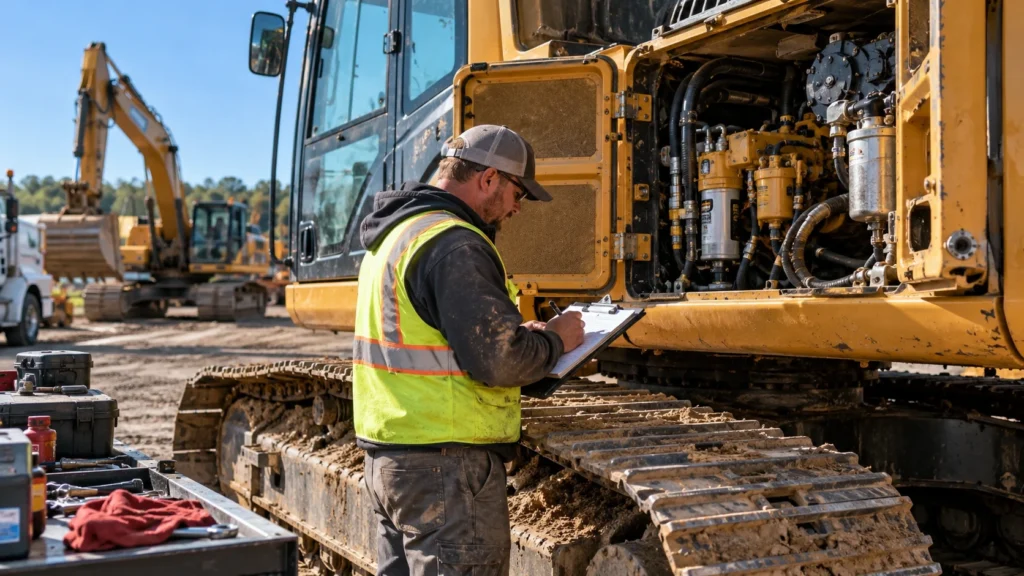
Mobile truck service brings repair capabilities directly to your vehicle’s location. Whether stranded on a highway shoulder or parked at your fleet terminal, mobile technicians arrive equipped with diagnostic tools, common replacement parts, and the expertise to handle most repairs on-site. This approach eliminates transportation logistics and gets vehicles operational faster.
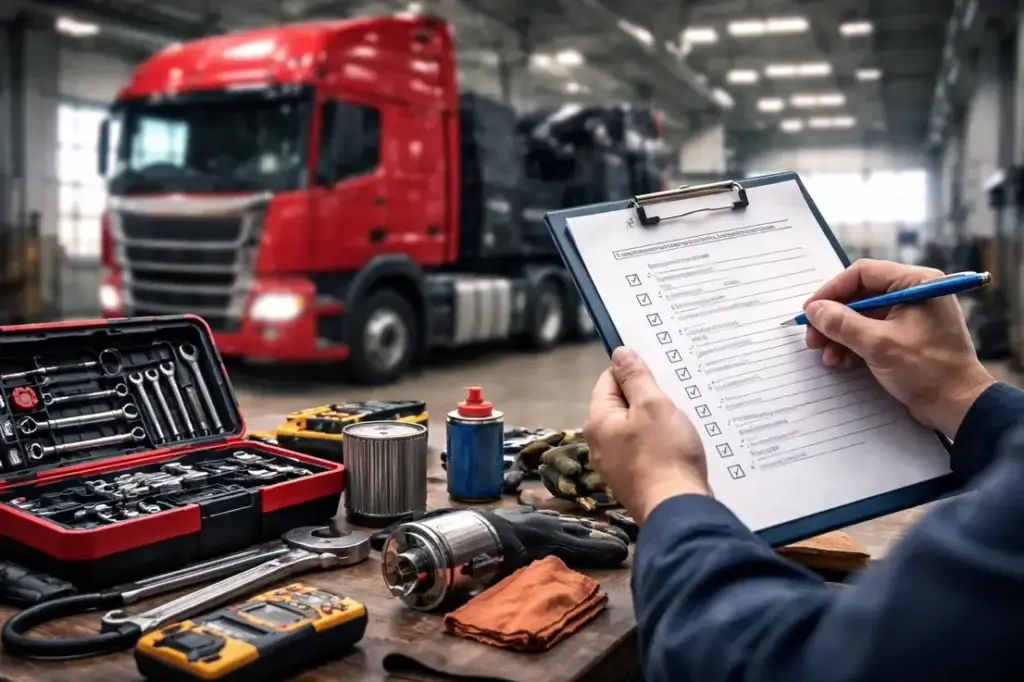
Shop repair provides a controlled environment with specialized equipment, heavy-duty lifts, and comprehensive parts inventories. Repair facilities offer resources that mobile units cannot replicate, making them essential for complex work requiring extensive disassembly, precision equipment, or climate-controlled conditions.

| Factor | Mobile Truck Service | Traditional Shop Repair |
|---|---|---|
| Response Time | 60-90 minutes typical | Hours to days (includes towing) |
| Repair Scope | 80-90% of common repairs | 100% including major overhauls |
| Equipment Available | Portable diagnostics, common parts | Heavy lifts, specialized tools |
| Best For | Emergency breakdowns, PM, minor repairs | Major overhauls, structural work |
| Hidden Costs | Higher hourly rate | Towing, downtime, driver wages |
Understanding these distinctions helps fleet managers deploy the appropriate service model for each situation. Strategic maintenance planning incorporates both approaches to maximize uptime while ensuring vehicles receive appropriate care based on repair requirements.
The Strategic Value of Mobile Truck Service for Fleet Operations
Fleet managers increasingly recognize mobile truck service as a critical component of operational efficiency rather than just roadside emergency support. The ability to bring repair capabilities directly to vehicles has redefined how commercial fleets approach maintenance scheduling and breakdown response.
Mobile service eliminates the traditional bottleneck of waiting for shop availability. Instead of trucks sitting idle in repair queues, on-site service allows fleets to maintain productivity while addressing mechanical issues. This approach proves particularly valuable for operations running on tight delivery schedules where every hour of downtime translates to lost revenue.
Evolution of On-Site Fleet Maintenance
Mobile truck repair has progressed significantly from basic roadside assistance to comprehensive maintenance solutions. Early mobile services focused primarily on tire changes and jump-starts. Today’s mobile units arrive equipped with advanced diagnostic tools and extensive parts inventories.
The industry transformation began as fleet operations demanded faster response times and more sophisticated repair capabilities. Mobile technicians now handle complex electrical diagnostics, brake system repairs, and preventive maintenance tasks that previously required shop visits.

How Mobile Units Reduce Operational Disruption
Mobile maintenance delivers measurable advantages in minimizing interruptions to fleet schedules. When breakdowns occur, dispatching a mobile unit eliminates towing costs and reduces total repair time. Vehicles remain at their current location rather than traveling to distant repair facilities.
The benefits extend beyond emergency situations. Mobile service eliminates travel time to and from repair shops while enabling simultaneous servicing of multiple vehicles at fleet terminals. Flexible scheduling during off-peak hours or overnight allows service when your operations are already paused. Reduced queue delays common at busy shop facilities keep your trucks productive.
Fleet management technology enables precise coordination between mobile units and dispatch operations. Real-time tracking systems identify the nearest available technician when problems arise, reducing response times and getting trucks back on the road faster.
Critical Advantages of Roadside Mobile Service
The competitive edge of roadside mobile service lies in its ability to transform breakdown scenarios into minor operational disruptions. Fleet managers who understand these strategic advantages can make informed decisions that protect revenue, maintain schedules, and control expenses.
Rapid Response During Critical Breakdowns
When a commercial vehicle experiences mechanical failure on the highway, every passing minute translates to lost revenue. Emergency breakdown service through mobile units typically arrives within 60 to 90 minutes of dispatch, depending on geographic location and traffic conditions.
Mobile technicians begin diagnosing issues immediately upon arrival. This on-site assessment eliminates the waiting period required for towing arrangements and subsequent shop intake procedures. Common roadside issues like flat tires, battery failures, fuel delivery problems, and coolant leaks often receive complete resolution during the initial service call.
Substantial Cost Avoidance Through Elimination of Towing
Towing expenses for commercial vehicles represent one of the most significant hidden costs in fleet management. A semi-truck tow can range from $500 for short distances to $3,000 or more for interstate transportation. These direct expenses multiply quickly across a fleet experiencing normal breakdown frequencies.


Towing cost savings extend beyond the immediate service fee. When mobile technicians resolve issues on-site, fleet managers avoid driver idle time while waiting for tow truck arrival, extended vehicle storage fees at towing facilities, and coordination costs for driver transportation.
$400-$700 per day
Average fleet vehicle downtime cost according to ATRI operational cost research
Protection of Driver Schedules and Customer Commitments
Driver productivity remains one of the most valuable yet vulnerable metrics in commercial transportation. Hours-of-service regulations under 49 CFR 395 create fixed windows for productive driving time. Every hour spent waiting for repairs represents irretrievable schedule capacity.
Roadside assistance protects these critical time assets. When technicians complete repairs on-site, drivers resume their routes with minimal disruption. This preservation of schedule integrity prevents cascading problems including missed delivery windows, detention charges, and compromised customer relationships.
When Shop Repairs Are Non-Negotiable
Not every truck repair can be performed roadside—some major truck repairs require the advanced equipment, controlled conditions, and extensive facilities that only a traditional shop offers. Fleet managers need to understand which situations absolutely demand shop-based service to make informed decisions.
Complete Engine and Transmission Work
Large-scale engine overhauls, complete transmission replacements, and differential rebuilds absolutely require shop facilities. These major truck repairs involve removing heavy components that weigh hundreds or thousands of pounds. A powertrain overhaul demands heavy-duty lifts, engine hoists, transmission jacks, and stable work platforms that mobile units cannot provide.
Shops feature controlled environments where technicians can work on complex internal components without weather interference. Complete engine rebuilds require precision measurement tools, torque specifications, and clean conditions to ensure proper assembly.

Advanced Diagnostic Technology
Certain troubleshooting procedures require specialized equipment available only at established repair facilities. Shops maintain advanced diagnostic computers with proprietary software for thorough system analysis essential for complex after-treatment system issues involving DPF, EGR, and SCR components.
Modern diesel engines feature intricate emissions systems governed by EPA regulations that require manufacturer-specific diagnostic protocols. Shop-based equipment can perform deep system scans, component-level testing, and calibration procedures that mobile diagnostic tools cannot replicate.
Structural and Fabrication Projects
Frame straightening, major welding projects, and structural modifications demand the safety equipment and stable platforms that only shops provide. These repairs involve high-heat processes, precise alignment procedures, and heavy fabrication work requiring permanently installed equipment.
The HDJ Perspective
The mobile-versus-shop debate misses the real opportunity. Fleet managers who view these as competing options leave efficiency gains on the table. The most successful operations we’ve observed treat mobile service as a strategic asset—not emergency backup—while maintaining strong shop relationships for complex work. Industry data consistently shows fleets achieving 15-20% cost reductions when they optimize their 30-40% mobile service mix rather than defaulting to shop visits for everything. The question isn’t which is better; it’s knowing when each delivers maximum value.
Prime Scenarios for Choosing Mobile Truck Service
Mobile truck service delivers maximum value in specific situations where time, location, or operational efficiency become the deciding factors. Understanding which circumstances benefit most from on-site repair versus shop visits allows fleet managers to optimize their maintenance approach.
Highway and Interstate Breakdowns
Highway breakdowns represent the most straightforward case for mobile service deployment. When vehicles become disabled on interstate corridors or rural routes, mobile technicians travel directly to the breakdown location, eliminating the logistical complexity and expense of commercial vehicle towing.
The service benefit increases proportionally with distance from repair facilities. A breakdown occurring 75 miles from the nearest qualified shop presents dramatically different cost implications for mobile versus traditional repair approaches. Mobile service transforms these scenarios from major operational disruptions into manageable service calls.

Scheduled Preventive Maintenance at Fleet Facilities
Proactive fleet managers leverage mobile service for scheduled maintenance at their own facilities. This approach transforms preventive maintenance from a logistical challenge into a streamlined operation where technicians come to your vehicles rather than vehicles traveling to technicians.
Terminal-based service enables simultaneous maintenance on multiple units. While one technician completes an oil change, another can perform brake inspections on adjacent vehicles. This parallel servicing maximizes technician efficiency and minimizes total fleet downtime for routine maintenance cycles.
DOT Compliance Inspections
Annual DOT inspections required under 49 CFR 396.17 represent an ideal application for mobile service. Rather than coordinating transportation for multiple vehicles to inspection stations, mobile technicians perform comprehensive inspections at your facility. This eliminates the scheduling complexity that often causes fleets to fall behind on compliance requirements.
Mobile Repair Services: What Technicians Handle On-Site
Modern mobile units deliver comprehensive repair capabilities that extend far beyond basic roadside assistance. Understanding this service scope helps fleet managers identify situations where mobile service can resolve issues completely versus those requiring shop-based follow-up.
Tire Service and Emergency Replacements
Mobile technicians provide complete tire solutions for highway and facility-based emergencies including flat repair, blowout response, and full tire replacement for single or dual wheel configurations. Technicians carry portable equipment to safely lift commercial vehicles and perform tire replacement under field conditions.

Electrical System and Battery Solutions
Electrical diagnostics represent a core competency for mobile technicians equipped with advanced scan tools. These professionals handle battery testing and replacement, alternator and starter service, and complex wiring repairs. Mobile units carry portable diagnostic equipment comparable to shop-based systems for sensor troubleshooting and ECM diagnostics.
Brake System Repairs and Adjustments
Comprehensive brake service remains one of the most requested mobile repair interventions. Technicians perform air brake adjustments, replace brake chambers, and service slack adjusters to restore proper braking function. These services ensure DOT compliance under 49 CFR 396.3 and vehicle safety without requiring shop visits.
Fluid Services, Filters, and Belts
Routine maintenance constitutes a significant portion of mobile service calls. Technicians handle fluid changes including engine oil, coolant system service, and transmission fluid when accessible. Filter replacement services cover fuel filters, air filters, and oil filters during scheduled maintenance intervals.
Free Professional Fleet Tools
Cost calculators, fault code lookup, maintenance planners, and more—built for owner-operators, fleet managers, and diesel techs. No signup required.
Building a Hybrid Fleet Maintenance Strategy
Developing a hybrid maintenance strategy requires systematic planning that leverages both mobile and shop service strengths. Many fleets achieve optimal performance by utilizing mobile services for regular preventive maintenance while visiting the shop for more complex tasks.
Effective maintenance planning demands clear protocols that guide decision-makers through service selection. Fleet managers who implement structured frameworks make faster, more cost-effective choices when equipment issues arise.
Categorizing Repairs by Service Type
A systematic classification framework separates maintenance needs into distinct categories based on repair complexity, required equipment, and time sensitivity. Routine services like oil changes, tire rotations, and fluid checks fall clearly into the mobile service category, while major overhauls require shop infrastructure.
Mid-complexity repairs demand situation-specific evaluation. Brake adjustments, battery replacements, and belt changes can often be handled by mobile units. However, when specialized diagnostic equipment or frame lifts become necessary, shop facilities provide the appropriate environment.
Creating Decision Matrices for Service Selection
Practical decision-making tools streamline service selection by incorporating multiple variables into quick-reference frameworks. These tools consider vehicle location, repair type, schedule constraints, driver availability, and cost implications simultaneously.
| Scenario | Mobile Service | Shop Repair | Key Factor |
|---|---|---|---|
| Highway breakdown | ✓ Recommended | Only if mobile fails | Towing cost avoidance |
| Engine overhaul | Not possible | ✓ Required | Equipment needs |
| Scheduled PM | ✓ Recommended | If combined with other work | Efficiency gains |
| Warranty repair | Usually not covered | ✓ Required | Authorization terms |
| Brake adjustment | ✓ Recommended | If major brake work needed | Repair complexity |
Selecting Quality Mobile Service Providers
Provider selection determines whether mobile service delivers promised benefits or creates additional complications. Fleet managers should verify ASE certifications specific to diesel engines, electrical systems, and brake systems. Manufacturer-specific training credentials demonstrate expertise with particular vehicle systems.
| Quality Indicator | Minimum Standard | Verification Method |
|---|---|---|
| Response Time | 90 minutes or less | Service Level Agreement |
| Technician Certification | ASE diesel certification | Credential documentation |
| Insurance Coverage | $1M liability minimum | Certificate of insurance |
| Parts Warranty | 12 months minimum | Written warranty policy |
Frequently Asked Questions
What types of repairs can mobile truck technicians perform on-site?
Mobile technicians handle approximately 80-90% of common commercial truck repairs in field conditions. This includes tire service and emergency replacements, electrical system diagnostics and battery solutions, brake system repairs and adjustments including air brake service, complete fluid services with filter and belt replacements, and diagnostic work using sophisticated portable scan tools. Modern mobile units carry advanced diagnostic equipment comparable to shop-based systems. However, mobile service has limitations for major powertrain overhauls, extensive structural repairs requiring welding, and specialized work demanding controlled environments with heavy lifting infrastructure.
Is mobile truck service more expensive than traditional shop repairs?
Mobile service typically carries higher per-hour labor rates with premiums of $250-$300 per incident compared to shop rates. However, when fleet managers calculate true total costs including downtime expenses ($400-$700 per day), towing fees ($500-$3,000 depending on distance), driver idle time wages, missed delivery windows, and detention charges, mobile service frequently proves more cost-effective for appropriate situations. The financial equation strongly favors mobile service for emergency breakdowns, time-critical repairs, and scenarios where rapid response prevents cascading operational disruptions.
When is shop repair absolutely necessary instead of mobile service?
Shop facilities become non-negotiable for major powertrain overhauls and rebuilds including complete engine rebuilds, transmission overhauls, and differential replacements that require controlled environments and heavy lifting equipment. Complex frame and structural repair work involving welding, frame straightening, or major body modifications demands specialized facilities. Certain diagnostic procedures requiring proprietary manufacturer equipment necessitate shop visits. Additionally, manufacturer warranty compliance, authorized recall work, and contractual service requirements often mandate repairs at certified shop facilities.
How quickly can mobile technicians respond to roadside breakdowns?
Reputable mobile service providers with established networks typically respond within 60-90 minutes for emergency breakdown calls in their primary coverage areas. Quality providers operate 24/7 since breakdowns occur at all hours. In contrast, traditional shop repair for roadside breakdowns involves coordinating towing services, transportation to the shop, queue waiting, and actual repair time—a cycle that routinely extends breakdown duration to a full day or longer compared to mobile service resolution within hours.
What certifications should I verify when selecting a mobile service provider?
Fleet managers should verify ASE certifications specific to diesel engines, electrical systems, and brake systems. Manufacturer-specific training credentials from major truck manufacturers demonstrate expertise with particular vehicle systems. Specialized certifications for air brake systems, emissions systems, and advanced diagnostics indicate technical competency. Additionally, verify appropriate insurance coverage, current business licenses, and documented proof of ongoing technician training. Reputable providers willingly share certification documentation while hesitation should raise concerns.
Choosing the Right Service Model for Your Fleet
Choosing between mobile truck service and shop repair isn’t about picking one option over another. It’s about building a fleet maintenance strategy that uses each service model where it delivers the greatest value. Your trucks need both approaches working together.
Mobile service excels when time matters most. Breakdowns on highways, urgent repairs between deliveries, and scheduled maintenance at your facility all benefit from on-site technicians. Shop visits remain essential for major overhauls, complex diagnostics, and specialized equipment work that mobile units cannot handle.
The real measure of success comes from service optimization. Create clear guidelines for when drivers should request mobile assistance versus bringing vehicles to your maintenance facility. Build relationships with qualified providers in both categories. Train your team to evaluate situations quickly and choose the most effective response.
Your fleet maintenance strategy should treat service selection as a competitive advantage. The right repair at the right time keeps trucks moving, schedules intact, and costs controlled. Evaluate your current approach against the frameworks presented here and identify opportunities to leverage mobile service more strategically while maintaining strong shop relationships for complex work.
Help Other Fleet Managers Optimize Their Maintenance Strategies
If this comprehensive guide helped you make better decisions about mobile service and shop repair, share it with your network. Fleet managers nationwide benefit from practical insights on reducing downtime and controlling maintenance costs.