

By Michael Nielsen, Editor & Publisher | 15+ Years in Diesel Repair
Last Updated: December 2025
📖 Estimated reading time: 22 minutes
The owner operator salary question produces wildly different answers depending on whether you’re looking at gross revenue or what actually hits your bank account. Most independent truckers generate gross revenues between $180,000 and $350,000 annually, but those numbers tell only half the story. After fuel, truck payments, insurance, maintenance, and regulatory fees, the typical owner operator takes home between $60,000 and $120,000 per year.
Understanding trucking income requires separating the impressive top-line figures from the reality of operating costs. The American Transportation Research Institute’s 2025 analysis found the industry’s average cost of operating a truck reached $2.260 per mile in 2024, with non-fuel operating costs hitting record highs. This expense burden explains why experienced operators earning $250,000 in gross revenue might net only $80,000 after covering all business obligations.
This guide breaks down realistic income expectations for 2025, examines the expense categories that determine profitability, and provides actionable strategies for maximizing what you actually keep from each load.
Key Takeaways
- Gross revenue ranges widely: Owner operators typically gross $180,000-$350,000 annually, with solo van operators averaging $180,000-$250,000 and team operations reaching $320,000-$430,000.
- Net income reality: After all operating expenses, most operators take home $60,000-$120,000, with struggling operations netting as little as $35,000-$50,000.
- Operating costs consume 60-80% of revenue: ATRI data shows average operating costs of $2.260 per mile, meaning an operator grossing $2.50/mile keeps only $0.24/mile before taxes.
- Fuel remains the largest expense: Most operators spend $45,000-$75,000 annually on fuel, representing 25-35% of gross revenue.
- Authority type significantly impacts earnings: Independent operators with their own MC number can earn 20-40% more gross revenue than leased operators, though with higher risk and administrative burden.
- Specialized freight pays premiums: Tanker, refrigerated, and flatbed operations command 15-30% higher rates than standard dry van freight.
Owner Operator Income Overview for 2025
The financial reality for owner operators in today’s trucking environment depends on numerous variables that directly impact both gross revenue and net profit. Understanding owner operator earnings requires examining current market conditions, operational models, and geographic factors that shape realistic income benchmarks.

The trucking industry continues experiencing significant fluctuations in freight demand and capacity throughout 2024 and into 2025. Market conditions have created a challenging environment where industry salary trends reflect both opportunities and obstacles for independent operators.
Freight rates have stabilized after the volatility seen in previous years, though they remain below the peak levels experienced during supply chain disruptions. The current rate environment means owner operators must operate more efficiently to maintain profitability. Capacity has loosened in many markets, creating increased competition for available loads.
Regulatory changes continue shaping the operational landscape. Electronic logging device compliance, insurance requirements, and environmental regulations all contribute to the cost structure that impacts trucking income potential. These factors make strategic planning and efficient operations more important than ever.
$2.260 per mile
Average cost to operate a truck in 2024, according to ATRI’s 2025 Operational Costs of Trucking report
Average Annual Income Range by Operating Model
Owner operator earnings vary significantly based on operational model and business structure. According to ZipRecruiter salary data, owner operator truck drivers average $4,395 per week nationally, translating to approximately $228,575 in annual gross revenue. Leased owner operators typically gross between $180,000 and $250,000 per year, while independent owner operators with their own authority can achieve gross revenues of $220,000 to $350,000 or more annually.
These gross figures represent total revenue before any expenses are deducted. The critical metric for financial success is net income, which typically falls between $60,000 and $120,000 after accounting for all operational expenses, loan payments, and taxes.
Specific operational models produce different revenue potentials. Van truckload solo owner operators working with carriers like Schneider can generate $180,000 to $250,000 in annual revenue. Team operations significantly increase earning capacity, with teams generating between $320,000 and $430,000 annually.
| Operational Model | Gross Annual Revenue | Typical Net Income | Key Characteristics |
|---|---|---|---|
| Leased Owner Operator | $180,000-$250,000 | $60,000-$85,000 | Working under carrier authority with support services |
| Independent Authority | $220,000-$350,000+ | $80,000-$120,000+ | Operating with own MC number, finding own freight |
| Van Solo Operations | $180,000-$250,000 | $65,000-$90,000 | Single driver in dry van freight segment |
| Team Operations | $320,000-$430,000 | $140,000-$200,000 | Two drivers maximizing truck utilization |
Specialized freight segments offer different income profiles. Tanker operators can generate between $190,000 and $285,000 in gross revenue annually, benefiting from specialized endorsements and typically higher per-mile rates. Port drayage operations, while requiring less over-the-road time, generally produce $150,000 to $250,000 in annual gross revenue.
Regional Income Variations Across the United States
Geographic location creates substantial differences in earning potential for owner operators across the United States. Regional freight density, fuel costs, toll expenses, and local market conditions all contribute to these income disparities.
High-volume freight corridors such as the Northeast region, California, Texas, and the Midwest industrial zones typically offer more consistent load availability and competitive rates. Owner operators based in or regularly serving these markets often achieve higher gross revenues due to abundant freight options and reduced deadhead miles.
However, operating in these high-demand regions comes with increased costs. Fuel prices in California and the Northeast run significantly higher than national averages. Toll roads in states like New Jersey, New York, and Pennsylvania add thousands of dollars annually to operating expenses. These cost factors can offset the revenue advantages of working in high-freight areas.
State-level regulations also impact profitability by region. California’s stringent emissions requirements, for example, may necessitate newer equipment or modifications that increase capital costs for operators serving that market regularly.
Gross Revenue: What Owner Operators Earn Before Expenses
The revenue landscape for owner operators presents a complex picture that varies significantly based on operational choices and market conditions. Understanding trucking business revenue at the gross level provides essential insight into earning potential before operating costs reduce take-home pay.
Typical gross income ranges span from $150,000 to $250,000 annually for most operators. Those running under independent authority with direct shipper relationships can push earnings toward $350,000 or higher. These figures represent total revenue generation before any business expenses are deducted, making them the starting point for profitability analysis.
Average Revenue Per Mile Rates
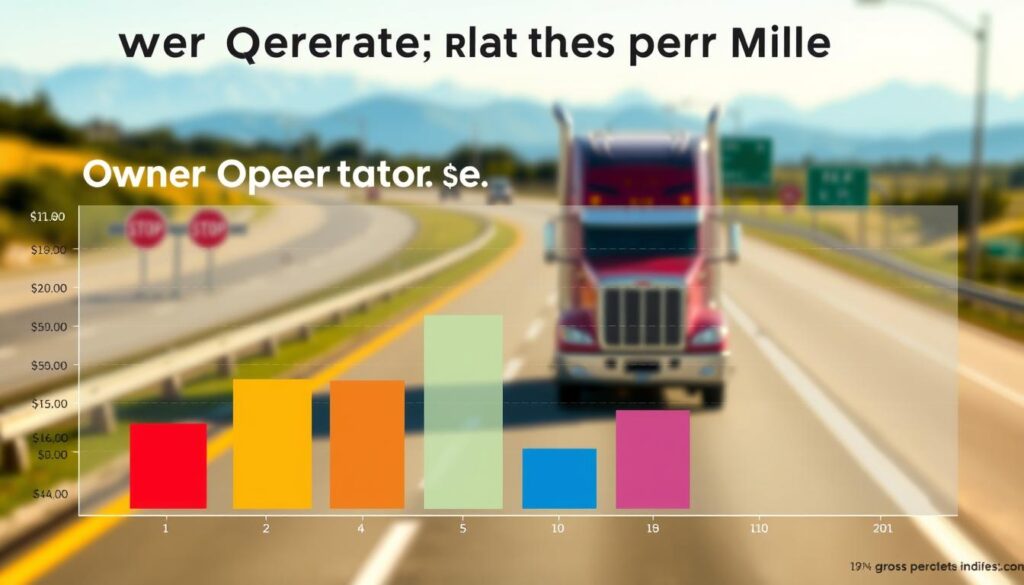
Current owner operator rates fluctuate based on equipment type, freight category, and market demand cycles. Standard dry van operations typically command rates between $1.50 and $2.50 per mile in most markets. Specialized equipment and freight types push these figures higher, with refrigerated loads averaging $2.00 to $3.00 per mile.
The revenue per mile calculation includes all-miles compensation in most scenarios. This means operators receive payment for both loaded and empty miles, though deadhead miles typically pay reduced rates or nothing at all. Minimizing unpaid miles becomes crucial for maximizing gross revenue.
Seasonal fluctuations create rate variations throughout the year. Peak shipping seasons from September through November often see rates increase 15-25% above baseline levels. Conversely, slower periods in January and February can depress rates significantly, requiring operators to adjust expectations and strategies.
Premium rates apply to specialized hauling situations. Hazardous materials certification typically adds $0.30-$0.60 per mile, while oversized or overweight permits command $3.00-$5.00+ per mile. Time-sensitive expedited freight pays $2.50-$4.00 per mile, and team operations typically earn 15-20% above solo rates.
Annual Gross Income Projections
Annual trucking business revenue projections require realistic mileage assumptions and rate expectations. Most owner operators log between 100,000 and 130,000 miles annually, with variations based on operational model and personal preferences. Multiplying these miles by average rates secured provides gross income estimates.
A typical scenario involves an operator running 110,000 miles at an average rate of $2.00 per mile, generating $220,000 in gross revenue. This middle-range example reflects standard dry van operations with mixed contract and spot market freight. Actual figures vary based on numerous operational factors.
Higher-earning operators achieve elevated gross income through strategic approaches: securing direct shipper contracts that eliminate broker margins, specializing in higher-paying freight categories, maximizing loaded miles while minimizing deadhead, operating in high-demand freight lanes with premium rates, and maintaining consistent availability during peak shipping periods.
Contract vs Spot Market Rates
Contract freight arrangements provide revenue stability through agreed-upon rates for specified periods. These relationships with direct shippers or dedicated carrier partnerships establish consistent trucking business revenue with predictable payment terms. Contract rates typically range 10-15% below peak spot market pricing but offer protection during market downturns.
Spot market loads secured through freight brokers and load boards fluctuate with real-time supply and demand. Rates rise sharply when capacity tightens, potentially exceeding contract rates by 30-50% during peak periods. However, spot markets also experience significant rate compression during slower shipping cycles, creating income volatility.
Experienced operators balance both approaches strategically. Maintaining 60-70% contract freight provides baseline revenue stability while reserving capacity for opportunistic spot market loads during rate surges. This mixed strategy optimizes owner operator rates across varying market conditions.
Stay Ahead of Market Changes
Get weekly insights on freight rates, fuel costs, and regulatory changes that impact your bottom line. Join thousands of owner operators who rely on HDJ for actionable industry intelligence.
Operating Expenses: The Reality of Trucking Costs
Trucking operating costs consume between 60% and 80% of gross revenue, making expense management essential for profitability. Understanding where your money goes each month separates successful owner operators from those who struggle financially. The difference between gross income and actual take-home pay often surprises new independent truckers.
Owner operator expenses fall into fixed and variable categories. Fixed costs remain relatively constant regardless of miles driven, while variable expenses fluctuate with activity levels. Managing both types effectively determines your ultimate profit margin and business sustainability.

Fuel Costs and Consumption
Fuel represents the single largest variable expense for most owner operators, typically accounting for 25% to 35% of gross revenue. Current diesel prices and fuel efficiency directly impact your bottom line every day you operate.
Average fuel expenses range from $0.60 to $0.80 per mile. For operators running 100,000 miles annually, this translates to $60,000 to $80,000 in fuel costs alone. Some operators in lower-mileage operations spend $45,000, while high-mileage drivers can exceed $75,000 annually.
Fuel consumption varies significantly based on several factors. Truck model and engine type determine baseline efficiency. Driving habits including speed management and excessive idling can increase fuel costs by 15% to 25%. Route selection also influences fuel expenses substantially—highway miles deliver better fuel economy than stop-and-go urban driving.
Truck Payments and Equipment Financing
Truck ownership costs represent a substantial fixed expense that continues regardless of revenue fluctuations. Monthly truck payments typically range from $1,500 to $2,500, creating an annual expense of $18,000 to $30,000. This cost significantly impacts cash flow for both new and established operators.
Financing terms vary based on creditworthiness and down payment amounts. Most truck loans span five to seven years with interest rates between 5% and 12%. New trucks require larger monthly payments but offer warranty protection, while used equipment carries lower payments but potentially higher maintenance costs.
Lease-to-own arrangements provide alternative financing options. These programs typically require lower upfront costs but may include higher total expenses over the contract term. Understanding the full cost of equipment acquisition remains critical for financial planning.
Insurance Premiums and Coverage Requirements
Insurance represents a mandatory expense category with significant cost variations. Total insurance premiums range from $5,000 to $15,000 annually depending on coverage types, cargo hauled, and driving history. For operators running under their own authority, insurance costs can reach $15,000 to $30,000 annually due to the higher liability coverage required.
Primary liability insurance provides coverage for damage to other vehicles and property. Federal regulations mandate minimum coverage of $750,000 for most freight operations, though many brokers and shippers require $1 million as a condition of doing business. Annual liability premiums typically range from $4,000 to $10,000, with factors including operating authority status, driving record, years of experience, and geographic operating area affecting costs.
Physical damage insurance protects your truck investment against collision and comprehensive losses, typically costing $3,000 to $8,000 annually based on truck value and chosen deductibles. Cargo insurance covers freight being transported against damage or loss, with annual premiums ranging from $1,000 to $4,000 depending on commodity types and coverage limits.
⚠️ Insurance Warning
Operating without adequate physical damage coverage creates substantial financial risk. A total loss accident without insurance could eliminate your business overnight. Clean driving records significantly reduce liability costs, while a single accident can increase premiums by 20% to 40% for multiple years.
Maintenance and Repair Expenses
Maintenance and repair expenses constitute a significant variable cost category for truck ownership. Annual maintenance costs typically range from $10,000 to $20,000, reflecting differences in truck age, operating conditions, and preventive maintenance practices.
Routine maintenance includes regular oil changes, tire replacements, brake service, and DOT inspections. These predictable expenses cost approximately $5,000 to $8,000 annually. Tire replacement alone can exceed $3,000 per year for high-mileage operations.
Unexpected repairs create financial stress for many owner operators. Engine failures, transmission problems, and major component breakdowns can cost $5,000 to $15,000 per incident. Older trucks require substantially more repair investment than newer equipment under warranty. Establishing a maintenance reserve fund helps manage irregular repair costs—many successful operators budget 10% to 15% of gross revenue for combined maintenance and repair expenses.
Permits, Licenses, and Regulatory Fees
Regulatory compliance creates ongoing administrative costs that accumulate throughout the year. These owner operator expenses typically total $1,500 to $3,000 annually, though many new operators underestimate these requirements when calculating operational budgets.
International Fuel Tax Agreement (IFTA) permits allow interstate fuel tax reporting, with registration costs of approximately $10 to $50 annually per jurisdiction. Unified Carrier Registration (UCR) fees vary by fleet size, with owner operators typically paying $76 to $100 annually. Heavy Vehicle Use Tax (HVUT) adds another $100 to $550 per year based on truck weight.
Electronic Logging Device compliance represents a newer expense category. Monthly ELD service fees range from $20 to $50, totaling $240 to $600 annually. This technology investment ensures Hours of Service compliance and avoids violation penalties.
Tolls represent another often-overlooked expense. Operators running northeastern corridors or utilizing toll roads regularly spend $1,000 to $3,000 annually on tolls. Some routes require strategic planning to balance toll costs against fuel savings from highway efficiency.
| Expense Category | Annual Cost Range | % of Gross Revenue | Type |
|---|---|---|---|
| Fuel Costs | $45,000-$75,000 | 25%-35% | Variable |
| Truck Payments | $18,000-$30,000 | 10%-18% | Fixed |
| Insurance Premiums | $5,000-$30,000 | 3%-15% | Fixed |
| Maintenance & Repairs | $10,000-$20,000 | 6%-12% | Variable |
| Permits & Regulatory Fees | $1,500-$3,000 | 1%-2% | Fixed |
How Much Do Owner Operators Actually Take Home?
Most aspiring owner operators focus on gross revenue, but owner operator take home pay determines actual business success. The difference between what you earn and what you keep represents the true measure of profitability in the trucking business.
The reality of net income trucking reveals a wide earnings spectrum. After deducting all operating expenses, owner operators typically net between $45,000 and $85,000 annually. However, experienced operators running efficient operations can achieve net incomes ranging from $60,000 to $120,000 or more in favorable market conditions.

Real-World Earnings Calculations
Examining detailed scenarios demonstrates how gross revenue transforms into actual trucking profit after expenses. These calculations reveal the financial realities that every owner operator must understand before making significant business decisions.
Consider a leased operator working under a carrier’s authority generating $200,000 in annual gross revenue through consistent freight opportunities. Total operating expenses including fuel, truck payments, insurance, maintenance, and lease fees reach approximately $109,000 annually. This leaves $91,000 before taxes. With self-employment and income taxes consuming approximately 25%, the final take-home pay reaches $68,250.
Independent operators running under their own authority face different financial structures. An independent operator earning $270,000 in gross revenue pays approximately $137,000 in total expenses, including higher insurance costs and additional administrative requirements. This produces net income before taxes of $133,000. With combined taxes at approximately 28%, the final take-home pay reaches $95,760.
Tax obligations significantly impact final earnings. Owner operators pay self-employment taxes covering Social Security and Medicare contributions, plus federal and state income taxes. Combined tax burdens typically consume 20% to 30% of net income before taxes, depending on total earnings and deductions claimed.
Realistic Take-Home Income Ranges
Understanding where most owner operators actually land financially provides essential context for income expectations. The owner operator take home pay spectrum varies considerably based on multiple performance factors and operational choices.
Entry-level or struggling operations may net only $35,000 to $50,000 annually after expenses and taxes. These operators often face inefficient routes, lower-paying freight, or excessive downtime that erodes profitability. Equipment problems and inexperience with cost management further reduce take-home earnings.
Average performers typically achieve annual net incomes between $55,000 and $75,000. These operators maintain steady freight, manage expenses reasonably well, and avoid major equipment failures. They represent the middle range of owner operator earnings across the industry.
High-performing operators consistently net $80,000 to $120,000 or more annually. These professionals optimize every aspect of their business, from fuel efficiency to freight selection. They maintain strong relationships with shippers and brokers while minimizing unnecessary expenses through strategic planning.
Sustainable Profit Margin Targets
Healthy profit margins serve as critical indicators of business sustainability and long-term viability. Industry standards suggest owner operators should target profit margins between 20% and 40% of gross revenue after expenses but before taxes. These margins provide sufficient cushion for unexpected expenses, equipment replacement reserves, and reasonable compensation for business ownership risks.
Profit margins below 20% indicate potential operational problems. Low margins leave insufficient buffer for emergencies, equipment failures, or market downturns. Operators consistently achieving margins under 15% should carefully evaluate whether continued operation makes financial sense or if significant changes are necessary.
Seasonal variations create margin fluctuations throughout the year. Peak shipping seasons may deliver margins above 40%, while slower periods might compress margins to 15% or 20%. Successful operators average their performance across the entire year rather than focusing on individual periods.
The HDJ Perspective
The owner operator income conversation has shifted dramatically in the past two years. With ATRI reporting record-high non-fuel operating costs at $1.779 per mile in 2024 and freight rates still recovering from the post-pandemic correction, the squeeze on profit margins is real. What separates operators who are thriving from those barely surviving often comes down to three things: direct shipper relationships that bypass broker fees, preventive maintenance programs that avoid catastrophic repair bills, and the discipline to walk away from loads that don’t cover true operating costs. The operators who built relationships during the boom times are weathering this downturn far better than those who relied solely on spot market loads.
Factors That Impact Owner Operator Earnings
The difference between struggling and thriving as an owner operator often comes down to strategic decisions across several key business areas. Two operators with identical equipment can achieve vastly different profitability levels based on how they manage the profit factors within their control.

Miles Driven and Route Selection
Annual mileage directly impacts your revenue potential as an owner operator. Most successful operators drive between 100,000 and 130,000 miles annually, with this range representing the sweet spot between maximizing income and maintaining sustainable work-life balance. FMCSA Hours of Service regulations limit drivers to 11 hours of driving within a 14-hour on-duty window, effectively capping maximum annual mileage potential.
Route selection affects your bottom line through multiple channels beyond simple distance. Strategic route planning considers fuel costs across different states, toll expenses on various corridors, and positioning for subsequent loads. Operators who plan routes that minimize deadhead miles typically see 10-20% fewer unpaid miles compared to those who accept loads without considering their next opportunity.
Smart route selection positions you in high-demand freight areas rather than leaving you stranded in markets with limited outbound options. The difference between ending a delivery in a freight-rich area versus a low-volume market can mean the difference between immediate reload and several days of searching for the next load.
Freight Type and Specialization
Equipment specialization and cargo type dramatically affect both your revenue and operating expenses. Specialized freight including refrigerated goods, flatbed materials, tanker products, and hazardous materials typically commands premium rates that can increase freight hauling income by 15-30% compared to standard dry van operations.
However, these premium rates come with corresponding cost increases. Refrigerated trailers demand additional maintenance for temperature control systems and consume more fuel to power refrigeration units. Hazmat transportation requires additional certifications, more stringent insurance coverage, and compliance with extensive regulatory requirements.
The key consideration involves matching specialization with consistent freight availability. Operating specialized equipment in regions or lanes where that freight type remains abundant maximizes the revenue advantage. Conversely, specialized equipment in markets with limited matching freight opportunities can leave you accepting general freight at standard rates while carrying higher operating costs.
Operating Authority: Leased vs Independent
Your business structure decision between leasing to a carrier or operating independently under your own authority fundamentally shapes your income potential and expense profile. This choice affects everything from gross revenue to daily operational complexity.
Leasing your services to an established carrier provides access to their freight network, insurance coverage, and administrative support. These arrangements typically offer percentage-based compensation ranging from 70-85% of the load revenue, or flat-rate per-mile payments. While this structure may limit your gross revenue compared to independent operation, it significantly reduces business complexity.
Operating independently under your own authority offers substantially higher revenue potential by eliminating the carrier’s percentage. Independent operators typically keep 100% of negotiated load rates, creating opportunities for significantly higher gross income. However, this increased revenue potential comes with corresponding increases in expenses, responsibilities, and business risk.
Independent operators must secure their own freight through direct shipper relationships or load boards, manage all compliance requirements personally, and handle every aspect of business operations. This includes obtaining your own insurance coverage (typically $15,000-$30,000 annually for operators with their own authority), filing quarterly taxes, managing permit requirements across multiple jurisdictions, and building credibility with brokers and shippers.
Owner Operator Income vs Company Driver Salary
The financial landscape separating owner operators from company drivers encompasses not just earnings potential but also risk exposure, business responsibilities, and lifestyle implications. This comparison requires examining both the visible compensation elements and the hidden costs that determine actual financial outcomes.

Company drivers typically earn between $45,000 and $75,000 annually depending on experience, freight type, and employer. The Bureau of Labor Statistics reports the median annual wage for heavy and tractor-trailer truck drivers was $57,440 in May 2024, with the lowest 10 percent earning less than $38,640 and the highest 10 percent earning more than $78,800. Entry-level company drivers start around $40,000 to $50,000, while experienced drivers with major carriers can reach $65,000 to $75,000 or higher.
The independent trucker salary comparison must account for comprehensive benefits packages that company drivers receive. These packages include employer-paid health insurance worth $8,000 to $15,000 annually, retirement contributions of 3% to 6% of salary, and paid time off valued at $3,000 to $6,000 per year. Company drivers also receive guaranteed compensation for all working time, including detention pay, breakdown time, and waiting periods.
Comparing company driver vs owner operator earnings requires examining total compensation against net business income. Owner operators may gross $180,000 to $350,000 annually, but after deducting $120,000 to $230,000 in operating expenses, their net income ranges from $60,000 to $120,000. When accounting for unpaid time managing their business, their effective hourly rate may actually fall below what company drivers earn with full benefits.
| Compensation Element | Company Driver | Owner Operator | Advantage |
|---|---|---|---|
| Annual Base Income | $55,000-$75,000 | $60,000-$120,000 net | Owner operator potential |
| Health Benefits Value | $8,000-$15,000 | $0 (self-purchased) | Company driver |
| Retirement Contributions | $1,650-$4,500 | $0 (self-funded) | Company driver |
| Income Stability | Guaranteed weekly pay | Variable monthly income | Company driver |
| Maximum Earning Potential | Capped by employer | Unlimited | Owner operator |
The fundamental trade-off centers on exchanging security for opportunity. Owner operators assume substantial financial risks including equipment breakdowns, market downturns, and income volatility in exchange for higher earning potential and business independence. Company drivers sacrifice potential maximum earnings for guaranteed compensation, comprehensive benefits, and freedom from business management responsibilities.
Income by Trucking Sector and Equipment Type
Your trucking profit margins vary significantly based on the freight sector and equipment you operate. The equipment type you choose creates distinct revenue patterns, expense structures, and ultimately determines your bottom-line profitability.
Dry Van Operations
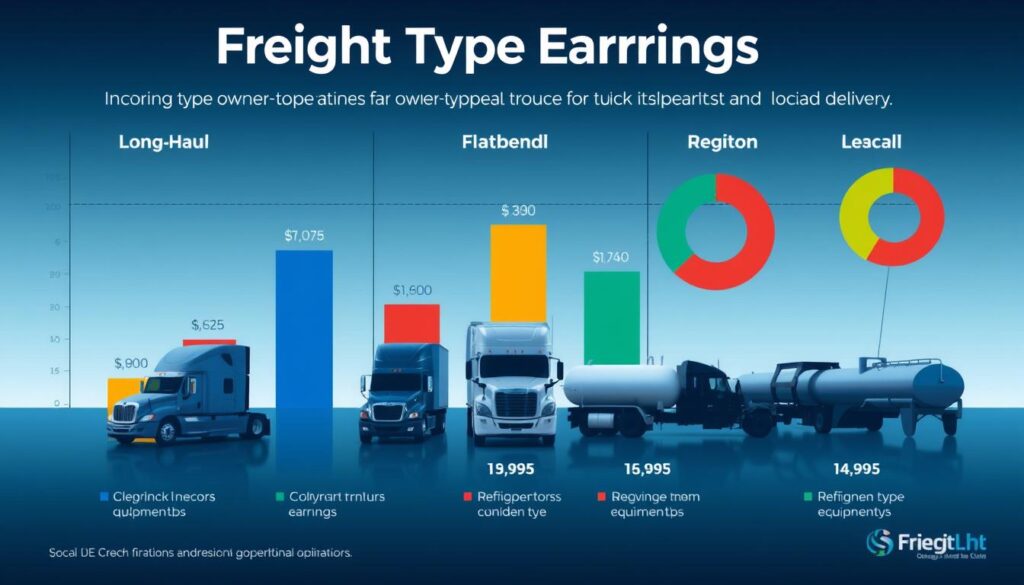
Dry van operations represent the most common entry point for owner operators in the trucking industry. Van truckload solo owner operators can generate $180,000-$250,000 in annual revenue, while team operations reach $320,000-$430,000 annually. These figures reflect gross revenue before operating expenses are deducted.
The dry van sector offers consistent freight availability across most regions. You’ll find loads in virtually every market, which provides operational flexibility and reduces deadhead miles. However, this accessibility creates intense competition that puts downward pressure on rates. Net income expectations for dry van operators generally fall between $45,000-$85,000 annually after all expenses.
Temperature-Controlled Freight
Refrigerated freight operations command premium rates due to specialized equipment requirements and cargo sensitivity. Owner operators in this sector typically earn 15-25% more per mile compared to dry van rates. However, refrigerated trailers demand additional maintenance for temperature control systems and consume more fuel to power refrigeration units.
Time-sensitive delivery requirements create both opportunities and challenges. Perishable goods demand strict adherence to delivery windows, which can limit your flexibility. Specialized hauling income in the refrigerated sector typically results in net annual earnings of $55,000-$95,000 after expenses.
Flatbed and Specialized Equipment
Flatbed and specialized hauling operations offer distinct advantages for owner operators with specific skills and equipment. This sector includes construction materials, machinery, steel products, and oversized loads that require expert securement and handling knowledge. Revenue potential in flatbed operations typically exceeds standard dry van rates by 20-35% per mile.
Seasonal fluctuations affect flatbed freight more dramatically than other sectors. Construction activity drives significant demand during warmer months, while winter can bring slower periods in northern regions. Planning for these seasonal income variations becomes essential for financial stability throughout the year.
Tanker and Hazardous Materials Transportation
Tanker operations, particularly those involving hazardous materials, represent the highest-paying sector for many owner operators. Tanker owner operators can generate $190,000-$285,000 in annual gross revenue, reflecting the premium rates commanded by this specialized sector. The limited pool of qualified drivers and strict safety requirements create favorable market dynamics.
Insurance costs rise substantially for tanker operations, especially when hauling hazardous materials. Your premiums may run 40-60% higher than dry van operations due to increased liability exposure. Net income for successful tanker owner operators typically ranges from $65,000-$110,000 annually.
Share Your Owner Operator Experience
Are you an experienced owner operator with insights on building profitable operations? Heavy Duty Journal welcomes contributions from industry professionals who can help fellow truckers succeed.
Maximizing Your Owner Operator Profit
Building a profitable owner operator business means implementing proven strategies that target both sides of your financial equation. Revenue enhancement and expense control work together to create sustainable income growth. Small improvements across multiple areas compound into significant profit increases over time.
Reducing Operating Costs Strategically
Trucking cost reduction starts with analyzing every expense category for potential savings without compromising safety or service quality. Insurance premiums represent a major controllable cost that responds to strategic management. Clean driving records, comparison shopping across multiple carriers, and bundling policies can reduce insurance expenses by 15 to 25 percent annually.
Preventive maintenance programs deliver substantial long-term savings by avoiding expensive emergency repairs. Regular oil changes, tire rotations, and system inspections cost far less than breakdowns that sideline your truck. Maintenance records also preserve resale value and reduce the likelihood of costly DOT violations.
Strategic fuel purchasing extends beyond finding the lowest pump price. Tax-advantaged fueling locations, bulk discount programs, and optimized fuel card selection combine to reduce your largest expense category. Planning fuel stops to avoid expensive urban stations and taking advantage of state tax variations adds hundreds of dollars monthly to your net income.
Finding Higher Paying Freight
Revenue per mile improvements have a more dramatic impact on profitability than equivalent cost reductions. Direct relationships with shippers eliminate broker margins, potentially increasing your compensation by 15 to 30 percent for identical loads. Building these connections requires consistent reliability, professional communication, and willingness to accommodate shipper scheduling needs.
Specialization in higher-paying freight types commands premium rates. Temperature-controlled, hazmat, oversized, and time-sensitive loads pay substantially more than standard dry van freight. The additional certification and equipment costs often pay for themselves within months through increased revenue.
Using multiple freight sources creates competitive leverage for rate negotiations. Load boards, broker networks, freight matching apps, and direct shipper contracts provide options that prevent dependence on any single source. Comparing opportunities across platforms ensures you select the most profitable available freight.
Tax Deductions and Financial Planning
Maximizing trucking profits requires expert management of tax deductions that legally reduce your taxable income. Owner operators qualify for extensive deductions that company drivers cannot claim. The IRS per diem rate for transportation workers effective October 1, 2024, is $80 per full day within the continental United States, allowing self-employed truckers to deduct 80% of this amount for each day away from home overnight.
Major tax deduction categories include fuel and oil expenses, all maintenance and repairs, depreciation on equipment, insurance premiums, permits and licenses, meals through per diem deductions, communication equipment, and home office expenses if you maintain a dedicated business space.
Meticulous record-keeping separates successful owner operators from those who miss valuable deductions. Trucking-specific accounting software tracks every expense and mile automatically. Digital receipt capture and categorization simplify tax preparation while maximizing deductible amounts.
Quarterly estimated tax payments prevent penalties and cash flow surprises. The IRS requires self-employed individuals to pay taxes throughout the year rather than annually. Working with a trucking-specialized accountant ensures accurate payment amounts and optimal deduction strategies.
Long-term financial planning extends beyond immediate income considerations. Emergency funds covering three to six months of expenses provide security during slow periods or unexpected repairs. Retirement savings through SEP-IRAs or Solo 401(k)s offer tax advantages while building future financial security. Equipment replacement reserves ensure you can upgrade or replace your truck without devastating your cash position.
Frequently Asked Questions
How much do owner operators actually make after all expenses?
Most owner operators take home between $60,000 and $120,000 annually after all operating expenses are deducted. This represents a significant reduction from gross revenues that typically range from $180,000 to $350,000. The wide variance in net income depends on operational efficiency, freight type, operating authority structure, and expense management. Struggling operators may net only $35,000-$50,000, while high performers consistently achieve $80,000-$120,000 or more through strategic cost control and premium freight relationships.
What percentage of gross revenue goes to operating expenses?
Operating expenses typically consume 60% to 80% of gross revenue for owner operators. According to ATRI’s 2025 analysis, the average cost to operate a truck reached $2.260 per mile in 2024. For an operator earning $2.50 per mile in freight revenue, this leaves only $0.24 per mile before taxes. The largest expense categories include fuel (25-35% of gross), truck payments (10-18%), insurance (3-15%), and maintenance (6-12%). Operators running under their own authority face higher insurance costs that can push total expenses toward the upper end of this range.
Is it better to lease to a carrier or run under your own authority?
The choice depends on your business skills, risk tolerance, and financial resources. Leased owner operators typically gross 20-40% less than independent operators but enjoy lower administrative burden, carrier-provided insurance, and consistent freight access. Independent operators with their own MC number keep 100% of negotiated rates but must handle all compliance, insurance ($15,000-$30,000 annually), and freight acquisition. New operators often start leased to learn the business before transitioning to independent authority once they’ve built shipper relationships and financial reserves.
What are the highest-paying trucking sectors for owner operators?
Tanker operations, particularly hazardous materials transportation, typically offer the highest earning potential with gross revenues of $190,000-$285,000 annually. Refrigerated and flatbed operations command 15-35% premium rates over standard dry van freight. However, these specialized sectors require additional certifications, equipment investments, and higher insurance costs. The net income advantage depends on maintaining consistent specialized freight rather than running general cargo with expensive specialized equipment. Team operations in any sector can gross $320,000-$430,000 annually by maximizing truck utilization.
How many miles can an owner operator drive per year?
Most successful owner operators drive between 100,000 and 130,000 miles annually. Federal Hours of Service regulations limit drivers to 11 hours of driving within a 14-hour on-duty window, with mandatory 10-hour off-duty periods. These regulations effectively cap maximum annual mileage regardless of how much an operator wants to run. Solo operators typically average 2,000-2,500 miles weekly, while team operations can cover 4,000-5,000 miles weekly by driving in shifts. The key to income isn’t maximum miles but maximizing revenue per mile through strategic freight selection and minimizing deadhead.
Building a Sustainable Owner Operator Business
This owner operator salary analysis reveals a complex financial picture where gross revenue tells only part of the story. While independent truckers can generate impressive top-line numbers of $180,000 to $350,000 annually, the reality is that 60-80% of that revenue goes directly to operating expenses. What remains—typically $60,000 to $120,000 for successful operators—represents the true measure of this career path’s financial viability.
Success as an owner operator demands more than excellent driving skills. You’re running a business, which means tracking every expense, negotiating rates, managing cash flow, and maintaining equipment. The operators who consistently achieve higher net incomes combine operational efficiency with strong business relationships and disciplined financial management.
The path offers genuine rewards for the right individuals. You gain control over your routes, schedules, and business decisions. Financial success comes to those who minimize deadhead miles, control operating costs, and build direct shipper relationships. Evaluate your readiness honestly: the financial cushion to weather slow periods, tolerance for irregular income, and preparation to manage complex tax obligations will determine whether this career path aligns with your circumstances and goals.
Help Fellow Owner Operators Succeed
Know another owner operator who could benefit from this income breakdown? Share this guide to help them make informed decisions about their trucking business.


