By Michael Nielsen, Editor & Publisher | 15+ Years in Diesel Repair
Last Updated: December 2025
📖 Estimated reading time: 22 minutes
Heavy equipment operator certification requirements create a complex regulatory landscape that fleet managers and construction professionals must navigate carefully. While OSHA establishes federal baseline training standards, no universal national certification exists for most heavy machinery—except crane operators, who face mandatory NCCCO certification requirements.
The certification pathway varies dramatically by equipment type, geographic jurisdiction, and operational context. Crane operators need third-party certification from accredited testing organizations, while excavator and loader operators typically rely on employer-provided training and state-specific licensing where mandated.
Understanding these requirements matters for fleet operations. Whether you’re hiring operators for a mixed fleet or expanding equipment capabilities, knowing certification standards helps ensure compliance, reduce liability exposure, and maintain safe job site operations.
Key Takeaways
- No Universal Federal Certification: OSHA requires employer-provided training but doesn’t issue equipment operator certifications for most machinery types
- State-Specific Variations: Licensing standards differ dramatically across jurisdictions—operators must verify requirements in their specific work location
- Crane Certification Mandatory: NCCCO certification is required for crane operation under OSHA standards, involving both written and practical examinations
- Accessible Entry Requirements: Most positions require only a high school diploma, with training programs ranging from 3-8 weeks for initial certification
- CDL Often Required: Commercial driver’s licenses are necessary for transporting equipment over 26,000 pounds on public roads
- Competitive Compensation: Certified operators earn strong wages, with crane specialists averaging $56,000-$64,000 annually and opportunities increasing with multiple certifications
- Ongoing Education Mandated: Credentials require renewal every 1-5 years through continuing education or retesting to maintain active status
Federal Regulations: OSHA’s Role in Equipment Operator Training
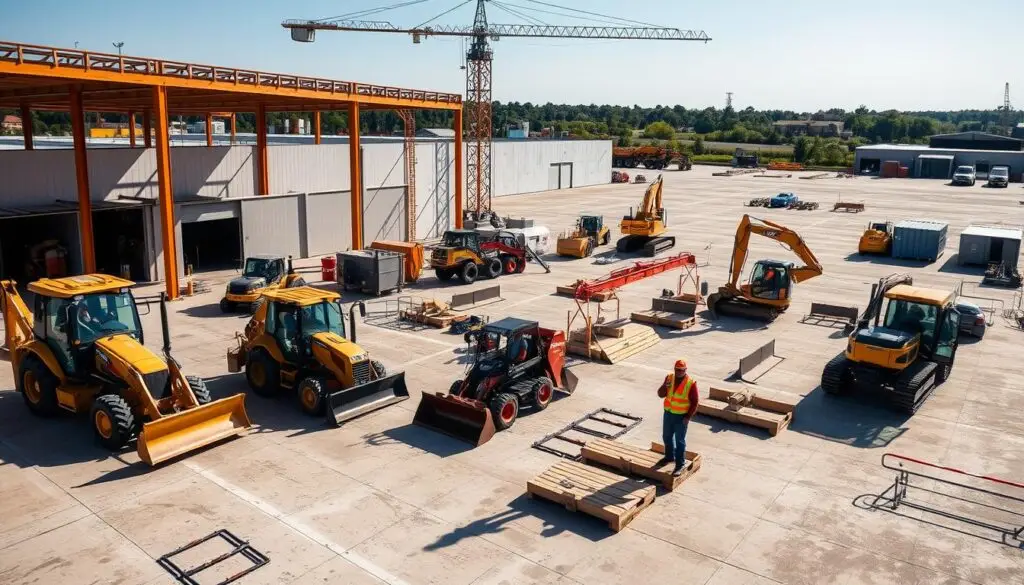
The Occupational Safety and Health Administration establishes foundational safety requirements governing heavy equipment operation across American construction sites. Understanding these federal mandates is essential for employers and operators navigating compliance obligations.
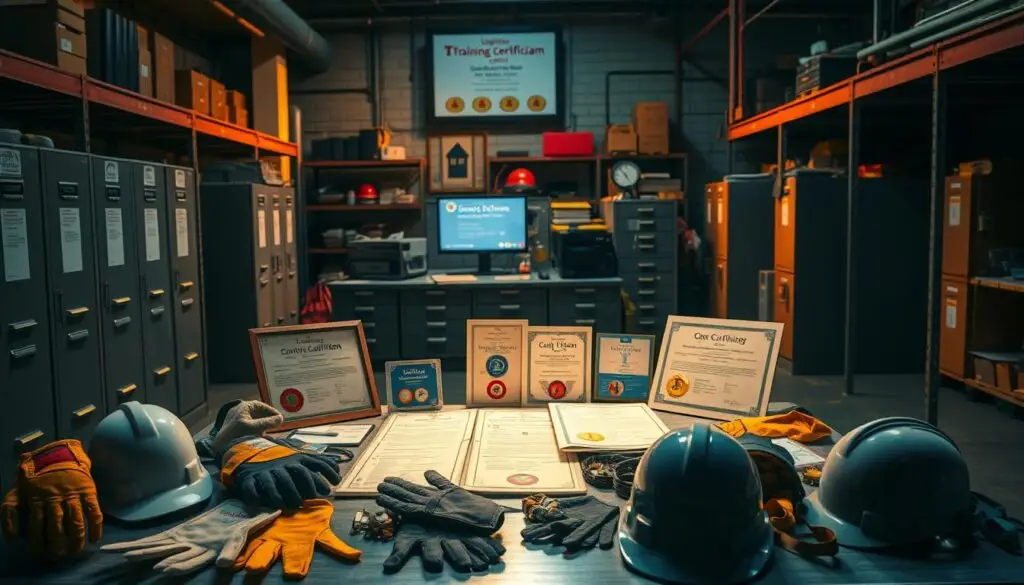
OSHA does not issue universal equipment operator certifications. Instead, the agency requires employers to verify operator competence through documented training programs tailored to their specific workplace environments and equipment types. According to an OSHA interpretation letter, the agency requires that employers instruct each employee in the recognition and avoidance of unsafe conditions and the regulations applicable to their work environment.
Employer Training Obligations Under Federal Law
Under OSHA standards codified in 29 CFR 1910.178(l) and 29 CFR 1926.602(d), employers bear responsibility for instructing employees in hazard recognition and safe operating procedures. This employer-driven model creates flexibility but demands strict accountability.
Organizations must maintain comprehensive training records and conduct periodic competency evaluations. During OSHA inspections, companies must demonstrate that operators understand equipment-specific hazards and follow established safety protocols.
The federal framework requires three core training components: formal instruction covering operating procedures and safety protocols, practical training demonstrating hands-on competency, and evaluation confirming the operator can safely control the equipment independently.
Documentation requirements extend beyond initial training. Employers must maintain records showing refresher training when operators demonstrate unsafe practices, when equipment characteristics change, or when workplace conditions create new hazards.
Equipment-Specific Federal Certification Requirements
While most heavy machinery falls under general employer training requirements, OSHA mandates specific certifications for certain equipment categories due to heightened risk factors.
Powered industrial trucks—including forklifts and comparable equipment—require formal operator certification under 29 CFR 1910.178. Employers must provide classroom training, practical instruction, and written evaluations before permitting independent operation.
⚠️ Crane Certification Requirement
OSHA regulation 29 CFR 1926.1427 requires certification from an accredited testing organization for cranes capable of lifting more than 2,000 pounds. Operating without proper certification can result in significant penalties and creates serious liability exposure.
Crane operators face the most stringent federal requirements. The National Commission for the Certification of Crane Operators provides the industry’s recognized certification program. NCCCO certification requires passing both written and practical examinations, with credentials valid for five years.
These federal mandates establish minimum standards. States and municipalities frequently implement additional licensing layers that operators must satisfy for legal operation within their jurisdictions.
Understanding Training Standards and Program Requirements
Quality training programs form the foundation of competent equipment operation. Industry-recognized standards ensure operators develop skills that transfer across employers and geographic regions.
NCCER Standards and Curriculum Framework
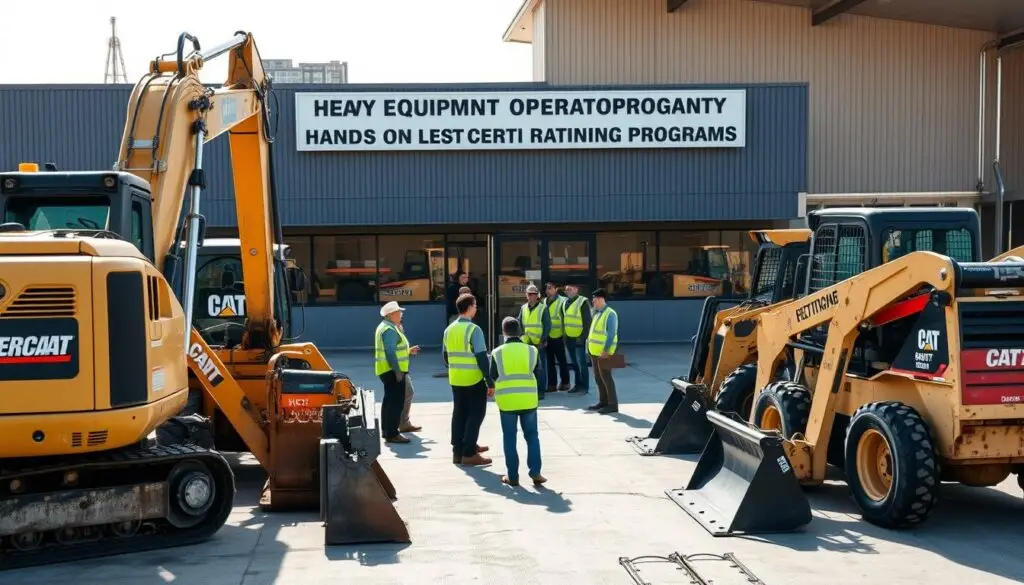
The National Center for Construction Education and Research establishes comprehensive training standards recognized throughout the construction industry. NCCER-accredited programs ensure curriculum consistency and credential portability across state lines.
NCCER Level 1 certification typically requires 120 hours combining classroom instruction with supervised equipment operation. The curriculum covers fundamental topics including safety protocols, pre-operational inspections, basic controls, and load handling principles.
Advanced certification levels build on foundational skills. Level 2 programs introduce complex maneuvering techniques, while Level 3 focuses on specialized applications and advanced safety management. Each level demands demonstrated competency through written examinations and practical assessments.
Programs emphasizing actual machinery operation over simulation technology produce the most job-ready graduates. Fleet managers hiring operators should verify that candidates attended schools providing substantial hands-on equipment time rather than relying primarily on computer-based training systems.
Vocational School vs. Apprenticeship Training Models
Two primary pathways exist for acquiring equipment operator credentials: concentrated vocational programs and extended apprenticeships. Each approach offers distinct advantages depending on individual circumstances and career goals.
Vocational schools and community colleges provide accelerated training typically spanning three to eight weeks. These programs concentrate instruction into intensive formats combining daily classroom sessions with supervised equipment practice. Graduates earn industry-recognized credentials qualifying them for entry-level positions.
Apprenticeship programs through unions or Department of Labor registered programs extend three to four years. Apprentices earn wages while developing skills under experienced operator supervision. These programs typically require 144 hours of related technical instruction annually alongside on-the-job learning.
The apprenticeship model provides comprehensive exposure to multiple equipment types and diverse job site conditions. Graduates possess broader skill sets and deeper industry knowledge compared to accelerated vocational programs, though the extended timeline delays full operator status.
Employer-provided on-the-job training represents a third pathway. Some construction companies develop internal training protocols for equipment operation, though these programs may not yield portable credentials recognized by other employers or jurisdictions.
Critical Safety Training Components
Regardless of training pathway, certain safety competencies remain non-negotiable for equipment operator certification. According to Bureau of Labor Statistics data, construction recorded 1,075 worker fatalities in 2023—the highest number for the sector since 2011.
Falls accounted for 421 deaths (39.2 percent of construction fatalities), while transportation incidents caused 240 deaths and struck-by accidents resulted in additional fatalities. Equipment-related incidents continue claiming lives at rates that underscore the critical importance of comprehensive safety instruction.
| Safety Metric | 2023 Figures | Primary Causes |
|---|---|---|
| Construction Fatalities | 1,075 | Falls, struck-by, transportation |
| Fall-Related Deaths | 421 (39.2%) | Ladders, elevated work |
| Transportation Incidents | 240 (22.3%) | Vehicle operation, roadway work |
Quality training programs emphasize hazard recognition, pre-operational inspection protocols, emergency shutdown procedures, and load capacity calculations. Operators must understand equipment stability principles, blind spot awareness, and communication systems for coordinating with ground personnel.
Modern safety curricula incorporate fall protection systems for elevated operator stations, lockout/tagout procedures for maintenance activities, and traffic control measures for roadway operations. Programs should also address environmental considerations like slope stability and weather-related hazards.
Equipment-Specific Certification Pathways
Different machinery types demand specialized knowledge and distinct certification protocols. Operators typically focus on specific equipment categories rather than attempting to master all construction machinery simultaneously.
Excavator and Backhoe Operator Credentials
Excavators and backhoes represent fundamental construction equipment with relatively accessible certification requirements compared to specialized lifting machinery. These versatile machines perform earthmoving, trenching, and material handling tasks across diverse job sites.
Training programs for excavator operation typically span four to six weeks, covering basic hydraulic controls, depth perception techniques, and trenching safety protocols. Operators learn bucket positioning, swing radius management, and coordination with ground crews for utility avoidance.
Most states don’t mandate specific excavator licenses beyond general equipment operator requirements. Employers verify competency through internal assessment processes or recognized training program completion certificates. However, operators must understand OSHA trench safety standards when working in excavations deeper than five feet.
Backhoe operation requires additional skills for coordinating front loader and rear excavator functions. Operators must manage competing priorities when alternating between loading and digging tasks on congested job sites.
Bulldozer and Grader Certification Requirements
Earthmoving equipment like bulldozers and motor graders demand precise control for achieving specified grades and slopes. These machines shape construction sites, prepare road beds, and establish drainage patterns requiring accuracy within fractions of an inch.
Bulldozer training emphasizes blade angle adjustment, track tension management, and load distribution principles. Operators learn techniques for managing equipment on steep grades and understanding the machine’s center of gravity to prevent rollovers.
Motor grader operation represents one of the most technically demanding equipment operator specializations. The complexity of coordinating blade position, angle, and tilt while maintaining precise elevation requires extended training periods often exceeding eight weeks for basic proficiency.
Modern GPS-guided grading systems add technological complexity requiring manufacturer-specific training. Operators must interpret digital elevation models and manage automated blade control systems while maintaining situational awareness of surrounding activities.
Crane Operator Certification Standards
Crane operation faces the construction industry’s most rigorous certification requirements due to extreme load capacities and catastrophic failure consequences. Federal OSHA standards mandate third-party certification for operating cranes exceeding 2,000-pound lifting capacity.
NCCCO certification remains the industry-recognized standard for demonstrating crane operator competency. The certification process involves passing written examinations covering load chart interpretation, rigging principles, hand signals, and safety protocols specific to crane type and capacity class.
Practical examinations require candidates to demonstrate equipment setup, pre-operational inspections, load handling techniques, and emergency procedures. Test administrators evaluate swing accuracy, load placement precision, and judgment in simulated challenging scenarios.
Specialty crane types require additional certifications. Tower crane operators, mobile crane specialists, and overhead crane operators each pursue distinct credential pathways reflecting unique operational characteristics and safety considerations for their equipment category.
Crane certifications require renewal every five years through written and practical retesting. This frequent renewal cycle ensures operators maintain current knowledge of evolving safety standards and technological advances in modern lifting equipment.
| Credential Type | Typical Duration | Renewal Requirements |
|---|---|---|
| Equipment-Specific Certification | 1-3 years | Practical testing |
| State Operator License | 3-5 years | Continuing education hours |
| NCCCO Crane Certification | 5 years | Written and practical retesting |
Forklift and Powered Industrial Truck Certification
Powered industrial trucks—including forklifts, reach trucks, and order pickers—operate under specific OSHA certification requirements distinct from other construction equipment. These machines function in warehouses, manufacturing facilities, and construction material yards.
OSHA regulation 29 CFR 1910.178 mandates employer-provided certification for all powered industrial truck operators. Training must include formal instruction, practical demonstration, and workplace-specific evaluation before operators can work independently.
Forklift certification programs typically require eight to twelve hours for initial training. Operators learn load capacity calculations, stability triangle principles, and techniques for navigating confined spaces with elevated loads.
Employers must provide refresher training every three years or when operators demonstrate unsafe behaviors. Additional training is required when introducing new equipment types or when workplace conditions change significantly.
Stay Ahead of Certification Requirements
Get expert insights on equipment regulations, training standards, and workforce development strategies delivered to your inbox weekly.
State-Specific Licensing and Regulatory Frameworks
The jurisdictional landscape for equipment operator licensing creates a complex patchwork of requirements across American states. Professionals must navigate this regulatory environment to ensure compliance when working across different geographic regions.

States with Enhanced Certification Requirements
Several states implement operator licensing systems that extend beyond federal OSHA minimums. These jurisdictions typically require state-issued credentials demonstrating competency through standardized testing protocols.
California maintains one of the nation’s most comprehensive equipment operator licensing programs. The state requires certification for specific equipment types operating on public works projects, with testing administered through Cal/OSHA-approved training providers.
New York City enforces strict hoisting machine operator licensing through the Department of Buildings. The city mandates separate licenses for different crane types, tower cranes, and derricks. Applicants must complete approved training courses and pass practical examinations specific to New York City operational environments.
Washington state requires crane operator certification through Labor & Industries for mobile cranes, tower cranes, and overhead cranes. The state maintains its own testing protocols beyond NCCCO requirements, creating additional compliance layers for operators working in Washington jurisdictions.
Hawaii implements equipment operator certification requirements for operators working on state-funded construction projects. The state’s program emphasizes environmental protection and cultural resource preservation alongside traditional safety protocols.
Commercial Driver License Requirements
Commercial driver’s licenses represent a separate credentialing layer that frequently intersects with equipment operator certification. CDL requirements vary based on equipment weight, transport scenarios, and state-specific interpretations of federal guidelines.
Federal law requires CDLs for operating commercial motor vehicles with gross vehicle weight ratings exceeding 26,000 pounds or towing trailers over 10,000 pounds on public roads. Many construction equipment pieces—including small excavators and bulldozers—exceed these weight thresholds.
Some states extend CDL requirements beyond federal minimums. These jurisdictions may require commercial licenses for equipment transport scenarios that federal law would exempt, creating compliance complications for operators working across state lines.
CDL classifications (Class A, B, or C) depend on specific equipment weight and towing configurations. Class A licenses permit operating combination vehicles exceeding 26,000 pounds gross combination weight. Class B covers single vehicles over 26,000 pounds without substantial trailers.
Obtaining CDLs requires passing written knowledge tests covering general commercial vehicle operation, air brake systems, and combination vehicle handling. Practical driving examinations assess pre-trip inspection competency, basic vehicle control, and on-road driving performance.
Municipal and Local Government Requirements
Beyond state regulations, municipal authorities frequently impose additional certification requirements for equipment operation within city limits. Urban areas with dense populations typically enforce heightened safety standards through local ordinances.
Major cities including Chicago, Boston, and Los Angeles maintain separate hoisting equipment licensing programs administered through city building departments. These local credentials require passing city-specific examinations and demonstrating knowledge of municipal safety codes.
Local requirements often focus on operational scenarios unique to urban environments—managing equipment on congested streets, coordinating with underground utilities in dense infrastructure zones, and minimizing disruption to surrounding businesses and residents.
Operators must verify municipal requirements before beginning work in new cities. Assuming state-level credentials suffice can lead to project delays, citations, and potential legal liability when local ordinances mandate additional licensing.
Union Certification and Trade Organization Requirements
Labor unions representing construction trades establish their own certification standards that members must satisfy for access to union-affiliated projects. These requirements typically exceed basic regulatory minimums.
The International Union of Operating Engineers maintains comprehensive training programs through local union training centers. Union operators progress through apprenticeship systems combining on-the-job hours with classroom instruction administered by union-certified instructors.
Union certifications often provide reciprocity benefits when working across different geographic regions. Operators holding union credentials typically face simplified processes when seeking work in new jurisdictions compared to non-union operators navigating state-by-state licensing variations.
Major construction projects—particularly public works and infrastructure developments—frequently specify union labor requirements in contract documents. Operators seeking these opportunities must obtain relevant union memberships and satisfy associated certification standards.
The HDJ Perspective
The fragmented certification landscape for equipment operators creates real headaches for fleet managers running operations across multiple states. While NCCCO crane certification provides reasonable national portability, the patchwork of state and municipal requirements for other equipment types means operators need portfolio management skills alongside their machine operation competencies. Forward-thinking fleet operations are increasingly maintaining certification tracking databases and building relationships with training providers across their service territories to ensure operators can work wherever projects demand.
Selecting Quality Training Programs
Choosing appropriate training institutions significantly impacts both initial skill development and long-term career prospects. Fleet managers evaluating potential hires and individuals seeking equipment operator careers should evaluate programs using multiple criteria beyond simple cost considerations.

Evaluating Program Quality and Accreditation
Accreditation status serves as the primary indicator of program quality and credential portability. NCCER accreditation ensures curriculum meets industry-recognized standards and that graduates possess competencies employers value.
Programs should maintain current equipment fleets representing machinery types prevalent in regional construction markets. Training on outdated or uncommon equipment limits job placement prospects after graduation.
Instructor qualifications directly impact learning outcomes. Superior programs employ instructors with extensive field experience—typically ten or more years operating equipment professionally—rather than instructors with primarily teaching backgrounds.
Class sizes substantially affect learning quality. Programs maintaining ratios below ten students per instructor provide sufficient individual attention and maximize equipment operating time for each student during training sessions.
Job placement assistance demonstrates program commitment to graduate success beyond credential issuance. Quality schools maintain relationships with regional contractors and actively facilitate introductions between graduates and potential employers.
| Selection Criteria | Excellent Programs | Average Programs |
|---|---|---|
| Hands-on Equipment Time | 80%+ actual operation | 50-70% mixed use |
| Class Size | Under 10 students | 10-20 students |
| Instructor Credentials | Industry veterans 10+ years | Certified teachers |
| Curriculum Standards | NCCER accredited | State minimum |
Comparing Training Program Costs and Financing
Equipment operator training program costs vary substantially based on program duration, equipment access, and institutional overhead structures. Prospective students should evaluate total investment against expected career outcomes.
Vocational school programs typically range from $3,000 to $15,000 for comprehensive multi-equipment training spanning six to eight weeks. Shorter programs focusing on single equipment types may cost $1,500 to $5,000 depending on regional markets and institutional structures.
Apprenticeship programs through unions or registered DOL programs provide earn-while-you-learn models eliminating tuition costs. Apprentices receive progressive wages starting around 50-60 percent of journeyworker rates and increasing with demonstrated competency progression.
Financial aid options include federal Pell Grants for eligible students, workforce development funding through state employment agencies, and veteran education benefits for former military personnel. Many programs qualify for federal student loan programs, though careful consideration of debt levels relative to expected starting wages remains essential.
Some construction companies sponsor training costs for promising candidates committed to working for the sponsoring employer after certification. These arrangements typically involve employment contracts specifying minimum service periods or repayment obligations if operators leave prematurely.
Certification Maintenance and Renewal Protocols
Obtaining initial equipment operator credentials represents only the beginning of ongoing professional development requirements. Maintaining active certification status demands strategic planning and documentation management.
Understanding Renewal Timelines and Requirements
Renewal periods vary substantially across different credential types and issuing organizations. Operators must track multiple expiration dates when holding certifications for various equipment categories or working across multiple states.
NCCCO crane certifications require renewal every five years through written and practical retesting. This renewal process ensures operators maintain current knowledge of evolving safety standards and equipment technologies introduced since initial certification.
State equipment operator licenses typically mandate renewal every three to five years. Some states require continuing education hours demonstrating participation in professional development activities, while others necessitate competency retesting through practical examinations.
Employer-provided certifications for powered industrial trucks must include refresher training every three years per OSHA requirements. Additional training becomes necessary when operators demonstrate unsafe practices or when workplace conditions change substantially.
Operators should establish renewal tracking systems six months before expiration dates. This advance planning prevents certification lapses that could interrupt employment and require complete recertification rather than simple renewal processes.
Continuing Education and Professional Development
Ongoing education maintains operator competency while demonstrating commitment to professional excellence. Many certification bodies accept diverse activities for satisfying continuing education requirements.
Manufacturer-sponsored training on new equipment technologies provides valuable continuing education credit while developing skills in operating modern machinery. Equipment manufacturers including Caterpillar, Komatsu, and John Deere offer training programs on GPS guidance systems, telematics integration, and advanced hydraulic controls.
Safety workshops covering topics like trench safety, crane rigging, or traffic control planning often qualify for continuing education credit. Industry associations and insurance providers frequently sponsor these programs at no cost to participants.
Technical conferences hosted by organizations like the Association of Equipment Manufacturers or regional equipment dealer associations offer networking opportunities alongside educational sessions qualifying for professional development hours.
Some operators pursue additional certifications in complementary skills like first aid, hazardous materials handling, or rigging techniques. These supplementary credentials enhance employment versatility while potentially satisfying continuing education requirements for primary equipment operator certifications.
Share Your Equipment Operator Expertise
Fleet managers and training professionals: contribute your insights on certification programs, hiring practices, or operator development to our growing community of industry decision-makers.
Career Advancement and Compensation Analysis
Equipment operator careers offer multiple pathways for professional growth beyond entry-level positions. Strategic skill development and certification accumulation unlock progressively advanced opportunities with corresponding compensation increases.
Compensation Across Equipment Specializations
Earnings potential varies significantly based on equipment specialization, geographic region, and experience level. Understanding compensation trends helps operators make strategic career decisions regarding additional certification pursuits.
Crane operators command the highest median wages among equipment specialists, earning approximately $56,000-$64,000 annually according to Bureau of Labor Statistics data. Complex certification requirements and catastrophic failure risks justify premium compensation for qualified crane professionals.
Excavator operators earn median salaries around $48,500 annually, with experienced operators in high-demand markets commanding $60,000 or more. Operators demonstrating GPS grading system proficiency typically earn 15-20 percent premiums over traditional excavator specialists.
Bulldozer operators average $51,800 in annual compensation, with finishing dozer specialists—those capable of achieving precise grade specifications—earning substantially above median rates. These precision operators remain in high demand for highway construction and commercial site development projects.
Loader operators, while earning lower median wages around $45,200, often experience more consistent year-round employment compared to seasonal equipment types. This employment stability can yield superior annual earnings despite lower hourly rates.
| Machinery Specialization | Median Annual Salary | Experience Premium |
|---|---|---|
| Crane Operator | $56,000-$64,000 | +25% |
| Excavator Operator | $48,500 | +20% |
| Loader Operator | $45,200 | +18% |
| Bulldozer Operator | $51,800 | +22% |
Supervisory and Management Career Progression
Experienced equipment operators frequently advance into supervisory positions overseeing multiple operators and coordinating equipment deployment across job sites. These roles require leadership skills alongside technical equipment expertise.
Equipment superintendents manage operator teams, schedule equipment utilization, and ensure compliance with project specifications. These positions typically require five to ten years of operating experience plus demonstrated leadership capabilities.
Safety coordinators represent another advancement pathway for experienced operators with strong safety records. These professionals develop site-specific safety plans, conduct operator evaluations, and investigate incidents involving equipment operations.
Project managers with equipment operation backgrounds bring valuable practical knowledge to construction planning and execution. Understanding equipment capabilities, production rates, and operational constraints enables more realistic scheduling and resource allocation.
Compensation for supervisory roles typically ranges from $65,000 to $95,000 annually depending on project scale and organizational structure. These positions often include benefits packages more comprehensive than those provided to hourly equipment operators.
Emerging Technologies and Specializations
Construction technology evolution creates opportunities for operators willing to develop expertise in emerging equipment categories and advanced control systems.
GPS-guided grading systems revolutionize earthmoving precision while reducing reliance on traditional grade stakes. Operators proficient in 3D machine control systems command premium wages due to productivity advantages and specialized skill requirements.
Autonomous and semi-autonomous equipment represents the industry’s future direction. Operators developing skills in supervising automated machinery position themselves for long-term career security as technology adoption accelerates.
Specialized foundation equipment including drill rigs, pile drivers, and micropile systems require distinct certifications and offer limited competition for qualified operators. These niche specializations can yield exceptional compensation—often exceeding $75,000 annually—due to limited practitioner pools.
Remote-controlled equipment for hazardous environment operations creates new specialization categories. Operators certified in robotic equipment control for demolition, tunnel boring, or confined space work access unique high-value market segments.
Industry Outlook and Workforce Trends
The construction equipment operator profession faces ongoing evolution driven by technological advances, infrastructure investment, and demographic workforce shifts. Understanding industry trajectories helps operators and fleet managers make informed career and hiring decisions.
Infrastructure Investment Impact on Demand
Federal infrastructure legislation including the Infrastructure Investment and Jobs Act directs substantial funding toward highway reconstruction, bridge replacement, and utility modernization. These multi-year investment programs drive sustained demand for qualified equipment operators.
State and local infrastructure programs supplement federal initiatives with additional construction activity. Aging transportation networks require ongoing maintenance and eventual replacement, creating continuous operator employment opportunities.
Commercial and residential construction cycles influence operator demand in private sector markets. Economic expansion periods generate robust hiring needs, while recessions reduce operator positions. Diversifying skills across multiple equipment types and market sectors provides employment stability during cyclical downturns.
Renewable energy infrastructure—including utility-scale solar installations and wind farm construction—creates new equipment operator opportunities in emerging sectors. These projects require traditional earthmoving skills while introducing unique site preparation challenges.
Technology Integration and Skill Requirements
Equipment automation and advanced control systems transform operator roles from purely manual machine control toward technology supervision and data interpretation.
GPS-guided grading systems require operators to understand digital elevation models, coordinate systems, and software interfaces alongside traditional machine control skills. Training programs increasingly incorporate technology components reflecting modern equipment capabilities.
Telematics systems providing real-time equipment performance data create new responsibilities for operators monitoring fuel consumption, maintenance schedules, and productivity metrics. Operators must develop data literacy skills for interpreting dashboard analytics.
Remote operation capabilities for certain equipment types—particularly in hazardous environments—demand different skill sets compared to traditional cab operation. Operators must develop proficiency with camera systems, haptic feedback controls, and spatial reasoning without direct visual access.
Fully autonomous equipment remains years from widespread deployment, though pilot programs demonstrate technical feasibility. Operators willing to develop skills in supervising automated machinery position themselves advantageously for future workforce transitions.
Frequently Asked Questions
Do I need a certification to operate heavy equipment in the United States?
Requirements depend on equipment type and location. OSHA requires employers to train operators but doesn’t issue universal certifications for most machinery. Crane operators need NCCCO certification, while other equipment typically requires only employer-provided training unless specific states mandate additional licensing. Always verify requirements for your specific equipment category and work location before beginning operations.
How long does equipment operator training typically take?
Vocational training programs range from three to eight weeks for comprehensive multi-equipment instruction. Single-equipment courses may require one to three weeks. Apprenticeship programs extend three to four years but provide wages during training. NCCER Level 1 certification typically requires 120 hours combining classroom and hands-on training, though total program length depends on scheduling format.
What is the difference between certification and licensing for equipment operators?
Certifications typically come from industry organizations or training providers demonstrating competency in operating specific equipment. Licenses are government-issued credentials mandated by states or municipalities for legal operation within their jurisdictions. Some states require licenses for certain equipment, while others accept employer training and industry certifications as sufficient proof of competency.
Do heavy equipment operator certifications transfer across state lines?
Portability varies significantly. NCCER certifications and NCCCO crane credentials are recognized nationwide, though some states require additional state-specific licensing beyond these industry certifications. California, New York, and Washington maintain particularly stringent state requirements. Always verify destination state requirements before accepting out-of-state positions.
Is a Commercial Driver’s License required to operate construction equipment?
CDLs are necessary for transporting equipment exceeding 26,000 pounds gross vehicle weight on public roads. Operating equipment solely on job sites generally doesn’t require CDLs. However, many construction positions involve moving equipment between sites, making CDLs valuable credentials that significantly expand employment opportunities for operators working across multiple locations.
What certifications provide the best career advancement for equipment operators?
NCCCO crane certification commands the highest wages and opens specialized opportunities. GPS grading system proficiency certifications increase earning potential by 15-20 percent. Multiple equipment certifications (excavator, loader, dozer) create versatility valued by employers. OSHA safety certifications and first aid credentials enhance employment competitiveness across all specializations.
Making Certification Work for Your Operation
Heavy equipment operator certification requirements create a complex landscape that varies significantly by equipment type, geographic jurisdiction, and operational context. While OSHA establishes federal baseline training standards, no universal national certification exists for most construction machinery—making local compliance verification essential for every project.
Successful equipment operators and fleet managers navigate this regulatory environment through careful research, strategic training program selection, and proactive credential management. Starting with NCCER-accredited vocational programs or Department of Labor registered apprenticeships provides foundational skills recognized across employers and regions.
The profession offers accessible entry points—requiring only high school diplomas to begin training—combined with strong earning potential and diverse specialization pathways. Crane operators, excavator specialists, and GPS grading system operators all command competitive wages with opportunities for advancement into supervisory roles.
Understanding jurisdiction-specific requirements, maintaining organized credential documentation, and planning certification renewals well in advance prevents compliance interruptions that could disrupt employment. Equipment operators who approach credentialing strategically maximize career opportunities while ensuring they meet all legal operating requirements across their service territories.
Share This Guide
Help fellow fleet managers and equipment professionals navigate certification requirements—share this resource with your network.