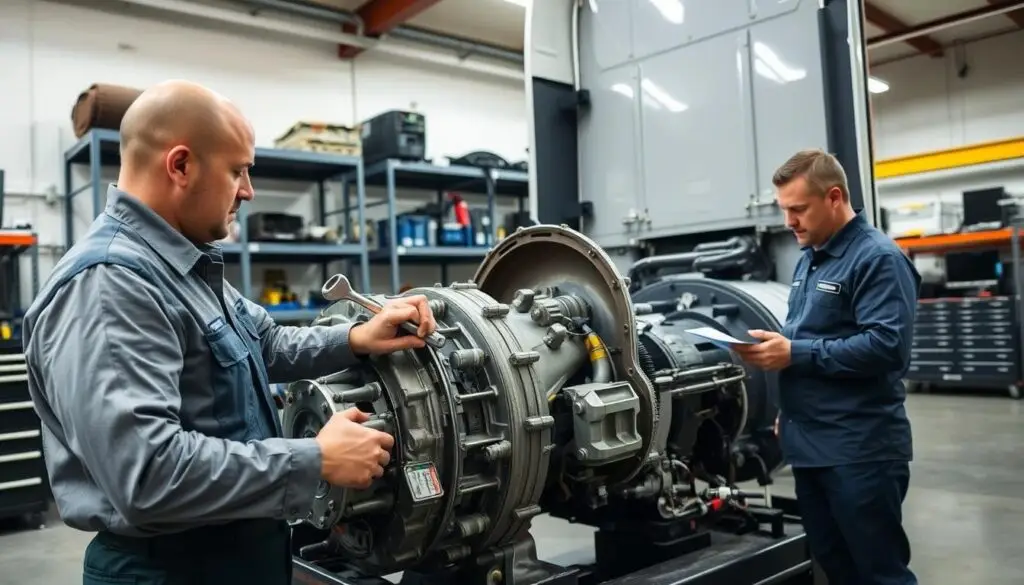
By Michael Nielsen, Editor & Publisher | 15+ Years in Diesel Repair
Last Updated: January 2026
📖 Estimated reading time: 22 minutes
Fleet managers operating commercial trucks face significant financial risk from transmission failures. Major repairs typically cost $8,000 to $15,000, but unexpected breakdowns generate additional expenses that push total incident costs beyond $25,000 when accounting for towing, vehicle rental, lost revenue, and customer relationship damage.
Recognizing transmission warning signs before catastrophic failure occurs separates profitable fleet operations from those struggling with constant downtime. Early detection transforms potential disasters into manageable, scheduled maintenance that protects delivery schedules and bottom-line performance.
Fleet managers who implement systematic monitoring protocols extend transmission lifespan by 30-40% while reducing unexpected repair costs by similar margins. The difference between reactive and proactive approaches determines whether your fleet operates reliably or experiences the operational chaos that comes with roadside breakdowns and missed delivery commitments.
Key Takeaways
- Financial Impact: Unexpected transmission failures cost fleets $15,000-$25,000+ per incident compared to $1,200-$3,500 for planned maintenance
- Early Detection Value: Systematic monitoring extends component lifespan by 30-40% and reduces unexpected repair costs by similar margins
- Warning Sign Categories: Visual indicators (fluid leaks, contamination), auditory signals (grinding, whining), and performance changes (slippage, delayed engagement) provide multiple intervention opportunities
- Preventive ROI: Proactive maintenance protocols reduce transmission-related downtime by 60% while protecting delivery schedule reliability
Why Transmission Health Drives Fleet Profitability
Every fleet manager faces a fundamental choice: invest in transmission maintenance today or face exponential costs tomorrow. The transmission system serves as the critical link between engine performance and operational productivity. When this component fails, the entire commercial vehicle operations structure experiences significant disruptions that extend far beyond a single truck being out of service.
Understanding the relationship between transmission health and fleet profitability transforms how managers approach preventive maintenance programs. Ignoring warning signs leads to complete breakdowns that take vehicles out of service for extended periods, disrupting delivery schedules and impacting profitability in ways that ripple through every department.
The Role of Transmissions in Heavy-Duty Commercial Vehicles
The transmission functions as the powerhouse connection between engine torque and wheel movement. It manages complex gear ratios that allow heavy-duty trucks to handle varying load conditions efficiently. Without a properly functioning transmission, even the most powerful engine cannot deliver its capability to the drivetrain.
Modern heavy-duty transmissions must withstand extreme operating conditions that would destroy passenger vehicle components. These systems handle frequent starts and stops in urban delivery routes with full cargo loads, hill climbing operations while carrying maximum weight specifications, and continuous operation over hundreds of thousands of miles without major service.
Whether equipped with manual, automated manual, or fully automatic transmissions, commercial vehicles depend on these systems for operational efficiency. The transmission adjusts power delivery based on load conditions, terrain, and driving demands.
Financial Impact of Unexpected Transmission Failures
The true cost of transmission failures extends far beyond the repair invoice. According to the American Transportation Research Institute’s operational costs analysis, emergency repairs typically cost 2-3 times more than planned maintenance because emergency situations compound expenses across multiple categories.
When a transmission fails without warning, fleet managers face immediate financial pressures. Emergency towing services for heavy-duty vehicles can cost $500-$1,500 depending on location and distance. Rental vehicle expenses to maintain delivery commitments add another $200-$400 per day. Lost revenue from missed deliveries compounds these direct costs with opportunity losses.
| Cost Category | Planned Maintenance | Unexpected Failure | Cost Difference |
|---|---|---|---|
| Transmission Service/Repair | $1,200 – $3,500 | $8,000 – $15,000 | $6,800 – $11,500 |
| Towing & Emergency Services | $0 | $500 – $1,500 | $500 – $1,500 |
| Rental Vehicle (5-10 days) | $0 | $1,000 – $4,000 | $1,000 – $4,000 |
| Lost Revenue & Penalties | Minimal | $3,000 – $8,000 | $3,000 – $8,000 |
| Total Cost Impact | $1,200 – $3,500 | $12,500 – $28,500 | $11,300 – $25,000 |
Cargo delay penalties represent another significant expense category. Many shipping contracts include service level agreements with financial consequences for late deliveries. Customer relationship damage from repeated delays can result in lost contracts worth thousands in monthly revenue.
How Transmission Issues Affect Fleet Uptime and Delivery Schedules
Vehicle downtime from transmission problems creates operational chaos that extends throughout the entire fleet network. A single transmission failure triggers a cascade of scheduling adjustments that affect multiple vehicles, drivers, and delivery routes.
Transmission-related downtime averages 5-10 days per incident when parts must be ordered and specialized labor secured. During this period, the affected vehicle generates zero revenue while continuing to incur fixed costs like insurance, financing payments, and depreciation. Driver satisfaction also suffers when vehicles experience frequent mechanical problems, and professional drivers prefer operating reliable equipment that allows them to complete routes efficiently.
$448 – $760
Average lost revenue per vehicle per day of unplanned downtime, according to ATRI 2024 operational costs data
Understanding Heavy-Duty Transmission Systems
Fleet managers today must navigate a complex landscape of transmission systems ranging from traditional manual designs to advanced automated solutions. Each transmission type presents unique characteristics that directly impact maintenance schedules, diagnostic procedures, and operational costs. Mastering these technical distinctions enables managers to make informed decisions about fleet composition and service protocols.
Traditional Manual Systems: Proven Reliability
The Eaton Fuller transmission family represents the gold standard in manual transmission design for heavy-duty applications. These units feature synchronized and non-synchronized configurations depending on the model and application requirements. Synchronized versions use brass synchronizer rings to match gear speeds during shifts, while non-synchronized designs require double-clutching technique for smooth operation.
Manual transmission maintenance focuses heavily on clutch condition and adjustment procedures. Fleet managers should monitor clutch free-play measurements and ensure drivers report any changes in pedal feel or engagement characteristics. Shift linkage adjustment represents a critical maintenance point often overlooked in manual systems. According to Eaton’s lubrication specifications, heavy-duty highway applications require fluid changes every 250,000 miles when using approved CD50 transmission fluid.
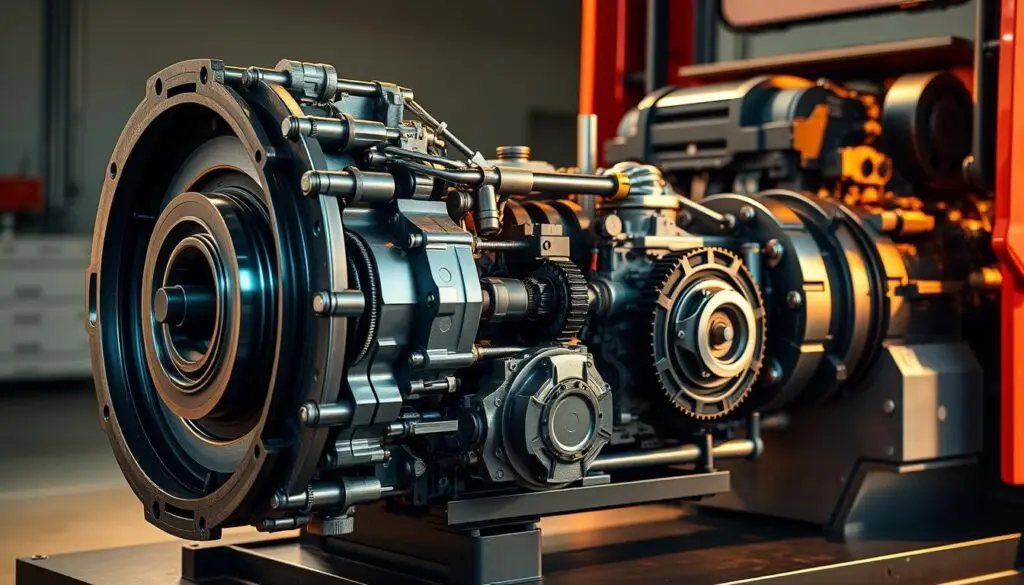
Modern automated manual transmissions use sophisticated electronic control modules and pneumatic or electromechanical actuators to execute precision shifts.
Computer-Controlled Shifting: The AMT Revolution
The Detroit DT12 automated manual transmission combines the fuel efficiency of a manual gearbox with sophisticated electronic control. This system uses an electronic control module to manage a pneumatic shift actuator that executes gear changes with precision timing. Detroit Diesel designed the DT12 with integrated software that adapts to load conditions, terrain, and driving patterns, learning from operational data to refine shift strategies continuously.
The Volvo I-Shift represents another milestone in automated manual transmission technology. Volvo’s system employs electromechanical actuators rather than pneumatic systems, providing faster shift execution and reduced air system demands. Both the Detroit DT12 and Volvo I-Shift eliminate the clutch pedal entirely through automated clutch management systems, controlling engagement and disengagement with millisecond precision while extending clutch life far beyond what manual operation achieves. Fleet managers report clutch life improvements of 50-100% compared to driver-operated systems.
Essential Components Requiring Regular Monitoring
Effective transmission care depends on systematic monitoring of critical components. Transmission fluid condition serves as the lifeblood of any transmission system. Regular sampling and analysis reveal contamination, oxidation, and additive depletion before damage occurs. Automated systems particularly benefit from fluid analysis programs since their complex internal mechanisms operate with tighter tolerances than traditional manual designs.
Electronic control modules and wiring harnesses require protection from environmental hazards. Corrosion, moisture intrusion, and physical damage to connectors cause intermittent faults that challenge diagnostic efforts.
| Transmission Type | Primary Advantages | Maintenance Focus |
|---|---|---|
| Eaton Fuller Manual | Mechanical simplicity, field serviceability, proven durability | Clutch adjustment, synchronizer condition, shift linkage |
| Detroit DT12 | Fuel efficiency optimization, extended clutch life, adaptive shifting | Electronic controls, pneumatic actuators, sensor accuracy |
| Volvo I-Shift | Fast shift execution, GPS integration, predictive features | Control modules, electromechanical actuators, wiring integrity |
Visual Transmission Warning Signs
The ability to spot visual transmission warning signs during routine inspections separates proactive fleet operations from reactive crisis management. Fleet managers who implement systematic visual assessment protocols can identify developing problems before they result in roadside breakdowns. Visual indicators provide immediate, actionable intelligence about transmission health.
Transmission Fluid Leaks: Location and Severity Assessment
Fluid leaks underneath parked vehicles indicate potential component wear leading to low fluid levels that can damage essential systems. The location of transmission fluid leaks provides critical diagnostic information about which seals or gaskets have failed. Common leak sources include input shaft seals, output shaft seals, pan gaskets, cooler lines, and shift actuator seals.

Daily visual inspections identify fluid leaks before they progress to severe conditions requiring emergency repairs.
Severity assessment requires evaluating both the leak rate and the fluid characteristics. Small seepage that produces minor dampness around seal areas may indicate aging components requiring monitoring but not immediate repair. Active dripping that creates visible puddles demands urgent attention to prevent fluid loss. Fleet managers should document leak locations with photographs and measure puddle diameter to track progression.
| Leak Severity | Visual Characteristics | Required Action |
|---|---|---|
| Minor Seepage | Slight dampness around seals, no dripping | Schedule repair within 30 days |
| Moderate Leak | Active dripping, 2-4 inch puddle after overnight parking | Schedule repair within one week |
| Severe Leak | Continuous dripping, puddle exceeds 6 inches | Remove from service immediately |
Identifying Burnt or Contaminated Fluid
Transmission fluid condition reveals critical information about internal component health. Healthy fluid maintains a reddish or pinkish color with a slightly sweet or neutral odor. Brown or black fluid indicates thermal breakdown from excessive heat exposure, while a burnt smell confirms overheating conditions that damage clutch materials and seals.
Fluid contamination presents in several forms that demand different responses. Metal particles visible in the fluid indicate internal wear of gears, bearings, or synchronizers. Milky or foamy fluid suggests coolant contamination, typically from a failed transmission cooler that allows engine coolant to mix with transmission fluid. This condition creates a chemical reaction that destroys the fluid’s lubricating properties.
Dashboard Warning Lights and Diagnostic Trouble Codes
Modern trucks feature onboard diagnostic systems that communicate potential problems through illuminated dashboard lights. Transmission-related warning lights include the check engine light when transmission sensors detect anomalies, dedicated transmission temperature warnings, and gear position indicators showing unexpected neutral conditions.
The appearance of warning lights triggers the storage of diagnostic trouble codes in the vehicle’s electronic control module. These codes provide specific information about which sensor detected an anomaly and what parameter exceeded normal ranges. Fleet managers should never ignore illuminated warning lights, even if the vehicle continues to operate normally.
Auditory Warning Signs Requiring Immediate Attention
When transmissions begin to fail, they rarely do so silently. Distinct noises telegraph specific problems that demand immediate attention. Fleet managers who implement effective transmission noise diagnosis protocols can identify component failures weeks before complete breakdowns occur. Training drivers to recognize and report these sounds creates an early warning system that protects both equipment and budgets.
Grinding Noises During Gear Engagement
Transmission grinding noise during gear changes signals serious mechanical problems that accelerate component wear. This distinctive sound indicates metal-to-metal contact between gears that should never touch directly. In manual transmissions, grinding typically points to synchronizer wear that prevents proper speed matching before engagement.
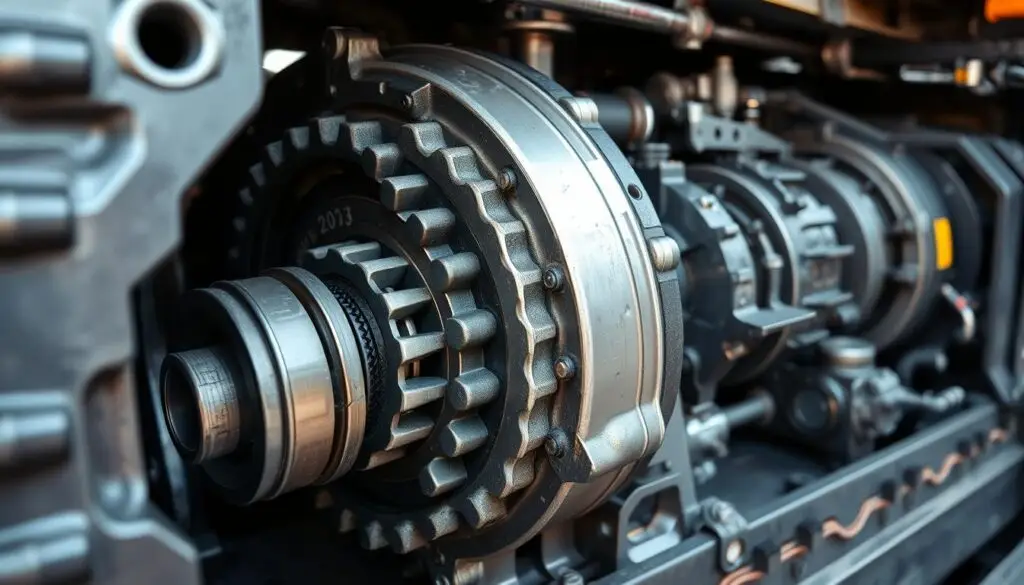
Professional diagnosis of grinding noises prevents minor synchronizer wear from escalating into complete transmission failure.
Clutch problems can also cause grinding by preventing complete disengagement of the transmission from the engine. Automated manual transmissions experiencing grinding face different root causes including electronic actuator timing issues or sensor failures. Fleet managers should treat any grinding noise as a priority maintenance issue since continued operation causes exponential damage.
Whining Sounds That Indicate Bearing Failure
High-pitched whining noises from the transmission compartment typically indicate bearing deterioration. Unlike engine noises that change with RPM, transmission whining correlates with vehicle speed regardless of engine speed. Input shaft bearings support the connection between the clutch and transmission internals, and when these bearings fail, whining increases under load as power transfers through damaged components.
Early detection of bearing problems allows replacement before catastrophic failure occurs. When bearings completely fail, they release metallic debris throughout the transmission and can cause shaft misalignment.
Clunking or Banging During Shifts
Harsh clunking sounds during gear changes indicate components are not synchronizing properly during shifts. These impacts create shock loads throughout the drivetrain, affecting not just the transmission but also u-joints, driveshafts, and differential components.
In manual transmissions, clunking often results from incorrect clutch adjustment or worn gear dogs. Automated manual transmissions experiencing clunking face different issues, where shift timing parameters in the electronic control module may require recalibration and actuator wear can slow clutch release, creating partial engagement problems.
Performance-Based Transmission Warning Signs
Transmission performance changes represent quantifiable warning signs that directly impact fleet productivity and operational costs. While visual inspections and auditory cues provide valuable diagnostic information, performance degradation often emerges as the earliest measurable indicator of developing mechanical problems. Fleet managers who establish baseline performance metrics can detect transmission performance issues weeks before they escalate into complete failures.
Slippage During Heavy Load Operations
Gear slippage occurs when the transmission momentarily loses power transfer between the engine and drivetrain. During slippage events, engine RPM increases without corresponding vehicle acceleration. This condition indicates serious internal problems requiring immediate professional attention.
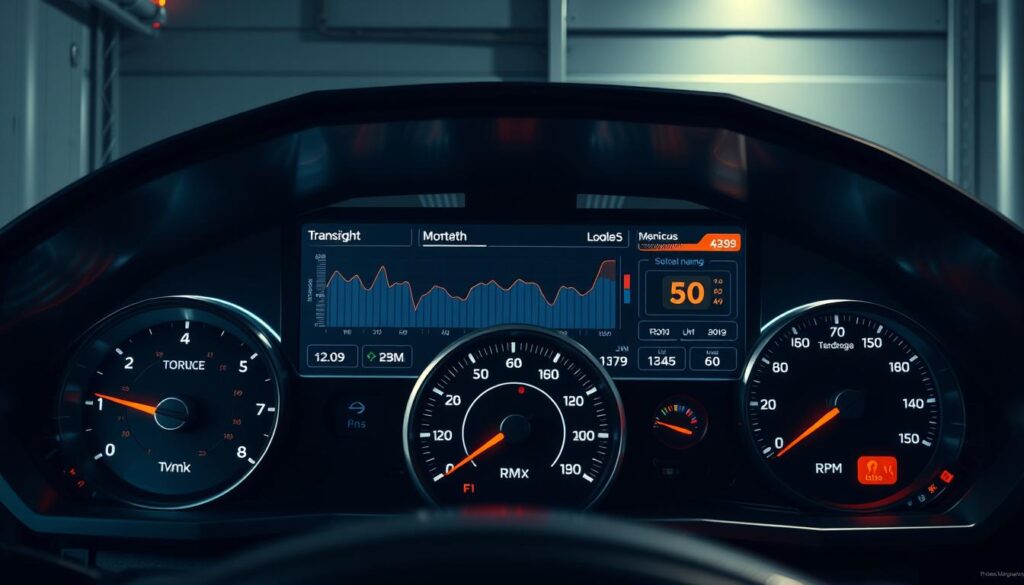
Modern fleet management systems provide real-time transmission performance data that enables early detection of developing problems.
In manual transmissions, slippage typically results from worn clutch friction material that can no longer maintain adequate clamping force. Slippage becomes most apparent under load conditions—when climbing grades with heavy cargo, fleet managers should watch for RPM increases of 200-500 without proportional speed gains.
Engagement Delays From Stationary Positions
Delayed engagement manifests as a noticeable lag between selecting drive and actual vehicle movement. Normal transmissions should engage within 1-2 seconds of selection. Delays exceeding this timeframe indicate developing problems that will worsen without intervention.
| Engagement Delay | Condition Assessment | Recommended Action |
|---|---|---|
| 1-2 seconds | Normal Operation | Routine monitoring |
| 2-3 seconds | Early Warning | Fluid level check, temperature assessment |
| 3-5 seconds | Developing Problem | Professional diagnosis within 48 hours |
| 5+ seconds | Serious Condition | Immediate removal from service |
Declining Fuel Economy as Advance Warning
Reduced fuel efficiency often emerges as the earliest quantifiable sign of developing transmission problems. Even minor internal issues cause measurable fuel consumption increases before drivers notice operational symptoms. Multiple transmission conditions contribute to fuel efficiency decline—slipping clutches waste engine power as heat rather than transferring it to the drivetrain, and improper shift timing keeps engines operating outside their optimal efficiency ranges.
Industry data indicates that transmission-related problems typically produce 5-15% fuel economy reductions before other symptoms become apparent. For a fleet operating 100 trucks averaging 6 miles per gallon, a 10% efficiency loss translates to significant monthly fuel cost increases.
The HDJ Perspective
After fifteen years in the diesel repair industry, I’ve seen countless fleets transform their maintenance culture from reactive to proactive—and the financial impact is dramatic. The most successful operations treat transmission warning signs as opportunities rather than inconveniences. Every grinding noise investigated early, every fluid analysis interpreted correctly, and every performance anomaly addressed promptly represents thousands of dollars saved and weeks of downtime avoided. The technology available today makes early detection easier than ever, but it still requires fleet managers who understand that prevention is not an expense—it’s an investment with measurable returns.
Heavy-Duty Transmission Maintenance Protocols
Systematic preventive maintenance protocols form the foundation of reliable fleet operations and predictable maintenance budgets. Fleet managers who implement structured transmission maintenance schedules reduce unexpected failures by up to 60% while extending component life significantly. Developing comprehensive maintenance protocols requires understanding manufacturer specifications, operating conditions, and real-world performance data.
Manufacturer-Recommended Service Intervals
Major transmission manufacturers provide specific service intervals based on extensive testing and field data. These intervals vary considerably between brands and models, reflecting different design philosophies and fluid technologies.
Eaton Fuller manual transmissions typically require oil changes between 250,000 and 500,000 miles depending on duty cycle severity. Detroit DT12 automated manual transmissions use synthetic fluids that enable extended service intervals when following manufacturer maintenance schedules. Allison automatic transmissions require more frequent service, typically every 25,000 to 50,000 miles depending on application severity.

Adhering to manufacturer-recommended service intervals prevents premature component failures and maintains warranty coverage.
| Transmission Model | Standard Interval | Severe-Duty Interval |
|---|---|---|
| Eaton Fuller Manual | 500,000 miles | 250,000 miles |
| Detroit DT12 | 500,000 miles | 150,000 miles |
| Volvo I-Shift | 450,000 miles | 180,000 miles |
| Allison Automatic | 50,000 miles | 25,000 miles |
Transmission Fluid Analysis Programs
Implementing fluid analysis programs transforms maintenance from schedule-based to condition-based monitoring. Oil analysis detects wear metals, contamination, and fluid degradation before components sustain damage. This proactive approach prevents catastrophic failures while avoiding unnecessary fluid changes that waste resources. Leading fleets report cost savings of $300 to $500 per vehicle annually through strategic oil analysis programs.
Laboratory reports provide detailed wear metal analysis that reveals specific component conditions. Iron content indicates gear and bearing wear, with concentrations above 200 parts per million suggesting accelerated deterioration. Copper levels reflect bearing and bushing condition, while aluminum indicates housing or thrust washer wear. Silicon content reveals dirt contamination when accompanied by elevated aluminum, or coolant intrusion when appearing alone.
Diagnostic Tools and Technologies for Proactive Fleet Management
Successful fleet operations rely increasingly on diagnostic technologies that identify transmission issues in their earliest stages. Proactive maintenance strategies depend on accurate, timely data from sophisticated monitoring systems.
Understanding Electronic Control Module Diagnostics
Modern transmissions use sophisticated computers called electronic control modules that continuously monitor dozens of parameters. ECM diagnostics track input and output speeds, gear position, clutch position, fluid temperature, fluid pressure, and shift quality. When parameters fall outside normal ranges, the ECM stores fault codes that technicians retrieve using specialized tools.
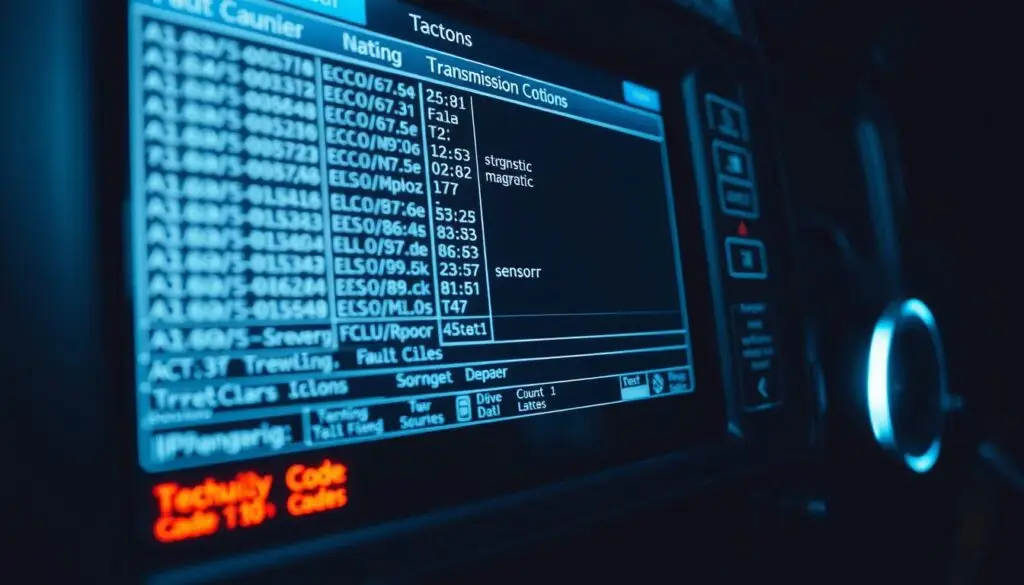
Professional diagnostic equipment retrieves comprehensive fault code data that guides precise repair strategies and prevents misdiagnosis.
Diagnostic scan tools connect directly to vehicle systems through standardized ports, retrieving stored codes and live data streams. Fleet managers should establish relationships with service providers who possess manufacturer-specific diagnostic equipment.
Leveraging Telematics for Predictive Maintenance
GPS-based fleet management systems increasingly integrate transmission data, providing fleet managers with real-time visibility into critical parameters. Telematics systems monitor transmission temperatures, shift quality metrics, fault code occurrences, and performance trends. According to the Technology & Maintenance Council’s recommended practices, data-driven maintenance approaches represent industry best practice for commercial fleet operations.
| Telematics Capability | Maintenance Benefit | Cost Impact |
|---|---|---|
| Real-time temperature monitoring | Early detection of cooling system problems | Prevents $8,000-$15,000 overheating damage |
| Shift quality analysis | Identifies clutch and synchronizer wear patterns | Reduces emergency repair costs by 40-60% |
| Automated fault code alerts | Enables scheduled repairs vs. roadside failures | Saves $2,500-$5,000 per incident in towing |
Free Professional Fleet Tools
Cost calculators, fault code lookup, maintenance planners, and more—built for owner-operators, fleet managers, and diesel techs. No signup required.
Cost Analysis: Prevention vs. Repair vs. Replacement
Smart fleet managers know that transmission failure costs involve much more than what appears on the mechanic’s bill. The true financial impact includes direct repair expenses, replacement options, and numerous hidden costs that can multiply the total burden exponentially.
Breaking Down Major Repair Expenses
Transmission repair costs vary widely depending on the specific component failure and the extent of damage. A clutch replacement typically ranges from $1,500 to $3,500 including parts and labor, while synchronizer repairs fall in the $2,000 to $4,000 range. Bearing replacement costs between $1,500 and $3,500, with prices varying based on bearing location and accessibility.
Complete transmission overhauls represent the highest repair category at $4,000 to $8,000. The stark reality is that minor repairs caught early through warning sign detection typically cost hundreds of dollars, while major repairs resulting from ignored symptoms often exceed $5,000 to $10,000.
Comparing Replacement Options
When repairs exceed a certain threshold, replacement becomes the more economical choice. Rebuilt transmissions typically cost $3,500 to $6,500 installed and use the existing core with worn components replaced. Remanufactured transmissions represent a middle-ground option at $5,000 to $8,500, undergoing more comprehensive rebuilding processes at specialized facilities with better warranties. New transmissions command premium prices from $7,000 to $12,000 or more, but offer the longest service life and most comprehensive warranty coverage.
| Replacement Option | Installed Cost | Warranty Period | Best Application |
|---|---|---|---|
| Rebuilt Transmission | $3,500 – $6,500 | 1-2 years | Older trucks near end of service life |
| Remanufactured Transmission | $5,000 – $8,500 | 3-5 years | Mid-life vehicles with remaining service potential |
| New Transmission | $7,000 – $12,000+ | Up to 5 years | Newer trucks with long planned service life |
Preventive Strategies to Maximize Transmission Lifespan
Smart fleet managers know that preventing transmission failures starts long before the first warning light appears. Implementing comprehensive preventive strategies can extend transmission service life by 30-50% while reducing failure rates by similar margins.
Comprehensive Driver Education for Transmission Protection
Driver behavior represents the single largest variable factor affecting transmission longevity. Well-trained operators achieve 200,000 to 300,000 additional miles of transmission service compared to poorly trained drivers, making driver training programs one of the highest-return investments fleet managers can make.
Effective training programs must cover proper shifting techniques for both manual and automated transmissions. For manual Eaton Fuller and Mack transmissions, drivers need instruction on proper clutch operation, including avoiding riding the clutch pedal and using correct engagement and disengagement techniques. Training should emphasize optimal shift timing to minimize component stress.
Strategic Load Distribution and Weight Management
Improper loading creates excessive stress on transmissions and drivetrains, accelerating wear and increasing failure risk. Fleet managers must enforce strict adherence to GVWR limits for every vehicle. Overloading even by small margins compounds stress on transmission components exponentially. According to CVSA’s out-of-service criteria, weight violations can result in vehicles being placed out of service during roadside inspections.
Systematic Pre-Trip and Post-Trip Inspection Protocols
Daily inspection checklists catch developing problems before they become failures. Effective pre-trip inspection checklists should include specific transmission-related items, and drivers should report any shifting irregularities, unusual noises, warning lights, or performance changes experienced during the day.
Key Recommendation
Implement weekly fluid level checks as standard protocol for all heavy-duty vehicles. Establish clear driver reporting protocols for any transmission-related symptoms, and schedule professional diagnostic evaluation within 48 hours of any warning sign appearance.
Frequently Asked Questions
How much does a major transmission failure typically cost a fleet operation?
Unexpected transmission failures typically cost fleets $15,000-$25,000+ per incident when all factors are considered. This includes direct repair costs of $8,000-$15,000 for major repairs, towing and recovery expenses of $500-$2,000+, vehicle rental costs of $200-$500 per day, lost revenue from delayed or cancelled deliveries, cargo claims, customer relationship damage, and administrative costs. According to ATRI operational costs data, emergency repairs typically cost 2-3 times more than planned maintenance, making proactive monitoring essential for controlling fleet operating costs.
What are the most critical visual warning signs of transmission problems?
The most critical visual warning signs include transmission fluid leaks at input shaft seals, output shaft seals, pan gaskets, or cooler lines; burnt or contaminated fluid showing brown or black color instead of healthy reddish fluid; dashboard warning lights including check engine lights with transmission-related codes and transmission temperature warnings; and external damage such as cracks in transmission housings, damaged mounting brackets, or bent shift linkages. Fleet managers should establish weekly fluid level checks at minimum and implement driver reporting protocols for immediate notification when visual warning signs appear.
How often should transmission fluid be changed in heavy-duty commercial vehicles?
Transmission fluid change intervals vary significantly by transmission type and duty cycle. Eaton Fuller manual transmissions typically require fluid changes every 250,000-500,000 miles, Detroit DT12 automated manuals need servicing every 150,000-500,000 miles with synthetic fluids, Volvo I-Shift systems have similar extended intervals with approved fluids, and Allison automatics require more frequent changes at 25,000-50,000 miles depending on application severity. Severe-duty applications involving frequent starts and stops, mountainous terrain, heavy loads, and extreme temperatures require significantly shortened service intervals, often by 50% or more than standard recommendations.
What does grinding noise during gear engagement indicate?
Grinding noises during gear engagement typically indicate synchronizer wear in manual transmissions, clutch issues preventing complete disengagement, or shift fork problems. In automated manual transmissions like the Detroit DT12 or Volvo I-Shift, grinding may indicate actuator timing issues or electronic control problems causing incomplete shifts. Grinding represents metal-to-metal contact causing accelerated wear, making immediate professional diagnosis essential to prevent catastrophic damage. Continued operation with grinding symptoms can escalate repair costs from hundreds of dollars for minor adjustments to thousands for complete transmission overhaul within weeks.
How can telematics systems help prevent transmission failures?
Modern telematics systems provide fleet managers with real-time visibility into transmission health through continuous monitoring of transmission temperatures, shift quality metrics, fault code occurrences, and performance trends across entire fleets. This data enables identification of problematic units before failures occur, comparison of transmission performance across vehicles to identify outliers, and correlation of transmission issues with specific routes, drivers, or operating conditions. Fleet managers implementing telematics-based predictive maintenance can detect anomalies early, schedule repairs during planned downtime rather than experiencing roadside failures, and extend transmission service life by 30-40% through data-driven maintenance decisions.
When should a fleet manager choose transmission replacement over repair?
The decision between repair and replacement depends on vehicle age, total mileage, overall vehicle condition, planned service life, and comparative costs. Rebuilt transmissions cost $3,500-$6,500 installed with typically 1-2 year warranties, remanufactured units cost $5,000-$8,500 with 3-5 year warranties, and new transmissions cost $7,000-$12,000+ with up to 5-year warranties. Fleet managers should choose replacement over repair when repair costs exceed 60-70% of replacement costs, when the vehicle has significant remaining service life justifying the investment, when warranty coverage is critical for risk management, or when transmission failures have been recurring.
Protect Your Fleet Investment Through Proactive Transmission Management
Recognizing transmission warning signs and taking prompt action prevents costly breakdowns that disrupt fleet operations. Your investment in transmission reliability delivers dividends through reduced downtime and sustained operational efficiency. The warning signs covered in this guide—fluid leaks, grinding noises, performance issues, and diagnostic codes—provide fleet managers multiple opportunities to address problems before they escalate into catastrophic failures.
Implementing proactive maintenance strategies delivers measurable results. Fleet managers who prioritize transmission health see substantial preventive maintenance ROI through extended component life and reduced emergency repairs. The data proves that systematic fleet transmission management reduces unexpected costs by 40-60% while driver training programs, regular inspections, and telematics monitoring create layers of protection that keep vehicles running and deliveries on schedule.
Success in commercial transportation requires attention to critical components. Fleet managers who master transmission warning signs position their operations for long-term competitiveness. Your commitment to maintenance excellence determines whether your fleet leads the market or struggles with reliability issues that undermine profitability and customer trust.
Share This Guide With Your Network
Help other fleet managers and diesel professionals protect their equipment investment—share this comprehensive transmission maintenance guide.