By Michael Nielsen, Editor & Publisher | 15+ Years in Diesel Repair & Fleet Operations
Last Updated: June 2026
Fleet telematics and ELD systems have become the operational backbone of every commercial trucking operation subject to FMCSA regulations — but the category has expanded far beyond hours-of-service logging. Today's platforms combine GPS tracking, AI-powered dash cameras, driver safety scoring, fuel management, predictive maintenance alerts, and IFTA reporting into systems that can meaningfully improve safety outcomes, reduce insurance costs, and give fleet managers the operational visibility they need to make faster decisions. The challenge is that every platform in this market requires a multi-year contract, declines to publish pricing, and uses sales processes designed to close deals before buyers fully understand what they're committing to.
This guide evaluates four platforms consistently appearing on shortlists for diesel repair shops, trucking operations, and heavy duty fleets: Samsara, Motive, Geotab, and Verizon Connect. Each is assessed across five criteria weighted by their operational impact on a heavy duty fleet. The goal is to give fleet managers and shop owners an honest framework for evaluation before a sales call — not after one.
In This Guide
- How We Evaluated These Platforms
- Key Takeaways
- What to Evaluate When Choosing a Fleet Telematics Platform
- Samsara — HDJ Top Pick (AI Safety & Mid-Market Fleets)
- Motive — HDJ Top Pick (Trucking & Compliance-First Operations)
- Geotab — Strong Contender
- Verizon Connect — Worth Considering
- Quick Comparison Table
- How to Choose the Right Platform
- Frequently Asked Questions
How We Evaluated These Platforms
Every platform in this guide was evaluated against five criteria weighted by their operational impact on a heavy duty fleet: ELD compliance and heavy duty workflow fit, AI safety and driver coaching capability, reporting and operational visibility, customer support quality, and total cost of ownership including contract terms. Each platform was assessed based on publicly available information — vendor websites, published case studies, verified third-party reviews on G2, Capterra, Trustpilot, and Software Advice. No platform was assessed from sales presentations or marketing materials alone.
We do not conduct independent product testing. Our editorial ratings reflect the HDJ team's assessment of publicly documented capabilities and verified user feedback. None of the four platforms publish pricing — all figures referenced are derived from publicly available sources, third-party analysis, and government procurement records as of mid-2026. Always request current quotes directly from each vendor before making a purchase decision.
Last methodology review: June 2026. Platform information verified as of the Last Verified dates shown in each profile.
Key Takeaways
- Contract terms are the highest-risk element in any fleet telematics purchase. All four platforms typically require 3-year commitments — and early termination on a 50-vehicle Samsara or Verizon Connect contract can trigger six-figure liability. Read the full agreement before the demo, not after.
- Samsara and Motive both earn HDJ Top Pick ratings for different primary use cases. Samsara leads in AI safety and turnkey deployment for mid-market fleets. Motive leads in ELD compliance depth and trucking-native workflow for carrier operations. The choice between them depends more on fleet priorities than platform quality.
- Geotab offers the most flexibility and integration depth of any platform on this list — but the reseller model means your experience varies significantly based on which reseller you purchase through. Two fleets buying Geotab can have completely different support and contract experiences.
- Verizon Connect's contract enforcement reputation is the most documented concern in this comparison — verified complaints about auto-renewals, billing after cancellation, and inflexibility during fleet downsizing appear across G2, Capterra, and Trustpilot. These are public record and should be evaluated carefully before signing.
- Fleets with 20 or fewer vehicles should evaluate whether any enterprise telematics platform is the right fit — simpler ELD-only solutions may deliver better value without the complexity and contract exposure of full-platform systems.
What to Evaluate When Choosing a Fleet Telematics Platform
Fleet telematics buying decisions are among the highest-stakes technology purchases a trucking operation makes — not because the monthly cost is necessarily the highest line item, but because the contract structure means you're making a 3-5 year commitment based on a 45-minute demo. The evaluation criteria that matter are different from what most sales processes emphasize.
ELD Compliance and Heavy Duty Workflow Fit
FMCSA-certified ELD compliance is the floor — every platform in this comparison clears it. The differentiator is how well the platform handles the operational reality of heavy duty trucking: J1939 and J1708 diagnostic port connectivity for commercial vehicles, Hours of Service tracking with sleeper berth splits, yard move and personal conveyance handling, DVIR workflows, IFTA fuel tax automation, and DOT inspection mode. Platforms that originated in light vehicle or field service markets frequently add these features without native integration — which means more workarounds, more driver friction, and more compliance exposure.
41%
More unplanned breakdowns experienced by fleets without integrated telematics-to-maintenance workflows, per published fleet operations research — the operational case for platforms that connect vehicle data to maintenance execution.
AI Safety and Driver Coaching Capability
AI dash camera systems have shifted from optional upgrade to primary evaluation criterion in 2026 — particularly for fleets concerned about nuclear verdict exposure in commercial vehicle litigation. A documented video record of driver behavior before, during, and after an incident is the most effective defense against inflated liability claims. Beyond accident defense, real-time driver coaching — in-cab alerts for harsh braking, following distance, distraction, and fatigue — has documented impact on safety outcomes. Evaluate AI detection accuracy carefully: platforms that generate excessive false positives create driver frustration that defeats the coaching purpose.
Reporting and Operational Visibility
Fleet telematics reporting should answer the questions fleet managers actually ask daily: Which vehicles are running? Where are they? Which drivers have HOS violations or near-violations? Which units are due for preventive maintenance? Which routes are burning the most fuel? Platforms that bury these answers behind custom report building, multiple navigation steps, or third-party add-ons deliver less value in daily operations than platforms where critical metrics are dashboard-accessible. Ask vendors to pull live reports during the demo — not pre-built examples.
Customer Support Quality
Support quality varies dramatically across fleet telematics providers — and the gap between what sales teams promise and what operations teams experience is wider in this category than almost any other B2B software market. Ask specifically: What is the average response time for a compliance-affecting issue at 3 AM? Do support staff have commercial vehicle operations experience or only software support backgrounds? Is there a dedicated account manager after implementation, or does support route to a general queue? Check G2, Capterra, and Trustpilot for support reviews specifically — not just overall ratings, which can mask poor post-sale experience.
Total Cost of Ownership and Contract Terms
Total cost of ownership in fleet telematics is almost always higher than the per-vehicle monthly figure quoted in the first sales conversation. Hardware costs ($99-$300 per vehicle depending on camera configuration), installation fees, add-on module costs for features shown in the demo, per-driver fees for ELD-connected users, and early termination liability all compound the base subscription. On a 50-vehicle fleet with a 3-year Samsara contract at $33/vehicle/month, early termination after year one generates $23,760 in contractual liability — before any hardware fees. Calculate total committed spend across the full contract term before comparing platforms on monthly cost.
Fleet Operations Intelligence, Free Every Week
Compliance updates, maintenance strategies, and fleet technology guidance built for diesel professionals. No fluff, no filler.
Samsara
Best ForMid-market and growing fleets of 20 or more vehicles where AI-powered driver safety, incident documentation, and turnkey platform deployment are the primary technology priorities — particularly operations with significant liability exposure or active safety programs.
HDJ Editorial Rating
HDJ Top Pick
Based on publicly available information. See methodology above.
Profile last verified: June 2026 against samsara.com
Samsara has positioned itself as the category leader in fleet management by building outward from a foundation of AI-powered safety rather than inward from GPS compliance. Its Connected Operations Cloud combines real-time GPS tracking, HD AI dash cameras with in-cab coaching, ELD compliance, fuel monitoring, maintenance alerts, and driver workflow tools in one platform — and the integration is genuinely unified rather than bolted together from acquisitions. Over 40,000 customers across trucking, construction, logistics, and field services use the platform, and verified customer data consistently documents measurable safety improvements after deployment.
Strengths
Samsara's AI dash camera system is the platform's clearest competitive differentiator — event detection accuracy, in-cab audio coaching, and incident documentation quality lead the market by independent assessment.
- AI dash camera system with dual-facing HD recording, real-time event detection (harsh braking, distraction, following distance, fatigue), and in-cab audio coaching — the most documented safety improvement tool in this comparison.
- Verified customer outcomes: Univar Solutions reported a 40% decrease in harsh driving events; real customer data consistently shows 10-15% fuel savings and safety incident reductions exceeding 60% at scale.
- FMCSA-certified ELD with native J1939 connectivity for commercial vehicles, automated DVIR, IFTA reporting, and DOT inspection mode.
- Unified platform architecture — GPS, cameras, ELD, maintenance, and driver workflow tools share data natively without third-party integration.
- Vehicle health alerts, fault code visibility, and maintenance insights that connect telematics data to preventive maintenance scheduling — rated as a primary value driver by G2 reviewers.
- Software Advice "Best for Small Business" designation for fleets under 49 vehicles; 4.3/5 value rating across 938 Capterra reviews.
- 30-day money-back guarantee on new subscriptions; plug-and-play hardware installation without professional installation requirement for most vehicle types.
- Pricing approximately $27-33/vehicle/month for GPS and ELD; AI dashcam configuration adds cost — total $40-60/vehicle/month with camera hardware approximately $99-148/device.
Considerations
Samsara's standard contract is 36 months, with early termination liability equal to the full remaining contract balance. Published BBB and Trustpilot complaints document cases where fleet downsizing requests were denied and operators were held to the original vehicle count commitment. A February 2026 BBB complaint involving a 30% fleet reduction was declined: Samsara cited contractual terms that prevented adjusting the subscription to reflect only devices in active use. For fleets with variable size or uncertain growth, this contract structure represents meaningful financial risk that must be evaluated before signing.
Platform complexity and cost make Samsara a poor fit for fleets under 10-15 vehicles or operations where GPS and basic ELD compliance are the only requirements. Hardware costs plus multi-year contract commitment creates a high total cost of ownership that smaller operations rarely recover through operational improvements alone.
Who Should Look Elsewhere
Small fleets under 15 vehicles where basic ELD compliance is the primary need — simpler, lower-cost ELD solutions deliver better value without Samsara's hardware costs and contract exposure. Trucking operations where FMCSA compliance depth and hours-of-service workflow maturity are the first priority should evaluate Motive directly, as its trucking-native origin delivers more nuanced compliance tooling. Operators uncertain about fleet size stability over a 3-year horizon should negotiate contract flexibility before signing or evaluate platforms with shorter commitment terms.
Best Fit: Fleets of 20 or more vehicles with active safety programs, significant liability exposure, or operations where AI dash camera documentation of driver behavior delivers direct insurance and litigation value. Operations replacing legacy systems like Verizon Connect that want a modern, long-term platform capable of growing with the business.
HDJ Verdict
Samsara earns HDJ Top Pick for AI-driven safety and turnkey platform deployment because no other platform in this comparison delivers comparable incident detection accuracy and driver coaching capability at scale. The 36-month contract requires careful evaluation — but for fleets where AI dash camera footage in accident disputes generates direct insurance and liability ROI, the commitment makes financial sense. Read the termination provisions before the demo.
Motive
Best ForTrucking and carrier operations where FMCSA compliance is the primary technology driver — fleets that need the most mature HOS, DVIR, IFTA, and DOT audit documentation tooling combined with AI safety and spend management in a platform built specifically for the trucking industry.
HDJ Editorial Rating
HDJ Top Pick
Based on publicly available information. See methodology above.
Profile last verified: June 2026 against gomotive.com
Motive (formerly KeepTruckin) was built from the ground up for US trucking compliance — and that origin remains its defining advantage. Founded in 2013 as an ELD-first provider, the platform now serves over 120,000 businesses ranging from owner-operators to Fortune 500 carriers including Halliburton and Maersk. The 2022 rebrand to Motive reflected genuine platform expansion: AI dash cameras, an integrated fleet card product that addresses fuel spend and driver purchase visibility, and telematics analytics that go beyond compliance logging. The ELD compliance foundation remains the most mature in the trucking industry — Hours of Service tracking, sleeper berth splits, DVIR forms, IFTA automation, and DOT inspection mode are native workflows, not additions.
Strengths
Motive's ELD compliance tooling is the most mature in this comparison for US trucking operations — HOS complexity that trips up other platforms is handled natively, including sleeper berth provisions, agricultural exceptions, and short-haul exemptions.
- FMCSA-certified ELD with native J1939 and J1708 commercial vehicle connectivity; the most complete HOS tracking, sleeper berth splits, and DOT inspection mode workflow in this comparison.
- AI dash camera with human review process — safety events are reviewed by Motive's safety team before reaching managers, reducing false positives and protecting drivers from incorrect penalties.
- Integrated fleet card product for fuel spend management and driver purchase control — eliminates a separate vendor relationship that most competitors require for spend visibility.
- Free hardware available with long-term commitments; hardware also available for purchase at Pilot Flying J truck stops — accessible for owner-operators and small fleets who prefer hands-on acquisition.
- Driver scorecards, built-in coaching tools, and geofencing with real-time alerts from a single dashboard.
- Available at Pilot Flying J locations — meaningful for trucking operations that want in-person hardware access without waiting for shipped devices.
- Pricing approximately $25-50/vehicle/month depending on feature configuration; 1-year contract structure noted as available, representing shorter commitment than Samsara's standard 36-month term.
- Over 1,685 verified reviews on GetApp with consistent praise for 24/7 customer support responsiveness — the strongest documented support reputation among platforms in this comparison.
Considerations
Verified user reviews note concerns about contract opacity and pricing structure — "restrictive and opaque contracts" and "high and rigid pricing structure" appear as documented criticisms in GetApp's verified review analysis. The platform's trucking-first design means non-trucking fleets (field service, construction, agriculture equipment-only operations) may find the workflow assumptions less natural than platforms built for mixed asset types.
Some reviewers also note "unreliable vehicle connectivity" and "frequent software and hardware glitches" in the same verified analysis — making it important to verify current hardware reliability in your specific vehicle makes and models during the trial period.
Who Should Look Elsewhere
Fleets managing significant non-trucking assets — construction equipment, agriculture machinery, or field service vehicles — where the trucking-compliance workflow assumptions add friction rather than reduce it should evaluate Geotab or Samsara, both of which handle mixed asset environments more natively. Operations where AI dash camera quality and incident documentation depth are the primary selection criteria should run a direct comparison with Samsara's camera system before deciding.
Best Fit: Owner-operators and trucking companies from single trucks to enterprise carrier operations where FMCSA compliance is the primary technology requirement. Fleets that want a single platform covering ELD, AI safety, and fuel spend management without managing three separate vendor relationships. Operations that value the shorter available contract terms and the Pilot Flying J hardware availability.
HDJ Verdict
Motive earns HDJ Top Pick for trucking-first operations because no platform in this comparison has more mature FMCSA compliance tooling — and for carrier operations where HOS accuracy, DOT audit readiness, and driver workflow are daily operational requirements, that maturity matters more than any other criterion. For HDJ's core audience of diesel repair shops managing their own vehicles and trucking operations, Motive is where the evaluation should start.
Geotab
Best ForData-driven fleet operations with internal technical capability that need the deepest engine diagnostics, broadest third-party integration ecosystem, and open API access — particularly mixed fleets managing trucks, equipment, and specialty vehicles on one platform.
HDJ Editorial Rating
Strong Contender
Based on publicly available information. See methodology above.
Profile last verified: June 2026 against geotab.com
Geotab was founded in 2000 in Oakville, Ontario and has grown to connect over 4 million vehicles across 45,000 customers in more than 130 countries — making it one of the largest telematics platforms in the world by connected vehicle count. The company processes over 75 billion data points daily, and its open-platform architecture with 430+ third-party integrations gives data-driven fleet operations a level of customization and analytical depth that closed platforms cannot match. The GO device hardware reads engine fault codes, fuel consumption, coolant temperature, odometer data, and driver behavior from a single OBD-II plug-in — no Bluetooth pairing required.
Strengths
Geotab's open-platform architecture and integration marketplace are its most defensible competitive advantages — no other platform in this comparison provides comparable data depth with comparable third-party extensibility.
- Largest third-party integration marketplace in the fleet management industry — 430+ solutions from 350+ partners covering maintenance software, cold chain monitoring, asset tracking, video telematics (via Lytx and Surfsight), compliance tools, and route planning.
- Deepest engine diagnostic data of any platform in this comparison — the GO device reads proprietary OEM vehicle data including seatbelt usage, odometer readings, and fault codes that generic OBD-II readers miss.
- ABI Research ranked Geotab number one in its 2025 fleet telematics platform assessment.
- Open API with publicly shared data schema — any developer can build a Geotab integration, creating a compounding network effect as adoption grows.
- Mixed fleet capability handles Class 8 trucks, light vehicles, EVs, and specialty equipment on one platform — EV battery state-of-health monitoring is among the most advanced available.
- Plug-and-play GO device hardware requires no professional installation; hardware approximately $80-120 to own outright.
- Entry pricing approximately $10-18/vehicle/month at base tier — the lowest of any major platform in this comparison before add-ons.
- 5 software plan tiers from Base (GPS only) through full telematics and compliance — flexible for fleets that want to start simple and expand.
Considerations
Geotab's reseller model is its most significant practical limitation. You cannot buy directly from Geotab — all purchases route through authorized resellers, and reseller quality varies dramatically. Two fleets buying Geotab on the same day can receive different contract terms, support quality, onboarding depth, and ongoing account management based solely on which reseller they chose. This introduces a variable the fleet cannot fully control. Before purchasing, vet the specific reseller as carefully as the platform itself — ask for references from current customers in your fleet size range and region.
The MyGeotab interface is functional but widely noted as less intuitive than Samsara or Motive — the platform's data depth is genuinely powerful, but it requires more time and technical capability to extract value from than turnkey competitors. TechRadar's 2026 review notes that customer support can be inconsistent and pricing lacks transparency due to reseller dependence.
Who Should Look Elsewhere
Owner-operators and small fleets that want a plug-and-play experience without reseller relationship management will find Geotab's buying process adds friction that Samsara or Motive eliminate. Fleets that prioritize AI dash camera quality and in-cab driver coaching as the primary safety tool should evaluate Samsara directly — Geotab's camera capability comes through third-party partners (Lytx, Surfsight) rather than native integration. Operations in rural areas with poor cell coverage may encounter sync lag during DOT inspections.
Best Fit: Fleets with internal technical capability to leverage data depth — operations analysts, fleet managers with IT support, or organizations building custom reporting pipelines. Mixed fleets managing diverse vehicle and equipment types on one platform. Data-driven operations that want the widest integration ecosystem and open API access for connecting telematics data to TMS, CMMS, ERP, or custom analytics platforms.
HDJ Verdict
Geotab earns a Strong Contender rating because its data depth and integration breadth are genuinely unmatched — but the reseller model introduces a variable that can make the same platform deliver very different experiences depending on who you buy through. Vet the reseller as thoroughly as the platform before committing, and get references from current customers in your specific operational profile.
Verizon Connect
Best ForLarge enterprise fleets of 200 or more vehicles in organizations where existing Verizon enterprise agreements simplify procurement and where compliance reporting breadth, network reliability, and AEMP 2.0 integration are the primary requirements.
HDJ Editorial Rating
Worth Considering
Based on publicly available information. See methodology above.
Profile last verified: June 2026 against verizonconnect.com
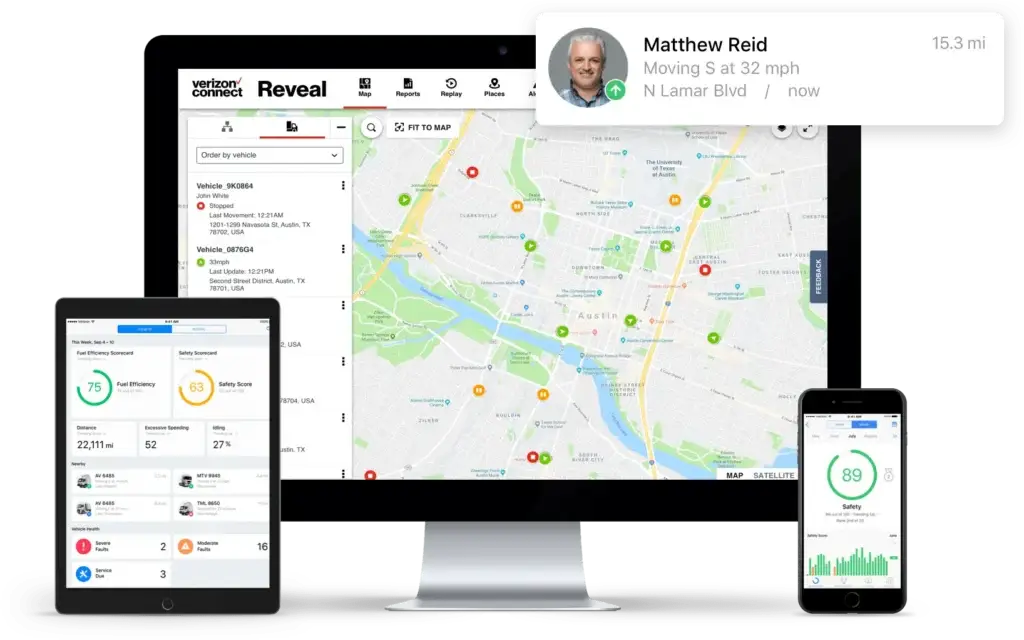
Verizon Connect is the largest fleet management provider in the United States by customer count — 85,000 customers managing 2 million vehicles — built on Verizon's cellular network infrastructure. Its compliance integration is comprehensive: IFTA reporting, HOS tracking, ELD, DVIR, and DOT audit documentation are native features. AEMP 2.0 integration for construction and heavy equipment data sharing is among the platform's strongest differentiators for mixed asset operations. For enterprise organizations with existing Verizon procurement relationships, the vendor familiarity and network reliability simplify a buying process that is otherwise administratively complex.
Strengths
Verizon Connect's compliance reporting depth and AEMP 2.0 integration are genuine competitive advantages for enterprise-scale mixed fleet operations managing both commercial vehicles and heavy equipment assets.
- Most comprehensive compliance integration of any platform in this comparison — IFTA, HOS, ELD, DVIR, and DOT audit documentation are native, not add-ons.
- AEMP 2.0 integration for easier data sharing between vehicles and assets — particularly valuable for construction and logistics operations managing mixed equipment fleets.
- Verizon's cellular network infrastructure provides strong geographic coverage across most of North America.
- Route optimization and field service dispatch capabilities that deliver productivity gains for service and distribution operations.
- Enterprise procurement familiarity for organizations with existing Verizon agreements.
- Real-time push alerts for driver behavior events including harsh braking, quick starts, and vehicle misuse.
Considerations
Verizon Connect's post-sale experience is the most consistently documented concern in public review data across this entire comparison. G2 carries a 3.8/5 rating — the lowest of any platform in this guide. Capterra reviewers describe contract cancellation as involving "inflexible terms, ignored requests, auto-renewals, and ongoing billing after termination." Trustpilot documents complaints about being charged for equipment never received and subscriptions continuing after cancellation.
Contract terms mirror the concerns: standard 36-month commitments with auto-renewal provisions that can lock operators into additional full terms if the cancellation window is missed. Hardware removal fees of $150 per device apply at contract end. For a mid-market fleet of 50 vehicles at $40-70/vehicle/month on a 3-year term, total committed spend reaches $72,000-$126,000 — and exits before term are documented as difficult to negotiate.
Product innovation has lagged behind Samsara and Motive — feature releases run 12-18 months behind pure-play fleet tech competitors by one independent assessment. The interface is consistently described as less intuitive and more menu-heavy than modern alternatives.
Who Should Look Elsewhere
Fleets under 200 vehicles will find the price-to-feature ratio hard to justify against Samsara or Motive. Independent owner-operators and small trucking companies should evaluate Motive first — the compliance tooling is comparable or stronger at better documented contract terms. Any fleet where post-sale customer support responsiveness is a priority should review G2, Capterra, and Trustpilot feedback specifically before committing. Verizon Connect's support reputation is documented across thousands of public reviews and represents a real operational risk for fleets that depend on rapid issue resolution.
Best Fit: Enterprise organizations with 200 or more vehicles where existing Verizon procurement relationships and network infrastructure alignment simplify vendor management. Compliance-heavy operations where AEMP 2.0 data sharing and native audit documentation depth outweigh interface modernity and post-sale support quality.
HDJ Verdict
Verizon Connect earns a Worth Considering rating because its compliance depth and network infrastructure are genuine strengths — but the contract enforcement reputation documented across public review platforms is a concern that fleet managers must evaluate seriously before signing. For fleets under 200 vehicles, Samsara or Motive deliver better feature currency, better post-sale support, and comparable compliance capability without Verizon Connect's documented exit risk.
Quick Comparison: Fleet Telematics Platforms for Heavy Duty Operations
| Platform | HDJ Rating | Best For | Key Strength | Key Consideration |
|---|---|---|---|---|
| Samsara | HDJ Top Pick | 20+ vehicle fleets; AI safety priority | Best AI dash camera; unified platform; proven safety outcomes | 36-month contract; full balance on early termination |
| Motive | HDJ Top Pick | Trucking & carrier compliance operations | Most mature ELD compliance; integrated fleet card; strong support | Contract opacity noted in reviews; hardware glitch reports |
| Geotab | Strong Contender | Data-driven fleets; mixed asset operations | Deepest diagnostics; 430+ integrations; open API; lowest entry price | Reseller model; support quality varies by reseller |
| Verizon Connect | Worth Considering | Enterprise fleets 200+ vehicles | Compliance depth; AEMP 2.0; Verizon network infrastructure | Lowest G2 rating; documented contract enforcement complaints |
The HDJ Perspective
After 15 years in commercial vehicle operations, the single most important thing I can tell fleet managers evaluating telematics platforms is this: the financial exposure in this category is unlike any other software purchase you will make. A shop management software contract might cost you $500 a month. A fleet telematics contract at $40/vehicle across 50 vehicles is $2,000 a month — $72,000 over 36 months — with documented cases of vendors holding operators to the full remaining balance even when half the fleet was sold.
The platforms in this comparison all have genuine value. The question is not whether the technology works — it mostly does. The question is whether the contract you're signing reflects the operational reality your business will actually live through over the next 3 years. Fleet size changes. Business conditions change. Markets change. The contract does not. Read Section 13 before you watch Section 1 of the demo.
How to Choose the Right Fleet Telematics Platform
What Does the Contract Actually Say About Early Termination?
Early termination liability is the most financially significant clause in any fleet telematics agreement — and it is almost never the first thing a sales team discusses. Request the master service agreement and reseller agreement (if applicable) before the demo. Locate the early termination section. Calculate your total liability if you needed to exit at the 12-month mark: total remaining months × vehicles × monthly rate. If that number is uncomfortable, negotiate flexibility before signing — or it will remain rigid afterward. Also locate the auto-renewal clause and the cancellation notice window. Missing a 30-60 day notice deadline can lock you into an additional full contract term.
What Is Your Fleet's Primary Technology Priority?
Fleet telematics platforms are not interchangeable — each is optimized for a different primary use case. If AI-powered driver safety and incident documentation are the primary drivers, Samsara leads. If FMCSA compliance depth and trucking workflow maturity are the primary drivers, Motive leads. If data analytics depth, open integration, and mixed asset management are the primary drivers, Geotab leads. Identifying your single most important criterion before evaluating demos prevents the common mistake of being impressed by the feature that sells best in a demo rather than the feature that matters most to your daily operation.
What Is the True Total Cost of Ownership?
The per-vehicle monthly rate is the beginning of the cost conversation, not the end. Before comparing platforms on price, request a fully itemized cost breakdown that includes: hardware per device, installation fees if required, per-driver or per-user licensing in addition to per-vehicle fees, add-on costs for features demonstrated during the sales process, annual billing versus monthly billing rate differences, and hardware removal or transfer fees at contract end. Get that full number in writing before any verbal commitments — platforms that decline to provide written itemized quotes before contract signature are telling you something important.
How Will You Evaluate AI Accuracy During the Trial?
AI dash camera false positive rates are one of the most impactful factors in driver acceptance — and one of the hardest to evaluate from marketing materials. A camera that flags every minor event as a safety incident generates driver frustration that undermines the coaching program's effectiveness. Ask vendors specifically: what percentage of flagged events require manual review before reaching fleet managers? How does the platform handle driver disputes of flagged events? Request access to a trial that runs on actual fleet vehicles in your operating environment — not a scripted demo on a clean account.
What Does the Post-Sale Support Experience Look Like?
Fleet telematics issues often surface at the worst possible moments — a driver at a DOT inspection can't access their electronic logs at 11 PM, or an HOS violation alert fires incorrectly during a critical delivery window. Ask specifically: what is the guaranteed response time for a compliance-affecting issue outside business hours? Is there a dedicated account manager after implementation? Do support staff have commercial vehicle operations experience? Then check G2 and Trustpilot for support reviews specifically — post-sale support quality is where the largest gap between vendor promises and customer experience consistently appears in this market.
Is a Full Fleet Platform the Right Fit for Your Operation Size?
Enterprise telematics platforms are designed for fleets of 20 or more vehicles. Owner-operators and small fleets under 15 vehicles should carefully evaluate whether the complexity and contract commitment of a full-platform solution deliver better value than a simpler, lower-cost ELD solution focused exclusively on FMCSA compliance. The operational overhead of managing an enterprise telematics platform — device provisioning, report configuration, driver coaching program administration — is meaningful for small operations where those hours come directly from the owner. Start with the compliance requirement, then add capability as the fleet grows.
Free Professional Fleet Tools
Fault code lookup, maintenance cost calculators, fleet management resources, and more — built for diesel professionals. No signup required.
Frequently Asked Questions
What is the best fleet telematics platform for heavy duty trucking operations?
HDJ gives dual Top Pick ratings in this comparison based on different primary priorities. Motive earns HDJ Top Pick for trucking-first operations where FMCSA compliance depth, HOS accuracy, and carrier workflow maturity are the primary criteria. Samsara earns HDJ Top Pick for mid-market and growing fleets where AI-powered driver safety, incident documentation, and a unified platform are the primary priorities. The right choice depends on which of these outcomes matters most to your operation.
What ELD do most trucking companies use?
Motive (formerly KeepTruckin) and Samsara are the most widely deployed ELD platforms in US trucking by active user count. Motive serves over 120,000 businesses and has the longest history as a trucking-native ELD provider. Geotab serves over 45,000 customers globally. Verizon Connect manages approximately 2 million vehicles across 85,000 customers but skews toward larger enterprise fleets.
What should I watch out for in a fleet telematics contract?
Early termination liability is the highest-risk clause — locate it before signing and calculate your exposure if you needed to exit at 12 months. Also review: auto-renewal provisions and cancellation notice windows (missing the window can trigger another full term), whether the vehicle count is locked even if your fleet shrinks, hardware removal fees at contract end, and whether the pricing you receive verbally is documented in writing in the contract. All four platforms in this guide typically require multi-year commitments. Documented complaints about contract enforcement are most prevalent for Verizon Connect, with Samsara also showing public BBB complaints about fleet downsizing denials.
How much does fleet telematics software cost?
None of the four platforms in this comparison publish pricing — all require a sales quote. Based on publicly available data and third-party analysis as of mid-2026: Samsara approximately $27-33/vehicle/month for GPS and ELD, rising to $40-60 with AI dashcam; Motive approximately $25-50/vehicle/month; Geotab approximately $10-18/vehicle/month at base tier through resellers; Verizon Connect approximately $40-70/vehicle/month for mid-market fleets including hardware and add-ons. Hardware costs add $80-300 per vehicle depending on configuration. Always confirm current pricing directly and request a fully itemized quote in writing.
Is Samsara or Motive better for a trucking company?
For trucking companies where FMCSA compliance is the daily operational foundation — HOS accuracy, sleeper berth splits, DVIR workflows, IFTA automation, and DOT audit readiness — Motive's trucking-native origin gives it more mature tooling in those specific workflows. For trucking companies where AI-powered driver safety, incident documentation for liability purposes, and a unified platform covering GPS, cameras, and maintenance are the primary priorities, Samsara leads. Many serious trucking operations evaluate both platforms directly before deciding.
What fleet telematics platform works best for a small fleet or owner-operator?
Owner-operators and small fleets under 10-15 vehicles should evaluate whether a full enterprise telematics platform delivers better value than a simpler ELD-only solution. For operations that specifically want one of the four platforms in this guide, Motive's availability at Pilot Flying J locations, free hardware with commitments, and documented support responsiveness make it the most accessible option for smaller operations. Samsara's Software Advice "Best for Small Business" designation for fleets under 49 vehicles reflects strong satisfaction at smaller scale — though hardware costs and contract terms remain meaningful at any fleet size.
What are the biggest complaints about fleet telematics providers?
Across G2, Capterra, Trustpilot, and BBB, the most documented complaints in fleet telematics are: contract inflexibility when fleet size changes, auto-renewal provisions that extend contracts without clear notice, billing continuing after cancellation requests, difficulty reaching knowledgeable support for compliance-affecting issues, and total cost of ownership exceeding the initial per-vehicle quote once hardware, installation, and add-ons are factored in. These complaints appear across all four platforms in this guide at varying rates — Verizon Connect has the most consistent documentation of contract-related complaints in public review data.
The Bottom Line
Fleet telematics is a category where the technology genuinely works — GPS tracking, ELD compliance, AI driver coaching, and preventive maintenance alerts all deliver documented operational improvements across the platforms in this guide. The variable that separates good implementations from expensive regrets is not platform capability. It is contract awareness.
For trucking operations and diesel fleets in HDJ's audience, the evaluation starts with two questions: Is FMCSA compliance your primary driver, or is AI safety your primary driver? If compliance comes first, Motive's trucking-native foundation is where the evaluation starts. If AI safety and a unified platform come first, Samsara leads. Geotab is the right choice for data-driven operations with internal technical capability and mixed asset management needs. Verizon Connect earns consideration for large enterprise fleets where existing procurement relationships and network infrastructure alignment simplify a complex buying process — but its post-sale support reputation requires honest evaluation before any commitment.
Read the contract before the demo. Calculate total committed spend across the full term. Verify AI accuracy on your actual vehicles during a trial. Check support reviews on platforms the vendor does not control. That sequence — not the demo itself — is where good telematics decisions are actually made.
Share This With a Fleet Manager Evaluating Telematics
This guide covers the four platforms on most shortlists — with the contract questions and evaluation framework that matter before the sales call, not after it.
Explore by Topic: Fleet Management & Strategy · Compliance & Safety Management · Diagnostics & Technology · Buyer's Guides