

By Michael Nielsen, Editor & Publisher | 15+ Years in Diesel Repair
Last Updated: February 2026
📖 Estimated reading time: 22 minutes
Female DOT compliance officers are reshaping commercial transportation safety, bringing critical expertise to a profession that directly protects drivers and the traveling public. These professionals serve as the bridge between complex Federal Motor Carrier Safety Administration regulations and the daily realities of fleet operations—translating dense regulatory language into practical safety programs that keep trucks running legally and highways safe.Women have increasingly stepped into this traditionally male-dominated profession, and their growing presence signals a meaningful shift in how the industry approaches regulatory enforcement. Their communication skills, detail-oriented documentation practices, and fresh perspectives strengthen safety outcomes across fleets of every size. But the role itself—regardless of gender—demands a rare combination of technical mastery, diplomatic skill, and unwavering commitment to public safety.This guide explores what DOT compliance officers do, the regulatory frameworks they navigate, the skills required for success, and the expanding career opportunities drawing more women into transportation safety leadership.Key Takeaways
- Safety gatekeepers: DOT compliance officers manage driver qualifications, hours of service, vehicle maintenance, and drug testing programs to prevent violations that carry fines up to $15,000 per incident.
- Growing female representation: Women now hold approximately 7-8% of compliance positions nationwide, with the strongest growth in third-party compliance services (+5.1% over five years).
- Regulatory scope: Officers must maintain expertise across multiple Title 49 CFR parts covering controlled substances, driver qualifications, hours of service, and vehicle maintenance standards.
- Technology-driven transformation: Fleet management software, electronic logging devices, and automated reporting systems have replaced paper-based processes, reducing administrative time by up to 60%.
- Career growth: Emerging roles in autonomous vehicle compliance and data analytics project 25-50% growth over the next decade, with salaries reaching $145,000 at the director level.
The Critical Role of DOT Compliance Officers in Commercial Transportation
Compliance professionals in commercial transportation safeguard both public safety and business continuity. These specialized officers serve as the essential link between FMCSA mandates and the daily operations of fleet companies across the United States. Their expertise prevents accidents, protects company assets, and ensures that commercial vehicles meet stringent safety requirements. The Department of Transportation created the FMCSA to regulate and enforce commercial vehicle safety for millions of trucks and buses operating nationwide. This regulatory body reduces threats to public safety through comprehensive oversight programs and standardized enforcement protocols.
How Compliance Officers Translate Regulations Into Practice
Compliance officers interpret complex commercial motor vehicle regulations and create actionable procedures tailored to their fleet’s specific operations. This translation process requires deep knowledge of both regulatory language and the operational realities of running trucks. They monitor driver qualification files, hours of service records, and vehicle maintenance schedules while educating vehicle owners about evolving safety regulations.The scope of FMCSA standards encompasses driver qualifications, vehicle maintenance protocols, hours of service limitations, and hazardous materials transport requirements. Officers must maintain expertise across all these domains simultaneously—and coordinate with the Commercial Vehicle Safety Alliance, which conducts enforcement checks at roadside inspection stations. Preparing fleets for these inspections requires ensuring documentation accuracy and vehicle readiness at all times.Economic Consequences of Non-Compliance
When a vehicle falls out of compliance, the DOT and FMCSA can impose fines that significantly cut into profits. Out-of-service orders halt revenue generation entirely while companies address violations. The financial impact extends to increased insurance costs and reputational damage that can take years to recover from.| Violation Category | Typical Fine Range | Operational Impact |
|---|---|---|
| Driver Qualification Files | $1,000 – $4,000 per violation | Driver suspension until corrected |
| Hours of Service Violations | $1,500 – $11,000 per violation | Immediate out-of-service order |
| Vehicle Maintenance Defects | $2,000 – $15,000 per vehicle | Vehicle grounded until repairs completed |
| Drug/Alcohol Testing Program | $5,000 – $10,000 per violation | Program suspension, potential authority loss |
Women Breaking Barriers in DOT Compliance
Female compliance professionals continue to reshape the landscape of transportation compliance and safety management. Their growing presence in DOT oversight positions represents a significant shift in how the commercial transportation sector approaches regulatory enforcement and fleet safety.
Historical Context and Current Representation
The journey of women in transportation compliance began in the mid-20th century when the trucking industry operated almost exclusively as a male domain. The 1980s and 1990s marked a turning point as regulatory frameworks expanded and federal requirements became more sophisticated, creating demand for professionals with strong analytical and organizational skills. By the early 2000s, women had established a visible presence in transportation leadership positions focused on safety and regulatory oversight.Today’s transportation sector shows measurable progress in gender representation, though opportunities for advancement remain. Industry data reveals that women now occupy approximately 7-8% of compliance officer positions across commercial fleets nationwide. The numbers vary significantly by fleet size and operational type.| Fleet Size Category | Female Officers | Male Officers | 5-Year Growth |
|---|---|---|---|
| Large Fleets (500+ vehicles) | 12% | 88% | +4.2% |
| Mid-Size Fleets (100-499) | 8% | 92% | +2.8% |
| Small Fleets (under 100) | 5% | 95% | +1.5% |
| Third-Party Compliance Services | 15% | 85% | +5.1% |
Unique Strengths and Perspectives
Research consistently demonstrates that gender diversity in safety management strengthens organizational performance. Female compliance officers often bring distinctive approaches that enhance fleet safety outcomes. Communication skills represent a frequently cited strength—many female professionals excel at conducting difficult conversations with drivers about violations or safety concerns. Their collaborative approach often reduces defensiveness and increases cooperation.Detail-oriented documentation practices contribute to more thorough compliance programs. Female officers typically maintain comprehensive records that withstand regulatory audits and provide clear audit trails. Fresh perspectives challenge entrenched practices that may compromise safety, leading to innovative solutions that improve both compliance and operational efficiency.Overcoming Gender Stereotypes
Despite progress, female compliance professionals still encounter obstacles rooted in outdated perceptions. Initial credibility challenges remain common, with some drivers or managers questioning authority based on gender rather than qualifications. Exclusion from informal networks creates additional barriers, as industry knowledge often spreads through casual conversations and relationships that may inadvertently exclude women.Successful women in DOT compliance overcome these challenges through demonstrated expertise and consistent professionalism. Professional certifications, comprehensive regulatory knowledge, and fair but firm enforcement establish credibility that transcends stereotypes. The Women in Trucking Association provides mentorship programs, scholarship opportunities, and networking events specifically designed to advance female professionals throughout transportation careers.Core Responsibilities of DOT Compliance Officers
Compliance officers manage a complex portfolio of regulatory responsibilities that directly impact fleet safety and operational success. These professionals ensure that every aspect of commercial transportation operations meets federal standards while protecting companies from costly violations.Driver Qualification File Management
Maintaining complete and accurate driver qualification files stands as the cornerstone of regulatory compliance. Each file must contain essential documentation proving a driver meets all federal requirements, including application forms, road test certificates, annual motor vehicle record reviews, and employment verification records.Background verification processes examine traffic violations, accident history, and license status across multiple jurisdictions. Officers must verify employment history for the previous three years from all employers, confirming that new drivers meet safety standards before operating commercial vehicles. Medical certification tracking requires monitoring expiration dates for every driver, sending renewal reminders, and preventing drivers from operating without current certifications.
Hours of Service Compliance Monitoring
Driver fatigue ranks among the leading causes of commercial vehicle accidents nationwide. Hours of service monitoring protects drivers and the public from fatigue-related crashes by enforcing strict time-management requirements established under 49 CFR Part 395.| Driver Type | Max Driving Time | Required Rest | Weekly Limit |
|---|---|---|---|
| Property-Carrying | 11 hours | 10 consecutive hours off duty | 60/70 hours in 7/8 days |
| Passenger-Carrying | 10 hours | 8 consecutive hours off duty | 60/70 hours in 7/8 days |
| Both Categories | 14-hour driving window | 30-minute break required | Must restart after rest |
Vehicle Maintenance and Inspection Oversight
Effective vehicle maintenance programs ensure commercial vehicles remain safe and roadworthy throughout their service life. Compliance officers establish systematic inspection schedules that meet federal maintenance standards. Driver-Vehicle Inspection Reports are required before and after every trip, covering essential safety components including lights, tires, mirrors, steering, brakes, fifth wheel connections, safety equipment, and windshield wipers.Officers review DVIRs daily to identify mechanical issues requiring immediate attention, coordinate repair schedules, and verify that defects are corrected before vehicles return to service. Documentation of all maintenance activities creates an audit trail that demonstrates regulatory compliance during inspections.Drug and Alcohol Testing Program Administration
Compliance officers manage random testing pools, coordinate with certified collection sites, and maintain strict confidentiality throughout the testing process in accordance with 49 CFR Part 382 controlled substances and alcohol testing requirements. Testing program administration includes pre-employment screening, post-accident testing, reasonable suspicion testing, and follow-up testing for drivers returning to duty.Officers handle positive test results according to return-to-duty protocols established by federal regulations while maintaining detailed records that withstand DOT audit scrutiny. The administrative complexity requires meticulous record-keeping and knowledge of confidentiality requirements that protect both driver rights and public safety.Regulatory Frameworks Governing Fleet Operations
Commercial motor vehicle operations exist within a multilayered system of federal regulations, enforcement mechanisms, and state-specific requirements. Understanding these federal motor carrier standards and their enforcement creates the foundation for effective compliance management.
FMCSA Authority and Enforcement
The Federal Motor Carrier Safety Administration serves as the primary regulatory body overseeing commercial vehicle operations throughout the United States. This agency possesses comprehensive authority to conduct investigations, issue citations, and propose civil penalties for violations. The FMCSA can ultimately revoke operating authority for serious or repeated violations, and its enforcement philosophy prioritizes safety interventions before accidents occur.Title 49 CFR: The Regulatory Backbone
Title 49 of the Code of Federal Regulations provides detailed requirements governing every aspect of commercial transportation. Understanding these interconnected regulations requires dedicated study and practical application experience.Part 382 establishes stringent drug and alcohol testing protocols for commercial drivers, mandating pre-employment testing for all candidates. Random testing pools must include 50% of the average driver count annually for controlled substances and 10% for alcohol. Post-accident testing protocols activate immediately following specific incident types, while reasonable suspicion procedures allow supervisors to require testing based on observable behaviors.Part 391 establishes minimum eligibility requirements for commercial operators under driver qualification standards. Age requirements vary based on interstate versus intrastate operations. Medical certification standards ensure drivers maintain physical capacity to operate safely, while knowledge and skills testing verifies competency before certification.Part 395 manages driver fatigue through time-management requirements. The 11-hour driving limit restricts consecutive driving time, and a 14-hour on-duty window caps the total working period regardless of breaks. Mandatory 30-minute breaks must occur within the first eight hours of driving, with sleeper berth provisions allowing split rest periods under specific conditions.$15,000+
Maximum per-vehicle fine for maintenance defects discovered during CVSA inspections — per FMCSA enforcement guidelines
State-Specific Compliance Variations
State regulatory requirements often exceed federal minimums, creating additional compliance layers for multi-state operations. Intrastate operating rules differ from interstate requirements in many jurisdictions. A commercial motor vehicle includes any vehicle over 10,001 pounds, those transporting eight or more passengers commercially, 15 or more non-commercially, or any vehicle carrying placarded hazardous materials. Compliance officers must maintain expertise across multiple regulatory jurisdictions simultaneously—a skill that separates exceptional professionals from average performers.Essential Skills and Qualifications for Compliance Success
Success in DOT compliance depends on building a robust foundation of educational credentials, industry certifications, and competencies that address both technical and human dimensions of safety management.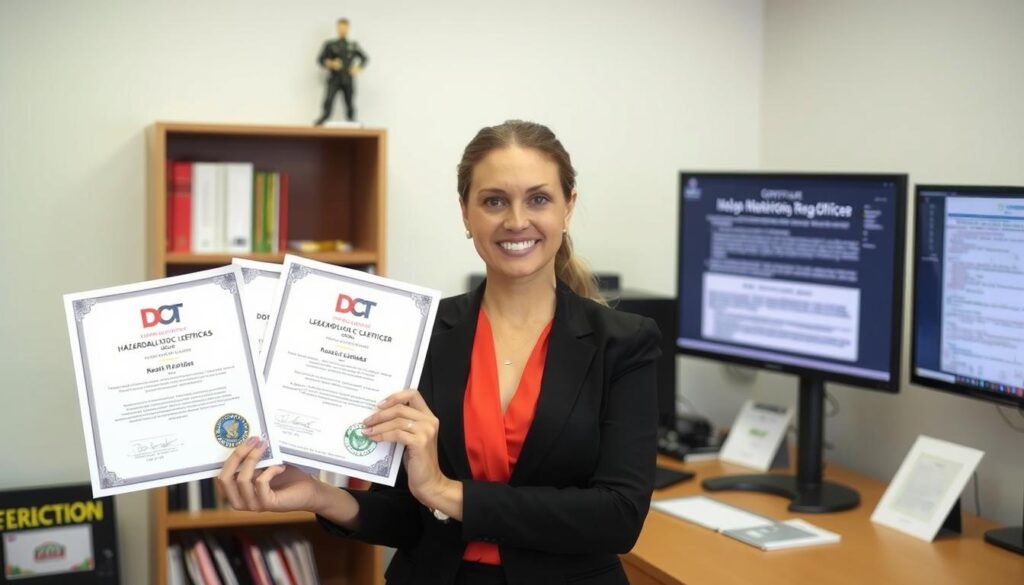
Education and Industry Certifications
While specific degree requirements vary among employers, successful compliance officers typically possess backgrounds in transportation management, business administration, or related fields. Many hold associate or bachelor’s degrees that provide foundational knowledge of logistics operations and regulatory frameworks.Professional certifications carry significant weight in the transportation industry. The North American Transportation Management Institute offers its Certified Director of Safety credential for experienced safety professionals. Candidates must demonstrate comprehensive knowledge across safety management principles, regulatory compliance frameworks, accident investigation methodologies, and program administration. This credential represents the gold standard for safety professionals in commercial transportation, requiring ongoing education to maintain certification status.Alternative certification paths exist through organizations like the American Society of Safety Professionals and the Commercial Vehicle Safety Alliance. Each program provides structured learning and assessment in specific compliance domains, complementing formal education with specialized knowledge in areas such as hazardous materials transportation, driver qualification standards, or vehicle maintenance protocols.Technical Knowledge and Communication Skills
Effective compliance officers must maintain mastery of current FMCSA regulations across all relevant parts of Title 49 CFR. This includes understanding how different regulatory sections interact and affect daily operations, grasping DOT enforcement procedures and violation severity weights that determine safety ratings, and maintaining familiarity with CVSA inspection procedures and out-of-service criteria.Technical knowledge alone proves insufficient. The ability to explain complex regulations in understandable terms to drivers and management represents a critical skill. Diplomatic abilities enable enforcement of unpopular but necessary restrictions without damaging workplace relationships. Leadership competencies help build genuine safety cultures rather than merely policing violations.Successful compliance officers also possess investigative mindsets that identify root causes of compliance failures rather than addressing symptoms. Data analysis skills reveal patterns in violation trends, while strategic thinking develops preventive solutions that address systemic issues. The transportation industry changes rapidly, requiring officers who can learn new systems, understand emerging technologies, and apply existing regulatory frameworks to unprecedented situations.The HDJ Perspective
The compliance officer role is evolving from “regulation enforcer” to “strategic safety partner”—and that shift favors professionals who combine technical depth with communication and leadership skills. In our conversations with fleet managers across the industry, the officers who earn the most respect aren’t necessarily the ones who memorize every CFR part number. They’re the ones who can explain to a frustrated driver why a 30-minute break requirement exists, coach a dispatcher through scheduling challenges, and present compliance ROI data to executives in the same week. Women entering this field often bring exactly this blend of analytical rigor and interpersonal skill. As regulatory complexity grows and technology transforms enforcement, the demand for well-rounded compliance leaders will only accelerate.
Technology Tools Transforming Compliance Management
Fleet compliance management has evolved from manual record-keeping to data-driven processes powered by advanced technology platforms. Compliance officers now utilize sophisticated digital tools that streamline regulatory oversight while reducing administrative burdens that once consumed entire workdays.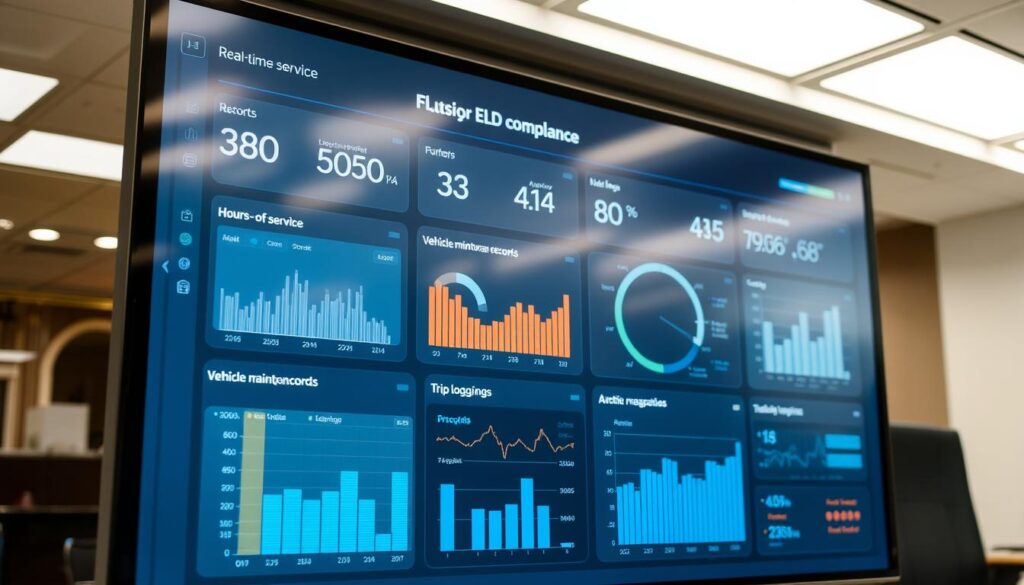
Fleet Management Software and ELD Integration
Integrated fleet management software serves as the central hub for all compliance activities. These platforms consolidate driver qualification files, vehicle maintenance schedules, and drug testing records into unified systems accessible from any location. Compliance officers can generate audit-ready reports within minutes rather than hours. Modern platforms eliminate redundant data entry and reduce human error in record maintenance.Electronic logging devices have fundamentally changed hours of service monitoring. The ELD mandate replaced paper logbooks with automated tracking that records driving time with precision. Officers now analyze complex data streams to identify anomalies suggesting device malfunction or tampering. ELD data integration extends beyond simple hour tracking—officers use it to optimize driver schedules while maintaining regulatory compliance and track IFTA compliance through accurate mileage recording across state jurisdictions.Automated Reporting and Mobile Monitoring
Specialized automated reporting systems monitor critical compliance deadlines throughout the organization. These platforms track medical certificate expirations, annual driver file reviews, and vehicle inspection due dates, sending automated alerts before deadlines pass. Drug testing random selection requirements are managed through sophisticated algorithms that ensure regulatory compliance while maintaining audit trails for every action taken.Mobile applications extend compliance oversight beyond traditional office hours. Officers monitor fleet status from any location, receiving instant notifications when compliance issues require immediate attention. Drivers submit electronic inspection reports at trip start and end points, eliminating the frustrations of incomplete or illegible paper forms. The CVSA’s Level VIII electronic inspections leverage ELD and telematics data to streamline the inspection process further.| Technology Solution | Primary Function | Key Compliance Benefit | Impact |
|---|---|---|---|
| Fleet Management Software | Centralized data management | Instant audit-ready documentation | Reduces admin time by 60% |
| Electronic Logging Devices | Automated HOS tracking | Eliminates logbook falsification | Improves hours compliance accuracy |
| Automated Reporting Systems | Deadline monitoring and alerts | Prevents missed compliance dates | Reduces violations by 75% |
| Mobile Applications | Remote fleet oversight | Real-time issue resolution | Extends monitoring beyond office |
Free Professional Fleet Tools
Cost calculators, fault code lookup, maintenance planners, and more—built for owner-operators, fleet managers, and diesel techs. No signup required.
Conducting Effective Compliance Audits and Inspections
Regular compliance audits represent the most powerful preventive tool available to transportation safety professionals. Systematic audit programs catch problems before external regulators discover them, saving companies from substantial penalties and operational disruptions.
Internal Audit Procedures and Best Practices
Comprehensive audit programs require structured planning and consistent execution. Officers develop annual calendars that distribute audit activities across all compliance areas, ensuring nothing receives attention only during crisis periods. Monthly or quarterly review cycles work best for most operations, with high-risk elements like hours of service and driver qualification files warranting more frequent examination.Driver qualification file audits demand meticulous attention. Officers systematically verify that each file contains complete applications, properly administered road tests, annual reviews with management signatures, current medical certificates, and motor vehicle record checks from all relevant jurisdictions. Standardized checklists ensure consistency across all examinations and help identify patterns that might indicate systemic problems requiring broader corrective measures.Face-to-face driver interviews verify that documentation reflects actual practices. Open-ended questions encourage honest disclosure rather than defensive responses, and creating psychologically safe environments helps drivers feel comfortable admitting mistakes or identifying training gaps.Preparing for DOT Roadside Inspections
The eight levels of DOT inspections require different preparation strategies. Level 1 North American Standard Inspections represent the most comprehensive examination, scrutinizing both driver credentials and vehicle components including brakes, tires, lights, and hours of service records. Level 2 Walk-Around inspections focus on visible components and driver documentation. Level 3 Driver-Only inspections review credentials and hours of service without vehicle examination. Officers train drivers on requirements for each type, emphasizing that professional cooperation improves outcomes.Federal regulations establish specific retention periods for different document types. Driver qualification files must remain accessible for three years after employment ends, accident records require three-year retention, hours of service records need six-month retention, and vehicle maintenance records must be kept for one year after the vehicle leaves the fleet. Proper organization prevents the panic that ensues when inspectors request documents that staff cannot locate.Key Recommendation
When audits reveal deficiencies, move beyond surface-level fixes to address root causes. Identify why violations occurred rather than simply correcting individual instances. Implement corrective measures with clear accountability, designated responsible parties, and completion deadlines—then verify effectiveness through follow-up auditing.
Building a Culture of Safety and Career Advancement
Compliance excellence emerges when organizations move beyond reactive enforcement to establish proactive safety cultures supported by education, incentives, and transparent accountability. Lasting regulatory adherence requires embedding safety values throughout every operational level, transforming compliance from a burdensome requirement into a competitive advantage.Training, Accountability, and Incentive Programs
Driver training programs form the foundation of sustainable compliance cultures. Effective training extends beyond initial orientation to include regular refresher courses addressing core compliance topics. Specialized modules target violation trends identified through internal audits, while scenario-based learning helps drivers apply regulations to real-world situations. The American Trucking Associations offers safety management resources that support these training initiatives.Accountability systems throughout operations clarify expectations at every level. Drivers maintain responsibility for daily hours of service compliance and pre-trip inspections. Dispatchers accept responsibility for creating schedules that allow legal operation. Maintenance personnel handle timely repairs, managers ensure adequate resources, and executives establish policies prioritizing safety over short-term pressures. Transparent reporting makes compliance performance visible throughout the organization.Recognition programs reinforce desired behaviors by celebrating achievements rather than focusing exclusively on violations. Clean inspection awards, safety bonuses tied to specific performance periods, preferential equipment assignment, and career advancement opportunities linked to safety records all demonstrate that the organization values compliance excellence.Career Pathways From Entry-Level to Executive Leadership
Most compliance officers begin through distinct entry points: former drivers transitioning after gaining operational experience, administrative staff learning compliance functions while supporting senior officers, or recent graduates from transportation and safety management programs entering directly into compliance positions. Entry-level roles typically involve maintaining driver qualification files, scheduling testing, processing maintenance records, and assisting during audits.Mid-career advancement opens doors to senior positions with expanded responsibilities including program design, audit leadership, and regulatory interpretation. Some officers develop expertise in hazardous materials regulations, while others concentrate on passenger carrier requirements or technology implementation. Post-accident investigation analysts bring valuable skills that command higher compensation.Experienced professionals advance into executive roles that shape organizational safety strategy. Director of Safety, VP of Risk Management, and Chief Safety Officer positions represent career pinnacles. These leaders manage compliance departments, interface with federal and state agencies, and influence regulatory development through rulemaking participation.| Career Opportunity | Growth Projection | Key Skills | Salary Range |
|---|---|---|---|
| Technology Integration Specialist | High (25-30%) | Software, data analytics, regulations | $75,000-$110,000 |
| Autonomous Vehicle Compliance Mgr | Very High (40-50%) | Technical systems, cybersecurity | $90,000-$135,000 |
| Safety Management Director | Moderate (15-20%) | Leadership, strategic planning | $95,000-$145,000 |
| Regulatory Affairs Consultant | High (30-35%) | Multi-state regulations, auditing | $85,000-$125,000 |
The Future: Autonomous Vehicles and Expanding Opportunities
Autonomous vehicles represent the most transformative change facing compliance professionals in decades. Traditional concerns like hours of service monitoring will diminish as automated systems handle driving tasks, but new challenges will emerge around software validation, cybersecurity protocols, sensor reliability verification, and transition management between automated and manual operation. These technical domains require compliance officers to develop expertise in areas previously outside their traditional scope.Transportation companies increasingly recognize compliance as a competitive advantage rather than merely a cost center. Organizations with strong compliance programs experience lower insurance premiums, reduced crash rates, and improved operational efficiency. Insurance providers now require demonstrated compliance programs for favorable underwriting decisions, creating sustained demand for qualified professionals who can document and maintain comprehensive safety management systems.The professionalization of compliance roles emphasizes skills like communication, systematic analysis, and relationship management—capabilities that align strongly with strengths many female professionals bring to transportation safety, creating particular advantages for women entering and advancing in this field.Frequently Asked Questions
What does a DOT compliance officer do on a daily basis?
DOT compliance officers manage driver qualification files, monitor hours of service records through electronic logging devices, oversee vehicle maintenance programs, and administer drug and alcohol testing programs. They translate complex FMCSA regulations into practical safety protocols that drivers and fleet managers can implement, conduct internal audits to catch problems before external regulators discover them, and prepare fleets for roadside inspections. Their daily work protects companies from fines ranging from $1,000 to over $15,000 per violation while safeguarding public safety on the nation’s highways.What qualifications do you need to become a DOT compliance officer?
Most DOT compliance officers hold backgrounds in transportation management, business administration, or related fields. Professional certifications from organizations like the North American Transportation Management Institute carry significant weight—their Certified Director of Safety credential is considered the gold standard. Officers need comprehensive knowledge of Title 49 CFR regulations, FMCSA enforcement procedures, and CVSA inspection standards. Strong communication skills, analytical abilities, and leadership competencies are equally important for translating regulations into practical guidance that drivers and managers can follow effectively.What are the biggest fines for DOT compliance violations?
DOT compliance violations carry fines ranging from $1,000 to over $15,000 per violation depending on the category. Driver qualification file violations typically cost $1,000-$4,000 each, hours of service violations range from $1,500-$11,000, vehicle maintenance defects run $2,000-$15,000 per vehicle, and drug and alcohol testing program violations cost $5,000-$10,000. Beyond monetary penalties, violations can trigger out-of-service orders that halt revenue entirely, increase insurance premiums, and damage carrier safety ratings through the FMCSA’s CSA program.How are women changing the DOT compliance profession?
Women now occupy approximately 7-8% of DOT compliance officer positions nationwide, with the strongest representation in third-party compliance services at 15% and large fleets at 12%. Growth trends show increases of 1.5-5.1% over the past five years across all fleet categories. Female compliance professionals bring distinctive communication strengths, detail-oriented documentation practices, and fresh perspectives that challenge entrenched habits. Research consistently demonstrates that gender diversity in safety management strengthens organizational performance through more comprehensive risk assessments and effective safety protocols.What technology tools do compliance officers use to manage fleet safety?
Modern compliance officers rely on integrated fleet management software that consolidates driver qualification files, maintenance schedules, and testing records into unified systems, reducing administrative time by up to 60%. Electronic logging devices automate hours of service tracking and provide real-time data analysis capabilities. Automated reporting systems monitor critical compliance deadlines and send alerts before certifications expire, reducing violations by an estimated 75%. Mobile applications extend monitoring beyond the office, allowing officers to approve vehicle repairs remotely and communicate with drivers during operations.What career advancement opportunities exist for DOT compliance officers?
DOT compliance careers offer structured progression from entry-level file management through specialized mid-career roles to executive leadership positions including Director of Safety, VP of Risk Management, and Chief Safety Officer. Emerging roles in autonomous vehicle compliance management and technology integration are projected to grow 25-50% over the next decade. Salaries range from $75,000 for technology integration specialists to $145,000 for safety management directors. Professional certifications, industry networking through organizations like the Women in Trucking Association, and continuing education accelerate advancement at every career stage.Strengthening Fleet Safety Through DOT Compliance Excellence
DOT compliance officers serve as essential guardians of transportation safety, translating complex federal regulations into practical programs that protect drivers, companies, and the public. Women bring valuable perspectives and leadership capabilities to this profession—their communication skills, analytical thinking, and collaborative approaches enhance the effectiveness of safety programs across every fleet size. As regulatory complexity grows and technology transforms enforcement, the demand for skilled compliance professionals will only accelerate. Aspiring officers should pursue relevant certifications, engage with industry associations like the CVSA and Women in Trucking, and build the blend of technical mastery and interpersonal skill that defines compliance leadership.Help More Fleets Stay Compliant
Know a fleet manager or compliance officer who’d find this guide useful? Share it with your professional network.