By Michael Nielsen, Editor & Publisher | 15+ Years in Diesel Repair
Last Updated: February 2026
📖 Estimated reading time: 23 minutes
Women in diesel repair are reshaping the heavy-duty service industry. Female shop owners and technicians are establishing thriving businesses, bringing fresh management perspectives and proven technical expertise to commercial fleets and owner-operators nationwide. The barriers that once seemed insurmountable are giving way to real opportunity.
According to Women in Trucking Association data, women now account for over 7% of diesel technicians in transportation—nearly double the 3.7% recorded just a few years ago. This growth extends beyond technician roles into shop ownership, fleet management, and parts management positions across the industry. For women considering diesel repair entrepreneurship, the combination of workforce shortages, consistent demand, and evolving customer preferences creates a favorable environment that rewards technical knowledge and business acumen equally.
Key Takeaways
- Workforce growth accelerating: Women’s representation among diesel technicians has nearly doubled, with female shop ownership growing 152% since 2020.
- Startup capital ranges from $250K to $1M+: Equipment, facility setup, and diagnostic tools represent major investments, but multiple financing programs support women-owned businesses.
- Certifications drive credibility: ASE T-series credentials and manufacturer training from Cummins, Detroit Diesel, and Caterpillar open doors to fleet contracts and warranty work.
- Customer-centric models create competitive edges: Transparent communication, proactive updates, and relationship-focused service approaches build loyalty that larger competitors struggle to match.
- The technician shortage creates opportunity: With over 80,000 unfilled diesel technician positions, shops with inclusive cultures attract talent from a broader candidate pool.
Women Making Gains in Diesel Repair
The number of women working as diesel technicians has nearly doubled in recent years, marking a significant milestone in workforce diversity. Women now represent over 7% of diesel technicians in the transportation sector, up from 3.7% not long ago. This growth reflects both increased interest from women entering the field and greater acceptance from employers recognizing the value diverse perspectives bring to complex diagnostic work.
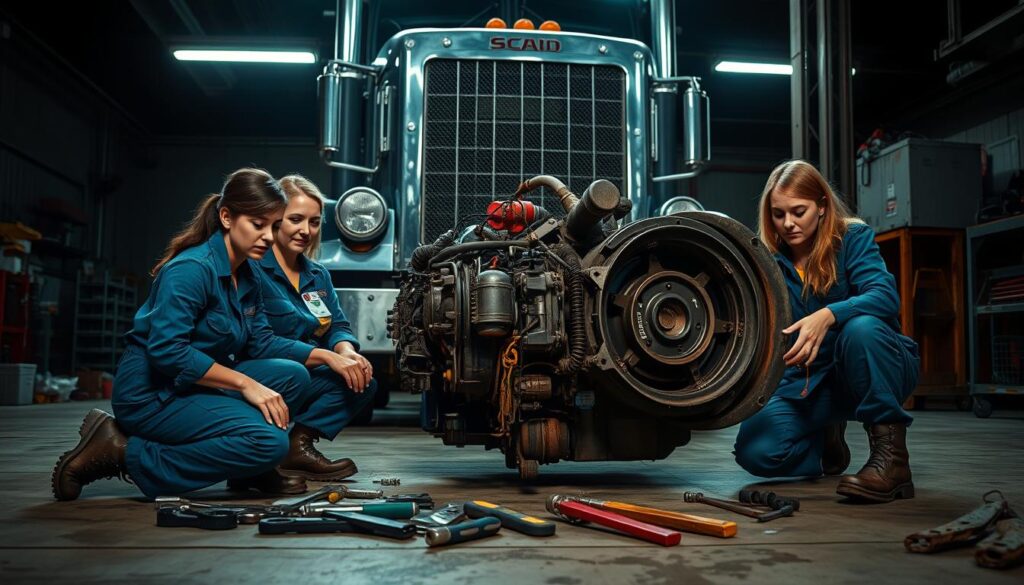
Real-world examples illustrate this transformation across the industry. One New Mexico shop owner operates two diesel repair facilities and has built her business partly by promoting and hiring women. Both female and male customers appreciate working with her female staff, and that customer satisfaction translates directly into repeat business and referrals. Major truck dealerships have similarly emerged as champions of diversity, creating environments where women thrive alongside male colleagues in technical roles.
“Once you get to know the guys, it’s very easygoing. They treat you like a person, not just a number on a paper. Everybody is pretty much equal across the board, whether you’re male or female.”
— Female technicians at a major truck dealership
Industry perceptions about women’s capabilities in heavy-duty repair have evolved dramatically. The reality is that modern diesel repair relies more on diagnostic technology and precision than brute force. Advanced computerized systems require analytical thinking and attention to detail—skills with no gender preference. Female shop owners report that their attention to customer communication often differentiates their businesses, with many clients appreciating the thorough explanations and transparent pricing their shops emphasize.
| Metric | 2020 | Current | Growth |
|---|---|---|---|
| Women Diesel Technicians (%) | 3.7% | 7.1% | +92% |
| Female Shop Owners | 2.1% | 5.3% | +152% |
| Women in Fleet Management | 12.4% | 19.2% | +55% |
| Female Parts Managers | 8.9% | 13.6% | +53% |
Business Opportunities for Women in Heavy-Duty Repair
The diesel repair sector presents substantial opportunities for female entrepreneurs ready to enter the market. A critical shortage of qualified diesel technicians affects the entire industry. The American Trucking Associations estimates a deficit of tens of thousands of technicians nationwide, creating market openings for new service centers that can attract and retain skilled workers. Female shop owners who cultivate inclusive workplace cultures often find it easier to recruit from the expanding pool of women entering the field.
Growing demand for diesel repair services continues unabated. The commercial trucking industry depends on approximately 3.5 million heavy-duty trucks requiring regular maintenance and emergency repairs. This consistent demand provides revenue stability for well-managed service centers regardless of economic conditions.
Women entrepreneurs can leverage unique customer service approaches that build loyalty. Transparent communication that explains repairs in accessible language builds trust. Customer-centric scheduling that offers flexible service times reduces downtime for commercial operators. Relationship-focused business models that emphasize long-term partnerships over transactional interactions create repeat business. Specialization opportunities in underserved niches like emissions systems, refrigeration units, or specific manufacturer lines further differentiate women-owned shops in local markets.
Financial incentives enhance these opportunities as well. Various government programs and private organizations offer grants, loans, and mentorship specifically for women-owned businesses in traditionally male-dominated fields. These resources reduce the capital barriers that historically limited female entrepreneurship in diesel repair.
Essential Technical and Business Skills for Diesel Shop Owners
Success in diesel repair ownership requires dual expertise: deep technical knowledge of heavy-duty systems and proven business management abilities. Female shop owners must either possess these skills themselves or build teams that deliver comprehensive capabilities across both domains.

Technical Expertise Requirements
Mastery of heavy-duty diesel engines represents the cornerstone of any successful shop. Understanding Cummins, Detroit Diesel, Caterpillar, and other major engine platforms provides the foundation for diagnosing and repairing the powerplants that drive commercial operations. Fuel injection systems require particular attention due to their complexity—modern common-rail systems operate at pressures exceeding 30,000 PSI and demand precise diagnostic approaches. Turbocharging systems, emissions controls including diesel particulate filters and selective catalytic reduction, and complete engine management strategies all fall within this expertise domain.
Hydraulic and pneumatic systems power essential functions throughout heavy-duty trucks and equipment, controlling braking, suspension, steering, and auxiliary equipment. Air brake systems represent a particularly important competency area, utilizing compressed air to activate braking components and requiring specialized knowledge of compressors, valves, chambers, and the entire pneumatic network. Female shop owners who develop strong capabilities in these areas gain competitive advantages because many technicians focus primarily on engine work.
Modern diesel equipment relies heavily on electronic control systems that manage virtually every vehicle function. Engine computers, transmission controllers, anti-lock braking systems, and multiplexed electrical networks create complex diagnostic challenges. Advanced diagnostic software from manufacturers like Cummins INSITE, Detroit Diesel Diagnostic Link, and Caterpillar Electronic Technician provides essential capabilities. Understanding how to interpret fault codes, analyze data parameters, and perform bi-directional controls separates competent shops from those capable only of parts replacement.
Business Management Competencies
While technical skills keep vehicles running, business management capabilities keep service centers profitable and growing. Financial management encompasses pricing strategies, cash flow monitoring, overhead cost control, and strategic investment decisions. Understanding which diagnostic tools, shop equipment, and facility improvements deliver the strongest returns requires analytical capabilities beyond technical knowledge.
“Skilled truck maintenance technicians are indispensable in keeping professional drivers productive, on the road, and delivering on-time.”
— Jennifer Hedrick, President, Women in Trucking Association
Customer relationship management skills prove equally essential. Building trust with commercial fleet operators, owner-operators, and individual customers requires communication abilities, service quality consistency, and the professionalism that encourages repeat business. Employee recruitment, retention, and development represent another critical area—the diesel technician shortage makes skilled workers difficult to attract and retain. Shop owners must create workplace cultures that appeal to quality technicians while providing ongoing training that keeps skills current.
The most successful female shop owners recognize they cannot master every skill personally. They strategically develop expertise in their strength areas while hiring or partnering with professionals who complement their capabilities. Aspiring entrepreneurs should assess their current skill levels across these domains honestly, identifying gaps early for targeted training, mentorship, or team-building strategies.
Starting a Diesel Repair Business from the Ground Up
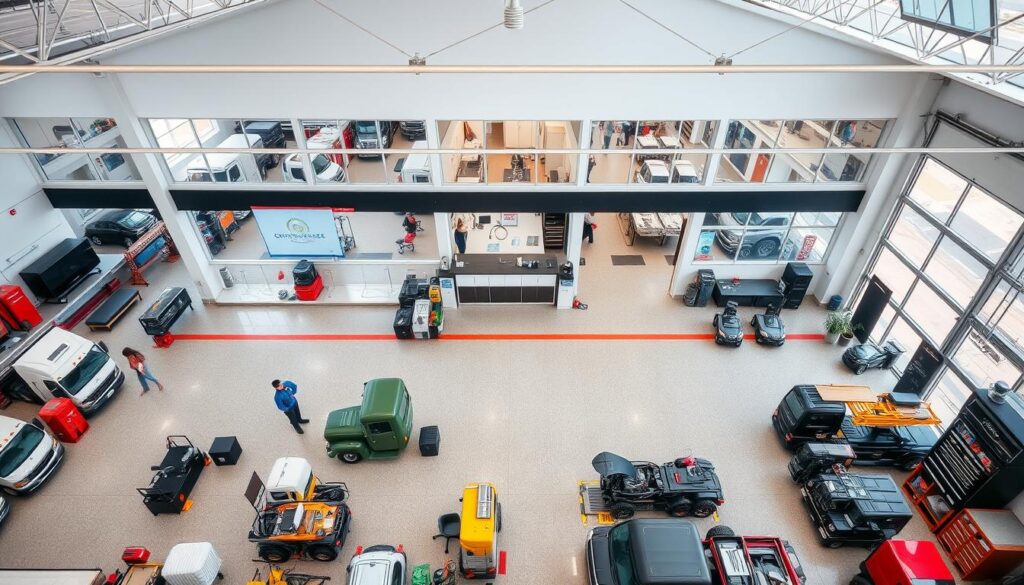
Launching a diesel shop from scratch demands thorough preparation, significant financial resources, and meticulous attention to facility requirements. The startup process involves multiple interconnected decisions that shape operations for years ahead. One successful female shop owner describes launching her business as “a huge leap of faith” but credits combining technical expertise with strong bookkeeping abilities as the foundation for building two profitable locations.
Developing a Comprehensive Business Plan
Market analysis forms the foundation of effective planning. Identify target customer segments with precision—fleet operators, owner-operators, construction companies, and agricultural operations each have distinct needs and service expectations. Research existing diesel repair providers in your target market thoroughly to understand pricing structures, service offerings, and market positioning. Define your service offerings clearly from day one, since each service category requires different equipment investments and technician skill sets.
Financial projections should cover the first three to five years of operation with detailed revenue forecasts, expense budgets, cash flow statements, and break-even analysis. Conservative estimates demonstrate realistic planning to potential investors. Operational plans outline staffing requirements, equipment needs, and daily workflow processes showing you understand the practical realities of running a commercial vehicle repair facility.
Securing Financing and Investment Capital
Capital requirements typically range from $250,000 to over $1 million depending on service scope, facility size, and equipment specifications. Multiple funding sources exist for qualified entrepreneurs. Traditional bank loans offer competitive interest rates but require strong credit histories and substantial collateral. SBA loan programs provide government-backed financing with favorable terms—the 7(a) program works well for general business purposes, while the 504 program specifically supports real estate and equipment purchases.
Women entrepreneurs may face additional challenges in accessing capital. Studies show that women-owned businesses receive smaller loan amounts and face higher rejection rates than male-owned businesses. However, specialized programs supporting women-owned businesses can help overcome these barriers. Organizations like the National Association of Women Business Owners provide resources and connections, while Women’s Business Enterprise National Council certification can open doors to corporate and government contracts prioritizing diversity suppliers.
Choosing the Right Location and Facility
Proximity to target customers should drive your location search. A facility near major trucking routes, distribution centers, or construction zones provides natural customer traffic. Fleet operators prefer service providers within reasonable distance to minimize vehicle downtime. Accessibility for large commercial vehicles eliminates a major barrier—your facility needs wide entrances, adequate turning radius, and clear approach routes for trucks hauling trailers.
Physical infrastructure specifications determine what services you can offer. Ceiling height requirements for heavy-duty truck service typically range from 16 to 20 feet. Class 8 trucks require bays at least 14 feet wide and 50 feet deep. Heavy-duty lifts must be rated for 40,000 pounds or more. Compressed air systems should deliver sufficient volume and pressure for multiple simultaneous users.
Regulatory considerations affect where you can operate and how you handle waste materials. Commercial zoning requirements vary between jurisdictions—verify your intended location allows automotive repair businesses before signing any lease. EPA hazardous waste regulations under the Resource Conservation and Recovery Act establish federal standards for used oil, batteries, and contaminated materials that you must meet or exceed. Environmental permits govern waste oil handling, and you must demonstrate proper storage, disposal, and record-keeping.
Building Credibility Through Industry Certifications
Female shop owners who invest in professional credentials differentiate their businesses while gaining access to advanced technical resources. Strategic certification choices create multiple business advantages beyond technical knowledge. Manufacturer training programs open doors to warranty work and OEM partnerships, while industry recognition through professional associations provides networking that leads to customer referrals.

ASE Certifications for Heavy-Duty Trucks
The National Institute for Automotive Service Excellence offers specialized T-series certifications covering eight critical areas: diesel engines (T2), drive train (T3), brakes (T4), suspension and steering (T5), electrical systems (T6), heating and air conditioning (T7), and preventive maintenance (T8). Each requires passing a comprehensive examination validating technical proficiency. Customers recognize the blue and white ASE logo as a quality standard, and fleet managers often require ASE-certified technicians as a condition for establishing service contracts.
The ASE Blue Seal of Excellence designation elevates an entire service center’s reputation. To qualify, at least 75% of technicians must hold current ASE certifications in their primary work areas. This shop-level recognition demonstrates organizational commitment to professional standards. Maintaining certifications requires recertification every five years, ensuring technicians stay current with evolving diesel technology and emission systems.
Manufacturer-Specific Training
Cummins offers comprehensive training at regional centers covering engine architecture, electronic controls, and diagnostic procedures. One female technician who completed the Cummins Engines Program after graduating from her core diesel technology program demonstrates how manufacturer credentials enhance foundational technical knowledge. Detroit Diesel provides certification programs focused on proprietary engine families and integrated powertrain systems, including access to Detroit Connect telematics data and remote diagnostics. Caterpillar certification covers both on-highway truck engines and off-road equipment, creating opportunities to serve construction customers alongside trucking fleets.
| Certification | Focus Areas | Business Advantage | Recertification |
|---|---|---|---|
| ASE T-Series | Eight diesel truck systems | Industry credibility with fleets | 5 years |
| Cummins Certified | Engine diagnostics, fuel systems, controls | Authorized warranty provider status | Annual updates |
| Detroit Diesel | DD13/DD15/DD16, aftertreatment | Proprietary software access | 2 years |
| Caterpillar Service | Cat engines, hydraulics, electronics | Dealer network referrals | 3 years |
Professional Industry Networks and Associations
The Women In Trucking Association provides networking and professional development opportunities specifically designed for women in the diesel and trucking sectors, connecting female shop owners with mentors, business resources, and industry recognition programs. The Technology & Maintenance Council of the American Trucking Associations offers technical education through events like the annual SuperTech competition. State and regional trucking associations host equipment shows, safety conferences, and business development events where female shop owners build relationships that translate into customer contracts and supplier partnerships.
Strategies for Success as a Female Diesel Shop Owner
Women entrepreneurs running diesel service centers consistently demonstrate that differentiated business practices create competitive advantages. The most successful operations build thriving businesses by leveraging authentic leadership styles rather than replicating traditional management approaches. One prominent shop owner states that a main reason her shops stay successful is because they “promote and hire women,” noting that both female and male customers respond positively to her approach.

Customer-Centric Service Models That Drive Loyalty
Building lasting customer loyalty requires implementing service models that prioritize customer experience alongside technical excellence. Creating welcoming facilities that make customers comfortable regardless of their background signals the attention to detail that extends to repair quality. Educational approaches—taking time to explain equipment needs, providing context for repair decisions—transform transactions into relationships built on mutual respect.
| Service Aspect | Traditional Approach | Customer-Centric Model | Business Impact |
|---|---|---|---|
| Repair Communication | Technical jargon without context | Clear explanations with visual aids | Reduced disputes, higher approval rates |
| Pricing Structure | Quote after diagnosis only | Transparent estimates with options | Increased trust and referrals |
| Follow-up Systems | Contact when problems arise | Proactive maintenance reminders | Higher retention rates |
| Warranty Programs | Minimum required coverage | Comprehensive guarantees | Demonstrates confidence, builds loyalty |
Building Trust with Commercial Fleet Customers
Commercial fleet operators and owner-operators represent the core customer base for diesel repair businesses. These customers prioritize reliability, quality, and value differently than individual consumers. Documentation practices play a critical role because commercial operators must maintain detailed maintenance records for 49 CFR Part 396 regulatory compliance and asset management. Providing comprehensive repair documentation, parts lists, and service histories adds value beyond the mechanical work performed.
Account management systems that provide personalized service to large fleet customers create competitive advantages in crowded markets. Dedicated contacts who understand specific fleet needs, equipment configurations, and scheduling constraints become trusted advisors rather than transactional service providers. This relationship depth generates loyalty that withstands competitive pricing pressures from larger chains or dealership networks.
The HDJ Perspective
The diesel repair industry’s technician shortage isn’t going away—and that creates a structural advantage for women-owned shops willing to invest in inclusive workplaces. While the industry debates how to attract the next generation of technicians, female shop owners are already tapping into a candidate pool that traditional shops overlook. The numbers tell the story: 152% growth in female shop ownership since 2020 isn’t a trend—it’s a market correction. The shops that thrive over the next decade will be the ones that recognize diverse leadership as a business strategy, not just a talking point.
Recruiting and Managing a Skilled Workforce
Finding and keeping quality diesel technicians represents one of the biggest challenges facing shop owners today. The Bureau of Labor Statistics projects strong demand for diesel technicians, and the persistent shortage of qualified professionals means shops with effective recruitment strategies gain significant competitive advantages.

Attracting Top Talent in a Competitive Market
Competitive compensation packages form the foundation of effective recruitment. Research prevailing wages in your region and consider offering above-market rates for experienced technicians. Sign-on bonuses ranging from $2,000 to $5,000 demonstrate commitment to attracting the best professionals. Building relationships with accredited diesel technology programs creates a pipeline of fresh talent—visit campuses, sponsor student competitions, and offer paid internships to establish your shop as an employer of choice.
Apprenticeship programs allow you to develop talent internally while addressing the technician shortage. Partner with registered programs combining on-the-job training with classroom instruction. Employee referral programs tapping existing team networks, with bonuses of $1,000 to $3,000 for successful hires, prove consistently effective because current technicians understand your culture and identify candidates who fit well.
Building an Inclusive and Productive Shop Culture
Creating an inclusive workplace culture delivers measurable business benefits beyond ethical considerations. Shops with respectful, supportive environments experience lower turnover, higher productivity, and better customer service. Establishing clear zero-tolerance policies for harassment and discrimination sets expectations from day one. Equal opportunity for challenging assignments prevents stereotyping certain technicians into specific job types—rotating complex repairs among qualified team members develops versatility while demonstrating that advancement depends on competence.
Collaborative problem-solving creates stronger teams than hierarchical structures where only senior technicians contribute. Regular team meetings where everyone shares insights foster innovation and give newer technicians learning opportunities. Recognition systems rewarding performance, quality work, and positive contributions reinforce the behaviors you want to see across your shop.
Free Professional Fleet Tools
Cost calculators, fault code lookup, maintenance planners, and more—built for owner-operators, fleet managers, and diesel techs. No signup required.
Financial Management and Profitability
Financial acumen drives diesel shop profitability as much as technical skill. One successful multi-location owner emphasizes being a “numbers kind of person” and notes that “the numbers in this industry just make sense” because economic downturns don’t eliminate the need for reliable transportation. Commercial vehicles must stay operational regardless of market conditions, providing revenue stability that many industries lack.
Setting Prices That Reflect Your Value
Your labor rate must cover more than technician wages. Calculate total monthly overhead including rent, utilities, insurance, equipment depreciation, administrative salaries, and marketing costs. Divide by productive technician hours to determine your baseline rate before adding profit margin. Parts markup typically ranges between 30% and 50% on wholesale costs, though commodity items may warrant lower margins while specialty components justify higher markups.
Flat-rate pricing provides consistency and allows customers to know costs upfront. Hourly billing protects against unexpected complications. Value-based pricing charges premium rates for specialized expertise, mobile services, or emergency repairs. Fleet contract pricing offers volume discounts in exchange for guaranteed business. Never compete primarily on price—this erodes profitability and attracts price-sensitive customers who show little loyalty. Emphasize quality workmanship, warranty coverage, and diagnostic accuracy that minimizes vehicle downtime.
Cash Flow and Equipment Investment Strategy
Establish clear payment terms balancing customer convenience with cash needs. Require deposits for repairs exceeding $2,000 to protect against abandoned vehicles or disputed charges. Offer net-30 terms to established commercial clients with good credit histories but implement credit limits and review aging receivables weekly. Accept multiple payment methods and invoice fleet customers immediately upon job completion rather than batching monthly.
Prioritize diagnostic equipment that addresses complex electronic systems in modern diesel engines. Budget $25,000 to $50,000 for comprehensive diagnostic tool inventory including manufacturer-specific platforms. Heavy-duty lifts ($15,000-$45,000) and compressed air systems ($3,000-$12,000) represent essential infrastructure investments. Quality used equipment deserves consideration for lifts, compressors, and hand tools, but diagnostic equipment warrants buying new with current software subscriptions since outdated scanners cannot communicate with newer vehicle systems.
Overcoming Gender Bias and Industry Challenges
Women who own diesel repair businesses face a combination of technical, financial, and social challenges demanding targeted solutions. The gender bias the industry perpetuates can manifest when customers question a woman’s technical knowledge, or when vendors direct technical conversations to male employees assuming leadership lies elsewhere. One experienced shop owner acknowledges “definitely feeling the gender stigma” but notes that “times are changing for the better.”
Strategies for Addressing Industry Bias
Demonstrate expertise immediately by using industry-standard terminology and referencing specific technical systems. Display certifications prominently in the office, on business cards, and in marketing materials. Let quality work speak for itself through consistent delivery. Address disrespectful behavior directly and professionally when it occurs. Build vendor relationships with partners who recognize your expertise and treat you as an equal. Most customers care primarily about getting trucks repaired correctly and returned to service quickly—consistent quality transforms initial skepticism into loyalty.
Work-life integration presents particular challenges for women who often shoulder disproportionate family responsibilities alongside the demands of running a service center. Successful female shop owners build strong management teams capable of handling daily operations without constant owner presence, establish clear boundaries by designating protected family time, and invest in reliable staff who manage emergency situations independently.
Capital access remains another hurdle. Women-owned businesses receive smaller loan amounts and face more stringent lending requirements on average. Female shop owners should explore multiple funding avenues beyond traditional bank loans including SBA women-owned business programs, Community Development Financial Institutions, equipment financing, and connections through NAWBO and WBENC that link entrepreneurs with experienced lenders.
Scaling and Growing Your Diesel Repair Business
After establishing a solid operational foundation, strategic expansion increases revenue while strengthening competitive positioning. The diesel repair industry offers numerous pathways for growth beyond traditional shop-based repairs.
Expanding Service Offerings
Mobile diesel repair represents one of the fastest-growing segments in heavy-duty service. Commercial operators face significant costs when trucks sit idle, making on-site repair extremely valuable. Mobile units that bring diagnostic equipment and common parts directly to broken-down vehicles command premium pricing. Implementing mobile services requires investment in properly equipped service trucks and trained technicians who can work independently, with marketing emphasizing your ability to minimize downtime costs.
Fleet maintenance contracts provide predictable recurring revenue that stabilizes cash flow. These agreements establish your shop as the primary maintenance provider, creating deeper customer relationships. Volume commitments allow competitive rates while maintaining healthy margins. Approaching fleet managers requires demonstrating capacity to handle multiple vehicles simultaneously while meeting tight turnaround requirements.
Multi-Location Growth and Technology Investment
Geographic expansion amplifies market presence and revenue potential. Successful female shop owners have demonstrated that managing multiple locations is achievable with strong management systems. Market analysis identifying underserved areas with sufficient commercial vehicle density, combined with proven profitability at existing facilities, positions entrepreneurs for funded expansion through SBA loans or retained earnings.
Investment in technology separates successful shops from those losing ground. Modern diesel engines contain sophisticated computer systems controlling everything from fuel injection timing to emission reduction strategies. Professional-grade diagnostic platforms from Cummins, Detroit Diesel, Caterpillar, and Volvo require annual subscriptions but pay dividends through faster diagnosis and fewer comebacks. Shop management software like Fullbay, Shop-Ware, or Mitchell 1 Manager SE streamlines work orders, inventory, customer communication, and financial reporting—replacing manual systems that cannot provide the data visibility modern businesses require.

Staying current with EPA emissions standards represents one of the most critical aspects of modern diesel repair operations. Emission control systems including DPFs, SCR, EGR, and variable geometry turbochargers require specialized diagnosis knowledge. Tampering with emission controls carries penalties starting at $4,527 per device under the Clean Air Act, and the EPA actively investigates shops performing emission system deletions. Shops that master emissions work attract customers other providers cannot serve.
Frequently Asked Questions
How many women work as diesel technicians in the United States?
Women now represent over 7% of diesel technicians in the U.S. transportation sector, nearly doubling from 3.7% just a few years ago according to Women in Trucking data. Female shop ownership has grown even faster, increasing approximately 152% since 2020. Women in fleet management roles have reached 19.2%, while female parts managers account for 13.6% of positions. These numbers continue trending upward as workforce demographics shift and industry acceptance grows.
What certifications do female diesel shop owners need?
ASE T-series certifications covering diesel engines, brakes, drive train, electrical systems, and preventive maintenance establish baseline credibility with fleet customers. The ASE Blue Seal of Excellence designation, requiring 75% of technicians to hold current certifications, elevates the entire shop’s reputation. Manufacturer-specific training from Cummins, Detroit Diesel, and Caterpillar opens access to warranty work and OEM technical support. These credentials help overcome initial skepticism and qualify shops for fleet service contracts that typically require certified technicians.
How much does it cost to start a diesel repair shop?
Capital requirements typically range from $250,000 to over $1 million depending on service scope, facility size, and equipment needs. Major costs include facility lease or purchase, heavy-duty lifts rated for 40,000+ pounds, diagnostic equipment ($25,000-$50,000 for comprehensive tools), and compressed air systems. Funding sources include SBA loans, equipment financing, and programs specifically supporting women-owned businesses through organizations like NAWBO and WBENC. Conservative financial projections covering three to five years strengthen financing applications.
What business advantages do women bring to diesel repair?
Female shop owners frequently leverage strong communication skills, detail-oriented quality control, and customer-centric service models that build loyalty in commercial fleet markets. Transparent pricing explanations, proactive repair status updates, and educational approaches to customer interactions create trust that translates into repeat business and referrals. Collaborative management styles foster team environments where technicians feel valued, and inclusive workplace cultures help attract and retain talent from a broader candidate pool during the ongoing technician shortage.
What financing options exist specifically for women starting diesel repair businesses?
The SBA Women-Owned Small Business Program offers favorable terms with lower down payments. Community Development Financial Institutions provide flexible, relationship-based lending for working capital and expansion. Equipment financing uses the purchased assets as collateral, making approval more accessible. Industry organizations like the National Association of Women Business Owners and the Women’s Business Enterprise National Council connect female entrepreneurs with lenders, mentorship programs, and government or corporate contracts prioritizing diversity suppliers.
How can women overcome gender bias in the diesel repair industry?
Successful female shop owners address bias through demonstrated expertise, prominent certification displays, and consistent delivery of quality work. Using industry-standard terminology in customer interactions establishes credibility immediately. Building vendor relationships with partners who treat you as an equal proves essential. Most importantly, competence gradually changes perceptions—fleet managers ultimately prioritize getting trucks repaired correctly and returned to service quickly over any other consideration.
Building the Future of Women in Diesel Repair
Women in diesel repair have proven that building profitable service centers is achievable through combining technical expertise with smart business strategy. The workforce data confirms accelerating growth, with female shop ownership up 152% and women diesel technicians doubling in just a few years. The combination of persistent technician shortages, consistent commercial vehicle demand, and expanding financing options creates real opportunity for women entering this field.
Success requires certifications that establish credibility, customer-centric service models that differentiate your business, and financial discipline that sustains growth through market cycles. Women considering diesel repair entrepreneurship should move forward with confidence—the path has been proven by female shop owners who built thriving businesses while reshaping what leadership looks like in heavy-duty repair.
Know a Woman Building a Diesel Repair Business?
Share this guide with shop owners, technicians, and aspiring entrepreneurs in the heavy-duty repair industry. The more we share these strategies, the stronger the community becomes.