
Fleet managers face a critical financial decision that directly impacts their bottom line: should they invest in preventive truck maintenance programs or rely on emergency roadside service when breakdowns occur? This choice affects not only immediate repair costs but also long-term operational efficiency, vehicle uptime, and fleet profitability.
The financial implications are substantial. According to the American Transportation Research Institute, truck operating costs surpassed the $2 per mile mark for the first time in 2022. Maintenance expenses rose from $7.04 per hour in 2021 to $7.89 in 2022, representing a 12% increase. Fleet maintenance costs now account for $9 of every $100 spent on vehicle operations, making it the third-highest expense after fuel and lease payments.
Emergency repairs typically cost 30-50% more than scheduled maintenance for identical work. A 20-truck fleet spending $350,000 annually on maintenance can potentially save between $70,000 and $140,000 through proper preventive maintenance implementation. This cost analysis reveals that fleet maintenance represents one of the largest controllable expenses in fleet operations.
Last Updated: November 2025
Key Takeaways
- Emergency repairs cost 30-50% more: Average repair costs reached $542 per incident, with emergency service adding significant premiums over scheduled maintenance.
- Downtime costs $448-$760 daily: Lost revenue, driver wages, and cargo penalties accumulate rapidly during breakdowns beyond the repair invoice.
- Prevention delivers 4:1 to 5:1 ROI: Every dollar invested in preventive maintenance saves $4-$5 in avoided emergency repairs and downtime costs.
- Maintenance is third-largest expense: At $7.89 per hour (up 12% from 2021), maintenance represents $9 of every $100 in operating costs.
- Fleet savings potential: A 20-truck operation can save $70,000-$140,000 annually through strategic maintenance planning.
Understanding the True Cost of Emergency Roadside Service
Understanding the complete cost structure of emergency roadside service requires examining multiple layers of fees, premiums, and charges that accumulate during breakdown situations. Fleet managers often underestimate the financial impact because emergency service costs extend beyond the visible repair invoice. The complexity of roadside assistance pricing involves direct service fees, geographic variables, and time-based premiums that can transform a routine repair into a budget-straining expense.
Emergency repairs typically cost 30-50% more than scheduled maintenance for identical work. This premium reflects the urgent nature of roadside breakdowns and the specialized resources required for mobile service delivery. Industry data shows that emergency roadside service incidents can cost fleets between $400-$2,500 per incident depending on the breakdown nature and location.
Recent trends indicate escalating costs across the emergency service sector. Average repair costs increased from $455 to $542 in Q3 2019, representing a 19% increase in a single quarter. This upward trajectory continues as parts costs, labor rates, and operational expenses rise throughout the commercial vehicle service industry.
Direct Service Costs and Fee Structures
The foundation of emergency service costs begins with direct charges that appear on every roadside assistance invoice. These baseline fees represent the minimum financial commitment before addressing any mechanical repairs. Service call charges typically include diagnostic fees, travel charges, and minimum service windows that providers establish to cover their operational expenses.
Fleet managers should expect emergency repair fees to include multiple cost components beyond simple labor and parts. Most providers structure their pricing around service tiers that reflect response time guarantees, equipment availability, and technician expertise levels.
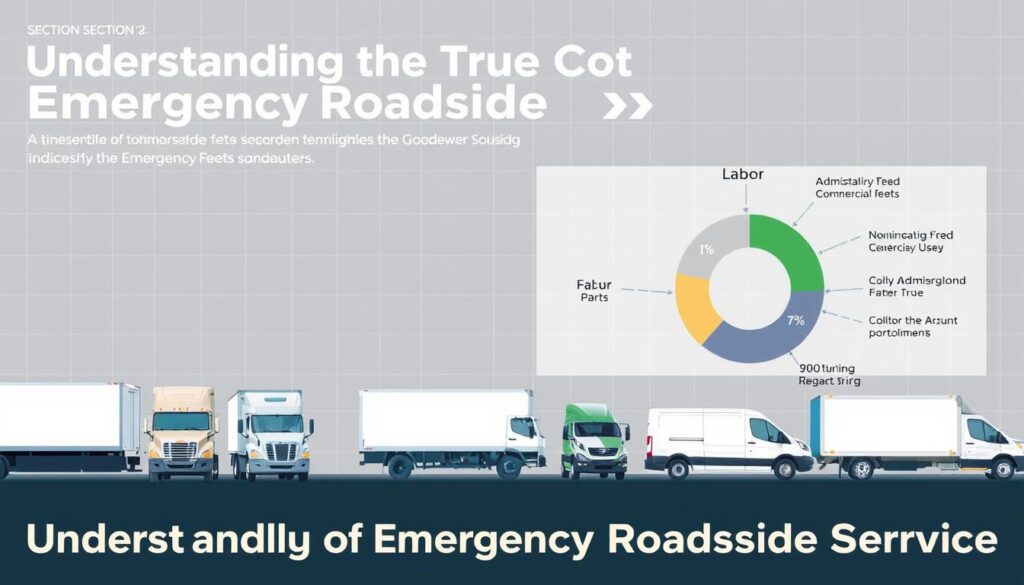
Emergency service costs include multiple fee components that quickly escalate total breakdown expenses.
Mobile mechanic rates represent a significant portion of total emergency service costs and vary considerably from standard shop rates. Emergency mobile mechanics command premium rates due to the convenience and urgency of on-site service delivery. These professionals bring specialized equipment and expertise directly to stranded vehicles, justifying higher hourly charges.
Standard shop services typically charge $85-$125 per hour for commercial vehicle maintenance and repairs. In contrast, mobile mechanic rates for emergency roadside service range from $125-$200 per hour. This represents a premium of approximately 40-60% above scheduled service rates.
Parts Markup and Emergency Pricing
Parts markup during emergency situations adds substantial costs beyond standard retail pricing. Emergency providers typically charge 40-60% markups on parts compared to what fleet managers would pay through regular supplier channels. Some emergency service providers implement markups reaching 100% on critical components needed for immediate repairs.
This pricing structure compensates providers for maintaining extensive parts inventories and the risk of carrying slow-moving items. Emergency situations eliminate the fleet’s ability to shop for competitive parts pricing, creating a captive market dynamic. The urgency of returning vehicles to service often leaves fleet managers with limited negotiating power regarding parts costs.
Common high-markup items include batteries, alternators, starters, and tire assemblies. The combination of emergency labor rates and inflated parts pricing can escalate a $300 scheduled maintenance repair to $800-$1,200 as an emergency service.
Geographic Variations in Emergency Pricing
Location dramatically influences roadside assistance pricing, with geographic factors creating substantial cost variations across service areas. The availability of emergency service providers, distance from major service centers, and regional economic conditions all contribute to pricing disparities. Fleet managers operating across multiple regions must account for these variations when budgeting for emergency expenses.
Urban areas typically offer more competitive emergency service costs due to higher provider density and market competition. Cities and metropolitan regions average $400-$800 per emergency incident for standard breakdowns. The concentration of service providers creates competitive pressure that moderates pricing despite high operational costs in urban environments.
Rural and remote locations present a contrasting cost structure. Limited provider availability and extended travel distances result in premiums of $1,000-$2,500 per service call. These elevated costs reflect the time investment required for technicians to reach remote breakdown locations and return to their service bases.
Time-of-Day and Weekend Premium Charges
Temporal factors introduce another layer of cost variability to emergency roadside service. After-hours, weekend, and holiday breakdowns trigger substantial premium charges that fleet managers must anticipate in their budgeting. These time-based premiums compensate service providers for maintaining 24/7 availability and staffing outside normal business hours.
After-hours services between 6 PM and 6 AM typically add 50-75% to base emergency service rates. A $600 daytime emergency repair escalates to $900-$1,050 when performed overnight. This premium reflects overtime labor costs, reduced technician availability, and the operational challenges of nighttime service delivery.
Weekend emergency service adds 30-50% premiums to standard rates, while holiday breakdowns can double or triple base pricing. Fleet managers should expect holiday emergency calls to reach $1,200-$2,400 for repairs that would cost $600 during regular business hours.
| Service Scenario | Labor Rate (per hour) | Typical Total Cost |
|---|---|---|
| Scheduled Shop Service (Business Hours) | $85-$125 | $300-$500 |
| Urban Emergency (Weekday Daytime) | $125-$150 | $400-$800 |
| Rural Emergency (Weekend After-Hours) | $175-$225 | $1,000-$2,500 |
| Interstate Emergency (Holiday Period) | $200-$300 | $1,200-$3,500 |
The cumulative impact of these cost factors demonstrates why emergency roadside service represents such a significant expense for fleet operations. A breakdown that occurs in a rural location during weekend evening hours combines geographic premiums, time-based surcharges, and elevated parts markup—transforming a minor mechanical issue into a major financial burden.
Hidden Expenses of Roadside Breakdowns
Beyond the obvious repair costs lie numerous invisible expenses that silently erode fleet profitability with every breakdown. The emergency service invoice captures only the immediate repair work, while the true financial impact extends far beyond the mechanic’s bill. Understanding these hidden breakdown expenses requires a comprehensive analysis of every dollar lost during vehicle downtime.
Fleet managers who calculate only direct repair costs underestimate the actual financial burden by 300-500%. The cascading effects of a single roadside breakdown touch every aspect of fleet operations. These invisible costs accumulate rapidly and represent the difference between profitable fleet management and financial struggle.
Downtime and Lost Revenue Calculations
Vehicle downtime costs represent the most substantial hidden expense in any breakdown scenario. When a truck sits idle on the roadside or in a repair facility, it generates zero income while fixed costs continue accumulating. Research indicates that downtime alone costs fleet operators between $448 and $760 per day, with some studies showing even higher figures.
The revenue loss equation becomes stark when examining per-hour calculations. A Class 8 long-haul truck typically generates between $75 and $150 in revenue for every operating hour. When a breakdown keeps that vehicle off the road for 12 hours, the immediate revenue loss ranges from $900 to $1,800 before any repair costs enter the calculation.

Downtime costs extend far beyond repair invoices, including lost revenue and continuing fixed expenses.
Calculating the true hourly impact requires a formula that accounts for both lost revenue and continuing expenses. Fleet managers can use this straightforward calculation: Hourly Loss = (Average Hourly Revenue) + (Fixed Costs per Hour) – (Variable Costs Saved).
For a typical long-haul operation, this formula reveals significant losses. If a truck generates $100 per operating hour, carries $25 per hour in fixed costs (insurance, depreciation, permits), and saves only $15 per hour in fuel and variable costs during downtime, the actual hourly loss equals $110. When breakdowns extend beyond a single day, losses escalate dramatically.
Load Rescheduling and Operational Disruption
Every breakdown creates a domino effect throughout fleet operations. Dispatchers must scramble to reassign loads, customers require immediate communication, and replacement capacity must be secured. This operational disruption carries substantial but often unmeasured costs.
Expedited freight arrangements become necessary when loads must be transferred to other carriers. These emergency solutions typically cost 40-80% more than standard shipping rates. A load that would normally cost $2,000 to transport suddenly requires $2,800-$3,600 when expedited services are needed.
Customer service teams spend valuable hours managing the fallout from a single breakdown. Phone calls, email communications, status updates, and relationship management consume 4-8 hours of staff time per incident. At typical logistics coordinator wages, this represents $100-$300 in labor costs that rarely appear in breakdown accounting.
Cargo Delay Penalties and Customer Impact
Modern shipping contracts frequently include financial penalties for late deliveries. These cargo delays trigger automatic deductions ranging from $100 to $500 per day depending on contract terms. Time-sensitive shipments carry even steeper penalties, with some contracts imposing $1,000 or more for critical deadline failures.
The customer satisfaction impact extends far beyond single-incident penalties. Repeated breakdowns erode client confidence and damage long-term business relationships. Fleet operators report that chronic reliability issues have resulted in lost contracts worth $5,000-$25,000 in monthly recurring revenue.
Driver Wages and Accommodation Costs
Driver compensation continues during vehicle downtime, creating another layer of hidden expense. Company drivers earning $200-$400 daily remain on the payroll while producing zero revenue during breakdowns. Owner-operators lose earning potential while incurring continuing business expenses.
Extended breakdowns requiring overnight stays add hotel accommodation costs. Drivers stranded far from home terminals need lodging at $100-$150 per night. A three-day repair requiring two hotel nights adds $200-$300 to the breakdown’s total cost, plus meal allowances averaging $40-$60 daily.
| Cost Category | Three-Day Breakdown Total | % of Total Cost |
|---|---|---|
| Emergency Repair Service | $650 | 8% |
| Lost Revenue (Downtime) | $3,600 | 45% |
| Towing and Transport | $1,200 | 15% |
| Driver Wages and Expenses | $900 | 11% |
| Cargo Delay Penalties | $600 | 7% |
| Load Rescheduling Costs | $1,000 | 12% |
| Total Breakdown Impact | $8,100 | 100% |
This comprehensive breakdown demonstrates how a $650 roadside repair transforms into an $8,100 total cost impact. The emergency service fee represents less than 10% of the actual financial burden. Fleet productivity suffers dramatically during these incidents, with each breakdown event consuming resources equivalent to weeks of normal operational profit.
Preventive Maintenance Cost Breakdown
Proactive fleet management begins with establishing a clear financial framework for routine service costs and maintenance intervals. Understanding how preventive maintenance costs distribute across inspection requirements, parts replacement, and labor helps fleet managers allocate budgets effectively. This structured approach transforms maintenance from a reactive expense into a predictable investment that protects asset value.
Class 8 trucks typically require $15,000 to $20,000 annually in scheduled maintenance to maintain optimal performance and regulatory compliance. These preventive maintenance costs break down into distinct categories that fleet operators can track, forecast, and optimize.
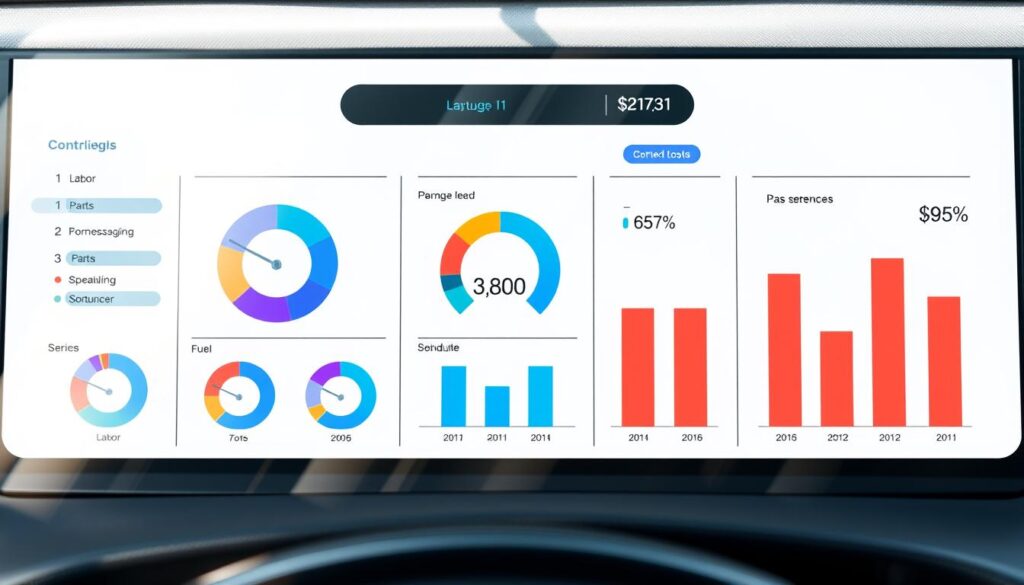
Preventive maintenance costs are predictable and controllable compared to reactive emergency repairs.
Federal Motor Carrier Safety Administration Requirements
The FMCSA mandates specific inspection protocols for all commercial motor vehicles operating in interstate commerce. Annual DOT inspections cost between $150 and $300 per vehicle and verify compliance with safety standards across brake systems, lighting, steering components, and documentation requirements.
Beyond the annual requirement, the 90-day inspection rule under 49 CFR Part 396 applies to commercial vehicles that travel beyond a 150-mile radius from their base. Quarterly inspections add $600 to $1,200 annually per truck to preventive maintenance costs. Many fleet managers exceed these minimum standards by implementing monthly safety checks that identify potential issues before they escalate.
Parts and Labor Costs for Routine Maintenance
The bulk of preventive maintenance costs stem from regular parts replacement and associated labor charges. Oil changes represent the most frequent scheduled maintenance task for commercial trucks. Standard service intervals range from 15,000 to 25,000 miles depending on oil type and engine specifications. Each oil change costs between $200 and $300, including filters and disposal fees.
Additional fluid services maintain system performance across multiple vehicle components. Transmission service every 100,000 to 150,000 miles costs $400 to $600. Differential service at similar intervals runs $350 to $500. Coolant system flushes every 200,000 to 300,000 miles range from $250 to $400.
Brake system maintenance represents one of the largest components of preventive maintenance costs due to the critical safety role these systems play. Regular inspections catch wear before complete failure occurs. Inspection intervals typically fall between 25,000 and 50,000 miles at costs of $100 to $200 per inspection. Complete brake jobs become necessary based on inspection findings, with a full brake overhaul on a single axle ranging from $1,500 to $3,000.
| Maintenance Category | Service Interval | Cost Range |
|---|---|---|
| Oil Changes | 15,000-25,000 miles | $200-$300 |
| Brake Inspections | 25,000-50,000 miles | $100-$200 |
| Tire Rotations | 25,000 miles | $50-$100 |
| Transmission Service | 100,000-150,000 miles | $400-$600 |
| DOT Inspections | Annual/Quarterly | $150-$300 |
Fleet Maintenance Software and Management Systems
Modern fleet maintenance software transforms how operators track, schedule, and analyze preventive maintenance programs. These digital platforms automate reminder notifications, track component lifecycles, and generate compliance documentation. The right fleet maintenance software selection depends on fleet size and operational complexity.
Entry-level maintenance tracking systems serve fleets with 2 to 10 trucks at costs between $20 and $50 per truck monthly. Mid-sized fleets operating 10 to 50 trucks benefit from more sophisticated platforms costing $50 to $100 per truck monthly, adding inventory management, vendor tracking, and basic analytics capabilities.
Enterprise fleet maintenance software for operations exceeding 50 trucks ranges from $100 to $200 per truck monthly. These comprehensive solutions offer predictive maintenance algorithms, advanced analytics dashboards, and full ERP integration. The return on software investment comes through improved maintenance interval adherence and reduced administrative time.
Stay Ahead of Maintenance Costs and Industry Trends
Get weekly insights on fleet maintenance strategies, cost-saving techniques, and regulatory updates delivered directly to your inbox. Join thousands of fleet managers optimizing their operations.
Comparative Analysis: Emergency vs. Preventive Spending
Data-driven analysis of reactive vs proactive maintenance spending patterns exposes hidden opportunities for substantial savings. Fleet managers who examine their maintenance expenditures often discover that the difference between these two approaches extends far beyond simple repair costs. The financial impact touches every aspect of fleet operations, from daily cash flow management to long-term asset values.
Studies demonstrate a compelling truth about prevention versus reaction. Every dollar invested in preventive maintenance delivers four to five dollars in saved emergency repair and downtime costs. This return on investment makes preventive strategies one of the most profitable decisions fleet operators can implement.
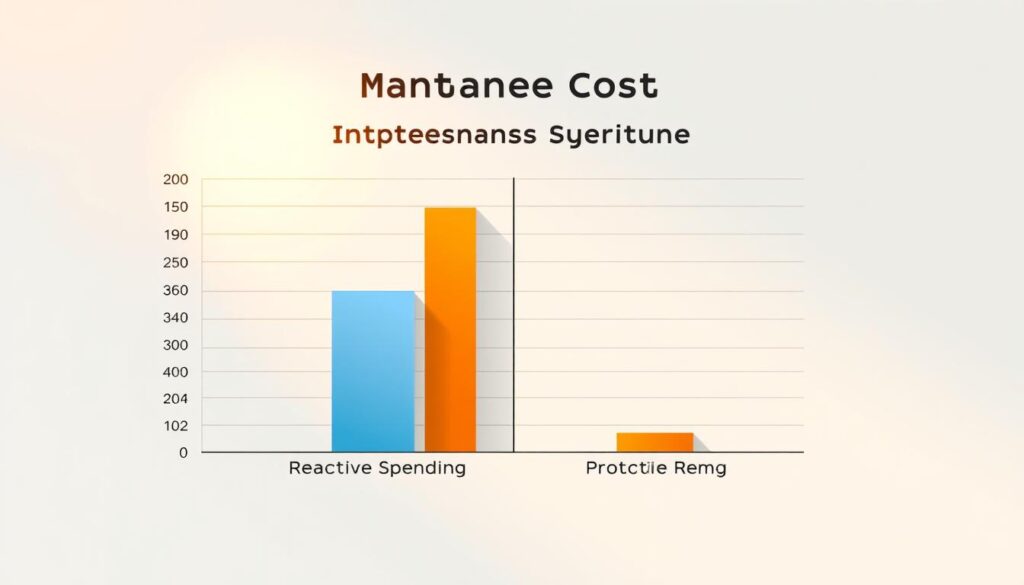
Proactive maintenance delivers consistent 4:1 to 5:1 returns compared to reactive emergency repairs.
Annual Cost Per Vehicle Comparison
The maintenance cost comparison between approaches reveals substantial financial differences. Class 8 trucks maintained reactively cost fleet operators between $18,000 and $25,000 annually per vehicle. These figures show high variance and unpredictability, making accurate budget planning nearly impossible.
In contrast, proactively maintained trucks cost between $15,000 and $20,000 annually. This represents a 15 to 25 percent cost advantage over reactive approaches. More importantly, these expenses remain consistent and plannable throughout the year, improving cash flow management and strategic decision-making.
Reactive maintenance creates extreme budget volatility. Fleet managers dealing with emergency-driven approaches experience quarterly spending swings of 40 to 60 percent. This volatility creates serious cash flow management challenges, requiring large emergency reserves that could otherwise generate returns through productive investments.
Five-Year Total Cost of Ownership Models
Long-term financial analysis reveals the true cost differential between maintenance strategies. A reactively maintained truck costs between $90,000 and $125,000 over five years in maintenance expenses alone. These figures exclude the initial purchase price but include all repairs, parts, labor, and breakdown-related costs.
Preventively maintained vehicles cost between $75,000 and $100,000 over the same period. The difference—$15,000 to $25,000 per truck—represents pure savings flowing directly to the bottom line. For a 50-truck fleet, this difference scales to $750,000 to $1,250,000 over five years.
| Vehicle Age Range | Average Annual Cost | Downtime Risk |
|---|---|---|
| 0-3 Years | $8,000 – $12,000 | 1-2% (Low) |
| 3-5 Years | $12,000 – $16,000 | 3-5% (Moderate) |
| 5-8 Years | $16,000 – $22,000 | 6-10% (High) |
| 8+ Years | $22,000 – $35,000+ | 10-20% (Very High) |
Maintenance strategy directly affects asset depreciation rates. Well-maintained vehicles with complete, documented service records retain significantly more value than neglected equipment. Preventively maintained trucks retain 15 to 25 percent more value compared to reactively maintained equivalents—a five-year-old truck in excellent condition commands $15,000 to $25,000 more than a comparable vehicle with spotty maintenance history.
Common Failure Points and Their Financial Impact
Major truck breakdowns stem from predictable failure points that fleet managers can anticipate and mitigate through targeted preventive strategies. Understanding which components most frequently fail reveals where emergency expenses concentrate and where preventive investments deliver the strongest returns.
Fleet repair expenses increase dramatically when mechanical issues progress from preventable wear to catastrophic failure. Emergency repairs consistently cost 30-50% more than scheduled maintenance for identical components, reflecting after-hours labor rates, expedited parts procurement, and the inherent inefficiency of roadside diagnostics.
Tire Blowouts and Tread Separation Costs
Tire-related incidents represent the most frequent category of roadside emergencies. Tire blowouts occur when wear patterns go undetected or when vehicles continue operating beyond recommended tread depth limits. A single emergency tire replacement costs $600-$900 per tire, compared to $400-$600 for the same tire installed during scheduled maintenance.

Tire failures often cause secondary damage to wheels, fenders, and brake components.
Complete blowout incidents rarely affect just one tire. The violent failure often damages multiple components simultaneously, including wheel assemblies, fenders, brake lines, and suspension components. Total incident costs frequently reach $1,500-$3,000 when accounting for all affected systems.
The financial impact extends dramatically beyond repair costs when accidents occur. Loss of vehicle control following sudden tire failure creates severe liability scenarios. Cargo damage from tire-related accidents averages $5,000-$50,000 depending on load value. Third-party property damage ranges from $10,000 to over $100,000 when vehicles strike other property or vehicles.
Engine and Transmission Failures
Engine and transmission breakdowns represent the most financially devastating category of component failures. A complete engine replacement costs $25,000-$40,000, while transmission replacements run $8,000-$15,000. These catastrophic failures often result from deferred maintenance on relatively inexpensive preventive services.
A skipped $200 oil change creates a chain reaction of mechanical failures. Inadequate lubrication causes engine overheating, which leads to blown gaskets, warped cylinder heads, and damaged bearings. What begins as a $200 maintenance item escalates into engine failure costs exceeding $15,000.
Brake System Emergencies
Brake system failures create immediate safety hazards alongside substantial financial consequences. The FMCSA’s Large Truck and Bus Crash Facts reports brake-related issues as a leading factor in commercial vehicle accidents.
Preventive brake replacement costs $1,500-$3,000 per axle, including pads, rotors, and system inspection. Emergency brake service following complete failure costs $3,000-$6,000 due to extensive damage to multiple system components. DOT violations compound the financial impact—inspectors who discover out-of-adjustment or defective brakes issue citations ranging from $1,000-$5,000.
Electrical System and Battery Issues
Electrical system problems cause an estimated 30-40% of all roadside breakdowns, making them the leading category by frequency. Battery failures represent the most common electrical emergency. A scheduled battery replacement costs $250-$350 including testing and installation. Emergency roadside battery service increases this cost to $400-$600.
| Component Failure | Preventive Cost | Emergency Cost |
|---|---|---|
| Tire Replacement | $400-$600 | $600-$900 |
| Engine Overhaul | $8,000-$12,000 | $15,000-$25,000 |
| Brake System Service | $1,500-$3,000 | $3,000-$6,000 |
| Battery Replacement | $250-$350 | $400-$600 |
Return on Investment for Preventive Maintenance Programs
The financial justification for preventive maintenance becomes clear when examining return on investment across key performance areas. Fleet managers who track preventive maintenance benefits discover that every dollar spent on scheduled maintenance saves $4 to $5 in emergency repairs and downtime costs. This substantial maintenance ROI transforms preventive programs from expense centers into profit generators.
Break-Even Analysis for Fleet Investment
Most operations reach break-even within 6 to 12 months as emergency repair frequency drops and operational efficiency improves. For a 20-truck fleet, total implementation costs typically range from $15,000 to $30,000, including maintenance management software ($20 to $200 per truck monthly), staff training programs ($2,000 to $5,000), and process documentation ($1,000 to $3,000).
A properly implemented preventive maintenance program delivers $300 to $600 per vehicle monthly in combined savings from reduced emergency repairs, lower downtime costs, and improved operational efficiency. Annual savings per vehicle range from $3,600 to $7,200. For a 20-truck fleet, this translates to $72,000 to $144,000 in yearly cost reductions.
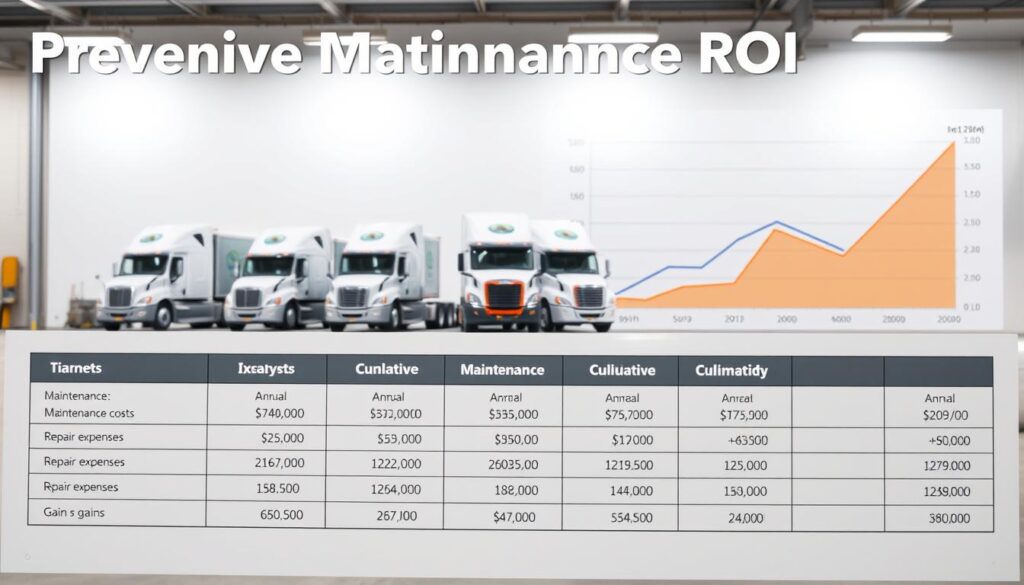
Preventive maintenance programs typically achieve break-even within 6-12 months.
Extended Asset Lifespan Benefits
Preventive maintenance dramatically extends vehicle operational life, deferring substantial replacement costs. Trucks maintained reactively typically last 7 to 8 years, while those under preventive programs operate effectively for 10 to 12 years. This extended asset lifespan defers $150,000 to $180,000 in replacement costs per vehicle.
For fleet operations, this extension reduces annual capital expenditure requirements by 20% to 30%. A 30-truck operation extending vehicle life by just two years avoids purchasing 7 to 8 replacement vehicles, preserving $1.05 million to $1.44 million in capital.
Reduced Insurance Premiums
Insurance providers recognize the risk reduction that comes with documented preventive maintenance programs. Fleets with strong maintenance records and proven safety performance qualify for 10% to 25% insurance premium reductions. These discounts save $1,500 to $4,000 per vehicle annually.
Fuel Efficiency Gains
Proper maintenance including clean air filters, correct tire inflation, aligned wheels, and efficient aerodynamics improves fuel economy by 3% to 10%. A 3% fuel economy improvement saves $1,617 per truck yearly (assuming 100,000 miles annually at 6.5 MPG and $3.50 per gallon). For a 20-truck fleet achieving a 5% improvement, annual savings reach $53,840.
Industry Benchmarks and Fleet Performance Metrics
Industry data shows that tracking the right fleet benchmarks separates high-performing operations from those struggling with excessive downtime. Maintenance accounts for 9% of marginal costs in commercial trucking operations. The American Transportation Research Institute tracks these costs annually, providing valuable benchmarking data for fleet operators.
Average Breakdown Rates by Maintenance Strategy
The contrast between reactive and preventive maintenance approaches becomes evident when examining breakdown rates. Fleets relying primarily on reactive maintenance experience 8-12 roadside breakdowns per vehicle annually. Preventive maintenance fleets achieve 1-3 breakdowns per vehicle yearly—a 65-85% reduction in roadside incidents.
Top-performing fleets maintain rates below 0.2 emergency calls per 100,000 miles. Good performers achieve 0.2-0.5 calls per 100,000 miles. Average fleets experience 0.5-1.0 calls, while poor performers exceed 1.0 calls per 100,000 miles.
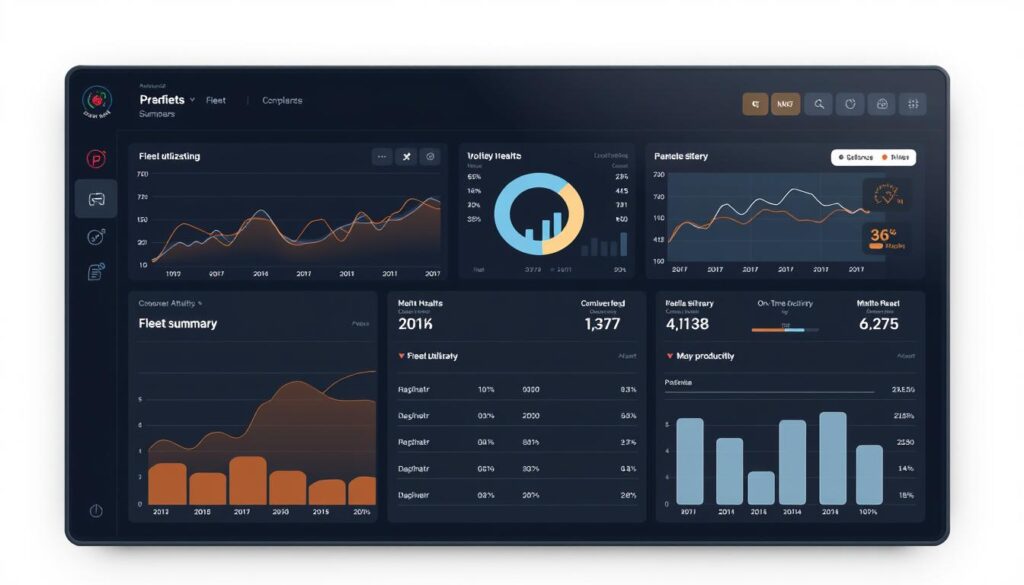
Best-in-class fleets target 95%+ preventive maintenance compliance and 95%+ uptime.
Cost Per Mile Comparisons
Fleet size significantly influences per-mile maintenance costs. Small fleets operating 2-10 vehicles typically spend $0.18-$0.25 per mile on maintenance. Medium fleets with 10-50 vehicles achieve $0.15-$0.20 per mile through improved vendor relationships. Large fleets exceeding 50 vehicles optimize costs to $0.12-$0.18 per mile.
| Performance Tier | Uptime % | Breakdowns/Year | Cost Per Mile |
|---|---|---|---|
| Industry-Leading | 98-99% | 1-2 | $0.12-$0.15 |
| Good Performer | 95-97% | 3-4 | $0.15-$0.18 |
| Average Fleet | 90-93% | 5-7 | $0.18-$0.22 |
| Below Standard | 85-90% | 8-12 | $0.22-$0.28 |
Building an Optimal Fleet Maintenance Strategy
Modern fleet optimization demands a comprehensive maintenance strategy that leverages technology, training, and strategic partnerships. The most effective programs integrate scheduled preventive services with real-time monitoring capabilities and realistic emergency contingency planning.
Hybrid Approach: Balancing Prevention and Emergency Preparedness
The most successful fleets implement hybrid maintenance programs that combine proactive prevention with realistic contingency planning. This approach acknowledges that complete breakdown elimination is neither achievable nor cost-effective. Effective maintenance planning focuses resources on preventing high-impact failures while accepting calculated risks on lower-priority items.
Vehicle criticality classification considers revenue importance, replacement cost, utilization rate, age and condition, and historical failure patterns. Component prioritization focuses preventive efforts on systems with the greatest failure impact—critical systems like brakes, steering, and engine components receive rigorous scheduled maintenance.
Strategic partnerships with regional roadside service networks transform emergency breakdowns from crisis management to planned contingency operations. Established partnerships typically provide 15-30% discounts below emergency retail rates, priority response times, and service level agreements.
Technology Integration for Predictive Maintenance
Modern predictive maintenance uses real-time data to identify developing problems before they cause failures. Telematics systems provide continuous monitoring of vehicle health and operating conditions, tracking engine parameters, fault codes, fluid levels, tire pressure, and brake wear. Advanced telematics systems cost $25-$75 per vehicle monthly and deliver substantial returns through early problem detection.
Modern fleet platforms analyze historical maintenance data across entire fleets, identifying patterns that individual vehicle records might miss. Data-driven maintenance planning replaces generic manufacturer schedules with fleet-specific intervals reflecting actual operating conditions.
Staff Training and Documentation Protocols
Technology and strategy only succeed with skilled execution. Maintenance technician training costs $1,000-$3,000 per technician annually. Driver training programs costing $500-$1,000 per driver annually focus on proper pre-trip inspections, smooth operating techniques, and early problem reporting. Driver behavior impacts 30-50% of maintenance costs through its effect on component wear and damage.
Properly trained drivers typically generate $3,000-$8,000 in annual savings per driver—a 300-800% ROI on training investment. Federal regulations under 49 CFR Part 396 require systematic vehicle inspections, and proper pre-trip inspections significantly reduce roadside violations and breakdowns.
Share Your Fleet Maintenance Expertise
Are you a fleet manager or maintenance director with proven strategies for reducing breakdown costs and improving uptime? We’re looking for industry professionals to contribute insights on preventive maintenance best practices.
Strategic Budget Allocation for Fleet Managers
Effective maintenance budgeting requires a systematic approach that balances routine expenses with emergency preparedness. Maintenance represents approximately 9% of marginal operating costs for most fleets—for every $100 spent operating a vehicle, $9 goes toward maintenance and repairs.
Creating a Maintenance Budget Framework
Well-managed fleets typically allocate 8-12% of total revenue toward maintenance expenses. A fleet generating $5 million in annual revenue should budget between $400,000 and $600,000 for maintenance. The ideal budget allocation distributes funds strategically: 70-80% to preventive maintenance and routine repairs, 15-25% to component replacements and major services, and 5-10% to emergency repairs.
Per-vehicle allocation provides precision by establishing specific amounts for each vehicle type. Class 8 long-haul trucks require $15,000-$20,000 annually, with an additional 20-25% after five years. Medium-duty trucks require $8,000-$12,000 annually. High-mileage vehicles require 20-30% larger budgets than average units.
Emergency Fund Reserves
Emergency reserves separate financially prepared fleets from those making costly panic decisions during breakdowns. Maintain reserves representing 1-2 months of average maintenance expenses to handle unexpected major repairs without operational disruption. Small fleets (2-5 trucks) need $10,000-$25,000 in reserves; medium fleets (5-20 trucks) need $25,000-$75,000; large fleets (20+ trucks) need $75,000-$250,000.
Vendor Relationship Management
Strategic vendor management delivers fleet discounts of 10-25% off retail labor rates. Contract negotiations should address parts pricing using cost-plus models—typical arrangements involve cost plus 20-35% versus 50-100% retail markups. Quality aftermarket components offer 30-60% savings for specific applications like filters, fluids, and brake components.
Frequently Asked Questions
How much more expensive is emergency roadside service compared to scheduled preventive maintenance?
Emergency roadside service typically costs 30-50% more than scheduled preventive maintenance for identical repairs. This premium reflects after-hours labor rates ($125-$200/hour vs $85-$125/hour for shop service), expedited parts procurement with 40-60% markups, and the inherent inefficiency of roadside diagnostics. A repair costing $300 at a scheduled shop visit can reach $800-$1,200 as an emergency service.
What is the ROI of implementing a preventive maintenance program?
Every dollar invested in preventive maintenance typically saves $4-$5 in avoided emergency repairs and downtime costs. Most fleets achieve break-even within 6-12 months of implementation. A 20-truck fleet can expect annual savings of $72,000-$144,000 through reduced emergency repairs, lower downtime costs, and improved operational efficiency.
How much does vehicle downtime actually cost per day?
Research indicates downtime costs fleet operators between $448 and $760 per day, but the true cost is often higher. A Class 8 truck generating $75-$150 per operating hour loses $900-$1,800 in a 12-hour breakdown before repair costs. Adding driver wages, cargo penalties, and load rescheduling, a three-day breakdown can cost $8,100 or more—with the actual repair representing less than 10% of total impact.
What are the most common breakdown causes that preventive maintenance prevents?
Electrical system problems (including battery failures) cause 30-40% of roadside breakdowns. Tire-related incidents represent the most frequent roadside emergency category. Brake system issues create both safety hazards and compliance violations. Most of these failures are preventable through regular inspections, timely component replacement, and proper pre-trip procedures.
What uptime percentage should fleets target?
Industry-leading fleets achieve 98-99% uptime for dedicated operations and 95-97% for long-haul operations. Good performers maintain 93-95% uptime. Best-in-class operations target 95%+ preventive maintenance compliance and keep emergency repairs below 20% of total maintenance spending.
Conclusion
The financial evidence presents an unambiguous case for fleet managers evaluating their approach to vehicle maintenance. Emergency service management creates a hidden cost structure that consumes 20-40% more budget than necessary while delivering inferior operational results.
A comprehensive fleet maintenance strategy centered on prevention delivers measurable returns. Every dollar invested in scheduled maintenance generates $4-$5 in avoided emergency repairs and downtime costs. For a 20-truck operation spending $350,000 annually, proper cost optimization can recover $70,000-$140,000 in preventable expenses.
The preventive maintenance ROI extends beyond immediate savings. Extended asset lifecycles, improved fuel efficiency, reduced insurance premiums, and enhanced resale values compound financial benefits over time. Most operations achieve measurable improvements within 90 days of implementation.
Fleet profitability directly correlates with maintenance approach. Reducing maintenance expenses by 25% delivers the same bottom-line impact as increasing revenue by 10-15%. This makes preventive maintenance vs emergency roadside service decisions one of the highest-leverage choices available to fleet managers.
The path forward requires transitioning from reactive crisis management to planned prevention. Implementing rigorous inspection schedules, investing in fleet management software, training drivers on pre-trip protocols, and establishing strong vendor relationships form the foundation of sustainable cost reduction. The competitive advantage belongs to fleets that view maintenance as strategic investment rather than unavoidable expense.
Found This Maintenance Cost Analysis Valuable?
Share this comprehensive guide with fellow fleet managers and maintenance directors who are working to optimize their operations and reduce breakdown costs.