

Diesel engine troubleshooting separates operational fleets from those hemorrhaging money on avoidable repairs. When a Caterpillar excavator stalls or a Cummins generator fails during peak demand, repair costs escalate rapidly—often reaching $5,000 to $15,000 per incident. Systematic diagnostic strategies reduce downtime by 75% and prevent minor issues from escalating into catastrophic failures costing six figures.
This comprehensive guide delivers proven strategies for identifying and resolving problems in fleet vehicles, marine engines, industrial generators, and oil field equipment. Combining systematic engine diagnostics with preventive maintenance protocols extends equipment life by 40-60% while maximizing operational efficiency.
Last Updated: December 2025
Key Takeaways
- Systematic troubleshooting: Reduces equipment downtime by 75% through early fault identification and targeted repair protocols
- Early diagnostics prevent catastrophic failures: Catching injector wear before complete failure saves $8,000-12,000 in rebuild costs
- Visual inspections combined with diagnostic tools: Deliver 95% accurate fault identification across combustion, fuel, cooling, and electronic systems
- Industry-specific maintenance: Address unique challenges in marine, oil and gas, healthcare, and data center applications
- Preventive maintenance: Extends engine life by 40-60% while improving fuel efficiency by 8-15%
Diesel Engine Troubleshooting Fundamentals
Diesel engines operate at compression ratios between 14:1 and 23:1—substantially higher than gasoline engines at 8:1 to 12:1. This extreme pressure creates unique diagnostic challenges requiring precise fuel system analysis and continuous monitoring. According to research from the University of Michigan and Volvo Trucks, higher compression ratios improve closed-cycle efficiency by increasing work extraction during expansion, but demand more robust component design to handle elevated cylinder pressures and temperatures.
A single component failure triggers cascading problems across interconnected systems. Understanding these interdependencies enables technicians to identify root causes before costly breakdowns occur. Professional diesel troubleshooting examines symptom patterns rather than isolated faults.
Critical System Components Requiring Evaluation
Four interconnected systems require systematic evaluation during diesel diagnostics. The combustion system includes glow plugs for cold-weather ignition while cylinders, compression rings, and timing components generate power through controlled combustion. Compression ratios exceeding manufacturer specifications by 10% indicate carbon buildup requiring decarbonization.
Fuel delivery systems feature high-pressure pumps operating at 20,000-30,000 PSI in modern common-rail configurations. Precision injectors, multiple filtration stages, and reinforced lines maintain exact fuel atomization. Pressure drops exceeding 5 PSI between filter stages signal restriction requiring immediate attention.
Cooling systems regulate operating temperatures within narrow tolerances—typically 180-210°F. Temperature fluctuations beyond ±15°F indicate thermostat malfunction or coolant circulation problems. Electronic control systems process data from 20-40 sensors, generating diagnostic trouble codes when parameters exceed specifications.
Understanding System Interdependency
Each system directly affects others in measurable ways. Restricted fuel delivery causes incomplete combustion, producing black exhaust smoke and reducing power output by 15-25%. Cooling system failures warp cylinders and crack heads, compromising compression ratios and requiring complete engine rebuilds.
Faulty sensors transmit incorrect data to control units, creating timing problems affecting fuel injection accuracy by ±2-3 degrees—enough to reduce efficiency by 10%. Understanding these relationships helps technicians trace symptoms to root causes rather than simply replacing obvious failed components.
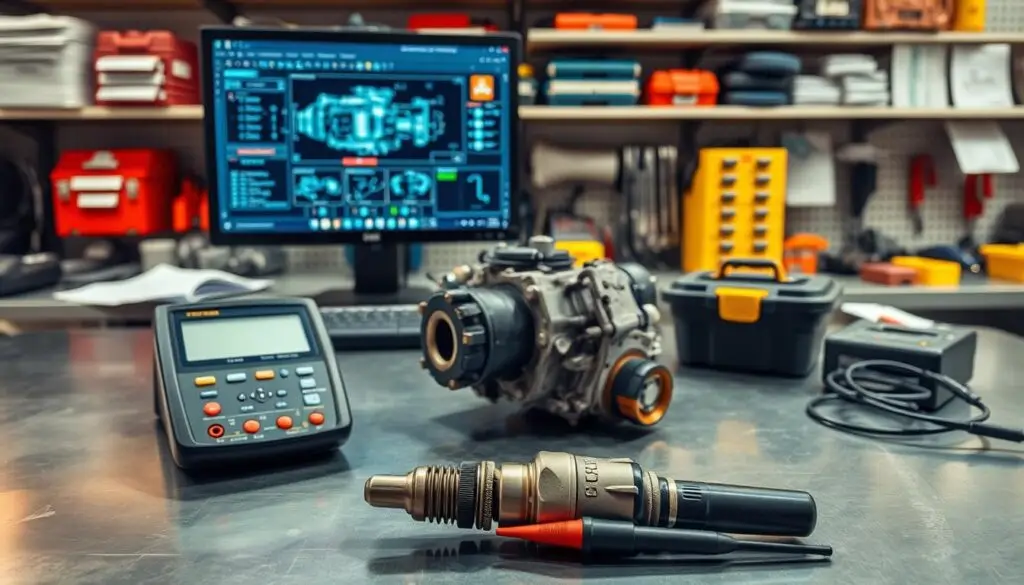
Preventive Diagnostics: Cost Comparison
Scheduled diagnostics identify problems before system failures occur. Fleet managers implementing structured diagnostic protocols report 40% fewer unexpected breakdowns and 30% lower annual maintenance costs. Proactive diagnostics cost $200-500 per inspection compared to $5,000-15,000 for emergency repairs following catastrophic failures.
Cooling system maintenance prevents overheating damage that reduces engine lifespan by 50%. Early detection of injector failures, excessive oil consumption, and turbocharger deterioration shows measurable warning signs 2-4 weeks before complete failure. Regular oil analysis reveals bearing wear, coolant contamination, and fuel dilution before visible symptoms appear.
| System Failure | Primary Effect | Secondary Impact | Cost Range |
|---|---|---|---|
| Clogged Fuel Filter | Reduced Power Output | Incomplete Combustion | $75-200 |
| Failed Thermostat | Engine Overheating | Cylinder Head Damage | $3,500-8,000 |
| Worn Injector Nozzles | Poor Fuel Atomization | Black Exhaust Smoke | $800-2,500 |
| Faulty MAP Sensor | Incorrect Air-Fuel Ratio | Reduced Fuel Economy | $150-400 |
Diagnosing Starting Failures and Power Loss
Starting failures represent the most common complaints requiring diesel engine diagnostics. These malfunctions range from delayed cranking to complete no-start conditions, costing operators $500-2,000 in emergency service calls and lost productivity. Systematic diagnosis identifies root causes and restores equipment quickly.
No-Start Conditions and Delayed Cranking
Engines that crank but refuse to fire indicate specific component failures. Begin by verifying normal cranking speed—healthy starters rotate engines at 150-250 RPM. Slow cranking signals weak batteries or corroded connections dropping available voltage below 10 volts. Single clicks suggest insufficient battery power, while rapid clicking points to corroded connections or failed solenoids.
Common no-start culprits include contaminated fuel blocking injectors, failed fuel pumps or clogged filters causing pressure drops below 40 PSI, air trapped in fuel lines creating vapor locks, malfunctioning engine control modules preventing injector pulse signals, low compression from worn piston rings (readings below 350 PSI), and failed crankshaft or camshaft position sensors.
Battery, Glow Plug, and Starter Testing
Begin battery testing with a digital multimeter measuring DC voltage. Fully charged batteries read 12.6-12.8 volts at rest. Load testing reveals true battery condition under stress—apply half the cold cranking amp rating for 15 seconds while monitoring voltage. Voltage must remain above 9.6 volts during testing.
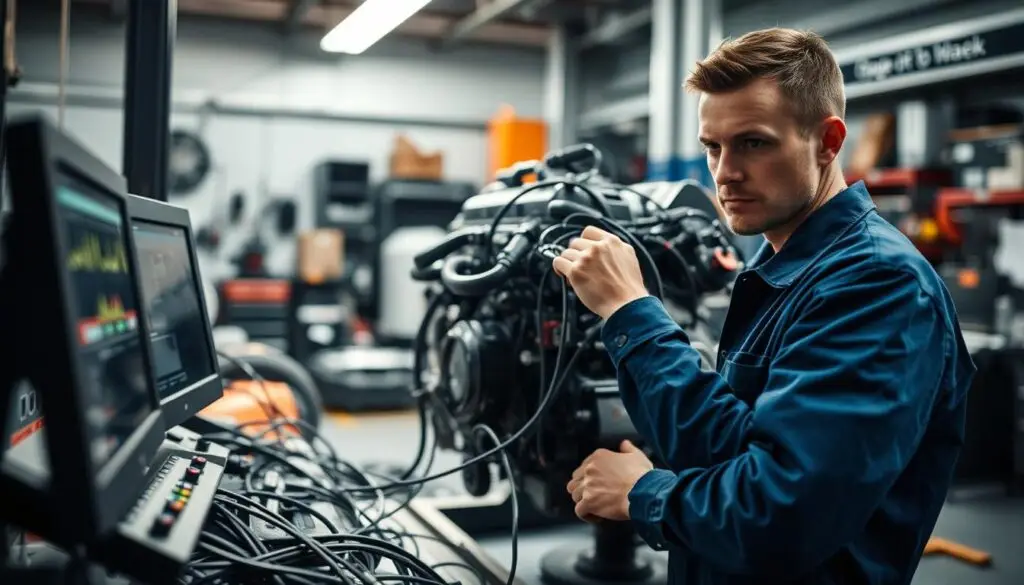
Glow plug failure prevents proper cold-weather combustion—particularly critical below 40°F. Test resistance with an ohmmeter measuring each glow plug individually. Functional glow plugs measure 0.5-2.0 ohms depending on manufacturer specifications. Visual inspection reveals carbon buildup or damaged tips requiring replacement.
Fuel Delivery and Air Infiltration Problems
Fuel delivery issues manifest through rough idling, power loss under load, and intermittent stalling. Inspect fuel lines for cracks, loose connections, or deteriorated hoses allowing air infiltration. Even small air leaks create significant performance problems.
Bleed the fuel system by loosening injector lines while cranking until fuel flows steadily without bubbles. Air in fuel systems creates white smoke during operation—unburned fuel passing through cylinders produces characteristic exhaust color.
| Symptom | Root Cause | Diagnostic Method | Solution |
|---|---|---|---|
| Engine stalls after starting | Water in fuel | Visual fuel inspection | Drain separator, replace filter |
| Power loss under load | Restricted fuel filter | Fuel pressure test | Replace filter element |
| White exhaust smoke | Air in fuel system | Fuel line inspection | Bleed lines, repair leaks |
| Hard starting when warm | Vapor lock from heat | Temperature monitoring | Insulate lines, relocate routing |
Turbocharger and Sensor Diagnostics
Turbocharger problems create immediate performance degradation costing $2,000-4,000 for replacement. Black smoke during acceleration indicates over-fueling from insufficient boost pressure—turbos should generate 15-30 PSI depending on application.
Check turbo shaft play by grasping the compressor wheel and checking for lateral movement. Acceptable play measures under 0.003 inches—excessive movement indicates worn bearings requiring rebuilding or replacement. Oil contamination in the intake pipe signals turbo seal failure.
$15,000-25,000
Average cost of complete engine rebuild after catastrophic turbocharger failure—early shaft play detection prevents this outcome
MAP and MAF sensors control fuel injection based on air intake measurements. Clean sensors with electronics-specific cleaner before replacement—contamination causes 70% of sensor-related faults. Test MAP sensor voltage at idle (1-2 volts) and full throttle (4-5 volts). Readings should transition smoothly; erratic signals require sensor replacement.
Overheating Diagnosis and Cooling System Failures
Engine overheating causes catastrophic damage within 3-5 minutes of temperature exceeding 240°F. Cylinder heads warp, head gaskets blow, and pistons seize—repairs costing $5,000-12,000. Early detection protects equipment and prevents expensive repairs.
Warning signs include temperature gauges exceeding 210°F, steam from engine compartments, dashboard warning lights, and coolant loss without visible leaks. Immediate shutdown prevents permanent damage.
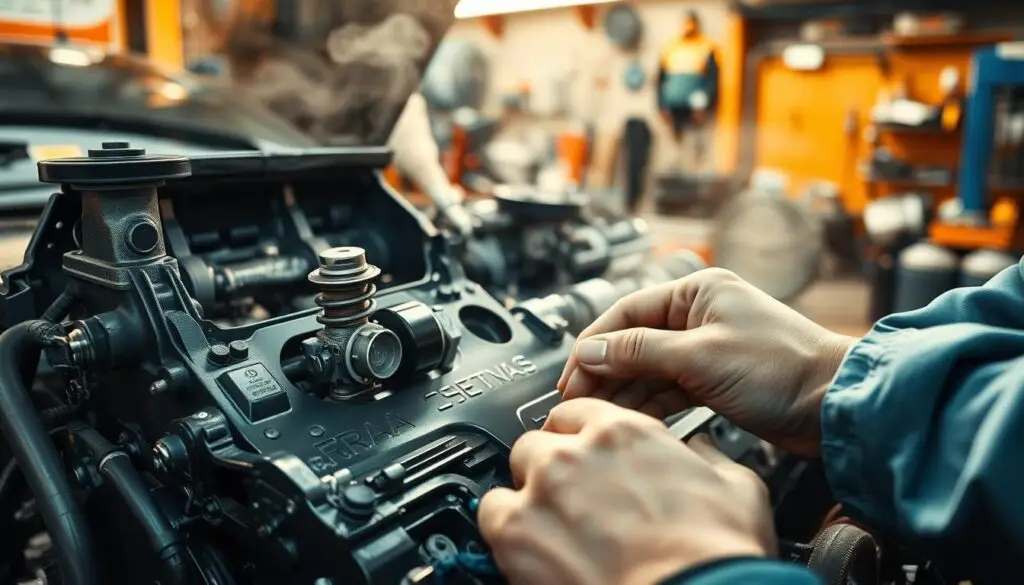
Cooling System Component Analysis
Coolant system failure typically begins with simple issues that escalate rapidly. Low coolant creates air pockets preventing heat transfer—even 10% air in the system reduces cooling efficiency by 30%. Contaminated coolant loses protective properties and corrodes internal components.
Radiator problems include external debris blocking airflow through cooling fins (reducing heat dissipation by 40-50%), internal scale buildup restricting circulation, damaged tubes causing leaks (1 quart per 500 miles indicates significant problems), and cracked plastic end tanks—common failure points after 5-7 years.
Thermostat malfunction prevents proper temperature regulation. Stuck-closed thermostats cause rapid overheating within 5-10 minutes. Stuck-open thermostats prevent engines from reaching optimal temperature (180-210°F), reducing efficiency by 10-15%. Test thermostats by removing and observing operation in heated water—functional units begin opening at rated temperature and fully open within 15-20°F above rating.
Water pump issues develop through bearing wear or impeller damage. Grinding noises indicate failing bearings—replacement costs $300-600. Coolant leaking from the weep hole signals seal failure requiring immediate replacement.
Preventive Cooling System Maintenance
Flush cooling systems per manufacturer specifications—typically every two years or 2,000 operating hours. Use proper coolant types featuring heavy-duty diesel formulations containing supplemental coolant additives. Check coolant levels weekly during pre-operation inspections.
Inspect hoses for soft spots, cracks, or swelling indicating deterioration. Replace hoses every 4-5 years regardless of appearance—internal degradation occurs before external symptoms manifest. Clean radiator fins seasonally removing debris blocking airflow.
Use proper coolant mixtures for climate conditions. A 50/50 glycol-water mixture provides freeze protection to -34°F and boil-over protection to 265°F. Test coolant strength with a refractometer ensuring adequate protection year-round.
Stay Current on Diesel Diagnostics
Get expert troubleshooting insights, maintenance strategies, and industry updates delivered to your inbox weekly.
Exhaust Smoke Analysis and Emission Troubleshooting
Exhaust smoke color reveals specific problems before internal damage occurs. Each color signals distinct issues requiring targeted solutions. Understanding smoke patterns enables accurate emission troubleshooting and prevents costly repairs averaging $3,000-8,000. Normal diesel exhaust appears nearly invisible under steady-state operation.
Black Smoke: Over-Fueling and Air Restriction
Black smoke indicates incomplete combustion from excessive fuel or restricted oxygen flow. Faulty injectors spray excessive fuel or create poor atomization patterns. Modern common-rail injectors operate at 20,000-30,000 PSI—worn nozzles reduce pressure by 15-20% causing smoke production.
Primary causes include clogged air filters (restriction exceeding 25 inches H2O requires replacement), leaking or worn fuel injectors, turbocharger malfunction reducing boost below 15 PSI, EGR valve stuck open recirculating excessive exhaust, and incorrect injection timing.
White Smoke: Unburned Fuel and Compression Issues
White smoke occurs when diesel fuel passes through cylinders without burning. Cold engines produce temporary white smoke until reaching operating temperature (180-210°F)—normal during warm-up periods under 5 minutes.
Persistent white exhaust indicates serious problems. Low compression from worn rings or valves, coolant leaks into combustion chambers, or incorrect injection timing all produce white smoke. Sweet-smelling white smoke signals coolant burning—head gasket failure or cracked cylinder head. Compression testing reveals cylinder health—readings below 350 PSI indicate excessive wear requiring overhaul.
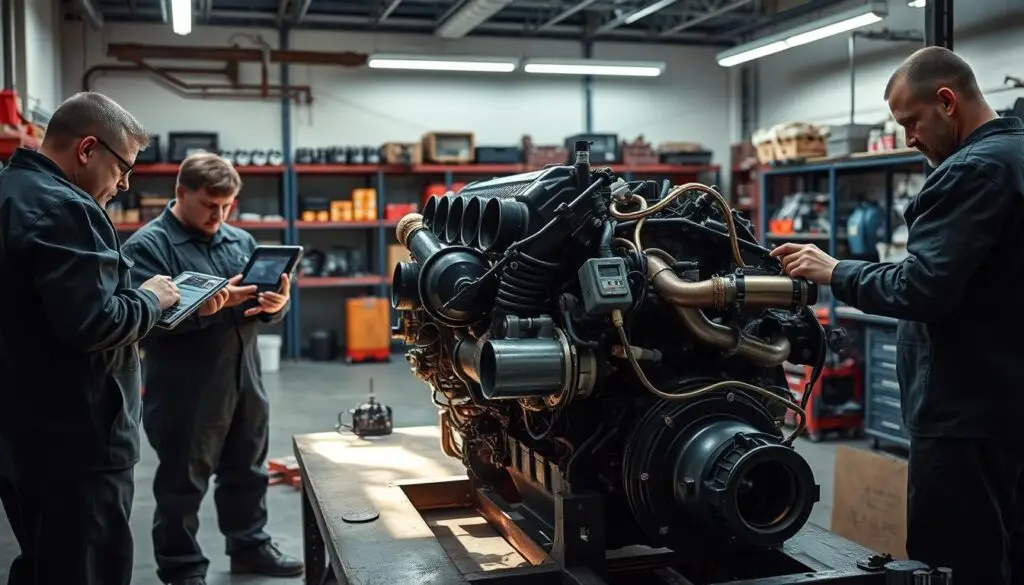
Blue Smoke: Oil Consumption and Seal Deterioration
Blue smoke indicates oil entering combustion chambers through worn piston rings, damaged valve seals, or turbocharger bearing failures. This condition increases oil consumption beyond 1 quart per 500 miles and damages emission control systems.
Prolonged blue smoke accelerates catalytic converter failure ($1,500-3,000 replacement), fouls oxygen sensors ($150-300 each), and damages diesel particulate filters ($2,000-4,000). Turbocharger seal failure produces blue smoke during deceleration—oil pulls through worn seals into the intake.
Injector Testing and Diagnostic Procedures
Injector testing requires specialized equipment measuring spray patterns and fuel delivery rates. Technicians measure pulse width (3-5 milliseconds typical), perform leak-down tests (leakage under 3cc per minute acceptable), and evaluate spray pattern uniformity identifying component failures.
Pop testing measures injector opening pressure—readings below specifications by 10% indicate worn components. Modern injectors require balance testing ensuring all cylinders receive identical fuel quantities. Imbalance exceeding 5% causes rough running and smoke production.
| Smoke Color | Primary Cause | Diagnostic Test | Repair Priority |
|---|---|---|---|
| Black | Over-fueling/Air restriction | Fuel pressure, boost check | Medium |
| White | Low compression/Coolant leak | Compression, leak-down test | High |
| Blue | Oil burning from wear/seals | Oil consumption monitoring | High |
| Gray | Partially burned fuel | Timing, injector balance | Medium |
Advanced Fuel System and Injection Diagnostics
Modern diesel fuel systems operate at extreme pressures requiring precision diagnostics. Common-rail systems generate 20,000-30,000 PSI while mechanical systems operate at 3,000-5,000 PSI. Pressure variations exceeding 5% cause performance problems and smoke production. Fuel contamination represents the leading cause of injection failures.
Common-Rail System Diagnostics
Common-rail systems use high-pressure pumps supplying fuel to a common manifold feeding individual injectors. Electronic control units precisely time injection events—accuracy within 0.1 milliseconds ensures optimal combustion. Rail pressure should match commanded pressure within 500 PSI; deviations indicate pump wear or pressure control valve malfunction.
Fuel Quality and Contamination Control
Fuel contamination causes 80% of injection system failures. Water enters tanks through condensation or contaminated deliveries. Microbial growth occurs when water concentrations exceed 50 PPM—bacteria and fungi produce acidic byproducts corroding precision components and clogging filters.
Install fuel polishing systems for stationary generators to continuously filter fuel and remove water. Marine applications require biocide treatments preventing microbial growth in warm, humid environments. Test fuel quality quarterly using water detection paste or electronic sensors.
Fuel meeting ASTM D975 specifications contains less than 500 PPM water and 10 PPM particulates. Contaminated fuel requires polishing or replacement—operating with dirty fuel damages injectors costing thousands in repairs and downtime.
Electrical System and Sensor Diagnostics
Modern diesel engines rely on 20-40 sensors monitoring critical parameters. Sensor failures create diagnostic trouble codes guiding troubleshooting efforts. Understanding electrical diagnostics prevents unnecessary component replacement—50% of “failed” sensors simply need cleaning or connector repair.
Critical Sensor Testing Procedures
Crankshaft position sensors provide timing reference for fuel injection—test output voltage during cranking (minimum 0.2 volts AC). Failed sensors prevent starting entirely. Camshaft position sensors determine cylinder identification; signals should match crankshaft frequency divided by two.
Coolant temperature sensors use thermistor technology. Test resistance at known temperatures: typical values are 2,000-3,000 ohms at 70°F and 200-400 ohms at 210°F. Values outside 10% require replacement. Boost pressure sensors monitor turbocharger output—test voltage at atmospheric pressure (approximately 1 volt) and under boost.
Wiring and Connector Troubleshooting
Electrical problems often originate in wiring harnesses and connectors rather than sensors themselves. Inspect connectors for corrosion, bent pins, or moisture intrusion. Clean with electronics cleaner and dielectric grease. Test wiring harness continuity—resistance exceeding 5 ohms per 10 feet indicates damaged wiring. Check for shorts to ground or power—infinite resistance to ground confirms proper insulation.
Heat-related failures occur in engine compartments exceeding 200°F. Inspect wire insulation for cracking near exhaust components. Reroute wiring away from heat sources or install shielding protecting vulnerable circuits. Vibration damage affects connections near engine mounts and suspension components—secure loose harnesses and replace damaged connectors promptly.
Intermittent electrical faults challenge even experienced technicians. Use data logging features in professional scan tools to capture fault conditions during operation. Many intermittent problems only manifest under specific temperature, vibration, or load conditions that cannot be replicated during stationary testing.
The HDJ Perspective
Fleet operations increasingly depend on electronic systems that previous generations of diesel technicians never encountered. The most successful shops we’ve observed are investing in continuous technician training on electrical diagnostics—not just mechanical repairs. As emission systems become more complex and telematics integration expands, the divide between shops with electrical diagnostic capabilities and those without will determine competitive survival.
Professional Diagnostic Tools and Maintenance Programs
Effective diesel engine troubleshooting requires specialized diagnostic tools and structured preventive maintenance schedules. Professional mechanics use targeted equipment identifying problems before equipment failures costing $5,000-15,000. Properly maintained engines last 15,000-20,000 hours compared to 8,000-12,000 hours for neglected equipment.
Essential Diagnostic Equipment
Modern diesel diagnostics begin with OBD-II scanners reading fault codes from engine control modules ($150-500 basic; $2,000-5,000 professional). Compression testers measure cylinder pressure—readings below 350 PSI indicate problems. Leak-down testers isolate ring versus valve problems through pressurized air testing.
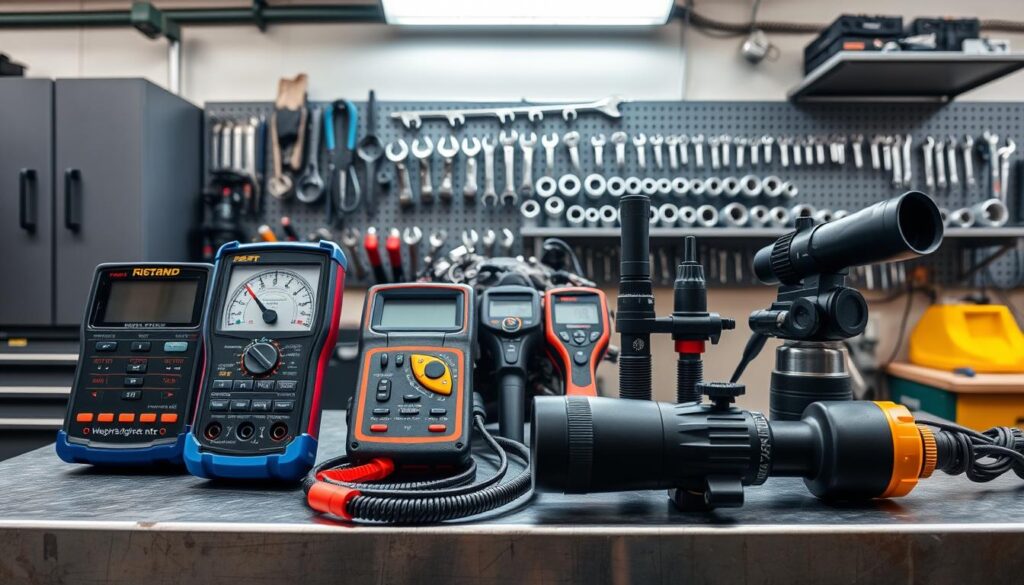
Fuel pressure gauges detect delivery problems at fuel filter housings and rail pressure sensors. Infrared thermometers measure temperature variations—differences exceeding 20°F between cylinders indicate circulation problems. Manufacturer-specific software like Cummins INSITE, Detroit Diesel Diagnostic Link, and Caterpillar Electronic Technician enable advanced troubleshooting beyond basic OBD-II capabilities.
Scheduled Maintenance Intervals
Preventive maintenance follows interval-based schedules preventing 75% of unexpected failures. Consistent adherence to these intervals extends equipment life significantly while reducing total operating costs.
Key intervals include oil and filter changes every 250-500 hours depending on operating conditions (severe service requires more frequent changes), fuel filter replacement every 500 hours preventing contamination damage, monthly air filter inspection with replacement based on restriction indicators, annual coolant system flush maintaining proper pH levels, and quarterly fuel system biocide treatment preventing microbial growth in stored fuel.
Additional maintenance includes valve adjustment per manufacturer specifications (typically 1,000-2,000 hours maintaining compression and preventing damage), belt and hose inspection every 1,000 hours (replace belts showing cracks or glazing), and turbocharger monitoring for boost pressure and oil leaks. Rebuilding costs $800-2,000—far less than emergency replacement at $2,000-4,000.
Industry-Specific Maintenance Requirements
| Industry | Critical Risk | Required Maintenance | Frequency |
|---|---|---|---|
| Marine | Saltwater corrosion | Seal inspections, zinc anode replacement | Weekly |
| Oil and Gas | Production downtime | Comprehensive diagnostics, oil analysis | Daily |
| Data Centers | Power loss | Load testing, fuel quality testing | Monthly |
| Healthcare | Emergency power failure | Full-load testing, transfer switch verification | 30 days |
When Professional Service Becomes Necessary
Certain problems require certified technician expertise. Internal engine damage indicated by metal shavings in oil demands professional evaluation—continuing operation risks catastrophic failure. Persistent electrical faults involving control unit programming require manufacturer-specific software and training.
Professional service becomes essential for injection pump timing requiring precision measurement, turbocharger rebuilding demanding specialized tools, cylinder head work involving precision machining, and repairs requiring certified documentation for warranty or EPA compliance.
Share Your Diesel Diagnostic Expertise
Have specialized knowledge in diesel troubleshooting, maintenance best practices, or diagnostic techniques? Join Heavy Duty Journal’s contributor network and reach thousands of fleet professionals.
Frequently Asked Questions
What causes diesel engine starting failure?
Primary causes include weak batteries (below 12.6 volts), corroded connections reducing cranking power by 30-40%, malfunctioning glow plugs preventing cold-weather combustion, clogged fuel filters restricting flow below 40 PSI, air trapped in fuel lines creating vapor locks, and low compression from worn piston rings (readings below 350 PSI). Technicians use multimeters for battery voltage testing and ohmmeters to measure glow plug resistance (0.5-2.0 ohms normal range).
How do I diagnose black smoke from diesel exhaust?
Black smoke indicates over-fueling or restricted airflow creating incomplete combustion. Diagnosis requires fuel pressure testing (should maintain 20,000-30,000 PSI in common-rail systems), checking air filter restriction (replace if exceeding 25 inches H2O), inspecting injector spray patterns through pop testing, and examining turbocharger boost pressure (should generate 15-30 PSI). Verify MAP and MAF sensor functionality through voltage testing at idle (1-2 volts) and full throttle (4-5 volts).
What diagnostic tools are essential for diesel engine troubleshooting?
Essential equipment includes OBD-II scanners ($150-5,000) for fault codes and live data, compression testers for evaluating pistons and valves (readings should exceed 350 PSI), fuel pressure gauges for delivery problems, leak-down testers isolating ring versus valve issues, infrared thermometers for cooling system assessment, and multimeters for electrical diagnostics. Advanced diagnostics require manufacturer-specific software like Cummins INSITE or Caterpillar Electronic Technician.
Why does my diesel engine overheat with sufficient coolant?
Overheating despite adequate coolant indicates contaminated coolant reducing heat transfer by 30%, clogged radiator restricting airflow by 40-50%, stuck thermostat preventing circulation, or failed water pump with damaged impeller. Additional causes include blocked oil coolers, internal coolant leaks creating air pockets, or damaged radiator fins. Solutions include cooling system flush, thermostat testing in heated water (should open at rated temperature ±5°F), water pump inspection, and radiator cleaning.
What causes white smoke in diesel engines?
White smoke signals unburned fuel from cold combustion, low compression below 350 PSI (worn rings or valves), or coolant entering combustion chambers through blown head gaskets. Temporary white smoke during warm-up (under 5 minutes below 180°F) is normal. Persistent white exhaust with coolant loss or sweet smell indicates serious problems. Diagnosis requires compression testing (variance exceeding 10% suggests specific failures), leak-down tests (acceptable leakage under 10%), and coolant system pressure tests.
When should I call a professional diesel technician?
Professional service is required for internal engine damage indicated by metal shavings in oil, persistent electrical issues involving ECM programming, specialized diagnostic requirements beyond OBD-II scanners, and repairs needing certified documentation for warranty or EPA compliance. Additionally, injection pump timing, turbocharger rebuilding, cylinder head machining, and problems persisting after standard troubleshooting warrant professional intervention to protect equipment investments.
Implementing Systematic Diesel Engine Troubleshooting
Systematic diesel engine troubleshooting ensures reliability across all industrial sectors. From Caterpillar generators powering critical facilities to Cummins marine engines navigating commercial vessels, proactive engine diagnostics prevent costly breakdowns averaging $5,000-15,000 per incident. The procedures in this guide extend equipment life by 40-60% while reducing unexpected failures by 75%.
Engine performance optimization begins with recognizing early warning signs and implementing immediate corrective action. Regular inspection of fuel injection systems, cooling circuits, and exhaust components identifies problems 2-4 weeks before catastrophic failure. Replacing worn injectors at recommended intervals costs $2,000-4,000 compared to $15,000-25,000 for complete rebuilds after catastrophic failure.
Document every symptom, diagnostic result, and repair to establish troubleshooting patterns for your specific equipment. Historical data enables predictive maintenance identifying failure trends before breakdowns occur. Fleet operations tracking diagnostic codes across multiple units identify systemic problems requiring corrective action across the entire fleet.
Professional diagnostic tools enable accurate problem identification reducing diagnostic time by 60-70%. However, even advanced scanners cannot replace disciplined maintenance schedules. Following manufacturer guidelines for oil changes, filter replacements, and coolant flushes extends equipment life from 8,000-12,000 hours to 15,000-20,000 hours. Successful diesel troubleshooting balances systematic diagnostic procedures with preventive maintenance protocols—delivering measurable returns through reduced downtime and lower total operating costs.
Share This Troubleshooting Guide
Help fellow fleet managers and technicians reduce downtime—share this diesel diagnostics guide with your professional network.