
By Michael Nielsen, Editor & Publisher | 15+ Years in Diesel Repair
Last Updated: December 2025
📖 Estimated reading time: 22 minutes
The commercial diesel engine market continues its growth trajectory as fleet managers navigate one of the most significant technology transitions in decades. With EPA 2027 emissions standards approaching and alternative powertrain competition intensifying, strategic equipment decisions made in 2026 will shape fleet profitability and compliance for the next decade.
Modern diesel engine technology bears little resemblance to systems from even five years ago. Advanced fuel injection systems, sophisticated emissions controls, and connected diagnostics have transformed these powertrains into precision-engineered platforms that deliver dramatic improvements in fuel efficiency, emissions performance, and total cost of ownership. For fleet managers evaluating equipment purchases in 2026, understanding these advances is essential for making informed investment decisions.
The year 2026 represents a critical inflection point where multiple technological, regulatory, and market forces converge. This comprehensive guide examines the diesel engine technologies that matter most for commercial fleets, from fourth-generation common rail injection to renewable fuel compatibility and predictive maintenance systems.
Key Takeaways
- EPA 2027 impact: New standards reduce NOx emissions by 82% to 0.035 g/bhp-hr, requiring advanced aftertreatment technology and creating pre-buy opportunities for 2024-2026 model year trucks.
- Fuel efficiency gains: Modern diesel engines deliver 10-15% fuel savings through variable geometry turbochargers, cylinder deactivation, and waste heat recovery systems.
- Renewable diesel ready: Current diesel engines from major OEMs approve renewable diesel (HVO) without modifications, enabling 50-90% lifecycle carbon reductions.
- Connected diagnostics: Telematics integration and predictive maintenance reduce unplanned downtime by 25-40% while extending service intervals.
- TCO advantage: Advanced diesel technology delivers positive ROI within 2-4 years through fuel savings, reduced maintenance costs, and 15-25% resale premiums.
The Evolution of Commercial Diesel Engines for Fleets
Commercial diesel engines have undergone a fundamental transformation over three decades, evolving from purely mechanical systems into sophisticated electronic powertrains that balance power, economy, and environmental responsibility. This evolution directly impacts fleet managers making critical equipment decisions as the industry approaches EPA 2027 compliance requirements.
The shift from mechanical to electronic control began in the 1990s and has accelerated continuously. Early diesel engines relied entirely on mechanical fuel injection pumps, governor systems, and timing mechanisms that offered limited precision. Today’s engines feature comprehensive electronic management systems controlling every aspect of combustion and emissions through thousands of real-time adjustments per second.

Electronic Control System Advances
Modern diesel engines integrate sensors monitoring engine speed, load, temperature, and airflow in real time. This data feeds sophisticated algorithms that adjust fuel delivery, injection timing, and turbocharger boost pressure with millisecond precision. High-pressure common rail fuel injection systems now operate at pressures exceeding 2,500 bar, enabling multiple injection events per combustion cycle that were impossible with mechanical systems.
The results speak for themselves. According to the Diesel Technology Forum, modern diesel engines achieve up to 98% cleaner particulate and NOx emissions compared to models from the early 2000s. Fuel economy has improved by 3-10% across most applications, even while meeting increasingly stringent emissions standards.
Current Market Position by Vehicle Class
Diesel engines maintain dominant market positions across commercial vehicle segments, though the competitive landscape varies significantly by application. In Class 7-8 heavy-duty trucking, diesel commands approximately 95% market share. Long-haul operations spanning 500-1,000 miles daily require the energy density, refueling infrastructure, and payload capacity that diesel provides.
Medium-duty applications in Class 4-6 present a more complex picture. Diesel maintains strong positioning where daily mileage exceeds 150-200 miles consistently, payload requirements approach maximum GVWR ratings, or operating environments include extreme temperatures. Vocational applications like construction equipment, refuse collection, and utility vehicles show particularly strong diesel adoption rates due to high torque demands and durability requirements.
| Vehicle Segment | Diesel Market Share | Primary Advantages | Competitive Pressures |
|---|---|---|---|
| Class 8 Long-Haul | 95%+ | Range, infrastructure, TCO | Emerging hydrogen fuel cells |
| Class 6-7 Regional | 75-85% | Payload capacity, flexibility | Battery-electric alternatives |
| Class 4-5 Delivery | 60-70% | Proven reliability, fuel availability | Electric and hybrid systems |
| Vocational/Specialty | 85-90% | Durability, power take-off capability | Limited near-term alternatives |
Why 2026 Represents a Strategic Decision Point
The year 2026 is the final full production year before EPA 2027 heavy-duty emissions standards take effect. Fleet managers purchasing equipment in 2026 face critical decisions about whether to acquire vehicles under current standards or wait for 2027 compliant models with their new technology packages.
Technologies that were experimental just a few years ago are reaching mainstream maturity in 2026. Variable geometry turbochargers with full electronic actuation, cylinder deactivation systems, and waste heat recovery technologies are transitioning from premium options to standard features. This creates opportunities for significant performance improvements without the risks of unproven technology.
The competitive dynamics between diesel and alternative powertrains are also reaching new equilibrium points. Battery-electric vehicles have expanded their viable operating envelope, renewable diesel has achieved significant infrastructure penetration, and mild hybrid systems offer compelling efficiency gains. Fleet equipment decisions in 2026 require more sophisticated total cost of ownership analysis than ever before.
Advanced Fuel Injection Systems Driving Performance Gains
Fuel injection technology has emerged as the cornerstone driving measurable improvements in diesel engine combustion quality. These sophisticated systems deliver precise fuel metering at pressures that maximize atomization while minimizing emissions. For fleet managers evaluating equipment, understanding fuel injection advances directly impacts operational cost projections.
The transition from mechanical injection pumps to electronically controlled systems created unprecedented optimization opportunities. Current platforms monitor dozens of engine parameters in real-time and adjust injection strategies thousands of times per second. This control level translates into fuel economy improvements of 5-8% compared to previous-generation systems and particulate emissions reductions exceeding 40%.

Fourth-Generation Common Rail Technology
Common rail architecture fundamentally changed diesel engine design by separating pressure generation from injection timing. Unlike older systems where a mechanical pump controlled both functions simultaneously, common rail systems maintain fuel at constant high pressure in an accumulator rail. Individual injectors then draw from this pressurized reservoir under precise electronic control.
Fourth-generation systems represent a maturity point where reliability matches performance capability. These platforms incorporate multiple pressure stages adapting to operating conditions—delivering lower pressures during idle to reduce noise while ramping to maximum pressure for acceleration and heavy-duty applications.
Ultra-High Pressure Capability
Leading suppliers including Bosch and Denso have pushed injection pressures to approximately 3,000 bar (43,500 psi). These extreme pressures fundamentally change fuel atomization physics, creating droplets small enough to ensure nearly complete combustion even under challenging conditions. Finer fuel spray means more surface area exposed to oxygen, accelerating combustion and reducing particulate formation.
The engineering challenges at these pressures are substantial. Components must withstand forces that would instantly rupture conventional materials while maintaining tolerances measured in microns. Independent testing consistently shows 3-5% fuel consumption reductions when comparing 3,000-bar systems against 2,000-bar predecessors in identical applications.
3-5%
Fuel consumption reduction with 3,000-bar injection systems vs. previous generation
Multi-Stage Injection Strategies
Modern fuel injection systems execute multiple injection events during each combustion cycle, with some configurations performing up to nine separate injections per cylinder firing. This multi-stage approach optimizes combustion quality and emissions control simultaneously through carefully choreographed fuel delivery.
Pilot injections deliver small fuel quantities milliseconds before the main injection event, preconditioning the combustion chamber by raising temperature and pressure. The result is smoother combustion with reduced noise and lower peak cylinder pressures that decrease mechanical stress on engine components.
Post-injections serve emissions control functions rather than power generation. These late-cycle injections raise exhaust temperature to facilitate diesel particulate filter regeneration and selective catalytic reduction reactions. By managing aftertreatment system temperatures through injection strategy, engines reduce the need for separate regeneration events that consume fuel without producing useful work.
Piezoelectric Injector Technology
Piezoelectric injectors represent the latest evolution in diesel fuel delivery, replacing electromagnetic solenoids with piezoelectric crystal stacks. When voltage is applied, these crystals expand with extreme speed and precision, opening and closing injection valves in microseconds rather than the milliseconds required by solenoid systems.
The response time improvement enables more injection events per combustion cycle and finer control over injection quantities. Piezoelectric units accurately deliver fuel quantities as small as 0.5 cubic millimeters, enabling extremely precise pilot injections that improve cold-start performance and reduce warm-up smoke.
Durability data from early piezoelectric deployments now spans over one million miles in commercial applications. Failure rates have declined to match or beat solenoid predecessors, eliminating early concerns about reliability.
EPA 2027 Emissions Standards and Compliance Strategy
The regulatory landscape for diesel emissions has transformed dramatically, with EPA 2027 standards representing the most significant change since 2007. These regulations demand unprecedented levels of pollutant reduction from commercial vehicles while extending useful life and warranty requirements substantially.
Understanding the technical capabilities required for compliance—and the timeline for implementation—proves essential for fleet investment decisions. Modern aftertreatment systems now capture particulate matter and convert nitrogen oxides into harmless compounds with efficiency levels that seemed impossible a decade ago.
What EPA 2027 Standards Require
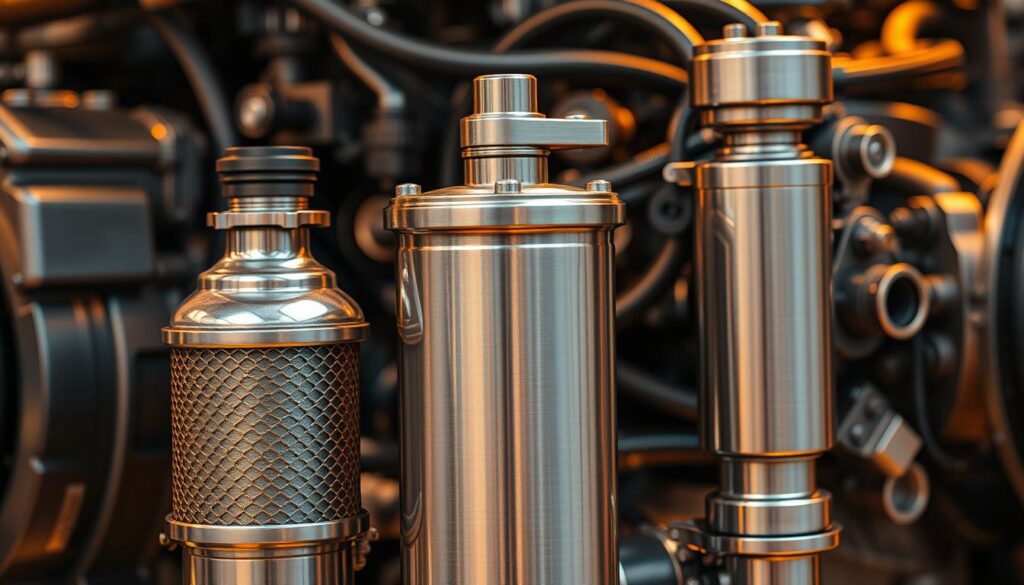
The EPA’s final rule published in December 2022 establishes significantly lower NOx limits alongside new testing protocols that better represent real-world driving conditions. Beginning with model year 2027 vehicles, the standards require NOx emissions of 0.035 grams per brake horsepower-hour during normal operation, 0.05 grams at low load, and 10 grams per hour at idle.
This represents an 82% reduction from the current 0.20 g/bhp-hr standard that has been in effect since 2010. The new regulations also extend useful life requirements to 450,000 miles for medium-duty vehicles and 650,000 miles for heavy-duty trucks—nearly doubling previous requirements.
Perhaps most significantly, the standards introduce updated test cycles including low-load operation and extended idling scenarios. These conditions challenge traditional emissions strategies that performed well in laboratory settings but struggled in actual fleet applications. Manufacturers must now optimize systems for the complete operational envelope rather than specific test points.
| Standard | NOx Limit (g/bhp-hr) | PM Limit (g/bhp-hr) | Useful Life | Warranty |
|---|---|---|---|---|
| EPA 2010 (Current) | 0.20 | 0.01 | 435,000 miles | 100,000 miles |
| ✓ EPA 2027 | 0.035 | 0.005 | 650,000 miles | 450,000 miles |
| CARB Low-NOx (Voluntary) | 0.02 | 0.005 | 650,000 miles | 450,000 miles |
Dual-Dosing SCR Systems for Maximum Efficiency
Advanced selective catalytic reduction systems represent the cornerstone of modern NOx control strategies. The latest implementations feature dual diesel exhaust fluid injection points positioned strategically within the exhaust stream. This architecture delivers substantially higher conversion efficiency across diverse operating conditions compared to single-dosing configurations.
The upstream DEF injector handles the majority of NOx conversion during steady-state operation and highway driving. The downstream injection point activates during transient conditions, low-load operation, and cold starts when the upstream catalyst hasn’t reached optimal temperature. This coordinated approach maintains NOx conversion rates exceeding 95% regardless of driving patterns.
Fleet managers should understand that dual-dosing systems typically consume 3-5% of fuel volume in DEF. This represents a modest increase over previous single-dosing systems but delivers the conversion efficiency necessary for upcoming regulations. Proper DEF quality and supply chain management become even more critical with these advanced architectures.
Pre-Buy Strategy Considerations
Many fleets are evaluating whether to pre-buy model year 2024-2026 trucks before EPA 2027 standards take effect. This strategy offers proven technology without first-year implementation risks, but requires careful analysis of your specific operational needs and risk tolerance.
Arguments favoring pre-buy include avoiding potential reliability issues with new emissions technology, maintaining current maintenance procedures and technician familiarity, and capitalizing on current pricing before potential cost increases. Industry estimates suggest EPA 2027 compliance could add $10,000-$15,000 to heavy-duty truck acquisition costs.
Arguments against pre-buy include the extended warranty protection of 2027 models (450,000 vs. 100,000 miles), protection against future regulatory tightening, and potential fuel efficiency improvements in newer platforms. Fleets operating in California face additional considerations given CARB’s Advanced Clean Fleets requirements.
Stay Ahead of Regulatory Changes
Get expert analysis on EPA 2027 compliance strategies, technology updates, and fleet investment decisions delivered to your inbox.
Fuel Efficiency Technologies Reducing Operating Costs
Fuel efficiency technologies represent the most significant opportunity for fleet managers to reduce operational costs while meeting environmental standards. Modern commercial engines integrate multiple advanced systems that work synergistically to extract maximum value from every gallon of fuel. These innovations deliver measurable improvements that directly impact fleet profitability.
The latest generation of engines combines electronic controls with mechanical refinements to achieve efficiency levels that seemed impossible just five years ago. Fleet managers implementing integrated efficiency strategies achieve fuel consumption reductions of 10-15% compared to 2020 baseline engines—representing thousands of dollars in annual savings per vehicle in long-haul applications.
Variable Geometry Turbochargers
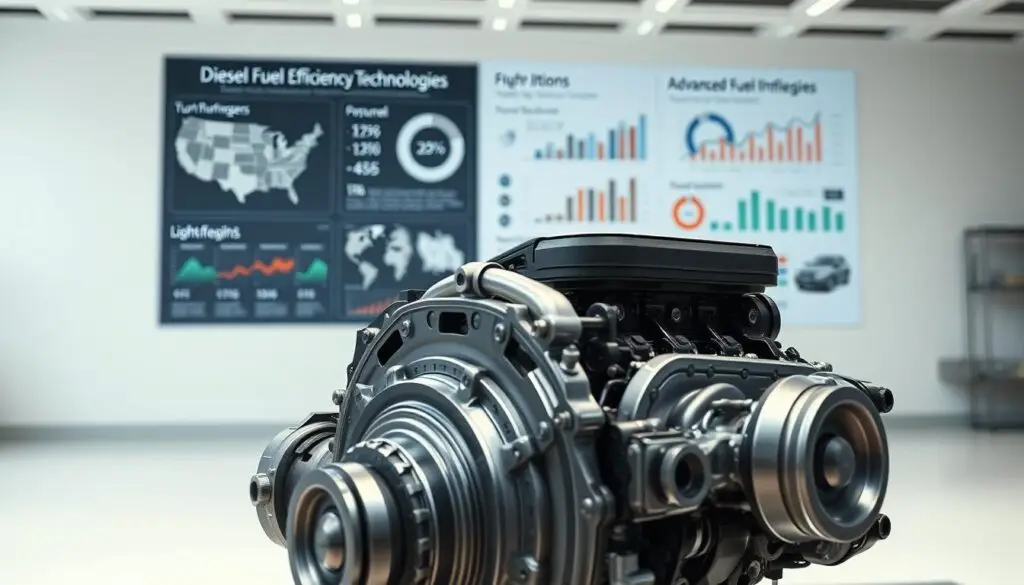
Variable geometry turbochargers use adjustable vanes to optimize boost pressure across the entire engine operating range. Unlike fixed-geometry turbochargers, VGT systems adapt vane angles in real-time based on engine speed, load, and driving conditions. This dynamic adjustment eliminates turbo lag while maximizing efficiency at cruise speeds.
Electronic actuation systems integrate VGT operation with engine management computers for coordinated control. The system balances performance demands with fuel economy targets and emissions requirements simultaneously. Fleet managers see fuel economy improvements of 2-5% in real-world applications, with the greatest benefits occurring in variable-duty cycles common in regional haul and urban delivery.
Cylinder Deactivation Technology
Emerging cylinder deactivation technology represents a breakthrough in reducing fuel consumption during light-load conditions. Unlike traditional systems that deactivate fixed cylinder banks, dynamic skip fire can deactivate individual cylinders on a stroke-by-stroke basis. This precise control maintains smooth operation while dramatically reducing pumping losses.
The technology delivers maximum benefit during highway cruising and downhill grades when full engine power isn’t required. Sophisticated engine management systems monitor load demands and selectively fire only the cylinders needed to maintain speed. Cylinder deactivation improves brake-specific fuel consumption by up to 6% in favorable duty cycles.
The investment typically pays back within two to three years for high-mileage fleets operating in applications with significant light-load operation time. Cummins has incorporated this technology into its latest X15 platform specifically designed for EPA 2027 compliance.
Waste Heat Recovery Systems
Waste heat recovery systems capture energy that would otherwise be lost through exhaust gases. Organic Rankine Cycle technology uses this thermal energy to generate additional power for the vehicle. The system works by circulating a working fluid through a heat exchanger positioned in the exhaust stream.
The heated fluid drives a turbine that either returns mechanical power to the crankshaft or generates electricity for vehicle systems. Commercial implementations demonstrate 3-5% fuel consumption reduction in long-haul applications. This technology proves most effective in steady-state highway driving where exhaust temperatures remain consistently high.
Friction Reduction Technologies
Modern engines achieve dramatic reductions in parasitic losses through multiple friction-reducing technologies. Advanced low-friction coatings such as diamond-like carbon reduce wear while minimizing energy loss at critical interface points. These coatings appear on piston rings, cylinder walls, and bearing surfaces.
Low-viscosity lubricants represent another key efficiency strategy. These synthetic formulations decrease internal friction while maintaining adequate protection for engine components. Fleet managers can expect efficiency improvements of 0.5-1.5% from optimized lubricant selection alone. Combined with redesigned bearing surfaces and optimized piston ring tension, modern engines achieve friction reductions of 15-25% compared to designs from a decade ago.
| Efficiency Technology | Fuel Savings | Best Application | Payback Period |
|---|---|---|---|
| Variable Geometry Turbochargers | 2-5% | Variable duty cycles | 1-2 years |
| Cylinder Deactivation | 3-6% | Highway cruising | 2-3 years |
| Waste Heat Recovery | 3-5% | Long-haul steady-state | 3-4 years |
| Friction Reduction Package | 1.5-3% | All applications | Immediate |
Renewable Diesel and Alternative Fuel Integration
Renewable diesel integration represents the most immediate opportunity for fleets to lower their environmental impact without replacing vehicles. The diesel fuel landscape has evolved dramatically as sustainable alternatives emerge as viable options. Fleet managers can now reduce carbon emissions by 50-90% simply by changing what they put in their fuel tanks.
This transition comes at a critical time. Regulatory pressures are intensifying, corporate sustainability commitments are expanding, and customers increasingly demand lower-carbon transportation options. The advantage of renewable diesel lies in its compatibility with existing diesel engine technology—eliminating the need for costly vehicle replacements or extensive infrastructure modifications.

OEM Approval for Renewable Diesel
The Cummins X15 and Detroit DD15 engines dominate the North American heavy-duty truck market, powering hundreds of thousands of commercial vehicles. Both manufacturers have established clear positions on renewable diesel that give fleet managers confidence in fuel transition decisions.
Cummins fully approves renewable diesel meeting ASTM D975 specifications for use in all engine configurations without modifications. Renewable diesel delivers superior combustion characteristics compared to petroleum diesel, with higher cetane numbers typically ranging from 70-90 versus 40-45 for conventional fuel. This improved ignition quality results in smoother engine operation and reduced combustion noise.
Detroit Diesel provides similar endorsement for renewable diesel in DD15, DD13, and DD8 engine platforms. Daimler Truck North America’s position statement confirms that renewable diesel meeting ASTM D975 or EN 590 standards maintains full warranty coverage. Fleet operators can transition without concern about voiding warranties or compromising engine protection.
HVO and Paraffinic Diesel Properties
Hydrotreated vegetable oil (HVO) and paraffinic diesel represent premium renewable fuels with exceptional performance characteristics. These advanced fuels undergo different production processes than traditional biodiesel, resulting in superior technical properties.
HVO is produced through hydrotreatment of vegetable oils, waste fats, or other renewable feedstocks. The process removes oxygen and saturates carbon bonds, creating a fuel that is chemically nearly identical to petroleum diesel but with enhanced properties. According to Fortune Business Insights, the global HVO fuel market is projected to grow at 8.1% CAGR through 2032, reaching $36.9 billion.
The technical advantages are substantial. Cetane numbers typically exceed 70 and can reach 99 in premium formulations. This exceptional ignition quality delivers smoother combustion, reduced engine noise, and lower emissions. Cold-weather performance sets HVO apart from both biodiesel and petroleum diesel, with cloud points reaching -30°C to -40°C depending on formulation.
| Fuel Type | GHG Reduction | Cetane Number | Cold Weather | Engine Modifications |
|---|---|---|---|---|
| Petroleum Diesel | Baseline | 40-45 | Standard | None |
| B20 Biodiesel | 15-18% | 45-48 | Requires management | None |
| ✓ Renewable Diesel (HVO) | 50-90% | 70-90 | Excellent | None |
Infrastructure and Supply Chain Considerations
Renewable diesel availability has expanded rapidly in states with Low Carbon Fuel Standards. California leads with widespread distribution at retail fuel stations and commercial fueling facilities. Oregon, Washington, and British Columbia have similarly robust infrastructure. Fleet operations in these regions can transition with minimal supply chain disruption.
Outside LCFS states, renewable diesel availability is more limited but growing. Wholesale distribution networks are expanding as producers increase capacity. Low Carbon Fuel Standard credits provide substantial value in LCFS states, often making renewable diesel cost-competitive with petroleum diesel.
On-site fuel storage compatibility is generally straightforward for renewable diesel and HVO, which can use existing petroleum diesel storage tanks and dispensing equipment. Fleet managers should verify fuel quality specifications and establish supply contracts with reputable distributors who can document sustainability certifications.
The HDJ Perspective
Renewable diesel represents a pragmatic bridge technology that delivers immediate environmental benefits without operational disruption. For fleets that can’t yet electrify—whether due to duty cycle demands, infrastructure constraints, or capital limitations—HVO provides a proven pathway to significant carbon reductions today. The technology is mature, OEM-approved, and increasingly cost-competitive. We expect to see accelerating adoption as LCFS programs expand and corporate sustainability commitments drive demand.
Connected Engines and Telematics Integration
Digital connectivity has transformed diesel engines from isolated machines into integrated network nodes within comprehensive fleet management ecosystems. This evolution represents more than incremental improvement—it fundamentally changes how fleet managers monitor, maintain, and optimize their diesel-powered vehicles. Connected engines now generate continuous streams of operational data enabling unprecedented visibility into fleet performance.
The integration of IoT sensors and cellular communication modules into diesel powertrains creates opportunities for real-time decision making. Fleet telematics systems capture thousands of data points per minute, transmitting critical information to cloud-based platforms where advanced analytics transform raw data into actionable intelligence.

Cloud-Based Performance Monitoring
Modern diesel engines equipped with connectivity modules transmit operational data to cloud platforms in real time. This capability provides fleet managers with instant visibility into fuel consumption rates, exhaust temperatures, turbocharger boost pressures, and regeneration cycles across their entire fleet. Web-based dashboards display this information through intuitive interfaces accessible from any device.
The depth of data available through these platforms far exceeds what was possible with previous generation diagnostic tools. Parameters such as fuel injection timing, EGR valve position, SCR catalyst efficiency, and individual cylinder contribution are monitored continuously rather than only during scheduled maintenance intervals. This granular monitoring enables fleet managers to identify developing issues before they cause breakdowns.
Cloud platforms archive historical performance data, creating comprehensive records for each engine over its operational lifespan. Fleet managers can analyze trends across weeks, months, or years to identify patterns in fuel efficiency degradation, component wear progression, or operational anomalies.
Over-the-Air Updates and Remote Calibration
Connectivity enables diesel engine manufacturers to deploy over-the-air updates that modify engine calibrations without requiring vehicles to visit service facilities. This capability mirrors the software update functionality familiar from consumer electronics but applies it to mission-critical commercial vehicle powertrains. Cummins, Detroit Diesel, and PACCAR have all implemented OTA update capabilities in their latest engine platforms.
These updates can optimize fuel injection strategies, refine emissions control system operation, or adjust power curves to better match specific duty cycles. When regulatory requirements change or performance improvements are developed, manufacturers can push updates to thousands of engines simultaneously. This eliminates the logistics and downtime associated with traditional calibration updates that required physical connection to dealer diagnostic equipment.
Predictive Analytics and Machine Learning
Advanced analytics platforms apply machine learning algorithms to the massive datasets generated by connected diesel engines. These algorithms identify subtle patterns in engine behavior that precede component failures, often detecting developing issues weeks before human operators or traditional diagnostic systems recognize problems.
Machine learning models trained on data from thousands of engines can predict failures of specific components—such as turbochargers, fuel pumps, or DPF substrates—with remarkable accuracy. When the algorithm detects a pattern consistent with impending failure, it generates alerts that allow maintenance teams to schedule repairs during planned downtime rather than experiencing roadside breakdowns.
Fleet operators implementing comprehensive prediction systems typically experience 25-40% reduction in unplanned downtime. The advance warning enables planned maintenance during scheduled service windows, with parts ordered and staged before vehicles arrive at maintenance facilities.
| Telematics Platform | Engine Integration | Predictive Maintenance | OTA Support |
|---|---|---|---|
| Geotab GO9 | J1939 direct, 500+ PIDs | AI-based, 85% accuracy | Cummins Connected Diagnostics |
| Samsara | Detroit Connect, Navistar OnCommand | 12 critical components | Unified dashboard |
| Trimble | PACCAR MX deep integration | Parts availability integration | PACCAR OTA ecosystem |
Predictive Maintenance and Diagnostic Capabilities
Fleet maintenance strategies have evolved dramatically as diesel engine technology now enables proactive intervention before component failures occur. The integration of sophisticated sensors, artificial intelligence algorithms, and cloud-based analytics transforms maintenance from reactive repairs into strategic planning. These advanced diagnostic capabilities deliver measurable improvements in vehicle uptime, maintenance cost control, and operational efficiency.
Modern diesel engines generate thousands of data points during operation. Connected systems transmit this information to analytics platforms that identify emerging issues weeks or months before they cause breakdowns. This shift from scheduled maintenance to condition-based service represents a fundamental change in fleet operations that reduces costs while improving reliability.
AI-Powered Failure Prediction
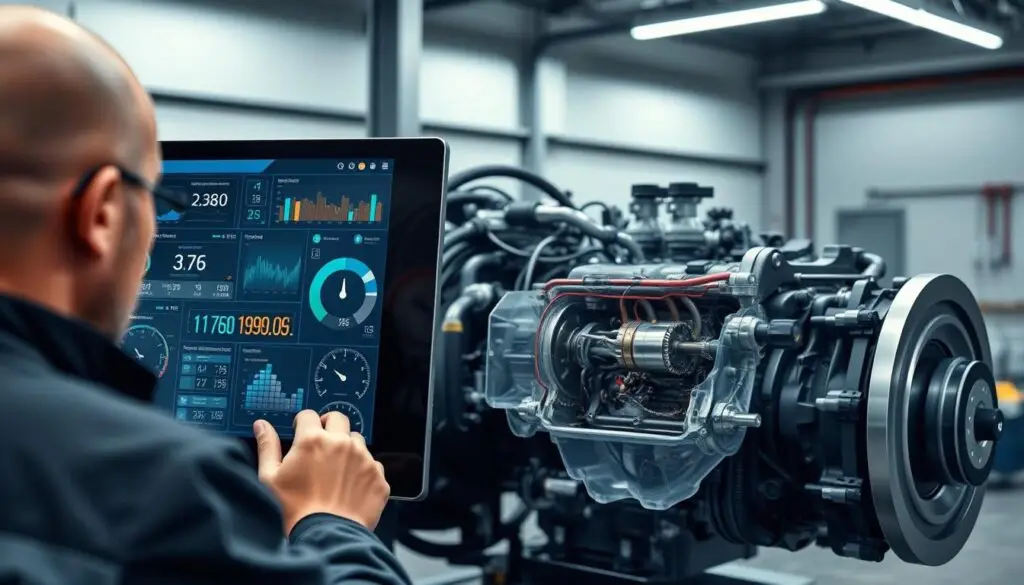
Artificial intelligence systems trained on millions of hours of engine operation data can identify subtle patterns that precede component failures. These prediction models analyze complex interactions between multiple parameters simultaneously. Oil pressure fluctuations may indicate bearing wear developing. Temperature profile shifts often suggest cooling system degradation.
Fuel system pressure variations frequently predict injector problems before performance degradation becomes noticeable. Major engine manufacturers including Detroit Diesel’s Virtual Technician and Cummins Connected Diagnostics now deploy these systems across their connected fleets.
The systems alert fleet managers to developing issues with specific recommended actions. A turbocharger showing early signs of bearing wear might generate an alert recommending inspection within 30,000 miles, allowing the fleet to schedule service during a planned maintenance window rather than experiencing a roadside failure.
Remote Diagnostics and Technician Efficiency
Connected engines enable remote diagnostics of fault codes and performance issues without requiring physical vehicle access. OEM technical support teams can access real-time engine data from central monitoring facilities. Fleet maintenance personnel review diagnostic information before vehicles return to the depot.
This capability allows accurate assessment of problem severity and urgency. Technicians can determine whether a vehicle requires immediate service or can complete its current route. Proper parts ordering occurs before the vehicle arrives at the shop, eliminating diagnostic delays. Studies indicate remote diagnostics reduce troubleshooting time by 30-50% while improving first-time fix rates.
Condition-Based Service Intervals
Oil condition sensors and engine wear monitoring enable condition-based maintenance strategies that extend service intervals beyond fixed schedules. Traditional approaches mandate oil changes every 15,000 miles regardless of actual oil condition. Advanced monitoring systems assess oil quality continuously and trigger service only when needed.
Fleet studies demonstrate that operating conditions often permit extending oil change intervals to 30,000-50,000 miles when monitoring confirms acceptable oil condition. Highway operations with minimal idling typically achieve the longest intervals. Urban delivery with frequent starts and stops requires shorter intervals but still exceeds traditional fixed schedules.
A 100-vehicle fleet operating 100,000 miles annually per vehicle with traditional 15,000-mile intervals performs approximately 667 oil changes yearly. Extending to 30,000-mile intervals through monitoring reduces this to 333 changes, saving $50,000-$75,000 annually in direct costs plus productivity gains from reduced downtime.
Maintenance Approach Comparison
Traditional fixed-schedule maintenance costs approximately $425,000 annually for a 100-vehicle fleet with 8-12 days of unplanned downtime per vehicle. Integrated predictive maintenance systems reduce annual costs to approximately $280,000 while cutting unplanned downtime to 3-5 days per vehicle. The investment in telematics and analytics typically pays back within 12-18 months for fleets with high-mileage operations.
Hybrid Diesel and Electric-Assist Systems
As commercial fleets seek immediate efficiency improvements, mild hybrid trucks combine diesel reliability with electric-assist capabilities that deliver 20-50% fuel economy gains in stop-and-go operations. These hybrid diesel systems integrate electric motors, battery packs, and advanced control systems with proven diesel engines to create powertrains that capture waste energy, reduce fuel consumption, and lower emissions.
Unlike fully electric vehicles, hybrid platforms maintain the range and refueling infrastructure advantages that long-haul and vocational fleets require. The technology proves especially valuable for urban delivery, refuse collection, and utility applications where frequent stops enable substantial energy recovery. Fleet operators report payback periods of three to five years for high-mileage urban routes.
48-Volt Integrated Systems
Modern mild hybrid trucks use 48-volt electrical systems that provide sufficient power for integrated starter-generator units without the cost and complexity of high-voltage hybrid architectures. Traditional 12-volt systems lack the electrical capacity to support motor functions during vehicle operation. The 48-volt platform delivers an optimal balance of cost, efficiency, and safety.
Integrated starter-generators mount directly to the diesel engine, combining starting, generation, and motor functions in a single compact unit. This architecture enables smooth engine restart after idle-stop events, eliminating the delay and harshness associated with conventional starters. The ISG provides electric boost during acceleration, reducing diesel fuel consumption during the most inefficient operating condition.
Regenerative Braking Energy Capture
Regenerative braking transforms kinetic energy that would otherwise dissipate as heat into electrical energy stored in battery packs for later use. In urban delivery cycles with frequent stops, hybrid systems recover 25-40% of braking energy. This captured energy powers subsequent acceleration events or auxiliary systems, creating a cumulative efficiency gain.
The technology delivers maximum value in applications with high stop frequency. Delivery fleets operating in dense urban environments see the greatest benefit. Refuse trucks making hundreds of stops per route represent ideal candidates for regenerative braking systems.
Electric Power Take-Off for Auxiliary Systems
Hybrid diesel platforms enable electrically powered auxiliary equipment to operate without engine idling—addressing a major source of fuel waste and emissions in vocational applications. Electric power take-off systems draw energy from the hybrid battery pack to run refrigeration units, liftgates, aerial booms, hydraulic pumps, and other work equipment.
Municipalities with anti-idling regulations increasingly restrict how long vehicles can idle while operating auxiliary equipment. Electric PTO capability ensures regulatory compliance while maintaining full work functionality. Some jurisdictions offer incentives or grant funding for hybrid vehicles with electric auxiliary power capability.
Refrigerated delivery operations gain particular advantage from electric PTO technology. Traditional transport refrigeration units require the diesel engine to idle for hours during loading, unloading, and overnight cooling. Electric systems eliminate this idle time entirely, reducing fuel consumption by hundreds of gallons per vehicle annually.
Total Cost of Ownership Analysis for Advanced Diesel
Smart fleet investment analysis balances upfront technology premiums against quantifiable operational savings, regulatory compliance benefits, and enhanced asset values at disposition. Fleet managers evaluating advanced diesel engines need comprehensive TCO analysis that extends beyond sticker prices to capture the complete economic picture over vehicle lifecycles.
The ROI equation has shifted dramatically as modern engines deliver superior efficiency and reliability that offset higher acquisition costs. Clean diesel systems generate measurable returns through reduced fuel consumption, lower maintenance expenses, extended service intervals, and improved regulatory compliance.
Capital Investment and Payback Periods
Advanced diesel technology packages command price premiums that vary based on emission control sophistication, efficiency features, and connectivity capabilities. Clean diesel emission systems typically add $8,000-$15,000 per vehicle compared to older technology platforms. Hybrid diesel-electric configurations increase incremental costs to $25,000-$50,000 per truck.
Multiple incentive programs substantially reduce net capital requirements. The EPA Diesel Emissions Reduction Act grants target fleets operating in non-attainment areas with funding that can offset 50% of technology upgrade costs. California’s HVIP voucher program offers substantial rebates for near-zero emission diesel systems. These combined incentives can accelerate payback periods to 18-36 months for most efficiency technologies.
Fuel Savings Quantification
Fuel consumption represents the largest variable cost in commercial trucking operations, making efficiency improvements the primary driver of diesel technology ROI. A comprehensive approach combining multiple efficiency technologies generates cumulative savings that exceed individual component contributions.
For a typical fleet vehicle traveling 100,000 miles annually with diesel at $3.50 per gallon and baseline fuel economy of 6.5 MPG, a 13% efficiency improvement translates to annual savings exceeding $6,500 per truck. This substantial return justifies technology investments even without considering emissions compliance benefits, reduced maintenance costs, or enhanced resale values.
Key Recommendation
Fleet managers should evaluate efficiency technologies as an integrated system rather than isolated components. Combined aerodynamics, low rolling resistance tires, advanced lubricants, and engine efficiency technologies can deliver cumulative fuel savings of 13-15% in long-haul applications—translating to $6,500+ annual savings per truck at current fuel prices.
Maintenance Cost Trajectories
Modern diesel engines demonstrate counterintuitive maintenance economics that challenge conventional assumptions about technology complexity and service costs. Advanced emission systems require diesel exhaust fluid replenishment and periodic aftertreatment service, adding operational expenses not present in older engines. DEF consumption typically ranges from 2-4% of diesel fuel consumption.
However, these incremental expenses are offset by reliability improvements and extended service intervals. Properly maintained advanced diesel engines demonstrate 15-20% lower total maintenance costs through 500,000 miles compared to previous-generation engines. This advantage stems from improved combustion control that reduces cylinder wear, enhanced lubrication systems that extend oil change intervals, and electronic control precision that minimizes component stress.
Resale Value Protection
Advanced diesel technology investments provide significant protection against asset depreciation by maintaining market competitiveness throughout ownership cycles. Trucks equipped with current-generation clean diesel engines, advanced safety systems, and connectivity platforms command 15-25% resale premiums over comparable trucks with older technology.
Corporate sustainability mandates are filtering through the used truck market as major shippers establish preferred carrier programs requiring specific emissions standards. Trucks meeting EPA 2021 and newer standards maintain stronger resale demand because they satisfy shipper requirements and avoid operational restrictions in emissions-sensitive regions.
Share Your Fleet Technology Experience
Have you implemented advanced diesel technology, renewable fuels, or predictive maintenance in your fleet? We’re looking for fleet managers and technicians to share their real-world experiences.
Making Strategic Equipment Decisions in 2026
Fleet managers face a practical reality: the transition to zero-emission powertrains will be gradual for most commercial applications. Strategic investment in proven diesel technologies delivers immediate benefits while positioning fleets for the future. Modern fuel injection systems, advanced emissions controls, renewable diesel compatibility, and telematics integration create operational excellence today while reducing environmental impact.
A comprehensive fleet technology strategy balances current operational needs with future flexibility. Conducting thorough total cost of ownership analysis, piloting new technologies on measured scales, and leveraging available incentive programs positions fleets competitively. Integration with platforms like Geotab and Samsara enables data-driven decisions that optimize performance across entire operations.
The optimal approach selects the right powertrain for each vehicle’s duty cycle, operating environment, and financial constraints. Fleet managers who stay informed about emerging diesel innovations and make strategic, evidence-based decisions will lead their organizations through industry transformation while maintaining competitive operations and meeting environmental objectives.
Frequently Asked Questions
What are the EPA 2027 heavy-duty diesel engine emissions standards?
EPA 2027 standards require heavy-duty diesel engines to limit NOx emissions to 0.035 grams per brake horsepower-hour during normal operation, 0.05 grams at low load, and 10 grams per hour at idle. This represents an 82% reduction from current 0.20 g/bhp-hr standards that have been in effect since 2010. The rule also extends useful life requirements to 650,000 miles for heavy-duty trucks and warranties to 450,000 miles—nearly quadrupling current requirements. These standards take effect with model year 2027 vehicles and include new low-load and idling test cycles that better represent real-world operating conditions.
Is renewable diesel compatible with current diesel engines?
Yes, renewable diesel (also called HVO or hydrotreated vegetable oil) is fully compatible with existing diesel engines without modifications. Major engine manufacturers including Cummins, Detroit Diesel, and PACCAR approve renewable diesel meeting ASTM D975 specifications for use in their engines with full warranty coverage. Unlike biodiesel, renewable diesel is chemically identical to petroleum diesel, so it can be used as a complete drop-in replacement. Renewable diesel typically offers higher cetane numbers (70-90 vs. 40-45 for petroleum diesel), better cold-weather performance, and can reduce lifecycle greenhouse gas emissions by 50-90%.
How do 2026 diesel engines compare to earlier models for fuel efficiency?
Modern diesel engines in 2026 deliver fuel efficiency improvements of 10-15% compared to 2020 baseline engines through integrated efficiency technologies. Variable geometry turbochargers contribute 2-5% improvement, cylinder deactivation systems add 3-6% during light-load operation, and waste heat recovery provides 3-5% in steady-state highway driving. Advanced friction reduction packages contribute another 1.5-3%. Combined with aerodynamic improvements and low rolling resistance tires, fleets can achieve cumulative efficiency gains of 13-15% in long-haul applications—translating to $6,500+ annual savings per truck at current fuel prices.
Should fleets buy trucks in 2026 or wait for EPA 2027 compliant models?
This decision depends on your fleet’s specific risk tolerance and operational requirements. Pre-buying 2024-2026 model year trucks offers proven technology without first-year implementation risks, maintains current maintenance procedures, and avoids potential price increases of $10,000-$15,000 for EPA 2027 compliance. However, waiting for 2027 models provides extended warranty protection (450,000 vs. 100,000 miles), useful life certification to 650,000 miles, protection against future regulatory tightening, and potential fuel efficiency improvements. Fleets operating in California should also consider CARB’s Advanced Clean Fleets requirements when making this decision.
What is the total cost of ownership advantage of advanced diesel technology?
Advanced diesel technology typically delivers positive ROI within 2-4 years despite higher upfront costs. The primary drivers include fuel savings of 10-15% annually (translating to $6,500+ per truck at 100,000 miles and $3.50/gallon diesel), maintenance cost reductions of 15-20% through 500,000 miles due to improved combustion control and extended service intervals, and enhanced resale values of 15-25% for trucks with current-generation technology. Available incentives from EPA DERA grants and state programs can offset 25-50% of incremental technology costs, further accelerating payback. EPA 2027 compliant trucks also benefit from extended warranty coverage that protects against major repair costs.
Conclusion
The commercial diesel engine landscape in 2026 presents both challenges and opportunities for fleet managers making strategic equipment decisions. With EPA 2027 standards approaching, advanced fuel injection systems reaching maturity, and renewable diesel becoming widely available, the technology choices made this year will impact fleet profitability and regulatory compliance for the next decade.
Modern diesel engines deliver measurable advantages through integrated efficiency technologies, sophisticated emissions controls, and connected diagnostics that reduce operating costs while meeting increasingly stringent environmental requirements. The combination of 10-15% fuel savings, 15-20% maintenance cost reductions, and 15-25% resale premiums creates compelling total cost of ownership advantages for fleets that embrace technology leadership.
For most commercial applications, diesel power remains the practical choice in 2026. The strategic question isn’t whether to invest in advanced diesel technology—it’s how to optimize that investment for your specific duty cycles, operating environments, and financial constraints. Fleet managers who conduct thorough analysis, leverage available incentives, and stay informed about emerging technologies will position their organizations for success through the industry’s ongoing transformation.
Share This Guide with Your Team
Help your fleet managers and technicians stay informed about the latest diesel engine technology, EPA 2027 requirements, and cost-saving strategies.