

By Michael Nielsen, Editor & Publisher | 15+ Years in Diesel Repair
Last Updated: December 2025
📖 Estimated reading time: 18 minutes
The diesel technician shortage has reached crisis levels in 2025, threatening the operational backbone of commercial transportation across North America. According to the American Transportation Research Institute’s comprehensive 61-page study, 65.5% of heavy-duty service shops are currently understaffed, with nearly one in five technical positions remaining vacant across the sector.
This workforce crisis represents more than a hiring challenge for fleet managers and shop owners. Every unfilled bay translates directly to extended repair backlogs, increased downtime costs, and strained customer relationships. Understanding the root causes behind this shortage—and the strategic solutions that actually work—has become essential for maintaining competitive operations.
Key Takeaways
- Critical Staffing Gap: 65.5% of heavy-duty service shops are understaffed, with an average 19.3% of technical positions unfilled nationwide.
- Workforce Growth Disparity: Truck driver positions grew 30% from 2014-2024, while diesel technician roles increased only 23%, creating a widening structural imbalance.
- Financial Entry Barriers: New technicians face $10,000 in tool costs while earning median starting wages of $23/hour—44% actively consider leaving the field.
- Training Pipeline Failure: Only 10,699 students completed diesel programs in 2021, far short of the 177,000 new technicians needed through 2026.
- Strategic ROI: Shops with training partnerships experience vacancy rates 5.2 percentage points lower and save $14,910 per hire in training wages.
Understanding the Diesel Technician Shortage Crisis
The diesel repair industry’s workforce crisis has been building for over a decade, but 2025 marks an inflection point where operational impacts have become impossible to ignore. ATRI’s analysis, synthesizing data from hundreds of service facilities and industry stakeholders, quantifies this challenge with stark precision.
Current data reveals that the average facility experiences vacancy rates approaching 20%—meaning nearly one in five bays sits idle not due to lack of work, but due to lack of qualified personnel to perform repairs. For shops already operating on thin margins, this translates to substantial lost revenue and extended customer wait times.
The trucking industry, which directly employs 20% of the nation’s 286,500 diesel service technicians, faces particularly acute pressure. Fleet maintenance operations compete not only with independent repair shops but also with automotive, construction equipment, marine, and transit sectors—all drawing from the same limited talent pool of mechanical expertise.

The Widening Gap Between Demand and Supply
The fundamental imbalance driving this crisis stems from asymmetric growth rates across transportation sectors. Between 2014 and 2024, commercial trucking expanded significantly, with driver positions increasing by 30% to meet growing freight demands. However, the technical workforce supporting these operations grew by only 23% during the same period.
This seven-percentage-point gap compounds annually, creating an ever-widening deficit between maintenance capacity and fleet requirements. According to the Bureau of Labor Statistics, approximately 28,000 new technician positions open annually through 2030 due to retirements and industry growth. Yet postsecondary training programs graduated only 10,699 students in 2021—a production rate that falls dramatically short of market needs.
TechForce Foundation research projects demand for 177,000 new diesel technicians between 2022 and 2026 to replace retiring workers and support industry expansion. At current graduation rates, training programs will produce roughly 53,000 graduates during that period—leaving a shortfall exceeding 120,000 qualified technicians.
Demographic Pressures Accelerating the Crisis
An aging workforce intensifies this shortage. Baby Boomer technicians with 30-40 years of hands-on experience are retiring at accelerating rates. BLS reports the median age of diesel technicians at 45 years, signaling a wave of departures over the coming decade. Industry estimates suggest approximately 110,000 experienced technicians—roughly half the current workforce—will reach retirement age by 2030.
This exodus removes not only labor capacity but also institutional knowledge. Veteran technicians possess diagnostic intuition developed through thousands of repair cycles—expertise that cannot be transferred through formal training alone. The knowledge gap becomes particularly acute in specialty areas such as emissions systems diagnostics, advanced electronic controls, and proprietary manufacturer platforms.
110,000+
Experienced diesel technicians projected to retire by 2030—representing nearly half the current workforce
Financial Barriers Deterring New Technician Recruitment
Economic obstacles consistently rank as primary deterrents for prospective diesel technicians. The financial reality of entering this trade presents immediate barriers that discourage career consideration and drive early-career attrition at alarming rates.
The $10,000 Tool Investment Challenge
New diesel technicians face substantial upfront capital requirements before earning their first paycheck. A comprehensive starter tool set—including diagnostic equipment, hand tools, specialty wrenches, and measurement devices—typically costs between $8,000 and $10,000. For entry-level workers without savings or family support, financing this purchase creates immediate financial stress.
This investment burden proves particularly heavy given entry-level compensation. ATRI data shows median starting wages of $23 per hour, translating to approximately $47,840 annually for full-time positions. When new technicians must immediately allocate significant portions of their income toward tool payments, the career’s financial appeal diminishes considerably.
Tool costs continue mounting throughout careers. Master-level technicians often maintain collections valued at $50,000-$75,000, with annual additions of $2,000-$5,000 for updated diagnostic equipment and specialized tools required for newer vehicle platforms.

Compensation Gaps Driving Career Dissatisfaction
Wage concerns dominate technician retention challenges across the diesel repair industry. ATRI surveys reveal that 44% of current technicians actively consider leaving the field, with compensation cited as the primary motivating factor. The industry’s annual turnover rate of 16.5% reflects this dissatisfaction, with understaffed shops experiencing even higher turnover at 18.1%.
The compensation disparity becomes stark when comparing diesel technicians to other skilled trades. According to BLS occupational data, heavy-duty truck mechanics earned a median wage of $60,640 in 2024. Meanwhile, electricians averaged $61,590 and plumbers $60,090—trades requiring similar training investments but offering better working conditions and more predictable schedules.
Geographic variations further complicate recruitment. Metropolitan areas with high living costs often fail to adjust technician wages proportionally, creating situations where housing expenses consume 40-50% of gross income. This economic pressure drives experienced technicians toward career changes or relocations to lower-cost regions.
| Experience Level | Median Hourly Wage | Annual Salary | Typical Tool Investment |
|---|---|---|---|
| Entry Level (0-2 years) | $23.00 | $47,840 | $8,000-$10,000 |
| Intermediate (3-5 years) | $27.50 | $57,200 | $15,000-$25,000 |
| Experienced (6-10 years) | $31.00 | $64,480 | $30,000-$45,000 |
| Master Level (10+ years) | $35.00 | $72,800 | $50,000-$75,000 |
Competition from Adjacent Industries
The diesel repair sector competes for talent against multiple industries pursuing identical skill sets. Automotive service facilities, construction equipment dealers, marine maintenance operations, and municipal transit agencies all require technicians with similar foundational competencies.
Manufacturing facilities increasingly recruit diesel technicians for industrial equipment maintenance roles. These positions often offer better working conditions—climate-controlled environments, predictable schedules, and less physical demand—while matching or exceeding shop wages. For technicians tired of harsh shop conditions, these opportunities prove attractive.
Technology companies developing autonomous and electric commercial vehicles actively recruit experienced diesel technicians for prototype testing and validation roles. While limited in total positions, these opportunities offer substantial salary premiums that further drain expertise from traditional repair operations.
Training System Failures and Educational Gaps
Training inadequacies sit at the root of workforce shortages. Current educational systems fail to produce technicians with the competencies required for modern commercial vehicle service, creating a cycle where shops must invest heavily in on-the-job training for every new hire.
The Unqualified Majority: 62% Enter Without Formal Training
ATRI research reveals that 61.7% of current diesel technicians entered the profession without completing formal postsecondary training programs. This majority learned through on-the-job experience, informal mentorship, or self-directed study—approaches that extend development timelines and increase error risks during the learning curve.
Shops hiring untrained workers invest an average of 357 hours in foundational training during the first year. At prevailing wage rates, this represents $8,211 in direct labor costs per new hire—expenses that small independent operations struggle to absorb while maintaining profitability. The training burden extends beyond initial orientation, with untrained technicians typically requiring 3-5 years to achieve proficiency levels that program graduates reach in 18-24 months.
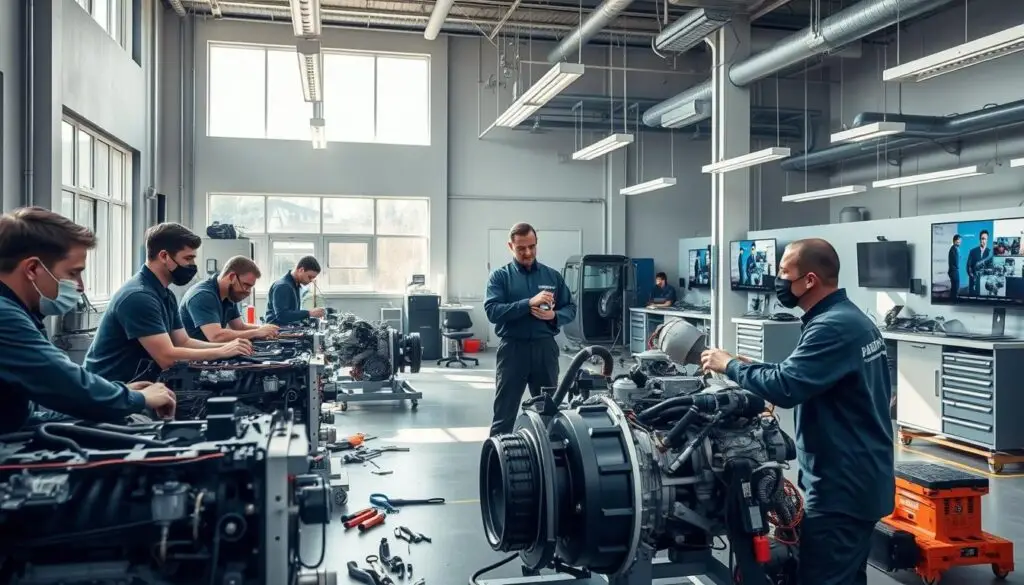
Program Graduate Deficiencies in Critical Skill Areas
Even formal training fails to adequately prepare technicians for current job demands. ATRI surveys of shop managers reveal that more than 30% of recent program graduates demonstrate insufficient proficiency in 20 core competency areas essential for entry-level performance.
The most significant skill gaps appear in hydraulic systems diagnosis, engine block service procedures, electrical system troubleshooting, and customer service competencies. Modern heavy-duty vehicles integrate these systems in ways that demand holistic understanding—yet training programs often teach them as isolated topics without connecting the diagnostic reasoning that ties everything together.
Diagnostic software proficiency represents another critical deficiency. Trucks manufactured after 2020 can generate between 700 and 1,000 distinct fault codes across engine, transmission, brake, and chassis systems. Many graduates lack the systematic diagnostic methodology required to efficiently isolate root causes from complex fault patterns, leading to extended diagnosis times and increased parts swapping.
Stay Current on Workforce Solutions
Get weekly insights on technician recruitment, training strategies, and operational best practices delivered to fleet managers and shop owners.
Curriculum Lag Behind Technological Advancement
Equipment technology evolves faster than educational curricula can adapt. The integration of advanced driver assistance systems (ADAS), telematics platforms, and alternative powertrains into commercial vehicles outpaces the updating of training materials and instructor expertise.
Electric and hybrid-electric trucks entering commercial fleets require high-voltage system knowledge that traditional diesel programs rarely address. The International Energy Agency reports that electric medium- and heavy-duty truck sales grew nearly 80% year-over-year in 2024, exceeding 90,000 vehicles worldwide. Yet few technical programs offer comprehensive EV service training, leaving shops unprepared for the growing electric vehicle segment.
Connectivity and telematics systems now standard on Class 8 trucks demand networking knowledge typically absent from mechanical training programs. Technicians increasingly must understand CAN bus protocols, IP networking basics, and cybersecurity fundamentals—skills that bridge mechanical and IT domains in ways traditional training doesn’t address.
Strategic Solutions: Building Sustainable Talent Pipelines
Progressive fleet operations demonstrate that strategic workforce development programs can overcome shortage challenges. These initiatives require sustained investment but deliver measurable returns through improved recruitment, faster competency development, and enhanced retention.
Apprenticeship Programs Driving Superior Outcomes
Registered apprenticeship programs combining classroom instruction with structured on-the-job training produce technicians with demonstrated superior performance and retention. Department of Labor data shows apprenticeship completers earn 30% higher wages than non-apprentice-trained workers in equivalent roles—reflecting both their enhanced value and employers’ willingness to invest in proven talent.
The typical diesel technician apprenticeship spans 3-4 years, requiring 2,000 hours of annual on-the-job training alongside related technical instruction. This model allows employers to develop workers specifically aligned to their equipment platforms and service methodologies, building loyalty through progressive skill development.
ATRI research confirms measurable apprenticeship advantages. Shops utilizing apprenticeship programs report turnover rates 40% lower than industry averages. The structured progression provides clear career pathways that improve job satisfaction and professional identity—critical factors for retaining ambitious technicians who might otherwise seek advancement elsewhere.
Companies like Penske Truck Leasing demonstrate best practices through comprehensive apprenticeship offerings. Their program includes approximately 40 hours of annual continuing education per technician, maintaining competency amid evolving equipment technologies while building long-term career engagement. With average technician tenure of nine years, their retention results validate the investment.
Training Partnerships Delivering Measurable ROI
Collaborative relationships between service providers and technical schools generate both recruitment advantages and training cost savings. Facilities that establish partnerships with educational programs experience vacancy rates 5.2 percentage points lower than shops relying solely on open-market hiring.
The financial benefits prove equally compelling. A median-sized shop with 16 technicians saves $14,910 in training wages by recruiting program graduates instead of untrained workers. These savings result from reduced supervision requirements and faster progression to independent work, allowing shops to bill more hours per technician from day one.
Effective partnerships extend beyond simple recruitment. Leading shops provide internship opportunities, donate equipment for training labs, supply guest instructors, and participate in curriculum advisory committees. This engagement ensures programs teach relevant competencies while creating pipelines of pre-qualified candidates familiar with the employer’s culture and expectations.
The HDJ Perspective
The diesel technician shortage isn’t a problem that will solve itself through market forces alone. Fleets and independent shops that treat workforce development as a strategic investment rather than an HR expense will establish lasting competitive advantages. The data is clear: organizations with structured training partnerships and apprenticeship programs consistently outperform peers on both recruitment and retention metrics. Those waiting for the labor market to normalize are watching their service capacity erode while competitors build sustainable talent pipelines. The question isn’t whether to invest in workforce development—it’s how quickly you can implement programs that work.
Competitive Compensation Strategies
Organizations successfully competing for technician talent implement comprehensive compensation packages addressing both wage and tool cost concerns. Leading operators now offer starting wages 15-20% above market median alongside sign-on bonuses of $2,000-$5,000 for qualified candidates.
Tool acquisition support proves particularly effective for new technician recruitment. Progressive employers offer interest-free tool purchase loans with payroll deductions, tool allowances of $1,000-$3,000 for new hires, partnerships with tool suppliers for discounted purchasing, and company-provided specialized diagnostic equipment. These programs directly address the primary financial barrier preventing new entrants from joining the field.
Performance-based compensation systems increasingly supplement base wages. Flat-rate pay structures reward productivity, while quality bonuses incentivize first-time fix rates and customer satisfaction scores. Top performers can earn 30-40% above base wages through these programs, creating meaningful income differentiation that motivates excellence.
Benefits packages increasingly emphasize work-life balance alongside traditional healthcare coverage. Shops offering flexible scheduling, predictable hours, and paid continuing education time demonstrate lower turnover rates than facilities with mandatory overtime and irregular schedules. For technicians with families, schedule predictability often outweighs modest wage premiums at less accommodating employers.
Technology Adaptation and Continuous Learning Requirements
Rapid evolution of commercial vehicle technology creates ongoing education requirements extending throughout technician careers. Managing these demands while maintaining service quality and technician engagement requires intentional program design.
Diagnostic Complexity in Modern Equipment
Today’s Class 8 trucks represent sophisticated computer systems on wheels. A typical 2025-model tractor contains 15-20 electronic control units managing engine performance, transmission shifting, brake systems, emissions controls, and safety features. These systems communicate across multiple network protocols, generating diagnostic complexity unprecedented in earlier vehicle generations.
Modern powertrains can produce between 700 and 1,000 distinct fault codes. Many fault conditions trigger multiple codes across different systems, creating diagnostic patterns that require systematic analysis rather than simple code-reading. Technicians must understand system interactions to efficiently isolate root causes from the noise of cascading faults.
Advanced diagnostics demand proficiency with multiple manufacturer-specific software platforms. Each OEM provides proprietary diagnostic tools with unique interfaces and capabilities. Technicians supporting multiple equipment brands must maintain proficiency across 3-5 distinct software systems—each requiring regular updates and periodic training refreshers as versions change.
Alternative Powertrain Technology Integration
Gradual electrification of commercial vehicle fleets introduces service requirements beyond traditional diesel expertise. Electric and hybrid-electric trucks require high-voltage safety training, battery system diagnostics, and charging infrastructure troubleshooting—skills entirely outside conventional diesel technician development.
California’s Advanced Clean Trucks regulation and similar policies in other states mandate increasing zero-emission vehicle percentages in new truck sales. The EPA’s greenhouse gas standards further accelerate this transition, ensuring electric trucks will represent growing portions of fleets requiring service within this decade.
Natural gas and hydrogen fuel cell vehicles add further complexity. These alternative fuels require specialized safety training and service procedures distinct from both diesel and electric platforms. Shops supporting diverse fleet compositions must develop multi-fuel competencies—or risk losing customers transitioning to alternative powertrains.
Implementing Continuous Education Programs
Leading service organizations treat ongoing technician education as operational necessity rather than discretionary expense. Penske’s standard of 40 annual training hours per technician represents industry best practice, ensuring technical knowledge keeps pace with equipment evolution.
Effective continuing education combines multiple delivery methods: manufacturer-sponsored training on new equipment and systems, online learning modules for flexible self-paced skill development, hands-on workshops for complex diagnostic and repair procedures, industry certification programs through ASE and TMC, and peer learning sessions where experienced technicians share expertise with newer team members.
Technology facilitates distributed learning. Major fleets deploy learning management systems delivering training content through tablets and smartphones, enabling technicians to complete modules during scheduled downtime rather than requiring dedicated training days that reduce billable hours.
Operational Impacts and Business Consequences
The technician shortage translates directly into measurable operational and financial impacts for fleet operators and service providers. Quantifying these consequences helps justify the workforce development investments required to address them.
Extended Downtime Eroding Fleet Productivity
Understaffed service facilities create repair backlogs that extend equipment downtime beyond necessary durations. Maintenance operations functioning at 80% capacity typically experience 30-40% longer average repair times due to workload compression and reduced diagnostic efficiency when technicians rush between jobs.
For fleet operators, extended downtime directly reduces earning capacity. A Class 8 tractor generating $200,000-$300,000 in annual revenue loses $550-$825 per day sitting idle. Even minor delays—waiting two additional days for service appointment availability—represent $1,100-$1,650 in lost productivity per vehicle. Industry estimates suggest the technician shortfall contributes to approximately $2.4 billion in lost revenue annually across the trucking sector.
Deferred maintenance resulting from service capacity constraints compounds these impacts. Fleets unable to access timely preventive maintenance experience increased breakdown frequency, creating unplanned downtime events that disrupt scheduled deliveries and damage customer relationships far more than predictable PM appointments.
Rising Labor Costs and Service Pricing Pressure
Severe talent shortages drive rapid wage inflation that pressures service providers’ cost structures. Areas with acute technician shortages have experienced 8-12% annual wage increases since 2022—rates substantially exceeding general inflation and forcing corresponding service rate adjustments that strain customer relationships.
Shop labor rates now range from $125-$175 per hour in most markets, with premium markets exceeding $200 per hour. These increases strain fleet maintenance budgets while creating pricing pressure that affects customer retention, particularly for smaller fleet operators managing tight margins.
Overtime costs amplify financial impacts. Understaffed facilities rely on existing technicians working extended hours at premium rates to maintain service levels. This approach proves financially unsustainable long-term while contributing to technician burnout and turnover—creating a vicious cycle that worsens the underlying shortage.
Share Your Workforce Solutions
Have you developed effective technician recruitment or retention strategies? Share your expertise with thousands of fleet managers and shop owners.
Safety and Compliance Risk Elevation
Rushed repairs and reduced quality control resulting from technician shortages create safety risks for vehicle operators and the public. Overworked technicians demonstrate higher error rates and reduced attention to detail—factors that can lead to brake system failures, steering problems, or other critical safety issues.
Regulatory compliance becomes more challenging when maintenance capacity constraints force deferred services. FMCSA regulations mandate specific inspection intervals and repair timeframes. Facilities lacking adequate staffing risk violations that trigger regulatory penalties and increase CSA scores affecting fleet safety ratings.
Insurance implications warrant consideration. Carriers with elevated accident rates or maintenance-related incidents face higher premium costs and potential coverage restrictions. Demonstrating robust maintenance programs and adequate service capacity becomes increasingly important for favorable insurance terms.
Industry-Wide Initiatives and Policy Considerations
Addressing workforce challenges requires coordinated action across industry associations, educational institutions, and government agencies. Recent initiatives demonstrate emerging strategies for systemic solutions beyond what individual employers can achieve alone.
Industry Association Workforce Programs
The Technology & Maintenance Council (TMC) of the American Trucking Associations leads industry efforts to strengthen technician pipelines. Their TMCSuperTech competition elevates technician status by showcasing elite diagnostic skills on a national stage, while their recommended practice guidelines help standardize training expectations across the industry.
The National Institute for Automotive Service Excellence (ASE) provides certification programs establishing recognized competency standards. Their heavy-duty truck certification series covers eight specialty areas from diesel engines to preventive maintenance, providing credentials that help employers evaluate candidate qualifications and technicians demonstrate professional expertise.
These organizations also advocate for policies supporting workforce development, including improved vocational education funding, apprenticeship tax incentives, and immigration pathways for skilled technical workers. While progress remains slow, industry voices increasingly shape policy discussions around skilled trades workforce challenges.
Federal and State Policy Initiatives
The Infrastructure Investment and Jobs Act includes provisions supporting workforce training for transportation maintenance occupations. Grant programs funded through the legislation help community colleges update equipment, expand program capacity, and develop curricula addressing emerging technologies—though funding competition remains fierce.
Several states have implemented technician shortage task forces examining barriers and recommending policy solutions. These efforts have produced initiatives ranging from tool loan programs to tax credits for employer training investments, though implementation and funding vary significantly across jurisdictions.
Immigration policy affects technical workforce availability. Industry advocates push for employment-based visa pathways that could help address shortages by facilitating recruitment of trained technicians from other countries, though such proposals face ongoing political challenges and uncertain timelines.
Future Outlook and Strategic Imperatives
The diesel technician shortage will likely intensify before meaningful improvement occurs. Understanding probable scenarios enables proactive strategic planning for service providers and fleet operators rather than reactive responses to worsening conditions.
Projected Workforce Dynamics Through 2030
Demographic trends indicate continued pressure from Baby Boomer retirements. Approximately 35-40% of current diesel technicians will reach traditional retirement age by 2030, representing potential losses of 100,000-115,000 experienced workers from the national workforce—a scale that training programs cannot realistically replace.
Training program capacity increases provide modest optimism. Community college diesel programs expanded enrollments by approximately 12% from 2021 to 2024, though this growth rate remains insufficient to close the supply-demand gap without substantial additional acceleration.
Technology changes introduce uncertainty. Widespread electric truck adoption could reduce demand for traditional diesel expertise while creating needs for high-voltage technicians—potentially requiring workforce transitions rather than simple additions. Shops that begin cross-training technicians on electric vehicle fundamentals now will be better positioned for this shift.
Competitive Differentiation Through Workforce Excellence
Organizations that successfully navigate current challenges will establish sustained competitive advantages. Superior workforce development programs become strategic assets that enhance service quality, reduce costs through lower turnover, and improve customer satisfaction through consistent service capacity.
Market consolidation may accelerate as smaller operations lacking resources for competitive wages and training programs struggle to maintain adequate staffing. Larger service providers and national fleet maintenance operations possess advantages in developing comprehensive workforce systems that smaller competitors cannot match.
Customer relationships increasingly factor in service provider workforce stability. Fleet operators prioritize maintenance partners demonstrating consistent service capacity, predictable appointment availability, and low technician turnover—capabilities that require systematic workforce strategies rather than ad hoc hiring efforts.
Frequently Asked Questions
What is causing the diesel technician shortage?
The shortage results from multiple converging factors: an aging workforce with accelerating Baby Boomer retirements removing experienced technicians, inadequate training program capacity graduating only 10,699 students annually versus demand for 177,000 new technicians through 2026, high entry costs including $8,000-$10,000 in tool investments, and wages that trail comparable skilled trades like electricians and plumbers. Additionally, truck driver positions grew 30% from 2014-2024 while technician roles increased only 23%, creating a structural supply-demand imbalance that compounds annually.
How much do diesel technicians earn in 2025?
According to Bureau of Labor Statistics data, the median annual wage for bus and truck mechanics and diesel engine specialists was $60,640 as of 2024. Entry-level technicians typically earn $23-$25 per hour ($47,840-$52,000 annually), while experienced master-level technicians can earn $35+ per hour ($72,800+ annually). Top earners in unionized positions or high-demand specialties like marine diesel can exceed $100,000 annually with overtime. However, these wages often lag comparable trades when accounting for tool investment requirements and working conditions.
What percentage of diesel service shops are currently understaffed?
According to the American Transportation Research Institute’s comprehensive 2025 study, 65.5% of heavy-duty service shops are currently understaffed. The average facility experiences vacancy rates of 19.3%, meaning nearly one in five technical positions remain unfilled. This represents a critical staffing crisis affecting service capacity and repair turnaround times across the industry, with understaffed shops also experiencing higher turnover rates (18.1% versus 7.8% for fully staffed operations).
Do apprenticeship programs help reduce technician turnover?
Yes, significantly. ATRI data shows shops utilizing registered apprenticeship programs report turnover rates 40% lower than industry averages. The structured progression provides clear career pathways that improve job satisfaction and professional identity. Additionally, apprenticeship completers earn 30% higher wages than non-apprentice-trained workers according to Department of Labor statistics, reflecting their enhanced value and employers’ willingness to retain proven talent. Facilities with training partnerships experience vacancy rates 5.2 percentage points lower than shops relying solely on open-market hiring.
How does the technician shortage impact fleet operations?
The shortage directly increases fleet downtime, maintenance costs, and operational risks. Understaffed facilities experience 30-40% longer average repair times due to workload compression. For Class 8 tractors generating $200,000-$300,000 in annual revenue, this translates to $550-$825 in lost daily productivity per idle truck. Industry-wide, the technician shortfall contributes to approximately $2.4 billion in lost revenue annually. Shops also face rapid wage inflation of 8-12% annually in shortage-affected areas, driving labor rates to $125-$200 per hour and straining fleet maintenance budgets.
Why is recruiting diesel technicians more difficult than other trades?
Diesel service competes against automotive, construction equipment, marine, transit, and manufacturing sectors—all pursuing technicians with overlapping skill sets. Many alternative opportunities offer climate-controlled environments, predictable schedules, and comparable or better wages. Manufacturing maintenance roles particularly attract diesel technicians seeking less physically demanding work with consistent hours. Technology companies developing autonomous vehicles also recruit experienced technicians for development roles at premium salaries, further draining talent from traditional repair operations.
Building Workforce Resilience for Long-Term Success
The diesel technician shortage represents a defining challenge for the commercial vehicle service industry in 2025 and beyond. With 65.5% of shops understaffed and 44% of current technicians considering career changes, workforce development has evolved from HR function to strategic business priority requiring executive attention and sustained investment.
Organizations implementing multi-faceted solutions—competitive compensation packages, tool acquisition support, training partnerships, apprenticeship programs, and continuous education systems—position themselves for sustained success. The evidence confirms that shops investing in these programs achieve vacancy rates 5.2 percentage points lower while saving nearly $15,000 per hire in training costs.
For fleet managers, the implications demand attention to maintenance provider stability as a supplier selection criterion. Evaluating service partners’ workforce development programs, technician retention rates, and training investments helps identify providers capable of delivering consistent, reliable service despite industry-wide challenges. The current crisis presents opportunity for forward-thinking organizations to build lasting competitive advantages by becoming employers of choice in their markets.
Help Others Prepare for Workforce Challenges
Share this comprehensive analysis with fleet managers and shop owners in your network who need to understand the technician shortage and proven solutions.