
By Michael Nielsen, Editor & Publisher | 15+ Years in Diesel Repair
Last Updated: December 2025
📖 Estimated reading time: 22 minutes
Autonomous trucking costs have moved from speculation to concrete calculation. Fleet operators across America now face investment decisions that will define their competitive position for the next decade. With Goldman Sachs Research projecting the cost per mile for autonomous trucks to drop from $6.15 in 2025 to $1.89 by 2030, the financial case for self-driving truck technology demands serious evaluation from every fleet manager.
Understanding the true scope of autonomous truck investment requires more than evaluating sticker prices. Capital requirements extend beyond vehicle acquisition to infrastructure, training, maintenance systems, and regulatory compliance. Meanwhile, operational savings and productivity gains promise to offset these expenditures through reduced labor expenses, improved fuel efficiency, and enhanced asset utilization.
This guide delivers the frameworks fleet operators need to calculate self-driving truck ROI for their specific operations. We examine real-world cost structures, break down return timelines, and provide decision criteria tailored to different fleet profiles. Whether managing regional deliveries or long-haul operations, you’ll gain authoritative insights to determine if automation technology aligns with your business objectives.
Key Takeaways
- Commercial deployment has arrived: Autonomous trucks now operate on revenue-generating routes in Texas, Arizona, and New Mexico, with companies like Aurora and Kodiak Robotics running daily hauls for major shippers.
- Capital investment scope: Per-vehicle costs range from $350,000 to $600,000 including sensors, computing infrastructure, and basic integration, with additional facility investments of $725,000 to $2.6 million.
- ROI timeline reality: Large fleets achieve break-even in 2.5 to 3 years on optimized corridors; mid-size fleets in 3.5 to 4.5 years; smaller operators face 4.5 to 6 year horizons without managed service models.
- Cost reduction potential: McKinsey research shows autonomous trucking can reduce costs per mile by 42% through eliminated driver wages, fuel optimization, and accident reduction.
- Regulatory evolution: The AMERICA DRIVES Act, introduced in July 2025, would establish federal preemption for Level 4 and 5 autonomous trucks, potentially streamlining interstate operations by 2027.
- Consumption models emerging: Trucking-as-a-service options at $1.20 to $2.50 per mile eliminate upfront capital requirements for fleets testing autonomous capacity.
The Current Landscape of Autonomous Trucking Technology
Fleet operators today face a dramatically different autonomous trucking landscape than existed even twelve months ago. The technology has moved beyond controlled testing environments into revenue-generating freight operations on specific corridors, with companies completing thousands of driverless commercial hauls.
Understanding this current state is critical before committing capital. The shift from experimental to operational represents more than technological progress—it reflects refined business models, established regulatory pathways, and proven safety records that make autonomous truck deployment a viable investment consideration rather than speculative bet.
Commercial Deployment Status and Market Maturity
Commercial autonomous trucks now operate on select routes across the Sun Belt and southwestern United States. These deployments focus primarily on long-haul highway routes between major logistics hubs where operational conditions match current technology capabilities.
The scale continues expanding rapidly. By late 2025, Aurora’s trucks complete daily hauls for major companies in Texas, while Kodiak Robotics has expanded its fleet to over 200 trucks with integrated driverless operations. The North American Council for Freight Efficiency reports that the inaugural fully autonomous freight corridor connecting Texas and California distribution hubs achieved 25% transit time reduction and 30% operational cost reduction in its first year.

Market maturity varies significantly by route type and operational design. Hub-to-hub transfers on predictable highways show the highest readiness levels. Urban delivery and complex pick-up scenarios remain largely in testing phases.
Several factors define commercially viable routes for current autonomous trucking deployment:
- Highway-dominant routing with minimal urban navigation requirements
- Consistent weather patterns that avoid heavy precipitation and extreme conditions
- High freight volume justifying dedicated autonomous lane assignments
- Terminal infrastructure supporting autonomous handoffs and human driver transitions
- Regulatory approval across all jurisdictions within the route corridor
Leading Technology Providers and Their Solutions
The autonomous trucking sector has consolidated around several key technology providers, each pursuing distinct approaches to Level 4 autonomous trucks. Understanding these providers helps fleet operators evaluate partnership options and technology stability.
Waymo Via leverages parent company Alphabet’s extensive autonomous vehicle research, focusing on integrated hardware-software systems. Their approach emphasizes proprietary sensor fusion and machine learning models developed through millions of test miles. Partnerships with Daimler Trucks provide manufacturing integration and service networks.
Aurora Innovation takes a platform approach, developing autonomous driving systems adaptable across multiple truck manufacturers. Their technology integrates with existing fleet management systems, offering retrofit potential for newer conventional trucks. Aurora announced a long-term partnership with NVIDIA and Continental to develop and deploy self-driving trucks, and has partnered with Uber Freight to integrate autonomous trucks into Uber’s logistics network.
Kodiak Robotics concentrates specifically on long-haul trucking applications, avoiding the complexity of urban autonomous systems. This focused strategy has accelerated their commercial deployment timeline on southwestern corridor routes. Kodiak’s partnerships with Bridgestone, J.B. Hunt Transport Services, Maersk, and Werner Enterprises are integrating autonomous technology into established logistics operations.
Technology approaches vary significantly across providers. Some prioritize lidar-heavy sensor packages for maximum redundancy, while others emphasize camera and radar combinations to reduce hardware costs. These architectural decisions impact both initial investment requirements and ongoing operational expenses.
Regulatory Framework and Operational Zones
The regulatory environment for commercial autonomous trucks remains fragmented across federal and state jurisdictions. This patchwork directly impacts where fleets can deploy autonomous assets and under what operational constraints.
At the federal level, the National Highway Traffic Safety Administration provides safety standards but grants states primary authority over commercial vehicle operations. The AMERICA DRIVES Act, introduced by Representative Vince Fong in July 2025, represents the most significant attempt to create a unified national framework.
35 states
Currently allow some form of autonomous truck testing or deployment — Autonomous Vehicle Industry Association
The AMERICA DRIVES Act would establish federal preemption over state laws requiring human drivers in Level 4 or 5 autonomous commercial vehicles. If enacted, it directs FMCSA to update regulations by September 2027, exempting autonomous trucks from human-specific requirements including hours of service, drug testing, and CDL licensing.
| State | Level 4 Status | Key Provisions | Reporting Requirements |
|---|---|---|---|
| Texas | Permitted | Highway-only operations | Quarterly safety reports |
| Arizona | Permitted | Minimal restrictions | Incident reporting only |
| Nevada | Permitted with certification | Designated corridors | Monthly operational data |
| California | Testing only | Safety driver required | Comprehensive disengagement reporting |
Regulatory constraints fundamentally affect ROI projections. Limited operational geography restricts route optimization and asset utilization. Compliance costs add ongoing operational expenses. Regulatory uncertainty complicates long-term capital planning and technology upgrade cycles. Fleet operators must monitor these changes closely as regulatory expansion could dramatically accelerate deployment feasibility and investment returns.
Understanding Autonomous Truck Technology Levels and Capabilities
Autonomous technology classifications reveal what fleets can actually accomplish without human drivers. The investment decisions made today depend entirely on understanding which automation levels apply to commercial operations and what limitations exist.
Many fleet operators confuse advanced driver assistance systems with true self-driving truck technology, leading to unrealistic expectations and flawed financial projections. The distinction between automation levels directly impacts the bottom line.
A Level 2 system requires constant driver supervision, delivering zero labor cost savings. A Level 4 system operates independently within defined conditions, potentially eliminating driver costs for specific routes. This fundamental difference transforms autonomous freight technology from an expensive driver assistance tool into a genuine business transformation opportunity.
Automation Framework for Commercial Applications
The Society of Automotive Engineers (SAE) International established a six-level classification system that defines autonomous capabilities from Level 0 through Level 5. This framework provides the industry standard for evaluating commercial trucking automation investments.
Level 0 represents no automation beyond basic warnings and momentary interventions. Most conventional trucks operate at this baseline level with features like forward collision warnings that alert but don’t act.
Level 1 includes driver assistance features such as adaptive cruise control or lane-keeping assistance. The system controls either steering or speed, but never both simultaneously. The driver must remain fully engaged and monitor the environment constantly.
Level 2 delivers partial automation where systems control both steering and acceleration simultaneously. However, the human driver must supervise the system continuously and remain prepared to take control instantly. This level requires hands on the wheel and eyes on the road.
Level 3 introduces conditional automation where the system handles all driving tasks under specific conditions. The human driver must be available to intervene when the system requests, but doesn’t need to monitor constantly. No commercial trucking applications currently operate at Level 3 due to the complexity of driver transition requirements.
| SAE Level | Automation Capability | Driver Requirements | Commercial Trucking Status |
|---|---|---|---|
| Level 0-1 | Warning systems and single-function assistance | Full-time driving and monitoring | Standard equipment in modern fleets |
| Level 2 | Combined steering and speed control | Continuous supervision required | Available but limited adoption |
| Level 3 | Conditional full automation | Must be ready to take control | Not commercially deployed |
| ✓ Level 4 | High automation within defined domains | No driver needed in operational zones | Active deployment in 2025 |
Level 4: The Current Commercial Standard
Level 4 autonomy represents the current operational reality for self-driving truck technology in commercial deployment. These systems handle all driving functions within their operational design domain without requiring human intervention. Unlike Level 3 systems that request human takeover, Level 4 trucks never transfer control unexpectedly within their approved operating conditions.
The defining characteristic of Level 4 is domain-specific independence. These autonomous trucks operate completely without safety drivers on designated routes during favorable conditions. When conditions exceed system capabilities, Level 4 trucks either don’t operate or require human drivers for those segments.
This capability structure directly enables the labor cost savings that drive autonomous vehicle ROI calculations. A Level 4 truck running overnight on Interstate 10 between Phoenix and Tucson requires no human occupant, eliminating driver wages, benefits, and hours-of-service constraints for that segment.
Operational Boundaries and Deployment Constraints
The operational design domain defines exactly where, when, and under what conditions autonomous systems function reliably. Understanding these boundaries is absolutely critical for accurate ROI projections because they determine what percentage of fleet operations can actually be automated. Overestimating operational design domain coverage leads directly to disappointing financial returns.
Geographic restrictions limit operation to pre-mapped routes with high-definition maps and known infrastructure. Most current systems operate only on divided highways with limited access, excluding urban streets, rural roads, and complex interchange configurations.
Weather conditions significantly restrict autonomous operations. Current self-driving truck technology struggles with heavy rain degrading sensor performance, snow and ice affecting both perception and vehicle dynamics, dense fog reducing lidar and camera effectiveness, and extreme temperatures impacting system reliability.
These weather limitations prove particularly challenging for northern routes and seasonal operations. A Phoenix-to-Los Angeles route may achieve 95% autonomous-eligible operating hours annually, while a Chicago-to-Minneapolis route might drop to 60% due to winter weather exclusions.
Fleet operators must conduct detailed operational design domain analysis for their specific routes and schedules. A 10% overestimation of eligible operating hours translates directly to a 10% overestimation of labor savings and efficiency gains. The practical implication is straightforward: autonomous systems don’t replace human drivers universally. They replace drivers for specific route segments under favorable conditions.
Stay Ahead of Industry Trends
Get expert insights on autonomous trucking developments, equipment reviews, and operational strategies delivered to your inbox weekly.
Initial Investment: Autonomous Truck Costs for Fleet Operators
Initial capital outlays for autonomous trucking systems represent one of the most significant barriers to entry for fleet operators. The financial commitment extends well beyond purchasing vehicles equipped with self-driving capabilities.
Fleet automation costs encompass sophisticated sensor packages, computing infrastructure, and supporting systems that work together to enable safe autonomous operation. Understanding these investment requirements provides the foundation for accurate ROI projections.
The total initial investment per vehicle typically ranges from $350,000 to $600,000 depending on implementation approach and technology provider. This figure includes hardware, vehicle platform, and basic integration costs. Additional facility and infrastructure expenses can add substantially to the overall capital requirement.
Hardware and Sensor Package Costs
The perception systems that enable autonomous trucks to interpret their environment represent the largest hardware expense category. These sophisticated sensor packages combine multiple technologies to create redundant environmental awareness.
Modern autonomous truck technology relies on sensor fusion that integrates data from multiple sources simultaneously. This approach provides the reliability and accuracy necessary for commercial deployment. At CES 2024, Velodyne and Luminar unveiled lidar systems with extended range exceeding 500 yards and enhanced resolution, enabling trucks to detect small objects at considerable distances even in low-light conditions.
LiDAR Systems and Multi-Camera Arrays
Lidar technology forms the primary perception backbone for most autonomous trucking systems currently deployed. These laser-based sensors create detailed three-dimensional maps of the surrounding environment. Comprehensive lidar arrays providing 360-degree coverage typically cost between $80,000 and $150,000 per vehicle.
Multiple lidar units are strategically mounted at various positions on the truck and trailer. Front-facing long-range units detect objects up to 300 meters ahead, while shorter-range units cover blind spots and adjacent lanes.
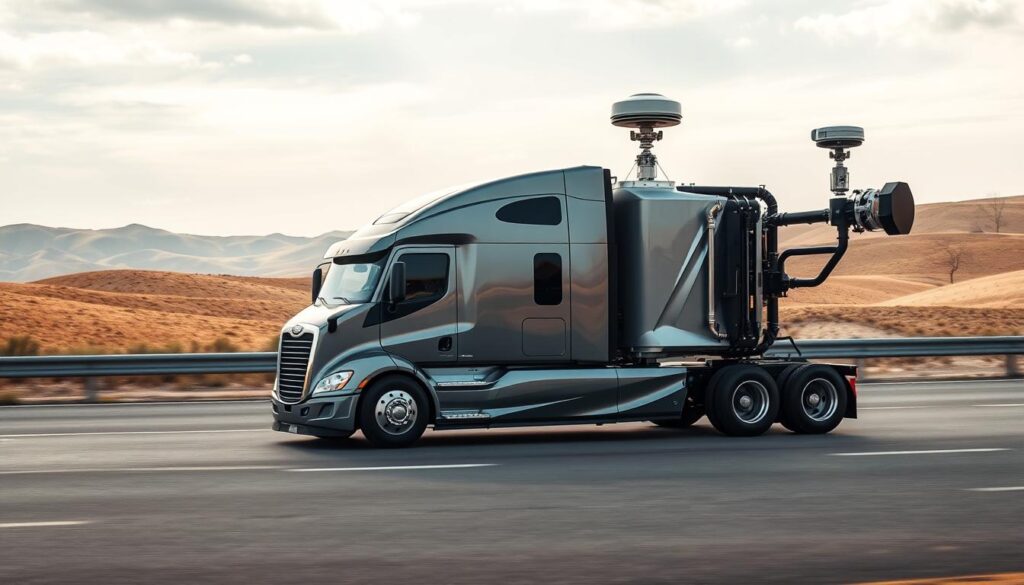
High-resolution camera systems complement lidar by providing visual perception capabilities essential for traffic signal recognition, road sign interpretation, and detailed object classification. Multi-camera arrays including forward-facing, side-mounted, and rear-facing units cost between $15,000 and $30,000 per vehicle, typically including 8 to 12 individual cameras with specialized lenses and processing capabilities.
Radar systems provide critical redundancy and excel in adverse weather conditions where lidar and cameras face limitations. Short-range and long-range radar units add $25,000 to $45,000 to the sensor package cost. Most implementations include 4 to 6 radar units positioned around the vehicle.
The computing infrastructure that processes sensor data and executes driving decisions represents another substantial investment. Redundant computing platforms featuring multiple processors, backup systems, and fail-safe architectures cost between $40,000 and $80,000 per vehicle.
Vehicle Acquisition Versus Retrofit Options
Fleet operators face a fundamental strategic decision between purchasing new autonomous-ready vehicles or retrofitting existing fleet assets. Each approach presents distinct advantages and challenges that impact driverless truck economics differently.
| Cost Component | New Autonomous Trucks | Retrofit Installation | Cost Difference |
|---|---|---|---|
| Base Vehicle Platform | $180,000 – $220,000 | Existing Asset | Retrofit Advantage |
| Autonomous System | $200,000 – $350,000 | $150,000 – $250,000 | Retrofit: $50k-$100k Lower |
| Integration & Calibration | Included in System | $25,000 – $50,000 | New Truck Advantage |
| Total Per-Vehicle Cost | $380,000 – $570,000 | $175,000 – $300,000 | Retrofit: ~$200k Lower |
Factory-integrated autonomous systems from major manufacturers offer the most streamlined implementation pathway. Companies like Daimler, Volvo, and PACCAR partner with autonomous technology developers to offer vehicles designed specifically for self-driving operation. New autonomous-ready Class 8 trucks typically add $200,000 to $350,000 to base vehicle costs, including complete sensor suites, computing platforms, and factory installation with comprehensive warranties.
Aftermarket autonomous system installation offers a capital-efficient pathway for fleets with newer conventional trucks. Retrofit solutions typically cost between $150,000 and $250,000 per vehicle. This approach makes sense for fleets with assets less than three years old in excellent mechanical condition. However, retrofit installations present integration challenges including potential warranty complications, more complex regulatory approval, and extended deployment timelines.
Goldman Sachs Research projects the autonomous technology premium will decline significantly, dropping from approximately $150,000 at present to $50,000 by 2030 as production scales and component costs decrease.
Infrastructure and Facility Upgrade Requirements
Beyond per-vehicle costs, fleet operators must invest substantially in supporting infrastructure to maintain and operate autonomous trucks effectively. These often-overlooked expenses significantly impact total fleet automation costs and deployment readiness.
Specialized maintenance facilities represent the first major infrastructure requirement. Establishing dedicated maintenance bays with sensor calibration equipment costs between $100,000 and $250,000 per facility. This includes laser alignment systems for lidar calibration, controlled environments for radar testing, high-bay overhead clearance for roof-mounted sensor access, specialized diagnostic computers, and environmental control systems.
Data infrastructure requirements grow substantially with autonomous operations. Each vehicle generates 2 to 4 terabytes of sensor data daily. Secure data storage and processing infrastructure costs range from $50,000 to $150,000 for initial deployment, including on-premise servers, cloud connectivity, and cybersecurity systems.
Remote operations centers enable human oversight of autonomous fleets through teleoperation capabilities and exception handling. Aurora’s Beacon platform and Torc Robotics’ Mission Control center demonstrate how remote specialists can oversee multiple trucks simultaneously. Establishing or upgrading remote operations centers costs between $500,000 and $2,000,000 depending on fleet size and sophistication level.
Ongoing Operational Costs and Maintenance Expenses
While initial investments capture attention, the ongoing financial commitment to autonomous systems determines long-term viability. Fleet operators must prepare for substantial recurring expenses that continue throughout each vehicle’s operational lifespan. These ongoing costs directly reduce the net savings that autonomous trucks generate, making accurate forecasting essential for realistic ROI projections.
Software Licensing and Subscription Fees
Autonomous driving systems operate on sophisticated software platforms that require continuous updates and support. Fleet operators face monthly subscription costs ranging from $3,000 to $8,000 per vehicle for access to the complete technology stack. These fees cover autonomous driving algorithms, real-time mapping updates, machine learning improvements, and cloud computing services.
Annual software expenses accumulate to $36,000 to $96,000 per truck, representing one of the largest recurring cost categories. This subscription model ensures vehicles receive continuous safety enhancements and regulatory compliance updates.
Specialized Maintenance and Technical Support
Autonomous vehicles require maintenance protocols that extend far beyond conventional truck servicing. The sensor arrays, computing hardware, and connectivity systems demand specialized attention from trained technicians.
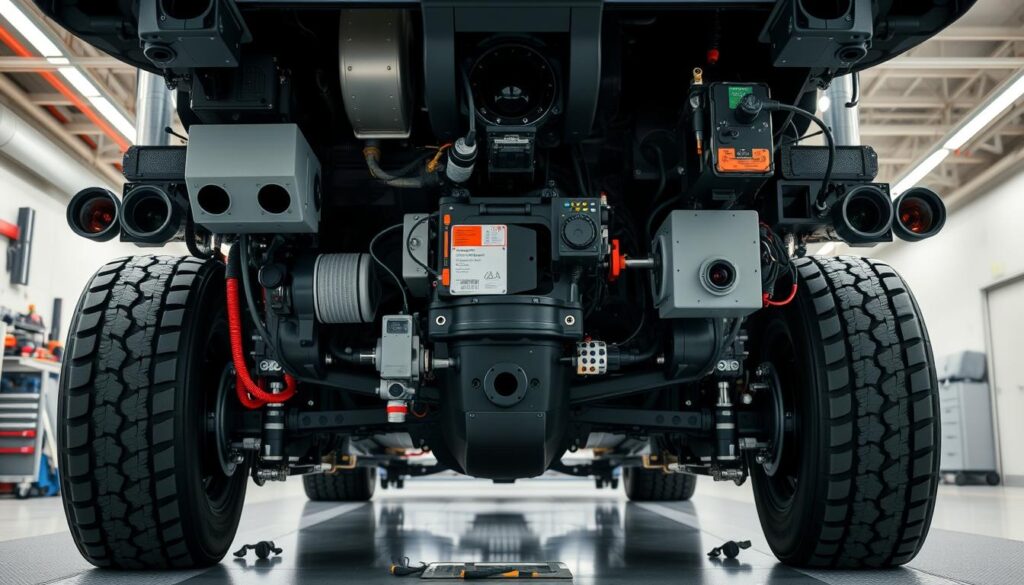
Lidar units, camera systems, and radar sensors require frequent cleaning to maintain operational accuracy. Establishing proper sensor maintenance capabilities requires purchasing specialized equipment costing $25,000 to $60,000 per maintenance facility. Per-vehicle annual costs for sensor maintenance range from $8,000 to $15,000 beyond conventional truck maintenance.
Autonomous systems require technicians with specialized knowledge that traditional diesel mechanics don’t possess. Training programs cost $5,000 to $12,000 per technician for initial certification in autonomous vehicle systems, covering sensor technology, software diagnostics, electrical systems, and safety protocols.
Insurance Premiums and Liability Coverage
The insurance landscape for autonomous trucks remains in flux as the industry accumulates safety data and regulators establish liability frameworks. Insurance premiums for autonomous trucks currently run 120% to 180% of conventional truck insurance costs, reflecting technology uncertainty, unclear liability allocation, and insufficient claims data for accurate risk assessment.
Remote Monitoring and Operations Center Costs
Autonomous trucks require continuous oversight from remote operations centers staffed with trained personnel. Operations center staffing costs typically range from $250,000 to $1,200,000 annually depending on fleet size and operational hours. Each monitoring specialist can oversee multiple vehicles simultaneously, but coverage requirements vary based on route complexity and operational domains.
| Cost Category | Small Fleet (5-10 Trucks) | Medium Fleet (25-50 Trucks) | Large Fleet (100+ Trucks) |
|---|---|---|---|
| Software Licensing (Annual) | $180,000 – $480,000 | $900,000 – $2,400,000 | $3,600,000 – $9,600,000 |
| Sensor Maintenance (Annual) | $40,000 – $75,000 | $200,000 – $375,000 | $800,000 – $1,500,000 |
| Insurance Premiums (Annual) | $60,000 – $120,000 | $300,000 – $600,000 | $1,200,000 – $2,400,000 |
| Remote Operations (Annual) | $150,000 – $300,000 | $400,000 – $700,000 | $800,000 – $1,500,000 |
Self-Driving Truck ROI: Calculating Your Return on Investment
The true financial impact of autonomous trucking emerges through careful evaluation of multiple cost reduction categories and efficiency gains. Fleet operators who master calculating fleet automation ROI gain a competitive advantage in deployment decisions.
Labor Cost Savings and Productivity Gains
Labor expenses represent the single largest operational cost for most trucking fleets, creating substantial opportunity for financial improvement. According to the ATRI annual study of trucking costs, driver wages and benefits account for approximately $1 per mile, while fuel adds about $0.48 per mile—combined, these represent 65% of total operating costs.

Driver compensation costs average between $65,000 and $85,000 annually for experienced long-haul operators. Benefits packages add another 25% to 35% to total compensation expenses, bringing complete annual cost per driver to $81,250 to $114,750 when accounting for health insurance, retirement contributions, and payroll taxes.
Autonomous trucks operating on fully automated routes eliminate these substantial expenses entirely. A fleet deploying ten autonomous trucks on routes within operational design domains realizes annual savings of $812,500 to $1,147,500 from driver wage elimination alone.
“The total costs of a U.S. Level 4 truck is approximately $250,000 less than that of the U.S. Level 0 truck over its operational life. The significant savings is the result of a reduction of about $400,000 in driver wages.”
— Commercial Carrier Journal analysis of autonomous trucking economics
The trucking industry faces chronic driver shortage challenges with turnover rates frequently exceeding 90% annually at major carriers. According to the American Trucking Associations, the current 80,000-driver gap could grow to 160,000 by 2030. Recruitment expenses range from $8,000 to $12,000 per driver hire, with onboarding and training adding another $5,000 to $10,000 per new driver. Autonomous trucks eliminate this expensive cycle entirely on automated routes.
Operational Efficiency Improvements
Autonomous trucks deliver value creation beyond labor cost reduction through fundamental operational improvements.
24/7 Operations Without Hours-of-Service Restrictions: Federal hours-of-service regulations limit human drivers to 11 hours of driving within a 14-hour workday, followed by mandatory 10-hour rest periods. Autonomous trucks operate continuously without these restrictions. Continuous operation capability increases asset utilization by 40% to 80% compared to human-driven trucks.
Fuel Efficiency Optimization: Autonomous driving systems optimize acceleration, braking, speed management, and route planning with precision impossible for human drivers. Aurora estimates autonomous trucks can provide 13% to 32% net energy efficiency improvement per loaded mile. For trucks consuming 20,000 to 25,000 gallons annually at current fuel costs, this optimization generates $7,000 to $12,000 in annual savings per truck.
Accident Reduction and Safety Benefits: Human error causes approximately 94% of serious truck accidents according to NHTSA safety data. Advanced 360-degree perception systems detect hazards in milliseconds, reacting faster than any human driver. Early deployment data suggests accident rate reductions of 30% to 60%, significantly reducing direct repair expenses, insurance claims, cargo damage, and legal fees.
ROI Calculation Framework and Methodology
The fundamental return on investment calculation follows this structure:
ROI = (Total Annual Savings – Total Annual Costs) / Total Investment × 100
Total Annual Savings includes driver wage elimination or reduction, recruitment and training expense savings, fuel efficiency improvements, accident reduction benefits, increased revenue from enhanced utilization, and insurance premium reductions.
Total Annual Costs encompasses software licensing and subscription fees, specialized maintenance expenses, remote operations center costs, additional insurance premiums for autonomous operation, and infrastructure and facility expenses.
| Fleet Size | Autonomous Deployment | Total Investment | Annual Net Savings | Annual ROI |
|---|---|---|---|---|
| Small (10 trucks) | 3 autonomous trucks on dedicated routes | $975,000 | $175,500 | 18% |
| Mid-Size (50 trucks) | 15 autonomous trucks with shared infrastructure | $4,200,000 | $1,092,000 | 26% |
| ✓ Large (200+ trucks) | 75 autonomous trucks with optimized utilization | $19,500,000 | $6,630,000 | 34% |
Large fleet deployments realize the highest returns through optimized infrastructure utilization and volume purchasing advantages. Technology provider pricing typically offers significant discounts at scale, while distributed fixed costs across more vehicles improve per-unit economics.
The HDJ Perspective
The autonomous trucking investment equation has fundamentally shifted in 2025. What was speculative capital allocation two years ago now generates measurable returns for operators who match deployment strategy to operational reality. The key insight for fleet managers isn’t whether autonomous technology works—it demonstrably does on hub-to-hub highway corridors. The critical question is whether your specific lane characteristics, freight density, and capital position align with current technology capabilities. Fleets operating primarily in the Sun Belt on predictable, high-volume corridors face a different calculation than those running seasonal produce or serving distributed regional customers. The smartest operators are conducting detailed route-by-route analysis rather than fleet-wide deployment assumptions. Those who get this matching right in the next 24 months will establish competitive advantages that compound as the technology matures and costs decline.
Payback Period Timelines and Break-Even Analysis
Breaking even on autonomous truck investments requires careful analysis of route characteristics, fleet scale, and utilization patterns specific to operations. The autonomous truck break-even point represents the moment when cumulative savings from reduced labor costs and operational efficiencies equal total technology investment.
Route Type Impact on Investment Recovery
The operational characteristics of trucking routes dramatically affect investment recovery timeline calculations. Highway-focused long-haul operations achieve the fastest payback periods because autonomous systems perform most confidently in these environments.
Long-haul routes with minimal complexity deliver payback periods of 2.5 to 3.5 years. These corridors feature consistent high-speed operation, limited urban navigation, and predictable traffic patterns. The elimination of hours-of-service restrictions allows continuous operation that maximizes autonomous system utilization.
Regional routes with moderate complexity show extended payback periods of 3.5 to 5 years. Mixed highway and arterial road operation reduces the percentage of miles where autonomous systems can engage fully.
Urban delivery and complex last-mile operations currently show payback periods exceeding 6 to 8 years or remain financially unviable. Operational design domain limitations restrict autonomous system engagement in dense traffic, complex intersections, and unpredictable pedestrian environments.
Fleet Size and Utilization Rate Considerations
Scaling dynamics significantly influence how quickly fleets recover autonomous technology investments. Larger operations distribute fixed infrastructure costs across more vehicles, creating favorable economics that smaller fleets cannot match.
Utilization rates critically determine payback timelines regardless of fleet size. Trucks operating at 85% to 95% capacity on dedicated autonomous corridors achieve payback 40% to 60% faster than trucks averaging 50% to 60% utilization in mixed operations.
| Fleet Size Category | Route Type | Utilization Rate | Break-Even Timeline |
|---|---|---|---|
| ✓ Large (100+ trucks) | Long-haul highway | 85-95% | 2.5-3 years |
| Mid-size (25-100 trucks) | Regional mixed routes | 70-85% | 3.5-4.5 years |
| Small (under 25 trucks) | Highway-focused lanes | 60-75% | 4.5-6 years |
| Any size | Urban/last-mile | Variable | 6-8+ years |
Financing Options and Investment Strategies
The method chosen to fund autonomous truck technology impacts cash flow, risk exposure, and long-term returns. Fleet operators have multiple pathways to adopt self-driving systems without overextending capital resources.
Capital Deployment: Ownership Versus Leasing Approaches
Direct purchase requires substantial upfront investment ranging from $250,000 to $400,000 per vehicle, including the autonomous technology package. Fleet operators gain complete asset ownership and control over equipment specifications.
Leasing autonomous vehicles offers a different value proposition. Monthly lease payments typically range from $6,000 to $12,000 per vehicle depending on term length and included services. This structure preserves capital for other business priorities while converting large expenditures into predictable operating costs.
| Financing Model | Upfront Capital | Monthly Cost | Technology Risk | Best For |
|---|---|---|---|---|
| Direct Purchase | $250,000-$400,000 | Variable maintenance | Owner assumes risk | Strong balance sheets, long-term deployment |
| Operating Lease | $0-$20,000 | $6,000-$12,000 | Lessor assumes risk | Capital preservation, upgrade flexibility |
| As-a-Service (per-mile) | $0 | $1.20-$2.50 per mile | Provider assumes risk | No capital investment, immediate deployment |
| ✓ Managed Service | $0-$15,000 | Per-load or monthly fee | Provider assumes risk | Minimal technical expertise required |
Risk Management Through Incremental Deployment
Phased implementation reduces financial exposure while validating technology performance. Starting with 2 to 5 autonomous trucks on carefully selected routes allows gathering real-world data before scaling. Pilot programs generate actual cost and productivity data specific to operations while refining operational procedures in a controlled environment.
Consumption-Based Autonomous Trucking Models
As-a-service offerings eliminate traditional ownership requirements entirely. Per-mile pricing creates direct alignment between costs and utilization, with autonomous technology providers and specialized fleet operators charging $1.20 to $2.50 per mile depending on route characteristics and volume commitments. This variable cost structure eliminates upfront investment entirely.
Managed service providers deliver turnkey autonomous capacity integration, handling all technology, maintenance, regulatory compliance, and operational management. This approach incorporates autonomous capacity without direct technology investment or specialized expertise development.
Share Your Autonomous Trucking Experience
Are you evaluating or deploying autonomous trucks in your fleet? Share your insights with Heavy Duty Journal’s 50,000+ fleet manager readers.
Risk Factors and Critical Investment Considerations
While autonomous trucking promises significant returns, multiple risk factors can dramatically impact investment outcomes. Fleet operators must evaluate these risks with the same rigor applied to financial projections.
Technology Obsolescence and Upgrade Cycles
Autonomous truck technology advances at a pace that creates substantial obsolescence risk for early adopters. Systems purchased in 2025 may require major upgrades within three to five years as sensor capabilities improve and computing platforms evolve. Industry analysts estimate maintaining competitive autonomous system performance may require capital infusions between $50,000 and $150,000 per vehicle for major technology refreshes.
Regulatory Uncertainty and Compliance Costs
The legal framework governing autonomous trucks remains in active development. The AMERICA DRIVES Act represents the most significant attempt to create federal standards, but its passage remains uncertain. Meanwhile, states continue charting independent courses, creating the patchwork of regulations that complicates interstate operations.
Liability questions create substantial uncertainty when autonomous systems control commercial vehicles. Current legal precedents don’t fully address responsibility allocation between fleet operators, technology providers, and component manufacturers.
| Risk Category | Impact Severity | Probability (2025-2028) | Mitigation Strategies |
|---|---|---|---|
| Technology Obsolescence | High ($50K-$150K per unit) | Moderate to High | Vendor upgrade commitments, modular systems, technology reserves |
| Regulatory Changes | Moderate to High | High | Route flexibility, multi-state monitoring, compliance budgets |
| Liability Framework Shifts | High (unpredictable) | Moderate | Comprehensive insurance, vendor liability sharing, legal reserves |
| Competitive Timing | Variable by segment | High | Phased deployment, pilot programs, competitive analysis |
Implementation Planning and Fleet Integration Timeline
Achieving projected ROI from autonomous trucks depends heavily on execution. The transition from investment approval to operational deployment requires careful coordination across technical, organizational, and operational dimensions. The timeline from decision to full operational status typically spans 6 to 18 months depending on fleet size and organizational complexity.
Evaluating Organizational Readiness Before Deployment
Pre-deployment readiness assessment identifies potential obstacles before committing resources. Fleet operators should allocate 8 to 16 weeks for thorough readiness analysis, encompassing route analysis to determine which corridors meet operational design domain requirements, infrastructure audits to identify necessary facility modifications, and workforce evaluations to assess training needs.
Preparing Your Workforce for Technology Transition
Workforce training and change management represent critical success factors that organizations frequently underestimate. Maintenance technicians require extensive training on autonomous system diagnostics, sensor calibration, and specialized repair procedures. These technical programs typically cost $5,000 to $12,000 per technician and span several weeks.
The North American Council for Freight Efficiency notes that drivers may need retraining for new roles including vehicle monitoring, maintenance oversight, or fleet management. Additionally, drivers still transport loads from origin points to AV loading hubs and deliver loads from destination hubs to final offload locations.
Tracking Performance and Optimizing Returns
Performance monitoring ensures that autonomous truck deployment delivers projected financial returns. Deployment completion marks the beginning of ongoing performance management rather than the end of implementation.
Operational metrics track utilization rates, route completion efficiency, and intervention frequency. Financial metrics compare actual costs against projections, monitor savings realization, and calculate real-time ROI to validate investment assumptions. Data-driven optimization identifies specific opportunities to enhance autonomous truck utilization through route refinement, maintenance schedule optimization, and dispatch strategy adjustments.
Frequently Asked Questions
What is the typical upfront cost to equip a Class 8 truck with autonomous technology?
The upfront cost to equip a Class 8 truck with autonomous technology ranges from $200,000 to $350,000 for factory-integrated systems from manufacturers like Daimler, Volvo, and PACCAR partnered with autonomous technology providers. Retrofit options for existing vehicles typically cost $150,000 to $250,000 per truck. These costs include comprehensive lidar arrays ($80,000-$150,000), multi-camera systems ($15,000-$30,000), radar units ($25,000-$45,000), and redundant computing platforms ($40,000-$80,000). Additional infrastructure investments for maintenance facilities, data processing systems, and remote operations centers can add $725,000 to $2,600,000 in total facility costs depending on fleet size. Goldman Sachs Research projects the autonomous technology premium will decline from approximately $150,000 today to $50,000 by 2030.
How long does it take for autonomous trucks to break even on the initial investment?
Break-even timelines vary significantly based on fleet size, route characteristics, and utilization rates. Large fleets deploying 100+ trucks on optimized long-haul corridors typically achieve break-even in 2.5 to 3 years, with positive ROI beginning in year four. Mid-size fleets of 25-100 trucks on suitable routes see break-even in 3.5 to 4.5 years, while small fleets under 25 trucks experience extended break-even periods of 4.5 to 6 years unless participating in managed service models. Long-haul highway routes with minimal complexity achieve the fastest payback periods, while regional and urban operations show substantially longer recovery timelines.
What are the ongoing monthly costs for operating autonomous trucks?
Ongoing monthly costs include software licensing and subscription fees ranging from $3,000 to $8,000 per vehicle for autonomous driving software, mapping updates, and cloud computing services. Specialized maintenance for sensors adds approximately $670 to $1,250 monthly per truck beyond conventional maintenance expenses. Insurance premiums currently run 120% to 180% of conventional truck insurance costs due to technology uncertainty. For fleets operating remote monitoring centers, staffing and technology infrastructure add $250,000 to $1,200,000 annually depending on fleet size. When combined, these ongoing operational expenses total approximately $5,000 to $12,000 monthly per autonomous truck.
What labor cost savings can fleets realistically expect from autonomous trucks?
Autonomous trucks operating on routes within their operational design domains can eliminate driver wages averaging $65,000 to $85,000 annually, plus benefits adding 25% to 35% to compensation costs, generating $81,250 to $114,750 in annual direct labor savings per truck. According to ATRI data, driver wages and benefits account for approximately $1 per mile—about 43% of per-mile expenses. Additional indirect savings come from eliminating turnover costs exceeding $13,000 to $22,000 per driver replacement. McKinsey research shows autonomous trucking can reduce costs per mile by 42% through eliminated driver wages, fuel optimization, and accident reduction.
How does the AMERICA DRIVES Act affect autonomous trucking investment decisions?
The AMERICA DRIVES Act, introduced in July 2025 by Representative Vince Fong, would establish federal preemption over state laws requiring human drivers in Level 4 and 5 autonomous commercial vehicles. If enacted, it directs FMCSA to update regulations by September 2027, exempting autonomous trucks from human-specific requirements including hours of service, drug testing, and CDL licensing. The legislation would create uniform national standards for interstate operations, potentially eliminating the current regulatory patchwork where 35 states have varying requirements. For fleet operators, passage would significantly improve ROI projections by enabling seamless cross-state deployment and reducing compliance costs. However, the bill’s passage remains uncertain, and operators should build regulatory flexibility into deployment plans.
Making the Autonomous Investment Decision
The autonomous trucking investment decision requires careful evaluation of financial metrics, operational requirements, and strategic positioning. Fleet operators must base their self-driving truck ROI evaluation on realistic assumptions rather than optimistic projections about technology capabilities or cost trajectories.
Larger fleets operating dedicated corridors in the Sun Belt states present the strongest financial case for autonomous truck adoption. These operations maximize labor savings and utilization gains while spreading fixed costs across multiple vehicles. Smaller fleets should seriously consider leasing or trucking-as-a-service models that reduce capital exposure and technology obsolescence risks.
Financial returns represent only part of the equation. Workforce development, operational experience, and competitive positioning may justify deployments that appear marginal on immediate ROI calculations. The technology will reshape freight transportation economics over the next decade, creating pressure for early capability development among operators serving price-sensitive shippers.
Premature or poorly planned deployments risk substantial losses without delivering projected benefits. Success demands matching autonomous capabilities to specific route types, operational profiles, and fleet characteristics where the technology delivers measurable value. Fleet operators who combine rigorous financial analysis with phased implementation strategies position themselves to capture autonomous benefits while managing adoption risks effectively.
Share This Analysis
This comprehensive autonomous trucking cost guide can help other fleet managers evaluate their investment options. Share it with your network.