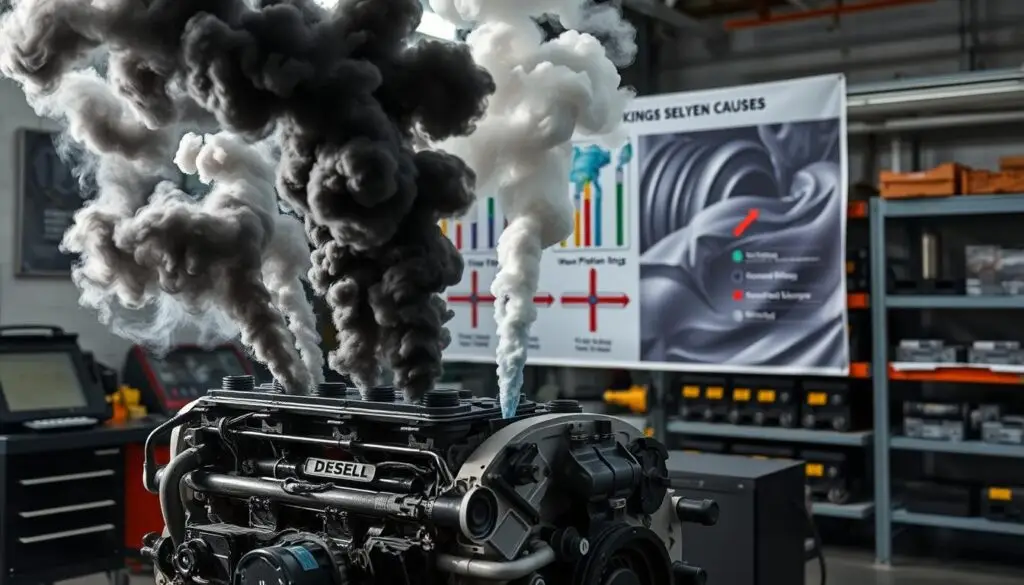
When diesel engine smoking becomes visible from commercial trucks or heavy equipment, exhaust color provides immediate diagnostic clues to underlying mechanical problems. Service technicians at major diesel facilities rely on smoke color patterns—white, black, or blue—to diagnose fuel system contamination, air intake restrictions, or internal engine wear efficiently. Understanding what each smoke type reveals about combustion conditions enables fleet managers and shop owners to address problems before minor issues escalate into expensive component failures.
The specific shade and density of diesel exhaust emissions indicates which engine systems require investigation. White smoke typically signals unburned fuel or coolant leaks entering combustion chambers. Black diesel exhaust points to incomplete combustion from oxygen-starved conditions or excessive fueling. Blue smoke warns that engine oil is burning inside cylinders from worn seals or failing turbochargers. Recognizing these visual warning signs early minimizes repair costs and prevents progressive engine damage.
Effective diesel troubleshooting begins with systematic fuel quality verification, checking for water contamination, particulate matter buildup, and proper filter maintenance. Industry best practices recommend replacing fuel filters at manufacturer-specified intervals, draining water separators monthly in high-humidity environments, and inspecting high-pressure fuel delivery components for wear. These routine procedures identify developing problems before symptoms manifest as visible smoke emissions.
Last Updated: December 2025
Key Takeaways
- Smoke color indicates specific failures: White suggests unburned fuel or coolant leaks, black indicates incomplete combustion, blue signals oil consumption.
- Fuel system contamination: Causes the majority of diesel smoking issues and accelerates injector wear.
- Regular filter maintenance: Prevents expensive engine damage and maintains optimal combustion efficiency.
- Fuel pressure diagnostics: Identify developing problems before cascading component failures occur.
- Preventive maintenance programs: Significantly reduce smoking-related repairs through systematic inspection.
- Early problem detection: Minimizes repair costs—minor service prevents major overhauls.
Understanding Diesel Engine Smoking: What the Colors Mean
When diesel engine smoking becomes visible, exhaust color provides immediate diagnostic information about specific failure modes. Each smoke color correlates with distinct mechanical or combustion problems requiring different repair approaches. Recognizing these visual warning signs early prevents progressive damage and reduces total repair expenses.
White Smoke: Unburned Fuel and Coolant Issues
White exhaust smoke appears when diesel fuel fails to combust completely or when coolant enters combustion chambers. During cold-start conditions in freezing temperatures, light white vapor represents normal condensation that dissipates within 2-3 minutes as engine temperature rises. Persistent white smoke after warm-up indicates serious problems demanding immediate investigation.
Common root causes include malfunctioning fuel injectors creating poor atomization patterns, insufficient compression from worn piston rings or damaged cylinder walls, and coolant system leaks from failed head gaskets. Sweet odors suggest coolant contamination, while diesel fuel smell indicates unburned fuel passing through cylinders. According to DieselNet’s technical analysis of emission formation in diesel engines, visible smoke emissions classify into black smoke (carbonaceous particulates) and white smoke (liquid droplets or vapor), with emission characteristics dependent on combustion conditions and exhaust valve timing.
Black Smoke: The Sign of Incomplete Combustion
Black diesel exhaust indicates excessive fuel delivery relative to available oxygen for complete combustion. This air-fuel imbalance creates carbon particles (soot) that darken exhaust emissions. Restricted air filters limit oxygen supply, while failing turbochargers cannot deliver specified boost pressure levels. Stuck-open EGR valves recirculate excessive exhaust gases, diluting oxygen concentration required for clean combustion cycles.
The EPA’s emission standards for heavy-duty diesel engines establish smoke opacity limits of 20% at acceleration, 15% during lugging, and 50% at peak modes to ensure proper combustion and environmental compliance. Exceeding these thresholds indicates fundamental air-fuel ratio problems requiring immediate correction.
Blue Smoke: When Your Engine Burns Oil
Blue-tinted exhaust smoke from diesel engines indicates engine oil entering combustion chambers and burning alongside fuel. Worn or broken piston rings permit oil migration past cylinder walls, aged valve stem seals leak with thermal cycling, and turbocharger shaft seal failures allow pressurized oil contamination. Excessive engine oil levels can also force lubricant past piston rings into combustion spaces, creating characteristic blue-colored emissions.
| Smoke Color | Primary Causes | Repair Priority Level |
|---|---|---|
| White | Coolant leaks, injector failures, low compression | High – Risk of progressive engine damage |
| Black | Restricted airflow, turbo issues, excess fueling | Medium – Performance and efficiency impacts |
| Blue | Oil consumption, seal failures, turbo damage | High – Expensive oil consumption and damage |
Professional diesel troubleshooting methodology begins with accurate smoke color identification and pattern recognition, matching observed symptoms to specific mechanical failure modes. This diagnostic approach prevents unnecessary component replacement by targeting actual root causes efficiently.
Fuel System Problems That Cause Excessive Smoke
When diesel engines produce excessive visible emissions, fuel delivery system malfunctions frequently represent the underlying cause. These precision components must deliver exact fuel quantities at specific pressures and timing. Any disruption in this calibrated system results in incomplete combustion and characteristic smoke emissions.
Contaminated Fuel and Water in the System
Poor fuel quality creates immediate operational problems in diesel engines. Water contamination causes cylinder misfires and produces white smoke as combustion processes fail to ignite water-diluted fuel properly. Even minor water presence (0.5% by volume) damages fuel injection equipment and pumps through corrosion and erosion, creating expensive repair requirements. Contaminated diesel frequently contains dirt particles, biological growth (algae/bacteria), or chemical degradation products that restrict filters and disrupt precise fuel metering.
Fuel-water separators provide primary defense against moisture-related damage. These filtration devices remove water droplets before fuel reaches sensitive injection components. Regular separator draining prevents accumulated moisture from overwhelming filter media and entering fuel systems. According to ASTM D975 diesel fuel specifications, fuel quality standards limit water content and particulate contamination to protect modern high-pressure injection systems.
Critical Warning: Water contamination in diesel fuel systems can cause catastrophic injector failure requiring complete replacement. Drain water separators weekly in high-humidity coastal or tropical environments, and monthly minimum in standard operating conditions. Always verify fuel quality before diagnosing other systems.
Faulty Fuel Injectors and Spray Patterns
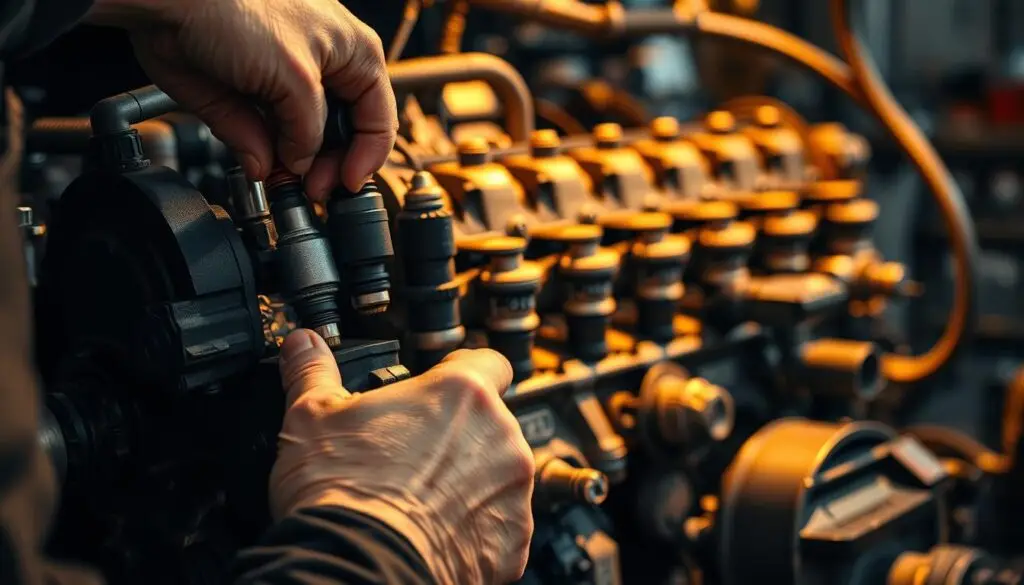
Worn or obstructed fuel injectors create improper atomization patterns preventing efficient air-fuel mixing and combustion. Injectors stuck in open positions flood cylinders with excessive fuel, producing dense black diesel exhaust smoke. Partially clogged injector nozzles starve cylinders of adequate fuel, causing white smoke emissions and rough operation. Modern common-rail fuel systems operate at pressures exceeding 30,000 PSI, making precise injector function critical for clean combustion.
Fuel Pump Malfunctions and Pressure Issues
Fuel injection pumps must maintain manufacturer-specified pressures for proper engine operation across all load conditions. Insufficient pressure prevents adequate fuel atomization into fine droplets, while excessive pressure overwhelms combustion chamber capacity. Both pressure deviation conditions trigger excessive smoke emissions and require immediate correction to prevent accelerated component wear and engine damage.
Systematic Fuel System Diagnostic Procedure
- Measure fuel filter restriction using differential pressure gauge (replace when exceeding 10 PSI restriction)
- Inspect water separator bowl and drain accumulated moisture completely
- Test fuel rail pressure at injector supply (verify against OEM specifications for specific engine model)
- Measure injector return flow volumes to identify stuck-open or leaking injectors
- Retrieve diagnostic trouble codes using OEM-compatible scan tool software
- Verify fuel supply pump output pressure meets minimum specifications
Air Intake and Turbocharger Issues Leading to Smoky Exhaust
Diesel engine air intake systems play critical roles in preventing diesel engine smoking through proper air-fuel ratio maintenance. When fresh air cannot flow freely into combustion chambers, thick clouds of black diesel exhaust result from incomplete fuel oxidation. Optimal air-to-fuel stoichiometry ensures clean combustion and maximum power output.
Restricted air filtration represents one of the most common causes of visible diesel smoke. When filter media becomes saturated with dirt and debris, airflow resistance increases dramatically. This restriction forces combustion processes to operate fuel-rich, creating characteristic carbon-laden black exhaust smoke under load conditions.
Turbocharger Failures and Boost Pressure Problems
Turbochargers increase engine power output by compressing intake air, forcing additional oxygen into combustion chambers. When these boost systems malfunction, several distinct problems manifest:
- Worn journal bearings produce distinctive high-pitched whining sounds during acceleration and boost conditions
- Failed shaft seals permit engine oil migration into intake ducting, producing blue-gray smoke emissions
- Insufficient boost pressure creates fuel-rich conditions causing incomplete combustion and black exhaust
- Damaged compressor or turbine wheels reduce volumetric efficiency and power delivery capability
- Oil contamination throughout intake system from turbocharger seal deterioration
EGR Valve Problems and Exhaust Gas Recirculation
Exhaust Gas Recirculation (EGR) valves regulate the quantity of inert exhaust gases returned to intake manifolds for NOx emission reduction. Valves stuck in open positions flood combustion chambers with oxygen-depleted gases instead of fresh atmospheric air. This oxygen deficiency creates ideal conditions for incomplete combustion and diesel engine smoking, particularly noticeable under heavy loads or trailer-towing applications.
Systematic preventive maintenance prevents most air intake restrictions before smoking develops. Industry best practices recommend inspecting air filter elements every 15,000 miles or annually, examining turbocharger intake and exhaust connections for deterioration, and monitoring for unusual operational sounds indicating bearing wear. These straightforward inspection procedures identify developing problems before component failure occurs.
Stay Current on Diesel Diagnostic Techniques
Get expert insights on diesel troubleshooting, emissions compliance, and fleet maintenance strategies delivered to your inbox weekly.
Mechanical Failures Behind Black Diesel Exhaust and Other Emissions
When diesel engines produce excessive smoke, internal mechanical failures frequently represent root causes compromising combustion efficiency. These component degradation issues prevent proper fuel burning, leading to decreased performance and increased emissions. Understanding mechanical failure modes enables appropriate diagnosis before expensive secondary damage occurs.
Low Compression and Worn Engine Components
Insufficient cylinder compression represents a primary cause of black diesel exhaust and power loss. When piston ring wear or cylinder wall scoring develops, combustion chamber sealing degrades significantly. This compression loss allows unburned fuel to escape through exhaust valves during expansion strokes.
Characteristic symptoms indicating compression problems include:
- Difficult starting, especially pronounced in cold ambient temperatures
- Progressive power loss during acceleration and sustained load operation
- Increased fuel consumption without corresponding performance improvement
- Rough idle conditions with noticeable engine vibration
- Excessive crankcase pressure (blow-by) from ventilation system
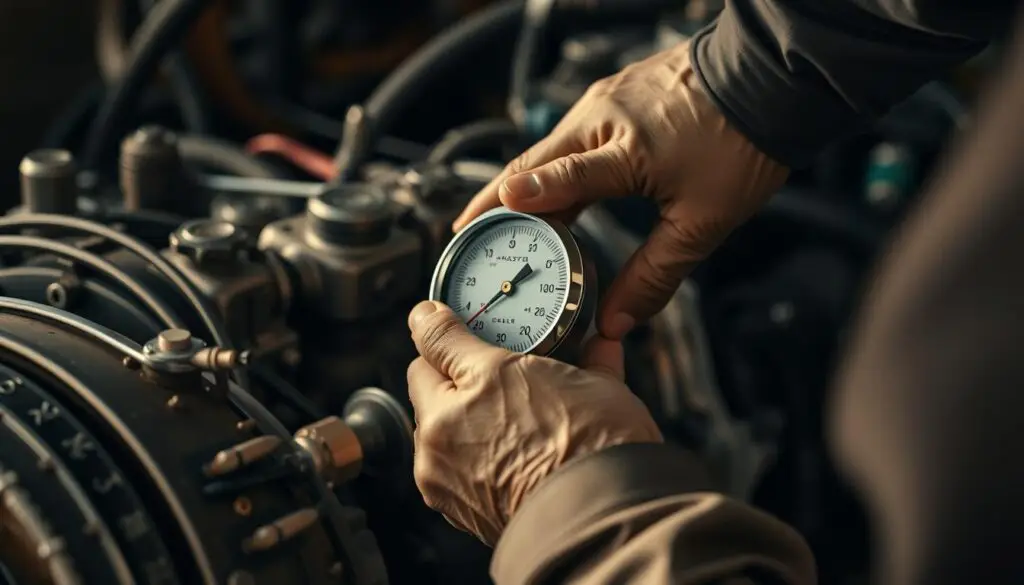
Regular compression testing during scheduled diesel engine maintenance intervals reveals progressive internal wear before catastrophic failure. Most diesel engines require compression readings within manufacturer specifications (commonly 350-500 PSI depending on design) to operate efficiently and maintain acceptable emissions levels. Consult specific engine service literature for exact compression specifications, as values vary significantly between engine families.
Timing Issues and Valve Problems
Injection and valve timing problems create serious combustion disruptions requiring immediate attention. When timing chains stretch or timing belt tensioners fail, valve and piston synchronization degrades. This timing misalignment prevents proper compression stroke fuel injection and valve closure, creating visible smoke emissions and power loss.
Valve train component failures manifest through multiple symptoms. Improper valve lash clearances cause combustion sealing problems and characteristic mechanical noise. Worn camshaft lobe profiles prevent valves from achieving full lift specifications. When exhaust or intake valves fail to seat properly due to carbon buildup or face damage, compression escapes past valve seats, producing visible smoke and measurable power reduction.
Head Gasket Failures and Internal Leaks
Cylinder head gasket failures create pathways between combustion chambers and cooling jackets, allowing combustion gases to pressurize cooling systems while coolant enters cylinders. This cross-contamination produces characteristic white smoke emissions and requires immediate repair to prevent catastrophic engine damage. Cooling system pressure testing and combustion leak detection procedures help technicians identify these internal leaks before complete gasket failure occurs.
| Mechanical Issue | Primary Diagnostic Method | Typical Repair Cost Range |
|---|---|---|
| Low Compression / Ring Wear | Compression test, cylinder leak-down test | $2,500-$8,000 (varies by engine size) |
| Timing System Problems | Timing mark inspection, diagnostic scan | $800-$2,500 |
| Head Gasket Failure | Pressure test, combustion gas detection | $1,500-$3,500 |
| Valve Train Issues | Valve lash measurement, head inspection | $1,200-$4,000 |
Repair costs represent industry averages and vary significantly by engine model, labor rates, and component availability. Always obtain written estimates from qualified diesel service facilities before authorizing major repairs.
The HDJ Perspective
Diesel engine smoking diagnostics represent one of the highest-value skill sets in commercial fleet maintenance today. With emissions compliance requirements tightening and engine technology growing more sophisticated, technicians who master smoke color interpretation and systematic troubleshooting protocols command premium labor rates. Fleet managers who invest in proper diagnostic equipment and ongoing technician training consistently report lower total repair costs and reduced unplanned downtime compared to reactive maintenance approaches.
Preventive Maintenance to Stop Diesel Engine Smoking
Preventing diesel engine smoking through systematic maintenance costs significantly less than repairing damage after problems develop. Structured service schedules identify minor issues before cascading failures occur. Professional commercial fleet operators follow strict maintenance intervals that enable engines to achieve 500,000+ mile service lives while maintaining clean exhaust emissions.
The Federal Motor Carrier Safety Administration (FMCSA) regulations under 49 CFR § 396.3 require motor carriers to systematically inspect, repair, and maintain all commercial motor vehicles. Compliance with FMCSA maintenance requirements not only fulfills legal obligations but also prevents smoking-related breakdowns that compromise operational uptime and profitability.
Essential Diesel Engine Maintenance Schedule
Follow these industry-standard service intervals to prevent smoking-related problems:
- Every 5,000 miles: Change engine oil using manufacturer-specified low-ash formulations, replace spin-on oil filter
- Every 10,000 miles: Replace primary and secondary fuel filters, drain fuel-water separators, visually inspect air filter restriction
- Every 15,000 miles: Verify turbocharger operation and boost pressure, inspect intercooler for oil contamination
- Every 30,000 miles: Replace air filter element, clean or replace EGR valve, test fuel injector spray patterns
- Every 100,000 miles: Perform compression testing, adjust valve clearances, complete comprehensive fuel system service
Adjust intervals based on operating conditions—severe duty cycles (dusty environments, frequent idle, extreme temperatures) require more frequent service. Always consult manufacturer service literature for specific engine requirements.
Critical Inspection Points for Exhaust Smoke Prevention
During routine service appointments, technicians systematically examine these components that prevent smoking issues:
- Fuel quality verification: Inspect for water presence, algae contamination, and particulate debris in fuel storage tanks
- Air intake system: Check for restrictions, examine hoses for cracks or deterioration, verify clamp tightness
- Turbocharger assessment: Listen for bearing noise during operation, check for oil leaks at connections, measure boost pressure
- Cooling system integrity: Pressure test for internal or external leaks, analyze coolant condition and contamination
- Exhaust system evaluation: Inspect for restrictions or damage, verify DPF condition on equipped models
Share Your Diesel Troubleshooting Expertise
Have years of experience diagnosing diesel emissions problems? Join Heavy Duty Journal as a guest author and share your knowledge with thousands of fleet managers and technicians.
Frequently Asked Questions
What are the main causes of diesel engine smoking?
Primary causes include fuel system contamination with water or particulates, malfunctioning fuel injectors creating poor atomization patterns, restricted air intake from clogged filter elements, turbocharger mechanical failures, insufficient compression from worn piston rings or damaged valve components, and oil consumption from deteriorated seals. Each cause produces characteristic colored smoke—white indicates unburned fuel or coolant, black signals incomplete combustion from air-fuel imbalance, and blue shows burning engine oil.
How do I troubleshoot persistent white smoke from my diesel engine?
First, determine if white smoke occurs only during cold starts (normal condensation for 2-3 minutes). If smoke persists after engine reaches operating temperature, inspect fuel injectors for atomization problems causing incomplete combustion. Perform compression testing to identify worn piston rings, damaged valves, or cylinder wall scoring. Check for coolant system leaks from failed head gaskets or cracked cylinder heads using pressure testing—sweet odor indicates coolant while fuel smell suggests unburned diesel passing through cylinders.
What diesel engine maintenance prevents smoking issues?
Essential preventive maintenance includes replacing fuel filters every 10,000 miles, draining fuel-water separators monthly (weekly in humid environments), inspecting high-pressure fuel lines for stress cracks or leakage, checking air filter restriction every 15,000 miles, and monitoring fuel delivery pressure. Verify fuel pressure specifications match your specific engine model requirements from service literature. Schedule compression testing every 100,000 miles to detect progressive internal wear before major failures develop.
Why does my diesel produce blue smoke during acceleration?
Blue exhaust smoke indicates engine oil burning in combustion chambers, typically from worn or broken piston rings permitting oil past cylinder walls, failed valve stem seals allowing oil into intake ports, excessive oil fill levels forcing lubricant past rings, or turbocharger shaft seal failures introducing pressurized oil into intake ducting. This becomes more noticeable during acceleration when cylinder pressures and loads increase. Verify proper oil level first, then inspect turbocharger seals and perform compression/leak-down testing to identify internal component wear.
How do professional mechanics diagnose diesel smoking problems?
Certified diesel technicians use systematic diagnostic approaches including retrieving diagnostic trouble codes from ECM systems, performing compression tests across all cylinders for comparative analysis, measuring turbocharger boost pressure during loaded operation, inspecting fuel system components including injector spray patterns and pump output pressures, and conducting cooling system pressure tests for internal leak detection. They also verify injection timing specifications, examine exhaust gas composition, and analyze smoke opacity using specialized meters for precise emissions measurement.
Can contaminated fuel cause all three types of engine smoke?
Yes, various fuel contamination types can contribute to multiple smoke colors. Water presence in diesel causes white smoke from incomplete combustion and cylinder misfires. Dirt or biological contamination restricts fuel flow causing black smoke from inadequate fuel delivery and poor atomization. Oil contamination in fuel tanks (from improper storage or cross-contamination) can produce blue-tinted exhaust. Always inspect fuel quality first when diagnosing smoking issues, use diesel fuel from reputable suppliers with proper storage practices, and maintain clean fuel storage tanks with regular inspection.
Stopping Diesel Engine Smoking: Final Recommendations
Effective diesel troubleshooting begins with recognizing what each exhaust smoke color reveals about internal engine conditions. White smoke indicates unburned fuel or coolant contamination requiring immediate investigation. Black diesel exhaust signals oxygen-starved combustion from air restriction or excessive fueling that wastes diesel and reduces power output. Blue smoke warns that engine oil is burning inside combustion chambers from worn seals or rings.
Systematic diesel engine maintenance prevents the majority of smoking-related problems before symptoms appear. Replace fuel filters at manufacturer-specified intervals and verify fuel quality through regular water separator inspection. Maintain clean air intake systems and monitor turbocharger function during routine service intervals. These fundamental procedures minimize repair expenses while extending engine service life significantly.
Early problem detection makes substantial difference between minor service and major overhaul expenses. Monitor exhaust characteristics for changes in smoke color, density, or odor, addressing abnormalities promptly. Your diesel engine will deliver reliable performance and optimized operating costs when potential problems receive attention before escalating into component failures requiring extensive repairs.
Help Your Network Diagnose Diesel Problems
Know a fleet manager or technician who could benefit from this diesel smoking troubleshooting guide? Share this article with your professional network.