
By Michael Nielsen, Editor & Publisher | 15+ Years in Diesel Repair
Last Updated: December 2025
📖 Estimated reading time: 19 minutes
Alternative fuel trends in trucking are reshaping how fleet managers approach equipment acquisition, operational planning, and long-term sustainability goals. With EPA Phase 3 greenhouse gas standards taking effect in 2027 and zero-emission mandates accelerating across multiple states, understanding the real-world adoption rates, infrastructure realities, and total cost of ownership for CNG, hydrogen fuel cell, and battery electric trucks has never been more critical for commercial fleets.
The transition away from diesel dominance isn’t happening uniformly. Regional infrastructure, duty cycle requirements, and regulatory pressure create vastly different adoption landscapes depending on where your fleet operates and what freight you haul. Fleet managers who understand these dynamics—and plan accordingly—will position their operations for both compliance and competitive advantage.
This comprehensive guide examines the current state of alternative fuel adoption in commercial trucking, breaking down the benefits, challenges, and market trajectories for each major technology. Whether you’re evaluating CNG for regional haul operations, exploring hydrogen for long-haul applications, or planning depot charging infrastructure for battery electric trucks, you’ll find the operational insights needed to make informed decisions.
Key Takeaways
- CNG leads alternative fuel adoption: Natural gas vehicles account for 95% of the alternative fuel truck market, with fleet operators reporting 30-40% fuel cost savings compared to diesel and 20-25% lower emissions.
- Electric trucks face infrastructure gaps: Only 3,500 public heavy-duty charging stations exist in North America as of 2025, with fewer than 5% capable of megawatt charging for long-haul applications.
- Hydrogen remains early-stage: The hydrogen truck market is projected to grow at 23.9% CAGR through 2030, but high production costs ($16-18/kg at retail) and limited refueling infrastructure constrain adoption to pilot programs and fixed-route operations.
- Regulatory timelines are accelerating: EPA Phase 3 standards require 30% of heavy-duty vocational trucks and 40% of day cabs to be zero-emission by 2032, with California’s Advanced Clean Fleets rule mandating zero-emission-only sales by 2036.
- Total cost of ownership varies by application: Electric trucks achieve TCO parity in urban delivery and short-haul applications, while CNG and hydrogen remain more viable for long-haul operations requiring extended range and rapid refueling.
Understanding Alternative Fuel Adoption in Commercial Trucking
The commercial trucking industry’s shift toward alternative fuels represents one of the most significant operational transformations in decades. Driven by a convergence of regulatory mandates, environmental commitments, and evolving economics, fleet operators are evaluating fuel options that would have seemed impractical just five years ago.
Unlike consumer vehicle markets where battery electric technology has achieved mainstream acceptance, heavy-duty trucking presents unique challenges that make the transition more complex. The demanding duty cycles, payload requirements, and operational constraints of commercial freight create scenarios where no single alternative fuel technology emerges as universally superior to diesel.
Understanding where each technology excels—and where it falls short—requires examining real-world performance data rather than manufacturer projections. Fleet managers who’ve deployed alternative fuel vehicles report that operational success depends heavily on matching the right technology to specific applications, routes, and infrastructure availability.
Current Market Landscape
The global alternative fuel vehicle market reached approximately $150 billion in 2025 and is projected to grow at a 12% compound annual growth rate through 2033. Within commercial trucking specifically, compressed natural gas (CNG) and liquefied natural gas (LNG) vehicles dominate current adoption, while battery electric and hydrogen fuel cell trucks are growing from smaller bases but at faster rates.
In the United States, over 28% of municipal fleets have converted to natural gas vehicles, with adoption particularly strong in refuse collection, transit, and regional delivery applications. Electric trucks remain concentrated in California and other states that have adopted zero-emission vehicle mandates, while hydrogen deployments are largely limited to pilot programs with major logistics providers.
Compressed Natural Gas: The Current Alternative Fuel Leader
CNG has established itself as the most mature and widely adopted alternative to diesel in heavy-duty trucking applications. The technology’s appeal stems from a straightforward value proposition: proven reliability, established refueling infrastructure, and meaningful emissions reductions without the operational compromises associated with emerging technologies.
The global CNG heavy-duty truck market reached $7.5 billion in 2025 and is projected to grow to $11.8 billion by 2033, reflecting a 5.7% CAGR. This steady growth trajectory indicates sustained fleet interest despite competition from battery electric alternatives in certain applications.

Infrastructure and Refueling Availability
The United States currently operates over 700 public CNG refueling stations, with additional private fleet installations supporting dedicated operations. This infrastructure footprint, while not matching diesel availability, provides viable coverage for regional and dedicated route operations in most metropolitan areas.
Fleet operators considering CNG typically evaluate two infrastructure approaches: public station access for mixed operations or private depot fueling for dedicated routes. Private installations require significant capital investment—typically $1.5 million to $3 million for a time-fill station—but offer lower per-gallon fuel costs and operational control.
| Infrastructure Type | Investment Required | Best Application | Fuel Cost Advantage |
|---|---|---|---|
| Public Fast-Fill Stations | None (per-fill pricing) | Mixed routes, flexible operations | 20-35% vs. diesel |
| Private Time-Fill Depot | $1.5M-$3M | Dedicated routes, return-to-base | 40-50% vs. diesel |
| RNG Partnership | Varies by agreement | Carbon reduction goals | Variable + carbon credits |
Cost Analysis and Economic Viability
The economic case for CNG centers on fuel cost savings that can offset higher vehicle acquisition costs over time. CNG trucks typically cost 50% more than comparable diesel units at purchase—approximately $150,000 to $180,000 for a Class 8 tractor versus $100,000 to $120,000 for diesel—but fuel savings of 30-50% can recover this premium within three to five years depending on annual mileage.
Fleet operators consistently report that CNG economics work best in high-utilization applications. Trucks running 100,000+ miles annually see faster payback periods, while lower-mileage regional applications may struggle to justify the upfront investment. The fuel cost advantage also depends heavily on local natural gas prices relative to diesel, creating regional variations in economic viability.
Renewable Natural Gas: The Carbon-Negative Option
Renewable natural gas (RNG) has emerged as a significant factor in CNG adoption, particularly for fleets with carbon reduction commitments. Produced from landfill gas, agricultural waste, and wastewater treatment, RNG is chemically identical to conventional natural gas but offers carbon-negative lifecycle emissions when properly accounted.
Major fleets including Anheuser-Busch and J.B. Hunt have converted CNG operations to RNG, leveraging both emissions reductions and carbon credit programs. At recent industry forums, fleet operators reported that RNG can deliver fuel cost savings equivalent to 50% of diesel prices in optimal scenarios, with additional revenue potential from environmental credit programs.
Environmental Impact and Emissions Performance
CNG vehicles produce 20-25% lower greenhouse gas emissions and significantly reduced particulate matter compared to diesel. The cleaner combustion characteristics also result in quieter operation—a meaningful benefit for urban delivery operations and residential refuse collection routes.
However, methane slip—unburned fuel escaping through the exhaust or during refueling—can partially offset these emissions benefits. Modern CNG engine technology has substantially reduced this issue, but fleet operators should verify methane capture capabilities when evaluating equipment and refueling systems.
Hydrogen Fuel Cell Trucks: Long-Haul Potential, Infrastructure Reality
Hydrogen fuel cell technology represents the most promising zero-emission solution for long-haul trucking applications, offering diesel-like range and refueling times without the weight penalties associated with battery electric drivetrains. The global hydrogen truck market reached $4.3 billion in 2024 and is projected to grow at 23.9% CAGR through 2030, driven by decarbonization mandates and infrastructure investments.

The technology’s core advantage lies in energy density. Hydrogen storage systems weigh significantly less than the battery packs required for equivalent electric truck range, preserving payload capacity critical for freight operations. Current fuel cell trucks achieve 300-400 mile ranges with 15-minute refueling times—performance characteristics that approach diesel equivalence.
Current Adoption and Market Players
Hydrogen truck deployments remain limited to pilot programs and early commercial operations, with Nikola, Hyundai, and Toyota leading development efforts. Nikola delivered 88 of its TRE fuel cell trucks in Q3 2024, while Hyundai’s Xcient has seen deployments primarily in South Korea and Switzerland.
The financial challenges facing hydrogen truck manufacturers have tempered market expectations. Nikola, Quantron, and Hyzon have all encountered significant financial obstacles, highlighting the capital intensity of developing both vehicle technology and supporting infrastructure simultaneously. These setbacks underscore the importance of evaluating manufacturer stability alongside vehicle specifications when considering hydrogen deployments.
Infrastructure Development and Challenges
Hydrogen refueling infrastructure represents the primary barrier to widespread adoption. The United States currently operates approximately 65 public hydrogen stations, with 58 concentrated in California. This geographic limitation effectively restricts hydrogen trucking to fixed routes within the state or operations that can leverage private fueling arrangements.
The U.S. Department of Energy’s National Zero-Emission Freight Corridor Strategy targets hydrogen refueling network development along major freight routes by 2040. China has set more aggressive near-term goals, targeting 1,200 hydrogen refueling stations by end of 2025 to support its growing fuel cell truck deployments.
$4-5/kg
Target hydrogen price for TCO parity with diesel at $3-4/gallon, according to Clean Air Task Force analysis
Total Cost of Ownership Considerations
Current hydrogen prices at retail stations average $16-18 per kilogram, equivalent to gasoline prices of $5-6 per gallon when adjusted for energy content. At these price points, hydrogen truck operating costs significantly exceed both diesel and battery electric alternatives, limiting adoption to operations where zero-emission mandates require compliance regardless of cost.
Industry analysts project that hydrogen prices must reach $4-5 per kilogram to achieve total cost of ownership parity with diesel. This target depends on scaled green hydrogen production—currently most hydrogen is produced from natural gas reforming, which carries substantial carbon emissions—and reduced distribution costs through expanded infrastructure.
Stay Ahead of Alternative Fuel Developments
Alternative fuel technology and regulations evolve rapidly. Get weekly updates on fleet management strategies, regulatory changes, and equipment innovations delivered to your inbox.
Battery Electric Trucks: Urban Dominance, Long-Haul Limitations
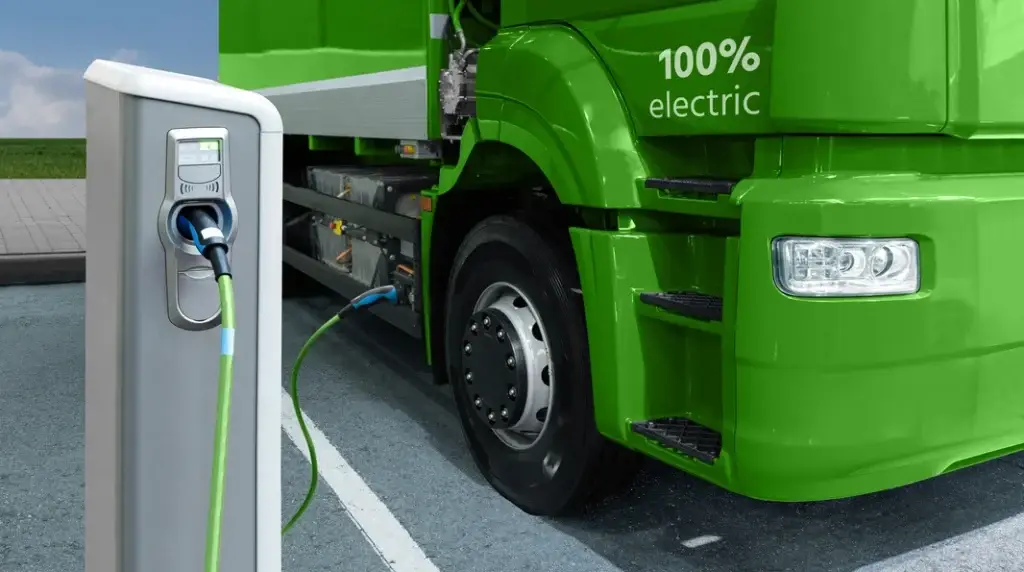
Battery electric trucks have emerged as the fastest-growing segment within alternative fuel trucking, with the global market projected to reach $124 billion by 2030. The technology excels in urban delivery, drayage, and regional applications where duty cycles align with current range and charging capabilities.
The United States is expected to have 54,000 electric trucks on the road by 2025, with sales supported by federal tax credits of up to $40,000 per Class 8 truck and additional state-level incentives that can reduce net purchase prices by more than $100,000 per vehicle in some jurisdictions. Major logistics providers including Amazon, UPS, and FedEx have committed to deploying thousands of electric delivery vehicles, creating market momentum that is attracting manufacturer investment.
Current Market Position and Adoption Patterns
Battery electric vehicles command approximately 73% of the electric truck market share in 2024, with plug-in hybrids and fuel cell vehicles comprising the remainder. Light and medium-duty applications dominate current deployments, with over 18,000 electric delivery trucks operational globally. Heavy-duty deployments remain more limited—approximately 6,000 units globally—concentrated in regions with robust charging infrastructure and zero-emission mandates.
Adoption patterns reveal clear application preferences. Electric trucks have achieved strongest penetration in last-mile delivery (60%+ of market share in that segment), urban distribution, and drayage operations where shorter routes and predictable schedules enable overnight depot charging. Long-haul applications remain challenging due to range limitations and sparse en-route charging infrastructure.
Infrastructure Requirements and Grid Challenges
Charging infrastructure represents the most significant operational challenge for electric truck adoption. As of 2025, the U.S. operates approximately 3,500 public heavy-duty charging stations—a significant increase from prior years but still insufficient for widespread deployment. Only 12% of existing stations offer fast-charging capabilities suitable for commercial operations, and megawatt-class charging required for rapid heavy-duty truck charging remains extremely limited.
Depot charging installation presents its own challenges. Grid capacity upgrades to support multiple high-powered chargers can require 12-24 months of utility coordination, permitting, and construction. Fleet managers report that infrastructure planning must begin 18-24 months before vehicle delivery to ensure charging capability aligns with equipment arrival.
⚠️ Infrastructure Planning Alert
Electric truck charging infrastructure requires coordination with local utilities that often takes 12-24 months. Fleets should engage utility representatives and infrastructure partners immediately upon making electrification decisions to avoid vehicle delivery delays.
Range and Payload Considerations
Current electric truck technology achieves ranges of 150-300 miles for light and medium-duty applications and 400-500 miles for heavy-duty models like the Tesla Semi and Volvo FH Electric. While these ranges accommodate many commercial applications, they fall short of diesel truck capabilities that routinely exceed 1,000 miles per fill.
Battery weight presents an additional consideration. Electric drivetrains add significant mass compared to diesel powertrains, reducing available payload capacity by approximately 10-20% for equivalent range specifications. For weight-sensitive freight operations, this reduction can impact revenue-generating capacity and operational efficiency.
Total Cost of Ownership Analysis
Electric trucks can cost double the price of comparable diesel units at purchase—$300,000 or more for a Class 8 tractor versus $120,000-150,000 for diesel. However, total cost of ownership calculations increasingly favor electric trucks in high-utilization applications due to fuel and maintenance savings.
Electricity costs per mile run substantially lower than diesel, and electric drivetrains require less maintenance than internal combustion engines with no oil changes, fewer brake replacements (due to regenerative braking), and simplified transmission requirements. Fleet operators in favorable electricity markets report achieving TCO parity within 4-6 years for trucks operating 60,000+ miles annually.
Comparative Market Analysis: Choosing the Right Technology
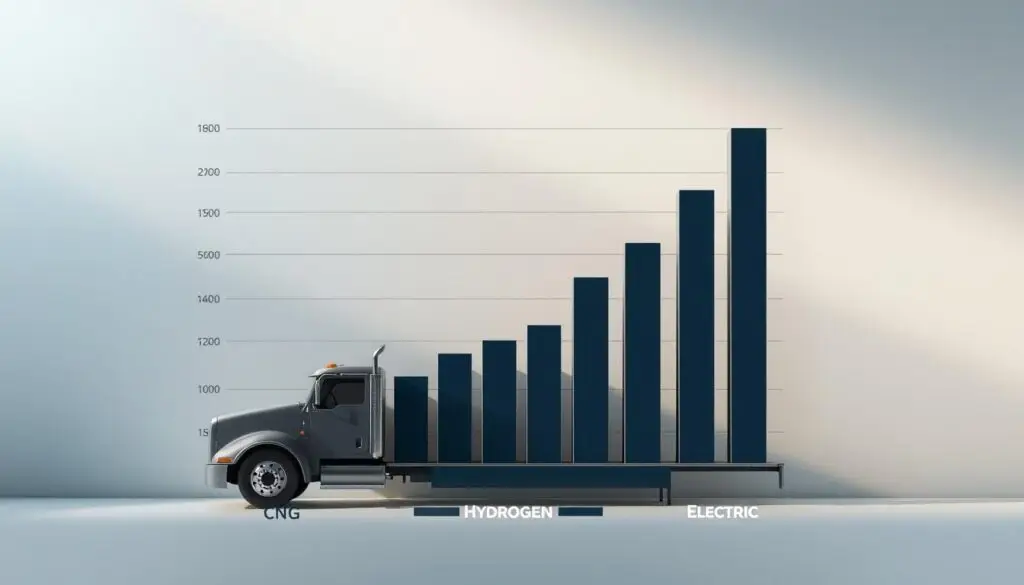
Selecting the appropriate alternative fuel technology requires matching operational requirements with each option’s strengths and limitations. No single technology emerges as universally superior—the right choice depends on duty cycle, route characteristics, infrastructure access, and regulatory requirements.
| Factor | CNG/RNG | Hydrogen Fuel Cell | Battery Electric |
|---|---|---|---|
| Best Application | Regional haul, refuse, transit | Long-haul, fixed routes | Urban delivery, drayage |
| Typical Range | 400-600 miles | 300-500 miles | 150-400 miles |
| Refuel/Recharge Time | 10-15 minutes | 15-20 minutes | 30 min – 8 hours |
| Infrastructure Status | Established (700+ stations) | Limited (65 stations) | Growing (3,500+ stations) |
| Vehicle Premium vs. Diesel | 40-60% | 100-150% | 80-120% |
| Emissions Reduction | 20-25% (CNG), Carbon-negative (RNG) | Zero tailpipe | Zero tailpipe |
| Technology Maturity | Proven, 20+ years commercial | Emerging, pilot stage | Maturing, early commercial |
Regional Adoption Variations
Geographic factors significantly influence alternative fuel viability. California leads zero-emission truck adoption due to its Advanced Clean Trucks regulation and extensive incentive programs, with the state accounting for approximately 35% of U.S. electric truck deployments. Texas and the Midwest show stronger CNG adoption, leveraging natural gas infrastructure and pricing advantages.
International patterns provide additional context. China dominates global electric truck sales, representing 85% of medium and heavy-duty electric truck registrations in 2022, while Europe has achieved stronger heavy-duty electric truck penetration than North America with over 10,000 sales in 2024.
Fleet Case Studies: Real-World Alternative Fuel Deployments
Examining actual fleet implementations provides practical insights that theoretical analysis cannot capture. These case studies highlight both successes and challenges that inform realistic planning.
UPS: CNG and RNG Integration
UPS has deployed one of the largest alternative fuel fleets in North America, with significant investments in CNG and renewable natural gas vehicles. The company’s experience demonstrates that CNG economics work best in high-density urban operations where trucks return to central facilities for overnight time-fill fueling. UPS reports meaningful carbon footprint reductions while noting that initial infrastructure costs required careful ROI analysis.
Amazon: Electric Delivery Vehicle Scaling
Amazon’s deployment of over 10,000 Rivian electric delivery vans across the U.S. represents the largest electric commercial vehicle deployment to date. The operation demonstrates electric vehicle viability for last-mile delivery applications, with optimized routing and depot charging enabling high utilization rates. Amazon has also ordered up to 2,500 Lion Electric Class 6 and Class 8 trucks, extending electrification into heavier applications.
Port of Long Beach: Hydrogen Drayage Operations
The Port of Long Beach has implemented hydrogen fuel cell trucks for container drayage operations, leveraging the port’s controlled operating environment and fixed route patterns. The deployment demonstrates hydrogen’s viability in applications where infrastructure can be concentrated at key nodes, though operators note that current hydrogen costs limit economic competitiveness without incentive support.
The HDJ Perspective
The alternative fuel transition in trucking isn’t following the consumer vehicle playbook. Where passenger cars have coalesced around battery electric technology, commercial trucking’s demanding duty cycles create space for multiple solutions. Fleet managers should resist pressure to standardize prematurely. The most successful early adopters are those who’ve matched specific technologies to specific applications—electric for urban delivery, CNG for regional operations, hydrogen for specialized long-haul corridors—rather than attempting fleet-wide conversion to any single platform. This pragmatic approach preserves operational flexibility while building institutional knowledge that will prove valuable as technologies mature and infrastructure expands.
Regulatory Framework and Compliance Requirements
Understanding the regulatory landscape is essential for strategic planning. Federal and state requirements are establishing increasingly aggressive timelines for emissions reductions and zero-emission vehicle adoption that will shape equipment acquisition decisions for years to come.

EPA Phase 3 Greenhouse Gas Standards
The EPA’s Phase 3 greenhouse gas standards, finalized in March 2024, establish progressively stringent emissions requirements for heavy-duty vehicles in model years 2027 through 2032. The standards are technology-neutral but structured to require substantial zero-emission vehicle penetration to achieve compliance.
By 2032, the standards effectively require approximately 30% of heavy heavy-duty vocational trucks and 40% of regional day cabs sold to be zero-emission vehicles. Fleet operators should note that while the standards apply to manufacturers rather than fleet purchasers, they will constrain available equipment options and likely drive diesel vehicle pricing higher as manufacturers spread compliance costs across their product lines.
EPA 2027 NOx Emissions Requirements
Separate from greenhouse gas standards, EPA’s 2027 NOx emissions rule requires an 82.5% reduction in nitrogen oxide emissions from heavy-duty engines compared to current standards. This rule affects diesel and natural gas engines alike, requiring enhanced aftertreatment systems that will increase vehicle costs by an estimated $10,000-15,000 per unit.
The rule also extends emissions system warranty requirements to 450,000 miles (from 100,000) and useful life definitions to 650,000 miles (from 435,000). These extended requirements may influence manufacturer support commitments and residual value calculations for new equipment.
California Advanced Clean Trucks and Advanced Clean Fleets
California’s regulations establish the most aggressive zero-emission requirements in North America. The Advanced Clean Trucks rule requires manufacturers to sell increasing percentages of zero-emission trucks, while the Advanced Clean Fleets rule targets fleet operators directly, mandating zero-emission vehicle purchases for certain fleet categories beginning in 2024.
The Advanced Clean Fleets rule faced implementation challenges, with California withdrawing its federal waiver request in late 2024 after acknowledging that original timelines were unachievable given infrastructure and technology readiness. The state is expected to re-engage with stakeholders on revised implementation schedules, but the long-term direction toward zero-emission mandates remains unchanged.
Federal and State Incentives
Substantial incentive programs offset alternative fuel vehicle costs. Federal tax credits provide up to $40,000 for Class 8 zero-emission trucks, while various state programs offer additional rebates that can exceed $100,000 per vehicle in jurisdictions like California. Infrastructure incentives also support charging and fueling station development, with utilities in many regions offering reduced rates and installation support for fleet charging systems.
Future Outlook: Technology Evolution and Market Projections
The alternative fuel trucking market is projected to experience significant growth and technological advancement over the next decade. Understanding likely development trajectories helps inform equipment planning and capital allocation decisions.
Technology Advancement Expectations
Battery technology continues improving at roughly 5-7% energy density gains annually, with solid-state batteries potentially offering step-change improvements in range and charging speed within the next five years. Manufacturers expect Class 8 electric truck ranges to exceed 600 miles by 2030, addressing current limitations for regional and some long-haul applications.
Hydrogen production costs are projected to decline as green hydrogen projects come online. The U.S. Department of Energy targets hydrogen costs of $1 per kilogram by 2030 through its Hydrogen Shot initiative, though achieving this goal requires substantial scale-up of renewable electrolysis capacity.
Infrastructure Development Projections
The National Electric Freight Corridor initiative and similar programs are investing billions in expanding charging infrastructure along major freight routes. Industry projections suggest heavy-duty charging station availability will roughly triple by 2030, though coverage will remain concentrated along major corridors with rural areas underserved.
Hydrogen infrastructure development depends heavily on policy support and investment decisions that remain uncertain. Current projections suggest viable hydrogen freight corridors in California and potentially Texas by 2030, with broader national coverage requiring additional decade of development.
Share Your Alternative Fuel Experience
Fleet managers and diesel technicians working with CNG, electric, or hydrogen vehicles bring valuable perspectives to the alternative fuel conversation. Share your implementation experiences and lessons learned with the HDJ community.
Implementation Strategies for Fleet Managers
Successful alternative fuel adoption requires strategic planning that extends well beyond vehicle selection. Fleet managers report that infrastructure coordination, driver training, and maintenance capability development often present greater challenges than the equipment transition itself.
Assessment and Planning Framework
Begin by analyzing your existing duty cycles to identify applications where alternative fuels offer clear advantages. Urban delivery routes with predictable mileage and return-to-base operations typically provide the best entry points for electrification. Regional operations with established CNG infrastructure access may offer lower-risk CNG adoption opportunities.
Evaluate your infrastructure requirements and timeline early. Electric truck charging infrastructure requires 18-24 months of utility coordination and construction in many jurisdictions. CNG depot fueling installations similarly require significant planning and permitting. Starting infrastructure development immediately upon making technology decisions prevents equipment delivery delays.
Financial Analysis Considerations
Total cost of ownership analysis should incorporate all relevant factors: vehicle acquisition costs net of incentives, fuel or energy costs based on local pricing, maintenance cost differences, infrastructure investment requirements, and potential residual value variations. Fleet operators report that spreadsheet projections often underestimate infrastructure costs and overestimate fuel savings in early deployment phases.
Consider phased adoption approaches that allow operational learning before large-scale commitment. Pilot programs with 5-10 vehicles provide real-world performance data specific to your operations while limiting financial exposure. Successful pilots can then inform larger deployments with greater confidence.
Training and Maintenance Readiness
Alternative fuel vehicles require modified maintenance procedures and, in some cases, specialized technician training. Electric trucks eliminate many traditional maintenance requirements but introduce high-voltage safety protocols and battery system diagnostics. CNG vehicles require fuel system inspection procedures and leak detection capabilities. Hydrogen fuel cell trucks present the most specialized maintenance requirements, often necessitating manufacturer or dealer service support.
Driver training should address both operational differences and emergency procedures. Electric trucks require understanding of regenerative braking systems and charging protocols. CNG drivers need training on pressure system safety and refueling procedures. Investing in comprehensive training programs before vehicle deployment prevents operational disruptions and safety incidents.
Frequently Asked Questions
What is the most cost-effective alternative fuel for commercial trucking?
CNG currently offers the most favorable economics for most commercial trucking applications due to established infrastructure, proven technology, and fuel cost savings of 30-50% compared to diesel. Fleet operators in high-utilization applications (100,000+ miles annually) with access to CNG refueling infrastructure typically achieve payback on the higher vehicle cost within 3-5 years. Electric trucks can achieve superior TCO in urban delivery applications where duty cycles enable overnight depot charging, but infrastructure requirements and range limitations constrain broader applicability. Hydrogen remains economically challenging at current fuel prices ($16-18/kg) and limited infrastructure availability.
How long does it take to charge an electric semi-truck?
Electric truck charging times vary significantly based on charging infrastructure and battery capacity. Overnight depot charging using Level 2 AC chargers typically requires 6-10 hours for a full charge. DC fast charging at 150-350 kW can provide 80% charge in 45-90 minutes for most medium-duty applications. Emerging megawatt charging systems (MCS) designed for Class 8 trucks can potentially deliver full charges in 30-45 minutes, but this infrastructure remains extremely limited. Fleet managers should plan operations around overnight depot charging where possible, reserving fast charging for mid-shift top-ups or emergency situations.
What are the main barriers to hydrogen truck adoption?
Three primary barriers constrain hydrogen truck adoption: infrastructure scarcity (only 65 public stations nationwide, concentrated in California), high fuel costs ($16-18/kg versus $4-5/kg target for diesel parity), and limited vehicle availability. Additionally, most current hydrogen production uses natural gas reforming with significant carbon emissions, undermining the environmental case until green hydrogen production scales. Fleet operators interested in hydrogen should focus on fixed-route operations where private fueling arrangements are feasible and evaluate manufacturer stability given recent financial challenges facing hydrogen truck developers.
Which states have the strongest alternative fuel incentives for commercial trucks?
California offers the most comprehensive incentive programs, with zero-emission truck rebates up to $120,000 per vehicle through the HVIP program and additional local utility incentives for charging infrastructure. New York, New Jersey, Colorado, and Oregon have adopted California’s Advanced Clean Trucks regulation and offer complementary state incentives. Federal tax credits of up to $40,000 per Class 8 zero-emission truck apply nationwide. Fleet managers should evaluate state-specific programs carefully, as incentive availability, funding levels, and eligibility requirements vary significantly and change frequently.
Can alternative fuel trucks meet the same performance requirements as diesel?
Alternative fuel trucks can meet most commercial performance requirements, though with trade-offs. CNG trucks deliver comparable range and power to diesel with slightly lower fuel efficiency and higher vehicle weight. Electric trucks match or exceed diesel torque and acceleration but face range limitations (150-500 miles depending on vehicle class) and payload reductions of 10-20% due to battery weight. Hydrogen fuel cell trucks achieve closest performance parity with diesel—similar range, refueling times, and payload capacity—but remain limited by infrastructure availability. The key is matching technology capabilities to specific application requirements rather than expecting universal diesel equivalence.
Moving Forward with Alternative Fuel Strategies
The transition to alternative fuels in commercial trucking is no longer a distant possibility—it’s an operational reality that fleet managers must address. Regulatory timelines, infrastructure development, and technology maturation are converging to make alternative fuel adoption both necessary and increasingly practical for many applications.
Success requires moving beyond theoretical comparisons to application-specific analysis. The fleet that deploys electric trucks for urban delivery, maintains CNG for regional operations, and monitors hydrogen development for long-haul corridors will likely achieve better outcomes than one that attempts premature standardization on any single technology.
Start with your highest-confidence applications—the duty cycles where alternative fuels clearly outperform diesel on total cost of ownership and operational fit. Build internal expertise through manageable pilot programs before committing to large-scale conversions. Engage with utilities and infrastructure providers immediately, as lead times for charging and fueling installations often exceed vehicle procurement timelines.
The coming decade will determine which fleets lead the alternative fuel transition and which struggle to catch up. The decisions you make now—about technology selection, infrastructure investment, and organizational capability development—will shape your competitive position for years to come.
Share This Guide with Your Network
If this alternative fuel analysis helped inform your fleet planning, share it with colleagues and industry contacts who are navigating similar decisions.